Drainage Excavation to Eliminate Standing Water in Oxford Connecticut
Oxford homeowners notice puddles lingering for days after a storm, water creeping toward the foundation, and that familiar sinking feeling when rain is forecast again. Many avoid calling a drainage contractor because they imagine their entire lawn ripped apart for weeks, but the reality of professional yard drainage excavation in Oxford CT is quite different. Modern drainage projects are designed around targeted trenching, efficient pipe installation, and quick restoration, typically concentrating the heavy work into several focused days rather than turning your property into a season-long construction zone. Federal housing standards and Connecticut stormwater regulations both require that residential lots be graded and drained to move water away from structures and off the site, but meeting those requirements doesn’t mean months of disruption. When you understand what contractors actually do, how they sequence the work, and how local conditions shape the timeline, you can make an informed decision about protecting your home without sacrificing your yard or your peace of mind all season.
Key Takeaways
- Drainage Excavation Targets Standing Water, Not Your Whole Yard: Professional crews concentrate on problem zones like low spots, foundation edges, and saturated pathways, using trenches, swales, and piping systems designed under HUD grading guidelines and Connecticut stormwater standards to move water safely away from your home.
- The “Torn Up” Phase Is Usually Measured in Days: For a typical Oxford residential property, the active trenching and grading work often spans several focused workdays when conditions cooperate, with restoration and grass regrowth extending over a longer period but without heavy equipment disrupting your daily life.
- Design Follows National and CT Standards: Slopes, French drains, and grass channels are carefully laid out to divert water away from foundations and off the property without creating flooding problems for neighbors or impacting wetlands, following both federal housing guidance and state drainage rules.
- Local Factors Shape the Plan: Oxford’s increasing rainfall intensity, mapped drainage basins, and Connecticut’s specific stormwater requirements all influence how deep contractors dig, where they place drainage structures, and how quickly they can complete the work.
- Restoration and Erosion Control Are Part of the Job: Both HUD guidance and Connecticut erosion control standards expect disturbed soils to be graded smooth and stabilized quickly with vegetation or temporary controls, allowing your lawn to begin recovering as soon as the last trench is backfilled.
Understanding Yard Drainage Excavation in Oxford CT
Professional drainage excavation in Oxford focuses on reshaping and piping the ground so surface water and roof runoff move away from your foundation, septic system, and living areas instead of forming puddles in the lawn or soaking into the basement. HUD’s site grading requirements call for immediate diversion of water away from buildings and off the site, while Connecticut’s stormwater manual reinforces that residential sites should manage runoff at the source to protect structures and downstream properties. This isn’t about digging up your entire yard randomly. It’s about identifying where water enters, where it pools, and where it can safely exit, then installing the drainage features needed to make that happen consistently.
The work typically involves creating positive slopes away from the house, cutting shallow swales to channel surface flow, or installing underground French drains where surface grading alone can’t solve the problem. Federal housing guidance acknowledges that when minimum protective slopes cannot be achieved around foundation walls due to lot constraints, acceptable drainage structures like drains, gutters, or catch basins should be installed instead. Connecticut contractors combine these approaches based on your specific site conditions, soil type, existing grades, and how water currently behaves on your property.
Local Drainage Conditions and Process Needs
Oxford sits within mapped natural drainage basins, which means any yard fix must respect how water naturally moves across and off your property without overwhelming neighboring lots or community drainage systems. Recent extreme rainfall events in southwestern Connecticut, including storms that dumped over 10 inches of rain in 24 hours, demonstrate why houses on modest slopes, compacted lawns, or clay soils now experience standing water that older grading never anticipated. Climate reports show Connecticut has seen roughly a 38% increase in annual precipitation over recent decades, making inland flooding and soggy yards far more common across the state. Oxford homeowners who never had drainage issues before may suddenly find low spots near patios, saturated soil along foundation walls, or seasonal ponds at the base of slopes because the amount and intensity of rain has changed significantly.
Professional drainage assessment starts by walking the property after a storm to observe where water actually collects, how it flows across the lawn, and where it exits or should exit the site. This field observation mirrors the drainage pattern review recommended in federal rehabilitation guidelines, which emphasize understanding existing conditions before proposing any grading or excavation work. Contractors also check soil compaction, measure existing slopes, locate buried utilities and septic components, and review property boundaries to ensure new drainage features will function properly and legally. The goal is to design a system that addresses your specific water problems without creating new ones for neighbors or sensitive environmental features nearby.
National vs. Oxford/CT Drainage Timelines
Nationally, small residential drainage projects can often be installed within a few working days under good conditions, but cold climate soils, frost depth considerations, and stricter Connecticut runoff regulations mean Oxford projects are sequenced carefully for long-term stability and regulatory compliance. HUD grading and drainage guidance provides a framework that contractors across the country follow, but each state and locality adds its own layer of requirements based on climate, geology, and environmental protection priorities. In Connecticut, that translates to attention to wetlands, erosion control, stormwater quality, and proper system design that won’t overtax local storm sewers or drainage channels.
Typical Timeline Ranges by Yard Complexity
A flat, open yard with one or two straightforward trench lines and simple French drains may see the excavation, pipe installation, and rough restoration completed in several workdays when weather and soil conditions cooperate. These simpler projects involve fewer complications, limited equipment access needs, and straightforward grading that can be finished and stabilized quickly. Homeowners with this type of site may find their yard looking “torn up” for only a concentrated window of active work before restoration begins.
Sites with steep slopes, required tie-ins to existing foundation drains, or proximity to wetlands, septic leach fields, or conservation areas often extend into the one to two-week range from first excavation to final stabilization. Connecticut stormwater design guidance includes minimum separation distances between infiltration systems and foundations or subsurface sewage disposal systems, additional slope stability considerations, and sometimes permit or review requirements that add planning and inspection time. More complex projects also involve staged excavation, where contractors complete one section, stabilize it, then move to the next area rather than opening the entire yard at once. This phased approach keeps the overall disruption period longer but reduces the amount of active construction happening on any given day.
Day-by-Day Breakdown Models
On day one, contractors typically walk the site with equipment operators to finalize layout, verify utility locations one last time, establish equipment access paths, and begin initial trenching or regrading in the worst standing water zones. HUD site preparation standards emphasize thorough planning and layout before excavation begins, and reputable contractors follow that same discipline to avoid surprises or unnecessary disturbance. The first day often produces the most visible mess, with sod stripped, trenches opened, and soil stockpiled near the work area.
Days two and three focus on continuing trenching, installing perforated drainage pipe surrounded by clean stone, placing catch basins or cleanouts where needed, and backfilling completed sections with appropriate materials. Contractors typically work methodically along planned trench routes, installing pipe to maintain continuous positive slope toward the discharge point and compacting backfill in layers to prevent future settlement. As each section is backfilled and rough-graded, the yard begins transitioning from a maze of open trenches to a more orderly construction zone where finished areas are closed up and new areas are opened.
Days three through five, depending on project size, involve final grading to establish smooth, continuous slopes away from the foundation and toward natural drainage paths or installed systems. Connecticut erosion control guidance encourages prompt stabilization of disturbed soil, so contractors should place seed, sod, erosion control blankets, or mulch over graded areas as soon as each section reaches final elevation. By the end of this phase, the yard is no longer actively “torn up” with equipment moving and trenches open, even though grass establishment and full landscape recovery will take additional weeks depending on growing season and weather.
Key Steps in the Drainage Excavation Process
Professional drainage work follows a logical sequence that mirrors HUD grading and site preparation requirements but is scaled appropriately for a residential property. Understanding each phase helps set realistic expectations and prepares you for what will happen on your lawn during the project.
Site Assessment, Layout, and Utilities
Contractors or drainage specialists start by reviewing your property’s topography, identifying where runoff enters from streets or neighboring lots, where it currently ponds, and where it can safely exit without causing problems for others. HUD environmental guidance on drainage recommends evaluating how water moves onto, across, and off the site before proposing any grading changes, which is exactly what a thorough site assessment accomplishes. This evaluation often includes simple measurements of existing slopes, soil test holes to check permeability and drainage capacity, and review of property boundaries and easements to ensure discharge routes are legal and acceptable.
The resulting grading plan, similar in concept to HUD’s lot grading templates, documents proposed slopes, swales, and drainage features around the home and shows how they tie into existing driveways, walkways, and neighboring properties. This plan becomes the roadmap for excavation and helps identify potential conflicts with utilities, septic systems, wells, or other buried features before any digging begins. Reputable contractors always verify underground utility locations through the state’s call-before-you-dig service and mark out known septic components, irrigation lines, and other private utilities based on homeowner information and available records.
Trenching, Swales, and French Drains
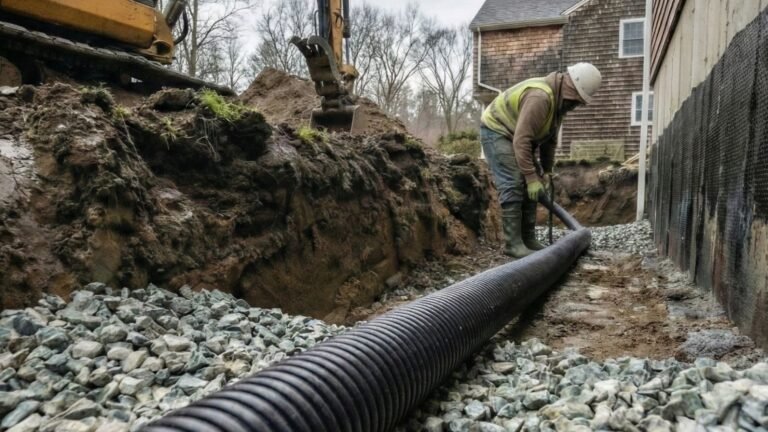
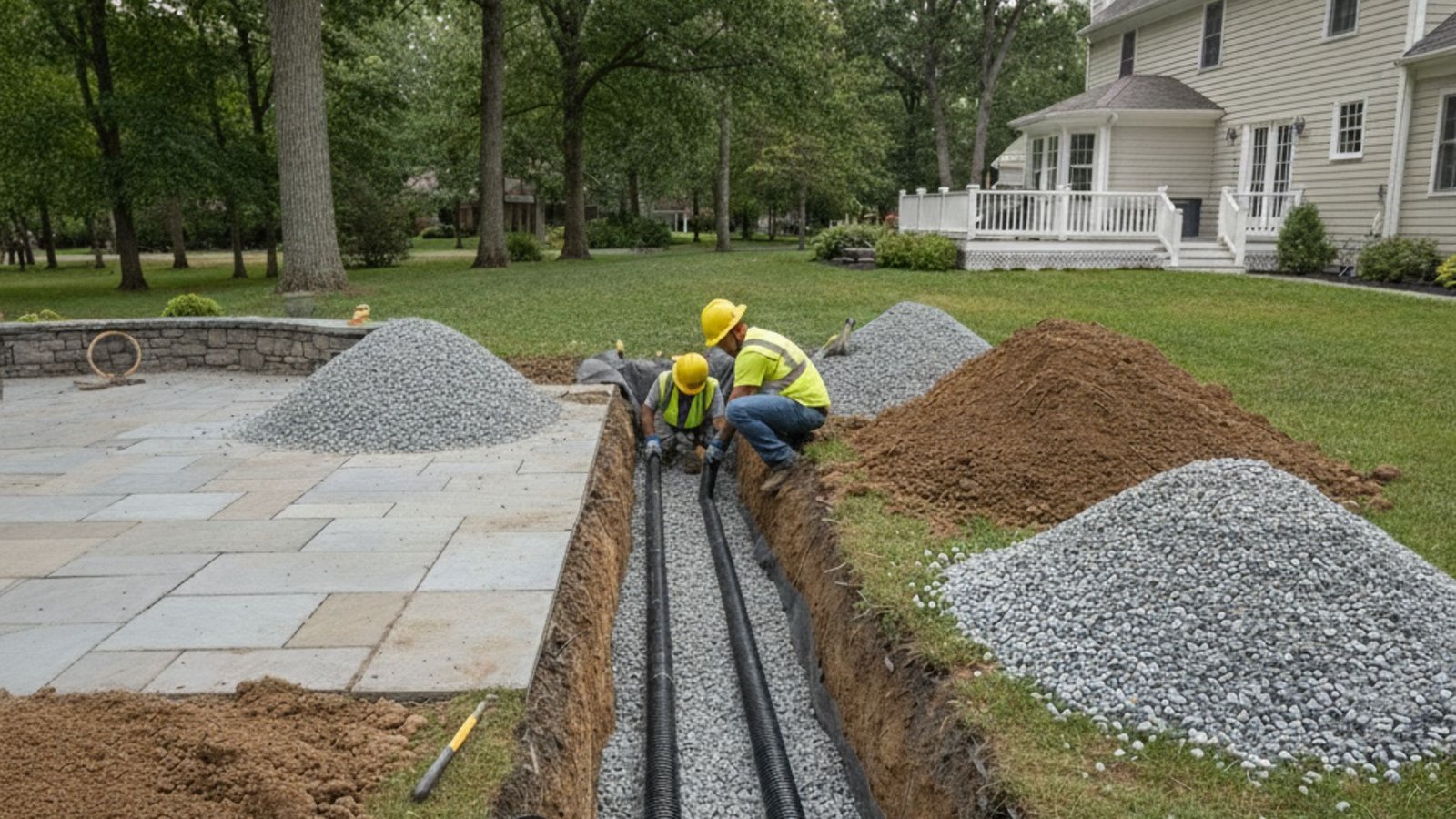
HUD site grading guidance requires that lots be graded to move water away from foundation walls and off the site, but where achieving minimum protective slopes is impractical due to existing conditions, drains and other structures are acceptable alternatives. In practice, this means contractors cut trenches to install French drains, which consist of perforated pipe surrounded by clean gravel that collects and conveys groundwater and surface infiltration away from problem areas. Best practice guidance on swales and drains recommends placing French drains at least 18 inches below the surface with continuous positive slope to the outlet and using smooth interior pipe rather than corrugated options to minimize sediment accumulation and clogging.
Shallow grassed swales may be cut along property lines, beside driveways, or parallel to foundation walls to intercept surface flow and direct it toward the drainage system or a safe discharge point. Connecticut grass channel guidance includes design recommendations for slope, depth, and vegetation that ensure channels can handle expected flows without eroding or becoming maintenance problems. These surface features work in combination with underground drains to capture both surface runoff and subsurface seepage, providing comprehensive drainage that addresses standing water from multiple sources.
Backfilling, Grading, and System Tie-ins
Once pipe and stone are installed in trenches, contractors backfill with excavated soil, compacting it in layers to match surrounding grades and prevent future settling that could create new low spots or damage the drainage system. HUD grading standards call for smooth, continuous slopes away from buildings and toward lower elevations, which requires careful attention to final grading over backfilled trenches and in transitions between undisturbed and reworked areas. Professional contractors use laser levels or grading tools to verify slopes meet design requirements and won’t create unintended ponding or erosion issues.
Where appropriate, roof downspouts and sump pump discharges should be connected to the new drainage system so stormwater is carried away from the foundation through underground pipe rather than being dumped directly at the wall. Federal drainage guidance recognizes that properly managing roof runoff is critical to keeping foundations dry and preventing soil saturation near structures. These tie-ins are typically completed during the backfilling and grading phase, with solid pipe connecting downspouts to the drainage system and proper slope maintained throughout the connection.
Additional Steps for Complex Oxford Yards
More involved drainage projects require extra design attention and stabilization measures but still follow a clear, predictable sequence that limits unnecessary disturbance.
Handling Slopes, Wet Areas, and Sensitive Features
HUD slope guidance warns that improper grading on or near slopes can alter surface water flow patterns and cause flooding on the site or neighboring properties, so contractors working on sloped Oxford lots must carefully design drainage features to work with the terrain rather than fighting it. Connecticut stormwater design standards add specific separation distances from foundations, septic leach fields, and steep embankments for infiltration systems, ensuring new drainage features won’t undermine structural supports or compromise on-site sewage disposal systems.
Properties near mapped wetlands, watercourses, or regulated drainage channels may require additional review under Connecticut wetland regulations to verify that proposed grading and drainage work won’t harm those protected resources. Contractors familiar with local conditions can guide you through any notification or permit requirements and design systems that meet regulatory standards while still solving your standing water problems. These extra steps add time to the planning phase but help avoid compliance issues or required removal of improperly installed drainage features later.
Finishing Touches and Long-Term Stabilization
Connecticut erosion control guidance emphasizes minimizing land disturbance and stabilizing disturbed soil quickly with seed, mulch, erosion control blankets, or other vegetative cover to prevent erosion and sediment-laden runoff after equipment leaves the site. Professional contractors should apply these stabilization measures as soon as final grading is complete in each work area, rather than waiting until the entire project finishes. This approach reduces erosion risk, speeds grass establishment, and shortens the time your yard looks raw and unfinished.
Additional finishing touches may include rain-friendly planting in swales or low areas, amending compacted soils with organic matter to improve drainage and vegetation growth, or adding decorative rock in channel beds where grass may struggle to establish. Connecticut stormwater guidance encourages using vegetation and natural systems alongside engineered features, and well-designed drainage projects can actually improve landscape aesthetics while solving water problems. These enhancements are optional but can provide long-term benefits by reducing maintenance needs and keeping the system functioning reliably through varying weather conditions.
Permits, Utilities, and Regulations in CT
Pre-excavation compliance work helps keep drainage projects safe, legal, and free from surprise delays that extend timelines or require rework.
Plot Plans, Drainage Routes, and Setbacks
HUD requires plot plans showing grading elevations, drainage swales, channels, pipes, and easements so inspectors can verify proper design and flow routes around structures. While single-family drainage projects may not always require formal plan submission, having a documented layout helps contractors work systematically and provides a record of where drainage features are installed for future reference. This documentation becomes especially valuable if you later need to locate buried pipes, plan landscape changes, or address drainage questions during a property sale.
Connecticut’s stormwater manual and related guidance serve as planning tools that help ensure residential drainage work doesn’t compromise water quality, overburden local storm systems, or create downstream flooding problems. While many residential projects fall below regulatory thresholds that trigger formal permitting, following stormwater design principles produces better-functioning systems and demonstrates responsible site management. Contractors who stay current with state guidance can design drainage features that meet or exceed regulatory expectations even when permits aren’t formally required.
Utilities, Septic, and Separation Distances
Environmental and drainage guidance emphasizes locating all utilities and subsurface systems so new drains and trenches don’t interfere with septic leach fields, wells, underground fuel tanks, or utility lines. Connecticut design standards include minimum horizontal distances between infiltration systems and building foundations or sewage disposal components to prevent groundwater mounding that could force water into basements or saturate leach fields. Professional contractors verify these clearances during site assessment and adjust drain locations as needed to maintain safe separation while still addressing drainage problems effectively.
These pre-construction checks are part of keeping excavation controlled and targeted, ensuring crews don’t have to reopen areas they’ve already closed because of utility conflicts or code violations discovered mid-project. Homeowners can support this process by providing septic system records, irrigation plans, and any available information about underground features before work begins.
What Oxford Homeowners Should Prepare For and Do
Understanding daily expectations and your role in the process helps drainage projects run smoothly and finish on schedule.
Daily Expectations While Work Is Underway
You can expect the loudest noise and most visible disturbance during trenching and grading days, when excavators, skid steers, and compaction equipment are actively moving soil and installing drainage components. Industry standards informed by HUD grading guidance encourage contractors to limit equipment access to planned paths so the entire yard isn’t unnecessarily churned up, and reputable drainage contractors will discuss access routes and staging areas with you before starting work. Most homeowners find they can continue normal indoor activities during construction days, though outdoor access may be limited in work zones for safety.
By the final grading and stabilization days, the yard surface should be largely closed back up, with erosion controls and seed or sod in place so the site transitions from active construction zone to lawn under repair. Connecticut erosion guidance expects disturbed soils to be stabilized promptly rather than left bare for extended periods, which means your yard should look progressively more finished as work advances rather than sitting in a muddy, disrupted state for weeks. Understanding this progression helps you recognize normal project milestones and identify when work may be falling behind schedule or not following proper restoration procedures.
How to Minimize Disruptions and Speed Recovery
Clearing toys, lawn furniture, grills, and other loose items from work areas before contractors arrive helps crews move efficiently without stopping to relocate obstacles. Discussing preferred equipment access routes, identifying areas to avoid like established gardens or delicate plantings, and planning temporary arrangements for pets or children who normally play in the yard all contribute to smoother project execution. Industry standards recognize that effective coordination between homeowners and contractors reduces wasted time and prevents accidental damage to property features not involved in the drainage work.
Scheduling work during weather windows that avoid forecast heavy rainfall and allow for quick stabilization aligns with Connecticut stormwater recommendations and can significantly reduce how long the yard looks muddy while grass establishes. While contractors can’t always control weather, choosing to start projects during relatively dry, mild periods increases the chances of uninterrupted progress and faster vegetation recovery. Discussing timing considerations with your contractor during planning helps identify the best seasonal windows for drainage work in Oxford’s climate.
Process Comparison Table: Simple vs. Complex Drainage Excavation in Oxford CT
| Phase | Simple Yard (Few Trenches, Flat) | Complex Yard (Slopes/Wetlands/Septic Nearby) |
|---|---|---|
| Assessment & Layout | Half-day walkthrough, measuring, and sketching grades and outlets per drainage guidance | Full day including basin mapping checks, slope analysis, and regulatory separation distances |
| Trenching & Pipe Installation | One to two days of focused trenching with limited access routes | Two to four days with staged excavation, slope stabilization work, and erosion controls in place |
| Backfill & Rough Grading | One day to close trenches and shape slopes away from house per HUD standards | One to two days including system tie-ins and adjustments for sensitive site features |
| Final Grading & Stabilization | One to two days for fine grading, seeding or sodding, and basic erosion controls | Several days including specialized stabilization, grass channel preparation, and plantings |
| Total Visible “Torn Up” Time | Several active workdays, then lawn in repair phase | Approximately one to two weeks including weather pauses and inspections, but with work zones closed between phases per CT erosion guidance |
Common Mistakes Homeowners Make With Drainage Excavation
Waiting to address grading problems until basements or crawlspaces show water damage can lead to structural issues and moisture problems that HUD inspection guidance specifically associates with poor site drainage. Early intervention through proper excavation and drainage installation typically costs less and causes less disruption than emergency repairs after water infiltration damages foundation walls, floor systems, or interior finishes.
Allowing contractors to leave long stretches of bare, unstabilized soil after excavation can contribute to erosion and sediment runoff problems that Connecticut stormwater standards are specifically designed to prevent. Homeowners should expect contractors to stabilize disturbed areas promptly with appropriate erosion controls and vegetation rather than leaving raw dirt exposed indefinitely. If your contractor’s timeline includes extended periods between final grading and stabilization, ask about their erosion control plan and whether the schedule meets state guidance expectations.
Another common error involves failing to maintain new drainage systems after installation. Grass channels need periodic mowing and debris removal, drain inlets should be checked after major storms for clogging, and outlet areas require monitoring to ensure water is discharging properly without causing erosion. Best practices for stormwater management include regular inspection and maintenance of all drainage features, which takes minimal time but prevents small problems from becoming major failures.
Preparing Your Oxford Property for Drainage Work
Walking your yard during or immediately after rainfall to note exactly where water collects, how it flows across the lawn, and where it currently exits or should exit provides contractors with valuable site-specific information. This hands-on observation mirrors drainage pattern analysis recommended in federal rehabilitation guidelines and helps identify problems that may not be obvious during dry weather site visits. Taking photos or videos of problem areas during wet conditions gives contractors clear documentation of existing issues and helps them design solutions that address real-world performance rather than just theoretical drainage needs.
Gathering any available plot plans, septic system records, property surveys, and irrigation layouts before meeting with contractors helps drainage designers work within existing constraints and avoid conflicts with underground features. HUD grading guidance and Connecticut stormwater standards both anticipate that proper drainage design requires knowledge of existing site conditions and subsurface systems, and homeowners who can provide that documentation help contractors develop better plans more efficiently. If original construction records aren’t available, at least mark the approximate locations of septic components, underground utilities, and irrigation zones so contractors know where to investigate further before excavating.
Frequently Asked Questions About Yard Drainage Excavation in Oxford CT
Q: Why do I suddenly have standing water in parts of my yard that used to drain fine?
A: Increased heavy rainfall throughout the Northeast means your yard is now receiving more intense storms and greater water volumes than the original grading was designed to handle. Soil compaction from years of lawn maintenance, settling around foundations or septic systems, and changes to neighboring properties can also alter drainage patterns and create new problem areas even if the yard drained adequately in the past.
Q: How long will my yard actually be torn up during drainage excavation?
A: The heavy excavation and open-trench phase typically concentrates into several workdays for straightforward projects, with more complex sites extending to one or two weeks depending on slopes, tie-ins, and regulatory requirements. Connecticut erosion control standards expect prompt stabilization of disturbed soils, so your yard should be re-graded and seeded or sodded soon after trenching finishes rather than sitting as bare dirt for extended periods. Full grass recovery then follows normal growing conditions for your climate and chosen seed or sod type.
Q: Will drainage excavation damage my foundation or septic system?
A: Properly designed drainage systems respect separation distances and flow routes identified in federal housing guidance and Connecticut stormwater standards so that new infiltration features and drains don’t undermine foundations or saturate subsurface sewage disposal areas. Professional contractors verify these clearances during site assessment and design phases, and reputable firms carry insurance to protect homeowners in the unlikely event that excavation causes unintended damage.
Q: How do I know the new drainage won’t cause flooding on my neighbor’s property?
A: Site grading guidelines require that grading avoid concentrating runoff onto neighboring lots and that drainage systems discharge to approved outlets like municipal storm sewers, natural watercourses, or stable vegetated areas capable of handling the flow. Responsible contractors design systems that manage water within your property boundaries and release it gradually to approved discharge points rather than creating new flooding problems for neighbors. If your site lacks a clear legal discharge route, contractors should identify this issue during assessment and work with you to find acceptable solutions.
Q: What maintenance will I need to do after the drainage project is complete?
A: Regular maintenance includes periodically checking drain inlets and outlets for debris accumulation, especially after major storms, maintaining healthy grass cover in swales and channels through mowing and occasional overseeding, and monitoring discharge areas for signs of erosion or clogging. Connecticut guidance on grass channels recommends removing accumulated sediment and re-establishing vegetation if channels show signs of degradation. Most homeowners find that basic inspection and debris removal several times per year keeps residential drainage systems functioning reliably with minimal effort.
Q: Can I do drainage excavation myself to save money?
A: While simple surface grading and shallow swale work may be within the abilities of experienced DIY homeowners, underground drainage systems require knowledge of proper slopes, pipe installation techniques, backfilling procedures, and tie-in methods to function reliably long-term. More importantly, federal housing standards and Connecticut stormwater regulations establish design and installation criteria that untrained installers may not be aware of, potentially leading to systems that don’t work properly or that create compliance issues. Professional contractors also carry insurance and understand local utility location requirements, wetland setbacks, and other regulatory considerations that protect you from liability and ensure work meets code requirements.
Q: How much does typical yard drainage excavation cost in Oxford?
A: Drainage project costs vary widely based on yard size, soil conditions, number and length of drain runs, equipment access difficulty, and whether tie-ins to existing systems or special erosion controls are needed. Simple French drain installations in accessible, flat yards typically cost less per linear foot than complex systems requiring extensive regrading, slope stabilization, or work near sensitive features. Getting quotes from several reputable local contractors who understand Connecticut drainage requirements gives you a realistic range for your specific property and helps you understand what different pricing levels include in terms of design, materials, and restoration quality.
Final Thoughts
Professional yard drainage excavation in Oxford Connecticut solves standing water problems through targeted trenching, careful pipe installation, and proper restoration that follows both federal housing grading standards and Connecticut stormwater guidance. The work is designed to direct runoff away from your home and off your property in a controlled manner, protecting foundations and living spaces from moisture damage while preventing flooding on neighboring lots. When contractors sequence the project correctly and follow recognized erosion control practices, the “torn up” phase remains concentrated in a manageable window of active excavation days rather than turning your yard into a season-long construction zone.
Properly installed drainage systems provide long-term protection against the increasingly intense rainfall Connecticut is experiencing, preventing soggy lawns, basement water problems, and the structural damage that results from poor site drainage. The initial disruption of excavation and grading trades a few focused days of construction activity for years of reliable drainage performance and peace of mind during storm events. Most Oxford homeowners find that addressing drainage problems proactively through professional excavation costs less and causes less stress than repeatedly dealing with flooded basements, damaged landscaping, or foundation moisture issues that worsen over time.
If standing water around your Oxford home is causing concern, Prestige CT Excavation & Drainage brings years of experience designing and installing residential drainage systems that meet federal housing standards and Connecticut stormwater requirements. Our team understands Oxford’s local drainage conditions, soil types, and regulatory environment, and we work efficiently to complete excavation and restoration while minimizing disruption to your property. Contact Prestige CT Excavation & Drainage today to schedule a site assessment and discover how targeted drainage excavation can eliminate standing water problems and protect your home from Connecticut’s increasingly heavy rainfall.