Land Development & Clearing
Forestry Mulching Services in Oxford, CT and Surrounding Areas
Prestige Property Maintenance grinds trees, brush, and invasive growth directly on site, turning overgrown land into clean, stable ground without the dump runs, burn piles, or weeks of waiting that traditional clearing requires.
What Is Forestry Mulching and What Do You Get?
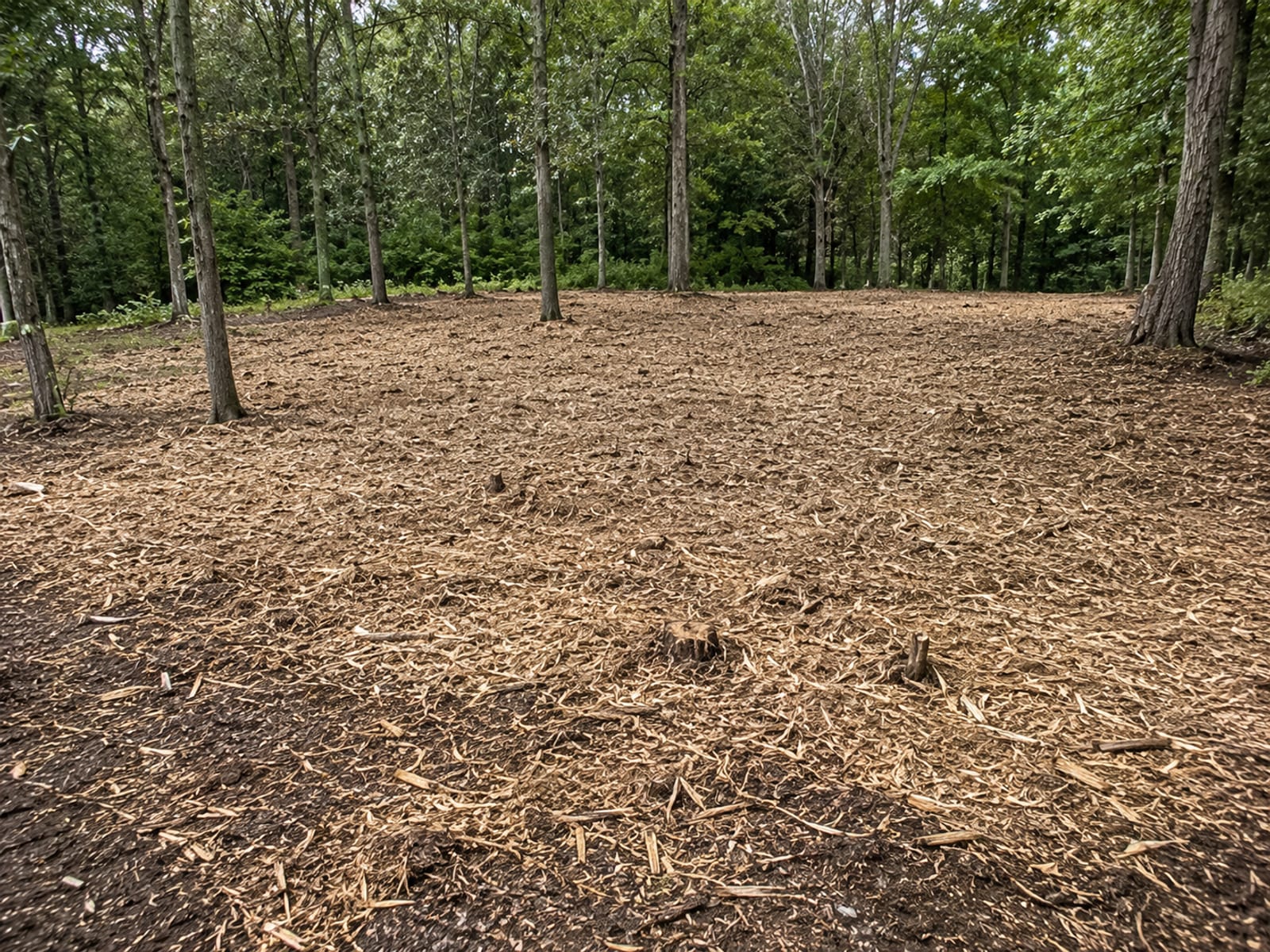
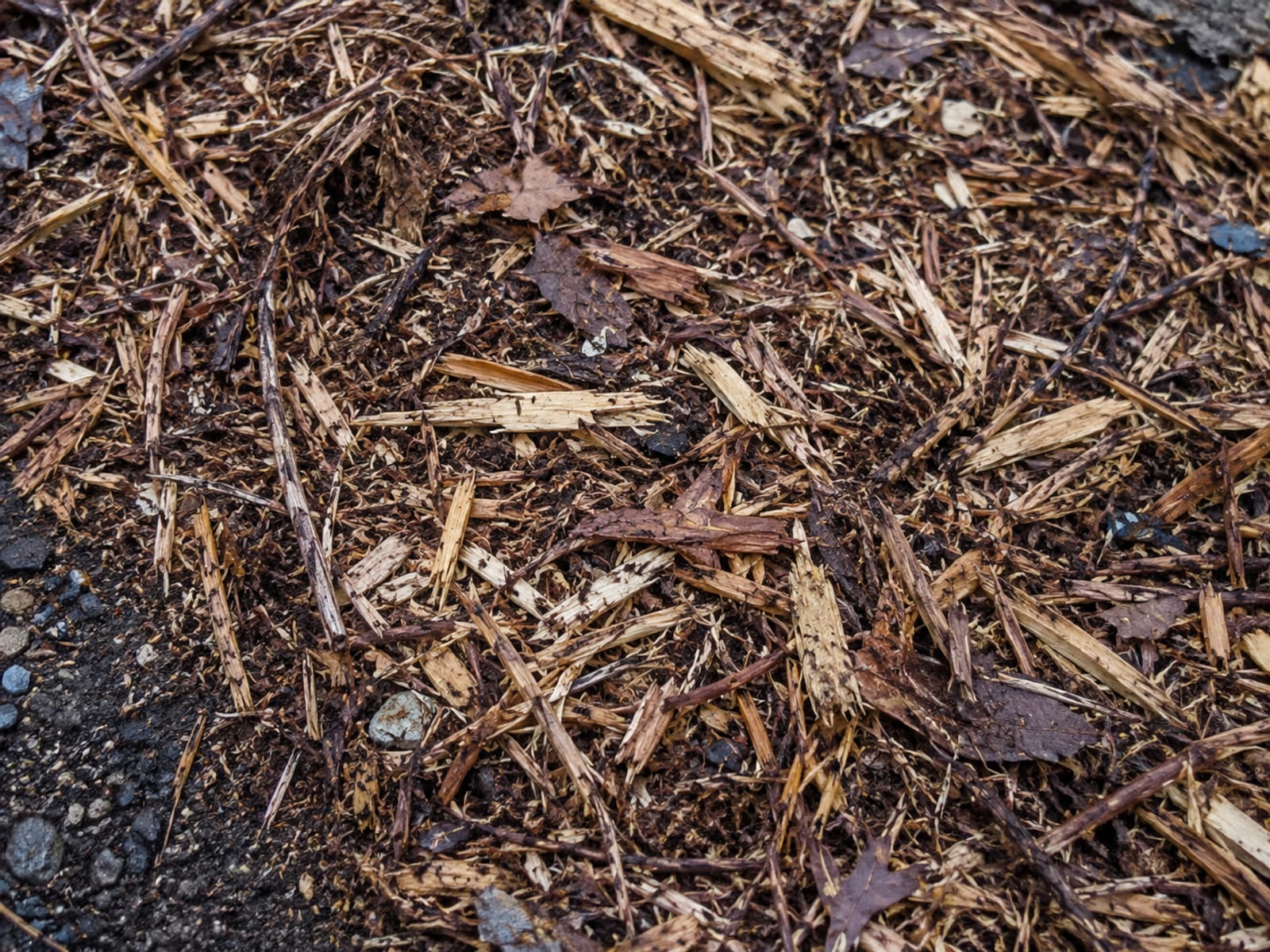
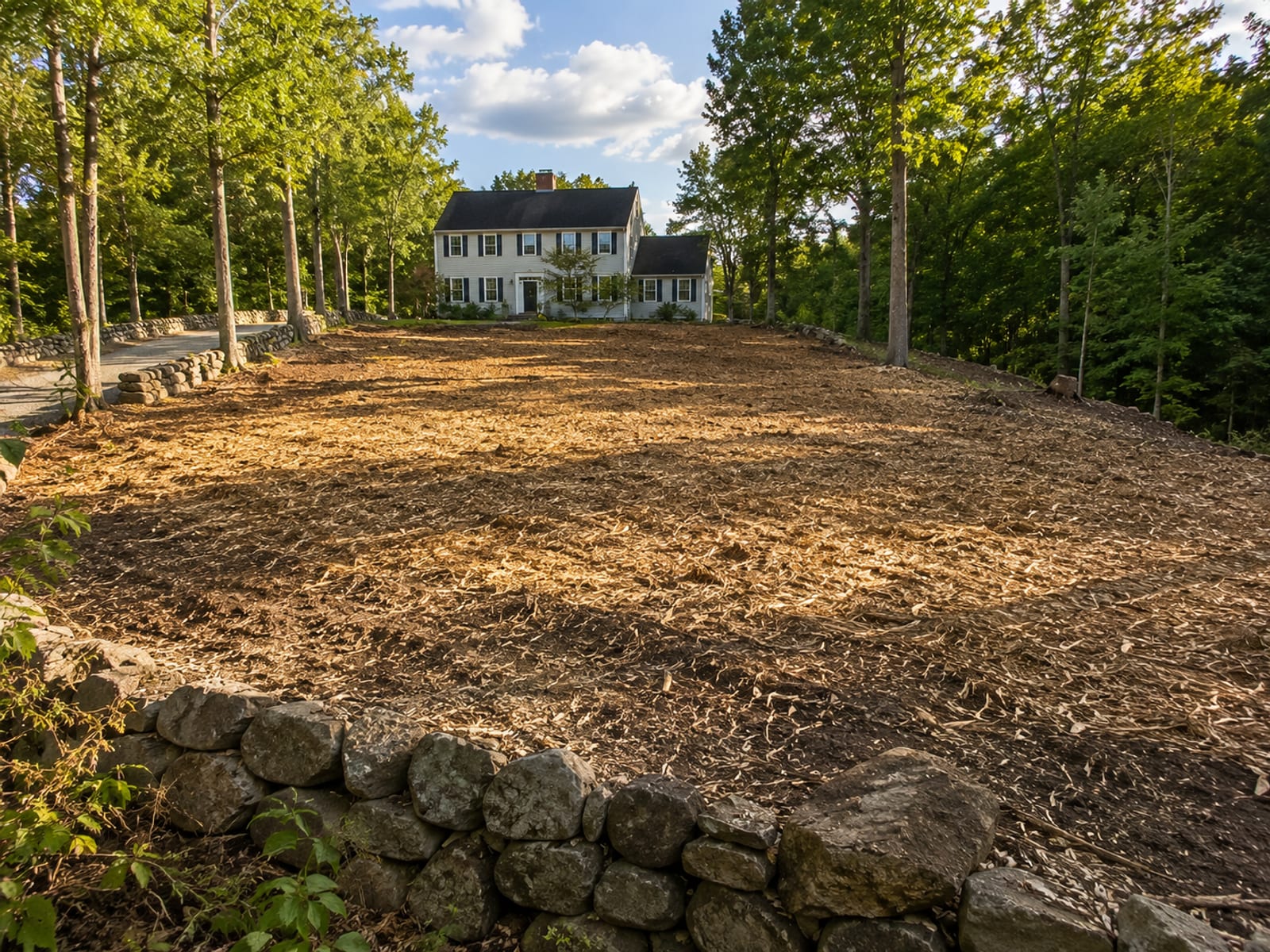
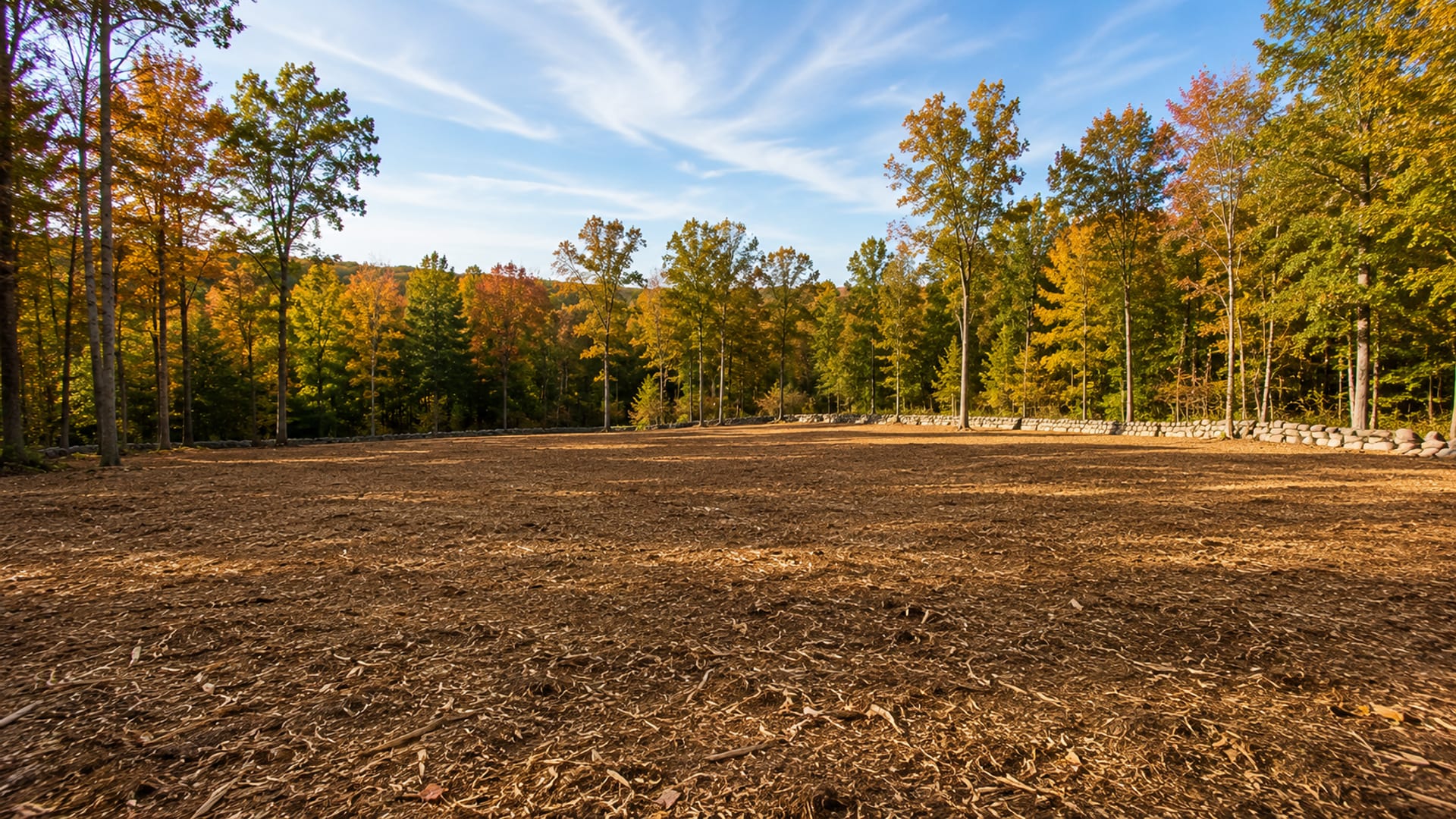
Forestry mulching is a land clearing method that uses a single piece of heavy equipment fitted with a rotating drum head to grind trees, brush, saplings, and invasive vegetation down to ground level in one pass. The machine cuts, shreds, and spreads the material right where it stands, leaving a layer of wood chip mulch on the surface instead of a pile of debris that needs hauling. What you get at the end of the day is cleared land with the soil still intact, covered by an organic layer that holds moisture, slows erosion, and breaks down over time.
For property owners in Oxford, Southbury, Newtown, and the surrounding towns, this matters because wooded lots in western Connecticut rarely give you easy options. Dragging brush to a pile and running dump truck after dump truck is time-consuming and expensive. Burning comes with town permits and weather windows. Forestry mulching sidesteps both problems by keeping the material on site and finishing the work in far less time than conventional clearing methods. A crew from Prestige Property Maintenance can clear a significant stretch of overgrown land in a single day that would take a traditional cut-and-haul operation several days to complete.
This service works well for opening land before excavation or grading, clearing overgrown field edges and fence lines, controlling invasive shrubs like multiflora rose and autumn olive that have taken over pastures or lot margins, creating access paths for equipment or future driveways, and preparing ground for seeding or replanting. It is not a full substitute for stump grinding when root removal is needed, and it does not replace grading when the finished grade needs to be shaped. As the first step in a site preparation sequence, though, forestry mulching clears the way for everything that follows.
Why Forestry Mulching Works Better on Connecticut Properties
Connecticut's terrain creates real problems for land clearing crews. Glacial soils across Oxford, Woodbury, Monroe, Roxbury, and the Naugatuck Valley are full of buried boulders, ledge outcroppings, and clay-heavy ground that does not respond well to aggressive equipment. A skid steer or bulldozer pushing brush and trees across that kind of terrain can tear up topsoil, disturb drainage, and leave a rutted, eroded surface behind. Forestry mulching equipment is designed to work above the soil, grinding what grows rather than pushing it around, so the ground underneath stays far more stable.
Slopes add another layer of difficulty. Many residential lots in Seymour, Ansonia, Shelton, and Woodbridge have significant grade changes where exposed soil after clearing would wash immediately without some kind of cover. The mulch layer left behind by a forestry mulcher acts as a natural buffer, slowing surface water runoff and protecting the soil while the area is being evaluated for the next phase of work, whether that is grading, drainage installation, seeding, or excavation.
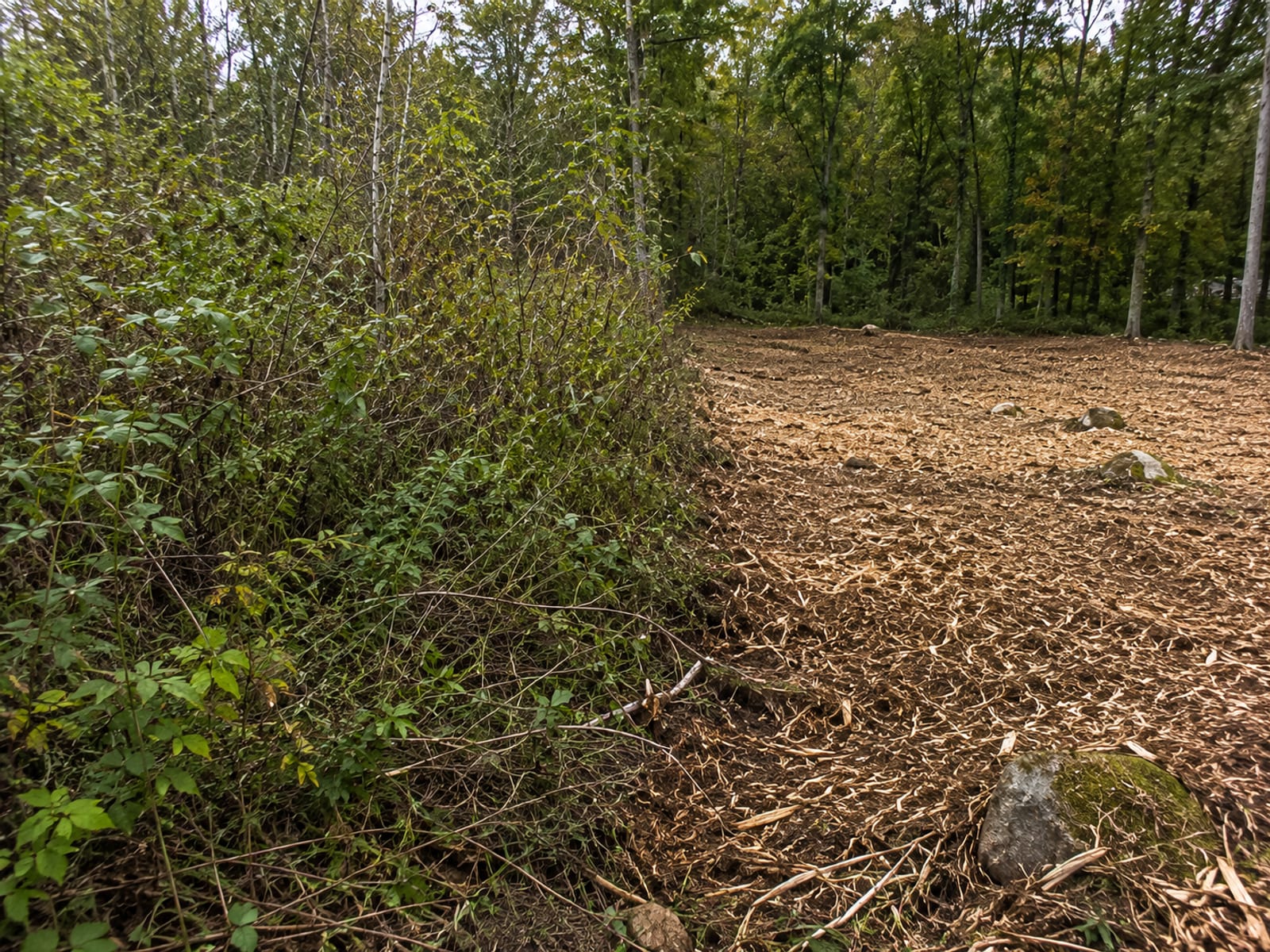
Invasive plant control is another reason this method fits Connecticut properties well. Shrubs like multiflora rose, bittersweet, and barberry have established themselves across thousands of acres of the state, and they grow back aggressively if just cut down. A forestry mulcher grinds the material thoroughly at ground level, which disrupts regrowth far more than cutting alone. Property owners dealing with overgrown fields or lot edges taken over by invasive growth often find forestry mulching the most practical way to reset the land to a manageable state.
Wetland proximity is a real consideration across this part of Connecticut. The state has an extensive inland wetlands review process, and properties near wetlands, watercourses, or regulated upland review areas may need to meet additional standards before clearing begins. Low-disturbance methods like forestry mulching, which avoid heavy soil disruption and leave organic ground cover in place, are often better suited to properties near sensitive areas than conventional clearing. Prestige Property Maintenance is familiar with the terrain and conditions across the 19-town service area, and we walk each property before any equipment moves.
How the Forestry Mulching Process Works
Every forestry mulching job at Prestige Property Maintenance follows the same sequence, because skipping steps is how projects go sideways on Connecticut's variable terrain.
Site Walk and Scope Review
Before any equipment rolls onto the property, we walk the site with you to identify what gets cleared and what stays. We check for wetlands, watercourses, stone walls, buried utilities, septic system locations, and any trees marked for preservation. Property lines are confirmed so nothing gets touched that should not be touched. Access routes are planned to minimize ground disturbance getting the machine in and out.
Area Marking and Preparation
Work zones are marked clearly before the mulcher starts. Any trees that require separate removal rather than grinding, such as large hardwoods or hazardous trees near structures, are flagged for a different step in the project. If the job is part of a larger site preparation sequence that includes grading, drainage, or excavation, we confirm the clearing boundaries against those plans before we begin.
Mulching Operation
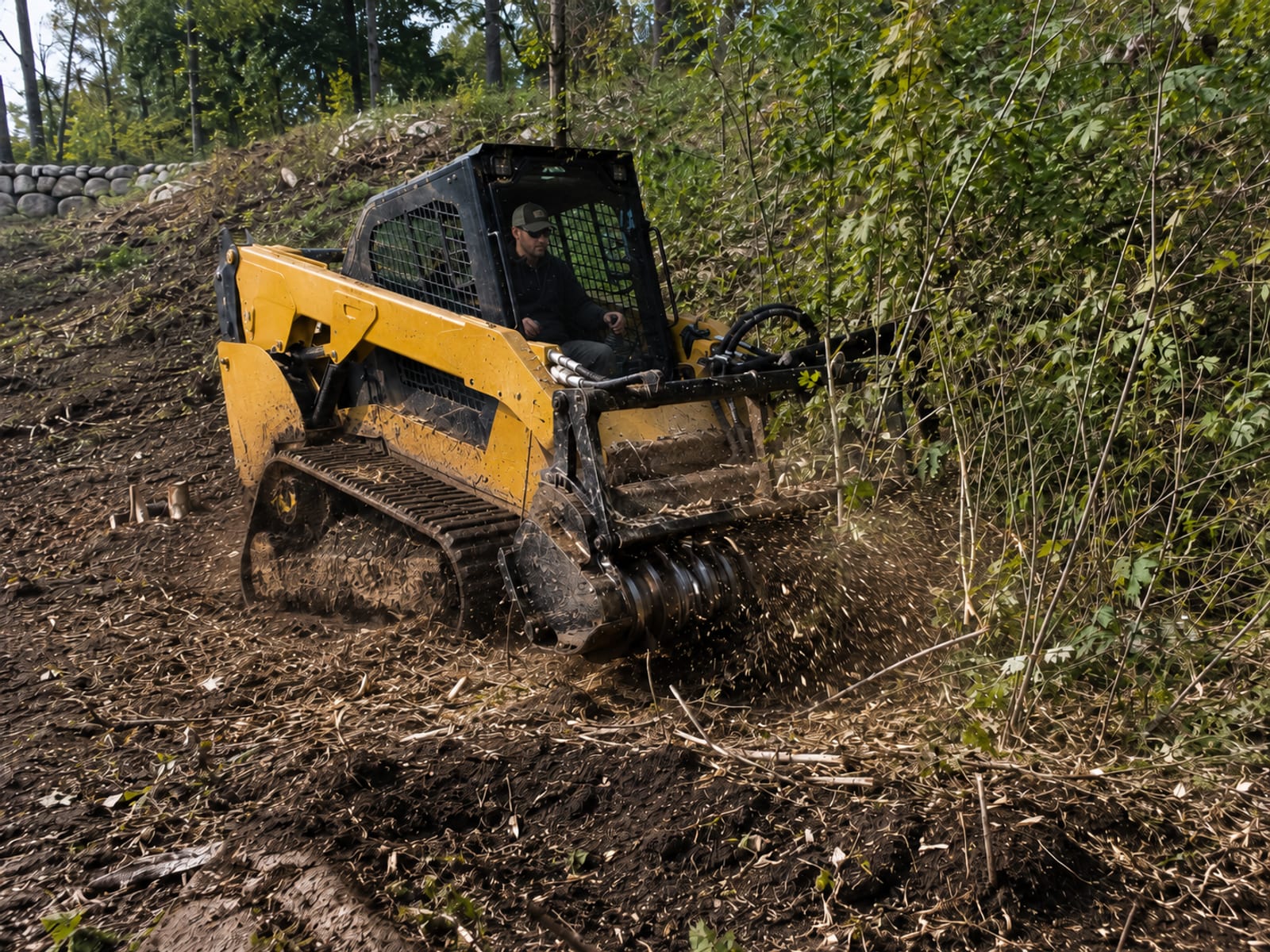
The tracked forestry mulcher works systematically through the clearing area, grinding brush, saplings, invasive shrubs, and smaller trees close to ground level. The carbide-tipped drum head processes the material on contact and spreads it across the cleared surface as it moves. Operators work carefully around marked boundaries, avoid unnecessary passes over stable soil, and adjust as terrain and vegetation size changes across the property.
Site Review and Cleanup
After mulching is complete, we walk the cleared area to confirm the work matches the agreed scope. The mulch layer left behind is discussed with you: what it does for erosion protection, roughly how long it takes to break down, and whether follow-up work like grading, seeding, drainage, or stump grinding fits your plans. If the mulching is the first phase of a larger project, this walkthrough sets the stage for scheduling the next crew or equipment.
What Forestry Mulching Can and Cannot Do
Forestry mulching is the right tool for a lot of situations, but knowing where it ends and another service begins saves time and avoids surprises.
Clears Brush and Saplings Fast
Forestry mulching handles dense brush, invasive shrubs, saplings, and small-to-medium trees efficiently in a single pass. It is the fastest way to open overgrown land without hauling a debris pile off the property.
Leaves Soil Stable
Because the mulcher works above the soil surface rather than pushing material across it, topsoil stays in place. This is especially useful on sloped lots and properties near wetlands where soil disturbance creates erosion and runoff problems.
Keeps Material On Site
No dump trucks, no burn permits, no debris removal cost. The chipped material stays on your property as ground cover, which is a practical advantage on rural and semi-rural lots where hauling out heavy loads over a long driveway adds real cost to a clearing job.
Pairs With Other Services
Forestry mulching is frequently the first step in a broader project. After clearing, Prestige Property Maintenance can follow up with stump grinding, rock removal, grading, drainage installation, driveway excavation, or retaining wall construction, all under one contractor without a scheduling hand-off.
Not a Replacement for Stump Grinding
A forestry mulcher processes material above grade and grinds stumps at or near the surface, but it does not remove root systems the way a dedicated stump grinder does. If you need ground that can be graded smoothly, built over, or seeded without stump regrowth, stump grinding is the right follow-up step.
Learn more about Stump GrindingNot a Grading Solution on Its Own
Forestry mulching levels the vegetation, not the land. If your property has drainage problems, uneven grade, or low spots that hold water, grading and drainage work needs to follow the clearing phase. The two services work together, but one does not replace the other.
Learn more about GradingPermits and Regulations: What to Know Before You Clear
One of the most common questions property owners ask is whether they need a permit for forestry mulching. The honest answer is that it depends on your specific property and town. Connecticut regulates clearing activity differently based on whether work is near wetlands, watercourses, upland review areas, steep slopes, or connected to a development project. Some general forestry activities in wetland areas may be allowed without formal approval, but that exemption does not cover every clearing situation, and individual towns have their own inland wetlands commissions and zoning rules that may apply.
Properties near wetlands or watercourses are where this gets most complicated. If your lot has a stream, pond, swamp, or regulated upland buffer, clearing near those areas may trigger a review process through your town's inland wetlands commission or through CT DEEP. It is worth checking with local zoning and inland wetlands offices before starting any significant clearing work, particularly if the project involves development activity that disturbs more than a threshold acreage of soil.
The invasive plant angle is also worth knowing. Equipment, mulch, topsoil, and debris that has been in contact with invasive plant material can spread seeds and root fragments to clean areas of your property or neighboring land. Connecticut has published best management practices for moving mulch and equipment through sites with invasive species. Prestige Property Maintenance works with that in mind, particularly when moving between cleared zones on larger properties.
We do not make blanket claims about what permits you will or will not need, because that varies by town, site, and project scope. What we do is walk the property, identify any conditions that look like they could trigger a review, and make sure you know what to check before the machine starts.
Why Work With Prestige Property Maintenance for Forestry Mulching?
Most local excavating contractors can dig and grade. Fewer have forestry mulching equipment on hand and the site experience to run it correctly across western Connecticut's variable terrain. Prestige Property Maintenance has been working on properties across Oxford, Derby, Bethany, Seymour, Ansonia, Shelton, Monroe, Bridgewater, Roxbury, Woodbury, Middlebury, Southbury, Naugatuck, Woodbridge, Prospect, Newtown, Oakville, Watertown, and Wolcott long enough to know what this ground tends to throw at you: ledge just below the surface, clay that turns to soup after rain, slopes that look stable until equipment gets on them, and buried stone that does not show up until the work is already underway.
Forestry mulching is also rarely the only thing a property needs. If you are clearing land for a future build, a driveway extension, a drainage fix, or just to get an overgrown lot back under control, the work that comes after the clearing matters just as much as the clearing itself. Prestige Property Maintenance handles the full sequence: tree removal, forestry mulching, stump grinding, rock removal, grading, drainage, retaining walls, excavation, and paving prep. You work with one crew, one point of contact, and one schedule instead of lining up three or four separate contractors who have to hand the project off between them.
We are licensed and insured, and we pull proper permits where the job requires them. Practical local knowledge, the right equipment for Connecticut's terrain, and the ability to carry a project from raw overgrown lot through to finished grade is what sets Prestige Property Maintenance apart from a contractor who only handles one part of the job and leaves the rest to you.
Forestry Mulching FAQ
Answers to the questions property owners across Connecticut ask most often before scheduling a forestry mulching job.
How is forestry mulching different from land clearing with a bulldozer?
A bulldozer pushes vegetation and topsoil together, which disturbs the soil profile and often creates piles of mixed debris that need to be sorted or hauled. A forestry mulcher grinds vegetation in place without moving the soil underneath it, leaving the ground surface far more stable and eliminating the hauling step entirely. On rocky or sloped Connecticut properties, the reduced soil disturbance makes a meaningful difference in how much cleanup and repair work is needed after clearing.
Can forestry mulching handle large trees?
Forestry mulching equipment handles brush, saplings, invasive shrubs, and smaller trees well, but larger hardwoods with significant diameter are typically beyond what a mulcher can process efficiently. Trees above a certain size are usually handled through separate tree removal before the mulcher comes through. On mixed properties with both heavy timber and dense understory growth, a combined approach of tree removal followed by forestry mulching often works best.
Will the mulch layer left behind cause problems for grading or construction later?
A freshly mulched area with a ground-level chip layer is compatible with most follow-up work. The mulch breaks down over time and does not typically interfere with grading, drainage installation, or excavation that follows. If you are planning a concrete or asphalt surface directly over the cleared area, the mulch layer would need to be incorporated into the grading and sub-base preparation step. This is something we cover during the site walk so there are no surprises when the next phase begins.
Does forestry mulching kill invasive plants or do they grow back?
Forestry mulching disrupts invasive shrubs and brush much more effectively than cutting alone because the material is ground thoroughly at ground level rather than just cut off at the stem. However, aggressive invasives like multiflora rose and bittersweet can regenerate from root material left in the soil, and some properties require follow-up treatment in the growing season after clearing. For heavily invaded areas, it is reasonable to plan for at least one follow-up evaluation to assess regrowth and decide whether additional clearing or chemical treatment is warranted.
Do I need to be home during the forestry mulching work?
You do not need to be on site during the work itself, but the site walk before the job starts is worth doing together. That walkthrough is where boundary lines, trees to preserve, access routes, septic locations, and any sensitive areas get confirmed in person. Getting those details straight before equipment arrives saves time and prevents the kind of misunderstanding that is much harder to fix after the machine has already been through.
How long does a typical forestry mulching job take?
Project time depends on the size of the area, the density of vegetation, terrain difficulty, and what the access situation looks like getting equipment onto the property. A modest lot clearing of a quarter to half an acre of brush and saplings can often be completed in a single day. Larger acreage projects, heavily wooded areas, or jobs with tight access routes take longer. We give you a realistic timeframe after the site walk, not a number pulled from a formula.
Can forestry mulching be done near a wetland on my property?
Work near wetlands, watercourses, or regulated upland review areas may require review through your town's inland wetlands commission before it proceeds. Forestry mulching is a lower-disturbance method compared to conventional clearing, which can be a factor in how that review goes, but it does not automatically make the work permit-free. We identify wetland proximity during the site walk and let you know what local approvals may be worth checking before we schedule the job.
Get a Quote for Forestry Mulching on Your Property
Call (203) 258-3395 or email dig@prestigectexcavation.com to schedule your site walk. Prestige Property Maintenance serves 19 towns across the Naugatuck Valley and western Connecticut, Monday through Saturday, 7AM to 5PM.