Site Preparation & Excavation
Grading Services in Connecticut That Get the Ground Right
Prestige Property Maintenance handles precision grading across 19 towns in western Connecticut, from rough cuts on raw land to finish work that sets up drainage, driveways, and construction. When the grade is wrong, everything built on top of it pays the price.
What Is Grading and What Do You Actually Get?
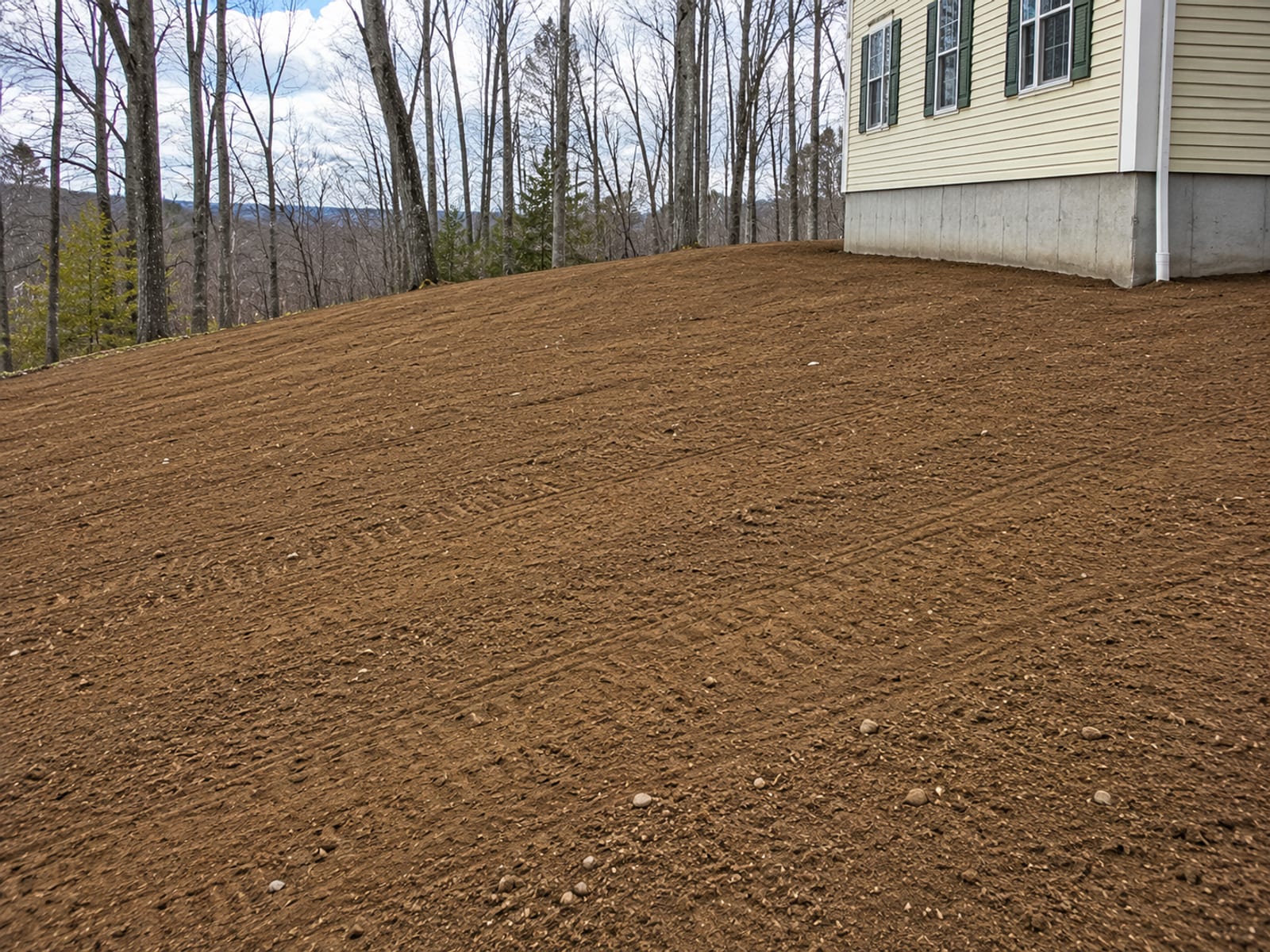
Grading is the process of reshaping the ground surface to a specific slope, level, or contour so that water drains where it should, structures sit on solid ground, and the site is ready for whatever comes next. For a homeowner in Oxford or Southbury, that might mean leveling a yard that pools after every rain, cutting a proper base for a new driveway, correcting a slope that sends water toward the foundation, or finishing a disturbed area after excavation. The result is a stable, properly pitched surface that solves a real problem and holds up long-term.
Grading at the residential level covers a wider range of work than most people expect. Rough grading moves large volumes of soil to establish the general shape of a site, usually after clearing or excavation. Finish grading refines the surface so it meets a specific pitch, grade stake, or elevation. Driveway base grading prepares the sub-base for stone or paving. Foundation backfill grading slopes soil away from the home to protect the structure. Drainage correction grading cuts swales or regrads flat areas to move standing water out. Each type requires different machine work, different materials, and different outcomes, and Prestige Property Maintenance handles all of them.
Why Does Proper Grading Matter So Much on Connecticut Properties?
Connecticut's terrain creates grading challenges that are not common in flatter states. Western CT towns like Monroe, Woodbury, Roxbury, and Newtown have rocky, glacial soil with heavy clay content, buried boulders, ledge close to the surface, and natural slopes that complicate almost any ground-level project. When grading is done without accounting for those conditions, the results tend to show up fast: driveways that wash out, yards that stay wet for days after a storm, soil that settles unevenly under a patio or addition, and foundation walls that take on water from soil pitched the wrong way.
Slope and water management are directly connected. A properly graded yard moves water away from the house and toward a natural outlet or drainage system, rather than letting it pool against the foundation, soak into driveways, or sheet across neighboring property. On steeper lots, grading also ties into retaining wall work and erosion control, because moving soil on a slope without stabilizing it creates new problems. Addressing the pitch of the ground affects every other improvement on the property, which is why it makes sense to get it right before pouring concrete, laying stone, or seeding a lawn.
What Problems Does Grading Fix on a Residential Property?
Most homeowners call about grading because something is already going wrong. These are the most common situations where precision grading solves the problem at the source.
Standing Water and Yard Drainage
Flat or low-lying areas that hold water after rain create soggy turf, muddy paths, and long-term soil saturation that kills grass and softens the ground under hardscape. Regrading the surface to create positive pitch moves that water toward a proper outlet instead of letting it sit.
Water Running Toward the Foundation
Soil that slopes toward a home rather than away from it pushes water against the foundation wall with every rain event. Correcting the grade around the perimeter creates the slope needed to send water outward, which reduces basement moisture, efflorescence, and long-term water intrusion.
Driveway Washout and Ruts
Driveways that lack a proper crown or cross-slope let water run down the center or sit in low spots, which eats away the stone base, creates ruts, and eventually undermines the driving surface. Regrading the driveway profile restores drainage and gives the base a chance to hold.
Uneven Ground After Excavation or Construction
Any time ground is disturbed for a foundation, pool, septic system, or utility trench, the surrounding area ends up rough and uneven. Finish grading after excavation smooths the site, establishes proper drainage, and prepares it for seed, stone, sod, or hardscape installation.
Learn more about ExcavationErosion on Sloped Areas
Slopes that have lost vegetation or been disturbed by construction shed topsoil every time it rains. Grading the slope to a stable angle, combined with seeding or erosion control measures, stops that soil loss before it creates a bigger problem lower on the property or in a nearby watercourse.
New Construction Site Preparation
Before a foundation goes in, before a driveway is paved, and before any patio or outdoor structure is built, the sub-grade needs to be at the right elevation and compacted to spec. Grading brings the site to that point and gives the construction crew a clean surface to work from.
Learn more about Site PreparationHow Does the Grading Process Work?
Every grading job at Prestige Property Maintenance starts with a site walk, not a truck and a blade. Understanding what the ground is doing, where it needs to go, and what is underneath it determines every decision from that point forward.
Site Assessment and Goal Confirmation
The crew walks the property to read existing slope, spot drainage patterns, note access points, identify any utilities, septic components, or structures that need protection, and confirm what the grading is meant to accomplish. A yard drainage fix looks different from a driveway base prep, and the plan needs to match the outcome. Utilities are marked through Connecticut's Call Before You Dig system before any ground is broken.
Permits and Regulatory Review
Grading requirements vary by town and project scope across Connecticut. Work near wetlands, watercourses, road rights-of-way, or on larger disturbed areas may trigger permit requirements through the local building department, inland wetlands commission, or CT DEEP stormwater rules. Prestige Property Maintenance helps clients understand what applies to their project before machines arrive on site.
Topsoil Management and Rough Grading
On projects where topsoil is present and worth saving, it gets stripped and set aside before the rough grade work starts. Rough grading moves the larger volumes of soil, cuts high spots, fills low areas, and reshapes the general surface to the target elevation or slope. This phase is where most of the material moves, and where Connecticut's rocky soil and buried ledge tend to show up and require adjustment.
Learn more about GradingPrecision Slope and Drainage Pitching
Once the rough shape is established, the work shifts to setting the correct pitch across the graded area. This means establishing a consistent slope away from structures, creating crown on driveways, cutting swales where water needs to be directed, and making sure low points drain toward an outlet rather than holding in place. This is the part of grading that directly determines whether water behaves the way it should.
Compaction and Sub-Base Preparation
For areas that will carry a load, whether a driveway, a building, or a patio, compaction is part of the grading process. Soil is compacted in layers so the base is stable and will not settle unevenly after the fact. This step is what separates a grading job done for appearance from one done for structural performance.
Finish Grading and Site Stabilization
Finish grading brings the surface to its final form, whether that is a clean sub-grade ready for paving, a smooth yard surface ready for seed or sod, or a stable backfill slope ready to be planted. Disturbed areas that will not be paved or covered right away get stabilized to prevent erosion until vegetation is established.
Learn more about GradingWhy Grading Works Better When It's Part of a Bigger Plan
One of the most common mistakes on residential projects is treating grading as a standalone step rather than connecting it to everything else happening on the site. When grading is planned alongside excavation, drainage installation, retaining wall construction, or driveway work, the whole project moves in sequence without gaps, without rework, and without the property sitting half-finished between contractor handoffs.
Prestige Property Maintenance handles grading as part of the full site sequence. If a project starts with land clearing and runs through grading, drainage, and driveway prep, the same crew manages each phase. There is no waiting on a separate tree service, no scheduling a different contractor for French drain installation, and no misalignment between what one trade leaves behind and what the next trade needs. For homeowners across Shelton, Seymour, Naugatuck, and the surrounding towns, that single-crew approach cuts the time a project sits between stages and reduces the chance of something being done differently than planned.
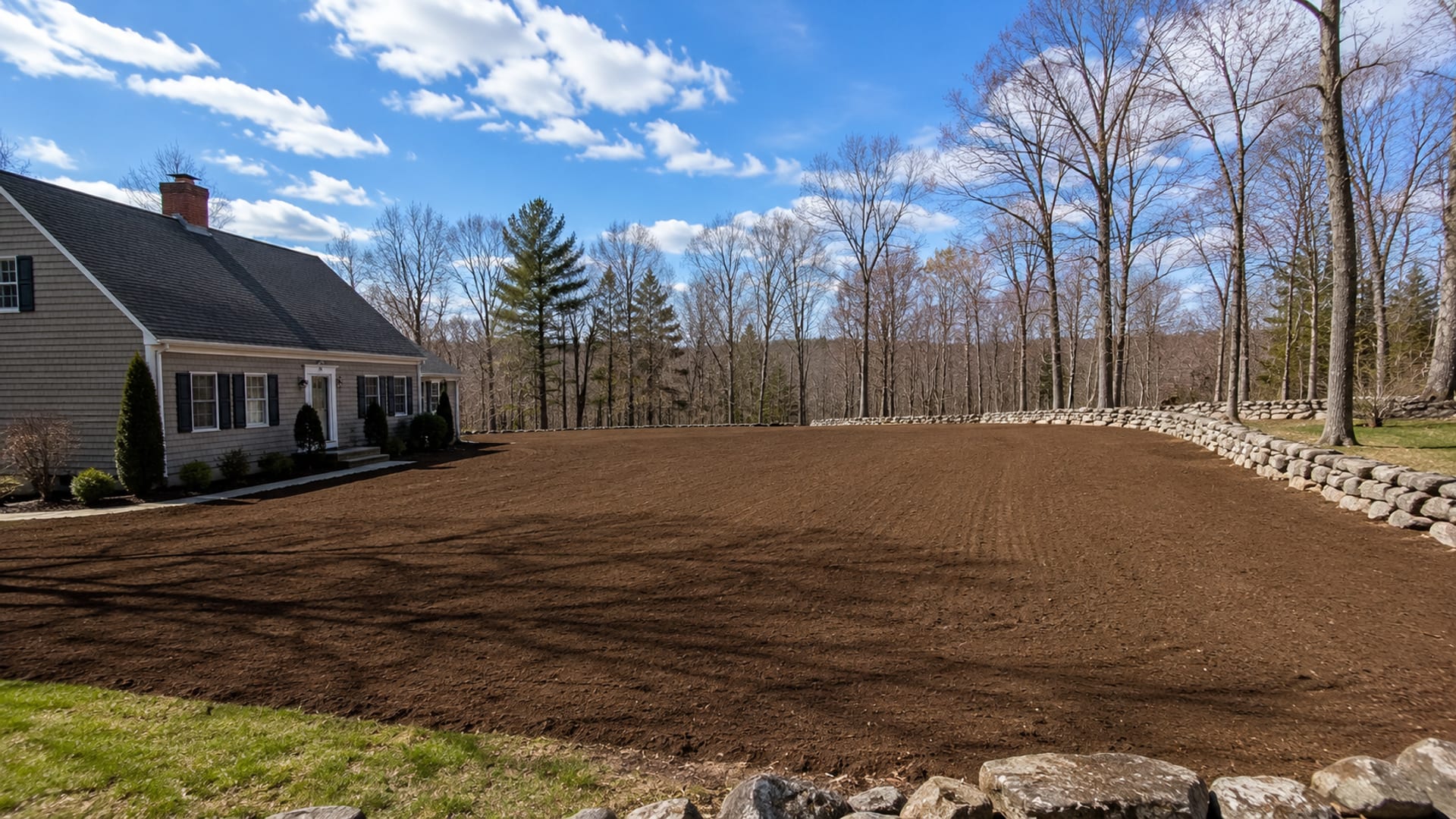
Grading that is designed with drainage in mind also tends to perform better over time. When the grade, the swale locations, and any pipe or catch basin placements are coordinated before the first machine moves, the finished site manages water as a system rather than as a collection of independent fixes. That kind of planning makes a real difference on sloped, wooded, or rocky Connecticut lots where water has a lot of ways to go wrong.
Why Property Owners in Western CT Choose Prestige Property Maintenance for Grading
Grading in this part of Connecticut is not straightforward. Rocky glacial soil, buried ledge, heavy clay, and irregular topography mean crews have to adapt as the job unfolds. Prestige Property Maintenance has worked across 19 towns in the Naugatuck Valley and western Connecticut since 2015, and that local ground knowledge makes a practical difference on every project. When a machine hits ledge under what looked like a clean loam surface, the crew knows what that means for the grade plan and how to adjust without starting over.
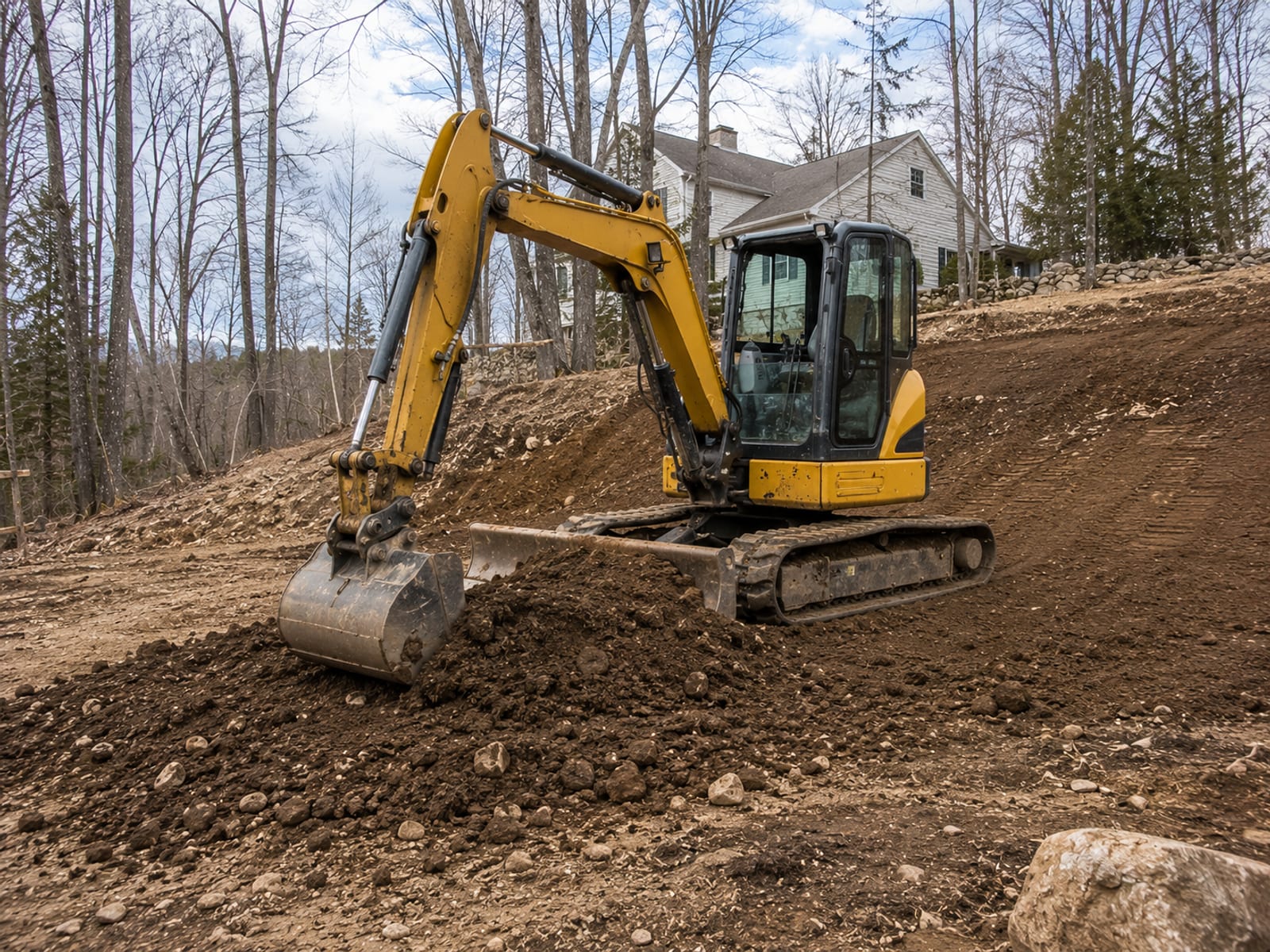
The equipment fleet covers the range of grading work that comes up on residential and commercial properties. Compact tracked machines handle tight lots with finished lawn, narrow access, and slopes where a full-size dozer would cause damage. Larger equipment handles bulk earth moving, site clearing, and heavy rough grading on open parcels. Having that range on one crew means the right machine shows up for the actual conditions rather than the contractor working around whatever they happen to own.
Licensed and insured, Prestige Property Maintenance serves Oxford, Woodbury, Naugatuck, Ansonia, Shelton, Newtown, Woodbridge, and Wolcott, along with the full 19-town service area across western Connecticut. Call (203) 258-3395 or email dig@prestigectexcavation.com to schedule a site visit.
Grading FAQs
These are the questions that come up most often when homeowners are figuring out whether grading is what they actually need and what to expect from the process.
What is the difference between rough grading and finish grading?
Rough grading is the major earth-moving phase where bulk soil is cut, filled, and shaped to get the site close to the target elevation and slope. Finish grading comes after, refining the surface to its final form for seeding, paving, or construction. Both phases require different equipment and operator attention, and skipping or rushing the rough grade makes the finish grade harder and less stable.
Does grading require a permit in Connecticut?
It depends on the town and the scope of work. Some Connecticut municipalities require permits for excavation, earth removal, or filling above a certain volume, and projects near wetlands, watercourses, or road rights-of-way typically require additional review. Work that disturbs a significant area may also fall under CT DEEP stormwater requirements. Prestige Property Maintenance helps clarify what applies before any work begins so there are no surprises mid-project.
How do I know if I need grading or a drainage system, or both?
Many drainage problems start with a grade issue, and fixing the grade alone solves them. But on properties where the natural topography does not allow water to drain away from structures even with corrected grading, a drainage system, such as a French drain, catch basin, or surface swale, may need to be added alongside the grade correction. The two solutions often work together rather than one replacing the other.
Can grading fix water that comes into my basement?
If the soil around your foundation slopes toward the house rather than away from it, regrading the perimeter to create outward pitch is one of the first things to address. This is a direct cause of surface water intrusion in basements. Grading will not fix water that enters through hydrostatic pressure from a high water table or through cracks in the foundation wall, so it is worth diagnosing where the water is actually coming from before deciding on a fix.
What happens to the topsoil when an area is graded?
On projects where quality topsoil is present, it can be stripped before rough grading and spread back over the finished surface to support grass or planting. If the existing topsoil is thin, compacted, or mixed with fill, it may not be worth saving and can be incorporated into the grade instead. The decision depends on the soil conditions on that specific lot, which is something the crew assesses during the initial site walk.
How long does a typical grading project take?
A straightforward yard drainage regrading or driveway base prep on a residential lot can often be completed in a day or two. Larger site grading tied to excavation, land clearing, or new construction takes longer depending on the volume of material, site conditions, and whether rock removal is involved. Connecticut's rocky soil means timelines sometimes extend when ledge or buried boulders show up unexpectedly, which is one reason the site assessment before work begins matters.
Do utilities need to be marked before grading starts?
Yes, and this is not optional. Connecticut law requires utility notification through the Call Before You Dig system before any excavation or grading that breaks ground. Underground electric, gas, water, and sewer lines can be close to the surface on older properties, and grading without knowing their locations creates real risk. Prestige Property Maintenance follows this requirement on every project before machines go to work.
Schedule Your Grading Estimate
Get the ground right before the project goes any further.