Land Development & Clearing
Tree Removal in Oxford, CT and Surrounding Areas
Prestige Property Maintenance handles the safe felling and full removal of hazardous, damaged, and unwanted trees across 19 towns in western Connecticut, including complete limb and brush cleanup so the site is ready for whatever comes next.
What Does Tree Removal Include?
Tree removal is the complete process of felling a tree, cutting it into manageable sections, and clearing all limbs, brush, and debris from the site. When you hire Prestige Property Maintenance for tree removal, you get a crew that handles the whole job from the first cut through final cleanup, not just the tree itself. Most residential removals in western Connecticut are completed within a single day, depending on tree size, site access, and whether stump grinding or additional clearing is part of the scope.
This service covers the full removal of trees that are hazardous, storm-damaged, dead, leaning toward a structure, or in the way of a planned project. Whether you have one problem tree near your foundation or a stand of trees that needs to come down before grading and site prep can begin, the process is the same: assess the site, plan the work, remove the tree safely, and leave the area clean.
Prestige Property Maintenance serves homeowners, commercial property owners, and contractors across Oxford, Seymour, Ansonia, Shelton, Monroe, Bridgewater, Roxbury, Woodbury, Middlebury, Southbury, Naugatuck, Woodbridge, Prospect, Newtown, Oakville, Watertown, Derby, Bethany, and Wolcott.
When Should You Remove a Tree on Your Connecticut Property?
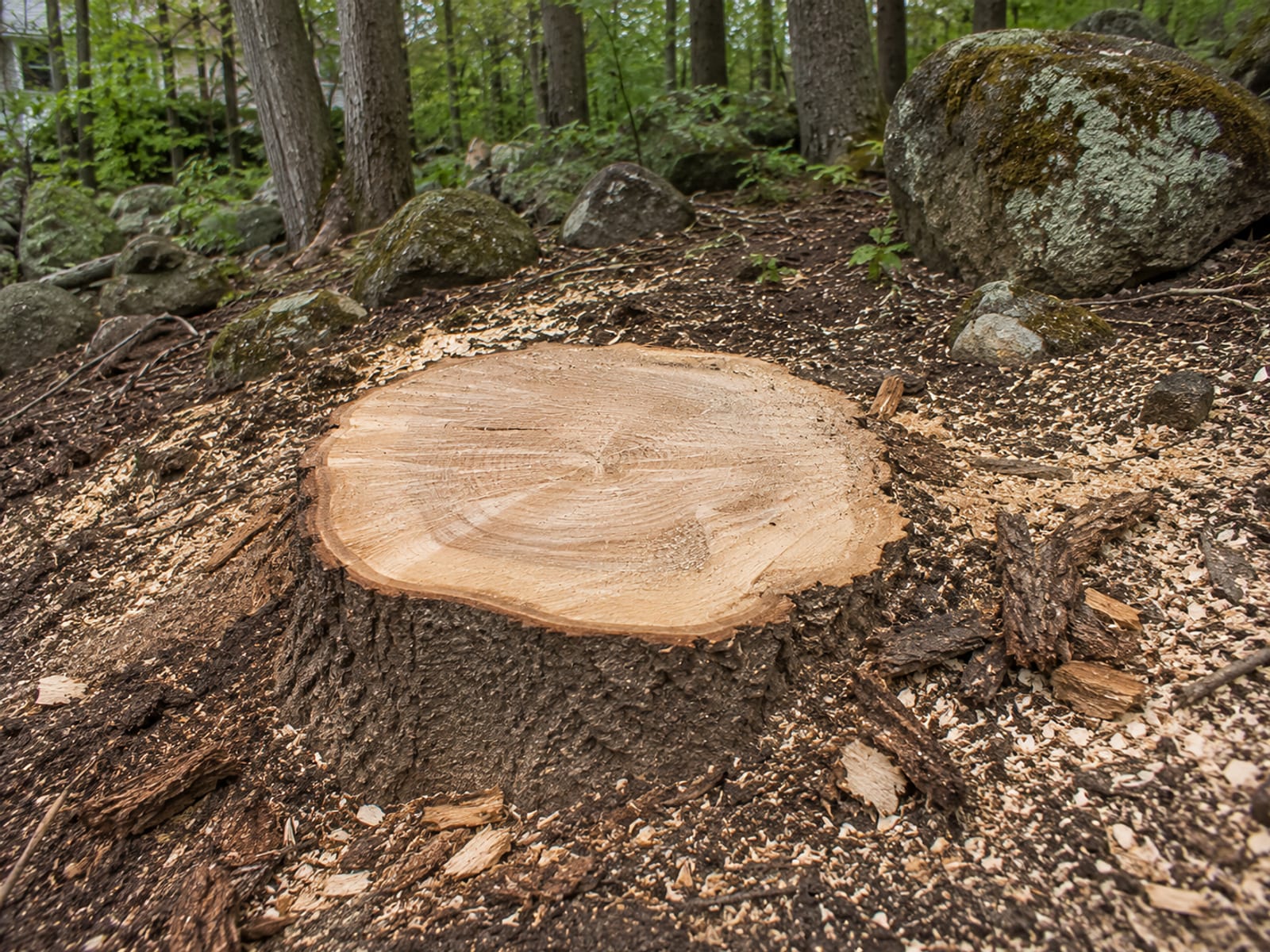
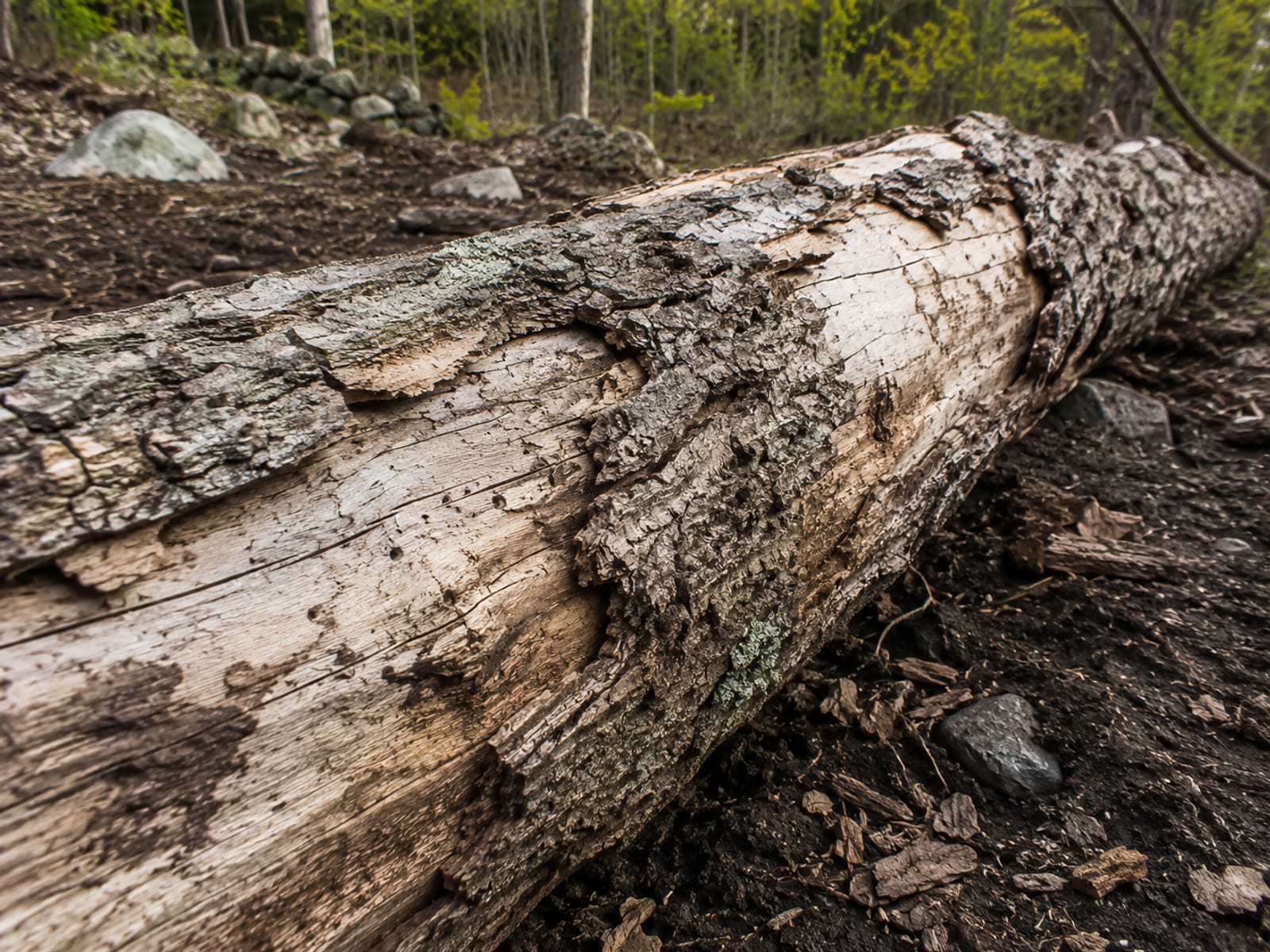
Not every tree that looks rough needs to come down, but several situations make removal the right call. A dead or dying tree loses structural integrity over time and can drop large limbs without warning, especially during the ice storms and nor'easters that hit western Connecticut hard. If the root system is lifting pavement, cracking a foundation, or growing into a septic system, removal protects your infrastructure before the damage gets worse.
Trees leaning toward a house, garage, or other structure are a practical liability, particularly on the steep, rocky lots common in towns like Oxford, Shelton, and Newtown. Storm damage that splits a major limb or cracks the trunk often leaves a tree in a condition where no amount of trimming makes it safe again. In those cases, full removal is the only answer.
Site preparation is another common reason. If you are planning an addition, a new driveway, a detached garage, a drainage correction project, or a full land clearing job, trees in the affected area need to come out before any equipment moves soil. Coordinating tree removal with excavation and grading through one contractor saves scheduling time and avoids the handoff between separate crews.
Invasive species are also a growing issue in Connecticut. Trees weakened by pests, or invasive species taking over a wood line, are often better removed as part of a clearing and land improvement project than left in place to continue spreading.
How Tree Removal Works: The Process from Site Visit to Cleanup
Every tree removal job at Prestige Property Maintenance follows a consistent process that accounts for site conditions, access, nearby structures, and what the property needs after the tree is gone.
Site Assessment
Before any work begins, the crew walks the site and reviews the tree's condition, lean direction, root zone, proximity to structures, utility lines, septic systems, and driveways. Connecticut properties in western towns often have buried boulders, ledge, and clay-heavy soil that affect where equipment can safely move, so this step shapes the entire removal plan. Access points, ground softness, and slope are all evaluated before work starts.
Hazard Identification and Utility Awareness
Overhead lines and underground utilities are identified before any felling or ground disturbance. When stump grinding or root work is part of the scope, utility marking requirements apply. The crew also identifies structural hazards on site, including damaged limbs overhead, unstable sections of the trunk, and proximity to neighboring property lines or structures.
Equipment Setup and Access
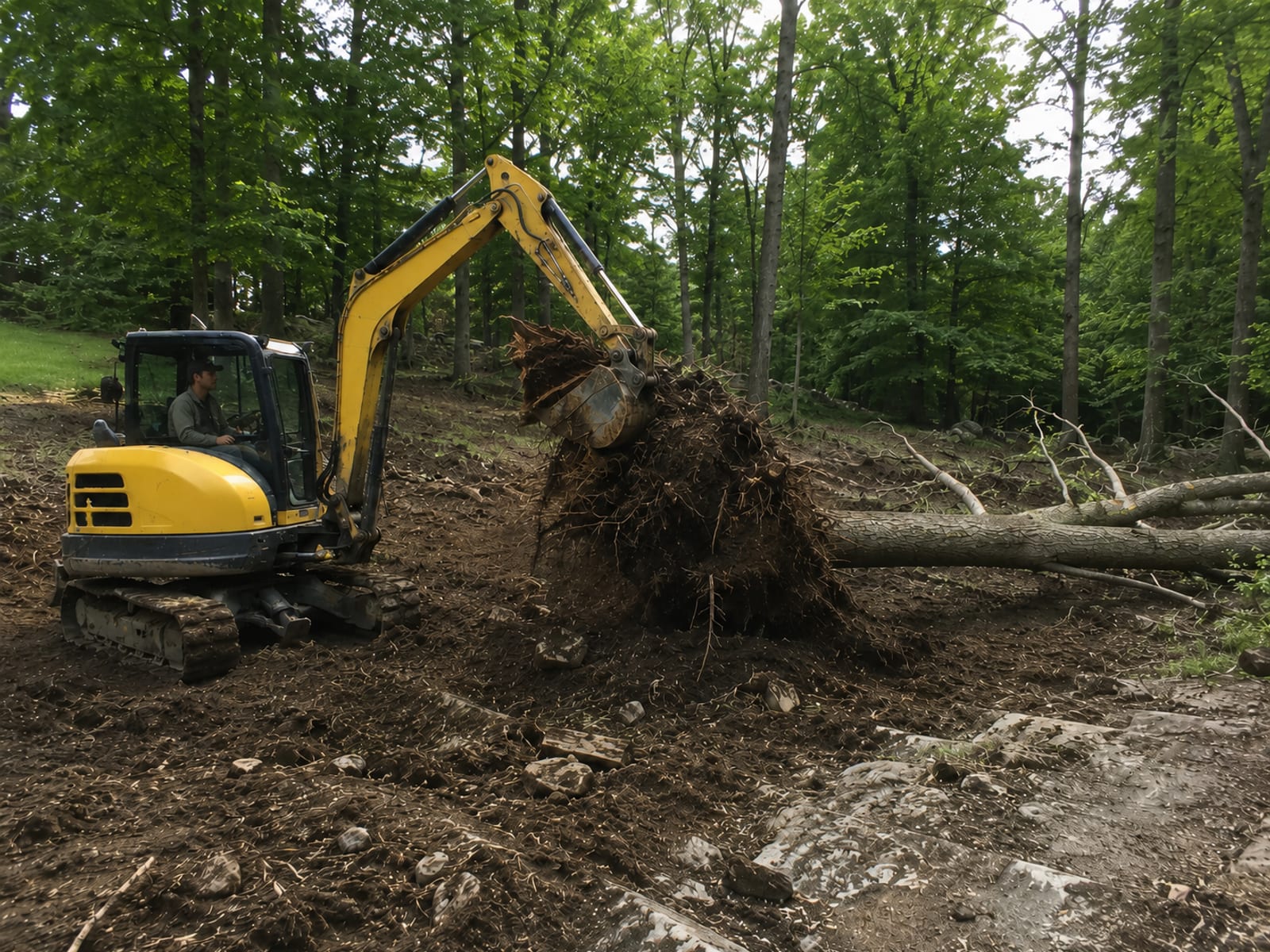
Depending on tree size and location, the crew positions equipment to handle the work safely without unnecessary damage to surrounding lawn, landscaping, or pavement. Tracked equipment and grapple attachments allow the team to work on softer ground and tighter access points common on semi-rural Connecticut lots. For larger trees, the work is staged in sections to control the direction and drop zone of each cut.
Felling and Section Work
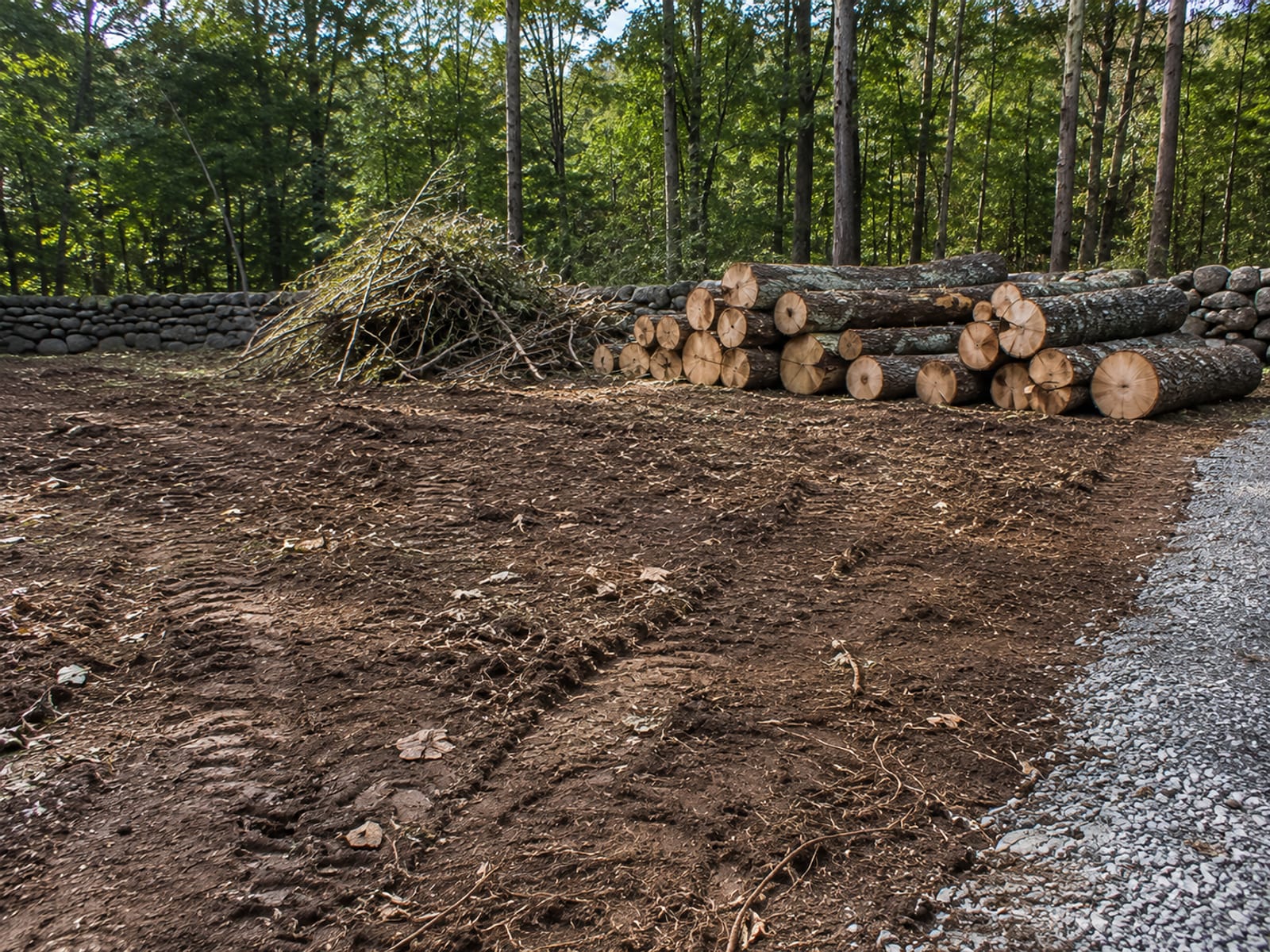
The tree is brought down either as a full fell or in sections depending on what the site allows. Large trunks are cut into sections that equipment can handle efficiently. Limbs and brush are separated from log wood during this phase so cleanup moves faster once the main tree is on the ground.
Debris Removal and Site Cleanup
All limbs, brush, and cut material are cleared from the site. Cleanup is included in every tree removal job, so you are not left with a pile of brush after the crew leaves. If the removal is part of a larger land clearing or site prep project, debris handling is coordinated with the rest of the work sequence.
Coordination with Next Steps
If your project continues into stump grinding, grading, drainage, or excavation, the same crew handles those steps without a scheduling gap. Working with a contractor that covers the full site development sequence makes a practical difference on your project timeline.
What Makes Tree Removal Harder in Western Connecticut?
Western Connecticut is not flat farmland. The towns Prestige Property Maintenance serves across the Naugatuck Valley sit on glacially deposited soil loaded with buried boulders, ledge rock, and heavy clay. That matters for tree removal because root systems in this region often grow around and through stone rather than straight down into soft soil. A tree that looks removable from the surface can have roots locked into ledge in ways that a crew unfamiliar with local conditions would not anticipate.
Access is another consistent challenge. Properties in Oxford, Roxbury, Bridgewater, and Woodbury tend to be larger, rural, and set back from the road on long driveways not built for heavy equipment. Getting the right equipment to the tree without damaging a gravel drive, a stone wall, or a soft wet area near a pond or wetlands edge requires route planning before the job starts.
Slope is a third factor. Many properties in this area have significant grade changes between the road and the house, or between the house and the back of the lot. Tree removal on a slope requires planning the fell direction and drop zone carefully, because the physics of a falling tree on angled ground differ from a flat-lot removal. Crews that work these properties regularly understand those conditions before a chainsaw is in hand.
Wetlands proximity is also real. Connecticut inland wetlands and watercourses regulations govern ground disturbance near wetlands, streams, and regulated upland review areas. When tree removal is near those areas, the work needs to account for those rules, particularly when the job is the first step in a larger excavation or grading project.
Tree Removal as Part of a Larger Site Project
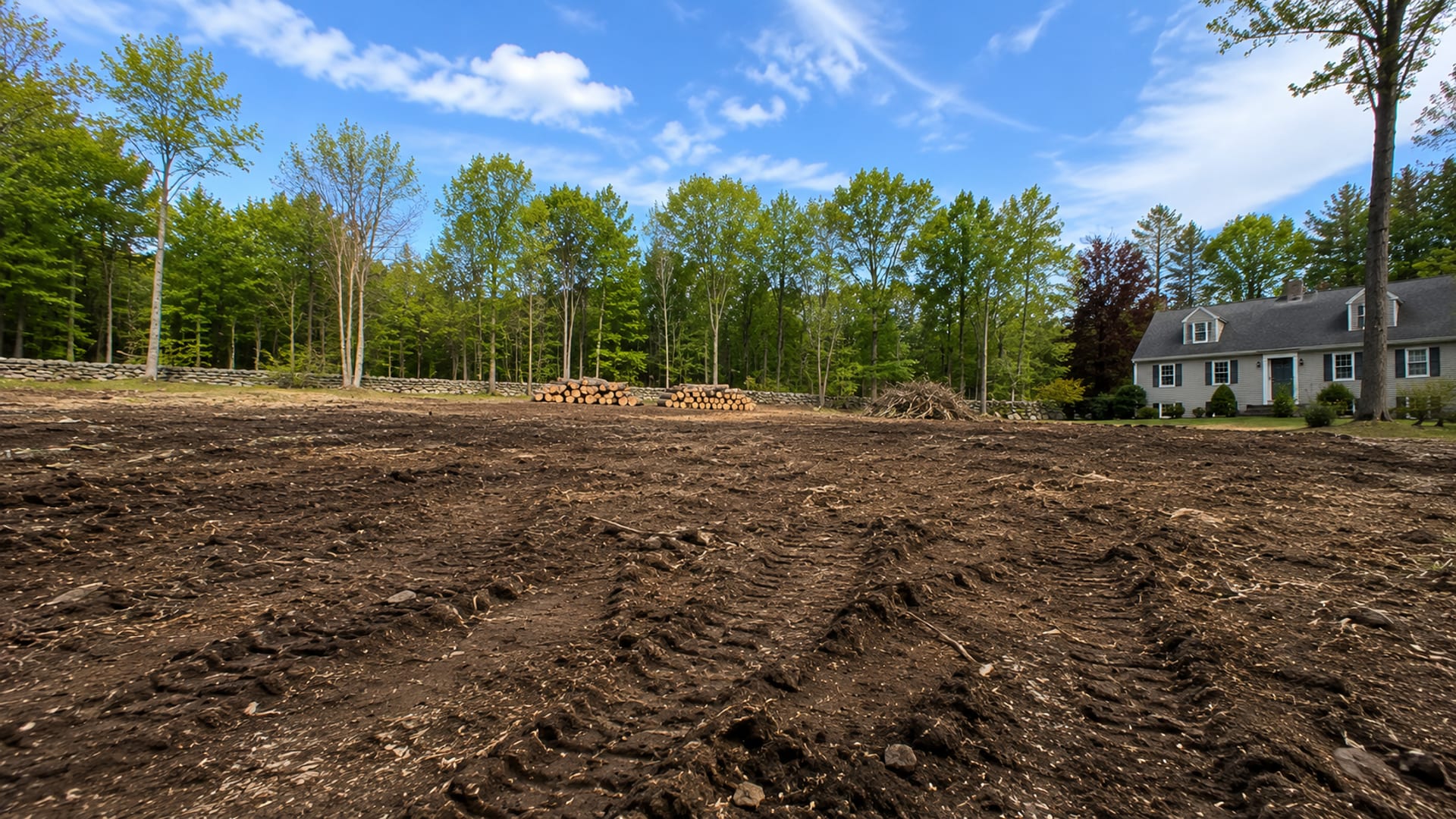
One of the most common mistakes homeowners make when planning a property improvement is treating tree removal as a separate phase to handle before calling an excavation contractor. That approach often works against the project. When the same contractor handles tree removal, stump grinding, land clearing, and site grading, the entire sequence is planned as one job. The crew knows what the finished grade needs to look like, which stumps need to come out below grade for equipment to work over them, and where debris can be processed on site using forestry mulching rather than hauled away in multiple loads.
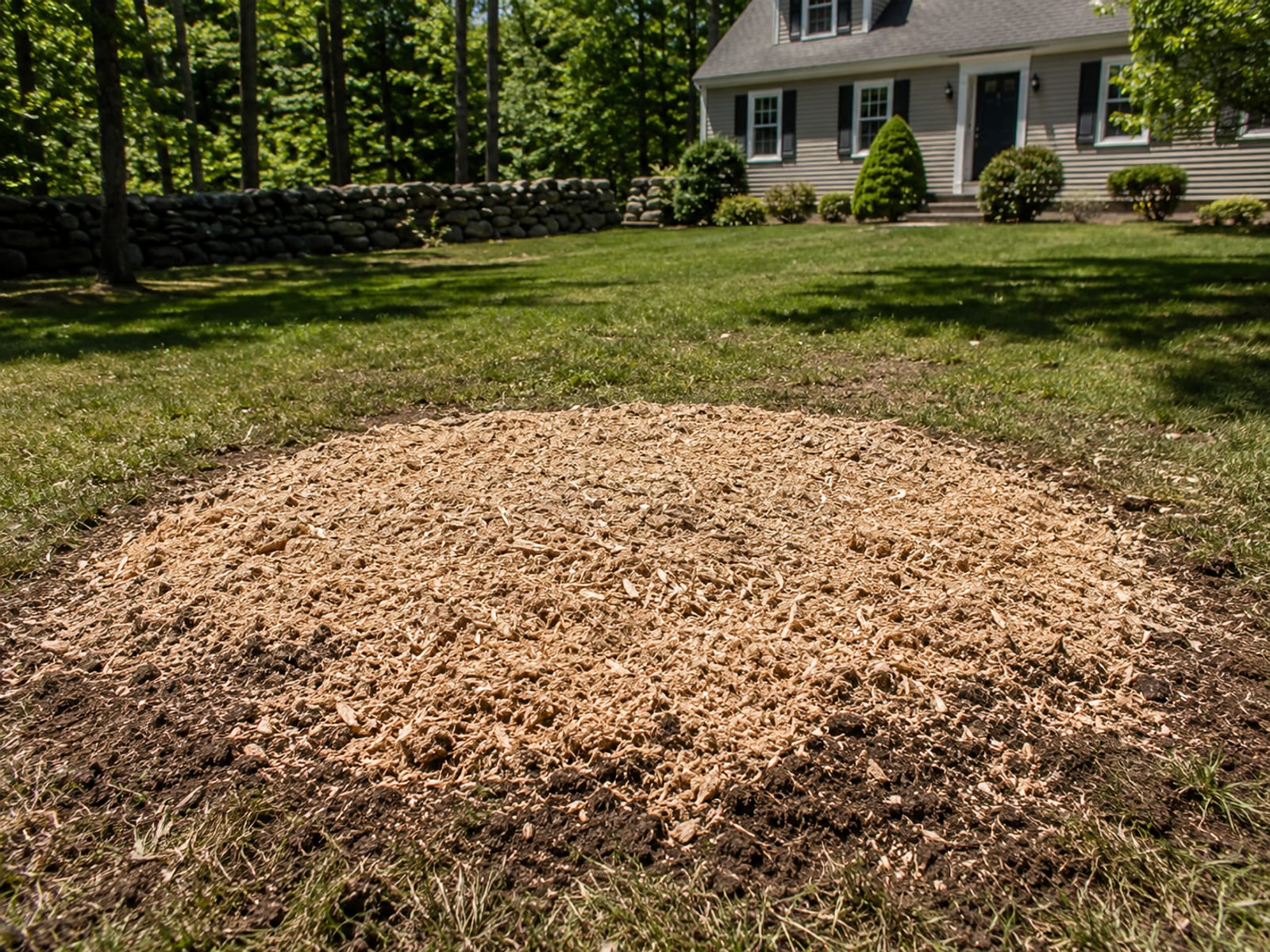
Stump grinding is a practical example of this coordination. After a tree is removed, the remaining stump can block grading, excavation, and drainage work. If you plan to add a driveway extension, pour a new slab, or correct a drainage swale through that area, the stump needs to go below grade before any of that work begins. Prestige Property Maintenance handles stump grinding as a connected service so the transition from removal to ground preparation happens without a gap.
Land clearing projects that include multiple trees often benefit from forestry mulching as the debris solution. Rather than cutting and hauling brush and limbs off site in multiple dump runs, forestry mulching grinds everything on site into ground-level mulch. That keeps the project moving faster, reduces haul cost, and leaves organic material in place to help with erosion control before final grading.
For homeowners planning a new drainage solution, retaining wall, or graded planting area, tree removal in the affected zone is often the first physical step. Getting that step done correctly, with the right equipment and a clear plan for what follows, sets the rest of the project up to run on schedule.
Why Homeowners and Contractors Choose Prestige Property Maintenance for Tree Removal
Prestige Property Maintenance has been working on Connecticut properties since 2015, handling tree removal as one part of a broader site work operation that includes excavation, grading, land clearing, drainage, and retaining wall construction. Licensed and insured, the company gives residential and commercial property owners the protection they need when heavy equipment and chainsaw work are happening near homes, garages, and outbuildings. That coverage matters when something unexpected happens on a site, and it is one of the first things to confirm before any contractor starts work on your property.
The equipment fleet supports a full-sequence approach. Tracked equipment, grapple attachments, and the ability to move directly from tree removal into stump grinding or excavation means one mobilization covers multiple phases. For homeowners in Oxford or Southbury who have dealt with coordinating two or three different contractors for a single project, the difference in scheduling alone is noticeable.
Local knowledge of Connecticut's terrain is not something picked up quickly. Understanding how to work around buried ledge, how to protect a long gravel drive from tracked equipment, and how to plan a removal sequence on a sloped lot with limited access takes time on these specific properties. That site-level judgment shows up in job outcomes, particularly when problems like root systems locked into stone or soft ground near a pond require adjusting the plan mid-job.
Tree Removal Questions We Get Asked Often
These are the questions that come up most often from property owners in Oxford, Shelton, Southbury, and the other towns Prestige Property Maintenance serves.
Do you need a permit to remove a tree in Connecticut?
Permit requirements vary by municipality and site conditions. Most towns allow homeowners to remove trees on their own private property without a permit, but rules differ when a tree is near a wetland, stream, conservation restriction, or town right-of-way. If your removal is part of a larger grading or excavation project, local inland wetlands regulations may apply depending on how close the work is to regulated areas. Confirming with your town's zoning or wetlands office before the job starts is always the right move.
What happens to the stump after a tree is removed?
Tree removal and stump grinding are separate scopes, and the stump stays in the ground unless grinding is part of your project agreement. If you plan to grade, seed, build over, or run equipment through the area, the stump needs to be ground below grade before that work begins. Prestige Property Maintenance handles stump grinding as a connected service so you can address both in the same project without calling a second contractor.
Can trees be removed in winter in Connecticut?
Yes, and winter is often a practical time for tree removal in Connecticut. Frozen ground supports heavy equipment better than wet spring or fall soil, which reduces the risk of ruts and surface damage on soft areas of your property. Deciduous trees without leaves are also easier to assess and fell because the canopy is not blocking sight lines or adding wind resistance. Winter timing works especially well when removal is the first step in a spring grading or drainage project.
How do you handle tree removal near a house or structure?
Tree removals near structures are done in sections rather than a full fell, with each section cut and lowered in a controlled direction away from the building. The approach depends on the available drop zone, the lean of the tree, and what equipment can safely reach the site. Site assessment before the job starts determines the removal method, so the crew is not making those decisions in real time once work is underway.
Is debris cleanup included in tree removal?
Yes. All limbs, brush, and cut debris from the removed tree are cleared from the site as part of the job. You will not be left with a brush pile to manage after the crew leaves. If the project involves multiple trees or a larger clearing scope, debris can be processed on site through forestry mulching, which eliminates the need for multiple haul trips and leaves ground-level organic material in place before grading.
Do you remove trees that are close to utility lines?
Trees near overhead utility lines require extra planning because contact with energized lines is a serious safety hazard. Prestige Property Maintenance reviews utility line proximity during the site assessment and determines whether the work can proceed safely with existing equipment and clearance, or whether utility notification or line clearance is needed first. In Connecticut, work near overhead lines has specific safety requirements that affect how close equipment and personnel can operate.
Can you handle tree removal as part of a larger excavation or grading project?
That is one of the most common ways Prestige Property Maintenance handles tree removal. When trees are in the path of a planned driveway, drainage correction, foundation excavation, or graded area, removing them first and grinding the stumps below grade sets the site up for equipment to work without obstruction. Running both phases through one contractor also means debris handling, access routing, and sequencing are planned together rather than handed off between separate crews.
Get a Quote for Tree Removal in Your Area
Call (203) 258-3395 or email dig@prestigectexcavation.com to schedule your site visit.