Land Development & Clearing
Land Clearing Services in Connecticut
Prestige Property Maintenance clears trees, brush, stumps, and debris from raw or overgrown parcels across 19 towns in the Naugatuck Valley and western CT, leaving your site ready for whatever comes next.
What Is Land Clearing and What Do You Actually Get?
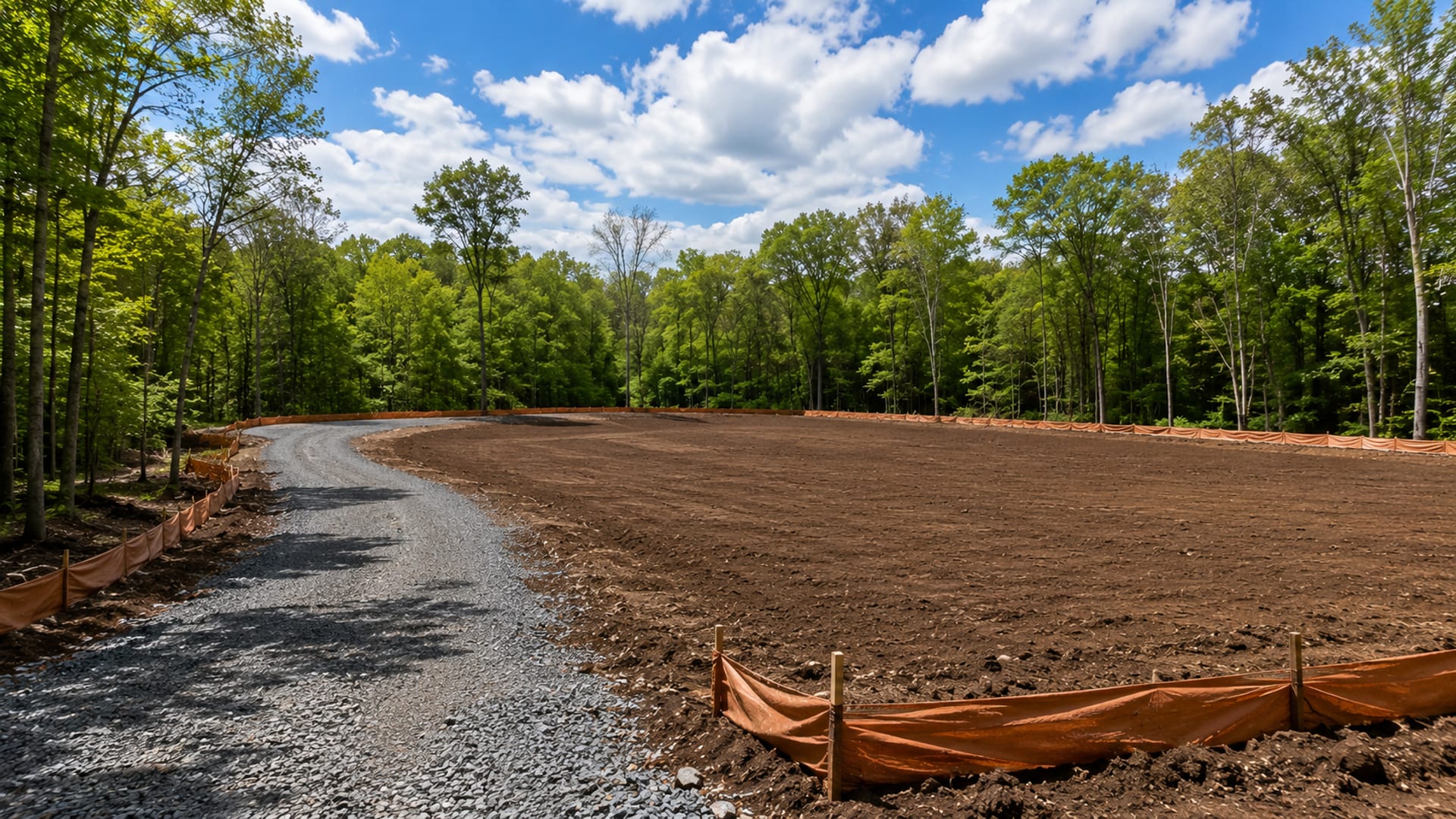
Land clearing is the full removal of trees, brush, stumps, and debris from a parcel so the ground beneath is accessible and workable. When Prestige Property Maintenance finishes a clearing job, you get an open, drivable site with vegetation removed to grade, stumps handled, and debris either mulched on site or hauled away depending on what the next phase of your project requires. Most residential clearing jobs in Connecticut span anywhere from a half-acre to several acres, with timelines shaped by tree density, slope, access, and how much ledge or rocky soil is involved.
Property owners call about land clearing for many different reasons. Some are opening up a building site for a new home or addition. Others are reclaiming a lot that has been overgrown for years and want usable yard space back. Still others need an access path cut to reach a rear portion of their property, or they are prepping land ahead of a driveway installation or drainage fix. Whatever the goal, clearing is almost always the first step before any grading, excavation, or construction can begin, and the way it gets done has a direct effect on how smoothly that next step goes.
Why Land Clearing in Connecticut Is Different From Anywhere Else
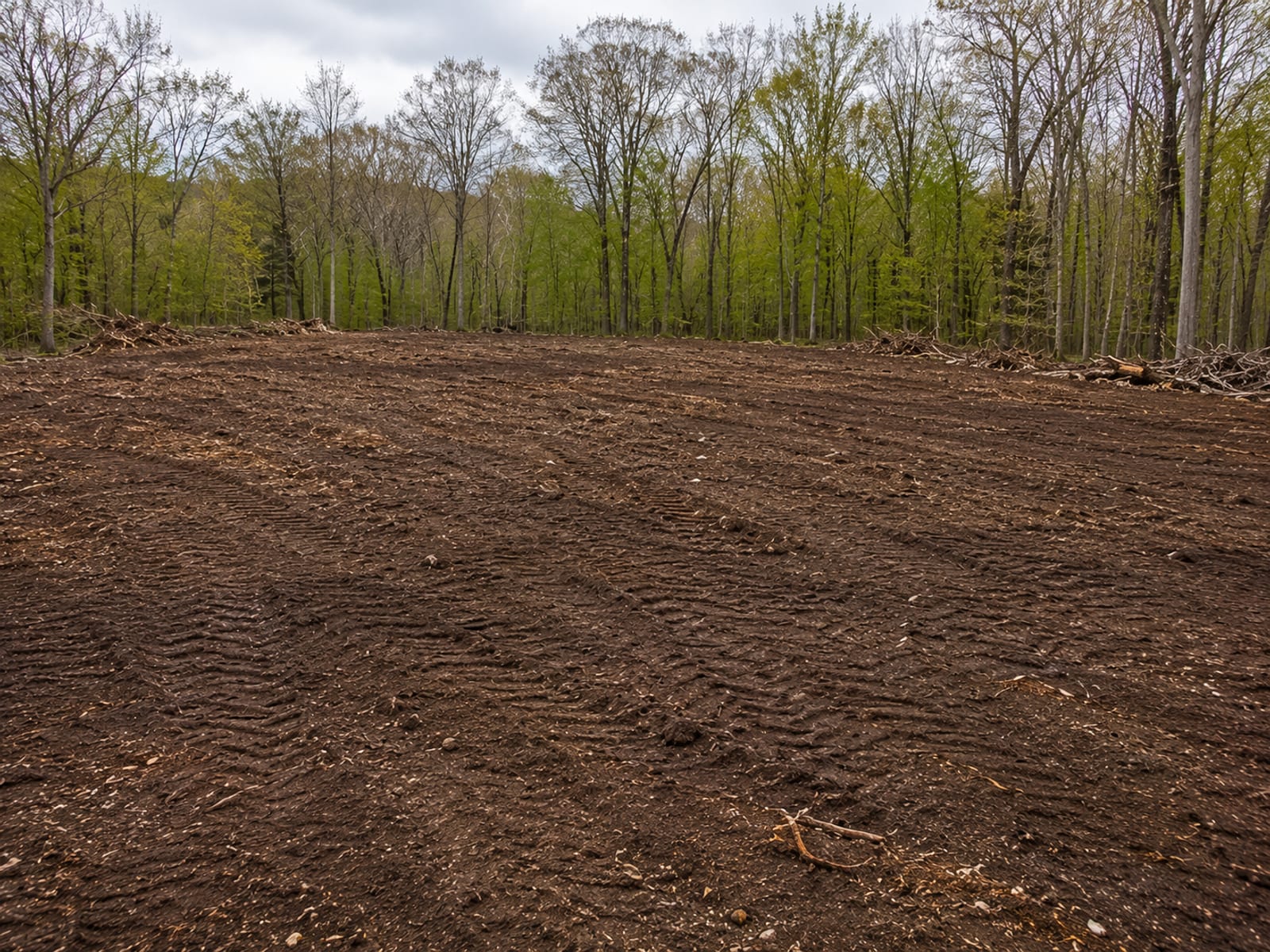
Connecticut soil is not friendly to a crew that shows up unprepared. Much of the Naugatuck Valley and western CT sits on glacial deposits, which means buried boulders, ledge rock close to the surface, and clay-heavy ground that holds water in ways that affect what equipment can safely operate and where. A clearing crew that has never worked this terrain will run into problems that an experienced local operator already plans around.
Wooded lots in towns like Oxford, Woodbury, Southbury, and Newtown tend to mix mature hardwoods, dense brush, rocky outcroppings, and seasonal wet areas. That combination affects everything from which equipment gets used to whether a site walk reveals wetland conditions that need to be accounted for before any machine touches the ground. Connecticut's inland wetlands rules are real, and a responsible contractor reviews those conditions before work starts, not after.
Slope is another factor that shapes how clearing gets done here. A lot with a significant grade change requires careful planning around erosion control, especially once vegetation is removed. Leaving exposed soil unprotected on a sloped site after clearing can create a drainage problem that costs more to fix than the clearing itself. Getting clearing and initial rough grading coordinated is part of doing the job right, not an upsell.
How the Land Clearing Process Works
Every land clearing project follows a clear sequence. Knowing what happens at each stage helps you understand what you are buying and what to expect on your property.
Site Walk and Work-Limit Review
Before any equipment is scheduled, the crew reviews the parcel on foot. This covers access points, tree types and sizes, stump locations, slope, drainage paths, nearby structures, and any signs of wetlands or watercourses. Work limits get marked clearly so the clearing stops exactly where it should.
Utility Locate Coordination
Any mechanized digging, stump work, or ground disturbance requires utility marking through Connecticut's Call Before You Dig process. This applies even when the work looks like simple clearing, because stump grinding and root removal go below grade. Getting utilities marked protects you, the crew, and your property.
Permit Check
Depending on where your property is located, what kind of clearing is planned, and whether wetlands or steep slopes are involved, a permit may be required before work starts. Municipal inland wetlands agencies handle most private property permit reviews in Connecticut. Prestige Property Maintenance accounts for this in the project conversation so there are no surprises.
Vegetation and Tree Removal
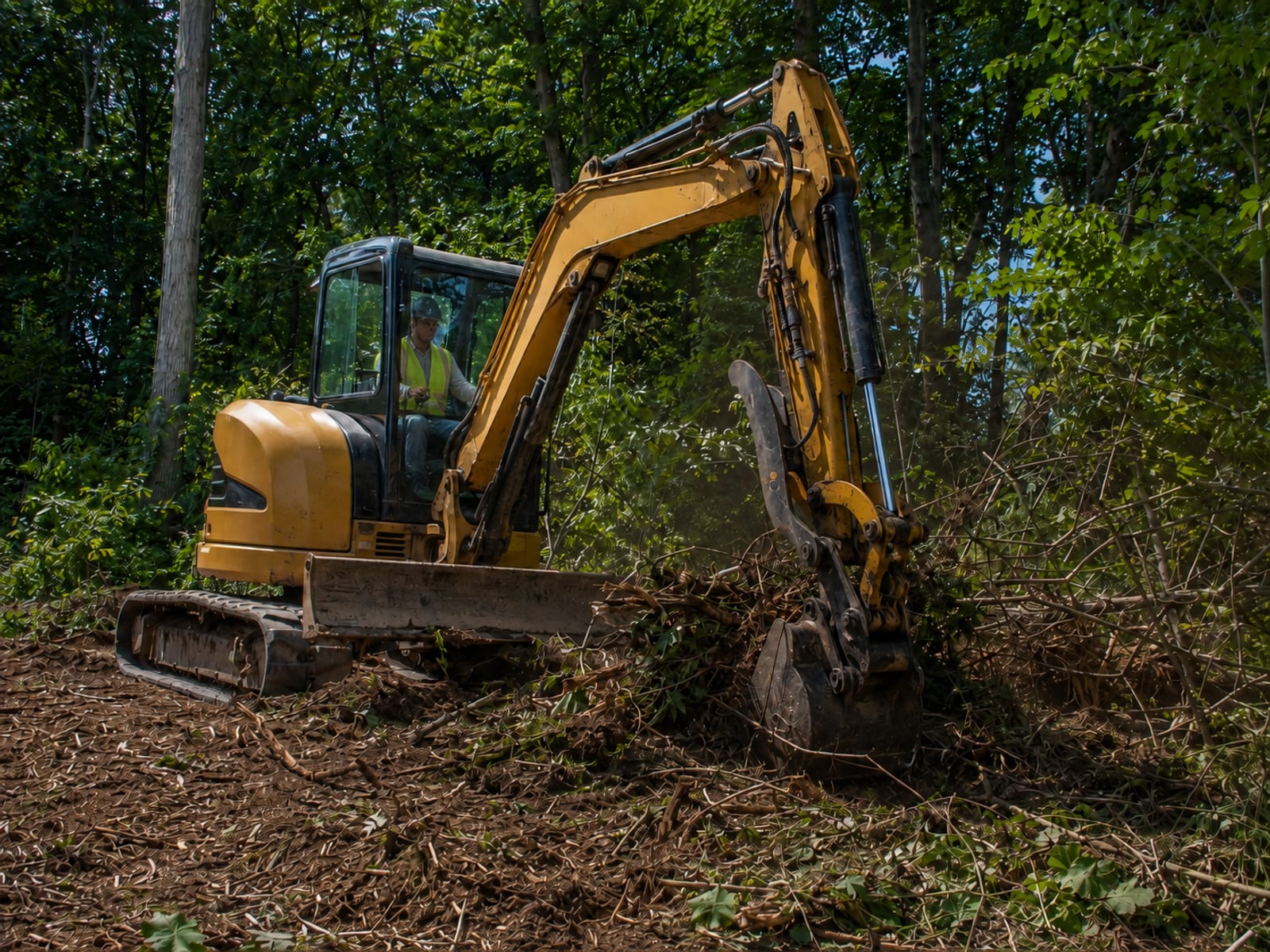
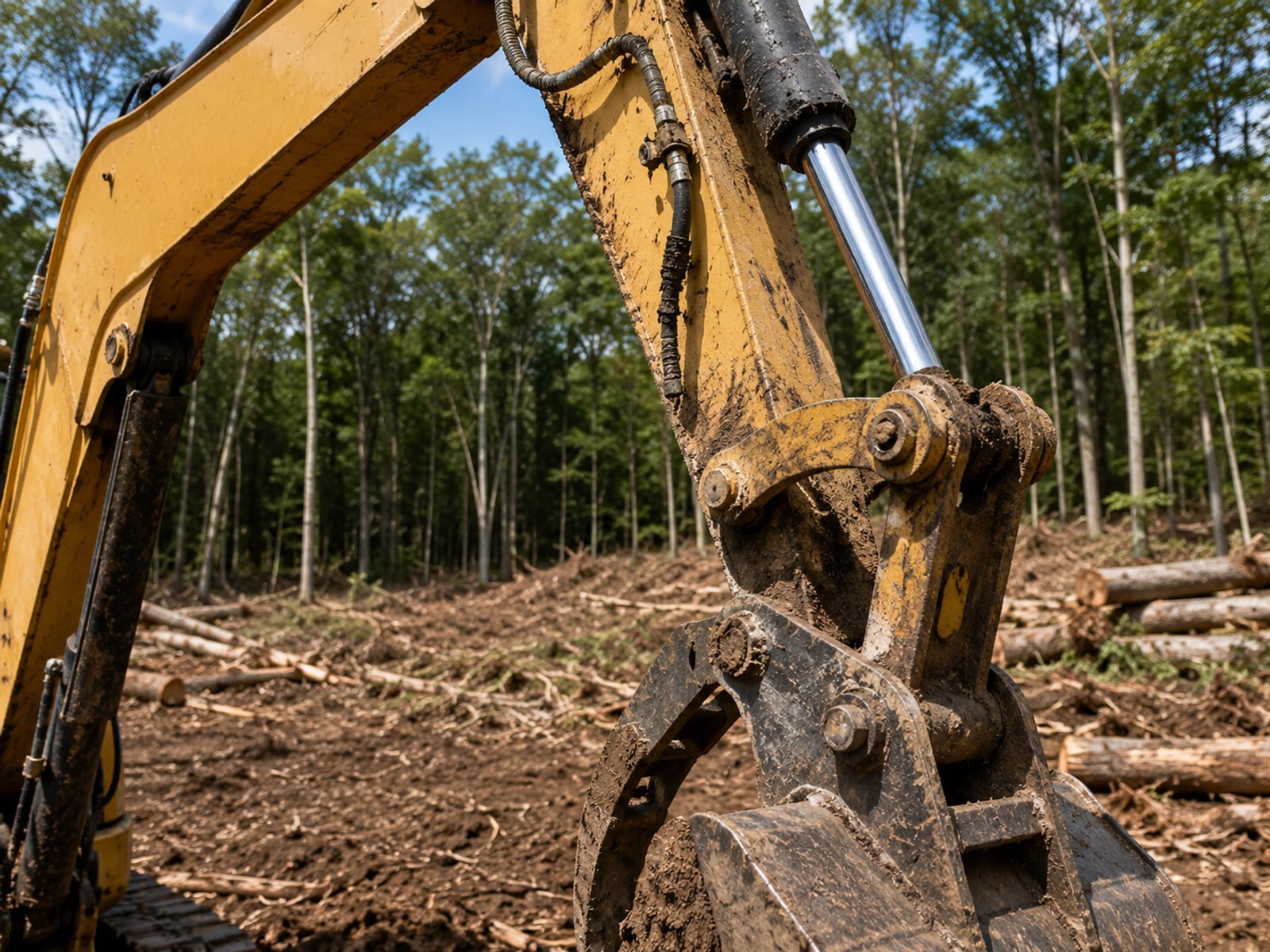
Trees, brush, and overgrowth come down in a planned sequence that accounts for fall direction, access, and what is being protected. Large trees are felled and processed on site. Brush and smaller growth is cleared to ground level.
Learn more about Tree RemovalStump Handling
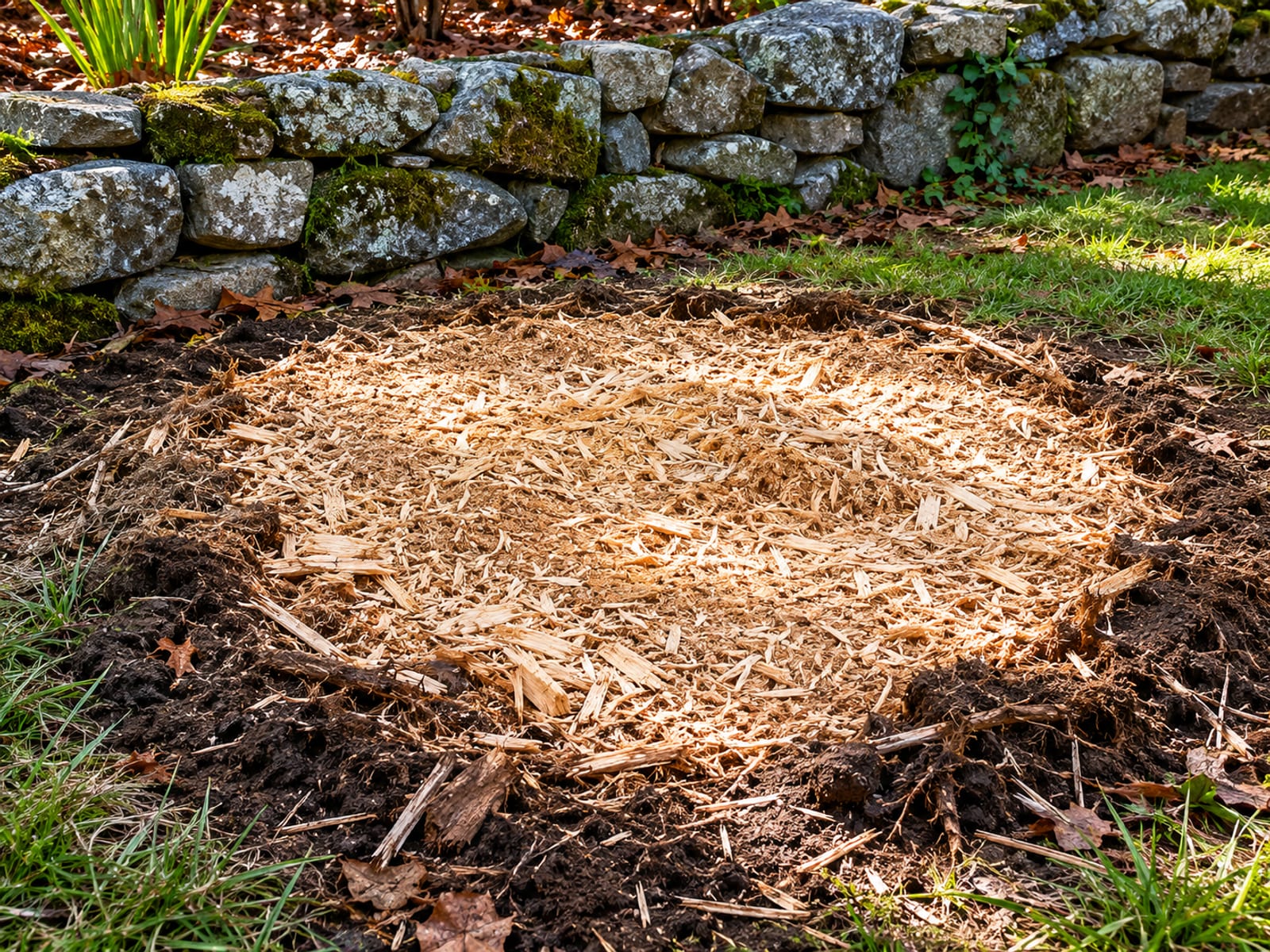
Stumps are either ground below grade or removed depending on the project plan. Grinding leaves the root system in place but drops the stump below the surface so the area can be graded, seeded, or built over. Full stump removal pulls the root ball out, which is sometimes necessary before foundation work or heavy grading.
Debris Management
Material can be handled a few ways. Forestry mulching grinds trees and brush into ground-level mulch that stays on site, which works well when you want organic material returned to the soil and do not need a completely clean sub-grade. Traditional clearing hauls debris off, which is often the right call when grading, paving, or construction follows immediately.
Rough Grading and Erosion Control
Once the vegetation is cleared, the exposed ground needs attention before rain hits it. Prestige Property Maintenance can move directly into rough grading to establish proper slope and drainage, then apply erosion controls where the site needs them. This keeps the project moving without a gap between clearing and the next phase.
Learn more about GradingFinal Cleanup and Site Readiness
The site gets cleaned up so it is ready for whoever or whatever comes next, whether that is a foundation crew, a grading pass, a driveway installation, or just usable open land. You should not have to spend time cleaning up after your clearing contractor.
What Can You Do With the Land After Clearing?
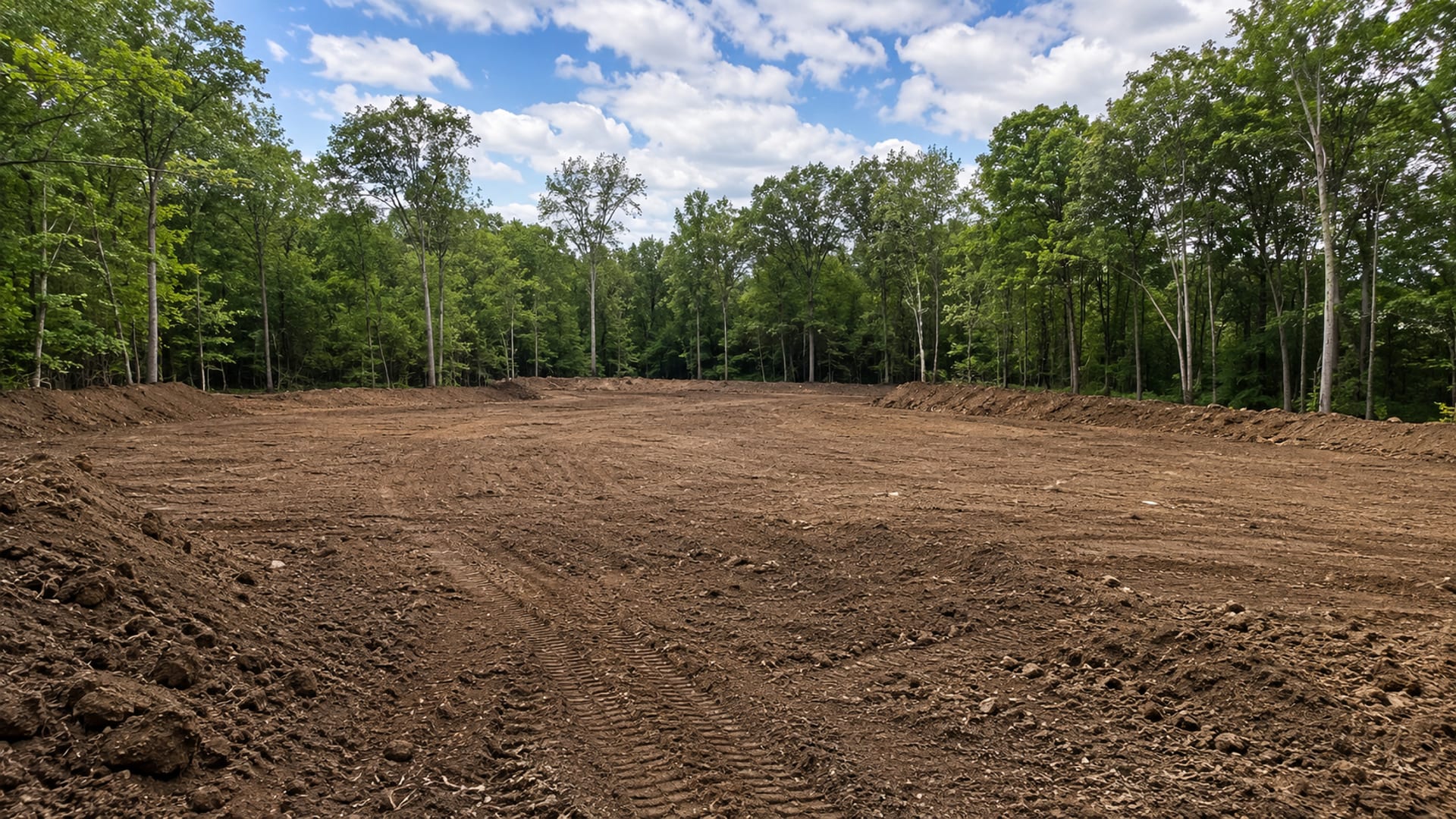
Clearing opens up options that did not exist before. The most common next steps on a freshly cleared parcel in this part of Connecticut are foundation excavation, driveway installation, drainage work to correct low spots or seasonal flooding, and grading to level or reshape the terrain for practical use. Some property owners go straight to lawn establishment or agricultural use. Others are running clearing as the first phase of a multi-step construction project.
The advantage of working with Prestige Property Maintenance is that the same crew handles what comes after. Grading, excavation, drainage solutions like French drains and catch basins, retaining wall construction on sloped lots, rock removal when ledge or buried boulders are in the way, and driveway and roadway excavation are all services that can follow directly from a clearing project. You are not calling a second or third contractor and hoping schedules line up.
A crew that cleared your lot already knows where the wet spots are, where the ledge showed up, which areas have heavier clay, and how the drainage moves across the site. That knowledge does not transfer cleanly from a clearing sub to an unrelated excavating contractor. Keeping it under one roof reduces miscommunication and keeps the job on track.
Forestry Mulching vs. Traditional Land Clearing: Which One Is Right for You?
This question comes up on most clearing projects, and the honest answer is that it depends on what you are doing with the land afterward. Forestry mulching uses a specialized head to grind trees and brush in place, turning everything into a layer of organic material that stays on site. It is faster on the right parcels, it eliminates most of the haul-off, and it leaves the topsoil less disturbed than traditional clearing. For property owners reclaiming overgrown land for better access, aesthetic improvement, or a future lawn area, forestry mulching often makes a lot of sense.
Traditional clearing, where material is cut, processed, and hauled away, is the better choice when clean sub-grade conditions are needed. If you are building a foundation, installing a paved driveway, putting in a drainage system with excavated trenches, or grading a significant area, you generally want material out of the way rather than ground into the surface. The mulch layer that forestry mulching leaves behind can interfere with compaction and sub-base work.
Prestige Property Maintenance can do both, which means the recommendation you get is based on your actual project goals, not on what a single-method contractor happens to own. Most jobs end up being a combination: forestry mulching in areas that do not need construction work afterward, traditional removal where the site needs a clean grade.
What Permits Might You Need Before Clearing in Connecticut?
Connecticut does not have a single statewide clearing permit, but several layers of regulation can apply depending on where your property is and what the clearing involves. The two most common triggers are inland wetlands proximity and the scale of soil disturbance involved. Connecticut's inland wetlands rules, administered at the municipal level, cover activities that affect wetlands or watercourses, and that definition can include clearing and grubbing near wet areas even if no water is visibly present on the parcel.
Larger clearing projects that disturb significant amounts of soil may also fall under state stormwater rules that require erosion and sediment controls during construction activity. Some towns have their own tree ordinances or zoning requirements that affect clearing work, and municipal zoning or planning boards may need to be consulted before work begins on certain parcels, particularly for projects connected to new construction.
Plenty of routine clearing projects on residential lots do not trigger any permit requirement at all. The goal is to make sure no one starts work without knowing what applies to your specific parcel. Prestige Property Maintenance covers this in the project conversation before a start date is set, so the work gets done cleanly and without regulatory issues after the fact.
Why Homeowners and Contractors Choose Prestige Property Maintenance
Prestige Property Maintenance has been working CT's rocky, glacial soil since 2015. The crew knows what it takes to get through mixed wooded lots across Oxford, Shelton, Naugatuck, Woodbury, and the other 15 towns in the service area, with no learning curve about what this terrain does to equipment and timelines. That experience shows up in accurate scoping, realistic timelines, and fewer surprises once work begins.
A lot of local clearing contractors stop at vegetation removal and call the job done. Prestige Property Maintenance can take a raw parcel from overgrown brush all the way through grading, drainage, retaining walls, rock removal, and driveway preparation without handing the project off. For a homeowner or developer who wants one point of contact and no scheduling gaps between phases, that matters.
Prestige Property Maintenance is licensed and insured, registered as Home Improvement Contractor HIC# 0704432. Beyond the paperwork, the practical differentiator is straightforward: the same team that clears your lot can grade it, drain it, and get it ready to build on, and they have been doing it across this specific part of Connecticut long enough to know what each town's terrain and soil conditions actually look like.
Land Clearing Questions We Hear All the Time
These answers cover the specifics that do not always make it into a general service description.
Do I need to do anything before the crew arrives?
A site walk before the job starts handles most of the prep on the contractor side, but knowing where your property lines are and pointing out anything you want preserved, such as specific trees, a garden area, or a section of existing fence, helps the crew protect the right things. If you have a septic system, flagging the tank and leach field location before any equipment shows up is always a good idea, even when the clearing work is not near that area.
How long does a typical land clearing job take?
A smaller residential lot with moderate brush and a handful of trees might clear in a single day. A densely wooded acre or more with significant stumps, access challenges, and rocky terrain can run several days. The clearest answer you will get is after a site walk, when the crew can see the actual conditions rather than estimating from a description.
Will clearing damage my lawn or driveway?
Equipment access is planned as part of the pre-job site walk specifically to minimize impact on areas you want to keep. Compact equipment is used where larger machines would cause unnecessary damage. If a temporary access point or protection for a driveway surface is needed, that gets worked into the plan before the first machine pulls in.
Can you clear land that has wet or boggy areas on it?
Yes, though wet areas require more planning. The crew accounts for ground conditions when selecting equipment and scheduling work, since operating heavy machinery in saturated soil can worsen compaction and create ruts. If the wet area suggests a wetland condition, that gets reviewed for permit purposes before any clearing starts in or near it.
What happens to the debris after clearing?
That depends on the project plan you choose. Forestry mulching returns material to the ground as mulch, which is a good option when haul-off cost is a concern or when you want organic material to stay on the site. Traditional clearing hauls material away, which is typically the right call when grading, paving, or construction follows. Some projects use both methods on different sections of the same parcel.
Do you handle rock and ledge that shows up during clearing?
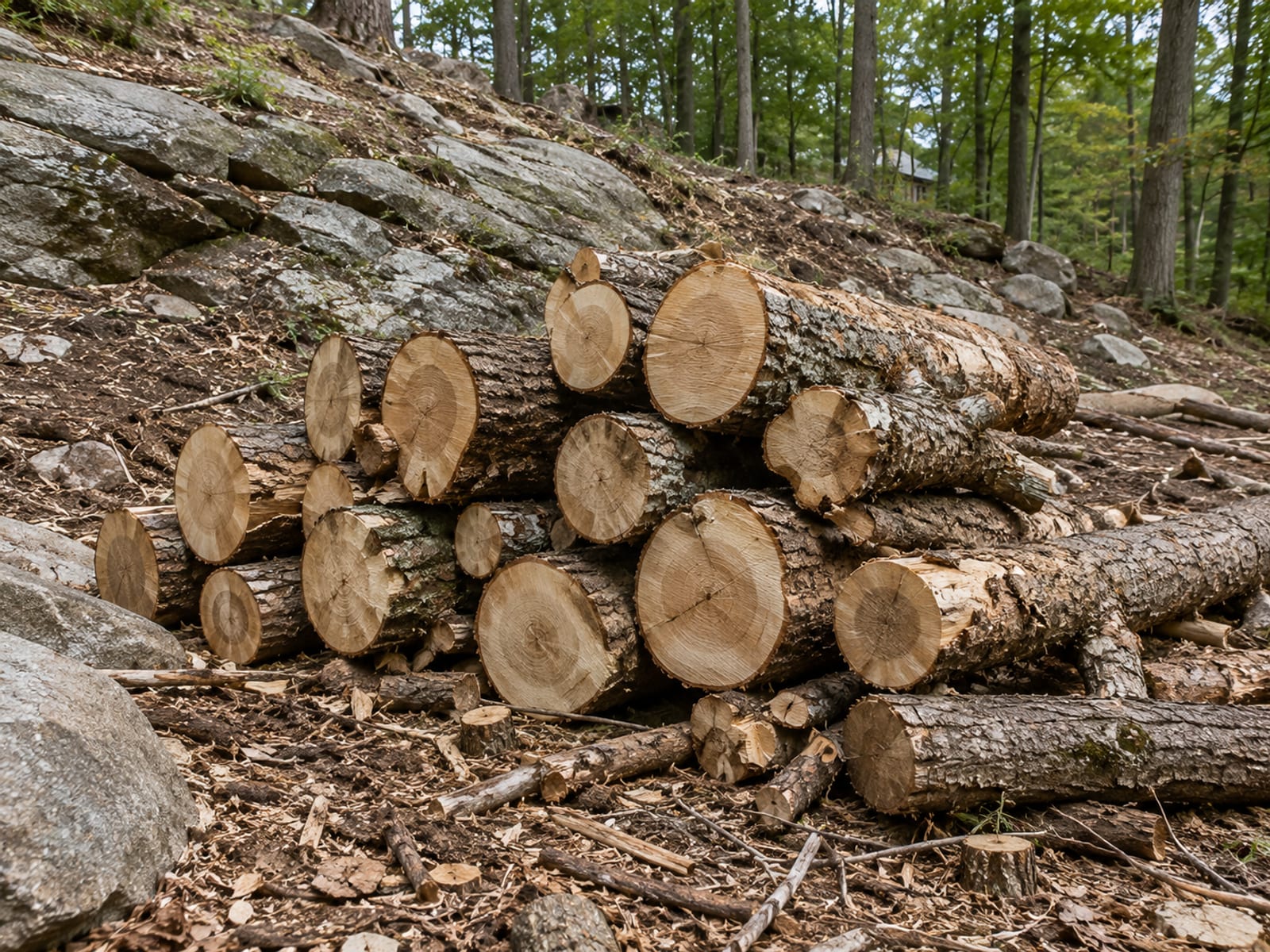
Rock removal is a separate service that often goes hand-in-hand with clearing on Connecticut properties. When the clearing reveals ledge or buried boulders that need to come out for grading or construction, Prestige Property Maintenance can move into that work without bringing in a separate contractor. This is one of the practical advantages of working with an excavating contractor rather than a clearing-only crew.
What is the difference between stump grinding and full stump removal?
Stump grinding mechanically reduces the stump below grade, leaving the root system in the ground. The area can be graded, seeded, or built over in most situations. Full stump removal pulls the root ball out entirely, which creates more ground disturbance but delivers a completely clean sub-grade. Foundation work and areas where deep grading will occur usually benefit from full removal; lawn restoration and general site cleanup usually work fine with grinding.
Ready to Clear Your Property? Let's Talk.
Call (203) 258-3395 or email dig@prestigectexcavation.com