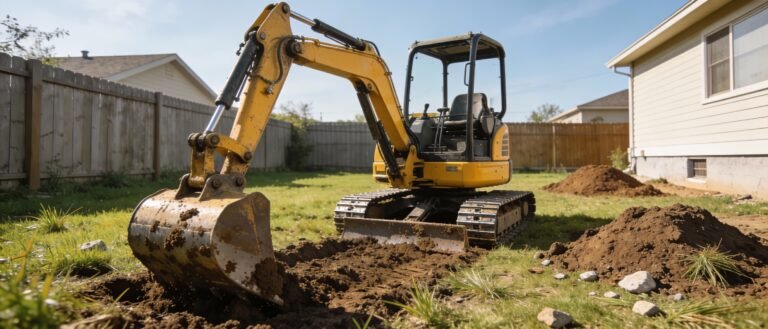
Residential Grading & Leveling: Fix Your Yard’s Slope
Have you ever watched rain turn your backyard into a swamp, leaving puddles that refuse to drain for days? Connecticut and New York homeowners dealing with soggy lawns often face a common concern: how long will contractors need to tear up the yard to fix the problem? Residential grading and leveling reshapes your property’s slopes and surfaces to direct water away from foundations and create functional outdoor spaces. The process involves more than simply moving dirt around.
Between Connecticut’s strict erosion regulations requiring stabilization within seven days, deep frost line requirements reaching 42 inches, and local zoning restrictions on slope angles, Northeast grading projects follow structured timelines that typically span 3-14 days depending on your lot size and terrain challenges. Understanding what happens during each phase can help you prepare for the temporary disruption while looking forward to a yard that finally drains properly and stays usable through every season.
Key Takeaways
- Grading projects in Connecticut and New York typically take 3-14 days from start to finish: Flat yards under 5,000 square feet can complete in 3-7 days, while properties with slopes, wetlands, or rocky soil may require 10-14 days including stabilization phases
- Excavation extends below the frost line to prevent winter damage: Contractors cut or fill to 42-inch depths on average in Connecticut and New York, compacting soil in lifts to prevent heaving during freeze-thaw cycles
- Preparation work identifies potential issues before equipment arrives: Surveys, 811 utility locates, and zoning checks for setbacks and slope limits help avoid surprises like wetland buffers or spite grading violations
- Erosion controls install first and enable quick recovery: Silt fences and seeding within seven days of disturbance per state regulations restore yard usability faster
- Permits add time but prevent costly work stoppages: Erosion and sediment control plans for properties disturbing over 0.5 acres require 7-30 days for approval, while local zoning reviews apply to steep grades
- Seeding and cleanup represent the final phase: Mulching and seeding disturbed areas with debris removal sets the stage for green recovery within 1-2 weeks
Understanding the Residential Grading Process in CT and NY
Reliable grading reshapes yards to achieve proper drainage slopes, typically between 2-5% grade away from structures. Northeast properties present unique challenges with mature trees, rocky ledge, and comprehensive codes mandating frost protection, erosion plans, and restrictions against alterations that harm neighboring properties. The technical work follows engineering principles adapted to regional conditions.
Local Yard Environment and Grading Needs
Connecticut and New York properties contend with environmental factors that influence project scope and duration. Frost heaving occurs when temperatures drop below freezing, expanding moisture in soil and potentially shifting improperly placed fill. Wetland buffers extending 75 feet or more from regulated areas restrict grading activities near streams, ponds, or designated wetlands. Local zoning codes may cap slopes at specific angles, such as 33% maximum in rear yards, to prevent erosion and maintain neighborhood character.
These conditions require detailed surveys and erosion preparation before heavy equipment begins moving soil. Contractors identify property boundaries, locate existing utilities, test soil composition, and map existing drainage patterns. This preparation prevents mid-project discoveries that could extend timelines or require expensive corrections.
Rocky glacial till common throughout the region can slow excavation compared to looser soils found in other parts of the country. Ledge may require hydraulic hammers or careful removal, adding days to basic grading work. Conversely, sandy soils near coastal areas may compact more easily but demand additional stabilization to prevent washouts during storms.
National vs. CT/NY Grading Timelines
Standard grading timelines from industry guides provide baselines, but Northeast projects often extend beyond these ranges. Regional regulations requiring deeper excavations, wet season restrictions, and soil stability requirements add phases to ensure long-term performance.
Typical Timeline Ranges by Yard Size
National averages suggest 2-7 days for properties around 5,000 square feet. Connecticut and New York projects typically span 3-14 days when factoring permit requirements, mandatory seven-day stabilization periods, and frost considerations. Small flat lots with straightforward drainage needs fall toward the shorter end. Properties near wetlands, on steep slopes, or with rocky substrates trend toward longer durations.
Medium-sized yards between 5,000-10,000 square feet generally require 5-10 days. Larger estates or properties with complex drainage systems may extend to two weeks or more, particularly when phased work allows disturbed areas to stabilize before proceeding to adjacent sections.
Weather plays a significant role in scheduling. Spring thaw brings saturated soils that resist compaction and create muddy conditions. Fall work must finish before ground freezes, limiting late-season windows. Summer and early fall typically offer optimal conditions, though drought-hardened clay can present compaction challenges.
Day-by-Day Breakdown Models
A typical simple residential grading project follows this pattern:
Day 1: Survey teams verify property corners and elevation points. Utility locates through 811 services mark underground lines. Light clearing removes vegetation from work areas. Equipment stages on-site with minimal disturbance.
Days 2-3: Excavation crews perform rough grading, removing high spots and filling low areas. Soil gets compacted in 6-12 inch lifts below the frost line. Material may get hauled off-site or redistributed across the property. Dust and noise peak during these phases.
Day 4: Fine grading smooths surfaces to designed slopes. Erosion controls including silt fences install around disturbed perimeters. Drainage features like swales or dry wells get positioned.
Days 5+: Topsoil spreads over graded areas. Seeding and mulching stabilize exposed soil. Final inspections verify elevations and drainage patterns. Properties near wetlands or with complex slopes may add several days for phased seeding and additional erosion monitoring.
Key Steps in the Residential Grading Process
Successful grading projects follow sequential phases that build on previous work. Phased earthwork delivers even, properly draining yards compliant with IBC-adopted building codes for residential sites throughout Connecticut and New York.
Site Preparation and Layout
Preparation sets the foundation for efficient work. Utility locates through 811 services identify buried electric, gas, water, communication, and sewer lines. Hitting unmarked utilities can cause service disruptions, safety hazards, and expensive repairs that halt projects for days or weeks.
Topsoil stripping preserves valuable growing medium. Contractors carefully remove and stockpile the top 4-8 inches of organic-rich soil for later redistribution. This material contains beneficial microorganisms and nutrients that support rapid grass establishment once grading completes.
Survey stakes mark critical elevation points. These reference heights guide equipment operators to achieve designed slopes. Zoning setback verification confirms work remains within allowable distances from property lines, typically 10-25 feet depending on local ordinances. Slope limit checks ensure grades won’t exceed municipal restrictions.
Excavation, Fill, and Compaction
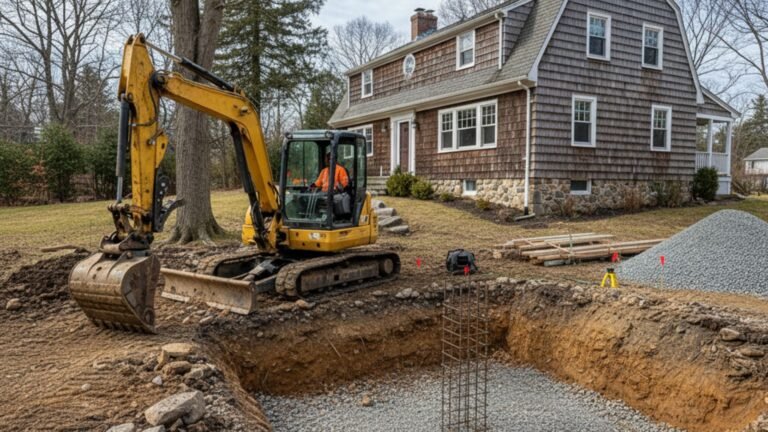
The physical reshaping phase moves significant soil volumes. Rough cutting and filling achieves design elevations below the 42-inch frost line common in Connecticut and New York. Equipment operators work from survey stakes, using laser levels or GPS guidance systems on larger projects.
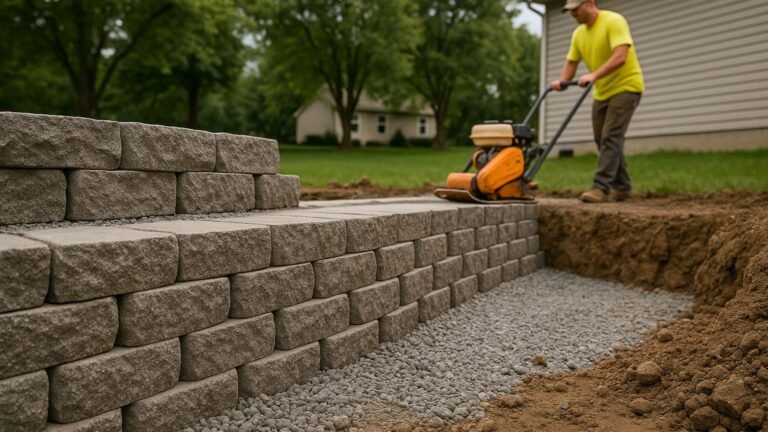
Compaction occurs in 6-12 inch lifts to achieve 95% density. Each layer gets compacted before adding the next. This prevents future settling that could create low spots or compromise structural fill near foundations. Roller compactors or plate tampers densify soil through mechanical force.
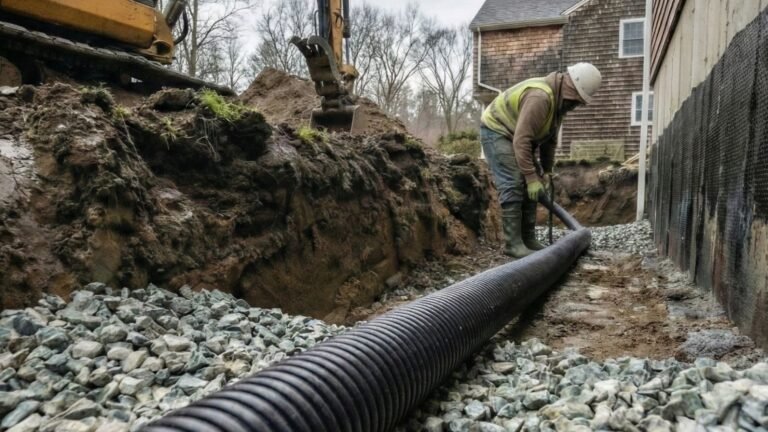
Gravel or crushed stone often gets incorporated for improved drainage. These materials create permeable layers that allow water to percolate while providing stable foundations. French drains, catch basins, or perforated pipes may install during this phase to manage subsurface water movement.
Fine Grading and Erosion Stabilization
Precision work follows rough shaping. Final grading smooths surfaces to 2% minimum slopes away from structures, preventing water from pooling while maintaining gentle enough grades for safe mowing and use. Hand tools and small equipment fine-tune areas around trees, walkways, and landscape features.
Silt fences install along downslope perimeters to capture sediment in runoff. Check dams may position in drainage swales to slow water velocity. These temporary measures prevent soil migration during rain events before vegetation establishes.
Seeding and mulching must occur within seven days of final disturbance under Connecticut erosion control regulations. Grass seed appropriate to the region gets broadcast over prepared seedbeds. Straw or hydromulch covers seed to retain moisture, moderate soil temperature, and prevent washouts. This stabilization phase typically completes in 1-2 days.
Additional Steps for Complex Grading Jobs
Northeast-specific challenges require adaptations beyond standard procedures. Regional conditions add phases for durability and regulatory compliance that extend simple timelines but deliver long-term performance.
Handling Slopes, Wetlands, and Frost
Properties with grades exceeding 20% often require stepped fills. Rather than creating steep continuous slopes, contractors build terraced sections that reduce erosion potential. Each bench gets compacted and stabilized before proceeding to the next level. This technique adds 2-5 days but prevents catastrophic washouts during heavy rains.
Wetland buffers ranging from 75-150 feet depending on jurisdiction restrict grading activities near protected water resources. Work in these zones requires specialized permits and may mandate hand labor instead of heavy equipment. Siltation barriers and turbidity monitoring ensure compliance. Projects touching wetland buffers can extend by a week or more.
Deep frost excavations reaching 42 inches or deeper demand additional time compared to shallower work. More soil volume moves, compaction takes longer, and backfill materials may need to meet specific specifications. Contractors often schedule this work when ground conditions allow efficient digging without excessive mud or frozen soil complications.
Finishing Touches and Yard Restoration
Final restoration returns properties to usable condition. Stockpiled topsoil spreads over graded areas to provide 4-6 inches of growing medium. This material gets lightly graded to maintain designed slopes while creating friable seedbeds.
Hydroseeding offers faster germination than traditional broadcast seeding. The slurry mixture combines seed, fertilizer, mulch, and tacking agents that bond to soil. Specialized equipment sprays this mixture evenly across large areas, reducing application time while improving seed-to-soil contact.
Debris removal clears construction materials, rocks unearthed during excavation, and vegetation removed during clearing. Properties return to clean conditions ready for immediate use once grass begins growing. Final walkthroughs with homeowners confirm proper drainage function and address any remaining concerns.
Permits, Utilities, and Regulations in CT and NY
Compliance begins before equipment arrives. Pre-construction permits prevent work stoppages and costly corrections when projects proceed without proper approvals. Connecticut and New York maintain distinct but overlapping requirements.
Zoning and Erosion Coordination
Connecticut DEEP requires erosion and sediment control permits for projects disturbing more than 0.5 acres. Permit applications include site plans showing existing and proposed grades, drainage patterns, and erosion control measures. Review processes take 7-30 days depending on project complexity and agency workload.
Local zoning reviews apply to grading that alters property elevations or creates retaining walls. Greenwich regulations require detailed erosion and sediment control plans showing how disturbed areas will stabilize. Permit fees typically range from $200-1,000, with higher amounts for larger disturbances or properties near sensitive resources.
Connecticut spite laws prohibit fences or grading alterations designed solely to harm neighbors. Common disputes involve blocking sight lines, creating drainage that flows onto adjacent properties, or constructing features exceeding height limits without legitimate purpose. Legal challenges can halt projects mid-construction until courts resolve disputes.
New York residential bulk regulations vary by municipality but generally limit yard elevations and slope angles. Zoning codes may restrict rear yard slopes to 33% maximum to prevent erosion and maintain neighborhood character. Setback requirements ensure grading work doesn’t encroach on property lines or easements.
What Homeowners Should Prepare For and Do
Active participation helps projects proceed smoothly. Homeowners who understand daily expectations and prepare appropriately experience fewer surprises and faster completion.
Daily Expectations During Grading
Days 1-3 bring peak noise and dust as heavy equipment excavates and moves soil. Diesel engines, backup alarms, and metal tracks on hard surfaces create significant sound. Dry conditions generate airborne dust that may drift to neighboring properties. Most contractors work 7am-5pm on weekdays, though some municipalities restrict hours further.
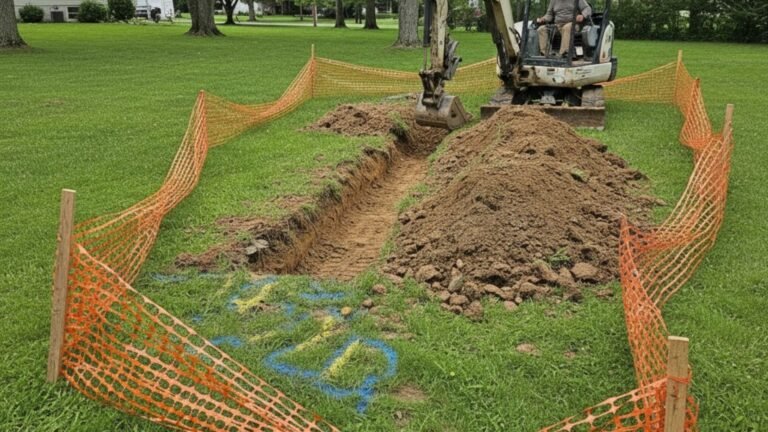
Access fencing protects active work zones. Families should expect limited yard access during construction, particularly in areas where equipment operates. Pets need secure confinement away from construction zones. Children require supervision to prevent wandering into dangerous areas.
Homeowner approvals at key milestones keep work on track. Contractors typically request sign-off on rough grades before fine grading begins. Final elevations need verification before seeding to ensure proper drainage. Being available for quick decisions prevents delays when field conditions require minor adjustments to plans.
Tips to Minimize Yard Tear-Up
Clearing obstacles before equipment arrives saves time. Remove portable items like furniture, planters, decorations, and hoses from work areas. Mark delicate plants or features to preserve with high-visibility stakes or flags. Contractors work more efficiently when properties are ready for immediate work.
Scheduling projects after spring thaw but before summer heat optimizes soil conditions and grass establishment. May through early July offers favorable weather in most Connecticut and New York locations. Fall work from September through October provides another window before ground freezes.
Neighbor notifications prevent disputes. Informing adjacent property owners about upcoming work, expected duration, and potential temporary impacts demonstrates consideration. Some homeowners coordinate with neighbors to address shared drainage concerns through cooperative grading projects.
Process Comparison Table: Simple vs. Complex Grading in CT/NY
| Phase | Simple Job (Flat 5k sq ft Yard) | Complex Job (Sloped/Wetlands) |
|---|---|---|
| Prep & Survey | 1 day for basic layout and utility locates | 1-2 days with wetland buffer surveys and detailed erosion planning |
| Excavation/Compaction | 1-2 days for straightforward cut/fill work | 3-5 days accounting for frost depth excavation and stepped slope construction |
| Fine Grade/Stabilization | 1 day for final smoothing and initial erosion controls | 2 days for phased seeding and enhanced siltation barriers |
| Total Timeline | 3-7 days from start to stabilized condition | 10-14 days including all regulatory requirements |
Common Mistakes Homeowners Make During Grading
Avoiding preventable errors keeps projects on schedule and within budget. Several common missteps create complications that extend timelines or increase costs.
Skipping 811 utility locates risks striking underground lines. Gas line hits present immediate safety hazards. Communication cable damage disrupts service. Water line breaks flood work areas and waste resources. Professional utility locates cost nothing to homeowners but prevent expensive accidents.
Proceeding without required permits invites enforcement actions. Municipalities can issue stop-work orders when grading occurs without erosion permits. Correcting unpermitted work may require removing completed grading and starting over. Fines can reach thousands of dollars for significant violations.
Neglecting erosion controls exposes sites to enforcement and environmental damage. Connecticut regulations mandate specific erosion measures and stabilization timelines. Sites without proper silt fencing or timely seeding face citations. Sediment escaping properties can contaminate waterways and damage neighboring lands.
Rushing seed establishment prolongs muddy conditions. Grass needs 14-21 days to germinate and several weeks more to develop root systems that stabilize soil. Walking on newly seeded areas compacts soil and damages emerging seedlings. Patience during establishment prevents prolonged bare spots and erosion.
Preparing Your Property for Residential Grading in CT/NY
Advance preparation streamlines the grading process and reduces potential delays. Calling 811 for utility locates several days before scheduled work allows sufficient time for all utilities to mark their lines. Some services require 48-72 hours notice.
Trimming overgrown vegetation provides clear access for equipment and survey work. Dense brush or low tree branches can interfere with grading operations. Removing these obstacles beforehand prevents damage to desirable plants when equipment maneuvers around them.
Checking property boundaries and verifying zoning setbacks before work begins prevents encroachment disputes. Survey pins may have shifted or become obscured over time. Professional surveys confirm exact property lines when uncertainty exists.
Wetland delineations identify regulated areas requiring special permits or restrictions. Properties near streams, ponds, or low-lying areas may contain jurisdictional wetlands not immediately obvious. Connecticut wetland regulations restrict work within substantial buffer zones. Knowing these boundaries before planning grading work prevents permit complications.
Frequently Asked Questions About Residential Grading and Leveling
Q: What is the typical residential grading process?
A: The process follows a sequence of survey and preparation, excavation and compaction, then fine grading and stabilization. Projects typically complete in 3-14 days depending on property conditions. Contractors begin by locating utilities and establishing grade stakes, then move soil to create proper drainage slopes. Compaction occurs in layers to prevent settling. Final phases include smoothing surfaces, installing erosion controls, and seeding disturbed areas.
Q: How long will my yard be torn up during grading?
A: Most residential grading projects actively disturb yards for 3-7 days. Seeded areas recover usability within 1-2 weeks as grass germinates. Complex projects involving slopes or wetlands may extend active work to 10-14 days. The actual timeline depends on property size, soil conditions, weather, and regulatory requirements. Contractors sequence work to minimize long-term disruption.
Q: Are permits required for yard grading in Connecticut and New York?
A: Yes, Connecticut requires erosion and sediment control permits for projects disturbing more than 0.5 acres. Local zoning boards review grading plans that significantly alter property elevations. New York requirements vary by municipality but generally mandate permits for substantial earthwork. Permit processing typically takes 7-30 days. Working without required permits can result in stop-work orders and fines.
Q: What should I expect on grading day 1?
A: The first day typically involves survey verification, utility checking, and light site clearing. No major excavation usually occurs on day one. Crews establish reference points, mark work boundaries, and position equipment. Homeowners should ensure access gates remain unlocked and pets stay secured indoors. This preparation phase sets the foundation for efficient work on subsequent days.
Q: How can I prepare my yard for grading?
A: Remove portable items from work areas, including furniture, planters, and decorations. Confirm zoning compliance for setbacks and slope limits. Call 811 to arrange utility locates several days before scheduled work. Mark delicate plants or features you want preserved. Secure pets and plan for limited yard access during construction. Clear communication with your contractor about property boundaries and drainage goals helps ensure the finished result meets your expectations.
Q: When is the best time of year for grading work in Connecticut and New York?
A: Late spring through early fall offers optimal conditions. May through July provides warm weather for fast grass germination while avoiding extreme summer heat. September and October present another favorable window before ground freezes. Avoid scheduling during spring thaw when saturated soils resist compaction. Winter work faces frozen ground complications. Summer droughts can make clay soils difficult to compact properly.
Q: Will grading solve my drainage problems permanently?
A: Properly designed and executed grading creates drainage slopes that direct water away from structures and eliminate pooling. The solution remains effective as long as grades maintain their designed angles. Settling from poor compaction can create new low spots over time. Regular maintenance like aerating compacted areas and maintaining grass cover preserves grading effectiveness. Some properties with severe drainage challenges may benefit from supplemental solutions like French drains or dry wells alongside grading.
Q: How much does residential grading cost in Connecticut and New York?
A: Costs typically range from $1-5 per square foot. Rocky soils, steep slopes, or wetland proximity increase prices. Permit fees add $200-1,000 to project totals. Simple 5,000 square foot projects might cost $3,000-8,000. Complex grading involving significant excavation, retaining walls, or drainage systems can reach $15,000 or more. Licensed excavators familiar with local frost heaving and regulatory requirements deliver better long-term value than cut-rate alternatives.
Final Thoughts
Connecticut and New York grading professionals navigate frost requirements, environmental regulations, and challenging terrain to fix drainage problems efficiently. Projects typically progress through well-defined phases spanning 3-14 days from initial surveys to stabilized, seeded yards. Understanding the process from permit applications to final seeding helps homeowners prepare for temporary disruptions while anticipating restored lawns that function properly through all seasons.
Frost-protected excavations to 42-inch depths, mandatory erosion controls within seven days of disturbance, and compliance with local zoning slope restrictions distinguish Northeast grading from work in other regions. These requirements add time but deliver yards that withstand freeze-thaw cycles, heavy rains, and decades of use.
Successful projects begin with thorough preparation. Utility locates prevent dangerous and expensive accidents. Permit applications processed before equipment arrives avoid mid-project stoppages. Clear communication with neighbors prevents disputes. Homeowners who participate actively in milestone approvals keep work progressing smoothly toward completion.
Prestige CT Excavation & Drainage brings extensive experience managing residential grading projects throughout Connecticut and New York. Our team handles permit coordination, erosion compliance, and frost-depth excavations while maintaining efficient timelines that minimize yard disruption. We understand local regulations, soil conditions, and seasonal challenges that affect grading success. Contact us for a detailed assessment of your property’s drainage needs and a timeline customized to your specific conditions. Your yard can transform from soggy problem area to functional outdoor space in less time than you might expect.