Residential Excavation Near Me in Oxford, CT
You walk outside one morning and see the surveyor’s stakes marking your new addition, and suddenly the question hits: what’s about to happen to your yard? The mental picture of heavy machines, piles of dirt, and weeks of construction chaos can keep you up at night, especially when you don’t know how long the disruption will last or which parts of your property will actually be affected. Most homeowners in Oxford starting excavation projects for additions, new builds, or drainage improvements share this exact worry—not knowing what the clearing phase involves or how to tell the difference between normal progress and unnecessary damage. The truth is that professional site clearing follows a predictable sequence from layout and protection to rough grading, and understanding that timeline helps you see the work as a controlled project instead of endless mud and uncertainty. When you know what happens each day of clearing, how contractors protect the rest of your yard, and how long your property will look like a jobsite, the whole process shifts from overwhelming to manageable.
Key Takeaways
- Clearing Work Is Measured in Days, Not Months: Brush and light tree clearing on a typical residential lot often takes just a few focused workdays, though the yard can look “under construction” for several weeks as excavation, utilities, and backfill work continue.
- Every Phase Follows a Clear Order: Layout and marking, erosion controls, brush and tree removal, stump and rock handling, then rough grading and access preparation form the backbone of residential site clearing, giving you a roadmap for what comes next.
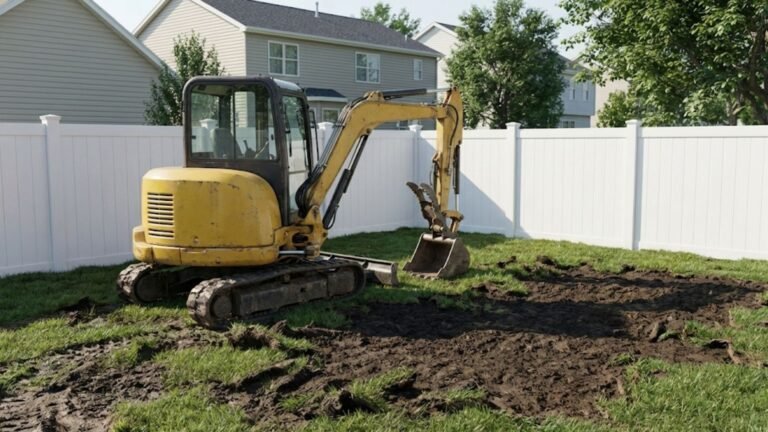
- Good Contractors Limit Where They Work: Professional crews confine equipment to planned access paths, use defined stockpile areas, and protect trees or features you want to keep, so your whole yard doesn’t turn into a construction zone.
- Simple Communication Reduces Stress: When crews share a day-by-day plan and quick updates, the fear of “I don’t know what’s happening” transforms into “I know what’s happening this week and what’s coming next.”
- Visible Disruption Lasts Longer Than Active Work: Heavy machines may only be on site for a handful of clearing days, but disturbed soil, material stockpiles, and temporary access routes remain until excavation, foundation work, and final grading wrap up.
Understanding Residential Site Clearing Before Excavation
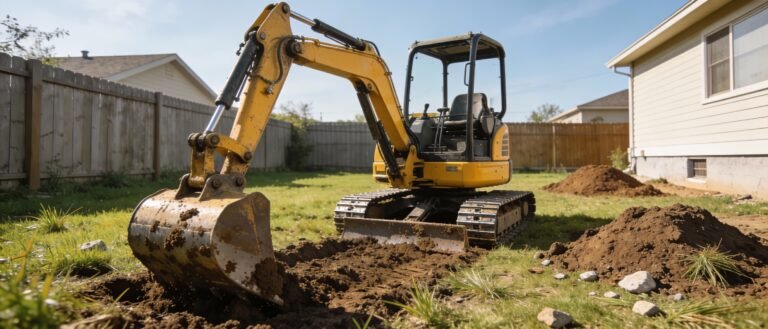
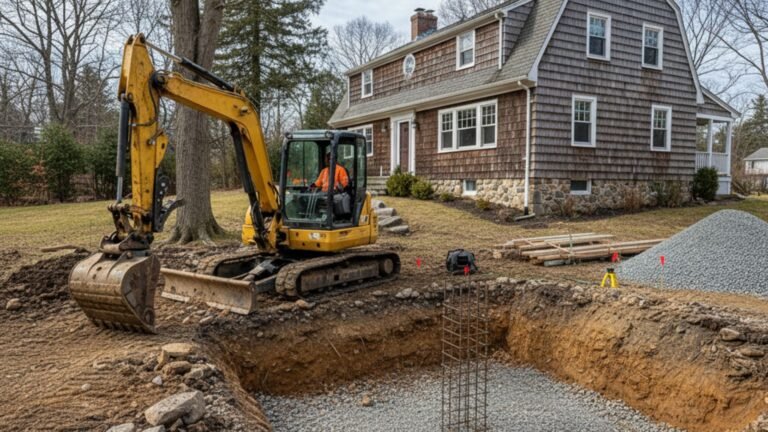
Professional site clearing is a planned preparation stage, not random tearing up of the yard. For a home build, addition, or major drainage project, crews use a site plan to decide where vegetation, small structures, and topsoil must be removed so excavation equipment can work safely. The goal is to open up only the area needed for the project, protect what you want to keep, and set up access and drainage so the property can handle heavy equipment and disturbed soil without creating problems across your entire lot.
Residential site clearing typically includes several distinct activities that happen in sequence. Crews perform a pre-clearing site walk and utility locating as part of basic safety and planning, marking known water, gas, electric, and communication lines. They remove brush, saplings, select trees, stumps, and surface rocks using a mix of manual tools like chainsaws and mechanical equipment such as excavators with grapples or mulchers. When small outbuildings, old fences, sheds, or concrete slabs sit in the footprint, crews demolish and remove them, then haul debris according to local solid-waste rules. One often-overlooked part of clearing is stripping and stockpiling topsoil separately from subsoil so it can be reused later for final grading and lawn restoration, keeping your long-term landscaping costs lower and your soil quality higher.
Local Environment and Process Needs Around Oxford
Lots in and around Oxford often combine lawn, edge woods, and uneven terrain, which shapes how clearing happens. Properties here can present narrow driveways, tight side yards, and varying slopes that influence equipment access and clearing methods. Crews may need to navigate these constraints while clearing brush and saplings along the planned foundation, driveway, or drainage path. Many homeowners also have certain trees, stone walls, or yard features they want to preserve, which requires careful layout and protection work before any heavy clearing begins.
This is why the first step is almost always a walk-through with you to decide what must go, what must stay, and how to keep the “torn up” zone as small as realistically possible. During this walk, contractors mark the house or addition footprint, identify mature trees worth saving, flag utility locations, and plan equipment routes. This planning phase directly addresses the homeowner’s biggest worry by showing exactly where the yard will look like a jobsite and where it will stay mostly undisturbed.
Typical Timelines: National Norms vs. Oxford-Area Reality
Across many residential projects, land and brush clearing is one of the shorter phases in terms of active work days, but it sets the tone for everything that follows. Nationally, a simple, lightly wooded residential lot may be cleared in a couple of days of focused activity, while heavier woods, more complex access issues, or extensive rock and stump work can stretch active clearing into a week or more of on-and-off activity. The key distinction homeowners need to understand is the difference between days of active clearing work and weeks of visible jobsite conditions.
In and around Oxford, timelines are shaped by local trees, slopes, soil conditions, and coordination with excavation and drainage schedules. It’s common for actual clearing work—including brush, small trees, select larger trees, and stump removal—to take a handful of workdays on a typical residential lot. However, the visible “jobsite look” with ruts, bare soil in the work zone, stockpiles of topsoil or stone, and temporary access roads often lasts several weeks as excavation, foundation work, utility installation, and backfill all run their course in sequence.
Day-by-Day Style Models
You can understand the clearing process through clear models based on lot complexity. For a lighter clearing scenario on a mostly open lot with some brush and a few small trees, the sequence might look like this: Day 1 covers layout, protection, and erosion controls; Days 2–3 handle brush and small tree clearing plus initial stump work; Day 4 involves rough grading, access path setup, and cleanup of loose debris. Total active clearing time in this model is about four workdays, though the yard will show signs of construction for weeks afterward.
For a heavier clearing scenario with more wooded areas or tight access, the timeline stretches but follows the same logical order: Day 1 focuses on layout, protection, and access planning; Days 2–4 involve progressive clearing in sections, working front to back or side to side depending on the site; Days 5–6 cover stump and rock removal, rough grading, and defining stockpile areas and machine routes. Even in this more complex scenario, active clearing work is measured in less than two weeks, though coordinating with excavation start dates means the property will look “under construction” longer.
These models help you set realistic expectations and understand that when your contractor says “clearing will take about a week,” they mean active work days with machines and crews on site, not the total time your yard will show visible disturbance. Tying clearing completion to excavation start dates gives you a clearer picture of when you’ll see the next major step forward, not just when the chainsaws stop.
Key Steps in the Land and Brush Clearing Process
Clearing for residential excavation follows repeatable phases that answer the question “what’s going to happen once they start?” in concrete terms. Understanding these steps helps you see clearing as a controlled sequence instead of random destruction.
Site Preparation, Layout, and Protection
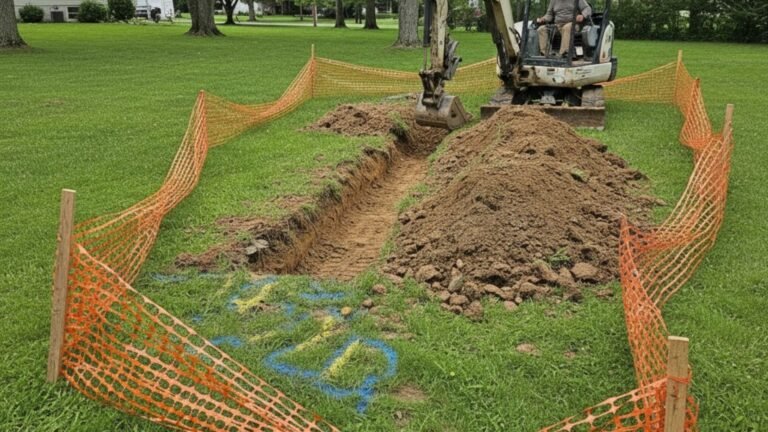
Before heavy work begins, crews walk the site with the plan in hand to mark the house or addition footprint, utility paths, and any drainage improvements. This phase confirms that permits and approvals are in place per local building department requirements and that everyone agrees on what’s happening where. Crews flag trees and features to save and mark the limits of disturbance so machines don’t wander across the entire lawn. They also decide on equipment access routes and staging areas so trucks and excavators use the same paths instead of carving tracks all over the yard.
This is the phase where the contractor can literally point to the parts of the yard that will look like a jobsite and the parts that should remain mostly undisturbed. For homeowners, this transparency directly addresses the fear of not knowing how much disruption to expect. You can see the plan on the ground before anything gets torn up, which gives you control and reduces anxiety about the unknown.
Erosion Controls and Access Set-Up
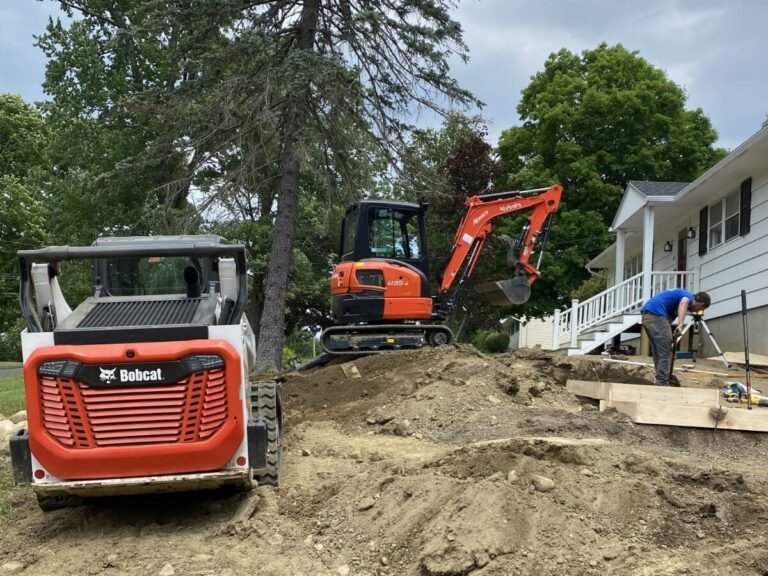
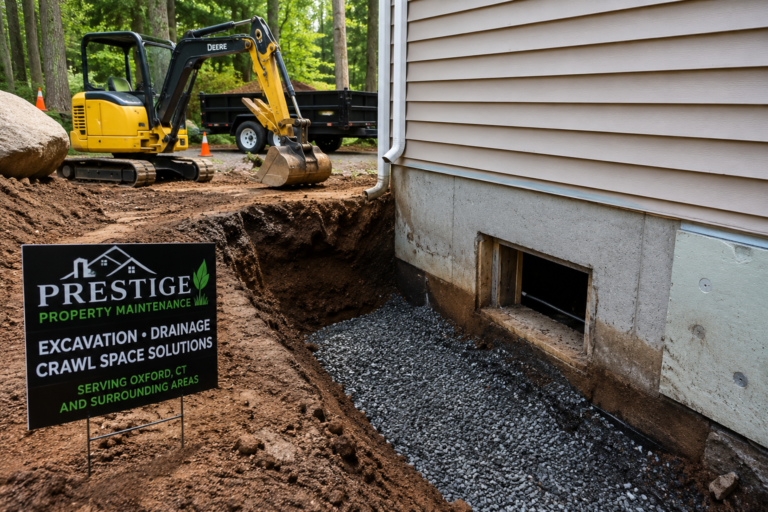
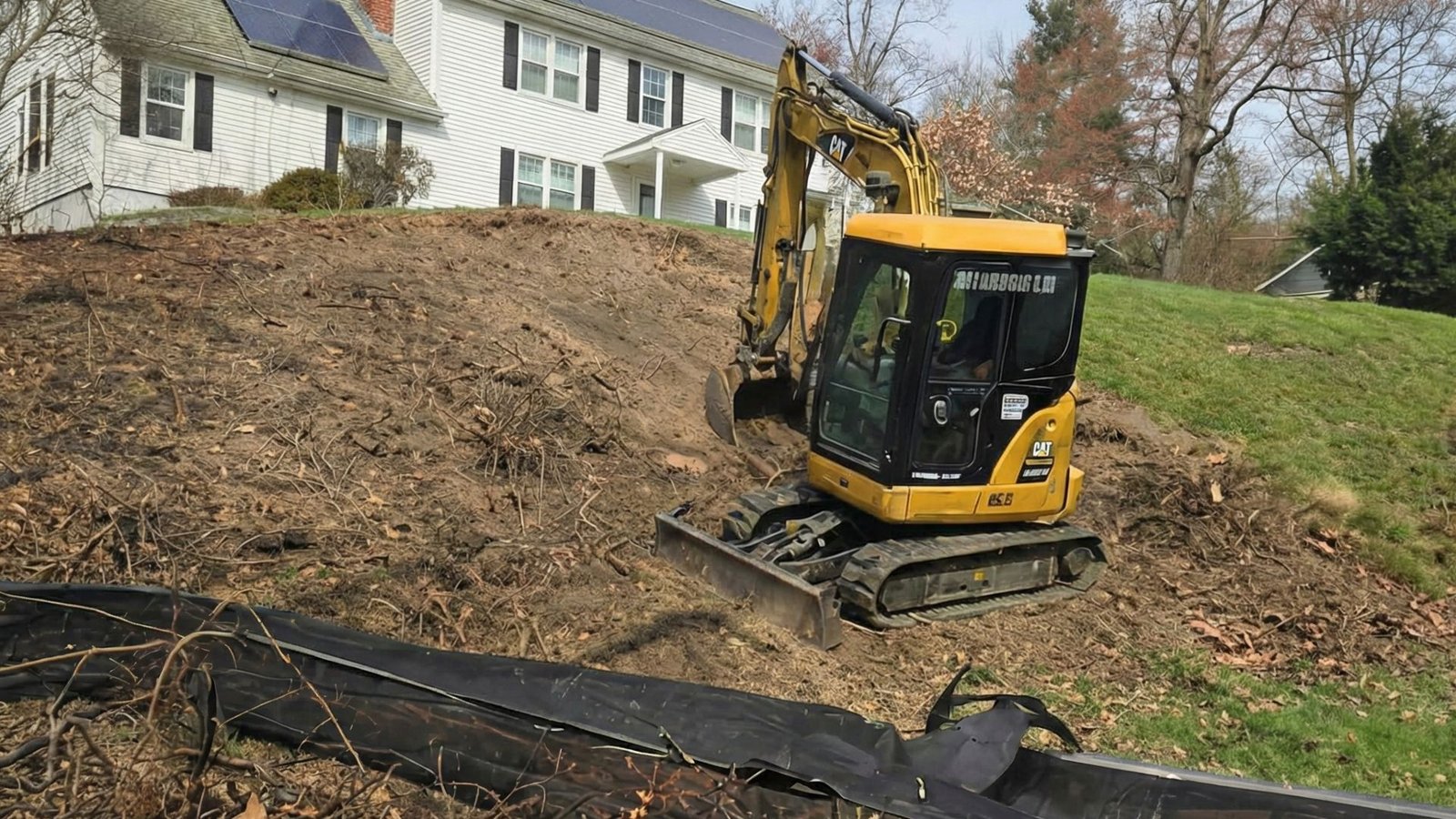
Before large areas are disturbed, regulations require that certain erosion and sediment control measures be installed and functional. Standard practice includes installing silt fence or similar perimeter protection where needed, building a stone construction entrance or temporary access road so trucks don’t grind deep ruts into soft lawn areas, and identifying a location for soil stockpiles so topsoil and fill don’t get spread randomly around the yard.
Even though homeowners think of “clearing” as cutting trees, these protection and access steps are what keep the mess contained. They also explain why some signs of construction like silt fence or a stone entrance stay in place well beyond the first week. These measures must remain throughout construction and until final stabilization, which means parts of your yard will look “under construction” longer than the clearing work itself. Understanding this helps you see silt fence and access roads as necessary protection, not signs that the job is dragging on forever.
Brush, Sapling, and Small Tree Removal
Once layout and protection are set, crews move into visible clearing by cutting brush, saplings, and small trees within the marked work area. Branches may be chipped on site or loaded into trucks for disposal, and smaller roots get pulled where needed so the ground can be graded smoothly. This phase uses manual clearing methods like chainsaws where access is tight and mechanical clearing with equipment where machines can safely operate.
On many residential lots, this is when homeowners feel the biggest shock because the view changes quickly. It’s helpful to remember that this part is often one of the fastest phases in terms of workdays, and clearing happens within a defined footprint, not across the whole property. A good contractor will remind you ahead of time which areas are being cleared and why, so the sudden change in your yard’s appearance doesn’t catch you off guard.
Larger Trees, Stumps, and Rock Handling
The next step involves heavier work that can add a few more days to the clearing timeline. Crews remove larger trees that fall inside the planned footprint, driveway, or drainage path, then pull and haul stumps or grind them where full removal isn’t necessary. Large rocks and surface ledge get lifted, broken, or relocated so excavation equipment can dig without constant obstructions. In some cases, good-sized boulders are saved for future retaining walls or landscape features instead of being hauled away.
A good contractor explains ahead of time which trees must go, what can be saved, and how that choice affects the amount of disturbance and the schedule. This phase can feel like it’s taking forever if you don’t understand that stump and rock work is physically demanding and time-consuming, but it’s essential for creating a stable, safe work platform for the excavation that follows.
Rough Grading and Excavation Access
After vegetation, stumps, and key obstacles are handled, crews strip and stockpile topsoil from the work area so it can be reused later for lawn restoration. They shape the exposed subgrade into a stable work platform with room for excavation, truck access, and material staging. Access paths get fine-tuned so machines can move without needing to drive over the entire yard.
This phase often makes the site look the worst right before it looks better. Soil is exposed, piles are visible, and the yard feels like a jobsite. But it also marks the point when clearing is essentially complete and the site is ready for excavation. Understanding that rough grading is the final step of clearing helps you see the “messy middle” as progress, not endless chaos.
Simple vs. Complex Clearing Scenarios Around Oxford
A comparison of scenarios helps homeowners see how their yard might fit in and why some projects create more visible disruption than others.
| Phase/Factor | Simpler Lot (Light Brush/Lawn) | Complex Lot (Heavier Woods/Access Issues) |
|---|---|---|
| Layout and Protection | Half to one day, easy access, few trees to save | One full day, multiple trees and features to protect |
| Brush and Small Trees | One to two days, limited footprint | Two to four days, clearing in sections for access |
| Stumps and Rock | Minimal stump work, small rocks | Extensive stump removal, larger rocks or ledges |
| Rough Grading and Access | One to two days, short access path | Two to three days, longer paths and more shaping needed |
| Visible Yard Disruption | Mostly confined to work zone | Wider access corridors and staging areas required |
| Overall “Jobsite” Look | Weeks, but small portion of yard affected | Weeks, larger portion of yard in active use |
Using this comparison, you can explain that even a complex lot still follows a planned sequence. It just has more time in the “messy middle” phase where clearing, preparation, and excavation overlap. The key difference is not whether the yard will look like a jobsite, but how much of the yard is affected and for how long. A simpler lot might have a 20-foot-wide work corridor from driveway to house, while a complex lot with tight access and heavy woods might need a 40-foot corridor plus multiple staging areas.
What Homeowners Should Expect and How to Prepare
Clearing goes best and feels less chaotic when homeowners know their role before, during, and after the work. Setting clear expectations up front prevents the “I had no idea this would happen” moments that create stress and conflict.
Daily Expectations During Land and Brush Clearing
You can expect that the first day is mostly marking, protection, and light activity, not full-scale destruction. The loudest days with chainsaws, excavators, and chipper trucks are often clustered together in a short window, not stretched endlessly across weeks. Some areas will be off-limits for safety while machines are operating and while the ground is uneven or open. Most importantly, the yard will not look finished once clearing stops. That restored appearance comes after excavation, drainage installation, foundation work, backfilling, and final grading all wrap up.
Understanding this sequence helps you mentally prepare for the fact that clearing is just the beginning of visible disruption, not the end. When you know that the “messy middle” is a normal part of construction projects, you can plan around it instead of being surprised and frustrated by it.
Tips to Minimize Disruptions and Speed Recovery
Practical steps for homeowners include moving vehicles, play equipment, and yard furniture away from access paths and the work zone before crews arrive. Decide ahead of time which trees and features are non-negotiable to keep, so there are no mid-day changes that cause delays or extra disturbance. Make a plan for pets and kids during the loudest, busiest days, keeping them safe and reducing distractions for the crew.
Ask your contractor for two timelines: how many days of active clearing they expect, and about how long the yard will look like a jobsite before restoration starts. This simple question gives you the information you need to set realistic expectations with your family and plan your life around the project. You can also ask where material stockpiles will be located and how long they’ll stay, which helps you understand why part of your yard stays unusable longer than you might expect.
Permits, Inspections, and Why They Affect Your Timeline
One reason clearing and excavation timelines stretch beyond the active work days is that the physical clearing cannot start until permits and any required erosion and sediment control plans are approved by building and zoning authorities. This means that even though your contractor might be ready to start, the project waits for paperwork, plan reviews, and official approvals. Homeowners often don’t realize this step exists, which makes the early delays feel frustrating and unexplained.
State building codes require that permit applications describe the land, proposed work, use, valuation, and include plans, and work cannot legally begin until the building official is satisfied that the work conforms and issues the permit. For projects that involve wells or septic systems, coordination with local health authorities is required, with written proof of approval submitted before a building permit is issued. These requirements protect you by ensuring that work meets safety and environmental standards, but they also add time to the front end of the project.
Inspections That Pause or Slow Work
Once clearing starts, building officials may require inspections at defined stages, and excavations, bedding, and other elements must be inspected before backfill is put in place. For larger residential projects, zoning or inland wetlands staff may also verify that erosion controls are installed per the certified plan. These inspections can create pauses in the work schedule, especially if the inspector finds something that needs correction before the next phase can proceed.
Understanding that inspections are built into the timeline helps you see delays as normal quality control, not signs that something is going wrong. A professional contractor will tell you when inspections are scheduled and what they’re checking, so you’re not surprised when work stops for a day or two while everyone waits for the inspector to sign off.
Factors That Drive How Long Your Yard Looks Torn Up
The duration of visible disturbance during site clearing and early excavation is shaped by several predictable factors that you can understand and plan around.
Permitting and reviews mean that physical clearing may only take a few days on a typical residential lot, but it cannot start until all the paperwork is approved. Erosion and sediment control sequencing requires that certain measures be installed and functional before site development begins, and they must be maintained throughout construction and until final stabilization. This explains why parts of the yard, like silt fence lines, construction entrances, and stockpile areas, remain “under construction” longer than the clearing work itself.
Site size and complexity affect how long clearing takes and how much of the yard is disturbed. Heavier brush, more trees and stumps, and limited equipment access extend the clearing timeline, and contractors need to choose the right methods to avoid delays. Existing structures and utilities add time whenever old sheds, slabs, or retaining structures must be demolished and removed, or when additional care is needed around utilities. Weather and seasonal conditions also play a role, especially during extended wet periods when work may slow or pause to comply with erosion control requirements and avoid environmental impacts.
Translating Technical Requirements Into Homeowner Language
The way to explain this to homeowners is simple: the actual clearing might only be a few days, but safety rules, inspections, and erosion control requirements mean parts of your yard stay in “project mode” until excavation, utilities, and backfilling are complete. The visible mess lasts longer than the active work because the site needs to stay protected and accessible through multiple construction phases, not just clearing.
When you frame it this way, homeowners can see that silt fence staying up for weeks isn’t a sign of a slow contractor. It’s a sign of proper compliance with environmental regulations that protect their property and their neighbors from erosion and sedimentation.
How Good Contractors Limit the Damage and Keep You Informed
The difference between a yard that’s completely torn up and one where disruption is contained comes down to planning, communication, and discipline. A good contractor uses several specific practices to limit where equipment travels and how much of the yard gets disturbed.
Controlled access paths mean picking one primary route for trucks and machines, laying down aggregate where needed, and keeping traffic out of the rest of the lawn as much as possible. Defined stockpile areas ensure that topsoil and other materials are piled in one or two designated locations, not scattered across the yard, so the rest of the property stays cleaner and is easier to restore later. Protection of saved features includes fencing off trees to keep or wrapping trunks, and using physical barriers around wells, septic tanks, or other sensitive areas. Daily or weekly cleanups mean the crew polices trash, stray debris, and unsafe conditions regularly instead of letting the yard drift into long-term chaos.
Each of these practices directly answers the homeowner question, “Is my whole property going to look like a disaster zone?” with concrete evidence that no, the disruption is confined to specific zones and managed actively throughout the project.
Communication That Reduces Timeline Stress
Since the core pain point is emotional—”I don’t know what’s going to happen once they start”—communication becomes as important as the physical work. Before work begins, a good contractor spells out the clearing phases and the order, giving you something like “Day 1: layout and protection, Days 2–3: clearing, Day 4: rough grading,” with a clear note that weather and surprises can shift that timeline slightly.
During work, short updates keep you in the loop: “We finished clearing today. Tomorrow we’ll focus on stump removal and rough grading. The loudest, messiest part should be over by Thursday.” When there is a delay, like weather or an unexpected buried obstruction, the contractor explains what changed and how it affects the “yard torn up” timeline. This kind of simple, regular communication transforms the experience from stressful and unpredictable to manageable and controlled.
Real Example: Light Clearing on a Half-Acre Oxford Lot
Consider a homeowner in Oxford adding a two-car garage and connecting breezeway to an existing house. The lot is half an acre, mostly lawn with a tree line along one side and some brush near the planned garage location. The clearing work took three days: Day 1 for layout, marking, and installing silt fence; Day 2 for cutting and chipping brush and removing two small trees; Day 3 for pulling stumps, rough grading, and setting up the access path for the excavator.
The active clearing work was done in 72 hours, but the yard showed visible jobsite conditions for about four weeks while the excavation crew dug the foundation, utilities were installed, and backfilling and rough grading were completed. The homeowner knew from the start that those four weeks were coming, so the visible mess didn’t create stress or conflict. The silt fence stayed up until final grading was done, and the stone access path remained until all heavy equipment was off the property. By the time the contractor removed the temporary access and spread the stockpiled topsoil back over the disturbed areas, the “torn up” phase was over and lawn restoration could begin.
This example shows the difference between active work time and visible disruption time, and it reinforces the value of clear communication about both timelines.
Frequently Asked Questions About Residential Site Clearing Services Near Me in Oxford CT
Q: How long does land and brush clearing usually take on a residential lot?
A: Active clearing work on a typical residential lot often takes a few focused days, usually somewhere between two and six workdays depending on the amount of brush, trees, stumps, and rocks involved. However, the yard will show visible signs of construction for several weeks as clearing leads into excavation, utilities, backfilling, and rough grading. The key is to understand the difference between days of active clearing and weeks of jobsite conditions.
Q: Will the contractor tear up my whole yard or just the construction area?
A: A professional contractor confines disturbance to the planned work zone, access paths, and designated staging or stockpile areas. They mark the limits of disturbance before work starts, install protection around trees and features you want to keep, and use controlled access routes instead of driving equipment randomly across the lawn. Your whole yard should not look like a disaster zone if the job is planned and managed properly.
Q: What can I do to prepare my property for site clearing?
A: Move vehicles, play equipment, yard furniture, and anything portable away from the work zone and planned access paths before crews arrive. Decide ahead of time which trees and features are non-negotiable to keep, and communicate that clearly to your contractor during the pre-construction walk. Make arrangements for pets and kids during the loudest work days, and ask your contractor for a simple timeline showing active work days and total jobsite duration.
Q: Why does silt fence and other erosion control stay up so long after clearing is done?
A: Erosion and sediment control measures are required to remain in place throughout construction and until final stabilization. This protects your property and neighboring properties from erosion, sedimentation, and water quality problems. Even though active clearing may only last a few days, the silt fence, construction entrance, and other controls stay functional through excavation, foundation work, utilities, backfilling, and rough grading to comply with environmental regulations.
Q: How do I know if my contractor is taking longer than they should?
A: Ask for two timelines at the start: how many days of active clearing they expect, and about how long the yard will look like a jobsite before restoration begins. If actual work stretches well beyond the estimate without clear explanations like weather delays, unexpected underground obstructions, or permit hold-ups, that’s a sign to have a conversation. A good contractor will update you when timelines shift and explain why.
Q: Can clearing happen in sections to reduce how much of my yard is torn up at once?
A: Yes, on some projects it makes sense to clear and work in sections, especially on larger lots or when access is tight. The contractor might clear the front section, complete excavation and utilities there, then move to the next section. This approach can reduce the total area that looks like a jobsite at any one time, though it may extend the overall project timeline slightly.
Final Thoughts
When you understand that land and brush clearing follows a predictable sequence from layout and protection through rough grading, the fear of not knowing what will happen transforms into confidence that you can plan around the work. The actual clearing on most residential lots is measured in days, not weeks, but the yard will show visible jobsite conditions longer as excavation, utilities, and backfilling all progress in order. A professional contractor confines disturbance to planned zones, installs erosion controls before heavy work begins, protects features you want to keep, and gives you simple timelines that separate active work days from total project duration. These practices keep your property from turning into a chaotic construction zone and help you see each phase as progress toward the finished project.
The long-term value of proper site clearing shows up in smooth excavation work, stable access for heavy equipment, and easier restoration when the construction phases are complete. When clearing is done right, your contractor can move quickly into excavation without fighting unexpected obstacles, your yard recovers faster because topsoil was properly stockpiled and protected, and erosion controls keep your property and your neighbors’ properties safe from sediment and water damage. Investing in professional clearing may feel like extra time and cost at the start, but it saves money and frustration by preventing delays, equipment damage, and environmental problems down the road.
If you’re planning an excavation project in Oxford and want a contractor who explains the clearing process clearly before work starts, Prestige Excavation & Drainage of CT brings decades of experience managing residential site work from layout through final grading. We walk every property with homeowners before machines arrive, mark exactly where disturbance will happen, install proper erosion controls, and give you realistic timelines for both active work and visible jobsite conditions. Our approach keeps disruption contained, protects the parts of your yard you want to save, and moves you steadily from clearing to excavation to finished grading without the stress of wondering what’s happening next. Contact Prestige Excavation & Drainage of CT today to schedule a site consultation and discover how professional clearing and excavation can keep your project on track and your yard under control.