Driveway and Roadway Excavation and Paving Prep Near Me in Oxford CT
If your driveway is cracking, sinking, or developing potholes within a few years of installation, the problem likely started before the first load of asphalt or concrete was poured. Driveway excavation CT is not simply about digging a hole and filling it back in. It is the foundational process that determines whether your driveway lasts two years or twenty.
Connecticut’s freeze-thaw cycles, heavy spring snowmelt, and roughly 47 inches of annual rainfall can expose every flaw in a poorly prepared base within a single season. What looks like a surface problem is almost always an excavation problem hiding underneath. Property owners across the state often spend thousands on resurfacing when the real fix requires going back to the ground-level prep work that should have been done correctly the first time.
Key Takeaways
- Proper excavation depth matters: Gravel driveways need 6 to 12 inches, asphalt needs 8 to 18 inches, and concrete needs 8 to 12 inches of excavation depth
- Connecticut excavation costs $66 to $264 per cubic yard: CT construction costs run approximately 32% higher than the national average
- Minimum 1 to 2% slope required: Proper grading ensures water runoff and prevents pooling and frost heave
- 4 to 6 inches of compacted base layer essential: A crushed stone base prevents shifting, settling, and potholes
- CT DOT encroachment permits required for road work: Any excavation within CT DOT right-of-way requires a permit before work begins
- Improper excavation costs 3 to 5 times more to fix: Professional excavation prevents expensive future repairs and premature failure
1. Why Driveway Excavation Near Me Matters
Proper excavation is the foundation of any successful driveway or roadway project in Connecticut. Without correct site preparation, driveways fail prematurely and develop potholes, cracks, and water damage that can cost thousands to repair. A properly excavated driveway can last decades rather than a few years, significantly reducing long-term maintenance and reconstruction costs.
The Foundation Problem
When excavation is done incorrectly, the surface has no stable base to support it under load and weather stress. Soft or unstable soil shifts under vehicle weight, causing settling, ruts, and cracks that worsen with each winter. Organic material left in the ground decomposes over time, creating voids beneath the surface that lead to pavement failure ahead of schedule.
Proper site preparation also prevents erosion, foundation damage near structures, and the kind of instability that makes a driveway unsafe to use. Skipping or rushing this phase may appear to save money upfront, but compounding repair costs quickly eliminate any early savings. Experienced excavation contractors in Connecticut understand that the visible surface is only as reliable as the work done several inches below it.
2. Warning Signs You Need Excavation
Recognizing early warning signs can help you address the underlying problem before it becomes significantly more expensive to fix.
Sign A: Premature Pavement Failure
Driveways that develop potholes, cracks, or settlement within two to five years indicate poor excavation and base preparation. Asphalt driveways should last 15 to 20 years with proper installation, and concrete driveways should last 25 to 30 years. If your driveway is failing well before those benchmarks, the excavation depth or base compaction was likely inadequate from the start.
Sign B: Water Pooling and Drainage Issues
Standing water after rainfall is a visible sign of insufficient slope or poor drainage planning during the excavation phase. A minimum 1% slope, equal to roughly one-quarter inch per foot, is required for proper water runoff. Connecticut’s seasonal rainfall and spring snowmelt require effective drainage systems to prevent washouts, erosion, and the freeze-thaw damage that rapidly degrades even newly installed pavement.
3. Key Considerations for Driveway Excavation
Material type, excavation depth, drainage requirements, and site-specific soil conditions all play a role in determining the correct approach. Understanding these factors before breaking ground helps avoid the most common and costly mistakes in driveway excavation CT.
Factor A: Excavation Depth by Material
The depth you excavate depends directly on your chosen surface material and the anticipated traffic load.
| Material | Excavation Depth | Base Thickness | Surface Thickness |
|---|---|---|---|
| Gravel driveway | 6 to 12 inches | 4 to 6 inches | 2 to 6 inches gravel |
| Asphalt driveway | 8 to 18 inches | 4 to 6 inches | 2 to 3 inches asphalt |
| Concrete driveway | 8 to 12 inches | 4 to 6 inches | 4 inches concrete |
| Heavy-duty road | 12 to 24 inches | 8 to 12 inches | 3 to 4+ inches asphalt |
When soil is soft, unstable, or has poor load-bearing capacity, excavating deeper and importing compacted fill material is the correct course of action. Attempting to work around compromised subgrade conditions is a shortcut that always leads to early failure.
Factor B: Drainage Requirements
Connecticut’s climate demands drainage solutions that can handle both volume and seasonal variation. A minimum 1% slope is required, and a 2% slope is the recommended standard for residential driveways. Drainage options typically include French drains in the $1,500 to $5,000 range, culverts from $500 to $3,000, and roadside ditches from $1,000 to $5,000 or more depending on length and complexity. Installing drainage infrastructure even when a site appears well-drained is strongly recommended, since Connecticut’s heavy spring snowmelt can overwhelm drainage that seems adequate during dry seasons.
4. Legal and Regulatory Requirements in Connecticut
Driveway excavation in Connecticut is subject to permit and safety requirements at both the state and municipal level. Understanding these requirements before work begins protects property owners and contractors from fines, project delays, and costly rework.
CT DOT Standards and Permit Requirements
Any excavation within CT DOT right-of-way requires an Encroachment Permit before work can proceed. For pavement repair associated with excavations under 1,500 square feet, CT DOT specifications require 3 inches of S 0.375 Traffic Level 2 HMA placed in two equal lifts, plus 6 inches of S1.0 Traffic Level 2 HMA also compacted in two equal lifts. Excavations over 1,500 square feet require milling and full HMA resurfacing. Base requirements under CT DOT pavement repair standards include 10 inches of Processed Aggregate Base Material compacted in 5-inch lifts, plus 10 inches of Compacted Granular Fill beneath that.
At the town level, requirements commonly include minimum concrete curing periods of 72 hours before opening to traffic, mandatory barricades and warning lights during the curing phase, and trench backfilling standards that require 8 inches of processed stone plus a temporary asphalt patch maintained for a minimum of 30 days. Connecticut law also requires calling 811 at least three business days in advance so that underground utilities can be marked. Failing to make this call before digging is not only dangerous but illegal, and the consequences of striking a utility line can be severe and expensive to resolve.
5. The Excavation Process: Step-by-Step
A systematic approach ensures consistent results and reduces the risk of problems developing after the surface is installed. Each step builds on the one before it, and skipping any phase creates vulnerabilities that Connecticut’s climate will eventually expose.
Step 1: Site Clearing and Preparation
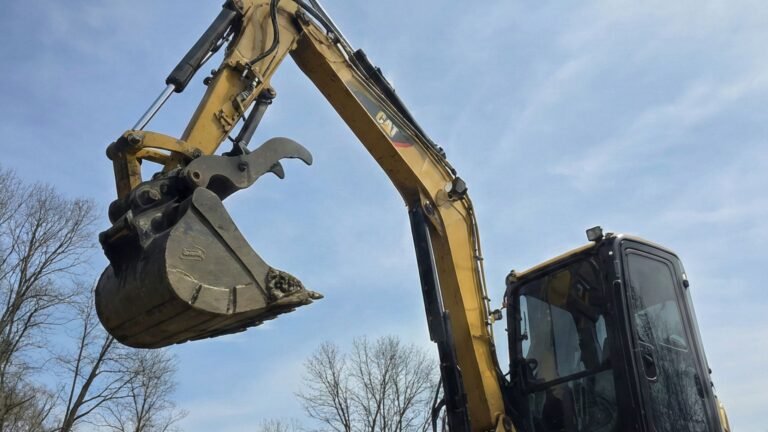
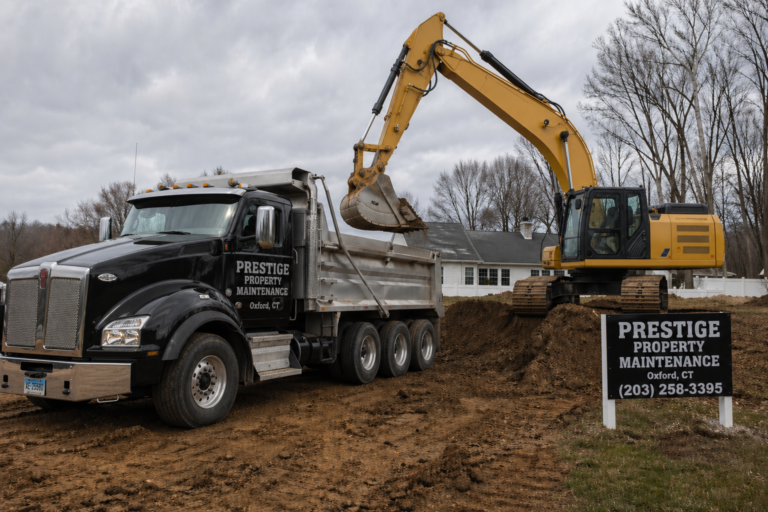
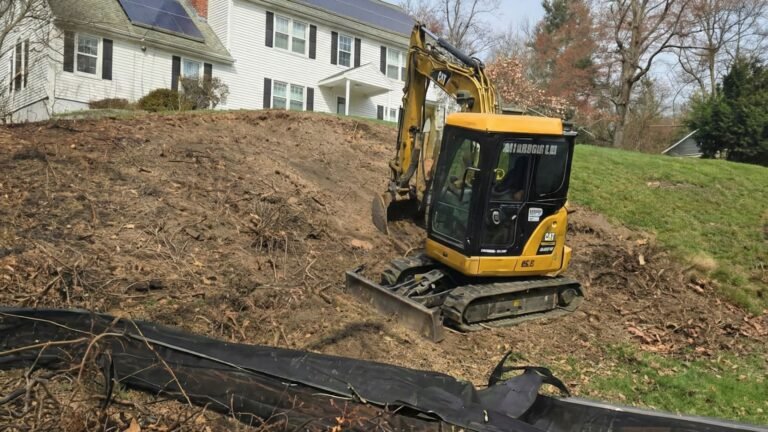
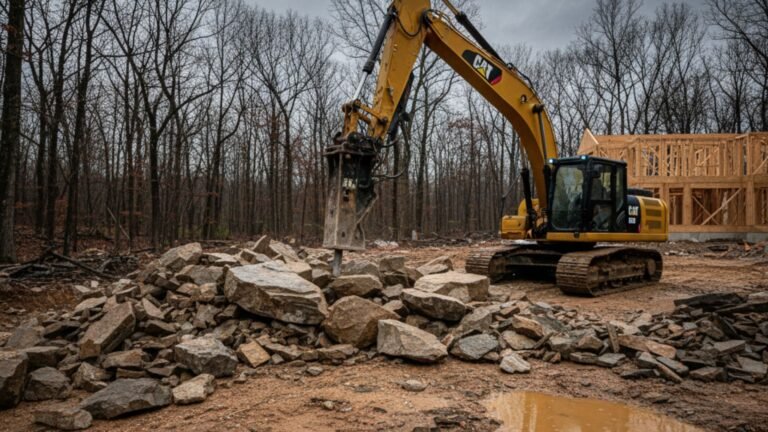
Before any digging begins, the work area must be fully cleared. Trees, stumps, and large rocks must be removed from the driveway path, and vegetation, debris, and any existing pavement stripped away down to undisturbed soil. Organic material must be removed completely, since stump grinding alone leaves decomposable material underground that creates voids over time. Checking the natural slope of the site at this stage confirms that water will drain away from the driveway and nearby structures once grading is complete.
Step 2: Mark and Excavate
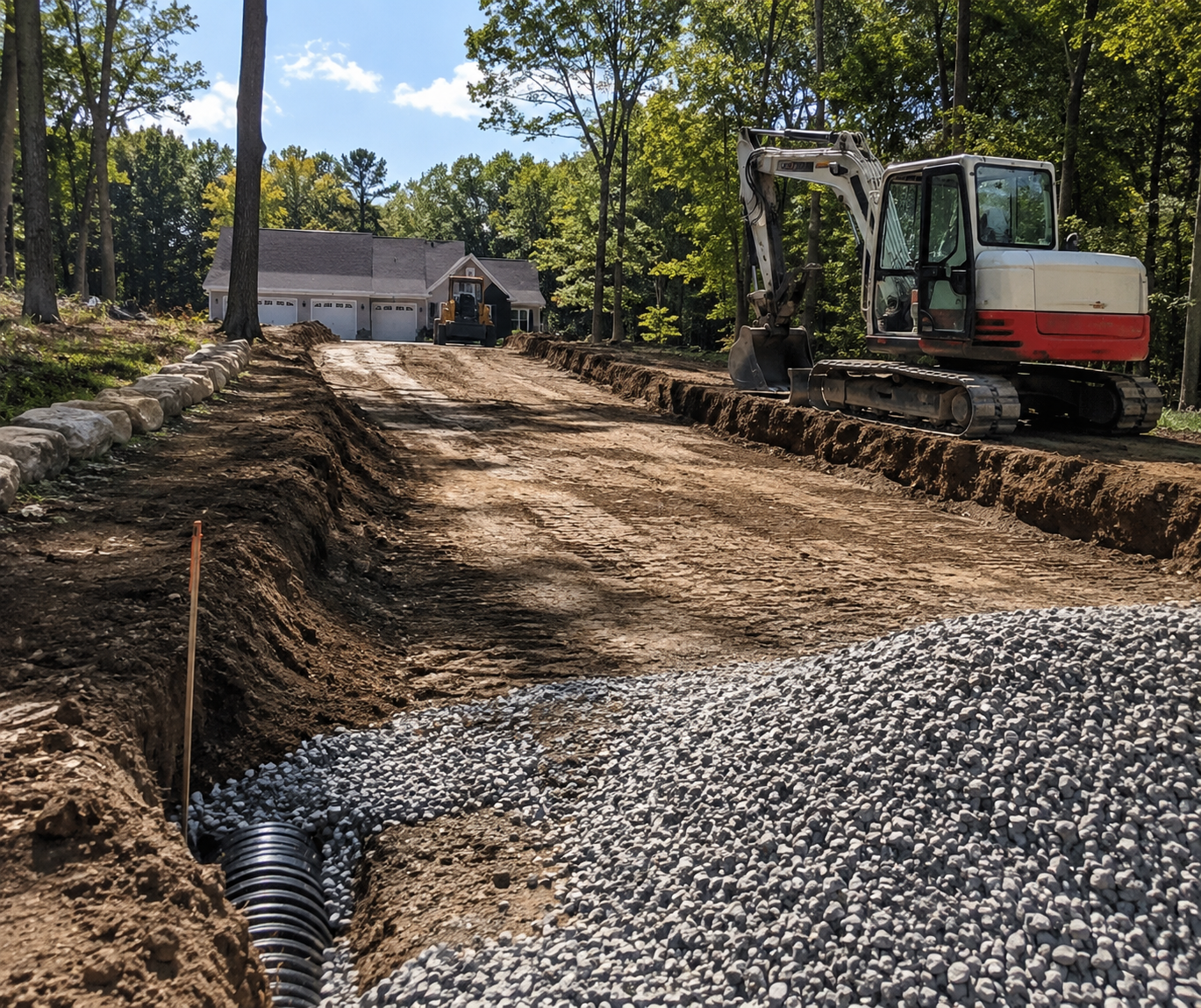
Driveway boundaries should be defined using stakes and string before excavation begins. Standard widths run 8 to 12 feet for single-car driveways and 18 to 24 feet for two-car configurations. Excavation should proceed from the high point to the low point following the planned grade, leaving 2 to 3 inches above final grade to account for compaction settlement. Checking elevation frequently with a laser level ensures consistency across the full project area.
Step 3: Address Drainage Needs
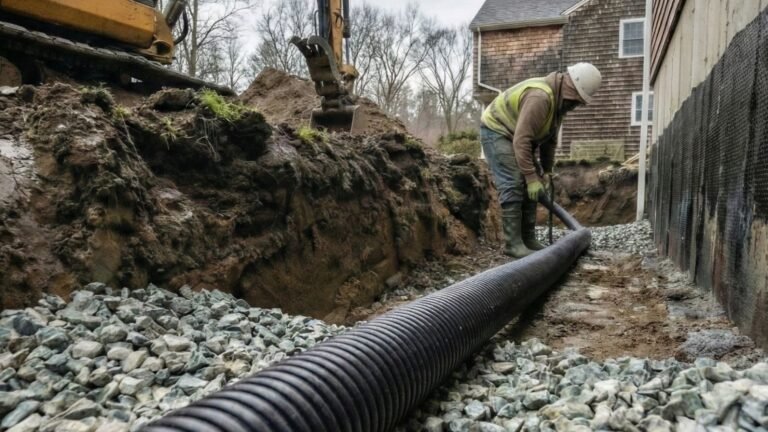
Drainage systems must be installed before base material is placed. French drains, culverts, or channel drains should be positioned based on site topography and expected water volume. Proper grading at this stage directs water away from the home, reducing the risk of erosion and structural damage near the foundation. On gravel roads with steep slopes, water bars or erosion barriers may also be required to prevent seasonal washouts during Connecticut’s spring snowmelt period.
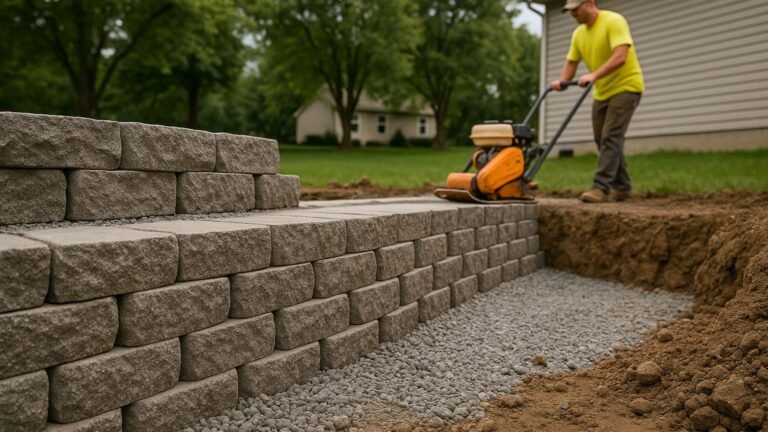
Step 4: Compact and Build the Base Layer
The base layer is constructed using crushed stone or compacted gravel, spread and compacted in 2 to 3 inch lifts rather than all at once. Compacting in lifts produces significantly better density and long-term stability. Achieving 95% or higher compaction density is the standard for asphalt and concrete driveways. In areas with soft or clay-heavy soil, geotextile fabric placed beneath the base material helps prevent it from sinking over time. Poor compaction is the single most common cause of premature pothole formation.
Step 5: Add Final Surface Material
With the base fully prepared and compacted, the surface layer can be installed. Gravel driveways receive a top layer of three-quarter inch to one-and-a-half inch crushed rock. Asphalt driveways get 2 to 3 inches of hot mix asphalt rolled and compacted while at temperature. Concrete driveways require forms to be set, concrete poured to a minimum 4-inch thickness, leveled carefully, and then allowed to cure before opening to traffic.
6. Prevention and Long-Term Strategy
The investment in proper driveway excavation and paving prep pays dividends over the full lifespan of the surface. Protecting that investment requires both professional installation and an ongoing maintenance commitment.
Long-Term Maintenance by Material
| Material | Maintenance Schedule | Lifespan |
|---|---|---|
| Asphalt | Sealcoat every 2 to 3 years, fill cracks immediately | 15 to 20 years |
| Concrete | Seal every 3 to 5 years, fill control joints | 25 to 30 years |
| Gravel | Regrade annually, add fresh gravel every 2 to 3 years | 5 to 10 years |
Common Pitfalls in Driveway and Roadway Excavation Near me
Most driveway failures in Connecticut trace back to one or more of the following mistakes.
- Not excavating deep enough: Leads to shifting, ruts, and early pavement failure regardless of surface material quality
- Skipping proper drainage: Water destroys driveways through freeze-thaw damage, and this is especially destructive in Connecticut winters
- Using wrong base material: A weak base produces a weak driveway no matter how well the surface is installed
- Poor compaction: Loose or incompletely compacted soil shifts under load, causing potholes and cracking within a few seasons
- Not calling 811: Damaged utility lines are dangerous, expensive, and entirely preventable with a three-day advance notice
- Breaking up soil instead of removing it: Disturbed soil that stays in place compacts poorly and creates voids as it settles
- Ignoring seasonal water flow: Spring snowmelt represents the worst-case drainage scenario and must be planned for during grading
Fixing excavation problems after paving is already in place costs three to five times more than doing the job correctly the first time. Premature failure at five years instead of twenty means paying for four driveways over the same period that a well-excavated surface would have required just one.
Frequently Asked Questions About Driveway Excavation CT
Q: How much does driveway excavation cost in Connecticut?
A: Connecticut excavation costs range from $66 to $264 per cubic yard. Complete project costs vary considerably by material: gravel driveways typically run $1,500 to $5,000 or more, asphalt driveways $3,000 to $15,000 or more, and concrete driveways $4,000 to $20,000 or more. CT construction costs are approximately 32% higher than the national average due to union labor, strict building codes, and high local property values.
Q: How deep should driveway excavation be?
A: Excavation depth depends on the surface material. Gravel driveways require 6 to 12 inches, asphalt driveways require 8 to 18 inches, concrete driveways require 8 to 12 inches, and heavy-duty roads require 12 to 24 inches. Soft or unstable soil conditions may require excavating deeper and importing fill material to achieve a stable subgrade.
Q: Do I need a permit for driveway excavation in Connecticut?
A: Permits are typically required for most driveway excavation work in Connecticut. Any excavation within CT DOT right-of-way requires an Encroachment Permit. Most towns also require local building or excavation permits, and projects near wetlands may need a separate DEEP stormwater permit. Checking with both the state and your municipality before beginning work is essential.
Q: What is the minimum slope for a driveway?
A: A minimum slope of 1%, equal to one-quarter inch per foot, is required to ensure water runoff. A 2% slope is the recommended standard for residential driveways. Without adequate slope, water pools on the surface and works its way into the base and subgrade, accelerating freeze-thaw damage throughout the winter.
Q: How much crushed stone base do I need?
A: Asphalt and concrete driveways require 4 to 6 inches of compacted crushed stone base. Gravel driveways need 4 to 12 inches depending on use intensity and soil conditions. Compacting the base in 2 to 3 inch lifts rather than all at once is critical to achieving the density needed for long-term stability.
Q: Why is my new driveway cracking and failing?
A: Early cracking and failure in a new driveway almost always points to excavation and base preparation problems rather than surface material defects. The most likely causes are insufficient excavation depth, inadequate drainage, the wrong base material, or incomplete compaction. These subgrade issues cannot be corrected by resurfacing alone; the base must be addressed to achieve a lasting repair.
Final Thoughts
Driveway excavation near me in Connecticut is a technical process where every phase directly affects the durability of the finished surface. Proper depth, effective drainage, quality base material, and thorough compaction are not optional steps; they are the minimum requirements for a driveway or roadway that holds up through Connecticut’s demanding climate.
A properly built driveway improves curb appeal, supports property value, and provides reliable access year-round without the recurring frustration of potholes, cracks, and drainage failures that plague poorly excavated surfaces.
At Prestige CT Excavation and Drainage, we provide professional driveway excavation, site preparation, grading, drainage solutions, and paving prep services for residential and commercial clients throughout Oxford CT, Seymour CT, and the surrounding Connecticut communities. Contact us to schedule a consultation and get an accurate project estimate.