Tree Root Removal by Excavation Near Me in Oxford CT
When tree roots start heaving your sidewalk, threatening your foundation, or backing up your sewer line, the sense of urgency is immediate. Many Oxford CT homeowners face this problem and find themselves wondering exactly what happens when a contractor shows up with excavators and shovels. The thought of strangers digging trenches through your yard naturally raises concerns about how long the property will remain torn up, whether nearby trees will survive the process, and what regulations or neighbor complications might arise. Professional tree root excavation in Connecticut follows a predictable sequence that limits disruption and addresses legal considerations around property lines, municipal tree wardens, and tree protection zones. Most residential root removal projects in Oxford CT span one to three days, with the truly messy phase confined to active excavation hours rather than weeks of open trenches. Understanding each step of the process, from utility locates to final backfill, helps you prepare for temporary yard disturbance and recognize the safeguards that protect both your property and your trees.
Key Takeaways
- Root Excavation Jobs Span 1-3 Days in Oxford CT: Simple 20-50 foot trenches near sidewalks or driveways often wrap up in one to two days, while complex jobs involving deep roots, foundation clearance, or multiple utility crossings may extend to three days depending on access and soil conditions.
- Planning Avoids Yard Chaos: Mandatory 811 utility locates, property line verification, and establishment of tree protection zones guide excavation into narrow corridors rather than random digging across your entire lawn.
- Trench Safety is Core: Protective systems for excavations five feet deep or greater, combined with hand-digging protocols near critical roots, meet Connecticut standards and limit the risk of cave-ins or equipment damage.
- Root Cutting is Selective: Problem roots are removed cleanly, while roots supporting tree stability receive burlap wrapping or mulch coverage per Connecticut regulations, then trenches are backfilled the same day whenever soil and weather allow.
- CT Tree Laws Vary Locally: Municipal tree wardens or utility companies may require advance notice for work near public rights-of-way, and Connecticut case law prohibits spite damages when cutting boundary tree roots.
- Yard Restoration Included: Contractors backfill trenches, grade surfaces, and reseed or sod disturbed strips, keeping the “torn up” appearance limited to the days when excavation equipment is actively on site.
Understanding the Tree Root Excavation Near Me Process in Oxford CT
Professional tree root removal follows a predictable sequence designed to address invasive roots while honoring Connecticut’s property-line rules, municipal tree warden authorities, and tree protection standards. Unlike random digging that can destabilize trees or trigger neighbor disputes, systematic root excavation begins with boundary verification, utility clearances, and establishment of tree protection zones around trunks you intend to keep. Connecticut’s legal framework recognizes your right to cut roots on your own property, even if the parent tree sits across the property line, but requires you to avoid unnecessary damage beyond your boundary and to respect public or warden-controlled trees that might require municipal approval.
Oxford CT’s mix of wooded residential lots and older neighborhoods presents specific challenges. Surface roots from large maples and oaks frequently heave sidewalks and invade foundation perimeters, while underground roots from mature trees follow utility trenches and seek moisture in sewer lines. Each scenario demands a tailored approach. Shallow surface roots near driveways may only require narrow trenches 12 to 18 inches deep, exposing and severing the offending root before immediate backfill. Deeper roots threatening foundation walls or buried pipes, however, often require excavations reaching four to six feet, which triggers trench safety protocols including protective sloping or shoring systems. The process adapts to your property’s layout, the tree’s health and species, and the specific root problem you need solved.
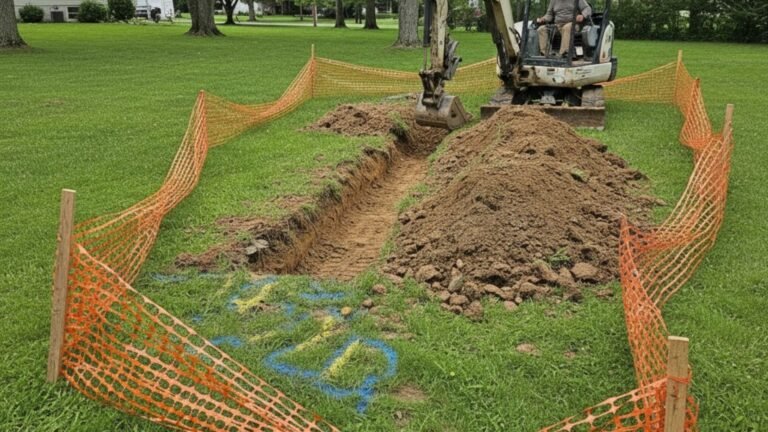
Before any excavator bucket touches soil, reputable contractors walk your property to identify where roots are causing damage, where the tree trunk stands, and where property lines run. This pre-excavation planning phase addresses the most common homeowner fear: uncontrolled digging that tears up the entire yard. By marking trench routes with paint or flags, confirming utility locations through 811 calls, and establishing fenced or flagged tree protection zones where hand tools replace machinery, the contractor confines disturbance to purposeful corridors. This upfront investment of planning time directly shortens the messy phase of your project, because crews dig only what is necessary and know exactly where they can and cannot work.
National vs. CT Root Excavation Timelines
Root excavation timelines in Oxford CT typically extend one to two days longer than baseline national figures due to Connecticut’s emphasis on tree protection, property-line caution, and utility coordination. A straightforward surface root removal job along a 30-foot driveway edge might be completed in one full workday in regions with minimal regulatory oversight, but the same job in Connecticut often spans two days once you account for mandatory utility locates, establishment of tree protection zones, and careful hand-digging within those zones to avoid damaging roots you intend to preserve.
Simple jobs, such as cutting and removing a single large root that has heaved a sidewalk slab, generally require four to six hours of active excavation once planning and utility work are complete. Add another half day for site preparation, final grading, and cleanup, and most homeowners see their yard returned to a restored state within 24 to 36 hours. Complex jobs involving multiple root systems, deep foundation clearance, or proximity to buried utilities can stretch to three days or more. For example, excavating roots around a basement wall where trenches must reach six feet deep requires protective shoring, hand-digging near tree trunks, careful backfill compaction in layers, and coordination with any structural engineer or utility inspector who needs to review the work.
Day-by-Day Breakdown Models
A typical two-day root excavation job in Oxford CT follows this pattern. Day one begins with final site layout, confirming utility markings, setting up tree protection fencing around any trunks within 10 to 15 feet of the work zone, and clearing vegetation or obstacles along the planned trench route. Crews may spend four to eight hours on this preparatory phase, depending on access constraints and the need to move lawn furniture, planters, or other items. Day two focuses on excavation, root cutting, and immediate backfill. Crews dig the trench to the target depth, expose the problem roots, make clean cuts with saws or pruners, wrap any remaining exposed roots with burlap or cover them with mulch per Connecticut root protection rules, then backfill the trench in compacted layers. By the end of day two, the trench is closed, soil is graded smooth, and your yard no longer has open excavations.
More complex scenarios add a third day. If the excavation encounters unexpected utilities, large boulders in New England’s rocky soil, or requires deeper hand-digging within tree protection zones, contractors may pause overnight to allow inspections or to bring in specialized equipment like air spades for root exposure without cutting. Weather also affects timelines. Heavy rain during excavation can force temporary halts because trench safety standards require re-inspection and stabilization after conditions change. In practice, most Oxford CT homeowners experience the “torn up” appearance for one to two full workdays, with restoration activities beginning immediately after root work is complete.
Key Steps in the Tree Root Excavation Process
The root excavation process breaks into distinct phases, each addressing specific concerns about yard disruption, tree health, and legal compliance. Walking through these steps in order demystifies what happens on your property and clarifies how long each phase impacts the appearance and accessibility of your yard.
Site Preparation and Layout
Before any digging begins, contractors complete utility locates by calling 811 at least 48 hours in advance. This mandatory step identifies underground electric, gas, water, sewer, and communication lines, allowing crews to route trenches safely. In Oxford CT, municipal and private utilities both respond to 811 requests, and contractors verify that all expected markings are visible before excavation starts. Simultaneously, property lines are confirmed through survey pins, fence lines, or reference points, because Connecticut law allows you to cut roots on your side of the boundary but prohibits damaging trees or roots on your neighbor’s land without consent.
Next, contractors establish tree protection zones around any trunks you want to preserve. These zones, often defined as a radius equal to one foot per inch of trunk diameter measured at breast height, are marked with flagging or temporary fencing. Inside the TPZ, excavation is minimized, and when unavoidable, hand tools replace machinery to reduce root damage. Vegetation, mulch, and obstacles along the planned trench route are cleared, and crews may lay down plywood mats or boards to create access paths for equipment, protecting existing lawn from rutting and compaction. This preparation phase typically consumes four to eight hours and leaves your yard looking staged rather than torn up, with clear markings showing exactly where the next day’s digging will occur.
Trench Excavation and Root Exposure
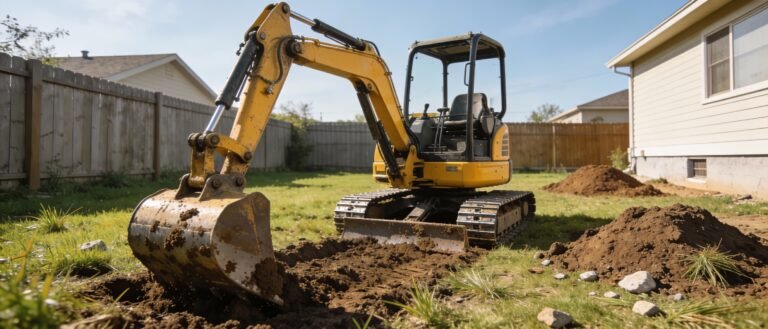
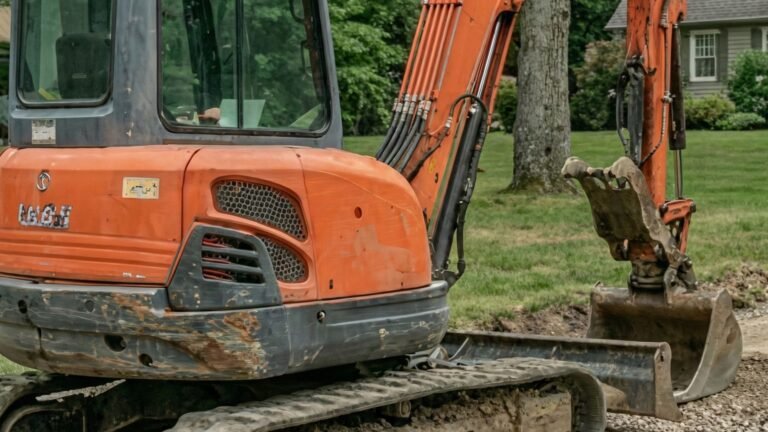
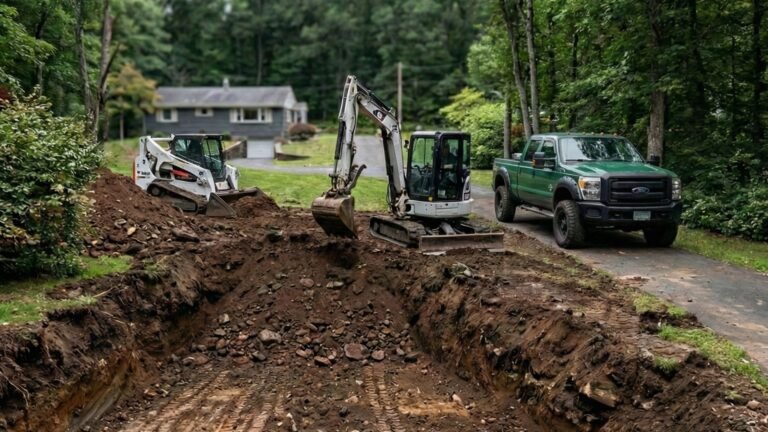
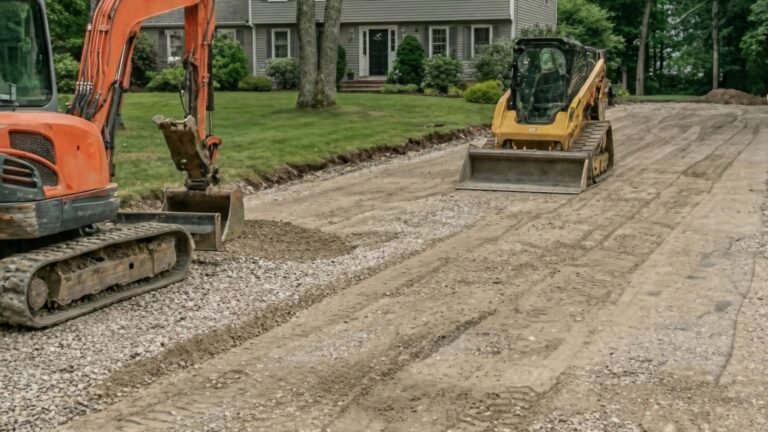
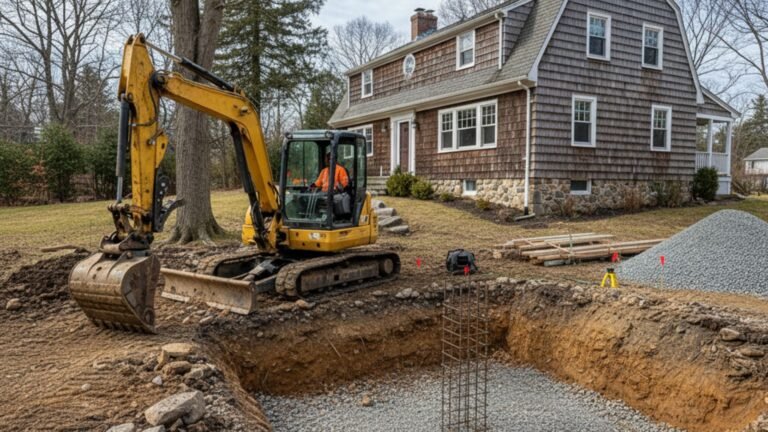
Actual excavation begins with compact machinery such as mini-excavators or backhoes opening a trench along the flagged route. Trench width is kept narrow, often just 12 to 18 inches for surface root work, to limit soil removal and simplify backfilling. Depth varies by the target roots. Surface roots causing sidewalk heaving may sit only 6 to 12 inches below grade, while roots invading foundation drains or basement walls can extend four to six feet deep. For any excavation deeper than five feet, safety standards require protective systems such as sloping the trench walls at a safe angle, benching the sides in steps, or installing trench boxes or shoring to prevent collapse.
As the trench deepens, roots are exposed gradually. Contractors may switch to hand tools, shovels, or air spades when working within tree protection zones or near utilities, because these methods allow precise control and reduce the risk of accidentally severing critical roots or striking buried pipes. Spoil, the excavated soil, is placed on tarps or plywood at least two feet back from the trench edge to prevent overloading and potential cave-ins. This phase is when your yard looks the most disrupted, with an open trench, piled soil, and equipment actively working. However, because planning has confined the work to a narrow corridor, the rest of your property remains accessible and undisturbed.
Root Cutting, Protection, and Backfill
Once problem roots are fully exposed, contractors make clean cuts using reciprocating saws, root pruners, or chainsaws, depending on root diameter. The goal is surgical removal of the roots causing damage while leaving as much of the tree’s structural root system intact as possible. Roots you’re keeping, those that support the tree’s stability or health, receive immediate protection. Connecticut regulations specifically call for wrapping exposed roots with damp burlap or covering them with mulch to prevent drying and damage during the brief period before backfilling begins.
Backfill starts as soon as root cutting is complete, often the same afternoon to minimize how long trenches remain open. Soil is replaced in layers, typically six to eight inches at a time, and each layer is compacted by tamping or mechanical compaction to eliminate voids that could cause settling later. If the trench crossed a lawn area, contractors separate topsoil during excavation and replace it as the final layer to support grass regrowth. If the excavation reached structural elements like foundation footings or utility lines, inspectors may need to verify proper clearances and backfill methods before the trench is fully closed. By the end of the backfill phase, your yard has a visible seam or strip of disturbed soil, but the open excavation and heavy equipment are gone.
Additional Steps for Complex Root Jobs
Some tree root excavation projects require extra measures to address proximity to tree trunks, utilities, or property boundaries. These additions typically extend the project by one day but provide critical protection against tree death, utility strikes, or legal disputes.
Handling Trees, Utilities, and Boundaries
When the target roots sit within a tree’s critical root zone, roughly the area inside the drip line or a calculated radius around the trunk, contractors often install temporary fencing and use hand-digging techniques exclusively to expose roots. Air spades, which use compressed air to blow soil away from roots without cutting them, become valuable tools in these zones. This careful approach prevents accidental damage to anchor roots that keep the tree upright, but it slows excavation because hand work and specialized tools take longer than machine digging.
Utility crossings add another layer of complexity. When tree roots have wrapped around water lines, sewer pipes, or buried electric cables, contractors must often tunnel under the utility or carefully hand-excavate around it rather than cutting straight through. This precision work may require a utility representative on site to verify clearances and approve the excavation method. Similarly, roots that cross property lines demand caution. Connecticut law permits you to cut roots encroaching onto your property, but contractors typically photograph the boundary, document the root’s path, and cut exactly at the property line to avoid any accusation of trespass or spite damage to your neighbor’s tree. These boundary and utility precautions can add four to eight hours to the project timeline, but they prevent disputes and utility emergencies that would cause far greater delays.
Finishing Touches and Yard Restoration
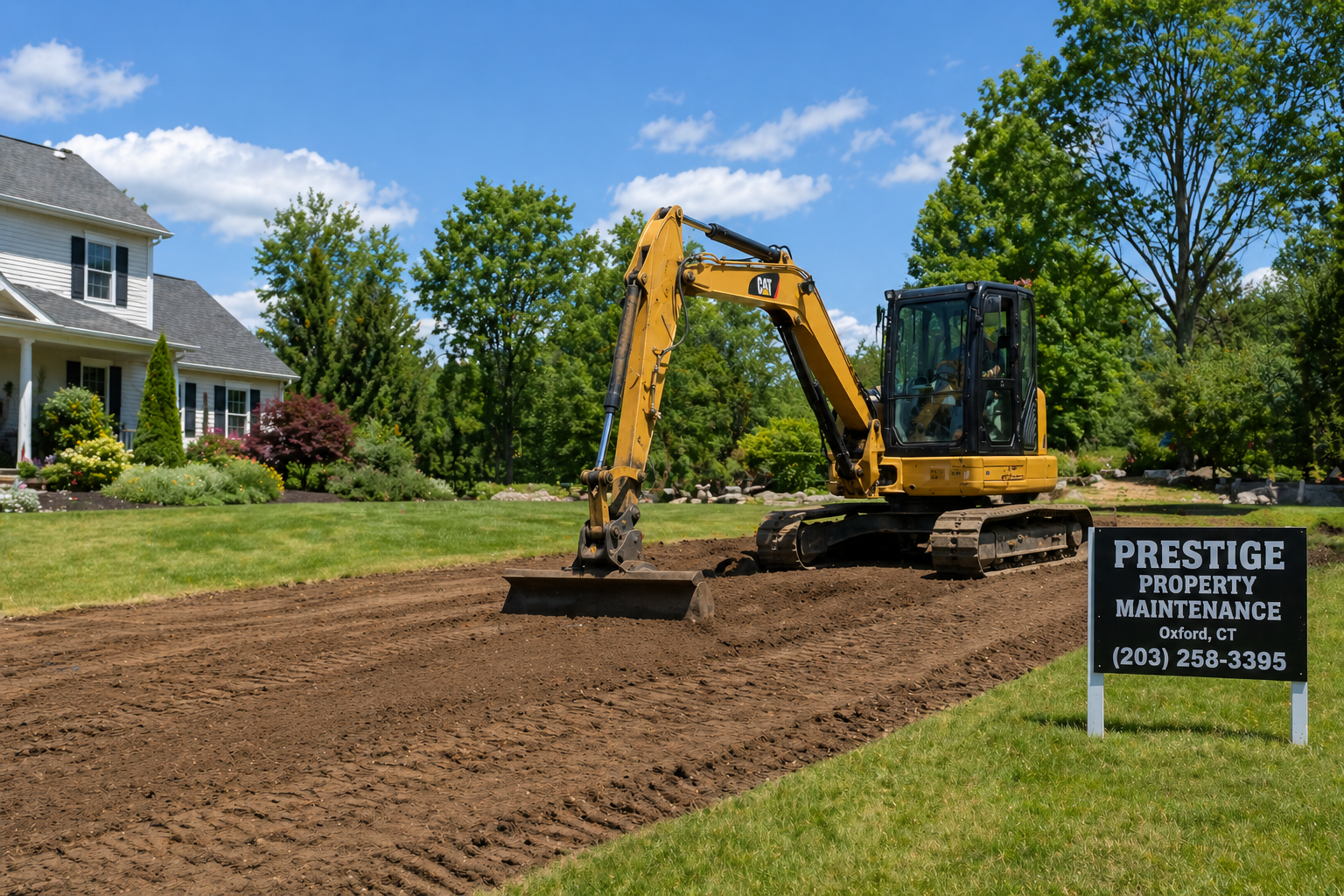
After trenches are backfilled and compacted, contractors perform rough grading to smooth the disturbed strips and blend them with surrounding grade. This grading prevents water from pooling in low spots and reduces erosion. Depending on the season and your preferences, restoration may include reseeding with grass seed and covering with straw to retain moisture, or laying sod for instant coverage. In garden beds or mulched areas, contractors spread fresh mulch to match the surrounding landscape and conceal the excavation seam.
Debris removal is part of the finishing process. Cut root sections, excess soil, rocks, and any vegetation cleared during site prep are hauled away, leaving your property clean. Contractors also remove equipment mats, fencing, and tarps, and may rake or blow off driveways and walkways to remove tracked soil. By the end of this phase, your yard no longer looks like an active construction site, though the repaired strip will remain visible until grass or groundcover fills in over the following weeks or months. This finishing work typically requires a half day for simple jobs and up to a full day for complex projects with extensive restoration needs.
Permits, Utilities, and Regulations in Oxford CT
Legal and regulatory steps often worry homeowners more than the physical digging, but understanding Connecticut’s tree laws and utility coordination requirements clarifies what approvals you need and when.
Zoning, Tree Warden, and Utility Coordination
Oxford CT, like many Connecticut municipalities, operates under state laws governing trees on public land, in rights-of-way, and along utilities. If the tree whose roots you’re removing sits on public property, within a road right-of-way, or is designated as a municipal tree under a tree warden’s authority, you may need approval before cutting roots. Municipal tree wardens have the authority to regulate work on public trees, and unauthorized damage can result in fines and required restoration. Contractors working in Oxford CT routinely check with the town’s public works or tree warden office to confirm whether a tree falls under municipal jurisdiction, especially if roots extend from a street tree into your yard.
Utility coordination goes beyond the initial 811 call. Connecticut utilities, including electric distribution companies and municipal water departments, have vegetation management rules that can affect root removal near power lines or substations. If your root excavation occurs near overhead or underground utility infrastructure, the utility may require advance notice or on-site inspection. These coordination steps add administrative time but prevent service interruptions and protect you from liability if an excavation accidentally damages a line.
Connecticut also prohibits spite damage to boundary trees. If your neighbor can demonstrate that you cut roots maliciously to harm a shared or boundary tree, rather than to address a legitimate problem on your property, you may face civil liability. This legal backdrop means contractors document the problem, photograph root damage to your structures, and cut roots only within your property boundaries. The result is a paper trail that protects both you and the contractor if a dispute arises later.
What Homeowners Should Prepare For and Do
Your role in the excavation process directly affects how smoothly the project runs and how quickly your yard returns to normal. Knowing what to expect each day helps you plan around disruptions and avoid common mistakes.
Daily Expectations During Excavation
On day one, expect layout and preparation activity. Crews will arrive with marking paint, flags, and possibly fencing materials. You’ll hear conversation and some light equipment noise as vegetation is cleared and access paths are prepared, but no heavy excavation occurs yet. Your yard will look staged, with visible markings and equipment positioned for the next day, but still largely intact. This is the best day to ask questions, confirm the planned trench route, and clarify any concerns about tree protection or property boundaries.
Day two brings the loudest and most visually disruptive phase. Excavators, backhoes, or trenchers create significant noise and activity. Dust and diesel exhaust may be present, and access to parts of your yard will be restricted for safety. Crews focus on digging, root cutting, and immediate backfill, often working continuously through the day to minimize how long trenches remain open. You should expect limited access to driveways or walkways near the work zone and be prepared for temporary inconveniences like parked vehicles blocking portions of your street. By late afternoon or early evening, the trench is typically closed and the heavy equipment is removed, leaving a rough-graded seam across the work area.
Day three, if needed, involves finishing work. Grading, seeding, debris removal, and final cleanup dominate this phase. Noise and disruption drop significantly, and most of your yard becomes accessible again. Contractors may ask you to walk the site and approve the final grade and restoration before they leave, giving you a chance to point out any low spots or areas needing additional seed or mulch.
Tips to Minimize Yard Disruptions
Preparation on your part shortens the project and reduces stress. Before crews arrive, mark or remove any obstacles you can, such as potted plants, garden hoses, lawn furniture, or decorative features near the planned trench route. Secure pets indoors or in a fenced area away from the work zone, because open trenches and equipment pose safety hazards. Clear access to gates, driveways, and utility meters so crews don’t waste time maneuvering around obstacles.
Communicate your schedule with the contractor. If you need driveway access at specific times or have concerns about noise during early mornings or late afternoons, discuss this before work begins. Many contractors can adjust start times or phase the work to accommodate your needs, especially if you’re flexible about the overall timeline. Avoid scheduling deliveries, lawn care, or other services during active excavation days, because competing activity in your yard creates delays and safety risks.
Finally, plan for the restored seam to look raw for several weeks. Even with prompt reseeding or sodding, grass takes time to establish, and the disturbed strip will remain visible through at least one or two mowing cycles. Understanding this normal recovery period prevents frustration when the yard doesn’t look perfect the day after contractors leave.
Process Comparison Table: Simple vs. Complex Root Excavation in Oxford CT
| Phase | Simple Job (Surface Roots) | Complex Job (Deep/Foundation Roots) |
|---|---|---|
| Prep & Layout | 4-6 hours; utility marks, TPZ flags | 1 full day with TPZ fencing, boundary photos |
| Trench/Root Work | 1 day; machine dig, same-day backfill | 1-2 days; protective shoring for deep trenches, hand digging near utilities |
| Restoration | Half day; grade, seed, mulch | 1 full day; compaction testing, sod installation, debris haul |
| Total Timeline | 1-2 days from start to restored yard | 2-3+ days depending on inspections and weather |
This comparison illustrates why a surface root removal job along a driveway edge typically completes in one to two days, while a foundation clearance job with roots six feet deep and crossing buried utilities extends to three days or more. The added time in complex jobs goes toward safety systems, hand-digging precision, and thorough restoration, all of which protect your property and trees.
Common Mistakes Homeowners Make During Root Excavation
Even with a clear plan, homeowners sometimes make decisions that extend the project timeline or create avoidable problems. Awareness of these pitfalls helps you steer clear.
Skipping the 811 call or assuming your contractor will handle it without your involvement is a common error. While contractors do initiate utility locates, homeowners should confirm that all expected utilities have responded and that markings are visible before excavation begins. Missing markings can halt work mid-project when a crew encounters an unmarked line, adding days of delay while emergency locates are completed.
Ignoring tree protection zones is another mistake. Some homeowners insist on digging right up to a tree trunk to remove every visible root, not realizing this can destabilize or kill the tree. Industry standards recommend limiting excavation to areas outside the critical root zone whenever possible, and using hand tools when work must occur closer. Pushing contractors to dig aggressively in these zones may shorten the project by a few hours but can result in a dead or dangerously unstable tree within a year.
Poor access planning extends the “torn up” phase unnecessarily. If equipment must make multiple trips back and forth across your lawn because gates are too narrow or driveways are blocked, soil gets compacted and rutted far beyond the actual trench area. Clearing a direct, wide access path before day one keeps disturbance confined to the planned corridors.
Finally, skipping the final walkthrough leaves issues unresolved. Low spots in backfilled trenches, missed debris, or areas needing additional seed only become apparent when you use your yard again. Requesting a final review with the contractor before they demobilize allows you to address these details immediately rather than calling them back later.
Preparing Your Property for Tree Root Excavation in Oxford CT
Advance preparation ensures crews can work efficiently and minimizes how long your yard remains disrupted. Start by calling 811 yourself at least 48 hours before the scheduled excavation, even if your contractor has also submitted a locate request. Confirm that all utilities have responded and that markings are visible and make sense based on your property’s layout. If you see paint marks for electric, water, and gas but know you also have buried cable or phone lines, contact those providers directly to request locates.
Trim low-hanging branches along the planned trench route and near equipment access paths. Branches that obstruct visibility or catch on excavator booms slow work and increase the risk of accidental damage to the tree. Clearing these obstacles in advance allows crews to focus on excavation rather than vegetation management.
Survey your property boundaries. If you’re unsure where your property line sits, hire a surveyor or locate existing survey pins before excavation begins. This clarity prevents accidental trespass and gives you confidence when discussing root cutting near boundary trees. Connecticut law allows you to cut roots on your side of the line, but proving where that line is requires accurate information.
Notify neighbors, especially if the work involves roots from a tree that sits on or near the property boundary. A brief conversation explaining that you’re removing roots on your property to address foundation damage or sidewalk heaving can prevent misunderstandings and reduce the chance of disputes. Neighbors are more likely to be cooperative if they hear about the project from you before equipment arrives.
Frequently Asked Questions About Tree Root Excavation Near Me in Oxford CT
Q: What is the typical tree root excavation process?
A: The process begins with site preparation, including utility locates via 811, property boundary verification, and establishment of tree protection zones around trunks you want to preserve. Crews then excavate narrow trenches along planned routes, expose problem roots, and make selective cuts using saws or pruners. Roots that must remain are protected with burlap or mulch per Connecticut root protection regulations, and trenches are backfilled in compacted layers the same day whenever possible. Final grading, seeding, and cleanup complete the restoration. Most residential jobs in Oxford CT span one to three days from start to restored yard.
Q: How long will my yard be torn up during root removal?
A: The open-trench phase typically lasts one to two active workdays for most residential projects. Simple surface root removal along driveways or sidewalks often involves trenches that are dug, roots cut, and backfilled within a single day. Complex jobs requiring deeper excavation, hand-digging near utilities, or protective shoring for trenches deeper than five feet may extend to two or three days. Contractors backfill and grade as soon as root work is complete rather than leaving trenches open overnight, so the visibly torn-up period is limited to the hours when equipment is actively on site. After backfill, your yard has a visible seam of disturbed soil that gradually blends in as grass or groundcover regrows over the following weeks.
Q: Are permits or notices required for root excavation in Oxford CT?
A: Permits depend on the tree’s location and ownership. Trees on private property within your yard generally do not require permits for root removal, though you should verify with Oxford CT zoning or building departments if excavation occurs near setback lines or involves significant grading. Trees in public rights-of-way, along streets, or under municipal tree warden control may require warden approval before you cut roots. Utility trees, those near power lines or substations, may need utility company notification. Licensed contractors familiar with Connecticut tree laws typically handle these checks and inform you if approvals are needed. Boundary tree roots crossing onto your property can be cut at the property line under Connecticut case law, but contractors document boundaries carefully to avoid spite damage claims.
Q: What should I expect on excavation day 1?
A: Day one focuses on layout and preparation rather than heavy digging. Crews arrive to mark trench routes with paint or flags, set up tree protection fencing or barriers around trunks, clear vegetation along the planned path, and position equipment. You may see mini-excavators or backhoes staged in driveways or access areas, but no major excavation occurs yet. This day is mostly planning, measuring, and organizing materials, so your yard still looks largely intact. Expect conversation, light equipment noise, and perhaps some hand trimming of branches or removal of obstacles, but the truly messy phase waits until day two when trenching begins.
Q: How can I prepare my yard for root excavation?
A: Clear access paths by removing lawn furniture, planters, hoses, and decorative features near the planned trench route. Secure pets indoors or in a fenced area away from the work zone to keep them safe and prevent distractions. Trim low branches along equipment paths and near the tree to improve visibility and reduce accidental damage. Confirm that utility locates are complete and markings are visible before the scheduled start date. Mark any underground irrigation lines, invisible dog fences, or other features not covered by 811 that contractors should avoid. Communicate your schedule and any access restrictions, such as needing driveway access at specific times, so the contractor can plan work phases accordingly.
Final Thoughts
Professional tree root excavation in Oxford CT delivers targeted solutions to invasive roots while respecting Connecticut’s tree protection standards, property-line rules, and municipal regulations. The process follows a logical sequence from utility verification and tree protection zone establishment through controlled excavation, selective root cutting, and prompt backfill, keeping yard disruption confined to narrow work corridors and active digging days rather than weeks of open trenches. Understanding that most residential projects span one to three days, with the truly messy open-trench phase limited to one or two of those days, helps you prepare for temporary inconvenience without fearing long-term chaos.
Taking proactive steps such as confirming utility locates, clearing access paths, and securing pets before crews arrive shortens project timelines and reduces stress. Choosing contractors who demonstrate familiarity with Connecticut tree laws, trench safety standards, and root protection requirements ensures your yard is restored properly and your trees remain healthy after problem roots are removed. The investment in controlled, documented work protects your foundation, hardscapes, and underground utilities while maintaining positive relationships with neighbors and municipal authorities.
When tree roots threaten your Oxford CT property, working with experienced professionals ensures the excavation process stays efficient and compliant. While root removal is a specialized task, the expertise required for planning excavation routes, coordinating with utilities, and restoring disturbed areas overlaps significantly with full-service excavation and site preparation work. Prestige Excavation & Drainage of CT brings comprehensive knowledge of Connecticut regulations, trench safety, and property restoration to every project, from foundation drainage and utility trenching to grading and site development throughout the Oxford area. Contact Prestige Excavation & Drainage of CT to discuss how controlled excavation methods and thorough site planning can address your property’s challenges while minimizing disruption and delivering lasting results.