

Services
Drainage Solutions & Retaining Wall Construction in Connecticut
Prestige Property Maintenance designs and installs French drains, catch basins, surface swales, and engineered retaining walls across 19 towns in the Naugatuck Valley and western Connecticut. We handle the full scope from site assessment through finished installation, so you get a water management plan that actually works with your property's soil, slope, and drainage conditions.
What Do Drainage Solutions and Retaining Wall Construction Include?
Drainage solutions and retaining wall construction address two sides of one problem: water moving where it shouldn't and soil giving way when it does. Prestige Property Maintenance provides design and installation of French drains, catch basins, surface swales, and buried pipe systems to redirect water away from foundations, driveways, and low-lying areas. On the structural side, we build engineered stone, block, and timber retaining walls to hold soil on sloped lots and control erosion along grade changes. Most drainage and wall projects start with a site walk, move through excavation and base preparation, and finish with a graded, stable surface ready for whatever comes next.
Getting drainage right on a Connecticut property means reading the site before touching it. That includes looking at where water enters the property, how the yard pitches, what the soil does under heavy rain, where runoff can safely discharge, and whether a slope is already losing ground. When those questions get answered up front, the installation lasts. When they get skipped, a French drain sits in the wrong spot, a wall face cracks within two winters, or the water problem just moves six feet to the left.
Why Connecticut Properties Have More Drainage Problems Than You'd Expect
Connecticut's glacial history left much of the Naugatuck Valley and surrounding towns with rocky, irregular terrain and clay-heavy soil that doesn't drain well on its own. When you add sloped lots, older grading that wasn't done with drainage in mind, mature trees rerouting surface water, and increasing rain intensity, you get the conditions that send water toward foundations, pool in yards, wash out driveways, and slowly undercut slopes.
Properties with an acre or more tend to collect and channel water across a larger area before it reaches the problem spot. A soggy corner of the yard or a wall showing signs of movement might have its real source twenty or thirty feet uphill. Rocky terrain adds another layer because buried ledge and boulders can redirect underground water in directions that aren't obvious from the surface. Prestige Property Maintenance works in this kind of terrain every day across towns like Oxford, Woodbury, Southbury, Newtown, and Monroe, where these conditions are common on residential lots of all sizes.
Heavier rain events have also pushed more property owners to address drainage they'd been living with for years. A French drain or catch basin system that was borderline adequate for normal rainfall can fail completely during a significant storm. That's when foundation moisture, flooded basements, washed-out driveways, and slipping retaining walls become urgent problems rather than things to deal with eventually.
What Problems Do Drainage Solutions Actually Fix?
Drainage work is worth doing when you can tie the installation to a specific, ongoing problem on your property. These are the conditions Prestige Property Maintenance sees most often across the towns we serve.
Foundation and Basement Moisture
Water pooling against a foundation or running toward a house during rain is one of the most common reasons property owners call us. French drains installed at the perimeter or uphill from a structure intercept groundwater and surface runoff before it reaches the foundation wall. Combined with proper grading that pitches away from the house, a well-designed drainage system can remove the source of chronic moisture problems.
Standing Water and Yard Flooding
Low spots that collect water after rain, areas that stay saturated for days, and yards that flood in heavy weather are symptoms of grade and drainage deficiencies. Depending on where the water comes from and where it can go, the fix might be a catch basin with outlet pipe, a swale cut to redirect surface flow, regrading to eliminate the low spot, or a combination of all three. The right answer depends on the site.
Driveway Washouts and Gravel Migration
Long gravel driveways in rural and semi-rural Connecticut towns wash out repeatedly if they weren't graded with proper crown and drainage pitch, or if the drainageway alongside the drive gets blocked. Driveway drainage work from Prestige Property Maintenance addresses the grade and the water path together, so gravel stays in place and the drive surface doesn't erode every time it rains hard.
Slope Erosion and Soil Movement
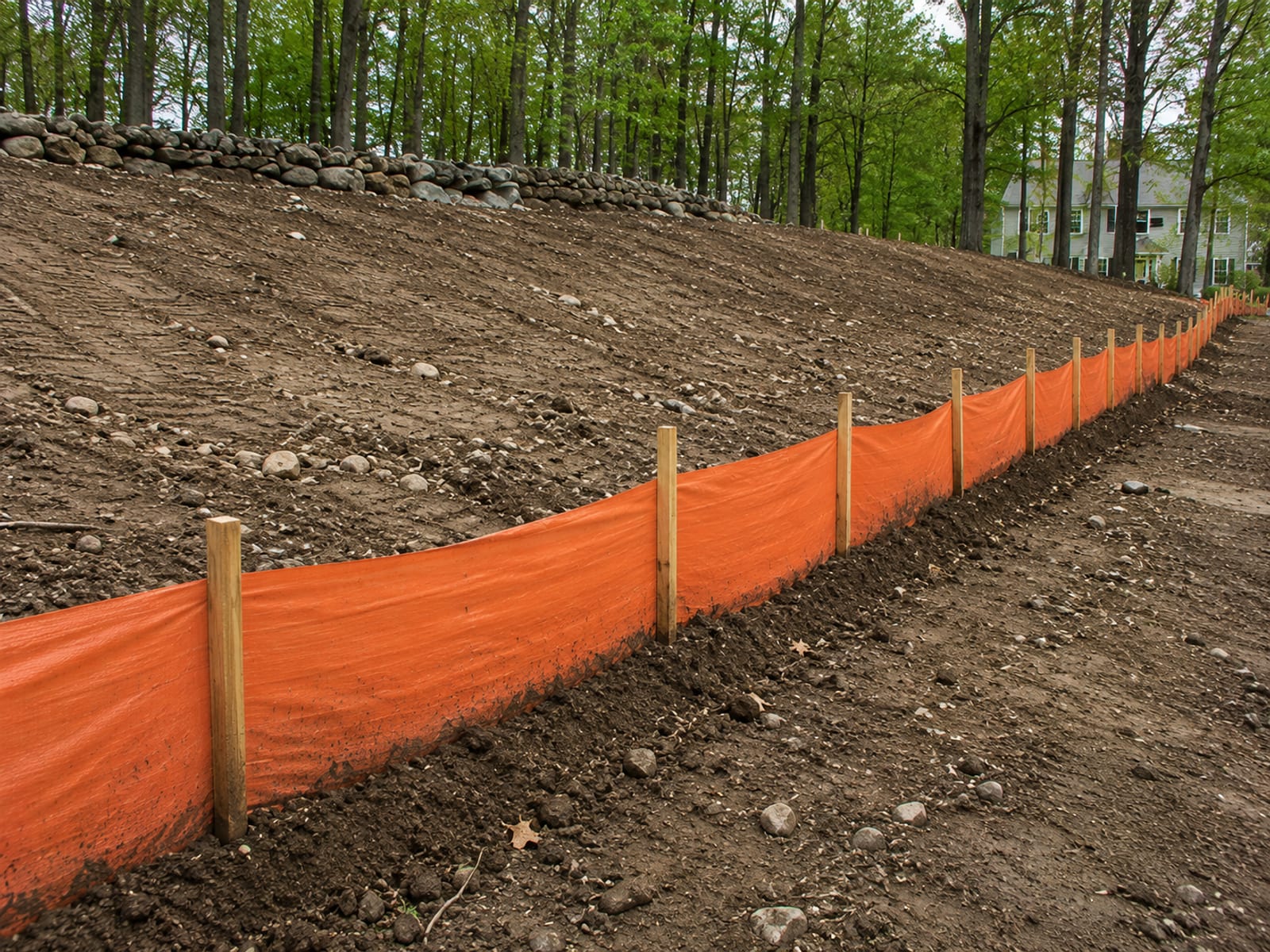
Slopes that are losing topsoil, showing rills and channels after rain, or developing slumping and settling need both erosion control and sometimes structural support. A retaining wall holds soil at a grade change while drainage behind the wall controls the water pressure that causes blowouts. Addressing both sides of the problem is what separates a repair that lasts from one that looks good for one season.
Retaining Wall Failure or Settlement
Existing walls that are leaning, cracking, or showing gaps between units are usually failing because of inadequate base preparation, poor drainage behind the wall, or frost heaving over time. Rebuilding a failing wall correctly means pulling it apart, evaluating what the base actually looks like, correcting the drainage layer, and reinstalling with proper batter and compaction. Patching a wall that has a drainage problem behind it is temporary at best.
French Drains, Catch Basins, and Swales: Which One Does Your Property Need?
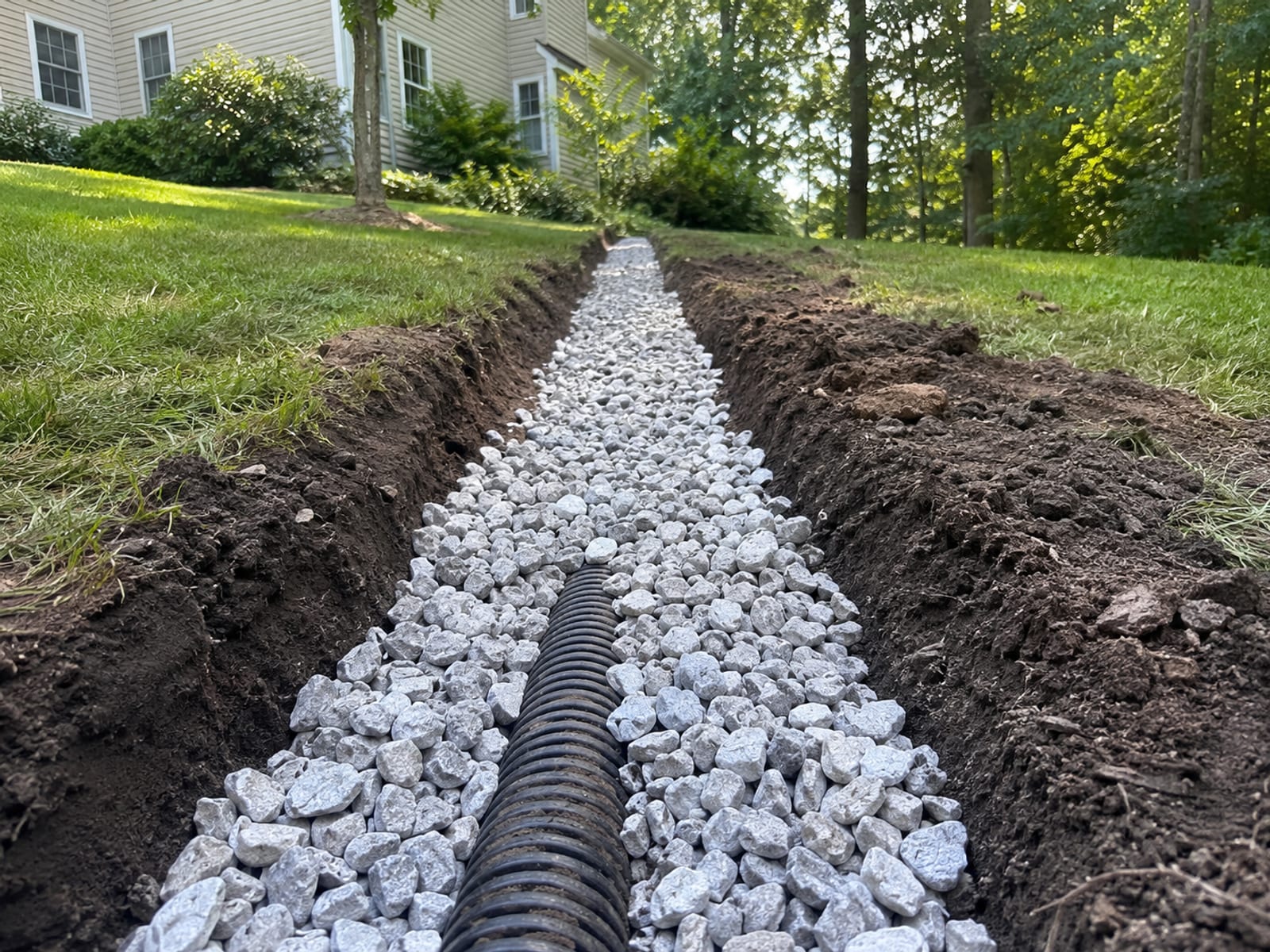
These three drainage tools each do something different, and most properties with a real water management problem use more than one. A French drain is a subsurface trench system: perforated pipe, drainage stone, and filter fabric working together to collect groundwater and slow-moving surface water along a defined path and move it toward a safe outlet. It's well suited for intercepting water before it reaches a foundation, collecting water along a driveway edge, or addressing low-level saturation across a yard section.
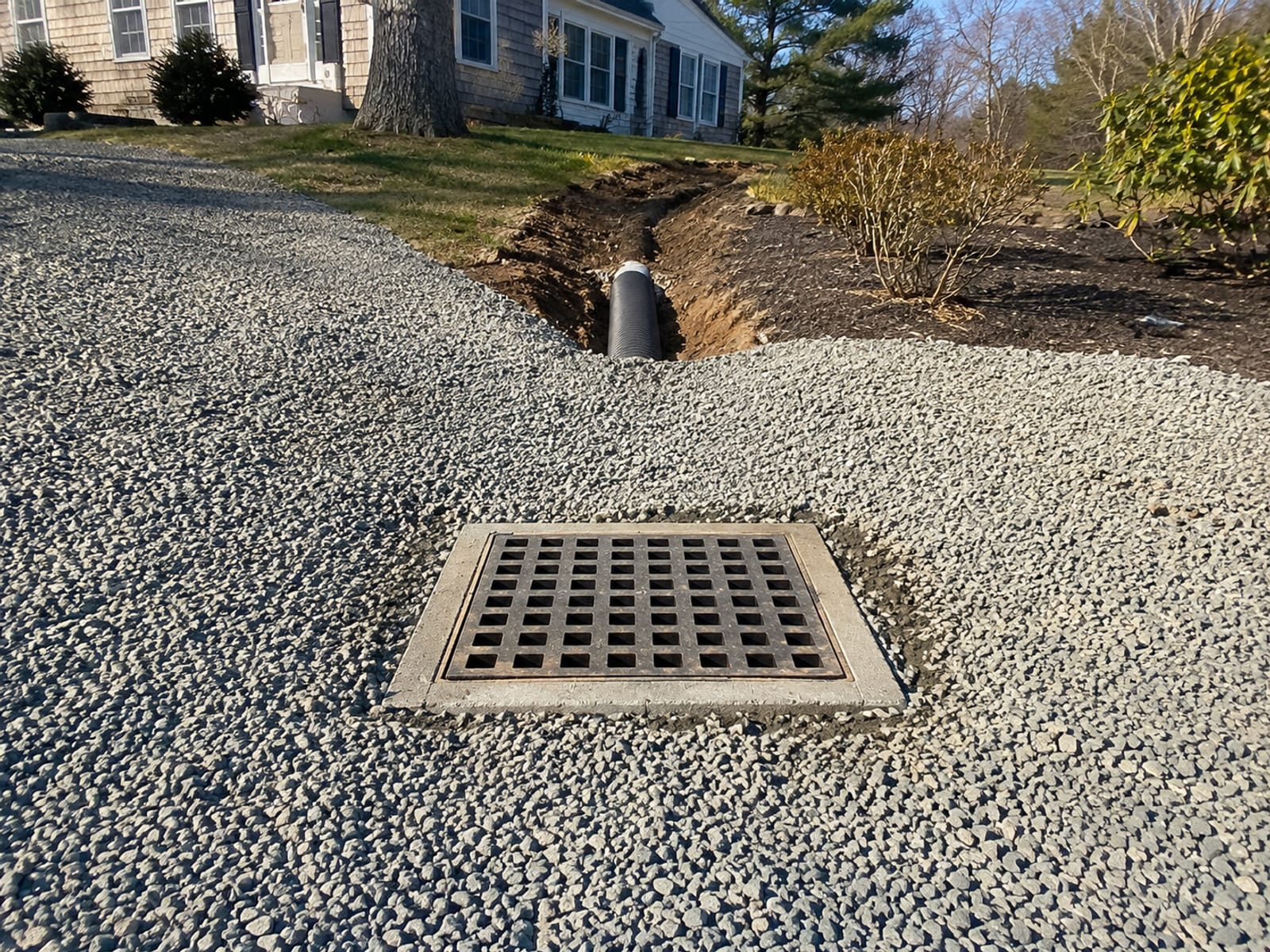
A catch basin is a surface inlet, typically a grated box set flush with grade that captures water running across the surface and routes it into a pipe system. Catch basins work well in areas where water concentrates at a low point, at the bottom of a sloped driveway, or where a French drain alone can't capture enough volume. The outlet pipe needs to reach a discharge point, so the site conditions determine whether a catch basin is practical.
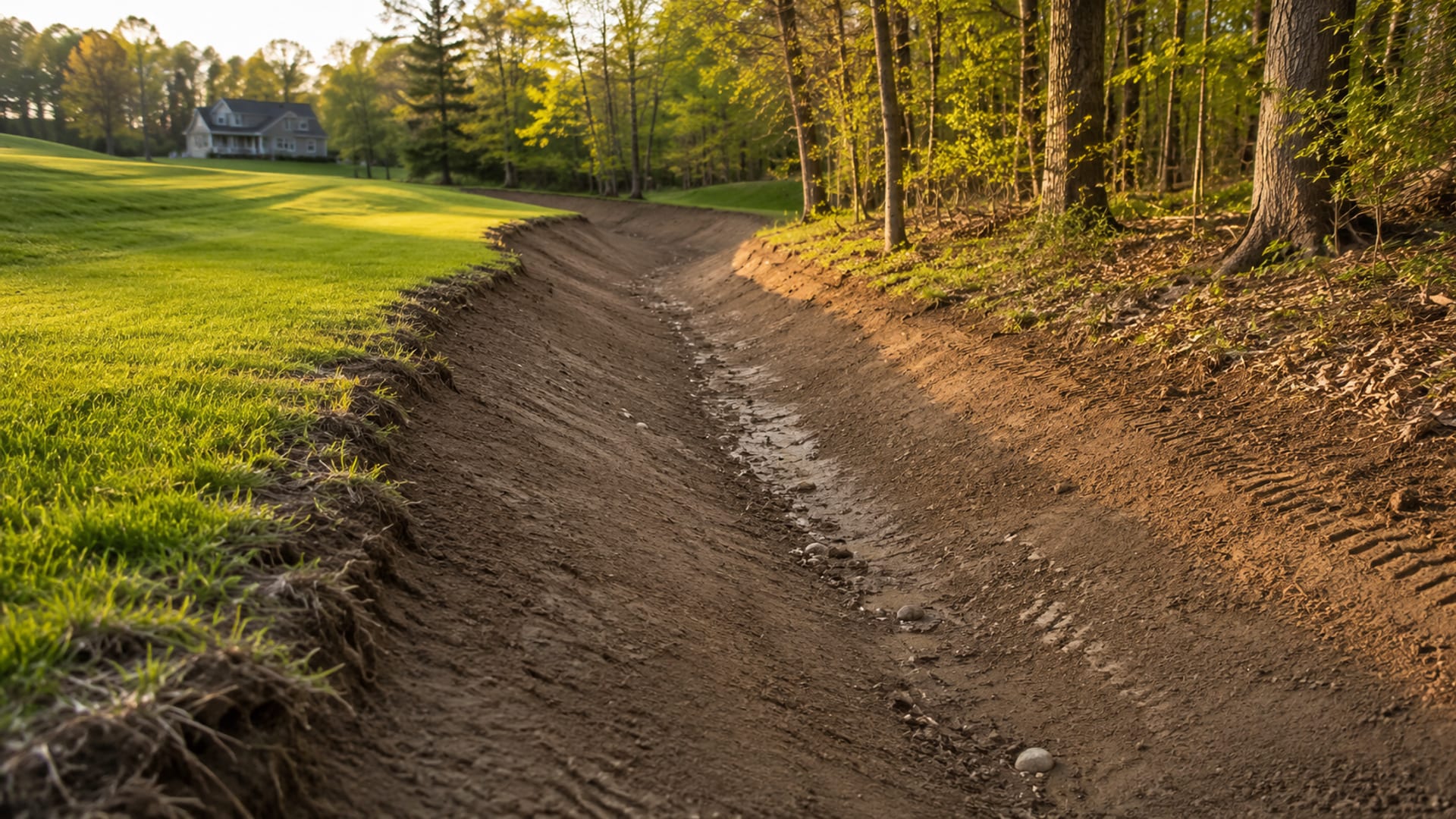
A swale is a shaped, open channel graded to carry surface water across or away from a property. Swales work when you have enough space and grade to move water without burying pipe, and they're often the most durable solution for redirecting sheet flow across a large lot. They need consistent slope, stable sides, and an outlet that won't erode. On properties where all three systems are needed, the swale moves volume, the catch basin handles concentration points, and the French drain handles the slower groundwater and perimeter seepage.
What Makes a Retaining Wall Last in Connecticut's Climate?
Connecticut's frost line runs roughly four feet deep, and any retaining wall that doesn't account for that is going to move. The freeze-thaw cycle expands and contracts the soil behind and beneath the wall every winter, and if the base isn't below frost depth or the drainage behind the wall isn't relieving pressure, that movement adds up year over year. A wall that looks solid in year two can be noticeably out of alignment by year five if the foundation and back-drain weren't done correctly.
Stone, block, and timber walls all have their place depending on wall height, load conditions, aesthetics, and budget. Natural stone walls built with good base prep and proper drainage behind them can last for decades on Connecticut properties and age well with the surrounding terrain. Segmental block systems offer consistent sizing and engineered batter angles that make them reliable for walls in the four-to-six-foot range. Timber walls are typically used for lower heights where appearance and cost are priorities, though they have a shorter service life than stone or block.
For walls above a certain height, which varies by town, a permit and sometimes an engineer's review may be required. Prestige Property Maintenance can help identify when a project is likely to trigger those requirements, but permit determinations always come from the local building or zoning office. If a wall is holding back a slope near a driveway, a structure, or a property line, the load calculations matter, and getting the right review up front protects both the installation and the property owner.
How Does the Drainage and Retaining Wall Process Work?
Every drainage and wall project at Prestige Property Maintenance follows the same sequence, because skipping steps is what causes systems to fail. Here's how a project moves from your first call to a finished installation.
Site Assessment and Water-Path Review
Before any equipment arrives, we walk the property to trace where water comes from, where it collects, and where it needs to go. This includes evaluating yard pitch, soil type, existing drainage, roof runoff paths, driveway grades, and any slopes showing erosion or instability. We also identify utility locations and check for wetlands or other conditions that affect where water can legally discharge. You get a clear scope of work before anything is committed.
Excavation and Base Preparation
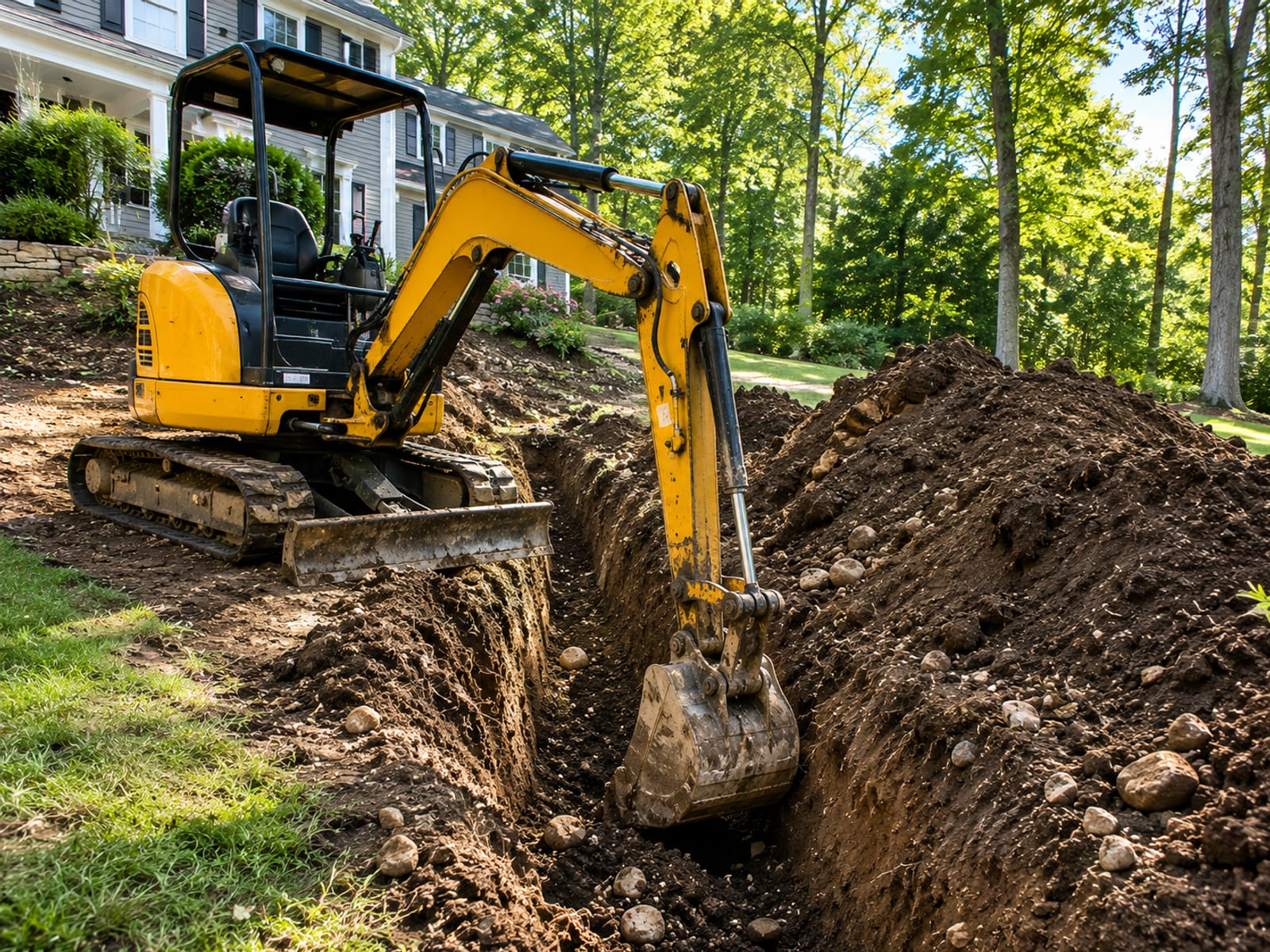
Once the scope is set, excavation begins. For French drains and pipe systems, this means cutting trenches at the right depth and pitch so water moves in one direction and doesn't stall. For catch basins, we excavate to the appropriate depth and prepare the surrounding grade. For retaining walls, base preparation is the most critical phase: we excavate below frost depth, install a compacted aggregate base, and make sure the footing is level before the first course of stone or block goes down. Connecticut's freeze-thaw cycle will find any shortcut in a wall foundation.
Learn more about ExcavationDrainage Layer and Material Installation
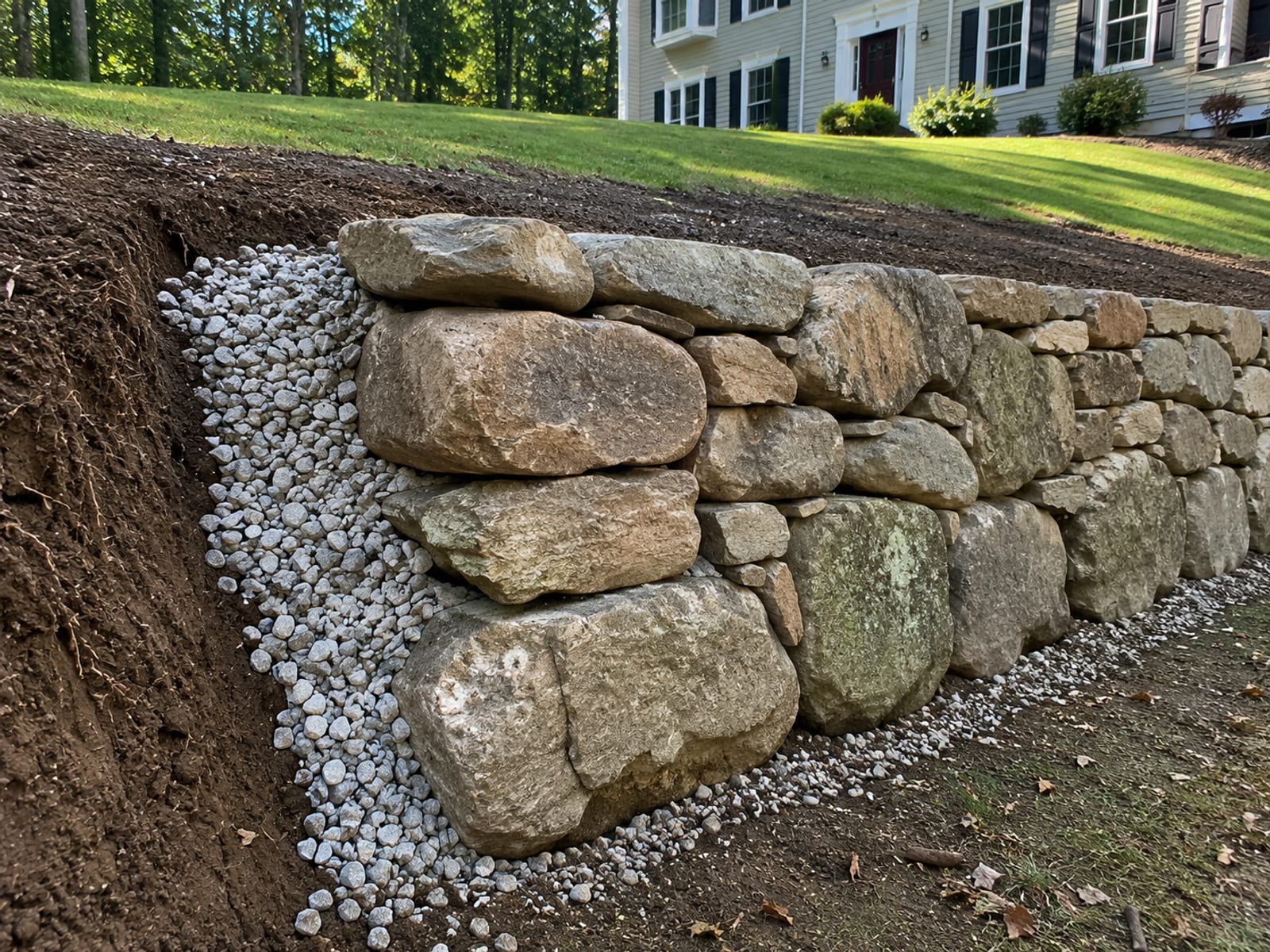
French drains get perforated pipe wrapped in geotextile fabric, surrounded by clean drainage stone, and covered with filter fabric before backfill. Catch basins are set at grade and connected to outlet pipe with proper fall to the discharge point. Swales are shaped with consistent slope and stabilized to prevent erosion along the channel. Behind retaining walls, we install drainage stone and back-drain pipe to relieve hydrostatic pressure, which is one of the main reasons walls fail. Every component serves a specific function in the water management plan.
Retaining Wall Construction
Wall construction moves from base course to finished cap, with attention to batter (the slight backward lean that adds stability), proper setback from any surcharge loads like driveways or outbuildings, and consistent unit placement. Stone, block, and timber walls each have different structural requirements, and wall height is a factor in whether the project needs a permit or engineering review. We build walls that are meant to hold, not just look right on day one.
Learn more about Retaining Wall ConstructionFinal Grading and Site Stabilization
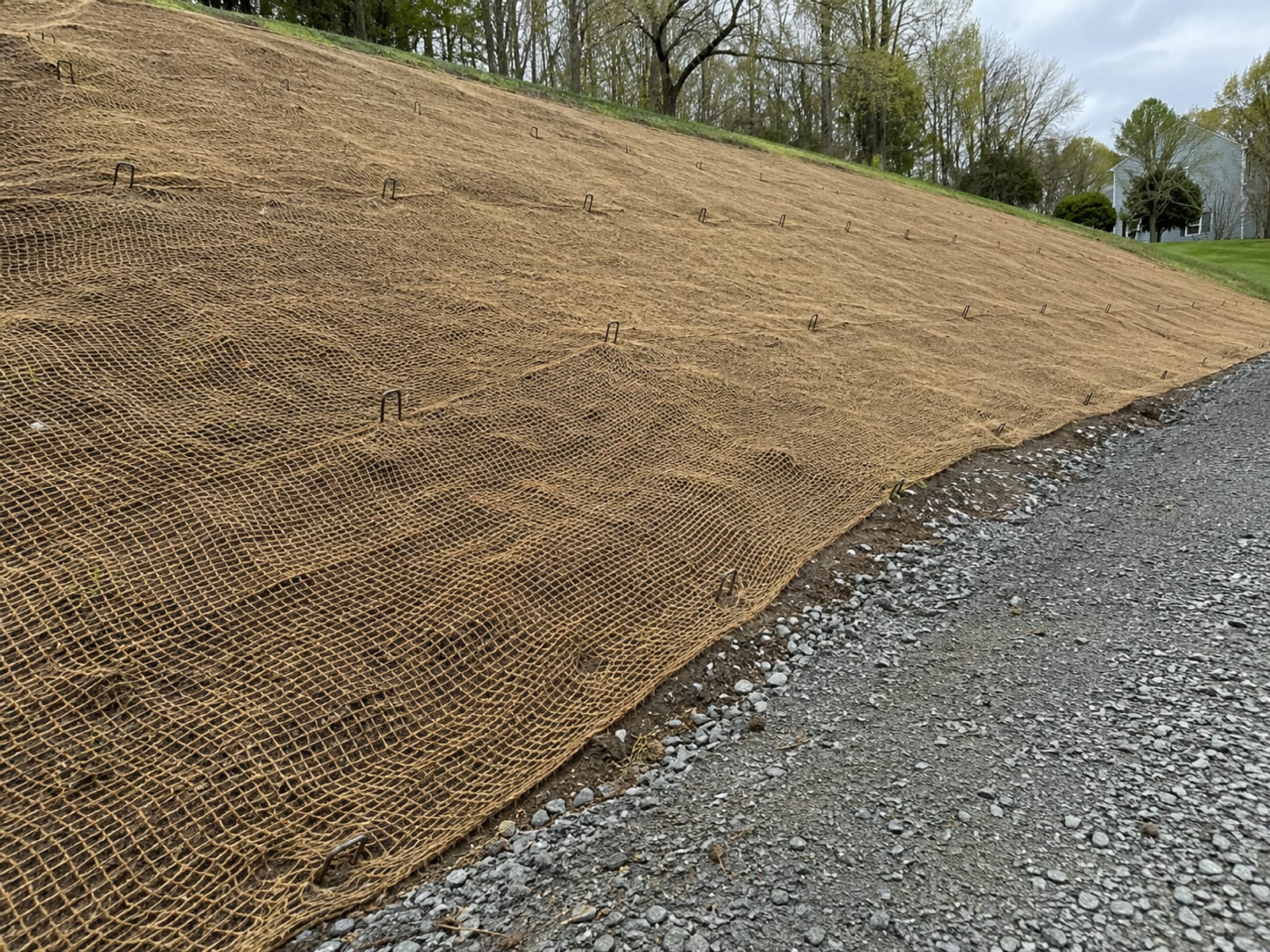
After drainage systems and walls are installed, final grading ties the new work into the surrounding property. This means feathering grades away from structures, stabilizing disturbed soil, and leaving the site in a condition that won't wash out or settle unevenly. If seeding or erosion mat is part of the scope, that goes down before we leave. The goal is a finished job you don't have to revisit.
Learn more about Grading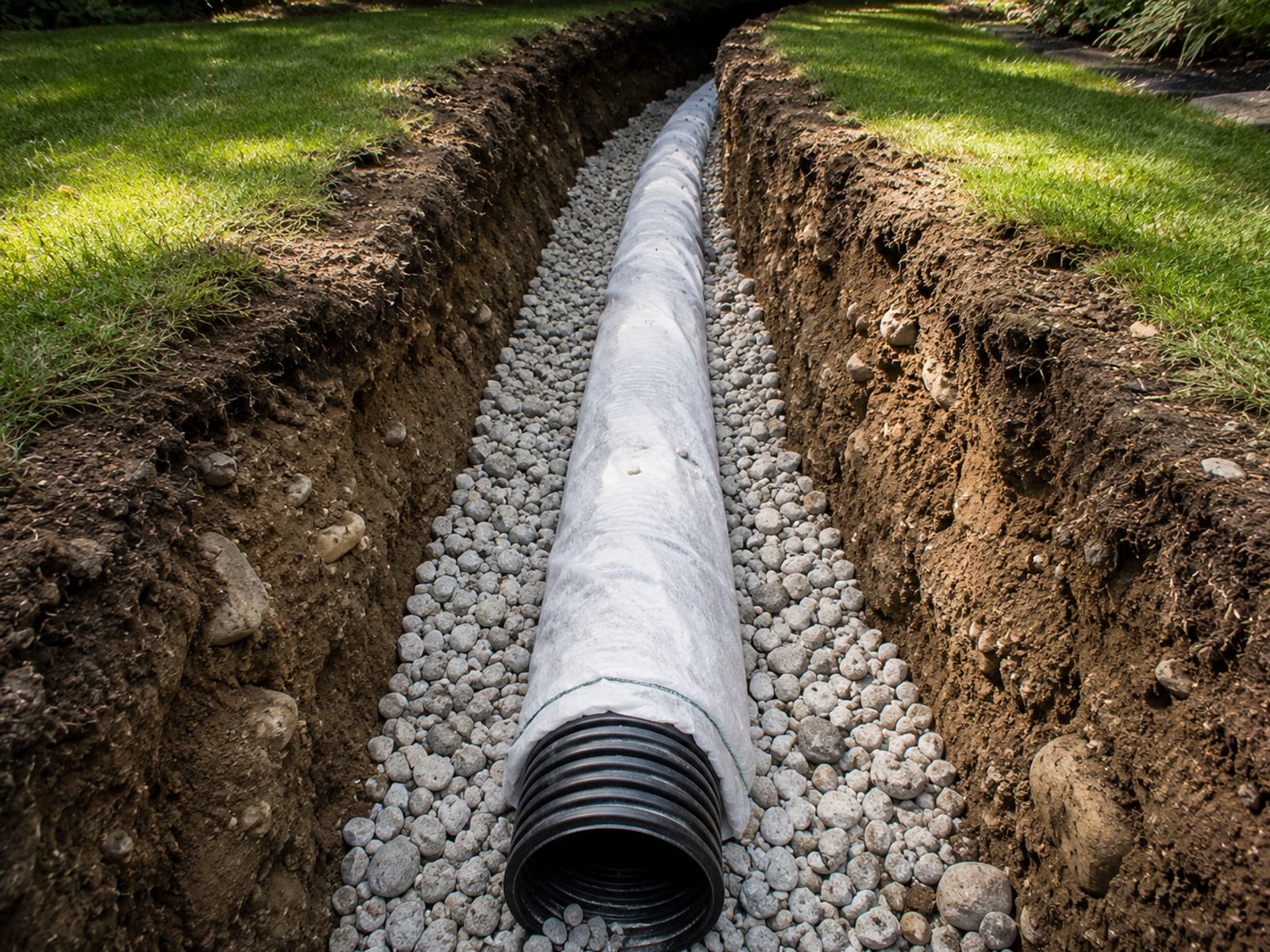
Why Work With Prestige Property Maintenance for Drainage and Wall Projects?
Drainage and retaining wall work done by an excavating contractor is different from drainage done by a landscaping crew with a shovel and a rental trencher. Prestige Property Maintenance operates excavation equipment, grading machines, and the crew experience to handle projects where the real work is in the ground: cutting proper grades, removing rock when it's in the way, moving significant soil volume, and building stable bases that hold through Connecticut winters.
Serving 19 towns across the Naugatuck Valley and western Connecticut means working in conditions that range from ledge-heavy terrain in Oxford and Woodbury to clay-dense flats in Naugatuck and Ansonia. That range of site conditions is part of the daily work here. When a drainage trench hits buried ledge at two feet, the crew knows what to do with it. When a retaining wall base turns out to be on clay, the base preparation adjusts accordingly.
Drainage and wall work often connects to other site needs: a driveway that needs regrading, a slope that needs clearing before a wall can go in, grading work that sets the drainage pitch for the whole property. Prestige Property Maintenance handles excavation, grading, land clearing, and stump grinding under the same crew and scheduling window, so the drainage project doesn't stall while you wait for a second contractor to show up for a related task.
Prestige Property Maintenance is licensed and insured, operating under HIC #0704432. We work Monday through Saturday, 7 AM to 5 PM, across all 19 towns in our service area.
Common Questions About Drainage Solutions and Retaining Walls in CT
These questions come up often when property owners are scoping drainage and wall work.
Do I need a permit for a retaining wall or drainage project in Connecticut?
Permit requirements vary by town and depend on factors like wall height, proximity to a property line or structure, the size of the land disturbance, and whether the project is near wetlands or a watercourse. Many municipalities require permits for walls over a certain height, often in the three-to-four-foot range, and some drainage projects that disturb significant areas of soil may require erosion and sediment control plans. The safe answer is to ask before you dig. Prestige Property Maintenance can help identify what a specific project is likely to involve, but the permit determination always comes from your local building or zoning department.
How long does a French drain installation typically take?
A straightforward French drain on a residential property can often be completed in one to two days, depending on trench length, depth, access for equipment, and whether rock removal is involved. Larger systems with multiple runs, catch basins, and significant regrading take longer. The site assessment before work begins gives you a realistic timeline based on actual conditions rather than a best-case estimate.
What causes a retaining wall to fail, and can it be repaired?
Most retaining wall failures trace back to one of three causes: inadequate base preparation below frost depth, poor or missing drainage behind the wall allowing hydrostatic pressure to build, or insufficient batter and structural design for the load conditions. Some walls can be repaired by addressing the drainage issue and resetting displaced units, but walls with significant foundation problems or base movement usually need to be pulled apart and rebuilt correctly from the bottom up. A wall that keeps moving back toward failure after a surface repair almost always has a drainage or base problem that wasn't resolved.
Will a French drain work in clay-heavy Connecticut soil?
French drains function by collecting water and moving it through a pipe system, not by relying on the surrounding soil to absorb it. In clay-heavy soil, which is common in much of the Naugatuck Valley, the surrounding ground drains slowly, but a properly installed French drain with perforated pipe, drainage stone, and geotextile fabric will still intercept water and carry it to a discharge point. The key is accurate grading of the trench and a discharge outlet that actually drains. A French drain that terminates in a wet spot or dead end doesn't help.
What is the difference between a surface swale and a French drain?
A surface swale is an open, graded channel that carries water across the ground surface, visible and shaped into the terrain. A French drain is a subsurface trench system that captures water underground and routes it out through pipe, with no visible channel at the surface. Swales move larger volumes of fast-moving surface water efficiently, while French drains handle slower groundwater and perimeter seepage that swales can't capture. Many sites use both: the swale redirects sheet flow across the yard, and the French drain intercepts the seepage that works its way toward the foundation.
Can drainage and retaining wall work be done at the same time as other excavation projects?
Yes, and combining them often makes sense. If a slope needs a retaining wall and the area uphill needs grading or clearing first, scheduling the land clearing, grading, and wall construction together with the same crew eliminates the coordination gaps that add cost and delay when multiple contractors are involved. Prestige Property Maintenance handles excavation, grading, land clearing, and rock removal alongside drainage and wall work, so related site tasks can be addressed in the right sequence without waiting on separate contractors.
How do I know if my drainage problem is a grading issue or a pipe system issue?
Many drainage problems start with grading that was never set correctly or that has shifted over time as soil settles, roots move, or the ground erodes. If water runs toward your house rather than away from it, or if a low spot consistently floods even when neighboring areas drain, the grade is often the first thing to evaluate. A pipe system installed over a grading problem collects water but doesn't fix the underlying issue. During the site assessment, Prestige Property Maintenance looks at both the surface pitch and the subsurface conditions to identify which is driving the problem before recommending an approach.
Explore Drainage & Erosion Control Services
Each service below has its own page with the full process and what Connecticut property owners can expect.
Ready to Stop the Water Problem for Good?
Contact Prestige Property Maintenance to get a drainage assessment and estimate for your property.