
Landscape Construction
Erosion and Sediment Control in Oxford, CT and Surrounding Towns
Prestige Property Maintenance installs silt fencing, stabilization measures, and runoff controls that hold soil in place during excavation, land clearing, grading, and drainage work across western Connecticut's Naugatuck Valley region.
What Is Erosion and Sediment Control, and What Do You Get?
Erosion and sediment control is the set of physical measures a contractor puts in place to stop disturbed soil from washing off your property during and after ground work. When heavy equipment breaks ground, clears brush, cuts a driveway, or reshapes a slope, the exposed soil becomes vulnerable to rain and runoff. Without the right controls in place, that soil moves, and it can end up in your neighbor's yard, your own foundation area, a nearby wetland, or a town road catch basin. Prestige Property Maintenance installs silt fencing, compost filter socks, erosion control blankets, stabilized construction entrances, temporary swales, diversion berms, and permanent vegetation cover as part of any job where soil disturbance creates real runoff risk. What you get is a site that stays in place during the work and leaves cleanly at the end.
These controls are not just add-ons. In Connecticut, erosion and sediment control requirements can come from state DEEP stormwater guidance, municipal building and zoning offices, inland wetlands commissions, and town public works departments. Whether your project is a residential driveway excavation on a half-acre lot in Shelton or a multi-acre land clearing and grading job in Southbury, site stabilization rules apply. Prestige Property Maintenance works the whole 19-town service area, so the crew arrives familiar with local ground conditions, drainage patterns, and what town reviewers typically look for in western Connecticut.
Why Erosion Control Matters More on Connecticut's Rocky, Sloped Lots
Connecticut soil tells a complicated story. The glacial deposits that run through the Naugatuck Valley leave behind a mix of ledge rock, buried boulders, dense clay, sandy pockets, and everything in between, often within the same lot. Clay-heavy ground sheds water fast. Sandy pockets drain too quickly in some spots and undercut grades in others. Rocky outcrops redirect runoff in ways that are hard to predict until the first real rainstorm hits a freshly graded area. These conditions mean that a bare slope left unprotected for even a week can move a surprising amount of sediment, especially during the spring thaw or after a heavy summer storm.
Sloped residential lots in towns like Monroe, Roxbury, Bridgewater, and Woodbury add another layer of difficulty. A slope that looks manageable when covered in mature trees and root systems becomes a completely different surface after clearing and grading. The roots that held the soil in place are gone, and the compacted equipment tracks left behind can channel water downhill faster than the undisturbed ground ever did. Getting stabilization measures in place quickly, in the right sequence, is what separates a clean finished site from one that requires a second round of remediation after the first heavy rain.
Prestige Property Maintenance crews account for this during project planning, not after the damage shows up. The goal is to keep soil exposure time as short as possible, apply controls in the right order, and have permanent stabilization ready to go as soon as each section of the job wraps up.
What Does the Erosion and Sediment Control Process Look Like?
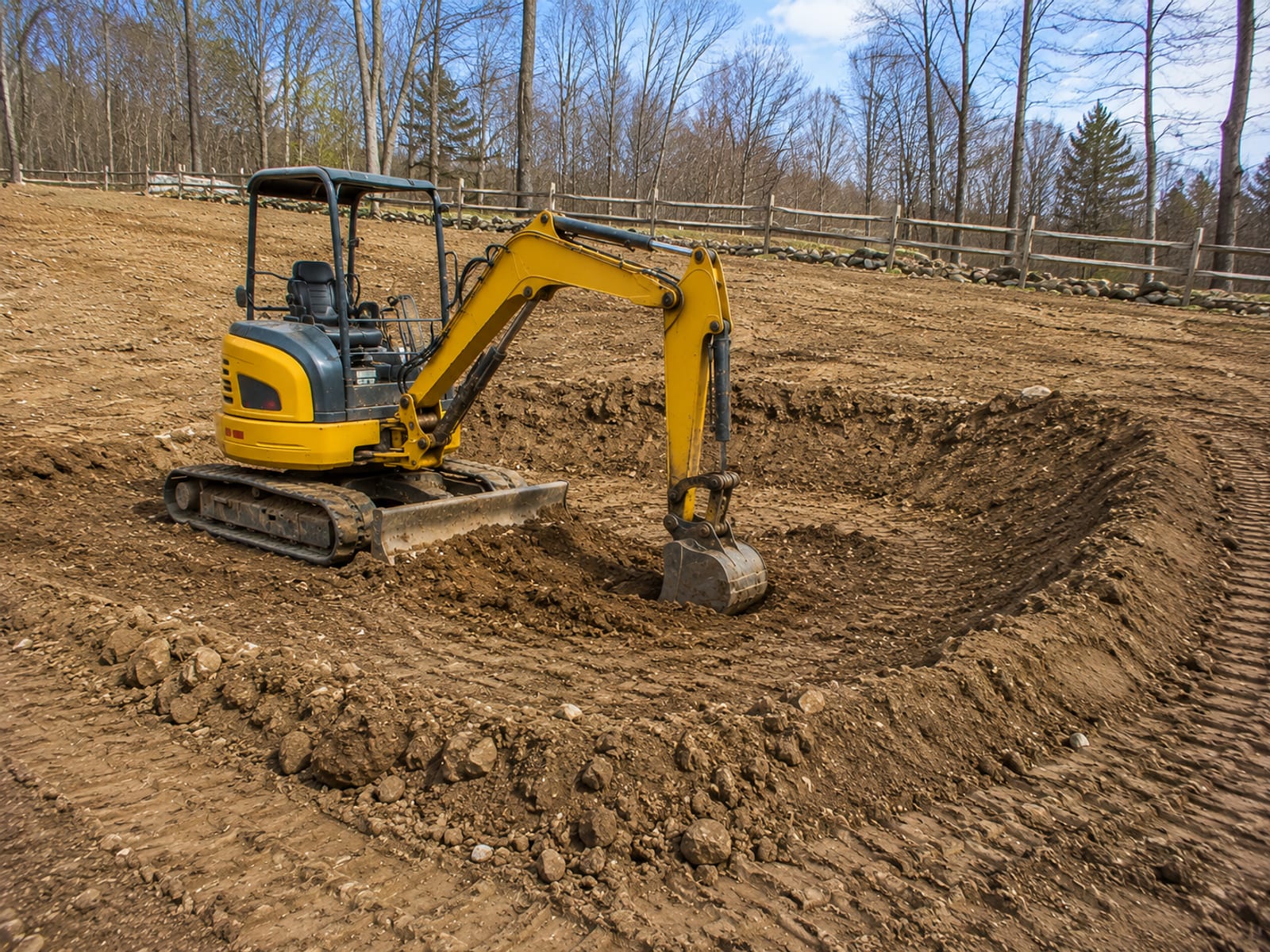
Erosion control works best when it is built into the project plan from the start rather than handled as a last step. Every job is different, but the sequence below reflects how Prestige Property Maintenance approaches it on a typical residential or light commercial project in the service area.
Site Review Before Equipment Arrives
Before breaking ground, the crew walks the property to identify slopes, drainage paths, existing catch basins, neighboring properties, wetlands or watercourses, and areas where water naturally collects. This assessment shapes where controls get placed and in what order the work proceeds. A project with a wetland buffer on the downhill side gets treated very differently than one where all drainage moves toward an open field.
Stabilized Construction Entrance
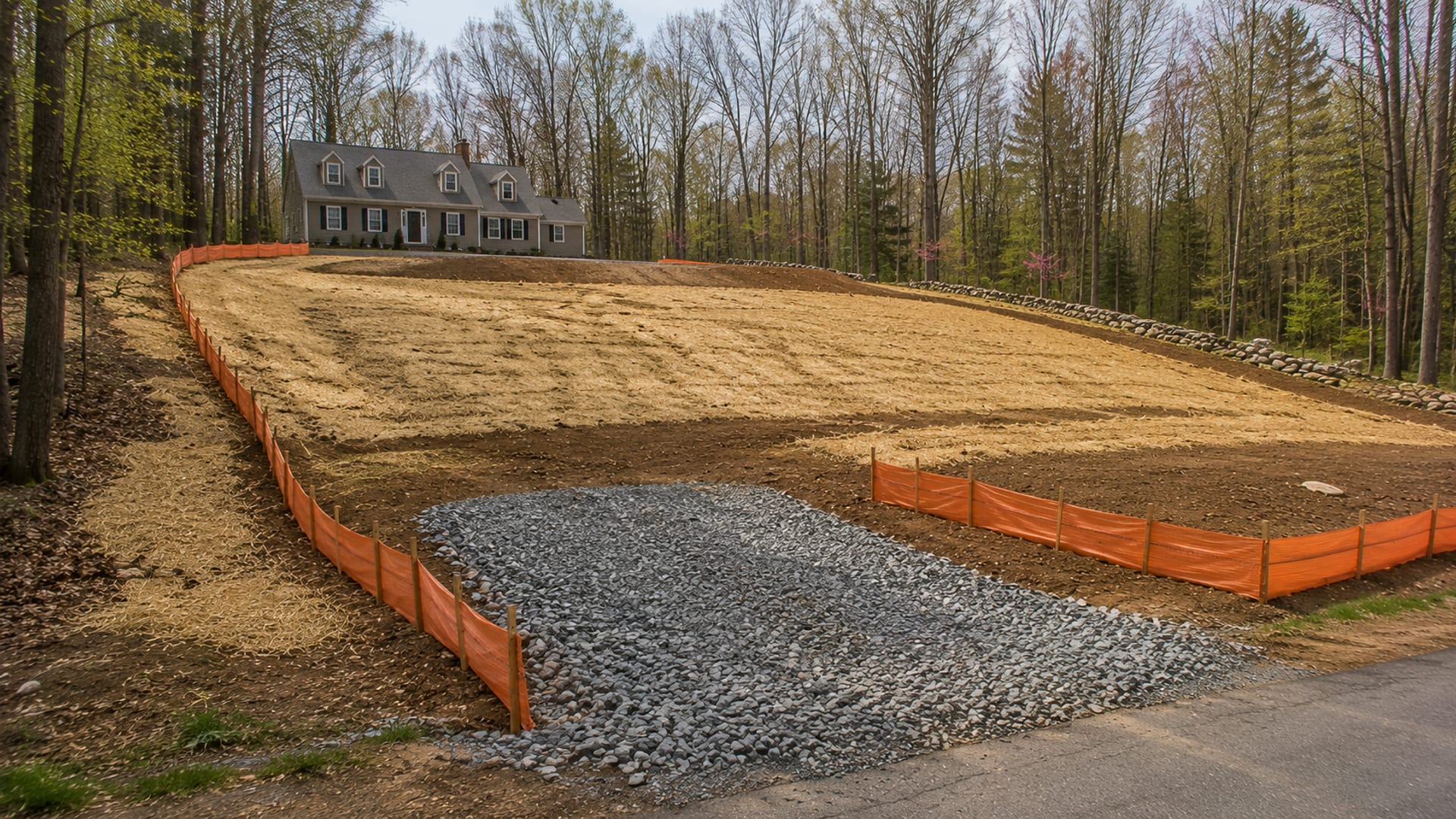
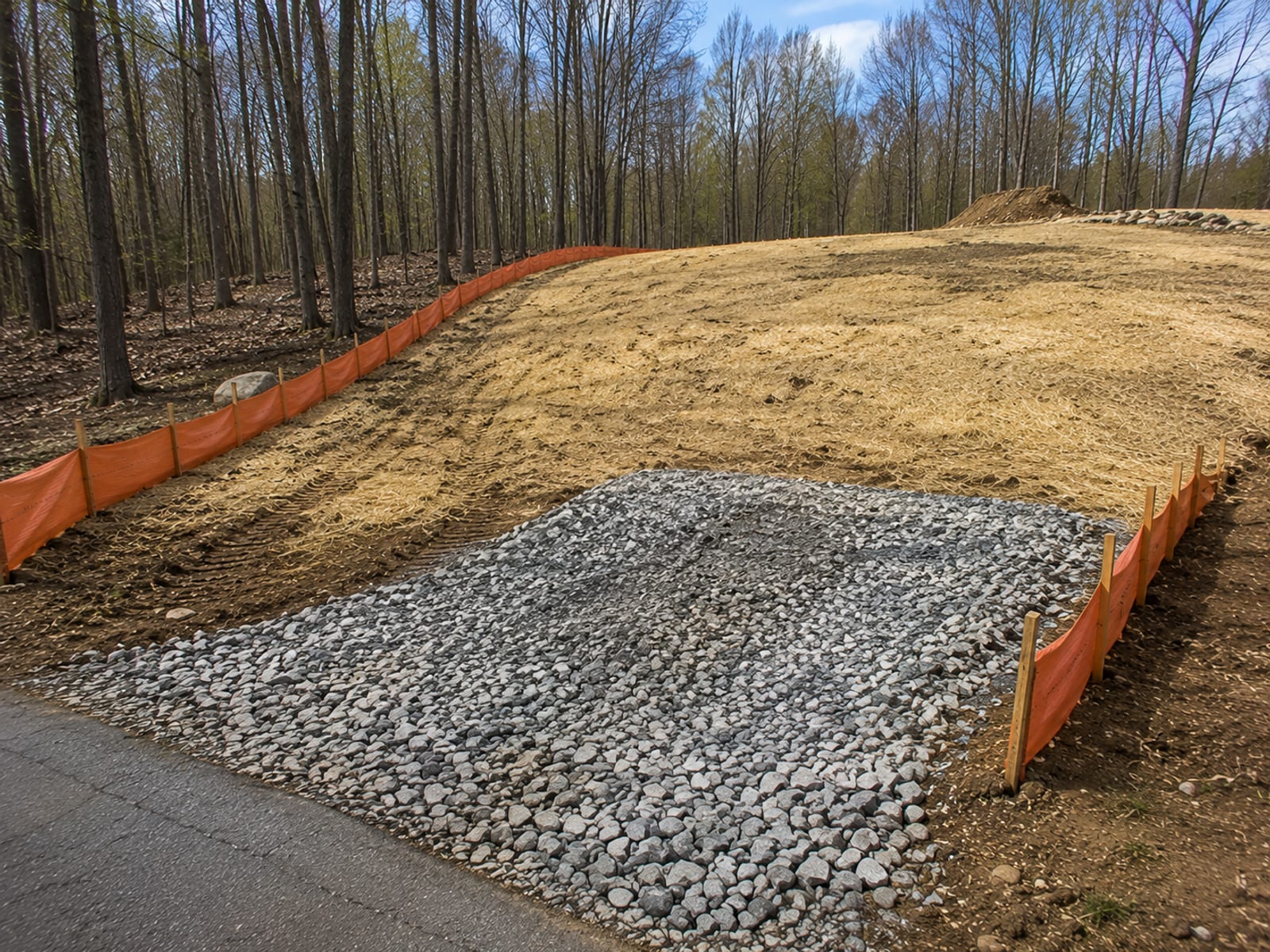
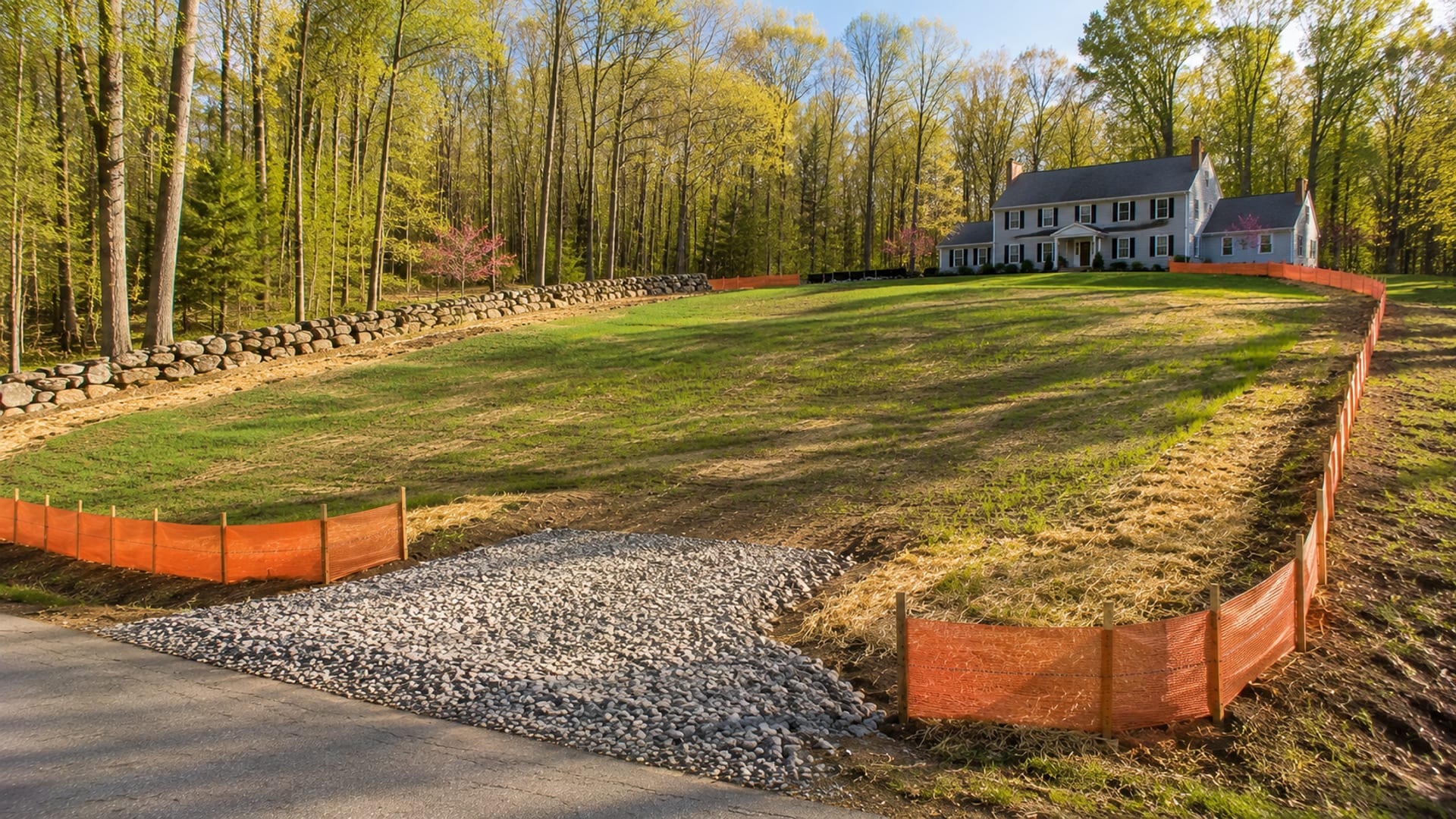
Where equipment enters and exits the site, a stabilized construction entrance made of crushed stone or gravel is set up to knock mud off tires and tracks before they reach the road. This is one of the most visible controls and one of the most practical, because a muddy construction entrance can track sediment onto town roads and trigger complaints or inspections.
Silt Fence and Perimeter Controls
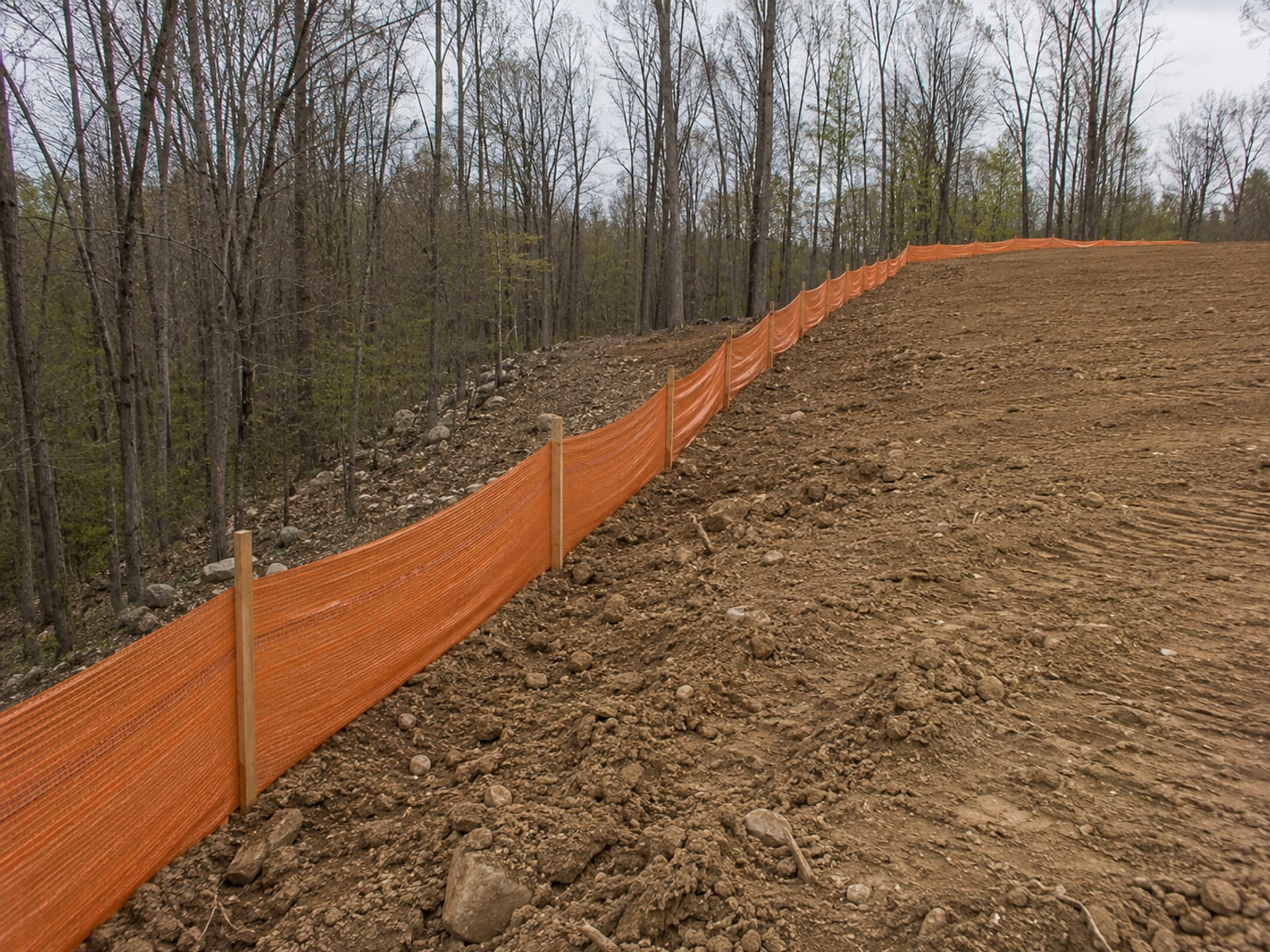
Silt fence gets installed along the downhill perimeter of the disturbed area before any digging or clearing begins. Compost filter socks are often used where silt fence alone is not enough, particularly near catch basins or in areas where runoff concentrates. These barriers intercept sheet flow and give suspended sediment time to drop out of the water before it leaves the property.
Temporary Swales and Diversion Berms
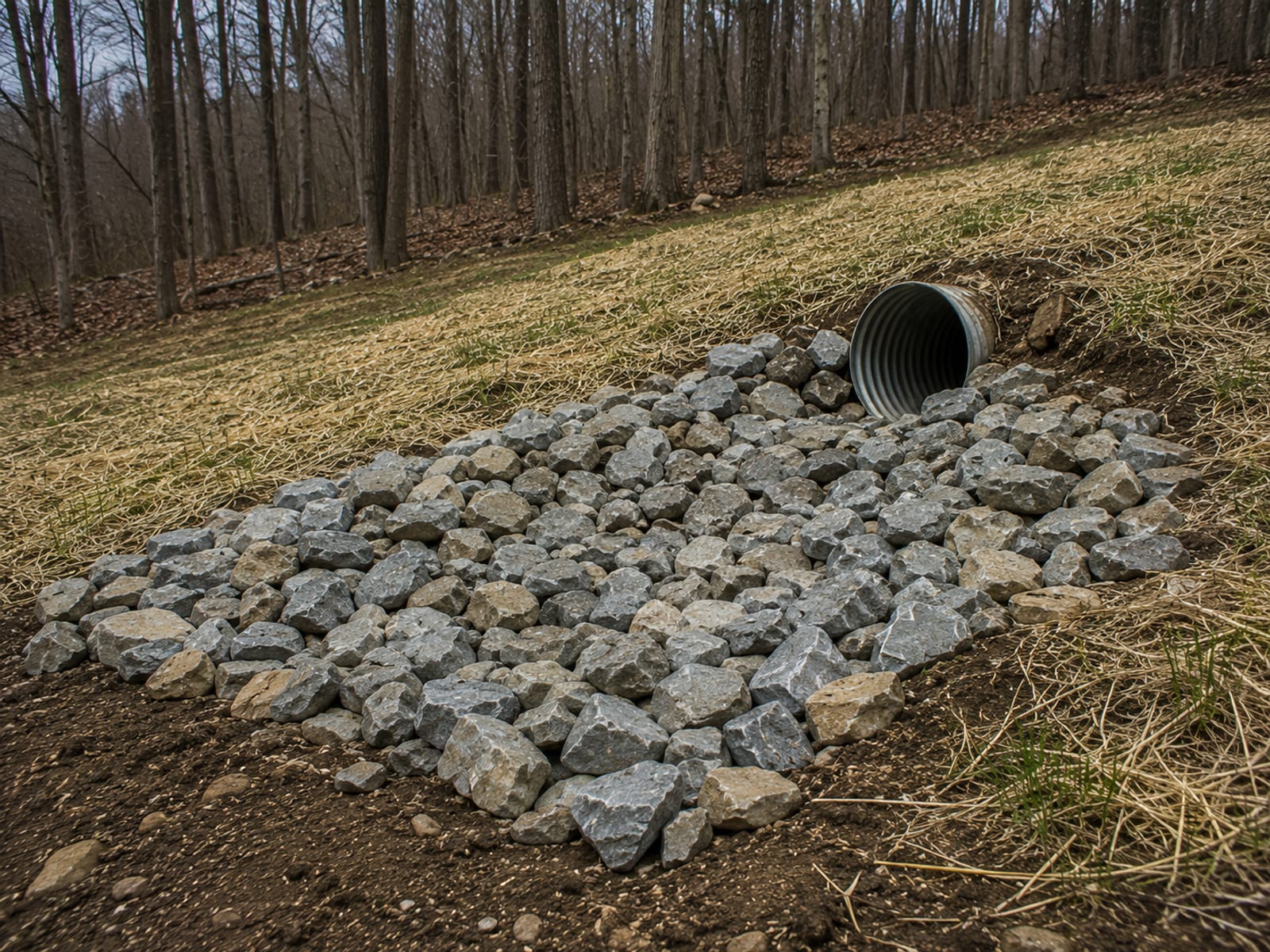
Where slopes channel water toward vulnerable areas, temporary diversion berms and graded swales redirect that flow to a stable outlet, such as a vegetated area or a sediment trap. These measures are especially useful on longer slopes or on projects that involve significant earth moving across multiple phases.
Erosion Control Blankets and Mulch
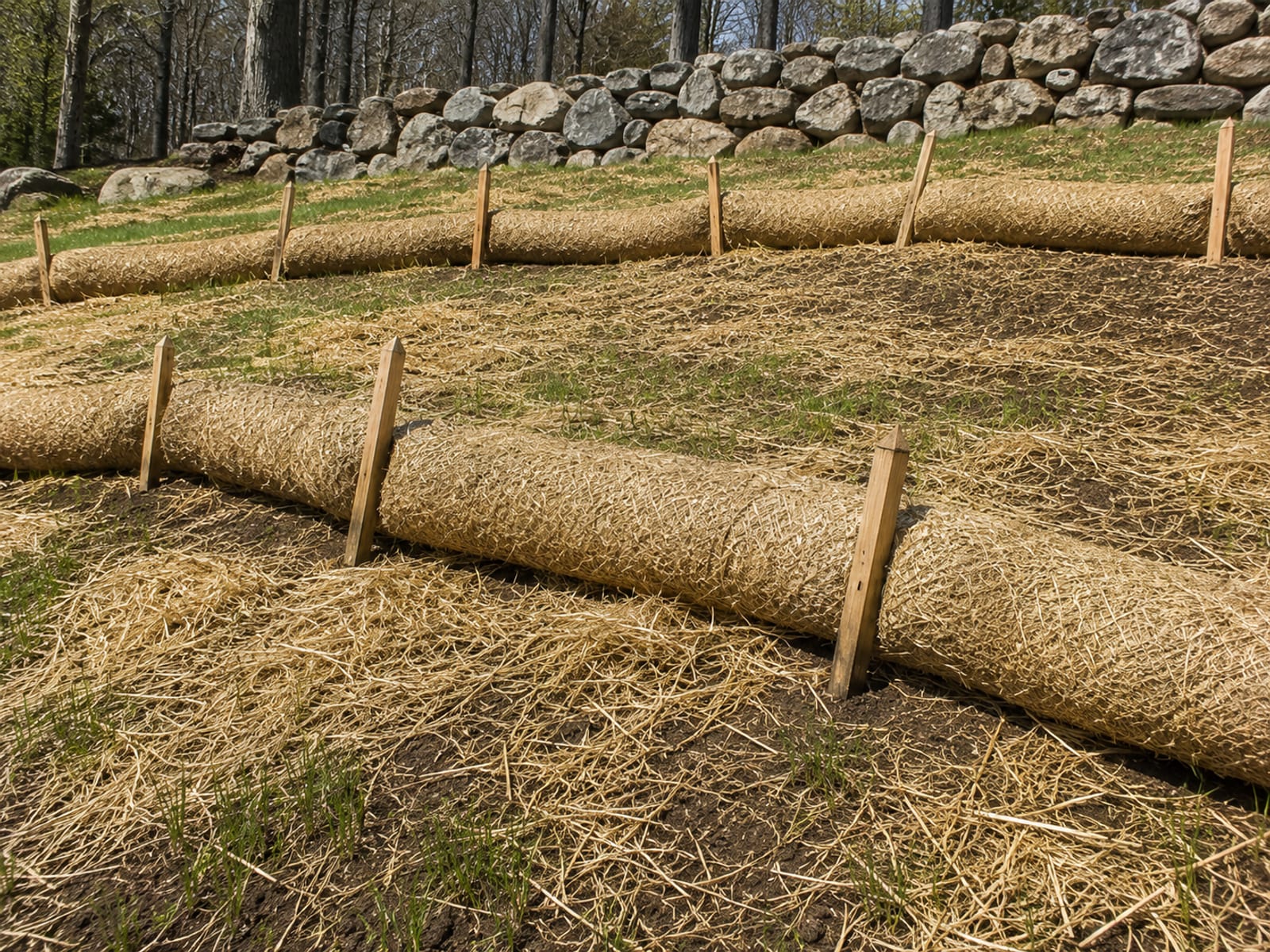
Freshly graded slopes that cannot be seeded immediately get covered with erosion control blankets or straw mulch to protect the bare soil surface from raindrop impact and surface runoff. These temporary covers hold the surface together until vegetation can establish.
Seeding and Permanent Vegetation
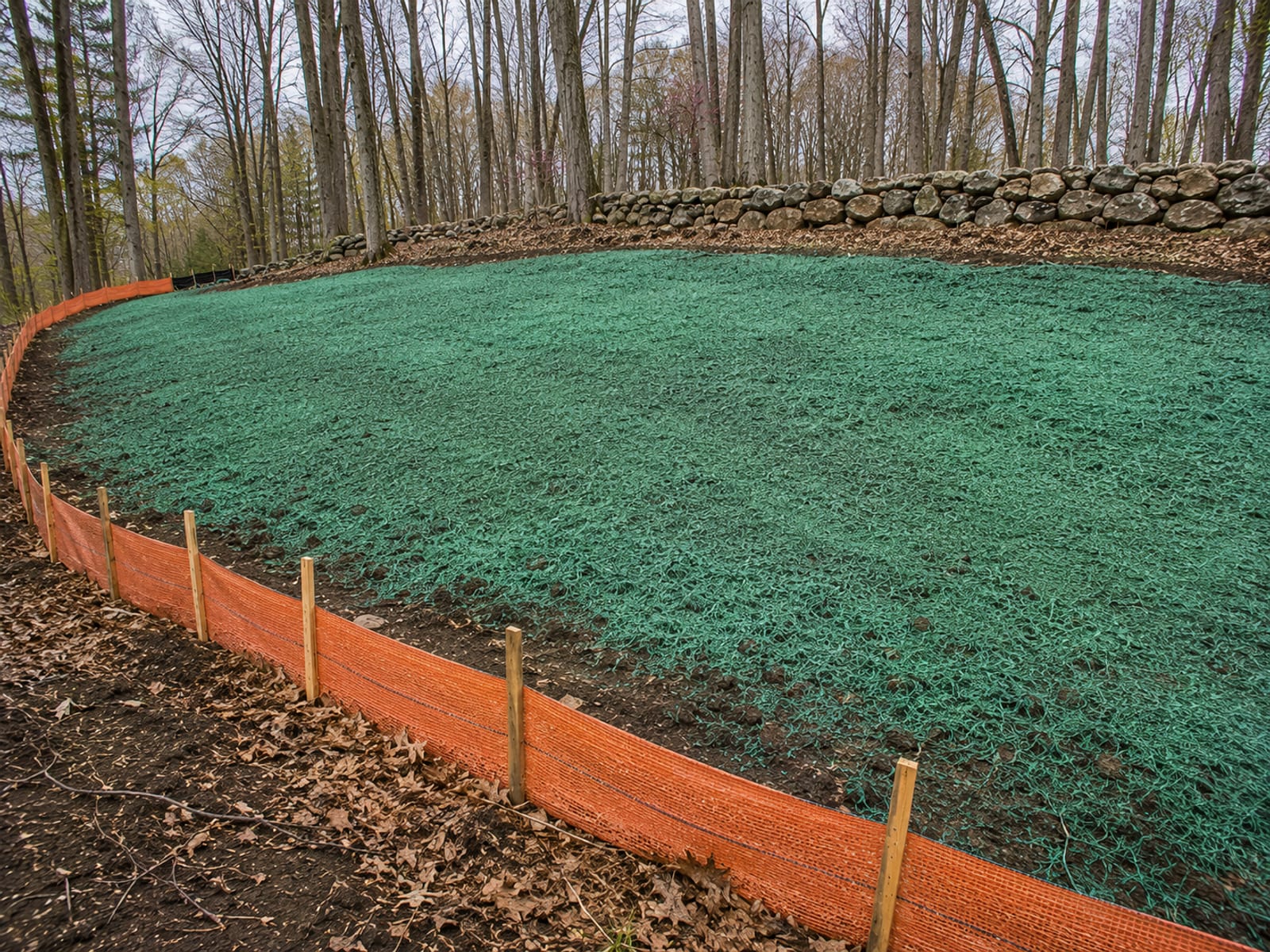
Temporary seeding goes down as soon as any section of the project reaches final grade, even before the full job is complete. Getting grass growing on finished areas reduces overall soil exposure time and starts building a permanent root system that will hold the surface through future weather events.
Monitoring, Repair, and Final Stabilization
Controls get checked during the project, not just at the start. After significant rain events, the crew repairs any silt fence that has sagged, fills in spots where erosion blankets have shifted, and addresses any areas where runoff found a new path. Final stabilization is confirmed before the job closes out.
How Erosion Control Connects to the Other Work on Your Property
One reason property owners in this area choose Prestige Property Maintenance is that erosion control does not have to be a separate call or a separate contractor. When the same crew handles land clearing, grading, drainage installation, and site stabilization, the sequencing gets planned as a single project rather than as disconnected tasks handed off between companies. Most erosion problems on residential sites happen in the gaps between contractors, when a freshly cleared parcel sits waiting for the grading crew, or when a graded lot sits bare while drainage work gets scheduled.
Drainage solutions work and erosion control are closely linked on sloped lots. A properly installed French drain, swale, or catch basin system that moves water away from a vulnerable slope reduces the erosive force that bare soil faces every time it rains. Retaining wall construction adds a structural element to that equation, holding back soil on the uphill side of a grade change and giving the downhill area a stable boundary. When these services are planned together by one contractor who understands how the site drains, each piece reinforces the others rather than creating new gaps.
Land clearing and forestry mulching projects also benefit from coordinated erosion planning. Forestry mulching leaves a layer of ground-level organic material across the cleared area that provides immediate surface protection and slows runoff while the soil gets shaped and seeded. That natural cover buys time and reduces how many separate erosion control products need to go down right away.
Connecticut Permit and Compliance Basics You Should Know
Connecticut does not have a single statewide threshold that tells you exactly when erosion and sediment control permits are required. The rules depend on the town, the size of the disturbed area, proximity to wetlands or watercourses, the type of project, and which local offices have jurisdiction. Many residential excavation and grading projects in Naugatuck Valley towns will involve review by the local inland wetlands commission, the town's building or engineering department, or both. Larger construction activities can trigger the Connecticut DEEP's Construction Stormwater General Permit, which requires a Stormwater Pollution Control Plan before ground disturbance begins.
Do not assume a project is permit-free because it is residential or because it seems small. A driveway excavation that drains toward a wetland buffer, or a grading project that redirects flow toward a neighboring property, can attract scrutiny regardless of the acreage involved. Prestige Property Maintenance is familiar with how these reviews typically play out in the towns we serve and can help you understand what documentation or site controls your specific project may need before work begins.
Prestige Property Maintenance is licensed and insured, which gives you a clear paper trail and protection if a third party raises questions about site conditions during or after the work.
Why Work with Prestige Property Maintenance for Erosion and Sediment Control?
Choosing the right contractor for erosion control comes down to a few practical things: local knowledge of Connecticut soil and weather conditions, the ability to handle the full project scope without scheduling gaps, and a track record of showing up and following through.
Connecticut Soil Knowledge
Western Connecticut's mix of ledge rock, glacial clay, and sandy deposits requires controls that match the actual ground conditions, not a generic template. Prestige Property Maintenance crews work this terrain regularly across 19 towns and know where runoff concentrates, where slopes are deceptive, and what seasonal conditions to plan around.
Single-Crew Project Flow
Excavation, clearing, grading, drainage, and stabilization all handled by one contractor means no gaps between trades, no finger-pointing when something moves wrong, and a cleaner handoff from active work to finished, stable ground.
Right Equipment for Every Phase
Erosion control on residential lots requires knowing when to use heavy machinery and when to step back to smaller, less disruptive tools. Having the right equipment for grading and final stabilization work reduces how much bare soil gets disturbed in the process of correcting a problem.
Wide Service Territory
Prestige Property Maintenance serves Oxford, Derby, Bethany, Seymour, Ansonia, Shelton, Monroe, Bridgewater, Roxbury, Woodbury, Middlebury, Southbury, Naugatuck, Woodbridge, Prospect, Newtown, Oakville, Watertown, and Wolcott. Projects that cross town lines or span larger parcels do not require finding a second contractor.
Practical, Not Oversold
Not every job needs every product in the erosion control catalog. The crew recommends controls based on actual site conditions, drainage paths, project duration, and proximity to sensitive areas, not on upselling. You get what the site actually needs.
Common Questions About Erosion and Sediment Control in Connecticut
Do I need an erosion and sediment control plan for a residential project in Connecticut?
It depends on the town, the scope of the disturbed area, and whether the project affects wetlands, drainage paths, or neighboring properties. Many towns in the Naugatuck Valley review erosion control plans through their inland wetlands commission, building department, or engineering office. Assuming a small residential project is automatically exempt can lead to stop-work orders or remediation requirements after the fact. Your best starting point is confirming with your town's land use office before work begins.
What is the difference between a silt fence and a compost filter sock?
A silt fence is a permeable fabric barrier staked into the ground along the perimeter of a disturbed area to slow and filter sheet flow runoff. A compost filter sock is a mesh tube filled with compost material that works similarly but tends to filter more effectively and hold up better in areas with concentrated flow, such as near inlet protection or along drainage swales. Both are commonly used together depending on where runoff concentrates on a given site.
How quickly does erosion damage happen on a bare slope after clearing or grading?
A single moderate rainstorm can move significant amounts of topsoil from an unprotected slope, particularly on the clay-heavy soils found across much of western Connecticut. Once surface runoff starts channeling, the damage accelerates because channels widen and deepen with each subsequent rain event. This is why getting temporary cover and perimeter controls in place within the first few days after soil disturbance matters so much, not at the end of the job.
Does Connecticut DEEP require permits for construction site runoff?
Yes, for certain projects. Connecticut DEEP's Construction Stormwater General Permit covers construction activities that disturb one or more acres of land, or smaller areas that are part of a larger common plan of development. This permit requires a Stormwater Pollution Control Plan developed before ground disturbance begins, along with inspection and maintenance protocols during active construction. Residential projects below those thresholds may still face local review requirements depending on the town.
Can erosion control be part of an excavation or grading project, or does it require a separate contractor?
Erosion control works best when it is integrated into the same project by the same contractor handling the ground work. A separate contractor hired after the fact is working around conditions that already exist, which limits what they can do. When the excavation, grading, and drainage work are all planned together with stabilization in mind, the controls are placed in the right sequence and the soil exposure window is minimized from the start.
What types of permanent stabilization are typically used at the end of a grading or clearing project?
Permanent stabilization on residential and light commercial sites usually involves seeding and mulching, hydroseeding on larger or steeper areas, erosion control blankets on slopes until grass establishes, and in some cases permanent retaining wall construction or rock placement to hold grade changes long term. The right combination depends on slope angle, soil type, drainage conditions, and how the finished area will be used. Vegetated swales and properly graded drainage paths also contribute to keeping the finished site stable without ongoing maintenance.
How does forestry mulching help with erosion control after land clearing?
Forestry mulching grinds cleared trees and vegetation into a layer of organic material that stays on the ground surface where it was created. That layer immediately reduces the impact of rainfall on bare soil, slows surface runoff, and holds moisture that supports seed germination. It also eliminates the window of fully bare, unprotected soil that typically exists between a conventional clear-and-haul operation and the arrival of erosion control measures. For sloped lots in particular, that immediate surface cover makes a meaningful difference.
Get Your Site Stabilized the Right Way
If you have ground work coming up in Oxford, Southbury, Shelton, Newtown, or anywhere else in the 19-town service area, Prestige Property Maintenance can handle the full scope from clearing and excavation through grading, drainage, and final stabilization. Call (203) 258-3395 or send a message to dig@prestigectexcavation.com to talk through your project and get a straight answer on what your site actually needs.
Ready to talk through your project? Call Prestige Property Maintenance at (203) 258-3395 or email dig@prestigectexcavation.com. Monday through Saturday, 7 AM to 5 PM.
Tell us about your project and get a clear, no-pressure quote. Same-day callbacks on most requests.