Site Preparation & Excavation
Earth Moving Services in Connecticut
Prestige Property Maintenance handles large-scale soil relocation, terrain reshaping, and site preparation across 19 towns in the Naugatuck Valley and western Connecticut. One crew, one schedule, no handoffs.
What Is Earth Moving and What Does It Include?
Earth moving is the process of cutting, hauling, placing, and grading large volumes of soil and material to change how a piece of ground is shaped or used. It covers stripping topsoil before construction, filling low spots that collect water, relocating cut material to build up a pad, and rough-shaping a site so every other trade, from foundation crews to paving contractors, can do their work on stable, properly pitched ground.
What you get from this service depends on where your project starts. A raw lot that needs to be stripped and rough-graded before a house goes in is a different scope than a backyard that needs several hundred yards of fill brought in to correct drainage and level a usable area. Prestige Property Maintenance works through both types of projects and everything in between, including driveway base work, topsoil stripping for seeding or landscaping, terrain reshaping on sloped rural lots, and site clearing combined with mass soil movement on larger parcels.
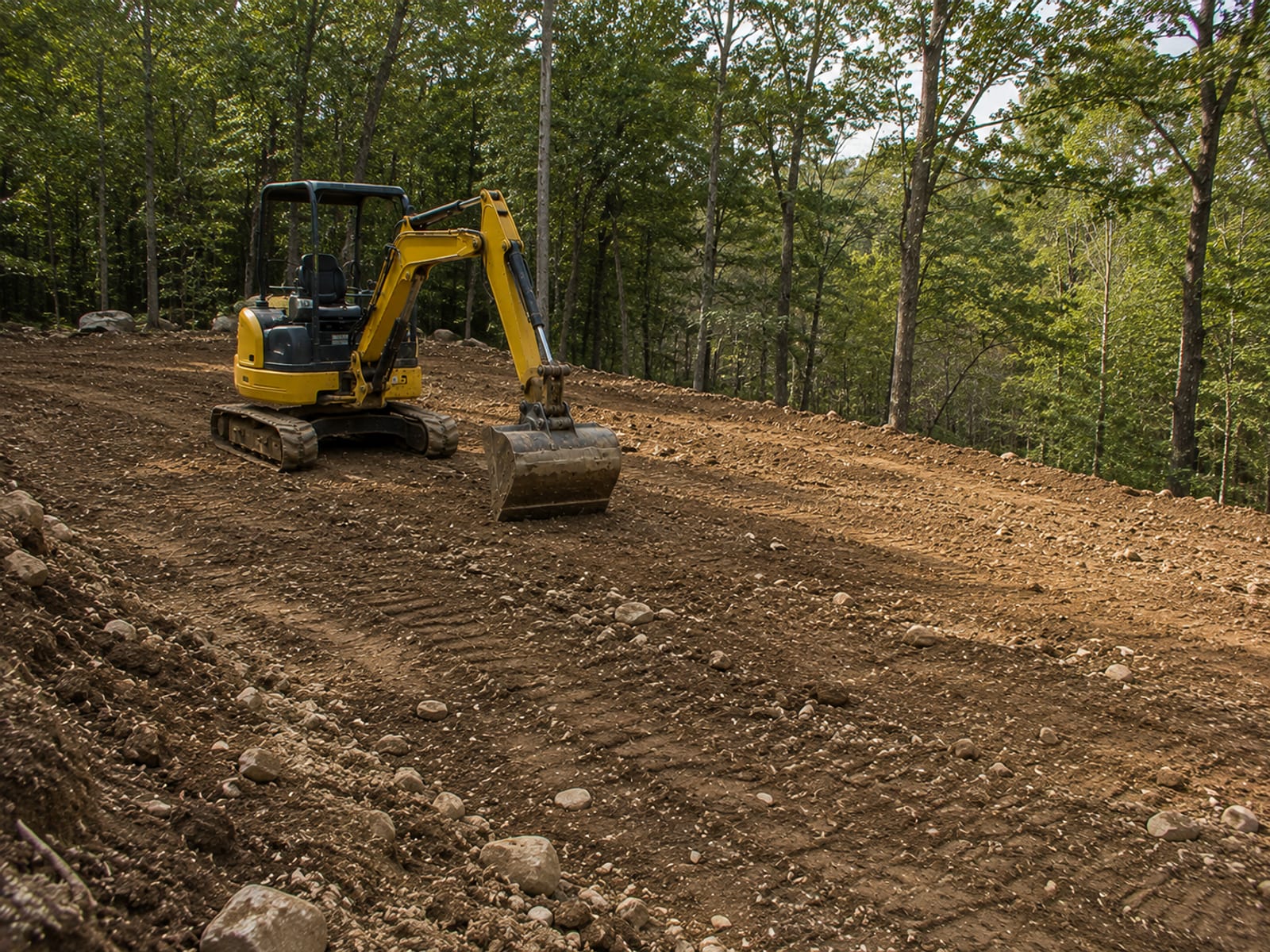
The defining characteristic of earth moving work, as opposed to finish grading or minor landscaping, is volume and machinery. These projects call for excavators, bulldozers, and dump trucks rather than skid steers and hand tools. When the scope involves moving hundreds or thousands of cubic yards of material, or when the terrain needs to be fundamentally reshaped rather than touched up, that is earth moving territory.
Why Does Earth Moving Matter Before Anything Else Gets Built?
Most site problems that show up later, settling foundations, flooded basements, cracked driveways, standing water in yards, can be traced back to earth moving work that was done poorly or skipped entirely. Getting the soil shaped, compacted, and pitched correctly at the beginning of a project is what makes everything built on top of it perform the way it should for years down the road.
In Connecticut specifically, this matters more than in many other states. The glacial soil conditions across the Naugatuck Valley and western CT towns mean you are often dealing with a mix of rocky ground, heavy clay layers, buried boulders, and areas where the water table sits high enough to cause seasonal saturation. Grading soil over clay without accounting for drainage, or filling a low spot without identifying where the water actually needs to go, creates problems that are expensive to fix after the fact.
When earth moving is planned well, it does several things at once. It removes material that does not belong under a structure or driveway, brings in fill where the grade needs to rise, creates positive drainage pitch so water moves away from buildings and toward appropriate discharge points, and leaves the site in a condition that holds up through the freeze-thaw cycles Connecticut winters produce. That kind of result does not come from rushing through soil movement to hit a price point. It comes from understanding the site before the first bucket swings.
For homeowners on larger rural or semi-rural lots, well-executed earth moving also opens up land that was previously unusable. A slope that collects water and cannot be mowed, a low-lying area that stays wet half the year, or a section of property buried under fill debris from a previous owner can all become functional outdoor space once the terrain is properly reshaped and graded.
How Prestige Property Maintenance Approaches an Earth Moving Project
Every earth moving project follows a clear sequence. Skipping steps or reordering them is how sites end up with drainage problems, unstable pads, or grades that do not match the final use. This is how Prestige Property Maintenance works through a job from first contact to finished site.
Site Walk and Scope Discussion
Before any equipment gets scheduled, the site gets a walk-through to understand existing grades, soil conditions, access points, where water currently flows, what the final use of the area will be, and whether rock, buried debris, or wet areas are likely to affect the work. This conversation shapes the plan and the estimate. A driveway base needs different preparation than a building pad or a yard that just needs fill brought in and shaped.
Utility Marking and Pre-Work Coordination
Connecticut law requires utilities to be marked before digging, and Prestige Property Maintenance coordinates with the applicable marking services before any equipment breaks ground. This protects underground electric, gas, water, and telecom lines and keeps the project on schedule by avoiding unexpected utility conflicts mid-job.
Access Planning and Erosion Control Setup
On Connecticut sites with steep grades, wet areas, or properties near watercourses, controlling how water and disturbed soil behave during work is part of the job, not an afterthought. Equipment access routes are planned to protect existing lawn, landscaping, and drainage. Temporary measures to manage runoff and sediment are set up before mass soil movement begins.
Cutting, Hauling, and Filling Operations
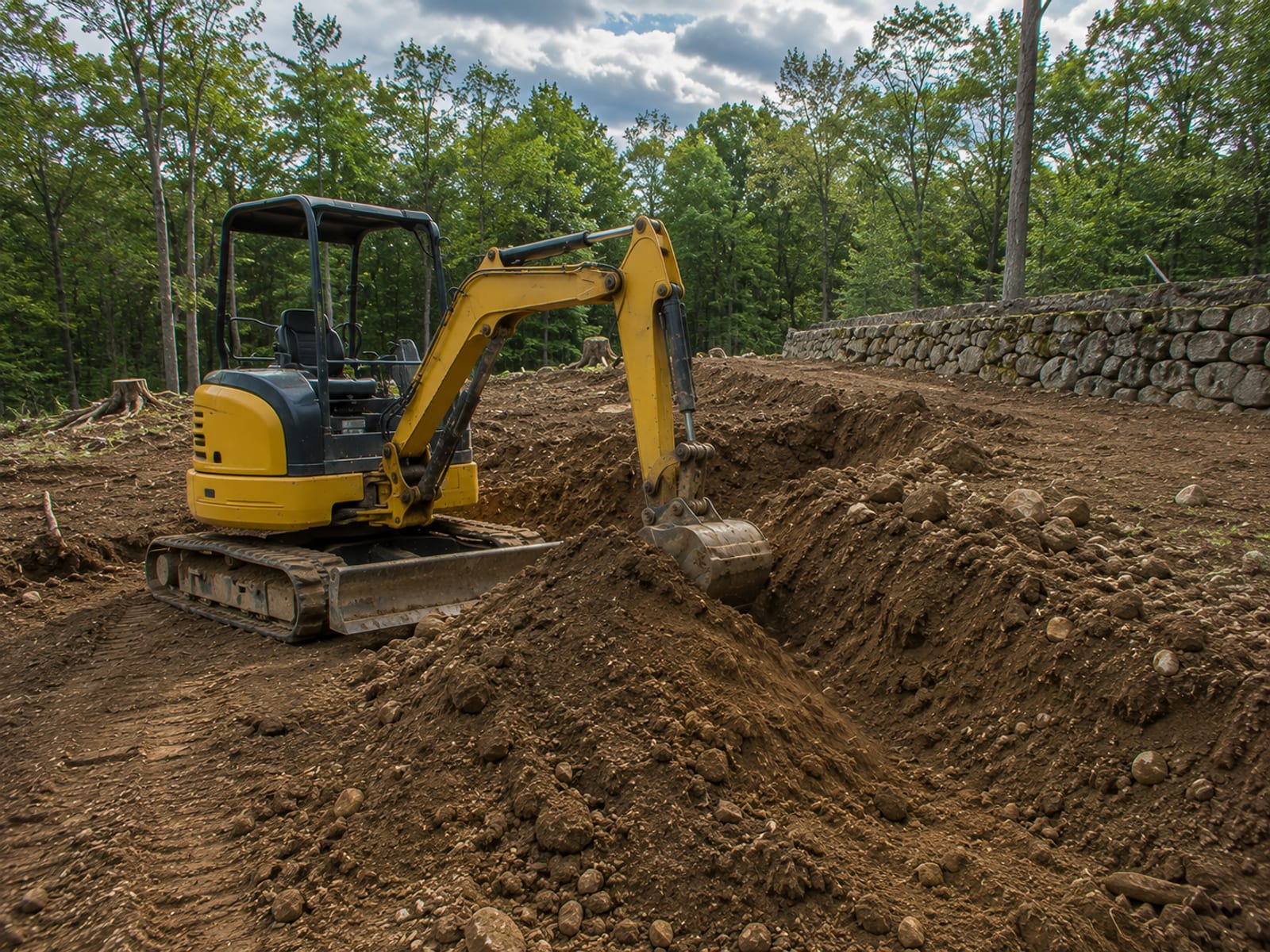
This is the core of the work. Excavators, bulldozers, and trucks move material according to the plan, cutting down high areas, filling and compacting low spots, stripping topsoil for stockpile or removal, and relocating soil to where it needs to go. Unsuitable material, including wet clay, organic-heavy soil, or debris, is separated out rather than buried under fill where it would cause settling later.
Rough Grade and Compaction Check
Once the bulk of the material is in place, the crew establishes the rough grade at the elevations and slopes the project requires. Areas that will carry structures or paved surfaces get compacted in lifts so the material does not settle unevenly after the project is done. The final grade is checked for proper drainage pitch before equipment leaves the site.
Site Cleanup and Coordination with Next Phase
Earth moving is usually one phase of a larger project. Prestige Property Maintenance finishes sites in a condition that hands off cleanly to the next phase, whether that is foundation work, paving prep, drainage installation, or landscaping. When Prestige Property Maintenance is handling additional phases, the sequencing is planned from the start to avoid rework or redundant mobilizations.
What Makes Earth Moving in Connecticut Different From Other States?
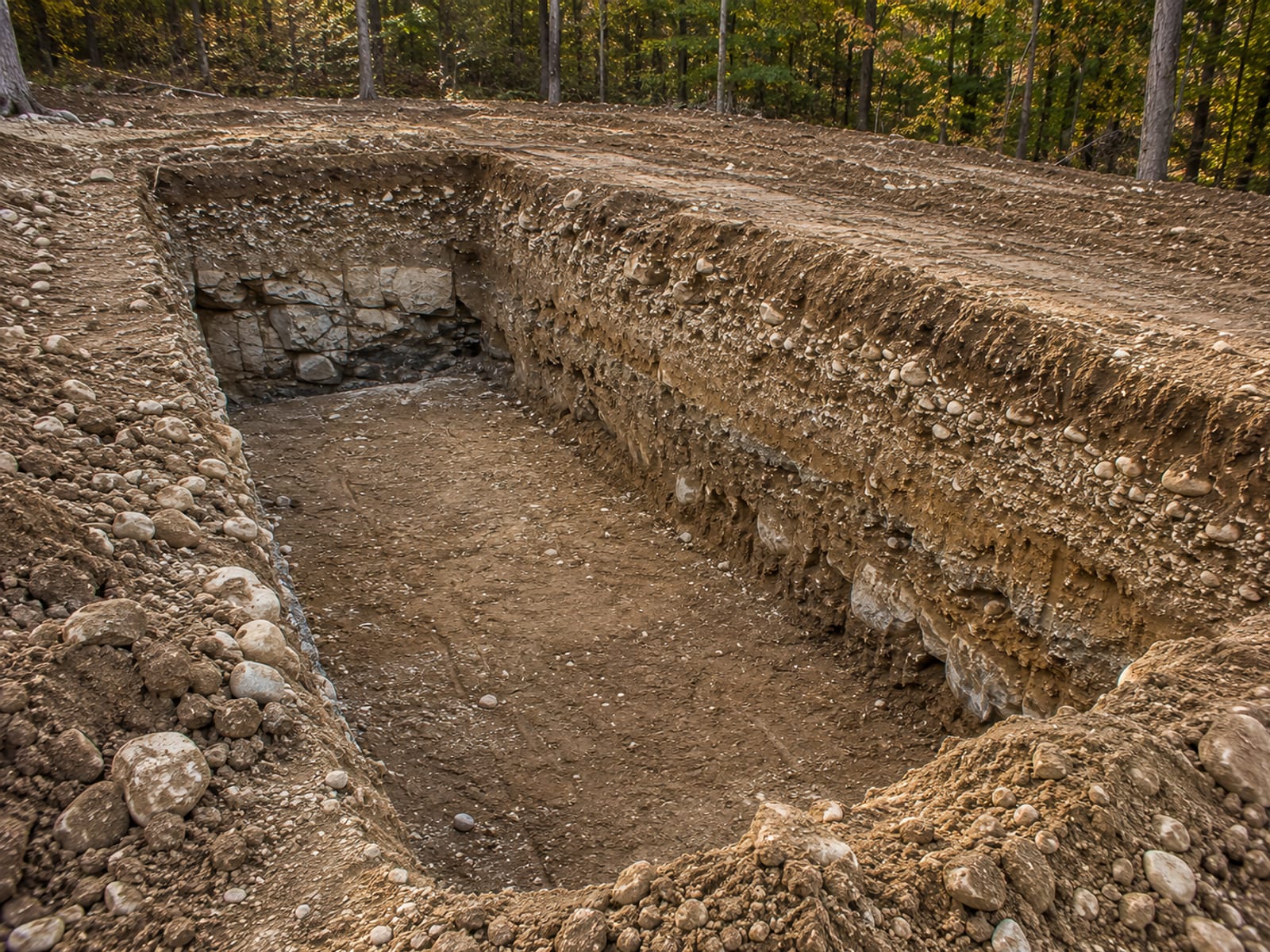
Connecticut's glacial geology creates conditions that crews from outside the region consistently underestimate. The last ice sheet that covered this part of New England deposited a highly variable mix of material when it retreated: dense clay, sandy loam, gravel, and boulders ranging from the size of a basketball to the size of a shed, all mixed together with no consistent pattern. In the Naugatuck Valley towns specifically, ledge rock runs close to the surface in some areas and drops away in others, and boulders buried several feet down are common enough that experienced local crews plan for them rather than being caught off guard.
Clay-heavy soil, which is common across much of western Connecticut, behaves differently when it gets wet. It does not drain the way sandy fill does, it swells and contracts with moisture and temperature changes, and it can become nearly unworkable as a fill material if it gets saturated during construction. Knowing when to use native soil as fill versus when to bring in cleaner gravel or bank run material is a judgment call that comes from working in this soil regularly, not from general earthwork experience.
Seasonal conditions add another variable. Frozen ground in late fall and winter limits when certain work can happen, and the spring thaw period can leave sites too soft for heavy equipment without proper staging. Contractors who have been working in the Naugatuck Valley for years know which sites drain well enough to work in wet conditions and which ones need to wait.
Regulatory requirements also come into play on Connecticut earth moving projects in ways that are worth knowing about. Sites near inland wetlands or watercourses typically require review by the town's inland wetlands agency before work begins. Projects that disturb larger areas may fall under state stormwater general permit requirements. Local zoning and building departments may require permits for grading work depending on the scope and location. Prestige Property Maintenance works in 19 towns across the region and knows that permit requirements vary by municipality. Before starting a project, property owners should confirm what approvals are needed with their local building, zoning, or wetlands office.
Services That Work Alongside Earth Moving
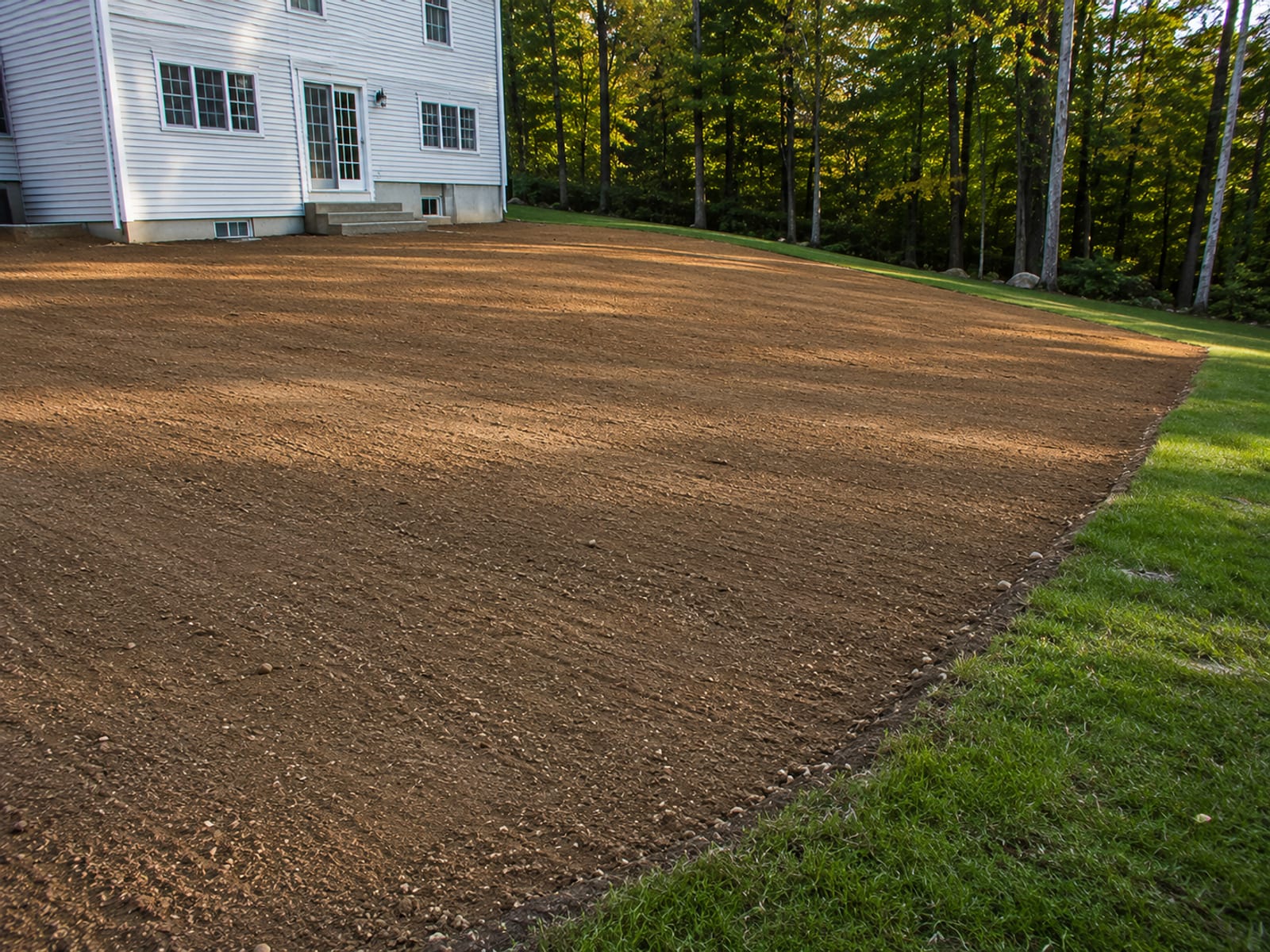
Earth moving rarely happens on its own. Most projects that require mass soil relocation also need at least one other service to be complete. Prestige Property Maintenance handles the full sequence in-house, which means the work flows from one phase to the next without scheduling gaps or handoffs to separate contractors.
Grading
After bulk soil movement is done, finish grading brings the site to its final elevations and slopes. This is what establishes proper drainage pitch around a structure, prepares a lawn area for seed or sod, and gives a paving crew a surface that is ready to work on.
Learn more about GradingRock Removal
Connecticut sites often produce ledge, boulders, or buried stone during earth moving. Having rock removal capability in the same crew means discovered rock does not stop a project or require a separate mobilization to deal with.
Learn more about Rock RemovalDrainage Solutions
Reshaping terrain affects how water moves across a site, and the two need to be planned together. Drainage work, including French drains, catch basins, surface swales, and pipe systems, is often installed as part of the same project as major soil relocation.
Learn more about Drainage SolutionsLand Clearing
Sites that need earth moving often start with trees, brush, and stumps that have to come out first. Handling clearing and earth moving with the same crew keeps the schedule tight and avoids waiting for one contractor to finish before another can start.
Learn more about Land ClearingDriveway and Roadway Excavation
Long rural driveways and private roads in western Connecticut often need sub-base work that is essentially an earth moving operation. Cutting the road profile, shaping the crown, and setting proper drainage pitch all fall under this same skill set.
Learn more about Driveway & Roadway ExcavationRetaining Wall Construction
When earth moving creates or exposes a grade change that needs to be held back, retaining wall construction addresses the structural side of the problem so the reshaped terrain stays in place.
Learn more about Retaining Wall ConstructionWhy Work With Prestige Property Maintenance for Earth Moving?
Prestige Property Maintenance has been working in the Naugatuck Valley and western Connecticut since 2015. That time on local sites adds up to something specific: an accurate read on what Connecticut soil actually does when you move it. Crews arrive on-site expecting ledge, clay, and buried boulders. Equipment selections and project plans account for the real conditions in this region rather than a generic job scope.
The full-service capability matters too. Most earth moving projects are not isolated events. They connect to clearing work that happened before them and grading, drainage, paving prep, or retaining wall work that needs to happen after. When all of that stays with one contractor and one crew that already knows the site, projects finish faster and with fewer gaps between phases. There is no waiting for a second company to mobilize, no disagreement about who left the site in what condition, and no separate schedules to coordinate.
Prestige Property Maintenance is licensed and insured, which matters for a service where equipment is moving large volumes of material across or near residential properties and for permitting, since some towns require proof of contractor credentials before approving a grading or earthwork permit.
The service area covers 19 towns: Oxford, Derby, Bethany, Seymour, Ansonia, Shelton, Monroe, Bridgewater, Roxbury, Woodbury, Middlebury, Southbury, Naugatuck, Woodbridge, Prospect, Newtown, Oakville, Watertown, and Wolcott. If your property falls in or near this area, Prestige Property Maintenance can get to you without the travel premium that out-of-area contractors often charge.
Earth Moving Questions Answered
These are the questions property owners and builders most often ask before starting an earth moving project in Connecticut.
Do I need a permit for earth moving work on my property in Connecticut?
It depends on the scope and location. Projects near inland wetlands or watercourses typically require review by the town's inland wetlands commission before regulated activity begins. Large disturbed areas may trigger state stormwater requirements. Local building and zoning departments may also require a grading or site disturbance permit depending on the town. Requirements vary municipality to municipality, so the right step is to check with your local building, zoning, or wetlands office before work starts.
How do I know if my project is earth moving or just grading?
Grading refers to shaping the surface to specific elevations and slopes, usually as a finishing step. Earth moving is the larger operation that happens first: cutting down high areas, hauling material off, bringing in fill, and fundamentally relocating large volumes of soil. Most projects involve both, with earth moving establishing the bulk shape of the site and grading dialing in the final surface. If your project involves more than a few hundred yards of soil movement or significant terrain reshaping, it is an earth moving scope.
What happens to the soil that gets removed from my site?
That depends on the project plan. Clean material, meaning soil without significant clay content, organic matter, or debris, can often be stockpiled and reused as fill elsewhere on the same site. Wet clay, topsoil stripped from a building pad, and unsuitable material typically gets hauled off and disposed of at an appropriate location. When fill needs to come in from off-site, the source and material type matter because the wrong fill under a driveway or structure will settle and cause problems down the road.
Can earth moving work be done near my foundation or septic system?
It can, but it requires careful planning. Excavators working near foundations need to account for footing depth and lateral pressure from soil loads. Work near a septic system requires knowing where the tank, distribution box, and leach field are located before any equipment moves in. Site plans, as-built drawings, or locating the system before work begins are standard steps for projects where earthwork will happen in the vicinity of existing infrastructure.
What soil conditions should I expect on a Connecticut property?
Western Connecticut and the Naugatuck Valley sit on glacially deposited material, which means the soil composition changes significantly from one part of a lot to another. Sandy loam, dense clay, gravel, buried boulders, and ledge rock can all be present on the same property. Clay-heavy soil is common and does not behave as fill the same way granular material does. Ledge rock near the surface is a known factor in many towns across the region. An experienced local contractor will plan for these variables rather than being caught off guard by them.
How long does a typical earth moving project take?
Project duration depends on volume, access, soil conditions, and weather. A straightforward fill and rough grade on a residential lot might take one to several days. A larger clearing-plus-earth-moving project that involves rock, significant volume, or difficult access can run a week or more. Seasonal conditions in Connecticut, particularly wet springs and frozen ground in late fall, also affect scheduling. Specific timelines are part of the estimate discussion once the site has been evaluated.
Does Prestige Property Maintenance handle earth moving for commercial sites and builder projects?
Yes. Along with residential property owners, Prestige Property Maintenance works with builders, developers, and general contractors who need site preparation, foundation excavation, paving prep, and grading work handled by a reliable sub. For commercial scopes, the same process applies: site walk, utility marking, planned soil management, and clean handoff to the next phase. The equipment fleet handles both residential and commercial volume.
Get a Quote for Earth Moving in Connecticut
Call (203) 258-3395 or email dig@prestigectexcavation.com to set up a site visit. Available Monday through Saturday, 7 AM to 5 PM.