Landscape Construction
Site Preparation Services in Connecticut
Prestige Property Maintenance gets your land build-ready from the ground up, handling clearing, grading, drainage, and rough shaping across 19 towns in western Connecticut and the Naugatuck Valley.
What Is Site Preparation and What Does It Include?
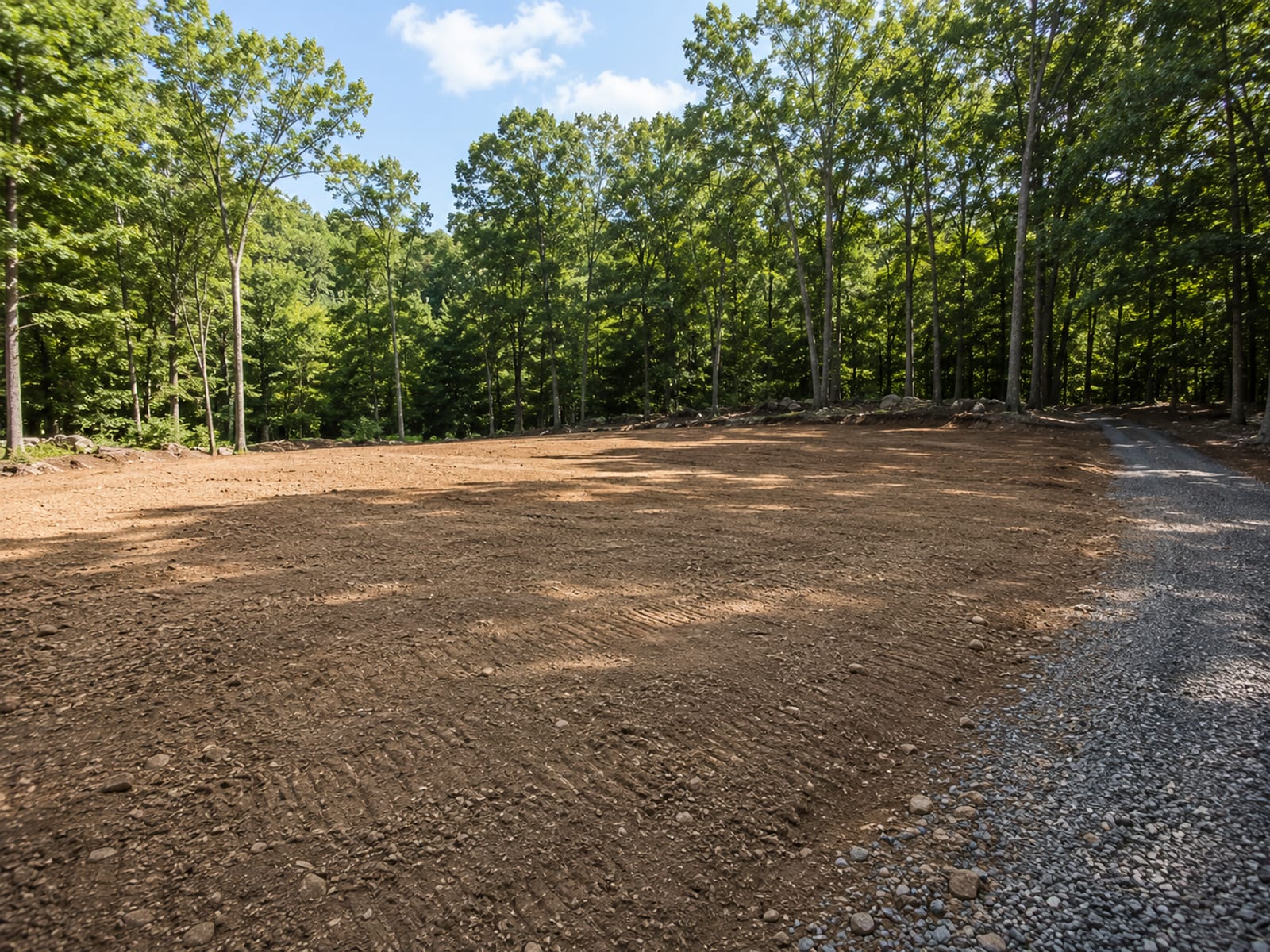
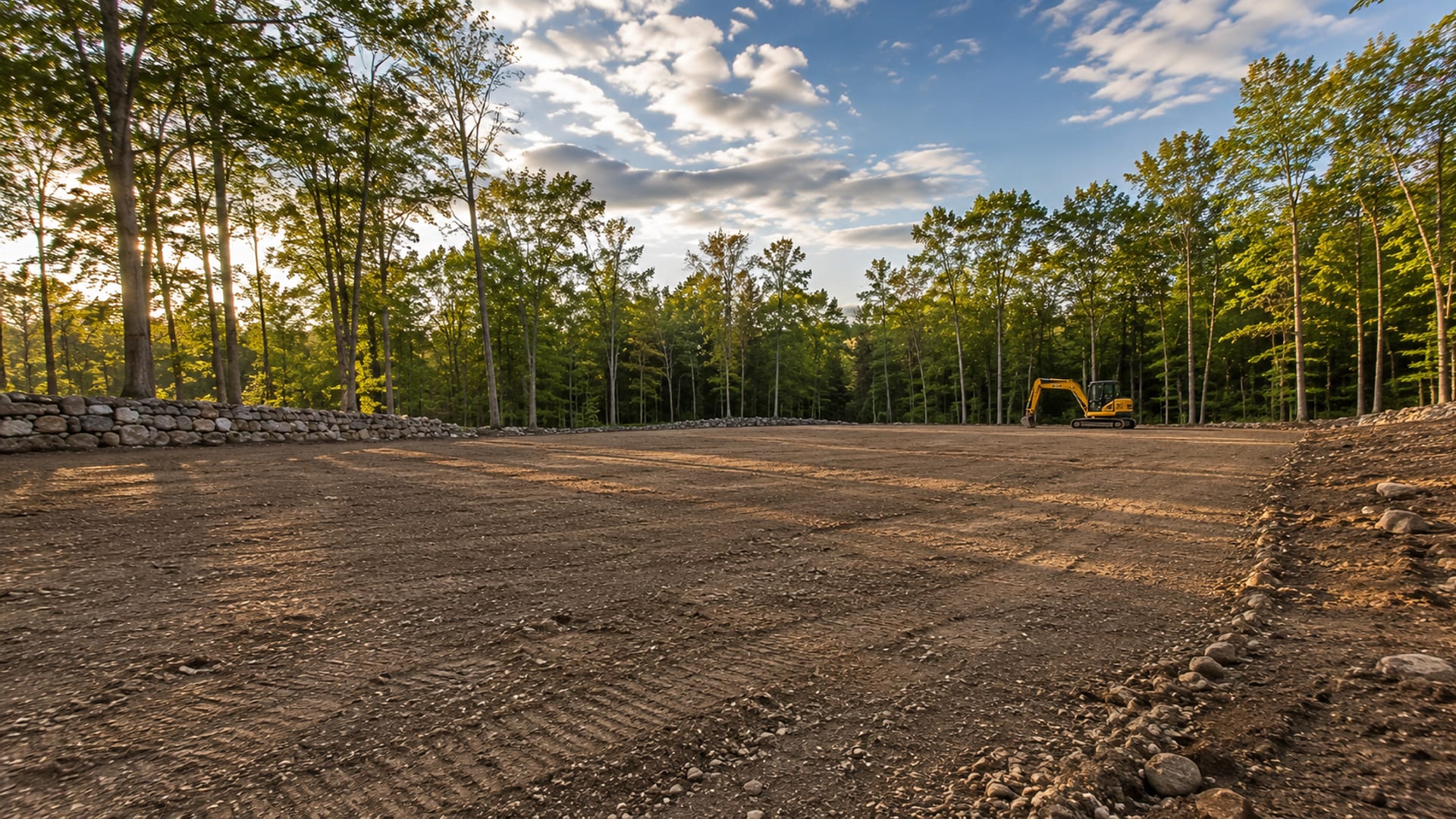
Site preparation is the full process of turning raw, overgrown, or undeveloped land into ground that's ready for construction, landscaping, or a driveway project. A properly prepared site has been cleared of trees and vegetation, graded to the right elevation, shaped for drainage, and compacted so whatever gets built on top of it actually stays put. For most residential and commercial projects in Connecticut, that process touches clearing, excavation, grading, rock removal, earth moving, and drainage work before the real building even starts.
When you call Prestige Property Maintenance for site prep, you get one crew that handles the whole sequence. No waiting for a tree service to finish before the excavator can show up, and no scheduling gaps while two different contractors try to coordinate. The clearing, stump grinding, rough grading, and drainage shaping all happen in one connected scope of work, which keeps the project moving and keeps you from acting as the go-between.
Connecticut properties add their own challenges to this process. The glacial history of the state left western CT towns with soil that mixes clay, ledge rock, boulders, and sand in the same parcel. What looks like a straightforward grading job on paper can hit buried stone at three feet, or shift to heavy clay that drains poorly and holds water against a foundation. That is exactly the kind of thing a crew with real experience in Oxford, Southbury, Woodbury, and the surrounding towns will already be prepared for before equipment rolls onto your property.
Why Good Site Prep Matters Before Construction Starts
Skipping steps in site preparation or rushing the grading phase creates problems that are expensive to fix later. Standing water near a foundation, a driveway that washes out after the first heavy rain, or a building pad that settles unevenly are all signs that the site was not properly shaped before construction began. In Connecticut, where storm patterns have been delivering more intense rainfall over shorter windows, proper drainage planning during site prep is not optional.
The grading work done at this stage sets the slope that directs water away from structures and toward areas where it can move safely. If that slope is off by even a small margin, water that should be flowing toward a swale or drainage outlet ends up sitting against a foundation wall or collecting in a low spot in the yard. Fixing a drainage problem after a building is up is far more disruptive and costly than addressing it during the site prep phase.
Proper site prep also involves removing material that would cause settlement problems. Topsoil, organic debris, roots, and soft or unsuitable soil need to be stripped and replaced with compacted fill before a slab, foundation, or paved surface goes down. A crew that understands soil conditions in the Naugatuck Valley knows which material can be reused on site and which needs to be hauled off and replaced, which affects both the timeline and the final cost of the project.
There is also the matter of utility conflicts. Connecticut requires contractors to contact Call Before You Dig before any excavation starts, so underground utilities get marked and the crew can work around them safely. A site prep contractor who treats this as a routine part of the job is going to save you from a very expensive and dangerous surprise mid-project.
What Does the Site Preparation Process Look Like?
Every site prep job at Prestige Property Maintenance starts with a site walk, not a phone quote. The conditions on the ground, how water moves, where equipment can access, and what the finished use will be all shape how the work gets planned and scoped. The process typically flows from first contact to a finished, build-ready site as follows.
Site Assessment and Scope Review
Before any equipment is scheduled, the crew walks the property to assess existing conditions. That includes looking at current drainage patterns, identifying trees and stumps that need to come out, flagging any visible ledge or boulder areas, checking where equipment can enter and stage, and understanding what the finished grade needs to look like. This step shapes everything that follows and prevents costly surprises once work starts.
Utility Marking and Access Planning
Connecticut law requires a Call Before You Dig request before any digging starts. Underground utilities get marked, and the crew plans excavation routes around them. Equipment access points, material staging areas, and haul routes get identified at this stage so the first day of work runs efficiently.
Clearing and Tree Removal
Any trees, brush, vegetation, and surface debris that need to come out are removed first. Depending on the project, that can mean full tree removal with haul-off, or forestry mulching that grinds everything on site into ground-level mulch. Forestry mulching is often faster and avoids multiple dump runs when the parcel has a lot of vegetation to clear.
Learn more about Tree RemovalStump Grinding and Root Removal
Stumps left in the ground cause settlement problems, block grading work, and interfere with drainage systems. Stump grinding takes each stump below grade level so the area can be filled, compacted, and built over without obstruction. Larger root systems in softer soil may also need to be pulled before grading begins.
Learn more about Stump GrindingRock Removal and Earth Moving
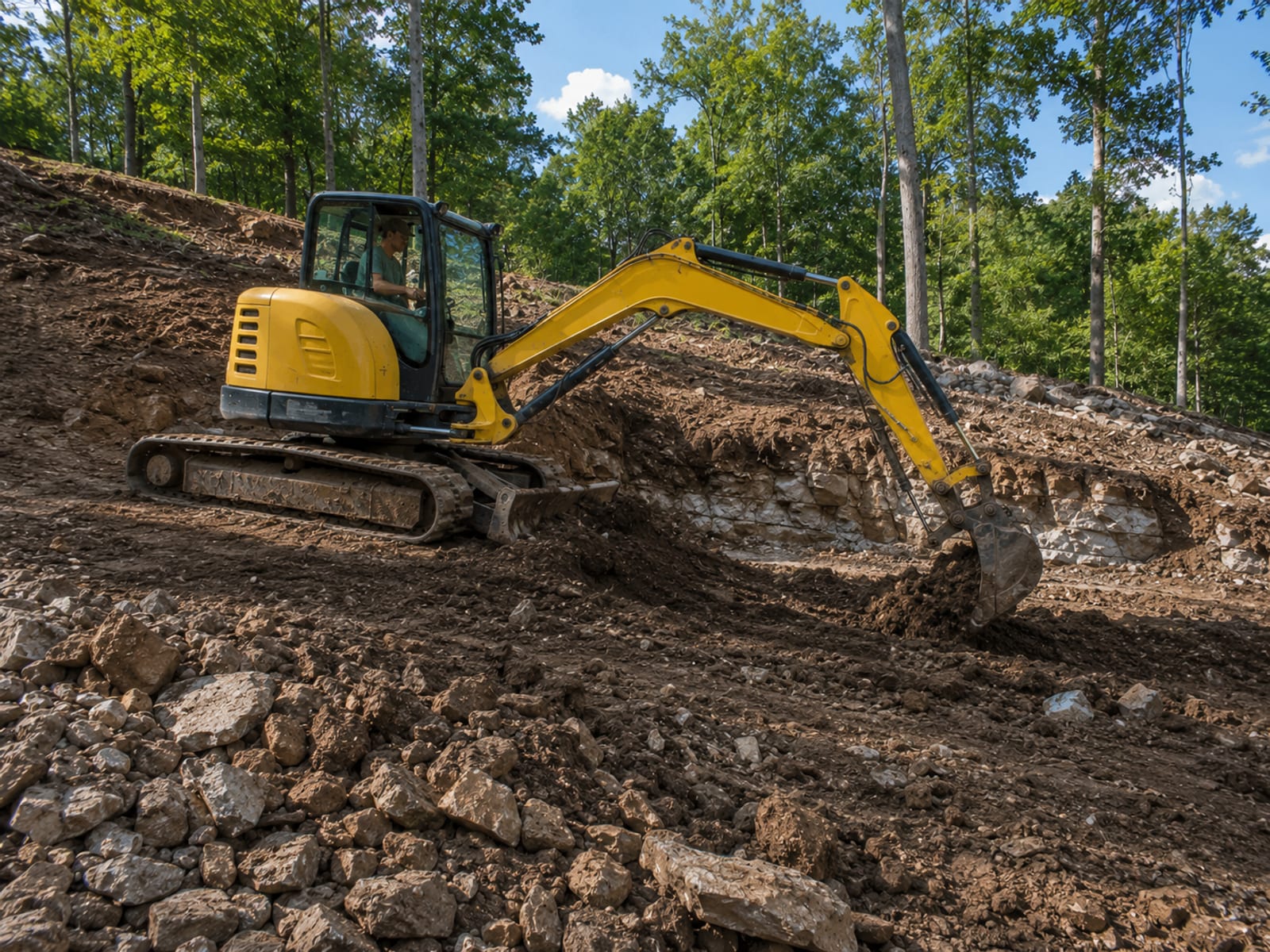
Western Connecticut's glacial soil is full of buried surprises. Ledge rock, boulders, and stone deposits need to be extracted before the site can be properly graded. Once the obstructions are out, earth moving reshapes the terrain, fills low spots, strips topsoil from building areas, and moves material where the finished grade requires it.
Rough Grading and Drainage Shaping
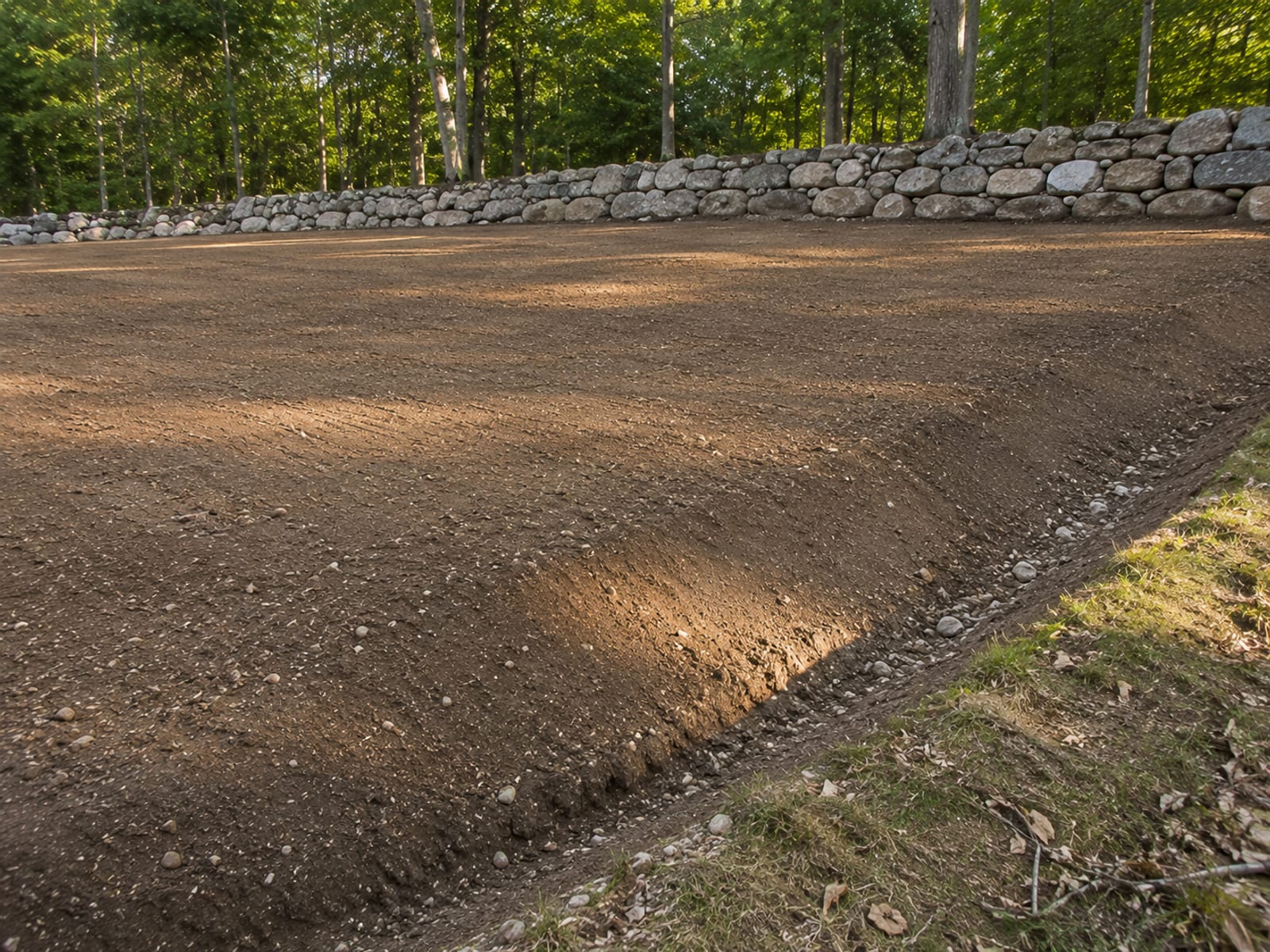
This is where the site gets shaped to its designed elevations. The crew cuts and fills to establish the proper slopes, creates drainage paths that move water away from structures, and prepares the surface for compaction. Swales, drainage outlets, and catch basin locations get incorporated at this stage if they are part of the scope.
Learn more about GradingErosion Controls and Final Stabilization
Any time soil is disturbed in Connecticut, erosion and sediment controls are expected on the site. Silt fence, stabilized construction access, stockpile management, and temporary seeding or mulching keep disturbed soil from washing into drainageways or onto neighboring properties. Final stabilization happens once the grading is complete and the site is ready for the next phase of construction.
Services That Work Together in One Site Prep Scope
Site preparation is a sequence of connected services that each need to be done in the right order and to the right standard for the finished site to perform the way it should. Prestige Property Maintenance handles all of these under one scope, so you are working with one contact, one schedule, and one crew from start to finish.
Excavation
Full-depth digging for foundations, utility lines, drainage systems, and site development work. Excavation is the core of most site prep projects and sets the depth and shape that everything else gets built around.
Learn more about ExcavationLand Clearing
Removal of trees, brush, stumps, and surface debris from raw or overgrown parcels. Clearing opens the property so grading and excavation equipment can reach every part of the site without obstruction.
Learn more about Land ClearingForestry Mulching
On-site grinding of trees and vegetation into ground-level mulch. This method clears a property faster than traditional cut-and-haul clearing and leaves organic material on site, which reduces hauling costs and keeps the timeline moving.
Learn more about Forestry MulchingGrading
Precision ground leveling to establish the slopes and elevations the site needs. Proper grading controls how water moves across and away from the property, which protects foundations, driveways, and finished outdoor areas.
Learn more about GradingStump Grinding
Mechanical grinding of tree stumps below grade so the area can be filled, seeded, graded, or built over. Stumps left in place cause settlement and drainage problems, so grinding them out is a standard part of site prep on wooded parcels.
Learn more about Stump GrindingRock Removal
Extraction of ledge rock, boulders, and buried stone. Connecticut's glacial terrain makes rock removal a frequent part of site prep work in towns like Oxford, Woodbury, Roxbury, and Bridgewater, where bedrock can be shallow and boulders can be scattered throughout the soil.
Learn more about Rock RemovalEarth Moving
Large-scale soil relocation to reshape terrain, fill low spots, or strip topsoil from building footprints. Earth moving is what transforms a sloped or uneven parcel into a site with the right finished grades.
Learn more about Earth MovingDrainage Solutions
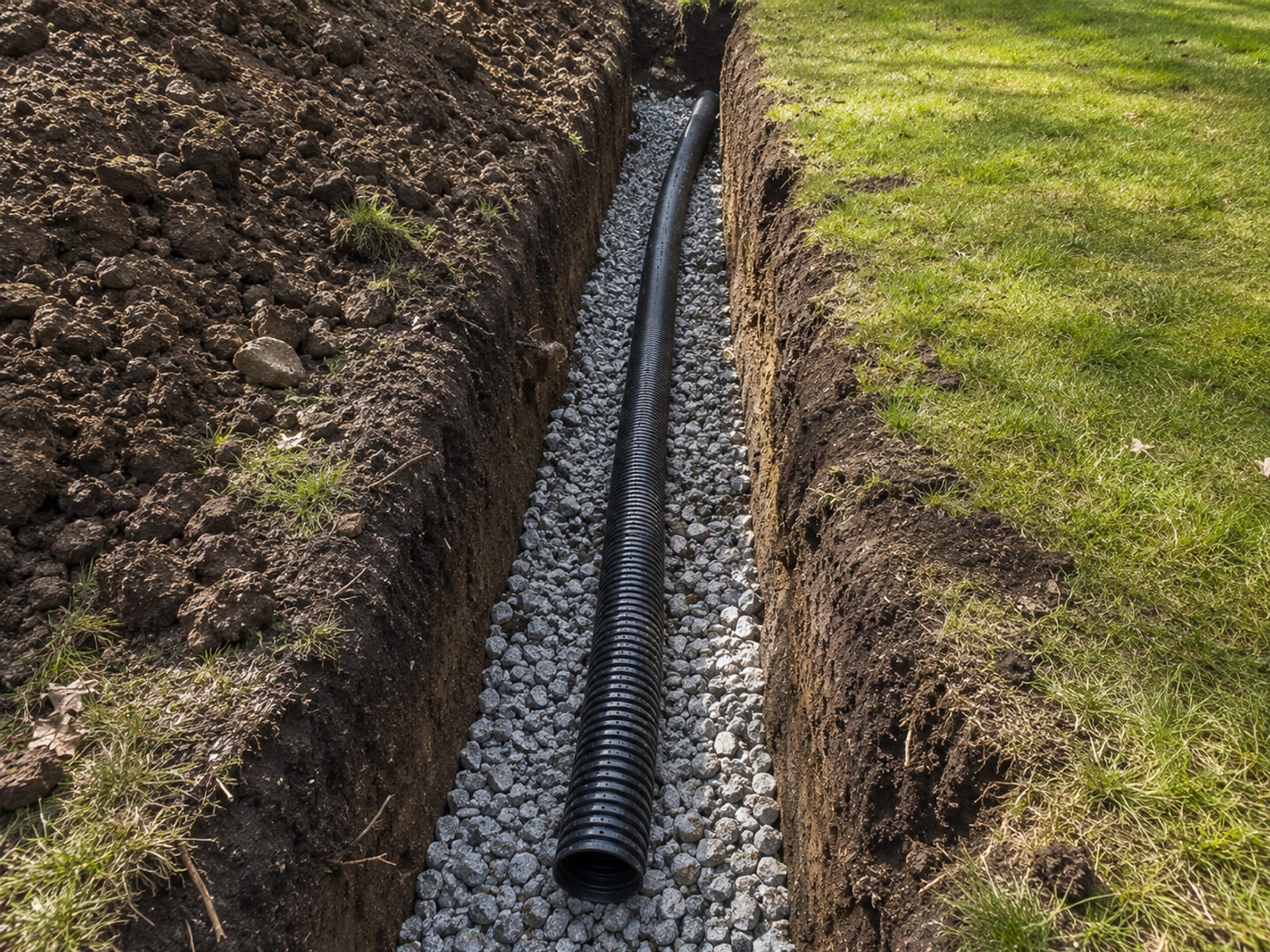
Design and installation of surface swales, French drains, catch basins, and pipe systems. Building drainage into the site prep phase is far more efficient than adding it after construction, and it protects the investment in the work above it.
Learn more about Drainage SolutionsTree Removal
Safe felling and removal of hazardous, damaged, or unwanted trees as part of a clearing scope. Handling tree removal under the same crew as excavation eliminates the hand-off delays that happen when a separate tree service and excavating contractor have to sequence their work.
Learn more about Tree RemovalPaving Prep
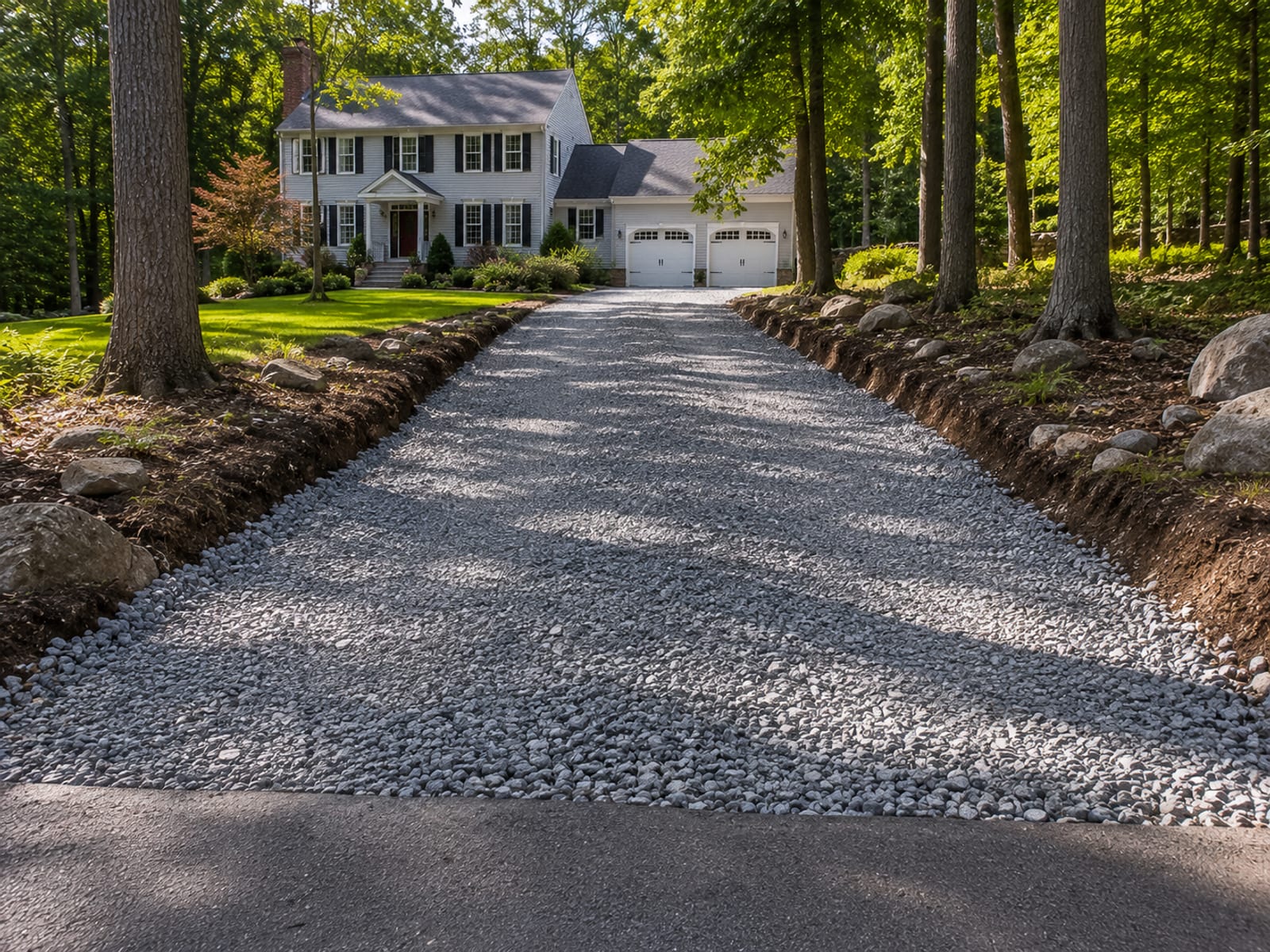
Sub-base excavation and grading to create a compacted, level foundation ready for asphalt or concrete paving. Getting the base right before the paving crew arrives is what determines how long a driveway or parking area holds up.
Learn more about Paving Prep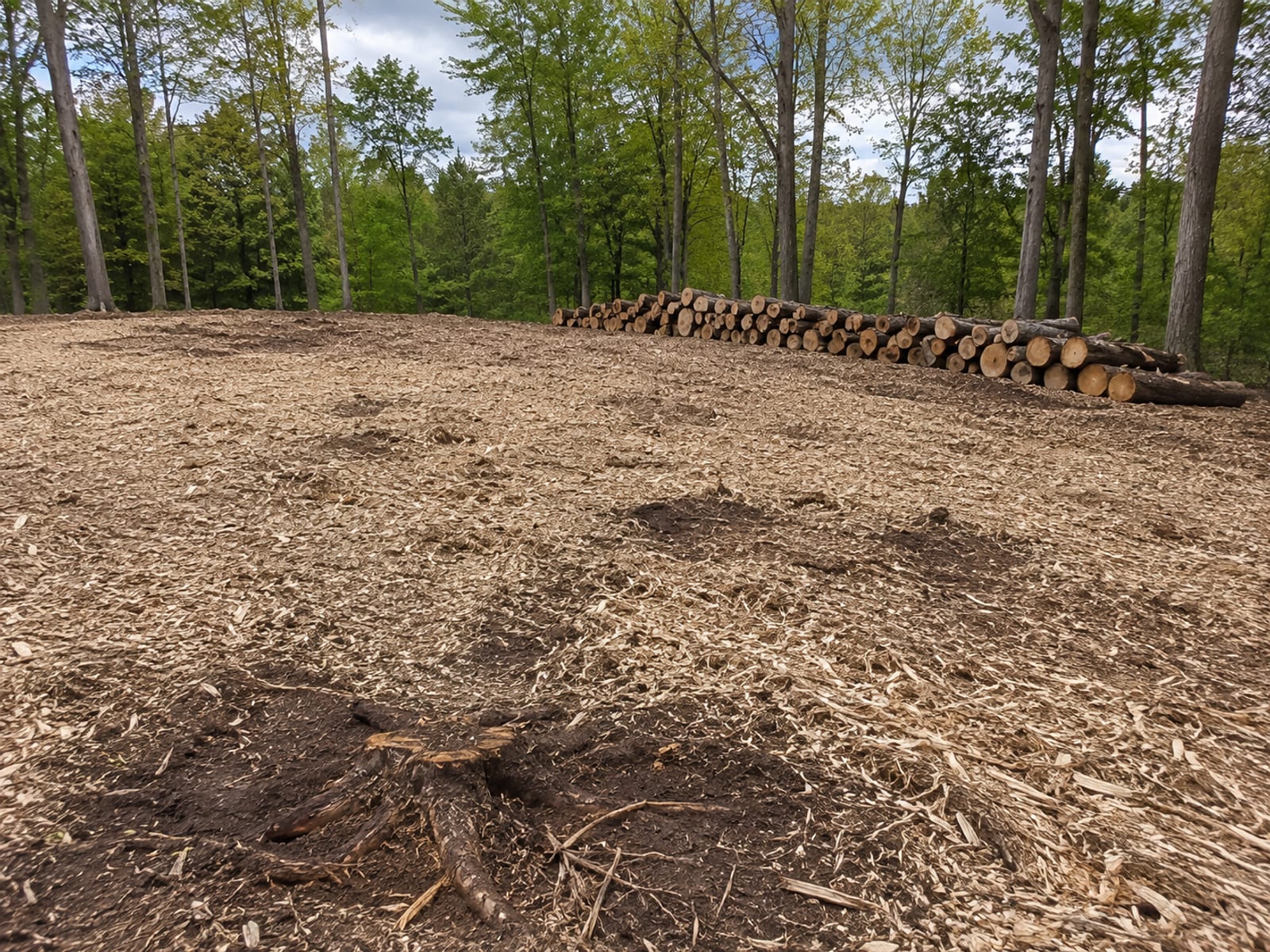
Why Property Owners in Western CT Choose Prestige Property Maintenance
Most excavating contractors in Connecticut do one thing well. They dig, or they clear, or they grade, and then they hand the project off to someone else. What that means for you as the property owner is coordinating multiple crews, waiting for scheduling gaps to close, and hoping that what one contractor leaves behind is workable for the next one. Prestige Property Maintenance handles the full sequence, from raw clearing through finished grade, on a single schedule, without the coordination headaches.
Working in western Connecticut and the Naugatuck Valley has given the crew at Prestige Property Maintenance real familiarity with what is under the ground in these towns. Ledge, buried boulders, clay-heavy pockets, and soft wet spots are common in this part of the state. A crew that is used to them arrives with the right equipment, the right plan, and realistic expectations about what the work will involve. That local knowledge shows up in more accurate scopes, fewer surprises mid-project, and better finished results.
The equipment fleet and crew size at Prestige Property Maintenance can scale to the project. A residential lot in Southbury that needs clearing and grading for a new garage calls for a different approach than a commercial development site in Shelton that needs phased clearing, mass excavation, and drainage installation across several acres. That flexibility means you are not being squeezed into a one-size approach or waiting on a contractor whose equipment does not match your job.
Prestige Property Maintenance is licensed and insured, with Home Improvement Contractor number HIC #0704432 on file. That matters when you are choosing a contractor for work that touches your property's structure, drainage, and resale value. You want someone who carries the right coverage, follows Connecticut's contractor registration rules, and can show you documentation rather than just describing it.
Frequently Asked Questions About Site Preparation in CT
Do I need a permit for site preparation work in Connecticut?
It depends on the scope and your specific town. Land clearing, grading, and excavation may require local permits for building, zoning, driveway access, or wetlands review depending on the size of the disturbance and the proximity to watercourses or regulated wetland areas. Projects that disturb a certain amount of soil may also trigger stormwater requirements from the state. Prestige Property Maintenance can help identify what applies to your project, but checking with your local building and wetlands offices before work starts is always the right first step.
What happens if ledge rock or boulders are found during excavation?
Rock encounters are common on Connecticut properties, especially in the western towns where shallow bedrock and glacial boulders are part of the terrain. When ledge or buried stone is hit, the crew assesses whether it needs to be broken up and removed or worked around, depending on the project requirements. Rock removal is included in the site preparation scope when it is part of the original plan, and for properties with known geological conditions, the estimate can account for that possibility upfront.
How is forestry mulching different from traditional land clearing?
Traditional clearing cuts trees and brush, then loads and hauls the material off the property in multiple truck runs. Forestry mulching uses a single machine to grind everything, trees, brush, and stumps, directly into mulch at ground level. The mulch stays on site, which means fewer haul trips, faster clearing, and no open burn or debris piles to manage. For wooded parcels in rural or semi-rural Connecticut towns, forestry mulching is often the faster and lower-impact option.
Can site preparation and drainage work be done at the same time?
Yes, and it is the most efficient way to approach it. Drainage swales, French drain trenches, catch basin locations, and outlet pipes are all easier to install when the site is already open from grading and excavation work. Adding drainage as part of the site prep phase saves time and avoids cutting into finished grade later. Prestige Property Maintenance handles both under one scope, so the drainage plan gets built into the grading work rather than treated as a separate project.
What does Call Before You Dig mean for my site prep project?
Connecticut requires any contractor planning to excavate to submit a locate request through the Call Before You Dig system before digging starts. This triggers underground utility companies to send locators to the site, who mark the approximate locations of buried electric, gas, water, sewer, and communication lines. It is a legal requirement and a safety measure. Prestige Property Maintenance handles this as a standard part of project planning so no excavation starts on unmarked ground.
How long does site preparation typically take for a residential project?
The timeline depends on the size of the parcel, the amount of clearing required, soil and rock conditions, drainage scope, and weather. A smaller residential lot that needs clearing, grading, and drainage prep might take a few days to a week. A larger parcel with heavy vegetation, significant rock work, and phased grading could run several weeks. After the site walk and scope review, Prestige Property Maintenance can give you a realistic timeline based on what the specific property actually requires.
What is the difference between rough grading and finish grading?
Rough grading establishes the major elevations and slopes across the site, moves bulk material, fills low areas, and shapes the drainage patterns. It is the stage that happens during site prep. Finish grading is the finer work that happens closer to the end of a construction project, smoothing the surface, setting final elevations for lawns or planting areas, and blending grades around structures. Site prep focuses on rough grading, and the finished ground can be brought to final grade during the landscape construction phase.
Serving Western Connecticut and the Naugatuck Valley
Prestige Property Maintenance handles site preparation projects across a 19-town area covering the Naugatuck Valley and western Connecticut. The service area includes Oxford, Derby, Bethany, Seymour, Ansonia, Shelton, Monroe, Bridgewater, Roxbury, Woodbury, Middlebury, Southbury, Naugatuck, Woodbridge, Prospect, Newtown, Oakville, Watertown, and Wolcott.
These towns share a lot of the same terrain characteristics: sloped lots, rocky glacial soil, clay-heavy drainage conditions, and older properties with overgrown parcels that have not seen equipment in years. Working across all of them gives the crew at Prestige Property Maintenance a clear picture of what site prep actually requires in this part of Connecticut, as opposed to what it looks like on paper from a contractor who has never worked these soils.
Ready to Get Your Site Prepared? Contact Prestige Property Maintenance
Call (203) 258-3395 or email dig@prestigectexcavation.com. Office hours are Monday through Saturday, 7AM to 5PM.