

Landscape Construction
Trenching Services in Oxford, CT and the Naugatuck Valley
Prestige Property Maintenance digs precise trenches for water lines, sewer connections, electrical conduit, and drainage systems across 19 towns in western Connecticut. Every trench is planned, marked, and sized to protect what's underground and get your utility or drainage line exactly where it needs to go.
What Is Trenching and What Do You Actually Get?
Trenching is the controlled excavation of a narrow channel in the ground to place and protect underground utilities, drainage pipes, electrical conduit, water lines, or sewer connections. When Prestige Property Maintenance completes a trenching job, you get a properly sized, correctly routed trench dug to the right depth for your specific line type, with clean spoil management, proper backfill, and finished grade restoration so your yard or driveway looks right when we leave.
Most residential trenching jobs in Connecticut fall into one of a few categories: running a new water service from the street to the house, connecting to municipal sewer, installing electrical conduit for a garage, outbuilding, or generator, placing a French drain or catch basin drainage line, or prepping for a septic system component. The depth and width of the trench depends on what's going in the ground, what the local code or utility requires, and what Connecticut's soil conditions dictate for your specific lot.
What separates a professional trenching job from a weekend rental-machine attempt is planning. Before any bucket hits the ground, Prestige Property Maintenance confirms utility markouts through Connecticut's 811 Call Before You Dig system, evaluates soil conditions, lays out the trench route, and accounts for things that can change the job mid-dig, such as buried ledge rock, tree roots, or old utility lines that aren't on any map. On Connecticut's rocky, glacial soil, that pre-work matters more than most property owners realize.
Why Do Connecticut Properties Make Trenching More Complicated?
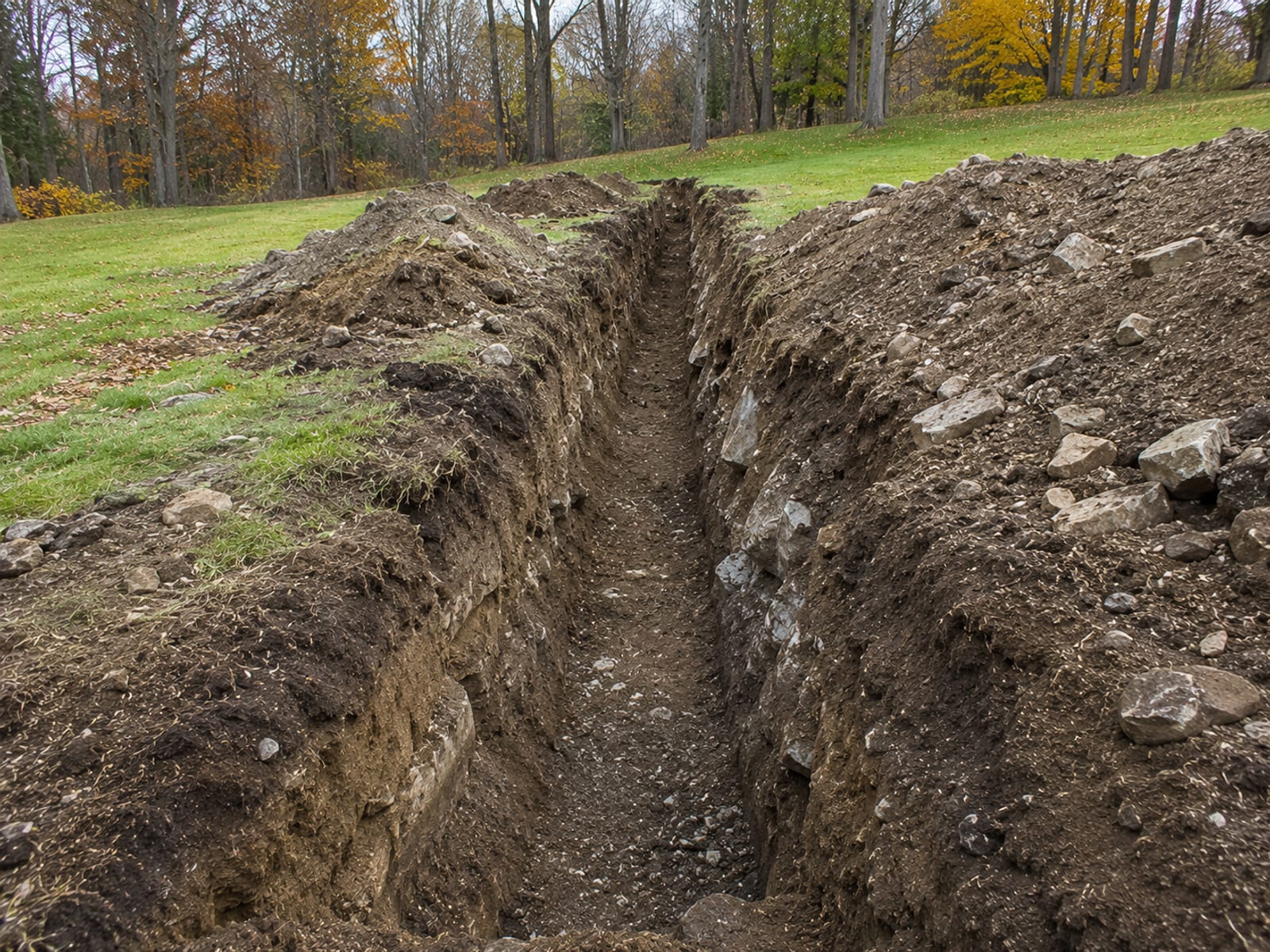
If you've owned property in Oxford, Southbury, Woodbury, or any of the hill towns in western Connecticut, you already know the soil here is not forgiving. Connecticut's glacial history left behind a mix of heavy clay, ledge rock close to the surface, buried boulders, and gravel pockets that can shift and drain unpredictably. What looks like a straightforward 50-foot trench on paper can hit solid ledge at 18 inches and require completely different equipment and approach.
Clay-heavy ground holds water, which creates trench wall instability if you open a long cut during a wet stretch. Rocky conditions slow progress and can damage equipment that isn't sized right for the site. Tree roots, especially on older semi-rural lots with mature hardwoods, cross trench lines in ways that require careful cutting and removal. Prestige Property Maintenance works across all 19 towns in the Naugatuck Valley and western Connecticut, so crews arrive already knowing what to expect in your area instead of learning the soil conditions on your dime.
That local familiarity also extends to the permit and inspection process. Trenching for certain utility connections may require a building permit, an inspection before backfill, or coordination with the utility company. Work near wetlands, drainage corridors, or steep slopes can bring in additional requirements from the town or Connecticut DEEP. Knowing which projects need which approvals before the job starts prevents delays and keeps the work on schedule.
What Is the Trenching Process from Start to Finish?
Every trenching project at Prestige Property Maintenance follows a consistent sequence that keeps the job safe, on track, and properly documented from the first call through final cleanup.
Scope and Site Review
Before any work is scheduled, Prestige Property Maintenance reviews what's being installed, the required trench depth for the line type, the planned route across your property, what access the equipment needs, and whether any slopes, wet areas, or sensitive features along the route could affect the plan. This is also where permit and inspection requirements get identified so there are no surprises mid-job.
811 Utility Marking
Connecticut law requires notification through the 811 Call Before You Dig system at least two full working days before excavation begins, not counting weekends and holidays. Prestige Property Maintenance handles this step as part of the job setup, not as something the homeowner has to manage. Utility marking is not optional, and a contractor who skips it puts your property and your family at risk.
Equipment Selection and Site Prep
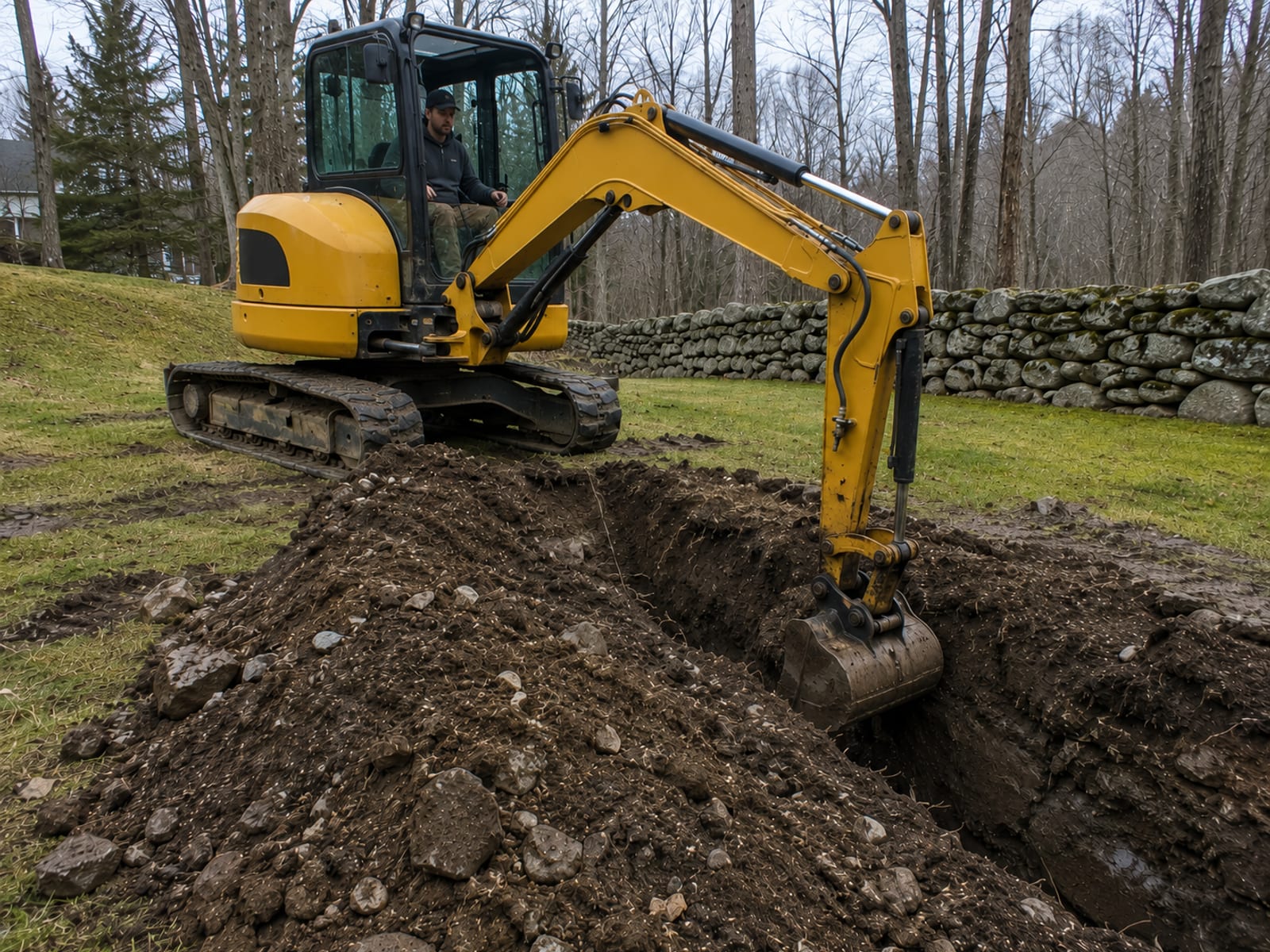
The right machine for the job depends on trench depth, soil type, access width, and proximity to existing structures, landscaping, driveways, or underground features. Prestige Property Maintenance uses compact excavators and trenching equipment sized for residential and semi-rural Connecticut properties, which reduces ground disturbance and lets crews work in tighter spots without tearing up everything around the work zone.
Trench Excavation
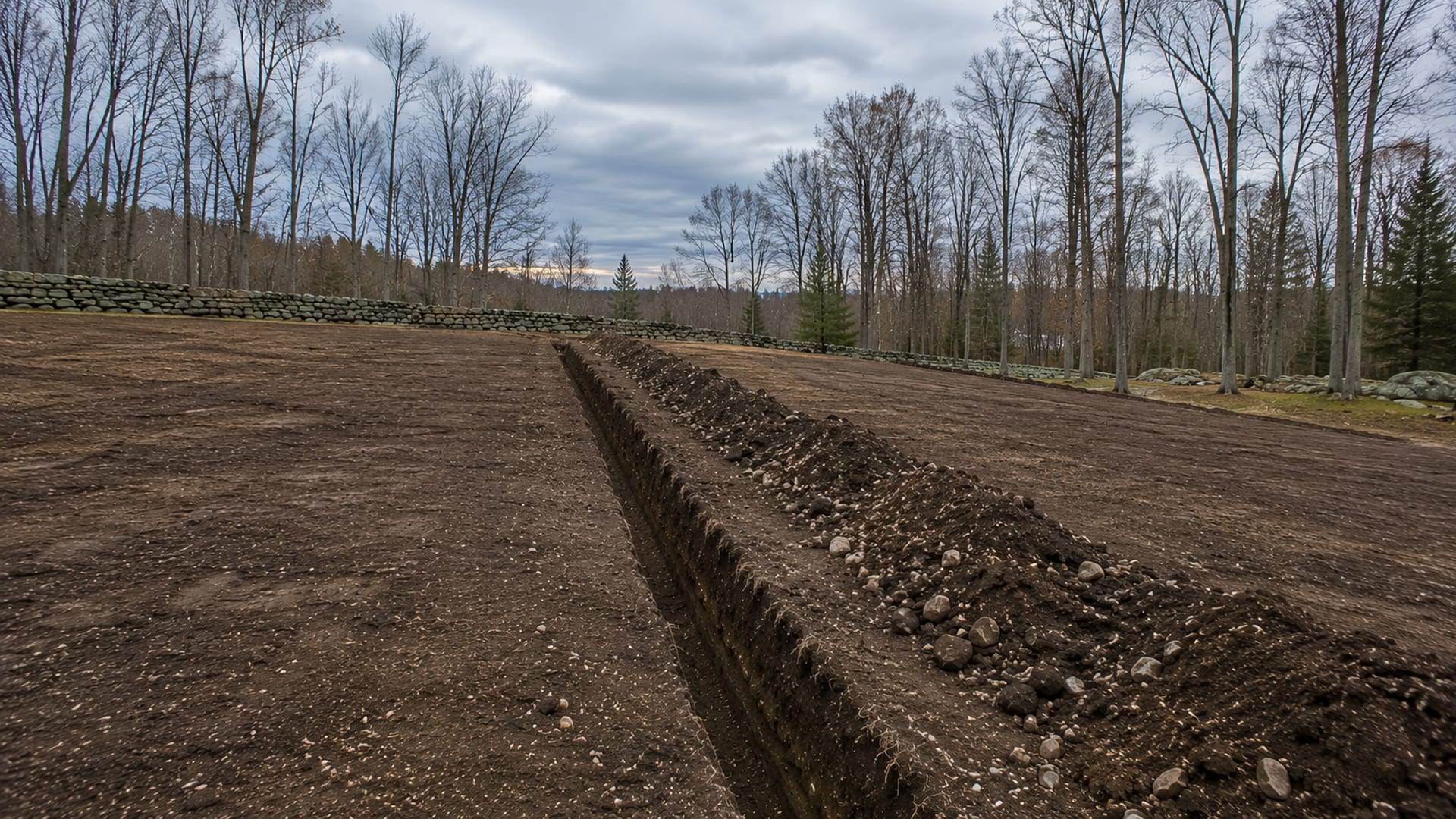
The trench is cut to the specified depth and width, with spoil placed away from the trench edge to prevent wall collapse and maintain a safe working zone. For trenches where workers must enter, OSHA excavation safety rules require competent-person oversight, daily inspection, and protective systems for any trench five feet deep or greater unless the material is entirely stable rock. Prestige Property Maintenance follows these standards on every job.
Learn more about ExcavationInspection Hold If Required
Some utility connections and certain permit types require an open-trench inspection before backfill. Prestige Property Maintenance coordinates this with you and the inspector so the trench doesn't stay open longer than necessary. The crew secures the site and keeps it safe during any required hold period.
Backfill and Compaction
Once the line is placed and any inspections are complete, the trench is backfilled in lifts and compacted properly so the ground doesn't settle into a sunken channel later. The fill material, compaction method, and number of lifts depend on what the trench passes under, whether it crosses a driveway or paved area, and what the soil conditions require for stable long-term performance.
Site Restoration and Cleanup
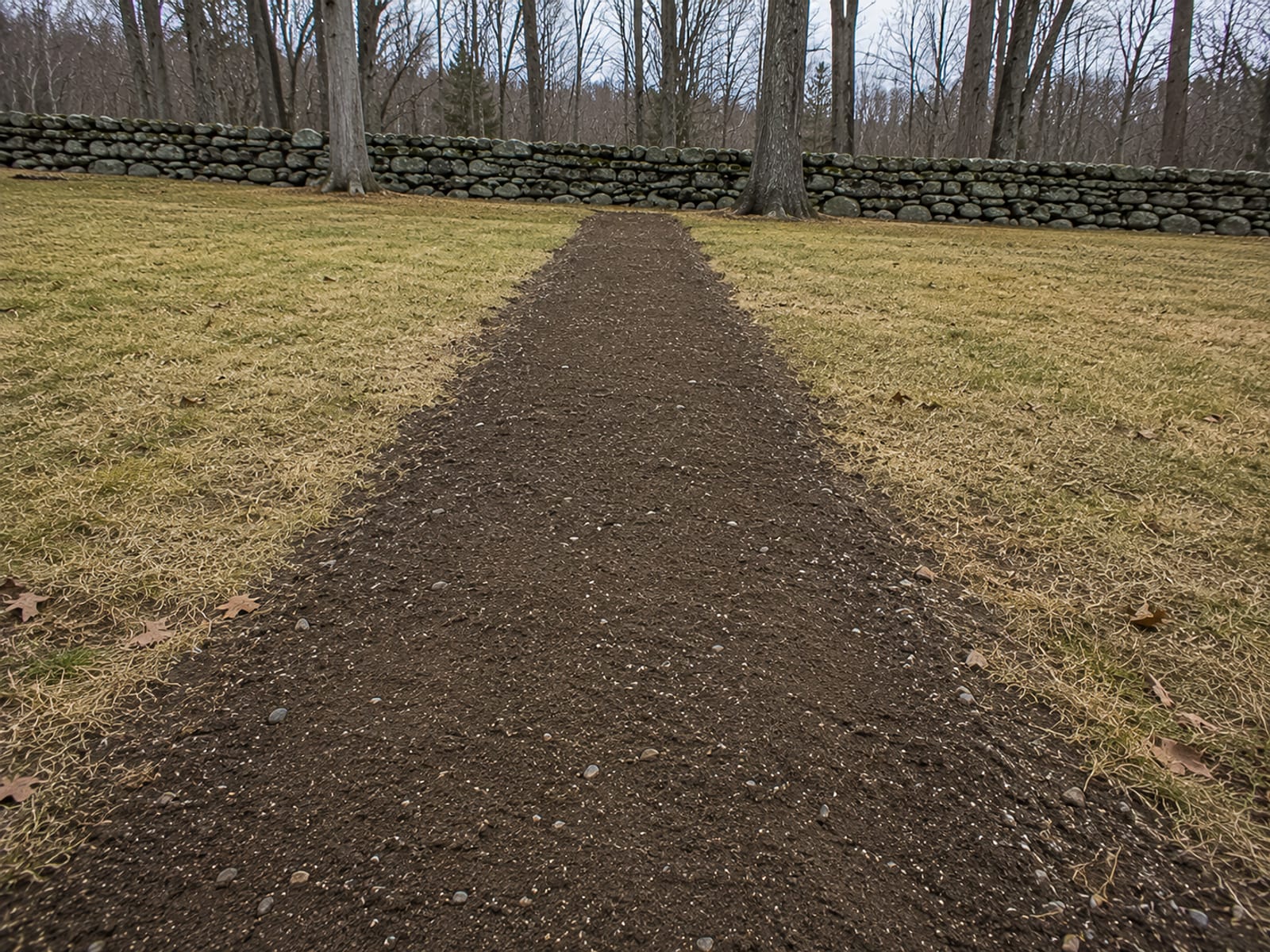
The final step is restoring the surface to match the surrounding grade, removing excess spoil, and leaving the work area clean. If the trench crosses a lawn area, final grading is done to blend the disturbed strip with the surrounding ground. Prestige Property Maintenance doesn't consider the job done until the site looks right.
What Types of Trenching Jobs Does Prestige Property Maintenance Handle?
Prestige Property Maintenance handles trenching across a wide range of residential and commercial applications throughout the Naugatuck Valley service area.
Water Line Trenching
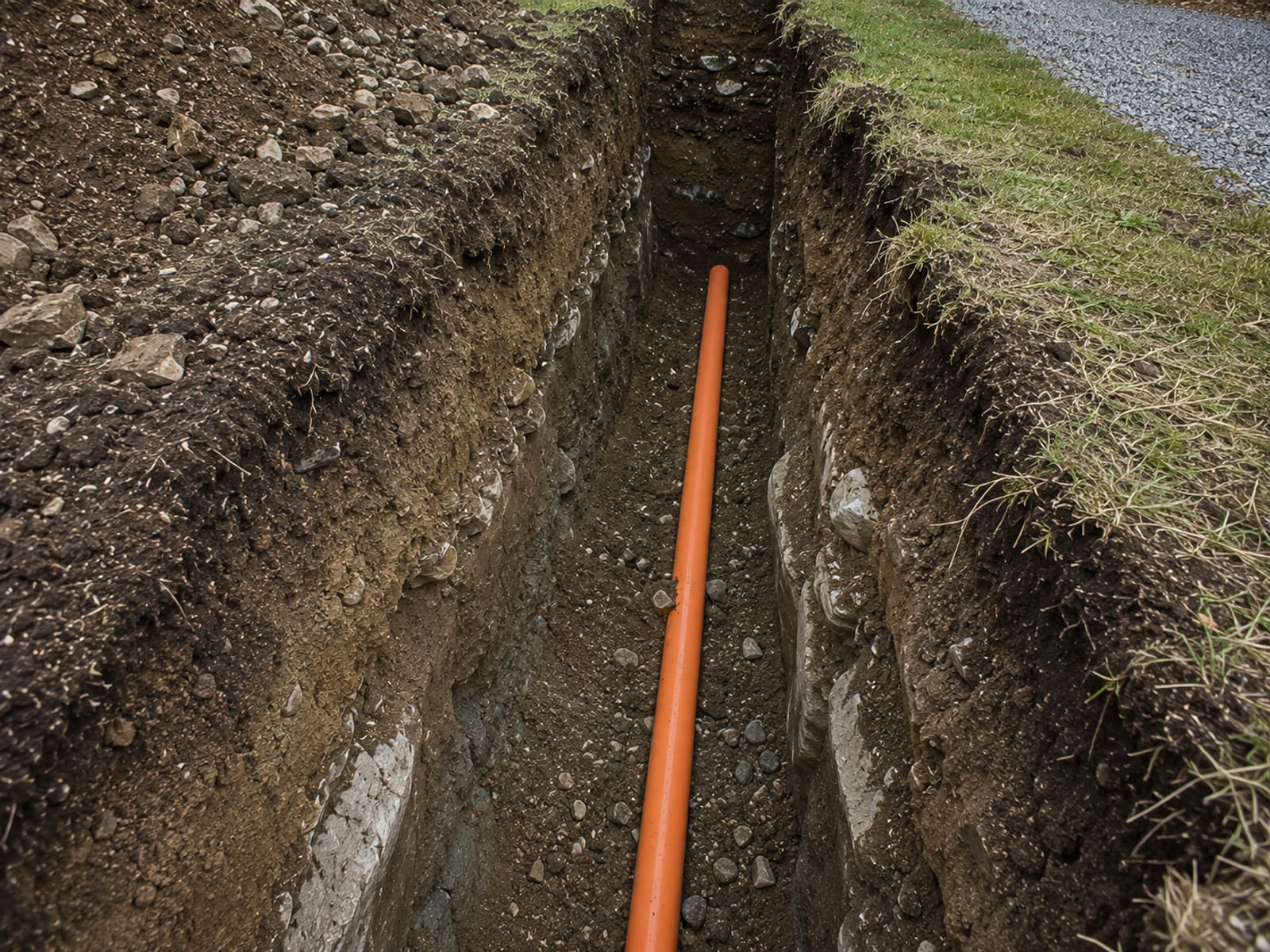
New water service runs from the street to the house require trenching to the frost depth specified by Connecticut code, typically 4 feet or greater in this region, to protect the line from freeze damage. Prestige Property Maintenance digs the trench, manages spoil, and restores the surface. The actual water line connection work is coordinated with the licensed plumber of your choice.
Learn more about TrenchingSewer and Septic Trenching
Connecting to municipal sewer or running lines to a septic component requires precise grade control in the trench so pipes flow correctly. Even small slope errors in the bottom of a sewer trench create long-term problems. Prestige Property Maintenance cuts and grades the trench bottom to the pitch required for proper drainage flow before any pipe is placed.
Learn more about TrenchingElectrical Conduit Trenching
Running power to a detached garage, outbuilding, pool equipment, generator, or exterior lighting requires a conduit trench at the depth your local code requires, typically 18 to 24 inches for residential conduit runs. Prestige Property Maintenance handles the trench and backfill; the licensed electrician runs the conduit and wire.
Learn more about TrenchingDrainage Line Trenching
Surface and subsurface drainage problems often require a network of trenched pipe runs connecting catch basins, French drain channels, or outlet points. This work connects directly with Prestige Property Maintenance's drainage solutions service, so the same crew that designs and installs your drainage system also handles the trenching, rather than you having to bring in a separate contractor.
Learn more about TrenchingFoundation and Utility Trenching for New Construction
Site development and new construction projects often require utility service trenches for water, sewer, gas, and communications before building begins. Prestige Property Maintenance coordinates trenching as part of broader site prep work, which reduces the number of separate contractors on the schedule and keeps the project moving without gaps between the excavation crew and the utility installation.
Learn more about Trenching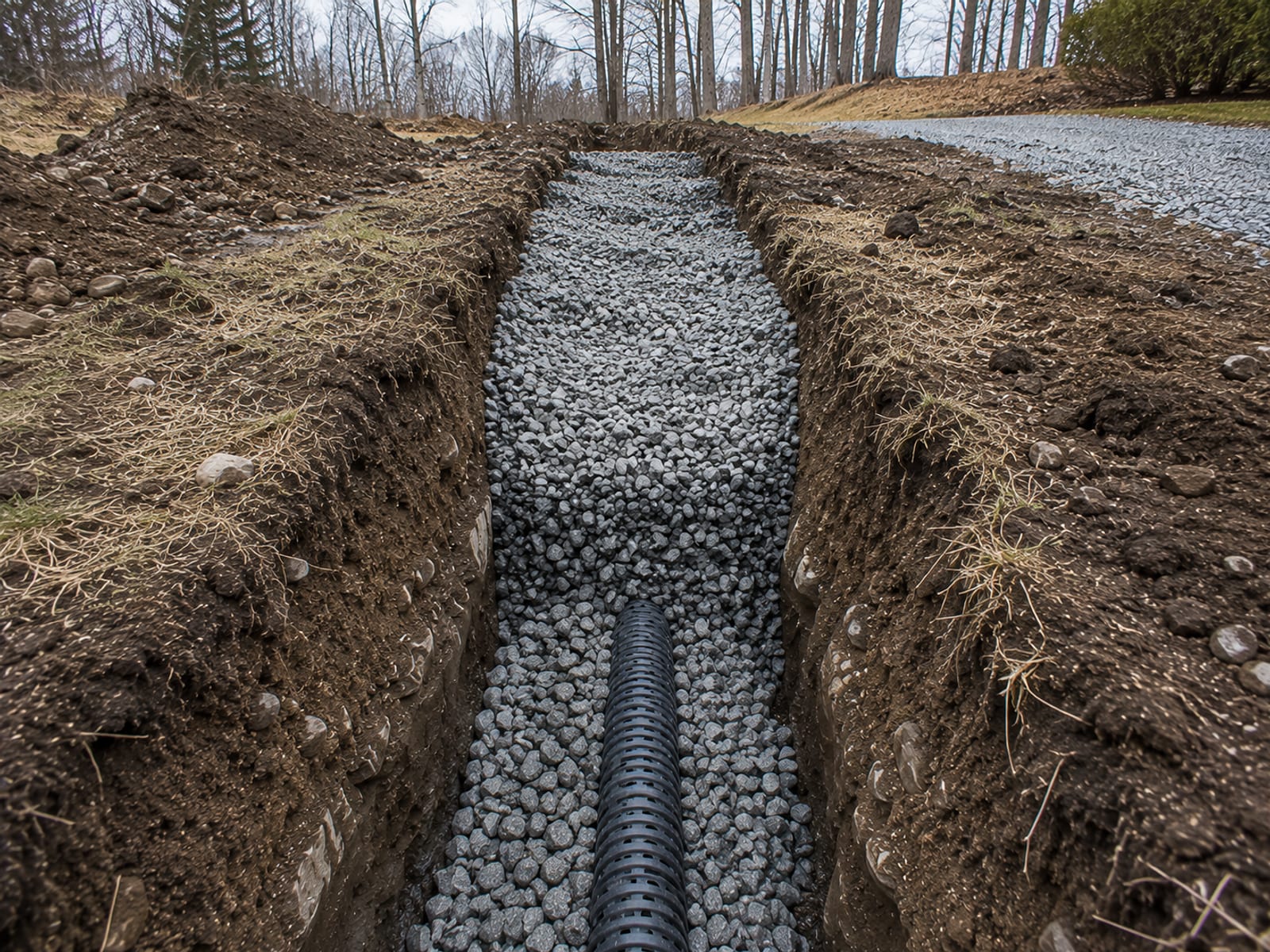
Why Choose Prestige Property Maintenance for Trenching in Connecticut?
The Naugatuck Valley and western Connecticut hill towns are not easy digging territory. Prestige Property Maintenance has been working this soil long enough to know what's usually waiting below the surface in Oxford, Woodbury, Seymour, Shelton, and the surrounding towns. Crews show up with the right equipment, enough time budgeted for the conditions, and a plan for what happens if ledge or buried stone changes the approach mid-trench. You're not paying for someone to learn your property's geology on the fly.
Prestige Property Maintenance is licensed and insured. HIC# 0704432 is on file with the Connecticut Department of Consumer Protection, and the company carries general liability coverage. That combination is the baseline for any contractor you should consider for trenching work near your utilities, your foundation, or your driveway.
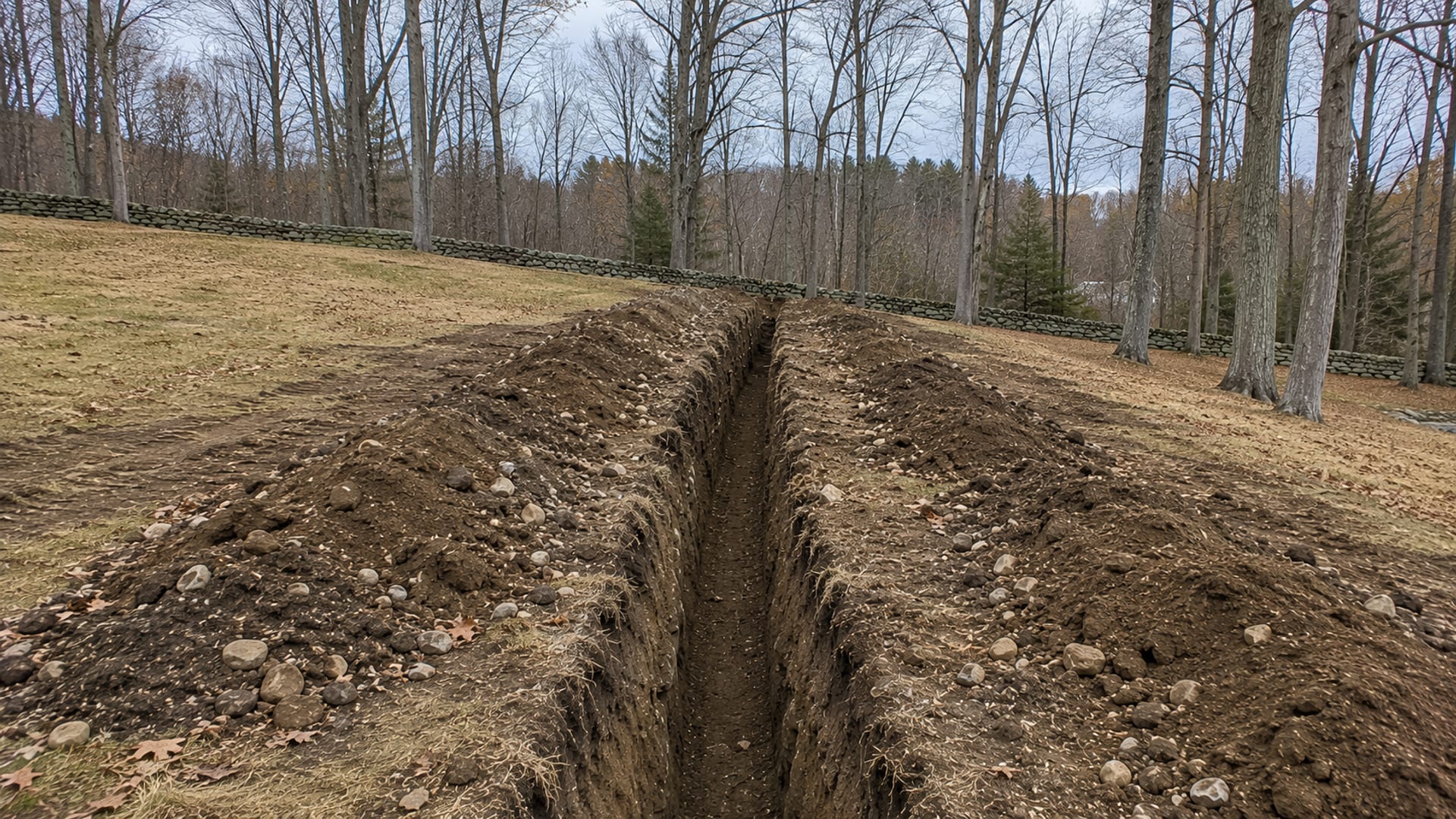
Trenching rarely happens in isolation. A water line trench may need grading at the connection point. A drainage trench may be part of a larger solution that includes catch basins, outlet structures, and graded swales. A site prep project may need trenching alongside land clearing, rock removal, and rough grading before a builder can start. Prestige Property Maintenance handles all of those services with the same crew and equipment, which keeps your project on one schedule instead of three.
Trenching FAQs
Answers to the questions Connecticut property owners ask most often before scheduling a trenching project.
Does Connecticut require utility marking before trenching, and who handles that?
Yes. Connecticut law requires contractors to notify the 811 Call Before You Dig system at least two full working days before any excavation, not counting weekends and holidays. Prestige Property Maintenance submits this notification as part of the job setup. Utility companies then send locators to mark gas, electric, water, telecommunications, and other buried lines near the work area. Digging without marks in place is illegal and genuinely dangerous.
How deep does a trench need to be in Connecticut?
Required depth depends on what's going in the ground and what code applies. Water service lines in Connecticut are typically buried at or below 4 feet to stay below the frost line. Electrical conduit for residential outdoor runs is commonly required at 18 to 24 inches depending on the conduit type and application. Sewer and drainage lines are graded by slope requirements, not just depth. Your licensed plumber or electrician will specify the required depth for their portion of the installation, and Prestige Property Maintenance digs to those specs.
What happens if the crew hits rock or ledge during trenching?
Ledge and buried boulders are common across Oxford, Woodbury, Shelton, and the surrounding Connecticut hill towns. When rock is encountered, the approach shifts to hydraulic rock hammering or, in some situations, controlled methods to break the material before continuing. Rock removal and breaking takes more time and may affect project cost, which is why Prestige Property Maintenance discusses soil conditions and ledge risk during the planning phase before work starts rather than after something unexpected stops the machine.
Does trenching require a permit?
It depends on the project and the municipality. Trenching for a utility connection to a new structure, an addition, or work in a public right-of-way will often require a building or excavation permit and an inspection before backfill. Some Connecticut towns also require inland wetlands review if the trench route passes near a wetland or watercourse. Prestige Property Maintenance identifies the applicable requirements during planning so you're not caught off guard when an inspector calls for an open-trench look before you can close up.
What's the difference between trenching and general excavation?
General excavation removes material across a broad area for foundations, pools, grading, or site development. Trenching is a narrow, linear cut made to a specific depth and route for the purpose of placing a pipe, conduit, or drainage line. Trenching requires more precision in route layout, depth control, and slope management because the finished utility or pipe has to perform correctly inside that trench for the life of the installation. Prestige Property Maintenance handles both, and many projects require both in sequence.
Will the yard look right after the trench is backfilled?
Properly compacted backfill and finished grading prevent the sunken strip that appears weeks after a poorly closed trench settles. Prestige Property Maintenance backfills in compacted lifts, not in a single dump, and grades the surface to match the surrounding ground before leaving the site. Areas that cross lawns are graded smooth so re-seeding or sod can take hold evenly. If the trench crosses a gravel driveway or paved surface, the surface restoration plan is discussed before work begins.
Does Prestige Property Maintenance coordinate with plumbers and electricians on combined projects?
Yes. Trenching is often the first step in a project that also involves a licensed plumber for water or sewer connections or a licensed electrician for conduit work. Prestige Property Maintenance handles the excavation portion and works around your contractor's schedule for inspections and pipe or conduit placement. Because the same crew can also handle grading, drainage, and site restoration, you have fewer separate contractors to coordinate across the full project.
Trenching Projects Across the Naugatuck Valley and Western Connecticut
Prestige Property Maintenance serves trenching and excavation customers in Oxford, Derby, Bethany, Seymour, Ansonia, Shelton, Monroe, Bridgewater, Roxbury, Woodbury, Middlebury, Southbury, Naugatuck, Woodbridge, Prospect, Newtown, Oakville, Watertown, and Wolcott. The service territory covers a wide range of terrain, from flatter valley-floor lots in Naugatuck and Ansonia to the rocky, wooded hillside properties found in Roxbury, Bridgewater, and Oxford.
Each of these towns has its own soil profile, its own permit and inspection expectations, and its own utility provider relationships. A contractor who works regularly across all 19 towns in this area already knows the locating procedures for each utility territory, understands which municipal offices handle excavation or building permits, and can anticipate where ledge is most likely to interfere with a planned trench route. That accumulated site experience is not something you get from a contractor who typically works one or two towns over.
Whether you're installing a new water service in Southbury, running electrical to a pole barn in Monroe, connecting drainage pipe in Woodbury, or doing site prep for a new structure in Oxford, Prestige Property Maintenance brings the equipment and local knowledge to get the trench done right and the site left in good condition.
Ready to Schedule Your Trenching Project?
Call (203) 258-3395 or email dig@prestigectexcavation.com to schedule a site visit. We work Monday through Saturday, 7 AM to 5 PM.