Site Preparation & Excavation
Rock Removal in Connecticut: Ledge, Boulders, and Buried Stone Cleared for Good
Prestige Property Maintenance extracts ledge rock, surface boulders, and buried stone across 17 Connecticut towns, so the ground beneath your project is clear, graded, and ready to build on.
What Is Rock Removal and What Do You Get?
Rock removal is the mechanical extraction of ledge rock, loose boulders, and buried stone from a site before construction, grading, drainage work, or driveway installation can move forward. When Prestige Property Maintenance handles rock removal on your property, you end up with cleared ground ready for the next phase of your project, whether that is a foundation dig, a new driveway, a drainage system, or a retaining wall. The scope of a typical job ranges from pulling a few surface boulders out of a lawn expansion area to breaking up and hauling continuous ledge running beneath a planned driveway or septic field.
Connecticut's glacial soil history means buried rock shows up on a lot of residential and rural lots where you would not expect it. What looks like a straightforward grading job sometimes turns into a rock removal job once the machine starts digging. Prestige Property Maintenance crews come prepared for that, with the equipment and experience to handle ledge, fractured rock, and large boulders without turning a manageable project into a drawn-out delay.
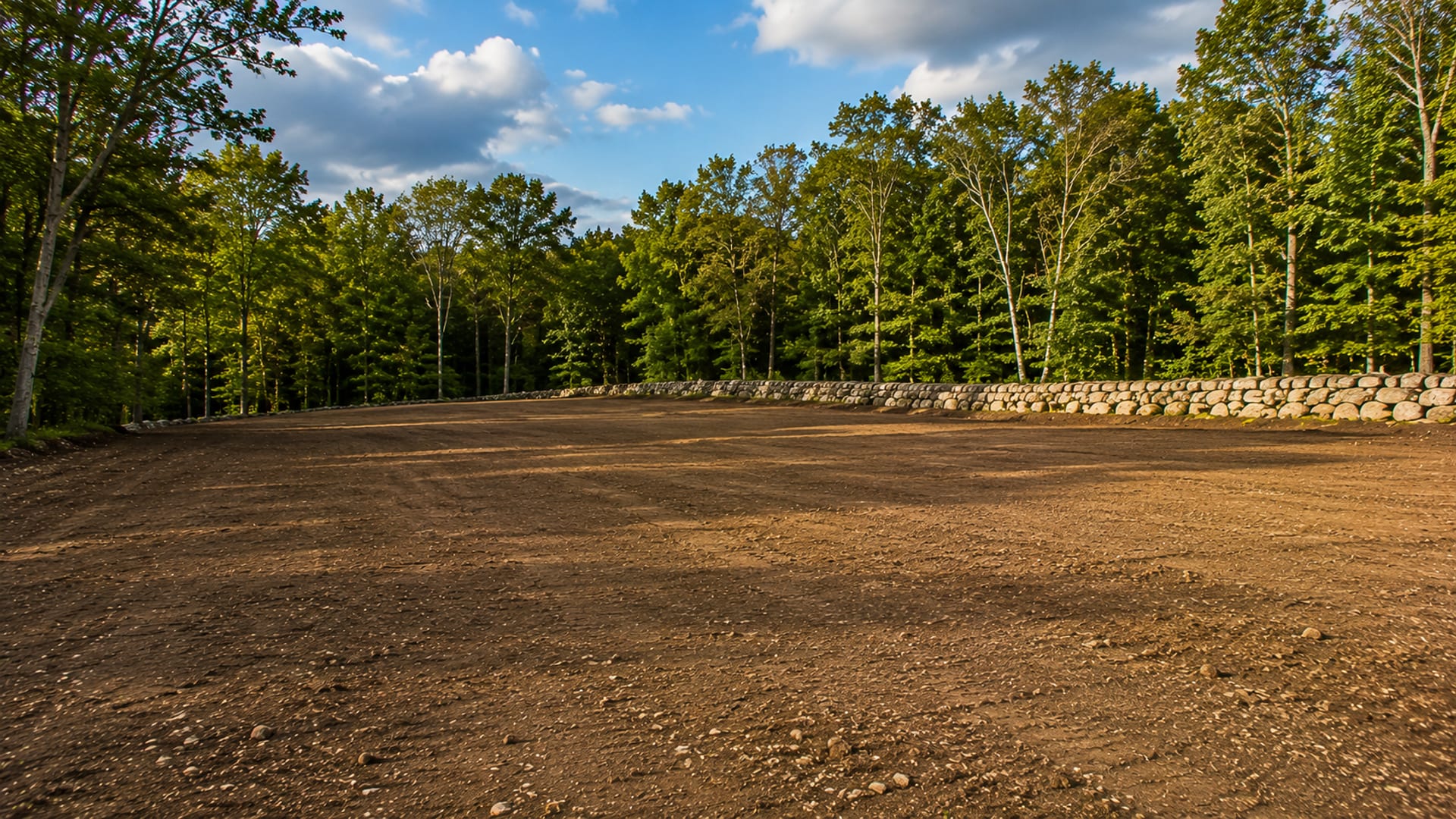
The end result is not just a pile of rocks moved to the treeline. The crew separates usable soil from rock debris, rebuilds the grade to your project's specifications, and stabilizes the disturbed area so whatever comes next can start on solid footing.
Why Rock in Connecticut Is Different from Most Other States
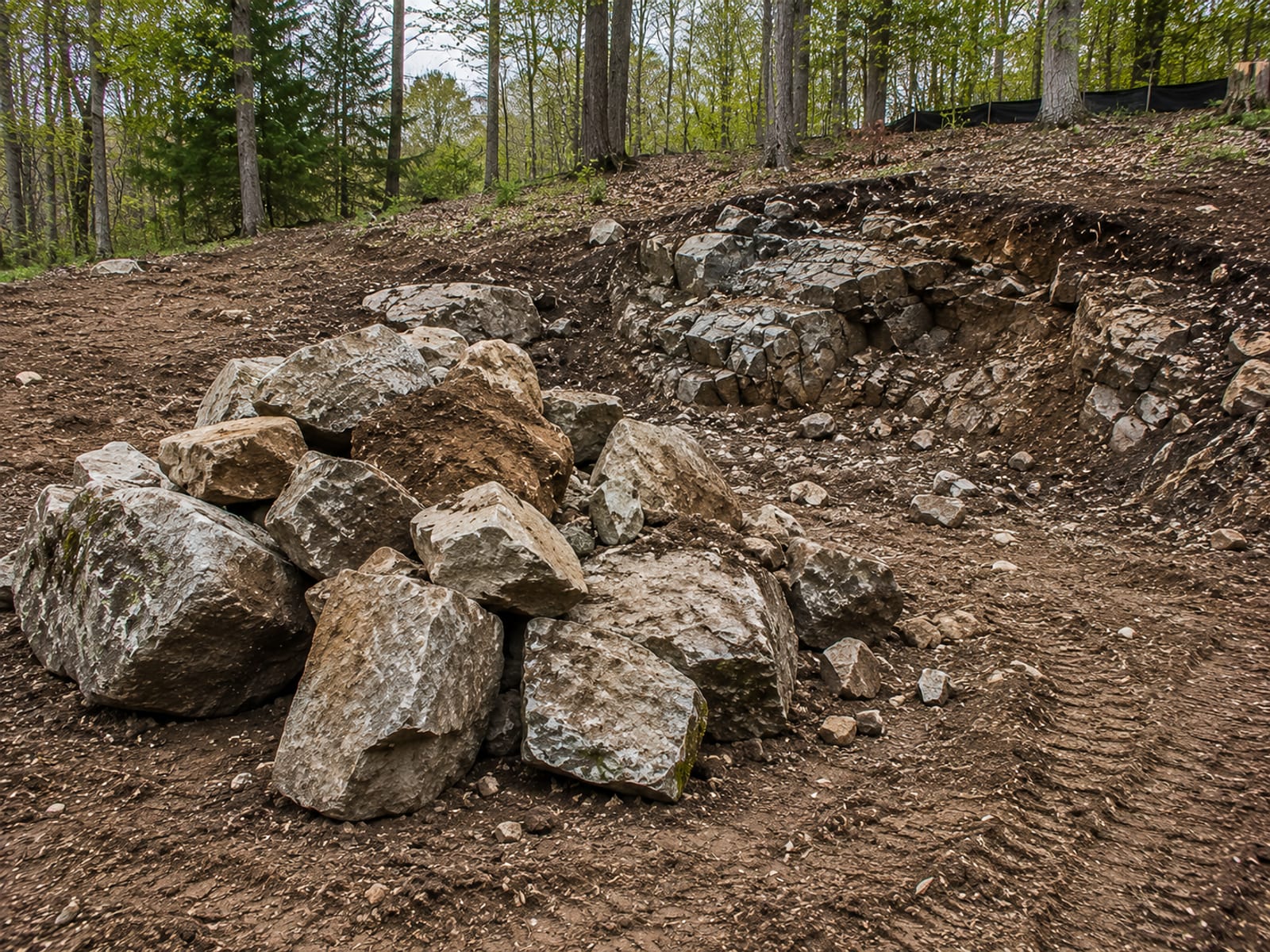
Connecticut sits on some of the rockiest glacial soil in New England. When the glaciers retreated thousands of years ago, they left behind an irregular layer of ledge, boulders, and stone just beneath the surface across much of the state. In towns like Oxford, Woodbury, Roxbury, Monroe, and Newtown, it is not unusual to break ground on a project and hit solid rock within the first foot or two of digging. Contractors who work elsewhere and move into Connecticut for a season often underestimate just how much of this state is underlaid by bedrock and large-diameter stone.
That local knowledge matters for estimating, scheduling, and selecting the right equipment. Prestige Property Maintenance has worked across all 19 towns in its service area and knows which areas tend to run heavy on ledge versus broken boulders versus clay-bound stone. That background shapes how jobs are planned before the first machine arrives on site, which keeps things moving instead of stalling out when rock appears.
Clay-heavy ground is also part of the picture. When boulders are buried in dense clay, extracting them requires more than just a bucket attachment. The machine has to work against the suction and weight of the surrounding material, and the disturbed area needs to be properly rebuilt afterward so water does not pool where the stone used to be. Skipping that rebuild step is how sites end up with drainage problems long after the rocks are gone.
What Situations Actually Require Rock Removal?
Rock removal comes up in a lot of different situations on Connecticut properties. These are the most common ones that bring homeowners and contractors to Prestige Property Maintenance.
Foundation Excavation
Ledge rock beneath a planned foundation area has to come out before concrete can go in. No amount of grading works around continuous ledge at foundation depth, so full extraction or breaking is required before the foundation crew can do their job.
Learn more about ExcavationDriveway and Road Work
A new driveway or private road needs a consistent sub-base profile. Surface boulders and buried ledge in the driveway path create high spots, soft spots after freeze-thaw cycles, and damage to gravel or paved surfaces over time.
Septic System Installation
Septic fields require excavation to specific depths and soil conditions. Rock in the septic field area can make it impossible to reach the required depth or grade the leach field properly, so removal is a prerequisite to system installation.
Drainage and Utility Trenches
French drain systems, catch basin piping, and utility trenches need to follow a planned route. Rock in that route has to be removed before the trench can be dug to the correct depth and slope.
Retaining Wall Footings
A retaining wall base needs firm, level ground at a consistent depth. Ledge or boulders at footing depth either have to come out or the wall design has to change, which affects the whole project scope.
Lawn and Landscape Grading
Expanding a yard, leveling a slope, or building out a graded planting area often turns up boulders just below the surface. Getting rid of them lets the final grade sit properly and prevents future frost heaving that pushes rocks back to the surface.
Learn more about GradingPool and Patio Excavation
Pools and patios have strict depth and base requirements. Rock at pool excavation depth or beneath a planned patio footing area is one of the most common reasons a straightforward dig turns into a more involved project.
Learn more about Excavation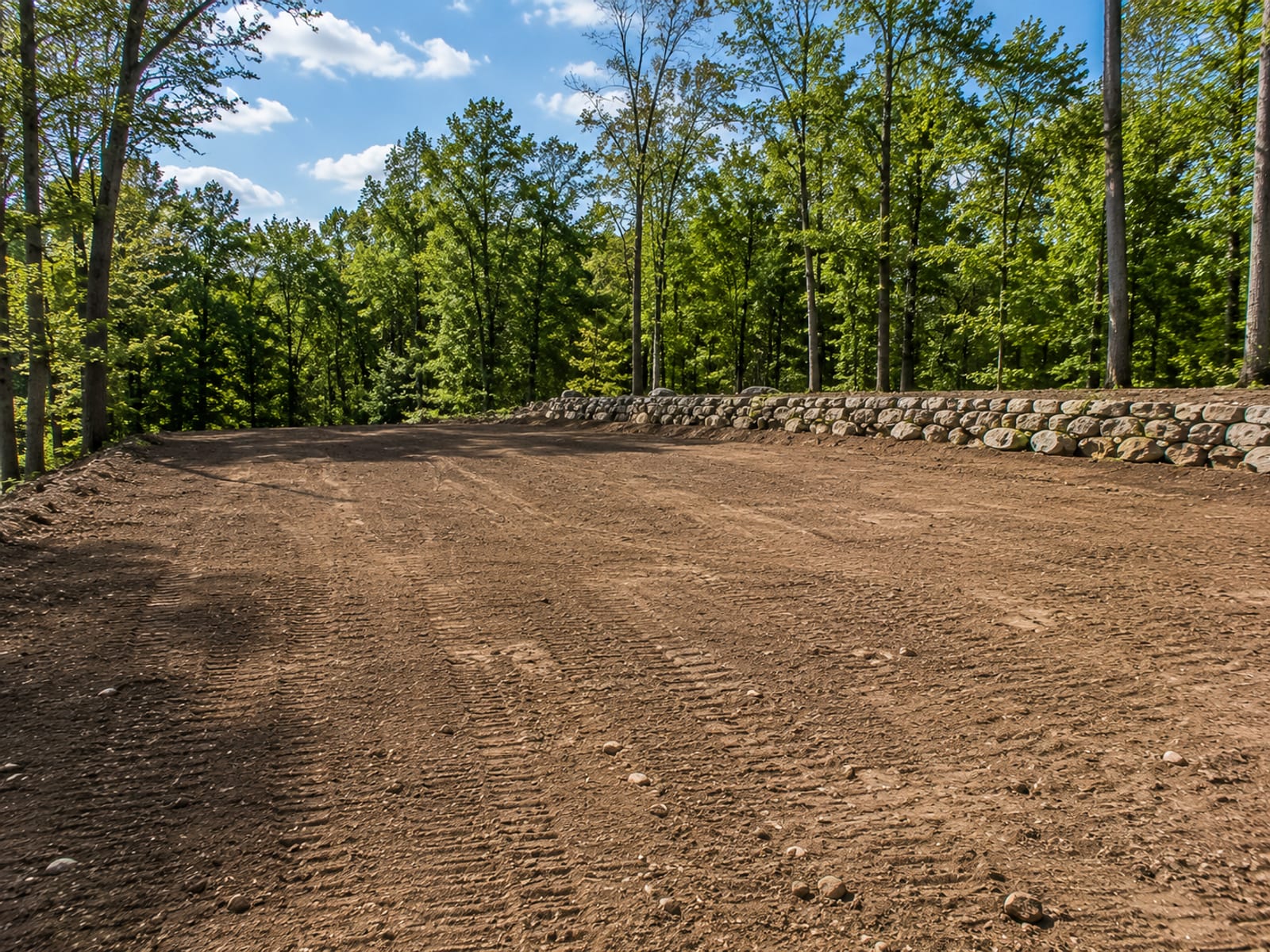
How Does the Rock Removal Process Work?
Every rock removal job follows a clear sequence from first look to finished grade. The steps below describe how Prestige Property Maintenance approaches a typical project.
Site Walk and Access Review
Before any machine moves, the crew walks the property to assess rock type, size, and location. Access routes matter here because large equipment needs a clear path to the work area without damaging existing structures, underground lines, or landscaping. This is also when the end goal gets confirmed, whether it is a clear building pad, a driveway path, a drainage corridor, or a graded lawn area.
Utility Markout
All underground utilities must be located before digging starts. In Connecticut, that means contacting Call Before You Dig (CBYD) to have lines marked. Prestige Property Maintenance accounts for this step in every excavation project, and work does not start until markouts are completed and reviewed.
Rock Exposure and Assessment
The excavator removes the topsoil and overburden above the rock to expose the full extent of what needs to come out. A boulder that looks like a single stone from the surface is sometimes three times larger underground, or connected to continuous ledge. Exposing the rock fully before committing to a removal method prevents mid-job surprises.
Breaking, Lifting, or Splitting
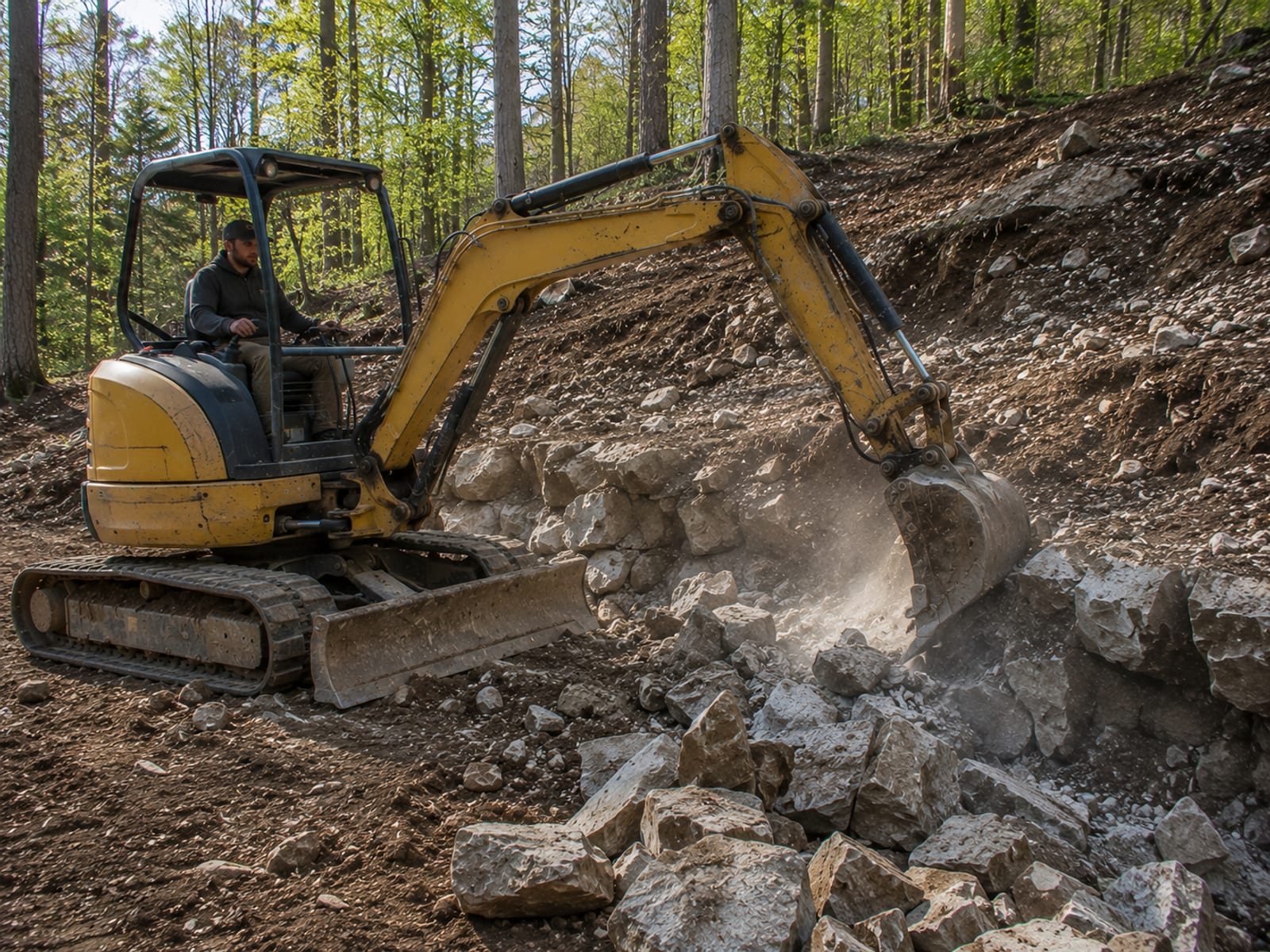
The method depends on the rock. Loose boulders are lifted directly with an excavator bucket or a hydraulic thumb attachment. Ledge and larger fractured rock may require a hydraulic hammer to break material into manageable pieces before removal. The right attachment for the job keeps production moving without unnecessary disturbance to surrounding ground.
Material Separation and Hauling
Once rock is broken and lifted, usable soil is separated from rock debris. Depending on the project, stone may be staged on site for reuse in drainage work, retaining wall construction, or fill areas, or it may be hauled off the property entirely. That decision is worked out with the property owner based on what the project needs.
Grade Rebuild and Soil Stabilization
After rock is cleared, the excavated area does not just get left as an open cut. The grade is rebuilt to match the project's specifications, soil is compacted where needed, and disturbed areas are stabilized so erosion does not undo the work before the next phase begins. This step connects rock removal to a site-ready result rather than just a hole in the ground.
What Happens to the Rock After It Comes Out?
A lot of property owners assume that all excavated rock gets hauled to a dump. That is sometimes the right call, but it is not always necessary or the most cost-effective option. Prestige Property Maintenance goes over the material options with you before work starts, because what happens to the rock affects both the project cost and how the rest of the site comes together.
Ledge fragments and medium-sized stone can often be reused on the same property. Broken ledge works as drainage aggregate beneath a French drain or as base material for a retaining wall footer. Larger boulders can be repositioned as natural borders, slope anchors, or decorative elements within a landscape construction project. Reusing material on site cuts down on hauling costs and makes good use of what was already there.
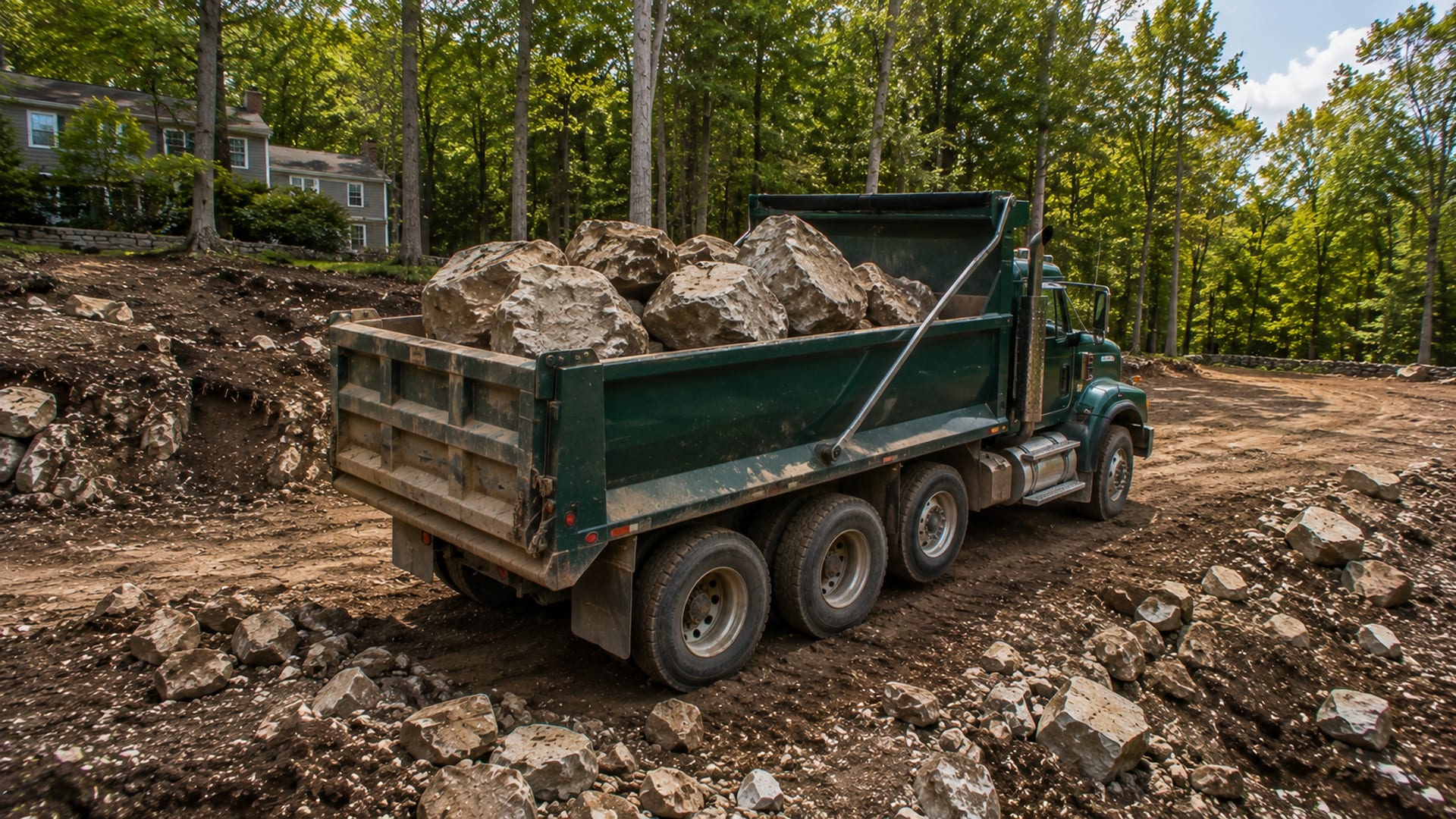
When rock has to leave the property, the crew handles loading and transport. The haul destination depends on the material type and size, and that is factored into the project plan. Stone does not get dumped in a corner of your yard and left for you to deal with later.
Why Choose Prestige Property Maintenance for Rock Removal?
Prestige Property Maintenance has been working Connecticut's rocky, clay-heavy ground long enough to know that rock removal rarely happens in isolation. On most residential jobs, pulling rock is one step in a larger project that also involves grading, drainage, driveway work, or site preparation for construction. Because Prestige Property Maintenance handles all of those services with the same crew and equipment, you do not have to coordinate a separate excavator, a separate grading contractor, and a separate drainage installer. One call sets the whole sequence in motion.
That matters on a practical level. When the rock removal crew is the same crew doing your driveway prep or drainage install, they already know the site conditions from the removal phase. They know where the ledge runs, where the clay sits heavy, and where water is likely to move once the grade is rebuilt. That continuity produces better finished results than handing a site off between contractors who have never seen each other's work.
Prestige Property Maintenance is licensed and insured, serves 19 towns across the Naugatuck Valley and western Connecticut, and operates Monday through Saturday, 7 AM to 5 PM. The equipment fleet handles everything from tight residential lots where access is limited to larger rural parcels with continuous ledge running across a wide area. If you have a rock problem blocking a project, Prestige Property Maintenance has done the same job on ground just like yours.
Rock Removal FAQs
These are the questions homeowners and contractors ask most often before starting a rock removal project in Connecticut.
Do I need a permit for rock removal on my Connecticut property?
It depends on your town and the scope of the work. Small-scale boulder removal on private property often does not require a permit, but projects that disturb significant soil area, alter drainage, or occur near wetlands or watercourses may trigger local inland wetlands review or a grading and drainage permit. Projects disturbing one acre or more can also trigger Connecticut's construction stormwater general permit requirements. Checking with your town's building or zoning office before work starts is the safest approach.
How deep can buried rock go on a Connecticut property?
There is no fixed answer because Connecticut's glacial geology is irregular. On some lots, ledge is four to six inches below the surface. On others, the first few feet are clear and ledge appears at five or six feet down, right at foundation or septic depth. Boulders can be similarly unpredictable; what reads as a single manageable stone from the top can extend three or four feet underground and weigh several tons. A site walk and initial excavation to expose the material fully is the only reliable way to assess depth and extent.
Can rock removed from my property be reused on site?
Yes, and in many cases reusing stone on site makes good practical sense. Broken ledge can serve as drainage aggregate beneath a French drain system or as base material under a retaining wall. Larger intact boulders can be repositioned as grade anchors, natural borders, or features within a landscape construction project. Whether reuse makes sense for your specific project depends on rock type, size, and what else is happening on the site.
What is the difference between removing boulders and removing ledge rock?
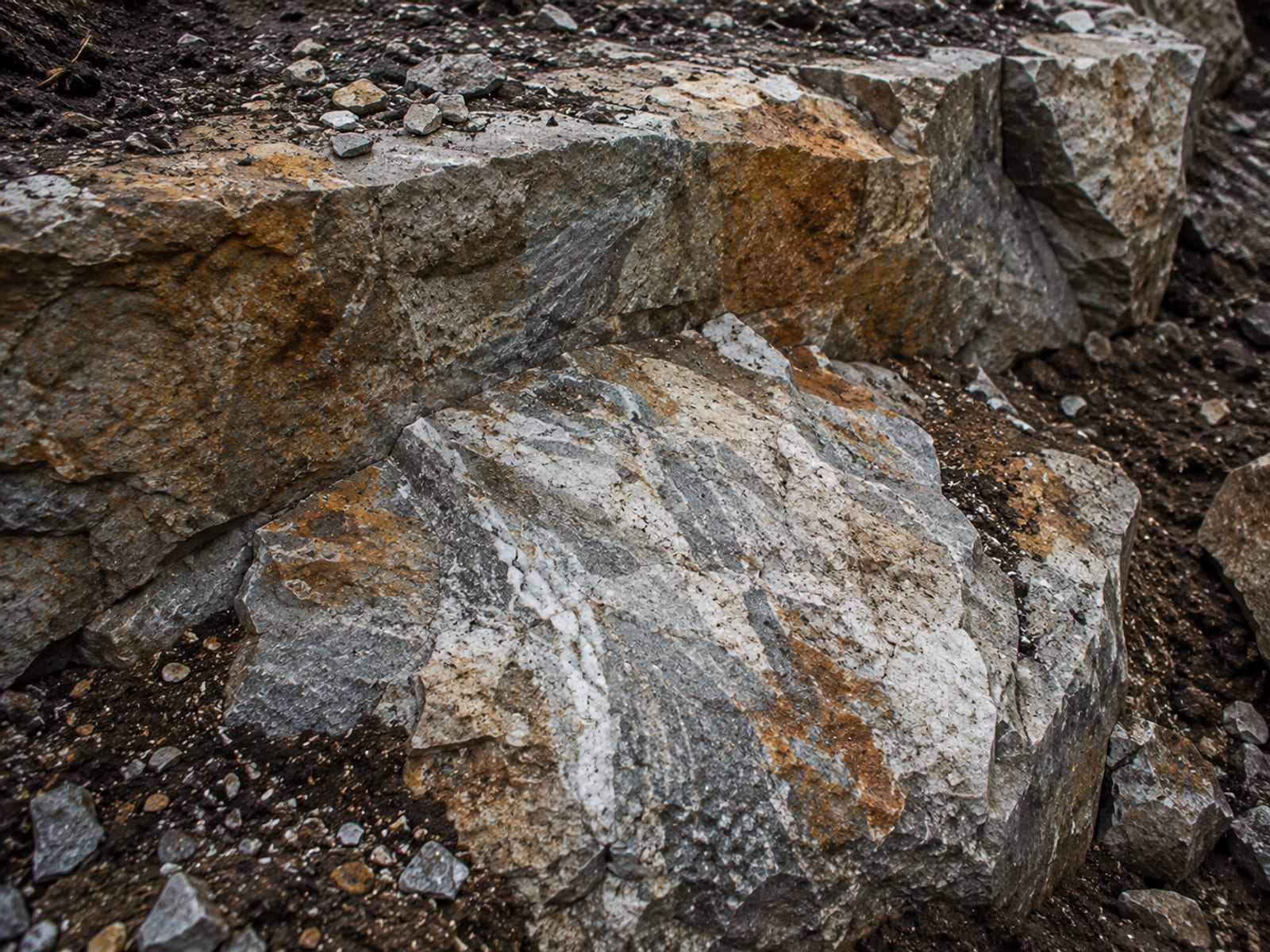
Boulders are individual stones, detached from bedrock, sitting in or on the soil. An excavator with the right attachment can grip and lift most boulders directly. Ledge is continuous bedrock that runs beneath the surface without natural breaks, and it requires a hydraulic hammer to break it into removable pieces before it can be extracted. Ledge jobs typically take longer and generate more material than boulder removal, which affects both scheduling and hauling.
Will rock removal damage my existing driveway or lawn?
Equipment access does affect the ground, especially on softer soil. Prestige Property Maintenance reviews access routes during the initial site walk to plan the least disruptive path to the work area. In some cases, using a compact excavator or tracked machine reduces surface impact on areas you want to preserve. Any disturbed access areas are addressed as part of the grade rebuild at the end of the job.
Does Prestige Property Maintenance handle blasting for rock removal?
Blasting requires specialty licensing, permit approvals, and coordination with local fire marshal authorities in Connecticut. For most residential projects, hydraulic hammering achieves the same result without the permitting complexity, neighbor notification requirements, and safety buffer zones that blasting involves. If your site presents conditions where blasting would need to be considered, that conversation happens during the site assessment, not after the job starts.
How do I know if my project needs rock removal before excavation starts?
Signs that point toward buried rock include outcroppings or surface boulders visible on the property, areas where trees grow at odd angles as roots push around stone, past projects on adjacent lots that encountered ledge, or hilly terrain with shallow topsoil. A site walk before project planning starts is the most direct way to assess the risk. Catching a rock problem during planning is far better than finding it mid-dig, when the schedule and budget are already committed.