

Drainage & Erosion Control
Retaining Wall Construction in Connecticut
Prestige Property Maintenance builds engineered retaining walls across Oxford, Southbury, Shelton, and 14 more Connecticut towns. We handle the full scope from excavation and drainage to finished wall installation, so your slope stays put and your yard becomes usable space.
What Is Retaining Wall Construction and What Do You Get?
A retaining wall holds back soil on a sloped lot, prevents erosion along grade changes, and gives you level, usable ground where a hillside used to be. Prestige Property Maintenance builds these walls using engineered stone, block, and timber, and every project includes the excavation, base preparation, drainage pipe, and compacted backfill that keep the wall standing for the long term. What you get at the end is a structurally sound wall that solves both a slope problem and a water management problem at the same time.
Most residential retaining wall projects involve one or more of these situations: a sloped yard losing soil to runoff, a driveway cut that needs to hold back a hillside, a failing or leaning old wall that needs to come out and be rebuilt properly, or a homeowner who wants to reclaim a section of their property for a patio, garden, or flat lawn. In every case, the wall is only part of the answer. The ground behind it, the drainage path around it, and the base under it all matter just as much as the blocks or stone you see on the surface.
Why Do Connecticut Properties Need Retaining Walls?
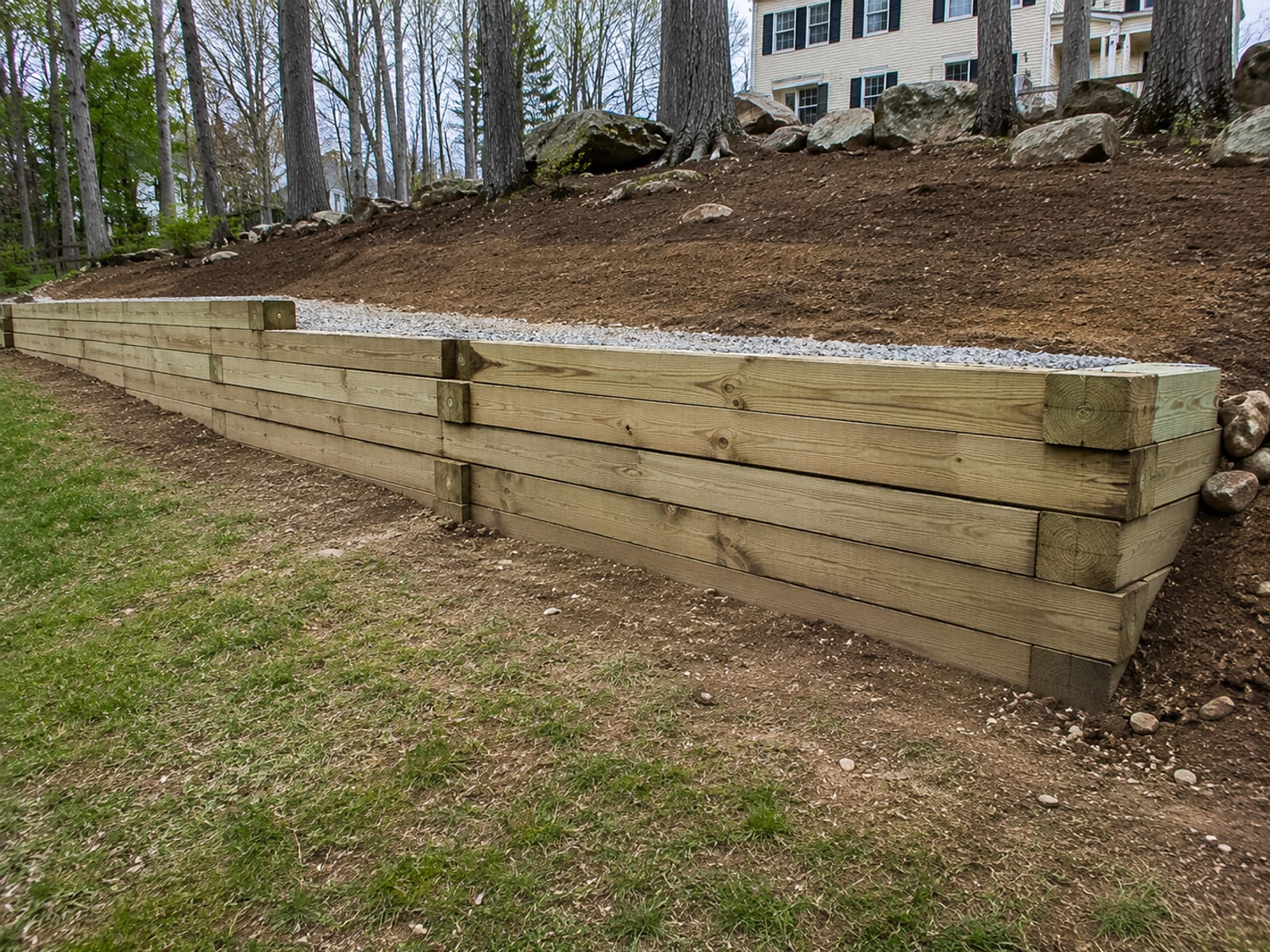
Connecticut's terrain is not flat, and the soil conditions across the Naugatuck Valley and western Connecticut make slope problems worse than they look. The glacial soil in this region is heavy with clay, laced with buried boulders, and prone to shifting during freeze-thaw cycles. A slope that looks stable in September can be washing out by April if nothing is holding the soil in place.
Older properties in towns like Oxford, Woodbury, Shelton, and Southbury often have original stone walls that were built without proper drainage or engineered backfill. Over time, water pressure builds behind those walls, and they start to lean, bulge, or separate. By the time a homeowner calls, the wall may already be pulling away from the hillside or pushing into a driveway or lawn.
Newer construction and lot clearing work also creates the need for retaining walls. When trees come down on a sloped lot, the root systems that held soil in place disappear, and erosion speeds up quickly. If you are adding a driveway, a garage, or a patio on a property with any grade change, you often need a wall to hold the cut or the fill in position before the rest of the project can move forward.
Connecticut towns also have their own rules about what work needs a permit, especially when walls are near driveways, wetlands, property lines, or drainage features. Prestige Property Maintenance is familiar with working in this regulatory environment and can help you understand what review or approval your project may need before work starts.
What Are the Benefits of a Properly Built Retaining Wall?
A retaining wall built the right way does more than hold dirt in place. These are the practical outcomes property owners see after a well-executed installation.
Usable Flat Ground
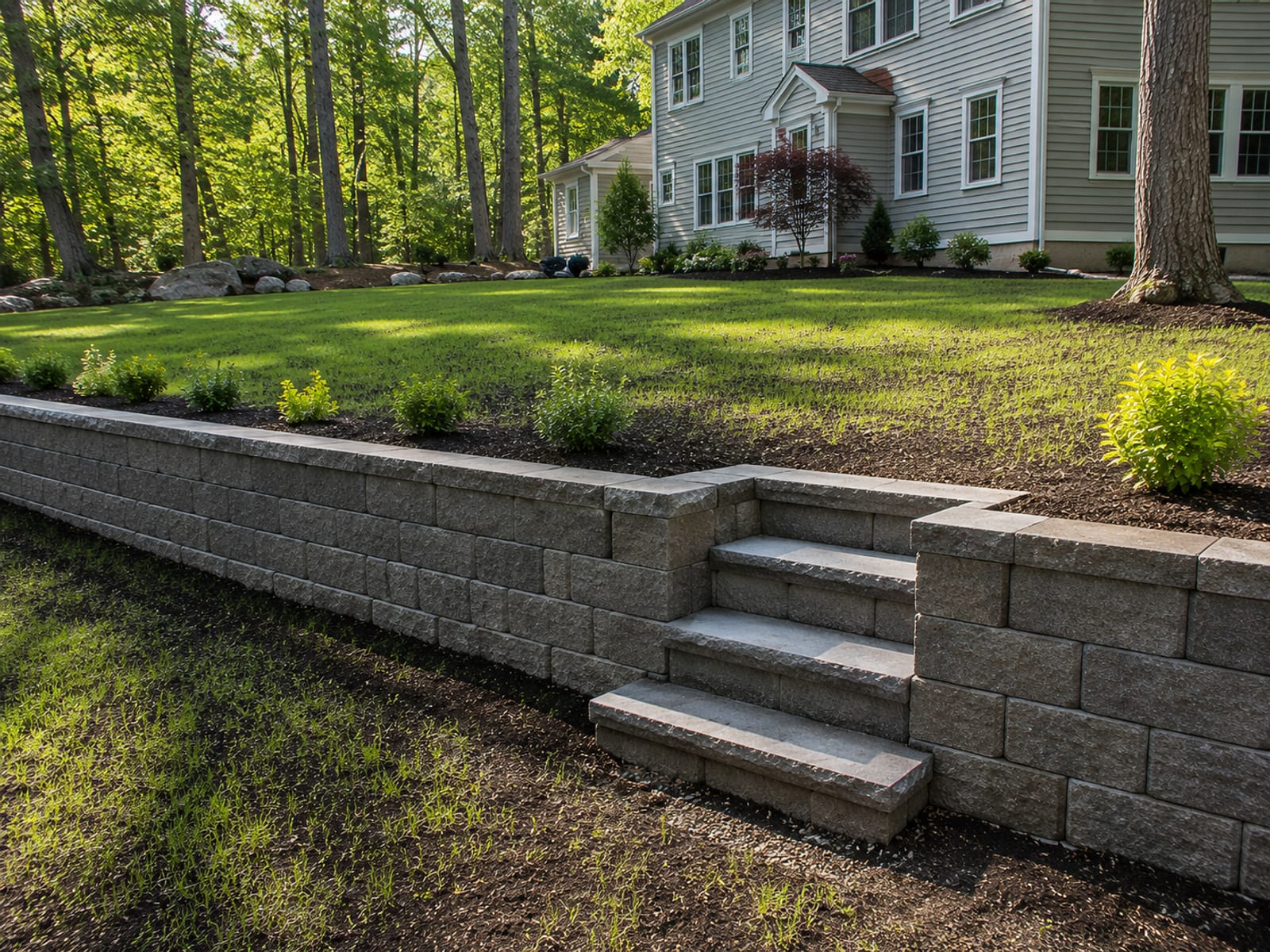
A sloped yard that was too steep to use becomes a level area suitable for a patio, parking, garden, or lawn. That is often a significant increase in the functional square footage of an outdoor property.
Erosion Stopped at the Source
Without a wall, rain and snowmelt strip soil off slopes and deposit it in driveways, drainage swales, and low spots. A properly built wall with good drainage behind it stops that process and keeps the grade where it belongs.
Water Managed, Not Just Blocked
A wall with a drainage pipe and free-draining gravel backfill relieves the water pressure that causes walls to lean or fail. You get a dry area behind the wall, not a wet zone building pressure against the blocks.
Property Value You Can See
A finished retaining wall changes the appearance of a property visibly. It signals that the site was professionally graded and managed, which matters when you are selling or refinancing.
Driveway and Structure Protection
When a slope runs alongside a driveway or toward a foundation, a retaining wall protects those investments by holding the hillside in position, even through wet winters and spring thaws.
Long-Term Stability
Connecticut's freeze-thaw cycle is hard on anything built into the ground. A wall installed with proper base depth, compacted lifts, and drainage is built to handle that movement without heaving, cracking, or falling apart after a few winters.
How Does Retaining Wall Construction Work?
Every retaining wall project at Prestige Property Maintenance follows a connected sequence. The wall you see at the end is the result of every step before it being done correctly. Skipping or shortcutting any part of this process is how walls fail.
Site Evaluation
Before any equipment moves, we look at the slope, the soil, how water is currently moving across the site, what is above and below the proposed wall, and whether any permits or engineering review are needed. Connecticut properties with rocky glacial soil, buried ledge, or proximity to wetlands need this evaluation before a shovel goes in the ground.
Excavation and Soil Removal
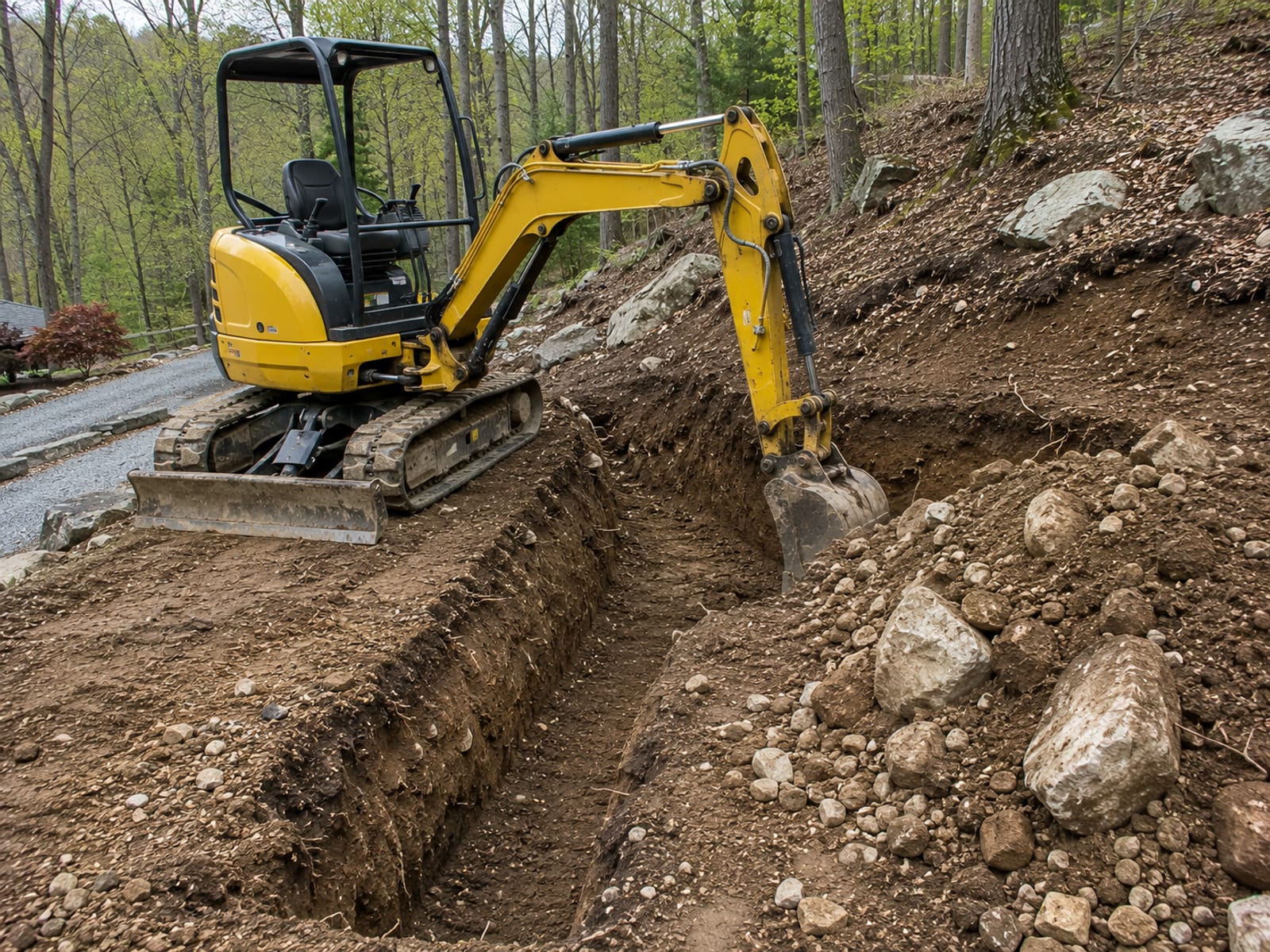
We cut back into the slope far enough to create room for the base, the wall itself, and the drainage zone behind it. Any unsuitable soil, including clay-heavy material or organic matter, is removed rather than compacted in place. If we hit ledge or boulders, we have the equipment to deal with that as part of this project.
Learn more about ExcavationBase Preparation and Leveling
The first course of a retaining wall is the most important one. We excavate to the correct depth below grade, place and compact a crushed stone base, and set the first course level across the full length of the wall. Any error here compounds with every course added above it.
Drainage Pipe Placement
A perforated drain pipe goes in at the base of the wall, behind the first course, with proper slope to carry water away from the wall to a daylight outlet or a connected drainage system. This step is what separates a wall that lasts from one that fails within a few years.
Free-Draining Backfill and Compaction
We backfill behind the wall with crushed stone or another free-draining material, compacted in lifts. This material lets water move down to the drain pipe instead of building up pressure against the back of the wall. Geogrid reinforcement is added where wall height and site conditions call for it.
Wall Installation
Block, engineered stone, or timber is set course by course, with each row properly stepped back, tied, or pinned according to the material and the wall design. Cap blocks or finished top material complete the wall surface.
Final Grading
Once the wall is built, we grade the area above and below it to direct surface water away from the wall face and away from any structures nearby. The finished grade should shed water cleanly without creating new low spots or pooling areas.
Learn more about Grading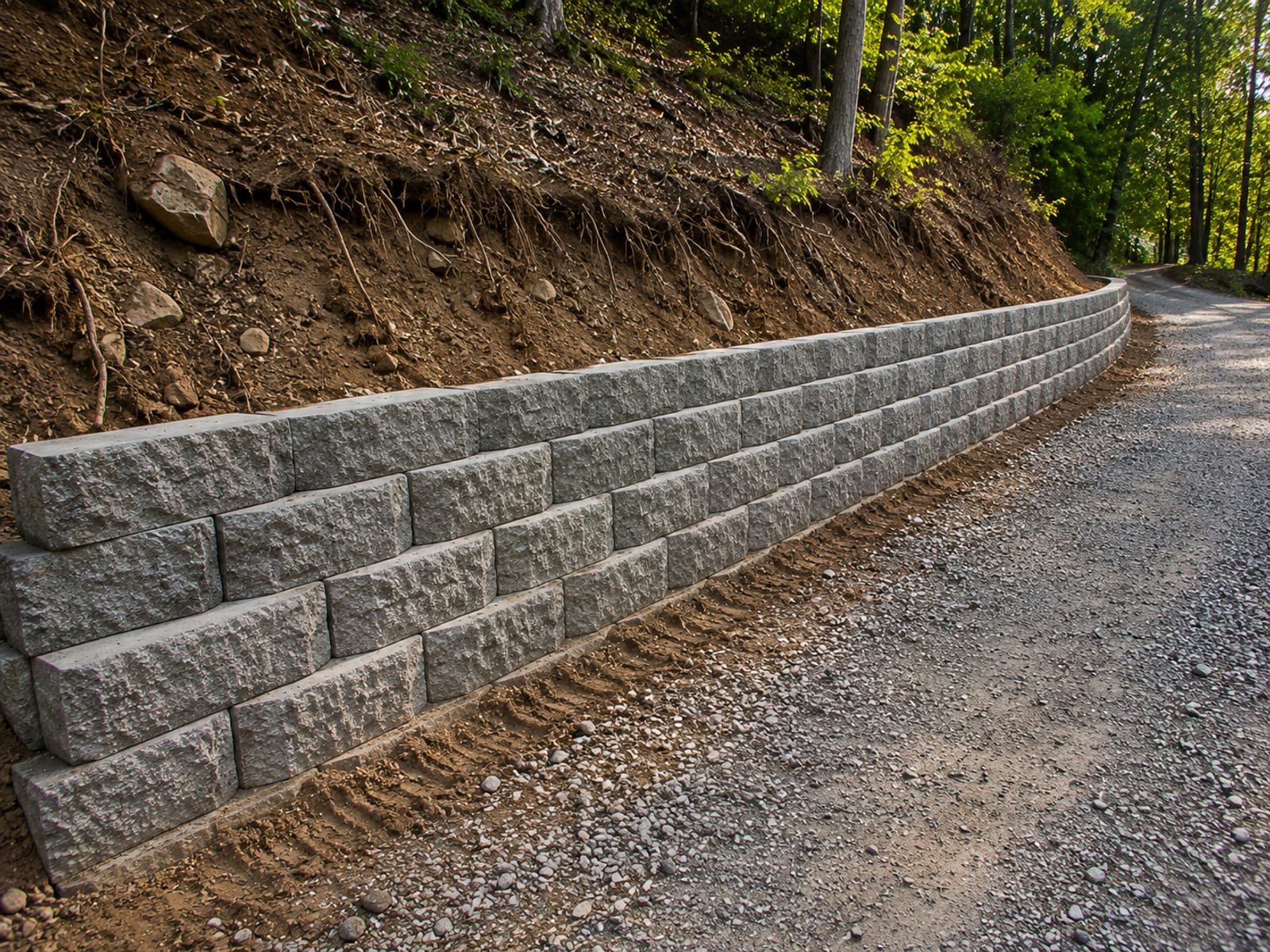
What Materials Are Used for Retaining Walls in Connecticut?
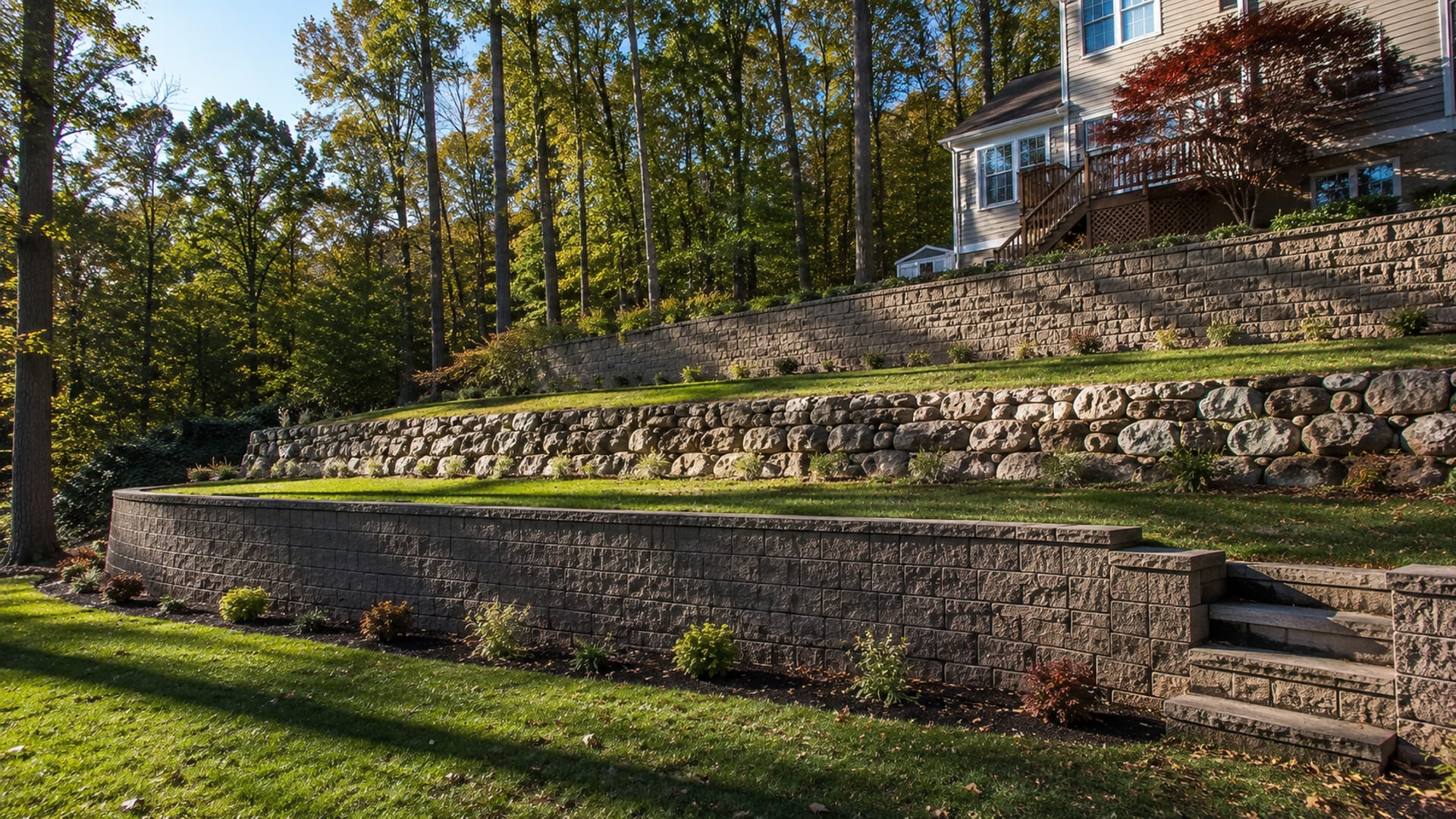
The three most common materials for residential retaining walls are segmental concrete block, natural or fieldstone, and timber. Each has a different performance profile, cost range, and appropriate use case. The right choice depends on your site conditions, wall height, how much load the wall will carry, and how you want the finished project to look.
Segmental concrete block is the most common choice for walls that need engineered performance. Manufacturers like Allan Block and Versa-Lok produce systems with specified setback angles, geogrid requirements, and height limits backed by testing data. These systems are also well-suited to Connecticut's freeze-thaw environment because the blocks are designed to shift slightly without cracking or separating.
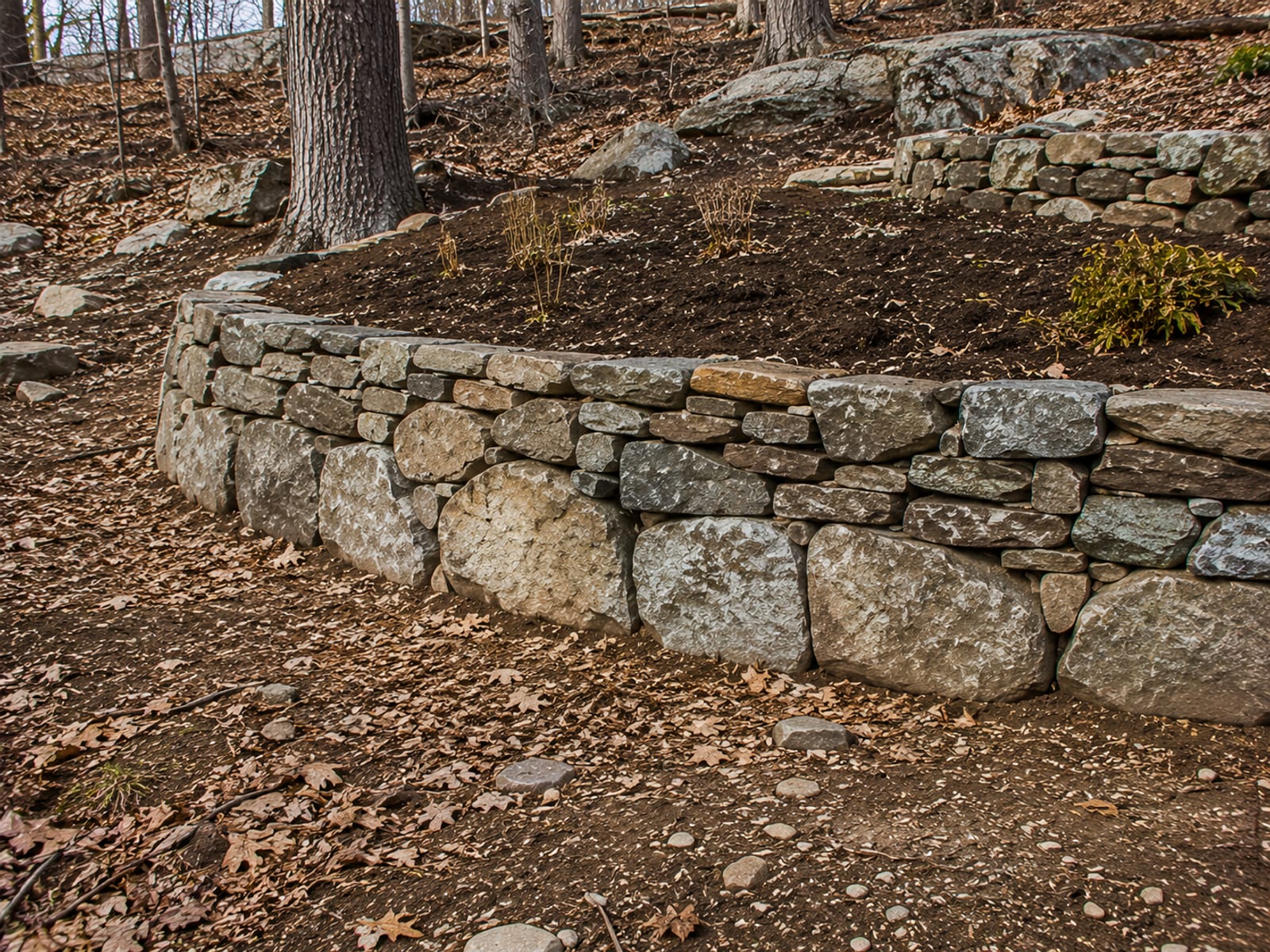
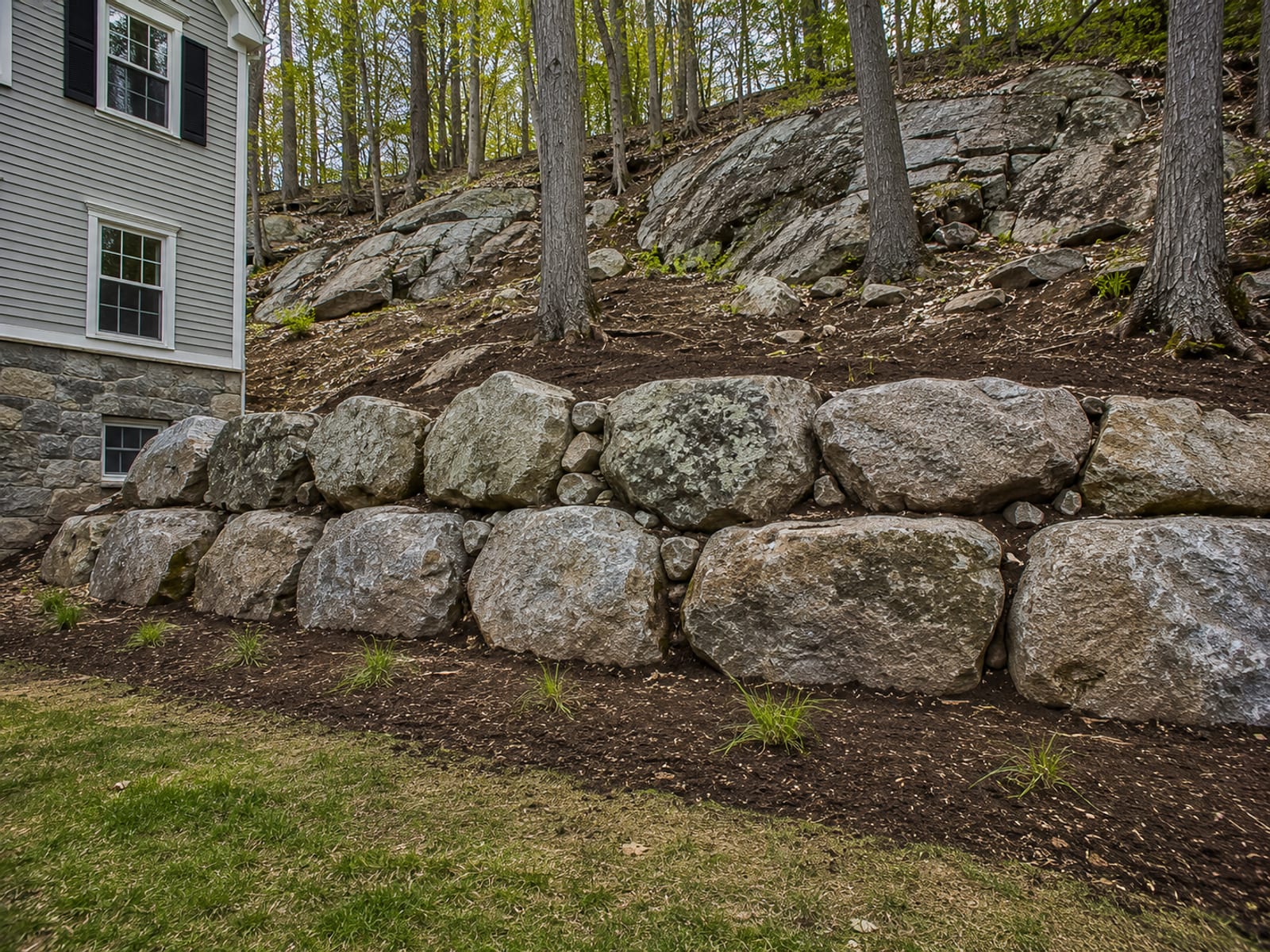
Natural stone and fieldstone walls have a look that fits well on older New England properties, and the material is often available locally. These walls require more hand labor to set properly, and they depend heavily on how well the base and drainage are prepared. A stone wall with poor drainage behind it will fail just as surely as a block wall with the same problem.
Timber walls are typically appropriate for smaller residential applications, including garden terraces, low landscape borders, and grade transitions that are not supporting heavy loads. Timber does have a shorter lifespan than block or stone in Connecticut's wet ground conditions, and it is generally not the right choice for walls that need to hold back a significant slope or support a surcharge load like a driveway or structure above.
The material choice also affects what engineering review may be needed. Taller walls, walls supporting loads, and walls near wetlands or structures may need engineer input regardless of what they are built from. We discuss material options as part of the site evaluation so you know what you are getting and why before work begins.
Do Retaining Walls in Connecticut Require a Permit?
Permit requirements for retaining walls in Connecticut vary by town, wall height, location on the property, and what the wall is supporting. Some towns exempt low decorative walls from building permits, but that exemption generally does not apply to walls above a certain height, near a property line, adjacent to a driveway or structure, or built in an area subject to wetlands or stormwater review.
State-level rules also come into play on larger projects. Connecticut DEEP's Construction Stormwater General Permit covers projects that disturb an acre or more of land, and smaller projects may still need municipal erosion and sediment control review if the work affects drainage, slopes, or nearby wetland buffers. Inland wetlands commissions in towns like Oxford, Southbury, and Monroe have their own review processes for work that happens within regulated upland review areas.
The safest approach is not to assume a project is permit-free without checking. A wall that needed a permit but did not get one can create problems when you sell the property, make an insurance claim, or need to do additional work later. Prestige Property Maintenance can help you understand what questions to ask your local building and wetlands offices before the project is scoped and priced.
Why Work With Prestige Property Maintenance for Your Retaining Wall?
Most retaining wall jobs involve more than just building a wall. They involve clearing vegetation or trees, excavating the slope, dealing with rocky or clay-heavy soil, managing water, and finishing the grade on both sides of the wall. If you hire a contractor who only builds walls, you still need someone else to handle the tree work, the excavation, and the drainage. Prestige Property Maintenance does all of it under one crew, which means no scheduling gaps and no finger-pointing if something in one trade affects the next one.
We work across 19 towns in the Naugatuck Valley and western Connecticut, and we know what to expect from the soil in this part of the state. Buried boulders, ledge rock, and clay-heavy ground are normal on these properties. Our equipment is set up for it, and our crews have worked through enough of these sites to plan for it instead of being caught off guard by it.
Retaining walls that also need to solve drainage problems get both sides of the answer from us. Our drainage solutions service handles the water management design and installation alongside the wall construction. Those two things are planned together from the start rather than one being added as an afterthought after the other is already done.
Prestige Property Maintenance is licensed and insured, which matters on a project that involves excavation, soil disturbance, and a load-bearing structure. Call us at (203) 258-3395 to talk through your slope situation and get a clear picture of what a proper installation involves.
Retaining Wall Construction: Frequently Asked Questions
How long does it take to build a retaining wall?
Most residential retaining wall projects take one to three days for a straightforward installation on accessible ground. Larger walls, walls on steep or rocky terrain, walls that include significant tree or stump removal beforehand, or projects requiring drainage system work alongside the wall will take longer. The site evaluation before your project starts will give you a realistic timeline for your specific situation.
How tall can a retaining wall be without an engineer?
Connecticut does not set a single statewide height limit for when engineering is required, because local towns and the specific conditions of each site both factor in. As a general reference point, many segmental block manufacturers require engineering review for walls taller than four feet when there is a surcharge load above them, and some municipalities apply their own height thresholds for permits. Walls supporting driveways, structures, or steep slopes above them are more likely to need engineering input regardless of height.
What causes retaining walls to fail or lean?
The most common cause of retaining wall failure is inadequate drainage behind the wall. When water cannot escape through the backfill, hydrostatic pressure builds up and pushes the wall outward. Other contributing factors include a base that was not deep enough for Connecticut's frost depth, backfill material that was too fine or too compressible, improper compaction in lifts, or a wall that was built without geogrid reinforcement on a site that needed it.
Can a retaining wall fix my drainage problem?
A retaining wall addresses the structural side of a slope problem, but it does not automatically fix drainage on its own. The drainage pipe and free-draining backfill installed as part of the wall construction manage water behind the wall. Surface drainage above and below the wall still needs to be graded correctly so runoff moves away from the wall face and away from your foundation or driveway. Prestige Property Maintenance plans both the wall and the drainage grade together so you are not solving half the problem and leaving the other half.
Will a retaining wall require ongoing maintenance?
A well-built block or stone retaining wall is largely low-maintenance, but there are things to watch for over time. Soil creeping over the cap, vegetation growing in the joints, drainage outlets getting blocked, and soil washing out from behind the wall base are the most common issues. Periodic clearing of the drain outlet and removing any plant growth in the joints will help the wall perform as built for a long time.
Can you replace an existing retaining wall that is already failing?
Yes. Rebuilding a failing wall is a common project for us. It typically involves removing the existing wall, excavating back into the slope to correct whatever the original installation got wrong, installing proper drainage and base material, and building the new wall correctly from the ground up. Trying to prop up or patch a wall that is failing due to drainage or base problems rarely solves the underlying issue.
Do you handle the tree removal and clearing if my slope has overgrown vegetation?
Yes. Prestige Property Maintenance offers tree removal, land clearing, and stump grinding alongside retaining wall construction. If your slope has trees, stumps, or heavy brush that need to come out before the wall can be built, we handle that as part of the same project rather than requiring you to schedule a separate tree service first.
Get a Retaining Wall Quote for Your Connecticut Property
Contact Prestige Property Maintenance, (203) 258-3395 | dig@prestigectexcavation.com