

Basement Excavation in CT: What to Expect When Contractors Arrive
Kash CochranePublished Updated
- basement excavation
- foundation excavation
- residential excavation
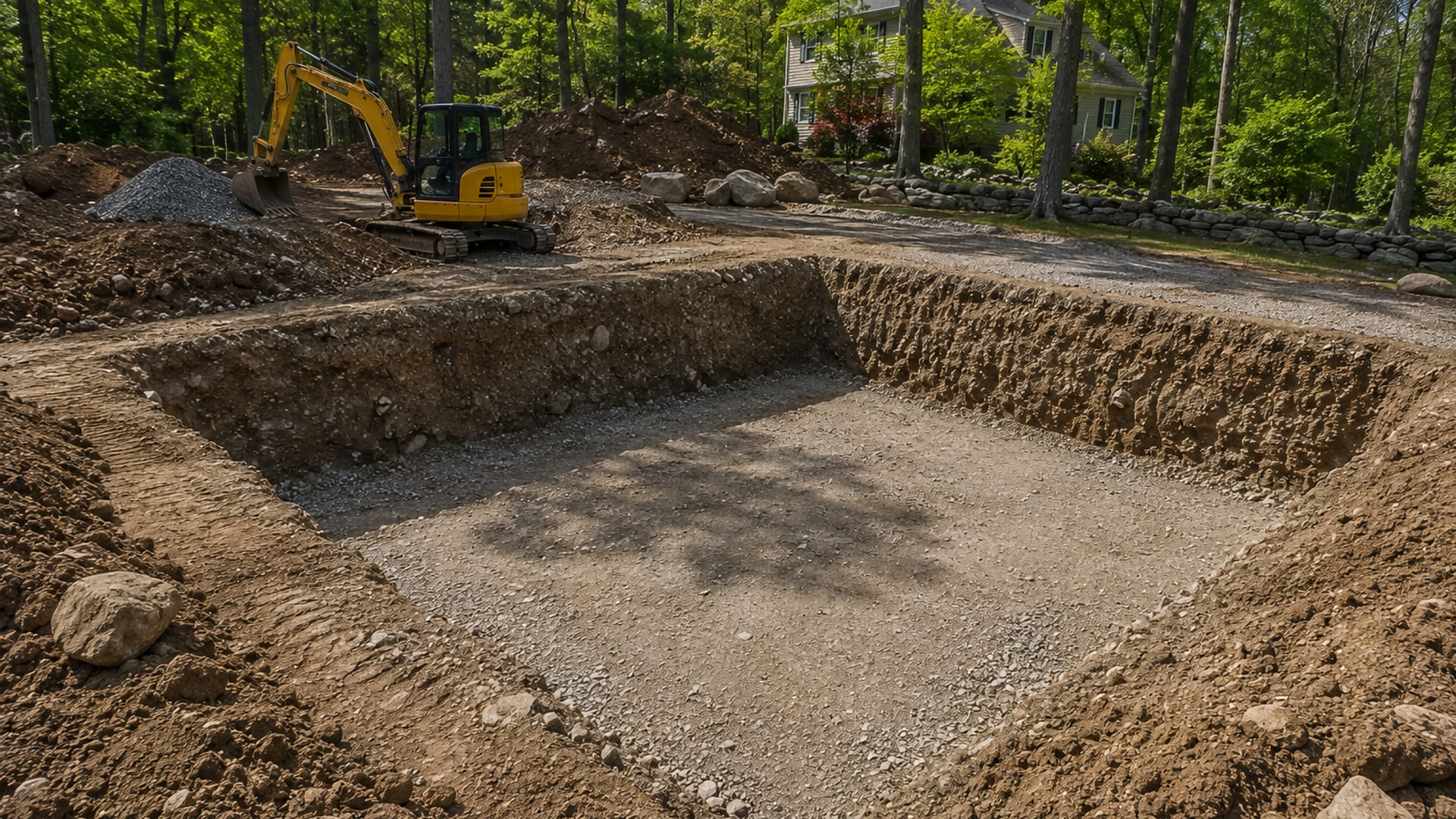
The date is on the calendar, and now the waiting is its own kind of stress. That moment when the equipment pulls into your driveway and the digging starts is the one part of the whole project that feels completely out of your hands. You've heard stories about neighbors who ended up with cracked foundations, runoff that damaged adjoining properties, or surprise ledge rock that turned a budgeted job into a financial nightmare. What you're really after isn't reassurance that everything will be fine. What you want is to know what *normal* looks like, so you can tell the difference between controlled professional work and something going sideways. Connecticut properties throw a specific set of conditions at excavation crews: glacial boulders buried just below the surface, heavy clay soil that holds water, slopes that push runoff in every direction, and lot access that can be tight on semi-rural roads. What follows walks you through the process from the morning the crew arrives to the point where the hole is ready for the foundation team to take over.
Key Takeaways
Basement excavation is a planned site-work phase
It includes access planning, digging, soil handling, drainage management, utility safety checks, and handoff to the foundation contractor.
Connecticut soil adds real variables
Buried boulders, rocky glacial material, wet clay, and sloped lots can change equipment needs, timelines, and cost.
Utility markouts are not optional
Underground utilities, septic lines, and service connections must be identified before any soil is disturbed.
Drainage planning starts on day one
How water moves around and through the excavation area directly affects the foundation work that follows.
The site will look like controlled chaos
Open holes, soil piles, equipment tracks, and temporary fencing are all signs the job is being done correctly, not signs something is wrong.
A clear estimate prevents the worst surprises
Ask specifically what is included for hauling, rock removal, drainage, grading, erosion control, cleanup, and site restoration.
Why Basement Excavation Matters More Than Most Homeowners Realize
Basement excavation sets up everything that comes after it. The depth of the dig, the footprint of the hole, how water drains away from the open area, and how the soil is handled all feed directly into whether the foundation contractor has a safe, properly prepared work area or a wet, unstable mess to work around.
When excavation is planned well, the foundation crew shows up to a site that makes their job straightforward. When it isn't, the problems stack up fast: standing water near footings, soil that shifts during backfill, erosion that moves sediment into storm drains or onto neighboring property, or access problems that slow every trade that follows. The Connecticut State Building Code sets baseline standards for construction work, and local building departments often add their own requirements on top of that. Knowing the excavation phase fits within that framework matters before the first machine arrives.
What excavation actually creates
The basement excavation process creates a work area that multiple trades will depend on. The foundation team needs stable walls, appropriate depth, correct footprint dimensions, and a floor area that doesn't flood overnight. Waterproofing crews need access around the perimeter. Drainage and backfill materials need to be staged nearby. Rough grading after backfill determines where surface water goes for the life of the structure. All of that starts with how the excavation itself is planned and executed.
How site conditions connect to later work
Poor excavation planning often shows up as problems that look like foundation problems later. Settlement under footings, water intrusion through foundation walls, and long-term drainage issues around a basement can all have roots in how the original excavation was handled. The Connecticut DEEP stormwater construction guidelines address how disturbed soil and runoff must be managed on construction sites, and those requirements exist precisely because how you handle water during construction shapes how the site performs for decades.
What Happens Before the Crew Starts Digging
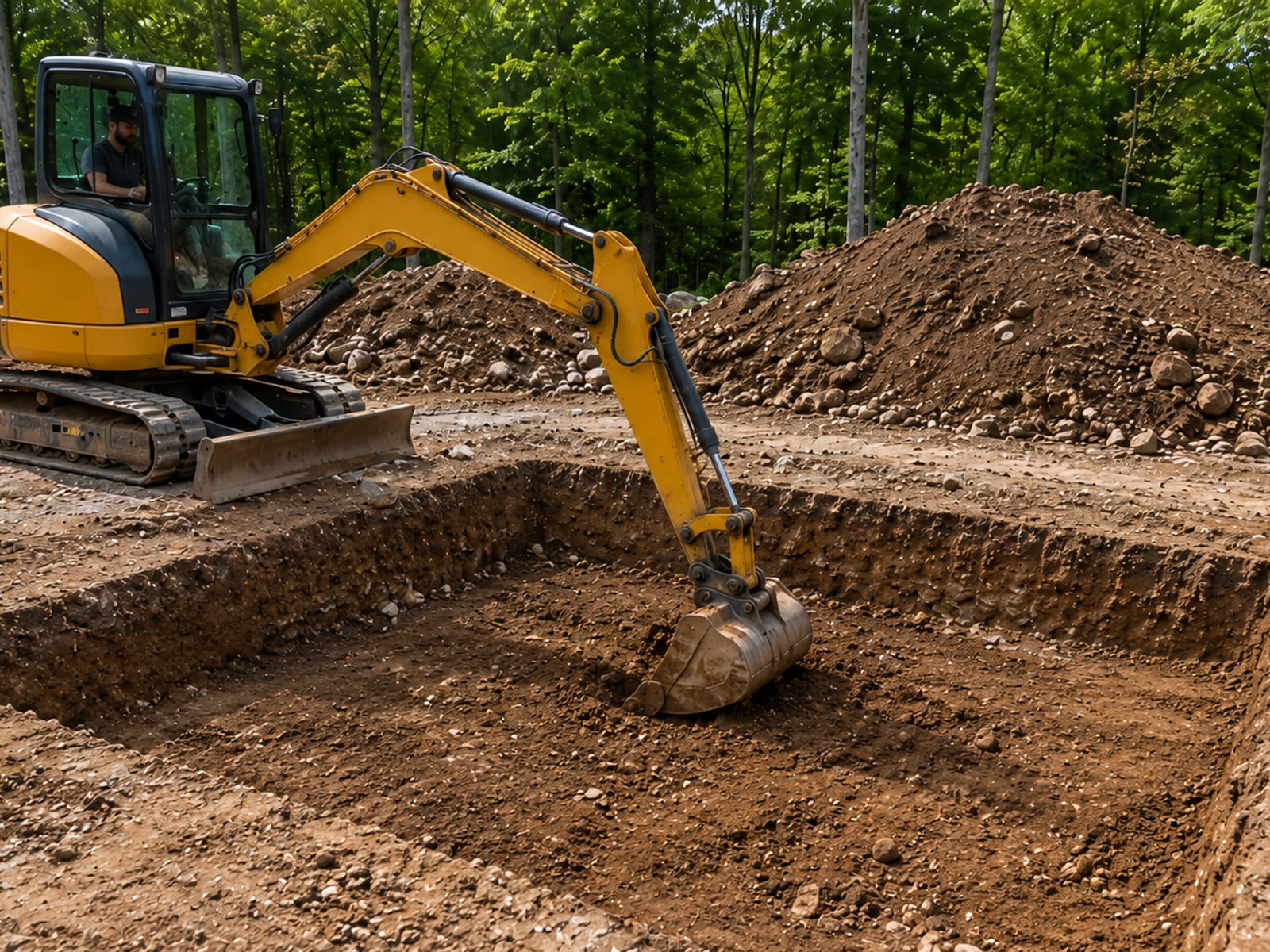
Most homeowners focus on the digging itself, but a significant amount of work happens before the excavator bucket touches the ground. A professional contractor working in Connecticut will review several things during site preparation, and how thoroughly they do that work often separates a smooth project from one that runs into expensive surprises. The pre-dig review covers access routing, slope and drainage patterns, soil stockpile locations, utility and septic locations, and how the timeline aligns with any local inspection requirements tied to the permit.
Utility markouts and underground safety
Before any soil is disturbed, Connecticut's Call Before You Dig system requires that underground utilities be identified. This is handled through a markout request that covers gas lines, electric, water, communications, and other buried infrastructure. When you see painted lines or small flags appearing in your yard a few days before work starts, that's the markout happening. It's not administrative busywork. Hitting a buried utility line during excavation can cause serious safety problems, project delays, and costs that are not in anyone's budget.
For basement excavation near existing homes, the list of underground concerns goes beyond utility lines. Septic systems, leach fields, wells, and old drainage systems may not appear on any plan. An experienced excavation contractor working in Oxford, Seymour, and the surrounding Naugatuck Valley knows to ask about all of these before the equipment moves into position.
Access, staging, and property protection
Equipment needs a path to get where it's going, and that path may cross a lawn, driveway, or area with existing landscaping. Before digging begins, the contractor should know exactly where the excavator and dump trucks will move, where the excavated soil will be stockpiled or loaded for hauling, and which areas of the property need protection with plywood, stone, or temporary barriers. A contractor who has thought through access and staging will cause less unnecessary damage than one who hasn't. Equipment leaves marks, and lawns take time to recover, but that's different from avoidable damage that comes from no planning at all.
The Morning the Equipment Arrives: What You'll See and What It Means
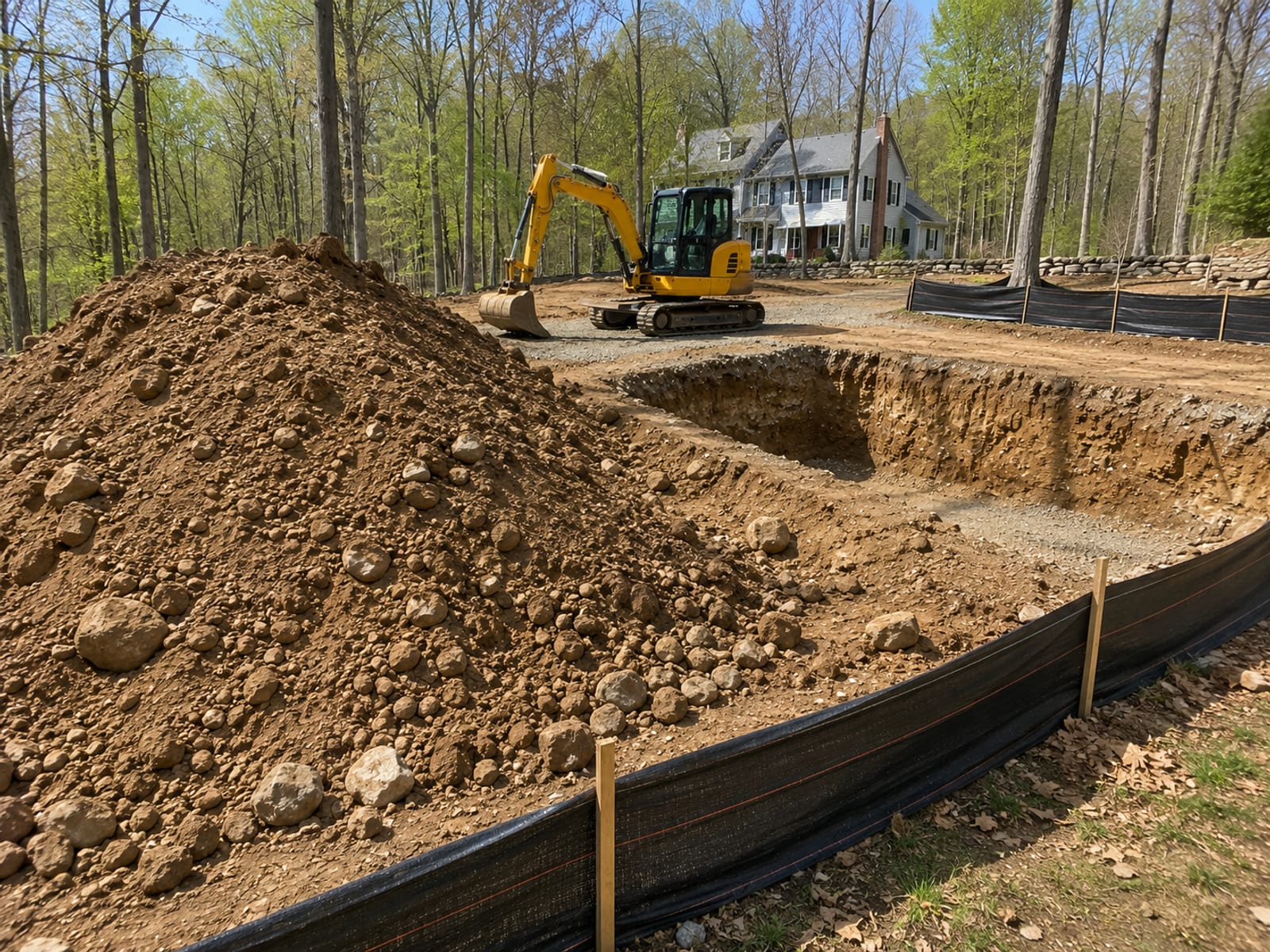
The first day of a basement excavation is often the most alarming for homeowners, and understanding what's happening can make a real difference in how you experience the project. When the crew arrives, the first work is usually site prep rather than digging. That may mean clearing brush or small trees from the work area, stripping and stockpiling topsoil separately for later use in restoration, and setting up erosion control barriers along the perimeter of the disturbed area. Silt fence along the downhill side, a stabilized equipment access point, and orange safety fencing around the open excavation are all signs the contractor is following Connecticut soil erosion and sediment control guidance. Those measures are required on disturbed sites, and seeing them in place early is a good sign.
What the excavation phase looks like in practice
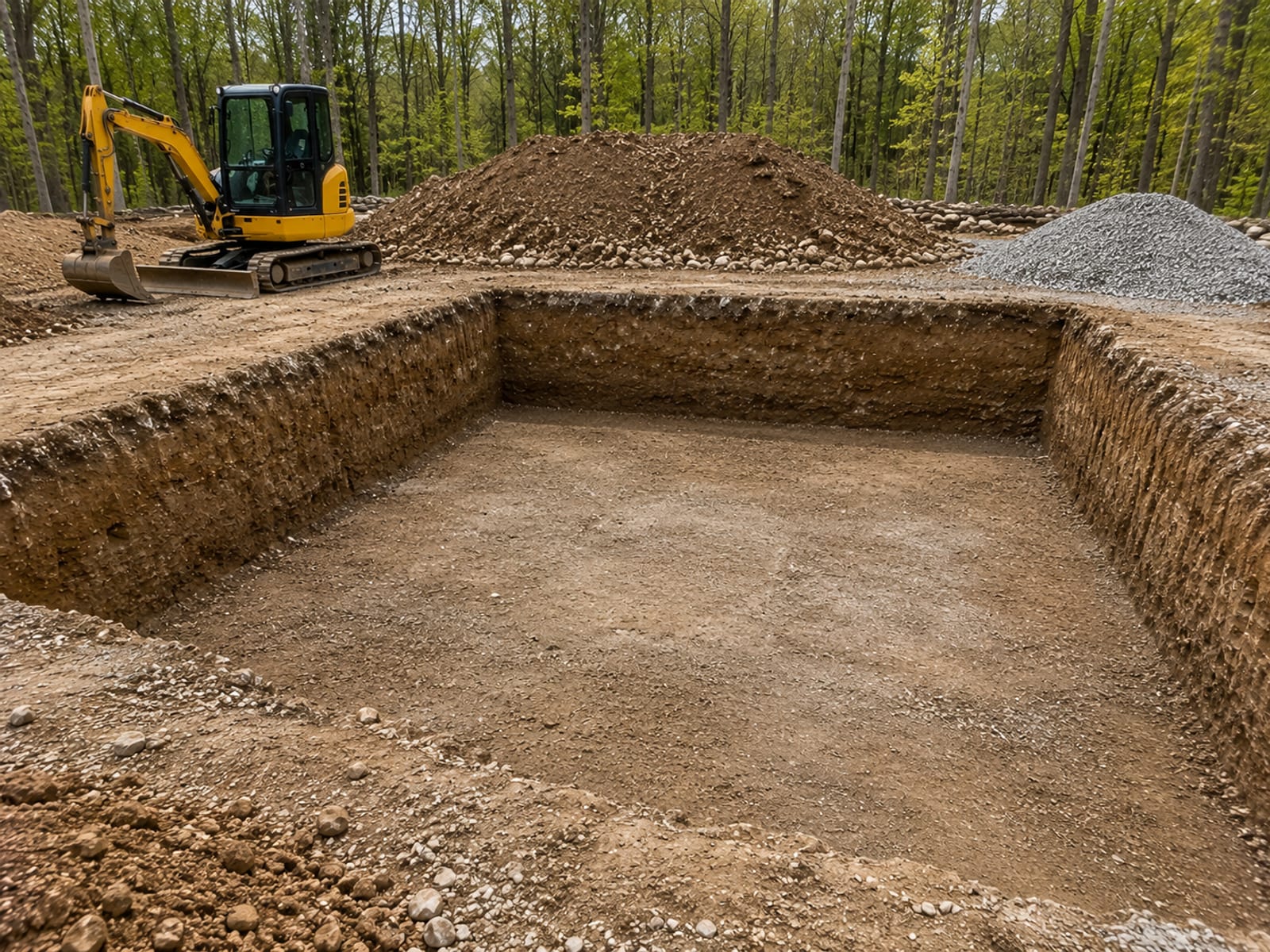
Once prep work is complete, the excavator begins removing material from the basement footprint. On a typical residential project, this means cutting down to the required depth in lifts, managing the removed soil, and keeping the work area accessible for equipment. In Connecticut, that process can go smoothly in sandy or loamy soil, or it can get complicated quickly when the bucket hits dense clay, an unexpected boulder, or ledge just below the surface.
The soil pile that builds up adjacent to the excavation can look enormous, and that's normal. A standard basement holds a significant volume of earth, and all of it has to go somewhere. Depending on the project, some material may be kept on site for backfill later and the rest hauled away. If you haven't confirmed which approach your contractor is taking and what haul costs look like, that's a conversation to have before the trucks start rolling.
What to watch for
You don't need to manage the job, but knowing what a well-run site looks like helps you have informed conversations with your contractor. Erosion controls should be in place before significant soil is disturbed. The excavation walls should be reasonably clean and stable. Equipment shouldn't be tracking mud across pavement and leaving it there. If it rains heavily, there should be a plan for how water in the excavation is handled. If these things are consistently absent, they're worth raising with whoever is running the job.
Connecticut Conditions That Can Change Your Timeline and Cost
Connecticut's geology and climate can affect a basement excavation in ways that are genuinely hard to predict before digging starts. The Naugatuck Valley and the broader Oxford area sit on glacial deposit material that can shift dramatically over short distances. A lot that digs like butter in the front yard may hit ledge-like conditions or a buried boulder field twenty feet in. The most common site conditions that affect timeline and cost in this region are rocky glacial soil and buried boulders that require a hoe ram or blasting, wet clay that makes soil handling slow and compaction difficult, high groundwater or spring seepage that requires pumping to keep the work area dry, limited access on wooded or sloped lots, and utilities or septic components that require hand-digging near their locations.
Rock, boulders, and ledge
Boulder removal is one of the most common cost variables in residential basement excavation CT. Glacial boulders can range from manageable to massive, and ledge-like conditions may require equipment or methods not included in a standard excavation estimate. When reviewing an estimate, ask specifically how the contractor handles rock. Is rock removal included? Is there a unit cost for boulders over a certain size? How will ledge be handled if it's encountered at footing depth? Getting answers to those questions in writing before work starts is far better than having that conversation after the boulder is already in the hole.
Weather, water, and the Connecticut freeze-thaw cycle
Spring is often when Connecticut homeowners want to get excavation moving, and it's also when conditions are most challenging. The stormwater performance standards from UConn Extension address how construction site water must be managed, and there are good reasons those standards exist. Spring runoff, saturated soil, and high groundwater can all slow excavation, make soil stockpiles unmanageable, and complicate backfill and compaction work later. Winter frozen ground presents its own set of variables. Neither season is a reason to abandon a project, but both should be part of the conversation when you're looking at a start date and budget.
Permits, Erosion Control, and the Regulatory Side of Basement Excavation in CT
Most basement excavation projects in Connecticut are part of a larger permitted construction project, which means the excavation work fits within a local building permit, a zoning review, or both. Depending on the site and scope, there may also be wetlands buffers, stormwater permits, or other review processes that affect how and when excavation can proceed. Understanding where your project sits within those layers before equipment shows up keeps you from learning about requirements at the wrong moment.
Erosion and sediment control is one of the areas where Connecticut has clear regulatory expectations. When soil is disturbed, sediment must be kept from washing off site into roads, storm drains, wetlands, or neighboring properties. The NEMO soil erosion guidance for Connecticut municipalities outlines the methods and standards that apply to construction sites throughout the state. Silt fence, stabilized access pads, temporary seeding, mulch cover on exposed soil, and proper inlet protection around storm drains are all part of managing disturbed soil responsibly.
What you should confirm before work begins
Before excavation starts, confirm that the necessary permits are in place, that utility markouts have been requested and completed, that the erosion control plan has been discussed with the contractor, and that you understand the access and staging plan. If any of those elements are unclear or haven't been addressed, resolve them before equipment shows up. A contractor who can answer those questions without hesitation is generally one who has managed similar projects before and knows what a professional site looks like from start to finish.
The Basement Excavation Process: From Prep to Ready for Footings
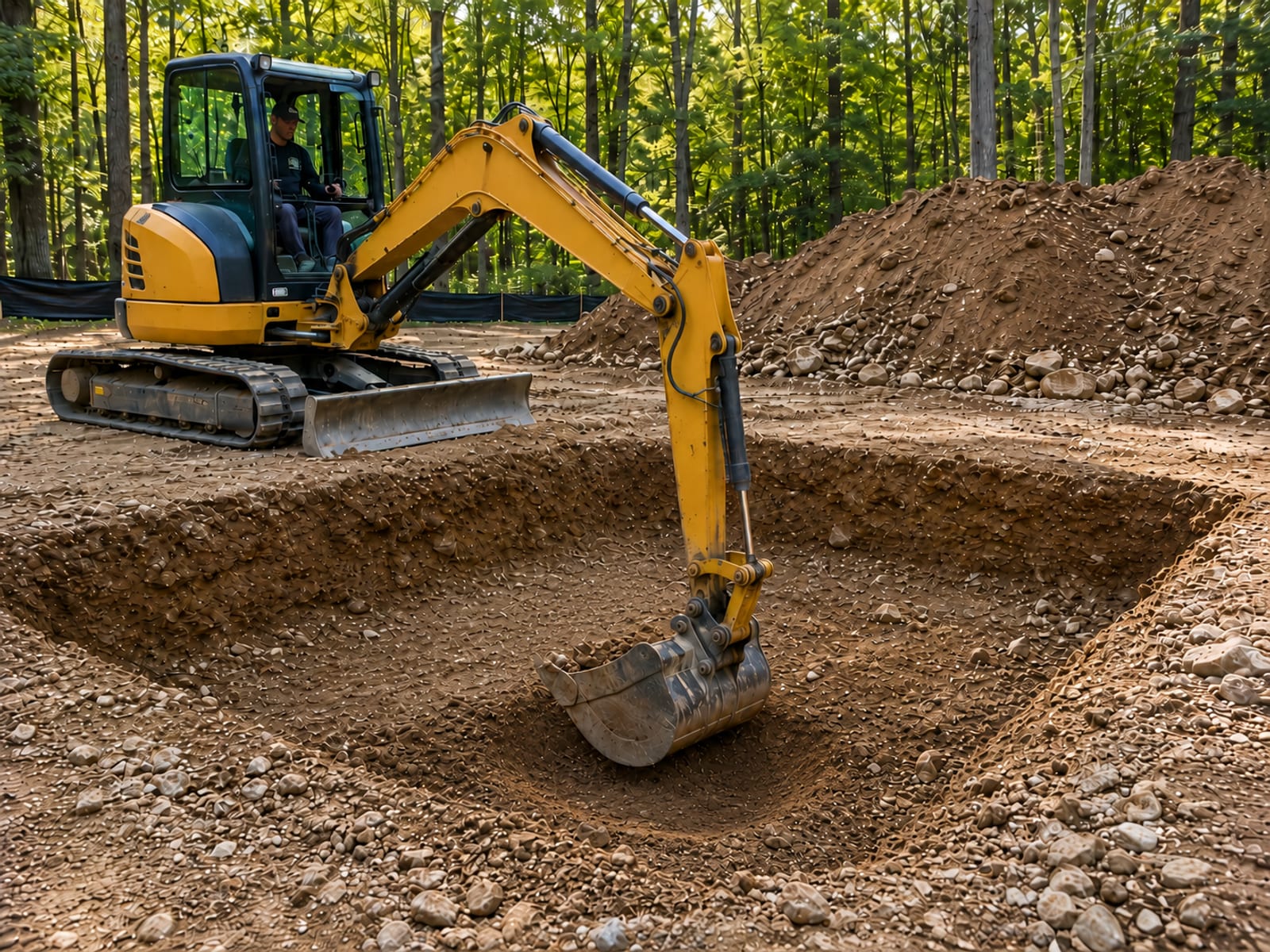
Understanding the sequence of a residential basement excavation helps homeowners know what's happening at each stage and what the site should look like as work progresses. The job moves from access and site prep through topsoil stripping, full excavation to depth, and rock or boulder removal as needed, with drainage management and erosion controls running throughout. Once the excavation reaches the right depth and the walls are stable, the contractor prepares the area for the foundation crew, which may include rough grading the floor area, setting grades for drainage, and confirming the site is ready for footing inspection.
Step 1: Site preparation and access
Access is set up first. That includes confirming the equipment path, placing protective materials over surfaces that need to be preserved, installing erosion controls along the perimeter, and handling any clearing required to reach the foundation footprint. Topsoil is stripped from the work area and stockpiled separately since it's the most useful material for restoring the site once the project is complete.
Step 2: Excavation, rock management, and drainage
With prep complete, excavation moves from the surface down to the required footing depth. Soil is managed as it comes out, with unusable material loaded for hauling and suitable material set aside for backfill. If rock or boulders are encountered, the contractor addresses them with the appropriate equipment. Water management around the open excavation protects the work area, keeps the floor from flooding before footings are poured, and sets up the drainage conditions that foundation waterproofing will depend on. The UConn Extension stormwater program outlines how construction sites should approach water management, and those principles apply directly to residential foundation excavation.
Common Mistakes That Make Basement Excavation CT Projects Go Wrong
Most basement excavation problems can be traced back to a handful of planning gaps. Skipping the utility markout creates safety risks and potential damage costs that far exceed any time saved. Underestimating rock in the estimate leaves homeowners with unexpected invoices once a boulder field shows up. Ignoring drainage during excavation can mean a flooded work area every time it rains, which slows the foundation crew and complicates backfill. Assuming excavated soil can be stockpiled anywhere without considering runoff or septic setbacks leads to erosion problems and potential conflicts with neighbors or local inspectors. Choosing an estimate that doesn't clearly define what's included for hauling, rock, drainage, access repair, and restoration is probably the single most common source of after-the-fact disputes on residential excavation projects.
The fix for most of these is straightforward: get a written estimate that spells out what each line item covers. Ask specifically about rock. Confirm how soil is being handled and at whose cost. Understand what erosion controls are included. Know what the site will look like when the excavation contractor wraps up and hands off to the foundation contractor.
Long-Term Planning: Treating Excavation as Part of the Full Site Plan
Homeowners who have the smoothest excavation experiences tend to think about it as one step in a connected sequence rather than a standalone job. The decisions made during excavation, where water drains, how soil is graded, where backfill material comes from, and how the perimeter of the foundation is prepared, affect how the basement performs for as long as the structure stands.
Before signing a contract for basement excavation in Connecticut, it's worth asking a few questions that go beyond the immediate dig. Where will surface water drain after backfill is complete? How will the finished grade around the foundation be established? What is the plan for restoring disturbed lawn, driveway, and landscaping areas? What happens if soil or rock conditions differ from what was expected? A contractor who can answer those questions with specifics has thought through the whole project, not just the day-rate digging work.
Frequently Asked Questions About Basement Excavation CT
What is basement excavation?
Basement excavation is the process of digging and preparing the ground for a basement foundation, basement addition, foundation replacement, or below-grade construction area. It includes site preparation, utility safety, soil handling, drainage planning, and preparation for footing and foundation work.
What should I expect when excavation contractors arrive?
Expect heavy equipment, truck traffic, soil movement, temporary erosion control barriers, and a work zone that may stay open until the foundation phase is complete. The yard and driveway will likely show equipment marks, and a soil stockpile will build up adjacent to the excavation. That's all part of a normal, professionally managed site.
Do I need utility markouts before basement excavation in Connecticut?
Yes. Connecticut's Call Before You Dig program requires that underground utilities be identified before excavation begins. This applies to gas, electric, water, communications, and other buried infrastructure. It's a safety requirement, not just a formality.
Can rocky soil affect basement excavation in Connecticut?
Rocky glacial soil, buried boulders, and ledge-like conditions are common in Connecticut, particularly in the Naugatuck Valley. They can require specialized equipment, add time to the project, and change the cost. Ask your contractor how rock is handled in their estimate before work begins.
Does basement excavation require permits in CT?
Basement excavation is usually part of a larger building project, so local building permits and potentially zoning, wetlands, or stormwater reviews may apply depending on the location and scope of work.
Why does drainage matter during basement excavation?
Water management around the open excavation affects footing conditions, backfill quality, long-term foundation drainage, and whether sediment washes off site during construction. Poor drainage during excavation can create problems that show up as water intrusion or settlement issues much later. The Connecticut stormwater manual covers the performance standards that apply to construction sites throughout the state.
How do I find a reliable excavation company in CT near me?
Look for a residential excavation contractor in CT who can explain site prep, drainage, rock handling, utility coordination, erosion control, and restoration in plain terms. Ask for a written estimate that covers what happens if rock or water conditions differ from expectations.
Final Thoughts
Basement excavation in Connecticut is a real investment, and the fear of it going wrong is reasonable. The open hole, the soil piles, the equipment tracks across the lawn, the silt fence along the property line: all of it looks like disruption. Most of it is actually evidence that the job is being done correctly. Understanding the sequence from pre-dig utility markouts through site prep, excavation, drainage management, and foundation handoff gives you the ability to ask the right questions and recognize when a crew is managing the work responsibly.
When that work is done well, it sets up every phase that follows. A properly excavated and drained site makes the foundation contractor's job cleaner, protects against long-term water problems, and leaves you with a basement that performs the way it's supposed to for the life of the structure. The cost of doing excavation right the first time is always lower than fixing drainage issues or unstable backfill after the fact.
At Prestige Property Maintenance, we work on these sites regularly throughout Oxford, Seymour, and the surrounding communities in the Naugatuck Valley. Our work includes excavation, site preparation, rock removal, grading, drainage, erosion and sediment control, earth moving, trenching, and land clearing. We understand what Connecticut ground actually looks like once the bucket goes in, and we plan for it. If you're getting ready to start a basement or foundation project, contact us to talk through your site and get an estimate that covers what the job actually involves.
Related Articles
What to Expect During Foundation Excavation in Connecticut
Foundation excavation in Connecticut is more complex than most homeowners expect. Here's an honest walkthrough of the process, the delays, and how to hire the right crew.
Excavation in Oxford CT: A Homeowner's Guide to Getting It Right
Oxford CT excavation covers more than digging. Here's what homeowners need to know about rock, permits, utilities, and getting the site done right.
Oxford CT Excavation Contractor: What to Look For
Hiring an excavation contractor in Oxford CT? This guide covers what to ask, what a solid estimate should include, and why local site experience makes all the difference.