

What to Expect During Foundation Excavation in Connecticut
Kash CochranePublished Updated
- foundation excavation
- residential excavation
- new home construction
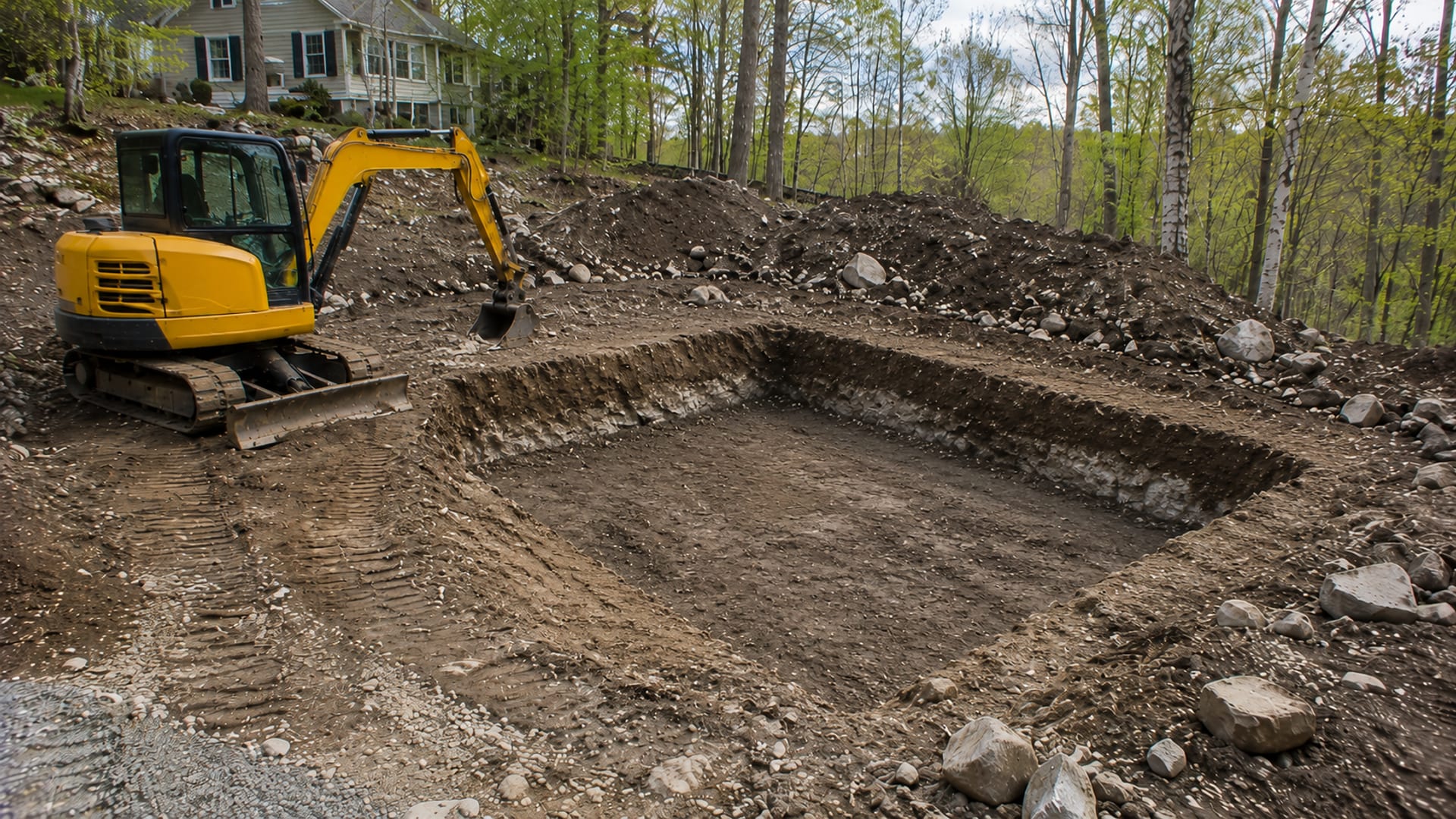
If you've noticed a crack running along your basement wall or a door that suddenly won't close right, you already know that sinking feeling when you start to wonder how bad it really is. Foundation excavation in Connecticut is not a small project, and the fear of not knowing what you're getting into, or what it's going to cost, is completely reasonable. Most homeowners searching for answers at this stage have never been through excavation before. They don't know what questions to ask, what warning signs to watch for in a contractor's estimate, or why a job that sounds straightforward can turn complicated once a machine hits the ground.
What makes Connecticut different from other parts of the country is what's hiding below the surface: glacial boulders, dense clay, buried ledge, and groundwater that doesn't always go where you'd expect. Those conditions can turn a project that looked simple on paper into something much harder by the end of the first day. Understanding the process before the equipment arrives is the best thing you can do for yourself, and that's exactly what this walkthrough is meant to help with.
Key Takeaways
Foundation excavation is more than digging a hole
The work includes access planning, topsoil removal, soil management, rock handling, drainage planning, erosion controls, and coordination with the next trade on the job.
Connecticut soil conditions can change the scope quickly
Buried boulders, rocky glacial material, wet areas, and sloped lots can affect equipment needs, timeline, and cost in ways that aren't always visible until work begins.
Permits and inspections usually apply
Foundation work is almost always tied to a permitted building project, and local building, zoning, inland wetlands, or stormwater review may be required depending on your property and town.
Utility markouts are not optional
Underground utilities need to be identified before any digging begins. Connecticut's Call Before You Dig program exists for exactly this reason.
Drainage affects how the foundation performs long-term
The excavation should support water movement away from the structure, not just create a hole for the foundation to sit in.
Your property will be disrupted during the work
Expect equipment, soil piles, limited access to parts of your yard or driveway, and an open work area until foundation, backfill, grading, and drainage are complete.
1. Why Foundation Excavation Matters
The foundation your home sits on is only as solid as what's below and around it. That's not a dramatic statement; it's just how load transfer and drainage work in practice. When the excavation phase is handled well, the builder or mason stepping in after you gets a clean, stable, predictable work area. When it isn't, problems tend to show up later, sometimes well after the concrete is poured and the crew is gone.
Foundation excavation in Connecticut involves more than removing dirt. The depth and footprint of the dig establish where the footing will bear. The drainage conditions around the excavation affect how water behaves once the foundation is backfilled and the final grade is set. The access plan determines whether equipment can reach the work area without damaging a septic system, utility line, or neighboring property. Every one of those decisions happens during site preparation, which is why the excavation phase deserves the same attention as the concrete or framing that follows it.
The Ground Below Sets the Stage for Everything Above
Residential foundation excavation in Connecticut often encounters conditions that other regions don't deal with at the same frequency. Glacial deposits left behind across much of the state mean that boulders can be sitting just below the topsoil with no surface indication at all. Dense clay soils hold water instead of draining it. Slopes common to Connecticut's hilly terrain can make access difficult and can push water toward the foundation from uphill. The Connecticut State Building Code establishes minimum requirements for how foundations must be built, but what happens below the footing is shaped by site conditions that vary from one property to the next.
Poor excavation planning can leave behind drainage problems, unstable subgrade, inadequate working room for the foundation crew, and erosion that damages the site before the project is even finished. Getting that planning right from the start is what separates a project that moves smoothly from one that stalls, costs more, and creates headaches down the road.
2. What Happens Before Digging Starts
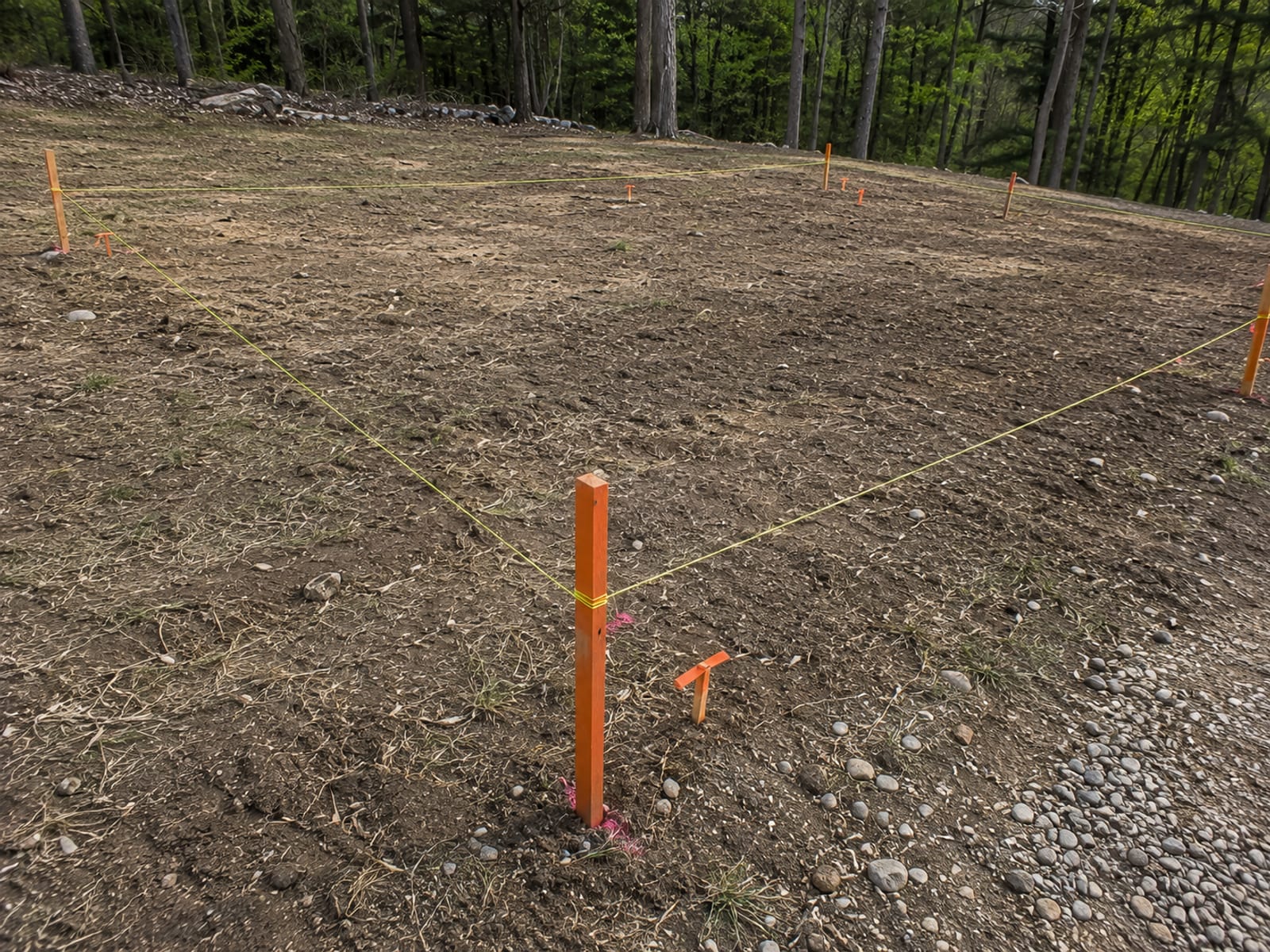
A lot of work happens before an excavator ever touches the soil. The pre-excavation phase is where a contractor reviews the site, coordinates with other parties, confirms permit status, and identifies conditions that could affect the job. Skipping or rushing this phase is one of the most common reasons residential excavation projects run into problems.
Site prep typically involves reviewing access routes, identifying slopes and drainage patterns, locating septic systems and wells, noting any trees or structures near the work area, and planning where excavated soil will be stockpiled. For additions and work near existing homes, that review also needs to account for driveways, utility connections, and neighboring property lines. A site that looks open and simple on a Saturday afternoon can look very different when a 30,000-pound excavator needs to reach a tight back corner.
Utility Markouts Come First
Before any digging begins, underground utilities need to be located and marked. Connecticut's Call Before You Dig system is the state-coordinated process for getting utilities marked prior to excavation. Electric lines, gas, water, sewer, and telecommunications are often buried in paths that aren't obvious from the surface, especially on older residential properties where original utility installations may have been rerouted or added over decades.
Hitting an unmarked utility line is dangerous, expensive, and in most cases preventable. A contractor who doesn't confirm utility markouts before starting is a contractor worth being cautious about.
Permits and Project Coordination
Foundation excavation is rarely a standalone job. It's almost always part of a permitted construction project, which means Connecticut building permits and related approvals may need to be in place before work begins. Depending on the property, that could include local building department review, zoning approval, inland wetlands permits, stormwater management requirements, or driveway permits.
The contractor handling excavation should know which approvals are needed for your scope and location. If a contractor quotes a job and never mentions permits, that's worth asking about directly. Excavating without required permits can result in stop-work orders, fines, and required remediation that costs more than the original job.
3. Key Site Conditions That Affect Foundation Excavation in Connecticut
Every property is different, and in Connecticut that difference can be significant. The state's geology is largely a product of glacial activity that deposited an uneven mix of boulders, gravel, silt, and clay across the region. What that means for excavation contractors is that you can't always predict what a site will look like below the first few feet until you're already in it.
Understanding the site conditions that commonly affect these projects helps homeowners set realistic expectations before the work starts. It also makes it easier to evaluate whether a contractor's estimate is actually accounting for what the job might require, or whether it's a low number that doesn't reflect what the ground might throw at the crew.
Rock, Boulders, and Soil Conditions
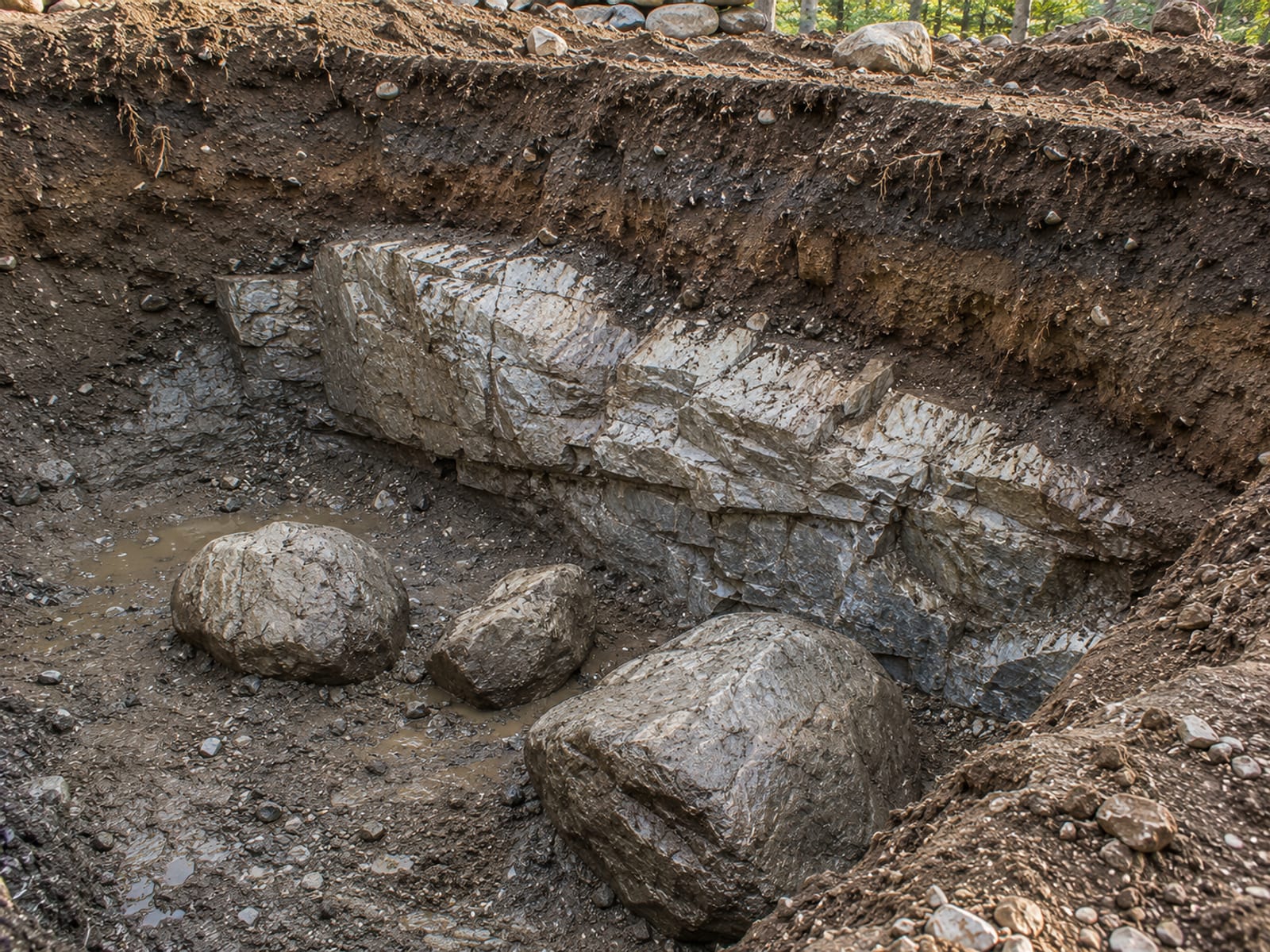
Rocky soil and buried boulders are among the most frequent variables that affect both cost and timeline in Connecticut residential excavation. A boulder sitting below the frost line, right where the footing needs to go, requires a different approach than a rock that can be pushed aside. Depending on size and location, boulders may need to be broken, extracted, and hauled off-site, which takes time, specific equipment, and often increases disposal costs.
Ledge conditions, where excavation hits continuous or near-continuous bedrock rather than individual boulders, can require drilling and blasting in some cases or significant over-excavation in others. Neither scenario is unusual in Connecticut; it just needs to be part of the planning conversation before anyone signs an estimate.
Unstable fill material is another variable worth flagging. Older properties, especially those that had site work done decades ago, may have fill below the surface that isn't suitable as bearing material for a foundation. Identifying that during the pre-excavation review is much better than finding it after the hole is open.
Drainage, Groundwater, and Wet Soils
Wet soils and poor drainage can make excavation significantly harder. Saturated ground is more difficult to dig through, harder to compact after backfill, and more likely to create erosion problems on the exposed slope of an open excavation. Groundwater that wasn't visible at the surface can show up at depth, requiring dewatering before work can continue.
The Connecticut Stormwater Quality Manual addresses how construction sites need to manage water movement during and after ground disturbance. From a practical standpoint on a residential job, the drainage question needs to be addressed at the excavation phase, not after the foundation is poured. Backfill placed against a foundation in a wet site without proper drainage planning is a setup for water intrusion problems that homeowners end up dealing with for years.
4. Permits, Safety, and Erosion Control
Disturbing soil changes how water moves across a property. An open excavation with exposed slopes, stockpiled material, and compacted access routes can send sediment into storm drains, adjacent properties, wetland buffers, or the road. Connecticut has specific requirements around how that sediment is managed during construction, and they apply to residential projects as well as larger commercial sites.
CT DEEP's soil erosion and sediment control guidelines outline the standards that apply to earth disturbance in the state. Depending on the scale of the project and whether it falls under a stormwater general permit, there may be formal requirements for an erosion and sediment control plan, stabilized construction access, silt fence installation, or temporary cover for disturbed areas. The good news is that for most residential foundation jobs, these controls are practical and straightforward, but they do need to be in place from day one.
Managing Disturbed Soil During Excavation
A stabilized construction entrance reduces the amount of mud tracked onto the road from equipment tires. Silt fence or compost filter sock along the downhill edge of the work area intercepts sediment before it leaves the property. Topsoil stripped from the work area should be stockpiled where it won't run into drainage channels or erode before it can be reused in final grading.
Temporary seeding, erosion control blankets, or mulch cover over disturbed areas that won't be worked for more than a few days can prevent surface erosion between phases. UConn NEMO's soil erosion guidance provides additional detail on how these practices are applied. The contractor should be able to describe specifically what erosion controls are included in the scope and how the site will be managed between excavation and final grading.
5. The Foundation Excavation Process, Step by Step
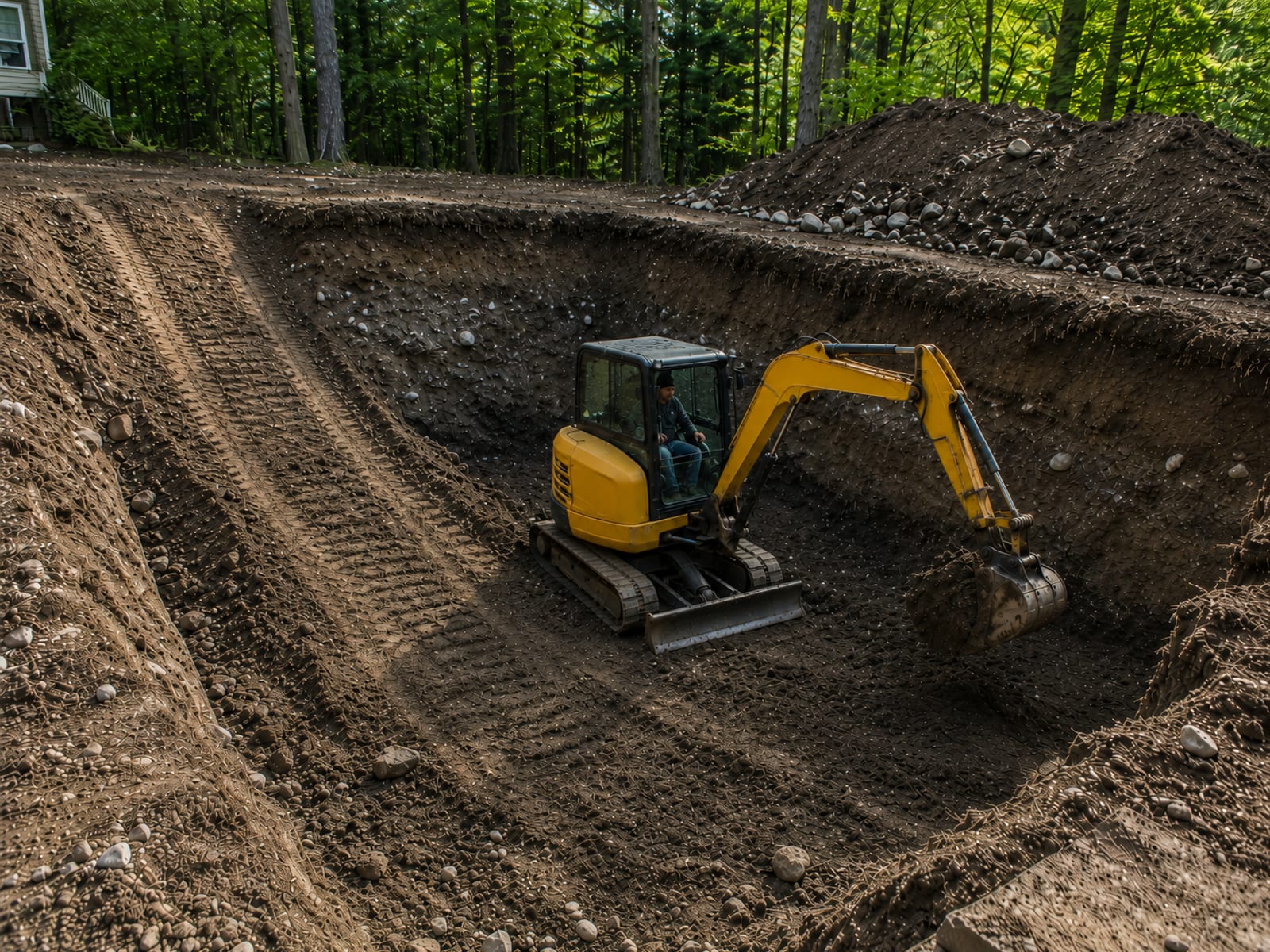
A well-run residential excavation for a foundation follows a sequence that most homeowners have never seen from start to finish. Knowing what that sequence looks like makes it easier to follow along as the work happens, ask informed questions, and recognize when something is being skipped that shouldn't be. The general flow is consistent across most jobs, though site conditions, access, and project size will affect how each phase plays out. Here's what the process typically looks like from the first day of mobilization through final site handoff.
Step 1: Site Preparation and Excavation
The first day of work usually starts with establishing equipment access. That might mean reinforcing a soft area of lawn to support heavy equipment, cutting a temporary access path, or protecting an existing driveway. Once access is confirmed, topsoil is stripped from the work area and stockpiled separately so it can be reused in final grading, which keeps organic material out of the subgrade where it would compress unevenly under foundation loads.
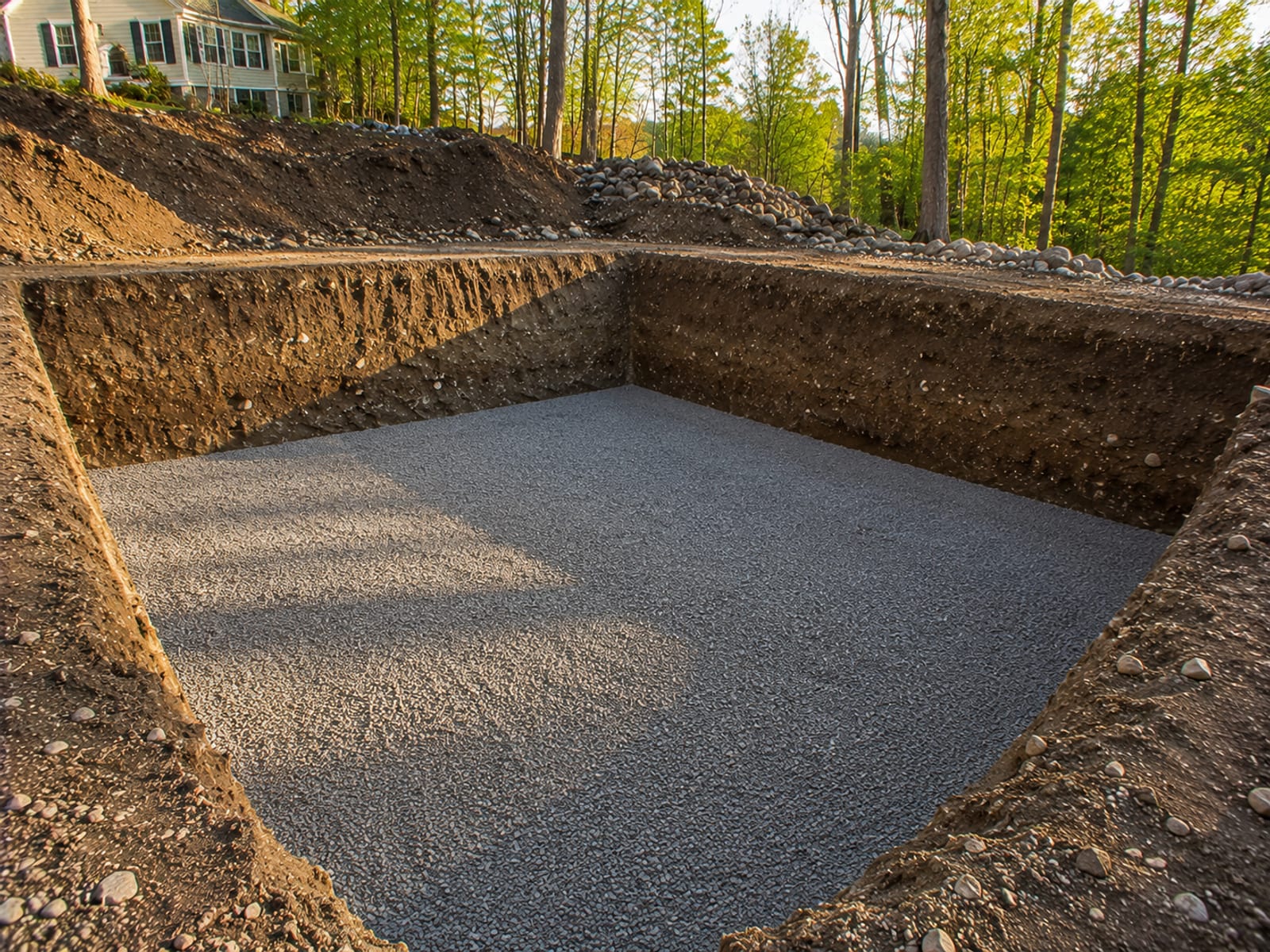
Rough excavation comes next: the machine removes material down to the planned depth and footprint, plus working room around the perimeter so the foundation crew can operate safely. In Connecticut, that working room often needs to account for frost depth as well. The Connecticut building code sets requirements for minimum footing depths to get below the frost line and prevent frost heave, which typically means digging to at least 42 inches below grade. Rock and boulder removal happens as encountered, and depending on what shows up and where, this can add time and equipment changes that weren't in the original schedule.
Step 2: Preparing the Site for the Next Phase
After the rough excavation is complete, the site needs to be left in a condition that sets the foundation crew up for success. That means a reasonably flat, stable subgrade at the right elevation, clear of loose material or standing water. Erosion controls should be in place before the excavator leaves the site if there's going to be any delay before the foundation work begins.
Drainage planning at this stage matters more than most homeowners realize. The excavation contractor and the foundation or concrete contractor should be coordinating about where footing drains will go, how water will be directed away from the foundation, and what the final grading plan looks like. These aren't separate conversations; they affect each other, and a gap in communication between trades at this phase is where drainage problems later tend to originate.
6. Long-Term Strategy: Treating Excavation as Part of the Whole Property
One of the most common mistakes homeowners make is thinking of foundation excavation as a contained event. The hole gets dug, the foundation goes in, the hole gets filled, and the project is done. The problem is that backfill placed against a new foundation, combined with the final grade around the structure, shapes how water moves on the property for years to come.
A better way to think about it: the excavation phase is the first chapter in the long-term drainage story of that structure. Decisions made during site preparation, about where soil is placed, how slopes are graded, where drainage stone is installed, and where runoff is directed, will determine whether that foundation stays dry or starts showing water intrusion problems a few years down the road. Connecticut's stormwater performance standards address this at the regulatory level, but from a homeowner perspective, the practical question is simple: where is the water going after this is done?
Before signing any estimate, ask the contractor how water will move around the completed foundation. Ask whether the backfill plan includes drainage stone or a footing drain. Ask how the final grade will direct runoff away from the structure. A contractor who can answer those questions clearly is thinking about the project the right way. One who deflects them or says that's someone else's problem may leave you with a drainage issue to solve after they're gone.
Common Pitfalls in Foundation Excavation Projects
Homeowners who have been through a difficult excavation project tend to identify the same set of problems after the fact, and most of them were avoidable with better planning or better questions upfront.
- Skipping utility markouts: Not contacting Connecticut's Call Before You Dig service before excavation is one of the most dangerous and costly shortcuts a contractor can take.
- Underestimating rock: A low estimate that doesn't account for boulder removal or ledge conditions can balloon once the machine hits something unexpected. Ask the contractor directly how rock is handled in the estimate.
- Ignoring drainage from the start: Treating drainage as something to figure out after the foundation is in place almost always leads to problems. It needs to be part of the plan from day one.
- No plan for the spoils: Excavated material has to go somewhere. Without a plan for soil stockpiling or off-site hauling, it ends up where it's convenient rather than where it should be, which can block drainage or cause erosion.
- Vague estimates: An estimate that doesn't break out access, rock handling, erosion controls, and coordination with the foundation contractor is one that can't be evaluated fairly.
- Overlooking permits: Assuming the contractor has handled permitting without confirming it is a common source of project delays and complications.
- Treating excavation as separate from grading: Site grading for foundation drainage is part of the same job. A contractor who hands off a rough hole with no discussion of final grading is leaving a gap someone has to fill.
Frequently Asked Questions About Foundation Excavation in Connecticut
What is foundation excavation?
Foundation excavation is the process of digging and preparing the ground for a foundation, footing, basement, addition, garage, or other structure. It includes site access preparation, topsoil removal, rough excavation to the planned depth and footprint, rock and boulder removal as needed, soil management, drainage planning, erosion controls, and coordination with the foundation contractor or builder.
How long does foundation excavation take in Connecticut?
There's no single answer because the timeline depends on the foundation size, soil conditions, rock, weather, permit status, utility markout scheduling, equipment access, and how the excavation contractor coordinates with the next trade. A smaller addition on a clean, accessible lot may move quickly. A larger foundation on a rocky, sloped, or wet site, or a project waiting on permits, can take considerably longer. Ask any contractor you're considering how they handle timeline changes when conditions differ from what was expected.
Do I need utility markouts before foundation excavation?
Yes. In Connecticut, contacting the Call Before You Dig service before any excavation is the standard requirement and the right practice on every project. Underground electric lines, gas, water, sewer, telecommunications, and drainage connections can all be damaged if excavation begins without knowing where they are. This is especially true for addition foundation excavation near existing homes, where utility routing may not be obvious from the surface.
Can rocky soil affect the cost and timeline of foundation excavation?
Significantly, yes. Buried boulders, rocky glacial soil, and ledge conditions can require different equipment, additional time, and hauling costs that may not be reflected in an initial estimate. This is one reason why Connecticut foundation excavation estimates should specifically address how rock is handled and what the pricing structure looks like if rock is encountered at depth.
Does foundation excavation require permits in Connecticut?
Foundation excavation is almost always part of a larger building project, and that project is typically subject to local building permits and code requirements. Depending on the property, scope, and location, additional reviews from zoning, inland wetlands, or stormwater authorities may also apply. Permit requirements vary by town, so confirming what applies to your specific project with your local building department is the right first step.
Why does drainage planning matter during foundation excavation?
The excavation phase sets the conditions for how water will move around the foundation for the life of the structure. Poor drainage planning during excavation and backfill can result in water pooling against the foundation, increased frost pressure, erosion around the structure, and basement water intrusion. Connecticut's stormwater management standards address these issues at the regulatory level, but the practical goal is straightforward: water should move away from the structure, not toward it.
What should I ask a contractor before hiring them for residential foundation excavation?
Ask how rock and boulders are handled if encountered, and whether that changes the price. Ask what permits are needed and who is responsible for obtaining them. Ask how utility markouts will be coordinated. Ask where excavated material will be stockpiled or hauled. Ask what erosion controls will be in place. Ask how the site will be left for the foundation contractor. And ask what the drainage plan looks like after backfill and final grading. A contractor who answers those questions clearly and specifically is one who has actually thought through the job.
Foundation excavation in Connecticut involves more moving parts than most homeowners expect, especially when you factor in the state's soil conditions, permit requirements, drainage needs, and the coordination required between trades. The homeowners who come through these projects in good shape are the ones who asked the right questions before the work started, not after a problem showed up. Rocky ground, wet sites, and tight access aren't surprises to an experienced crew; they're variables that get planned for when the estimate is written.
Taking the time to understand the process also helps you evaluate what you're being quoted. A detailed estimate that addresses rock, drainage, erosion controls, and site coordination tells you the contractor has thought the job through. A vague one that glosses over site conditions is worth pressing on before you sign anything.
When you're ready to talk to someone who works Connecticut soil every day, we're here. Prestige Property Maintenance is based in Oxford, CT and handles foundation excavation, land clearing, grading, rock removal, drainage solutions, trenching, erosion and sediment control, site preparation, and earth moving for residential and site-work projects across the region. If you've got a foundation project coming up and you want a straight conversation about what it will actually take, reach out to our team and we'll walk through the site conditions with you before anything else.
Related Articles
Basement Excavation in CT: What to Expect When Contractors Arrive
Basement excavation in CT involves more than digging a hole. Learn what responsible contractors do before, during, and after the equipment arrives on your property.
What to Expect During Residential Excavation for New Home Construction
Residential excavation for new home construction involves more than digging. Here's the full sequence Connecticut homeowners need to know before work begins.
Excavation in Oxford CT: A Homeowner's Guide to Getting It Right
Oxford CT excavation covers more than digging. Here's what homeowners need to know about rock, permits, utilities, and getting the site done right.