

Excavation in Oxford CT: A Homeowner's Guide to Getting It Right
Kash CochranePublished
- residential excavation
- oxford ct
- site preparation
- drainage
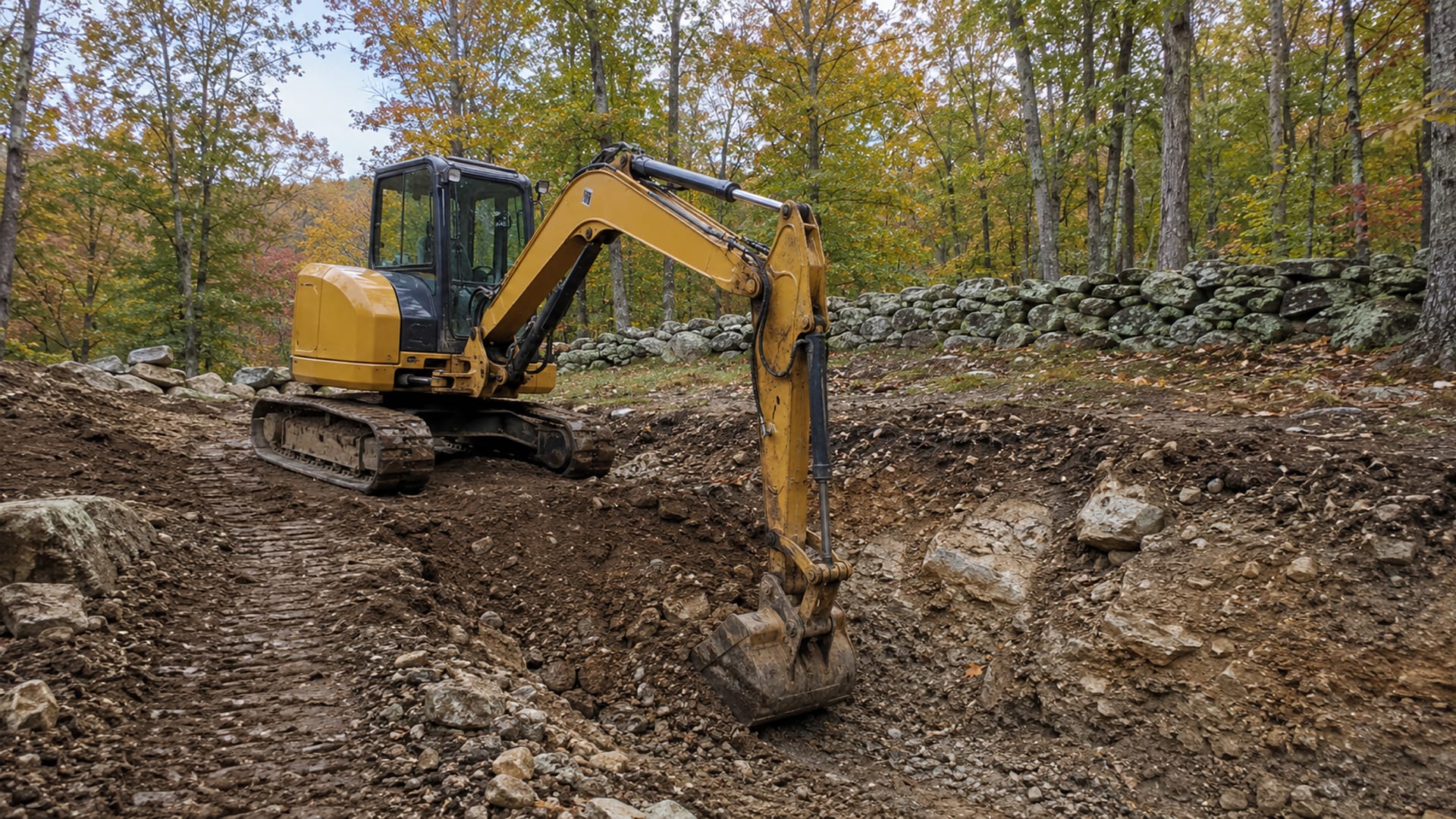
If you're searching for excavation in Oxford CT, you probably already know something on your property isn't working the way it should. Maybe water pools near the foundation after every rain. Maybe your driveway has ruts, soft spots, and loose stone washing downhill every time it storms. Maybe you've got a wooded corner you've been meaning to clear for years, or a rough-graded lot that a previous contractor left unfinished. Whatever the problem, you typed "excavation near me" because you know the fix involves heavy equipment, but you're not quite sure what that means for your property, your budget, or how long it will take.
That uncertainty is worth addressing before you pick up the phone. Excavation in Oxford CT is rarely just digging a hole. The rocky glacial soil, wooded slopes, clay pockets, and winding lots that define western Connecticut properties create conditions that can turn a straightforward-sounding job into something more layered. Understanding those conditions in advance puts you in a much better position to hire the right crew, ask the right questions, and avoid the surprises that leave homeowners frustrated with an unfinished or poorly drained site.
Key Takeaways
Excavation changes how a property works
Digging, grading, clearing, and drainage work can affect access, water flow, soil stability, and the next phase of construction.
Oxford CT properties can bring hidden challenges
Rock, ledge, clay-heavy soil, slopes, wet areas, stumps, and old driveway bases can affect timing and cost.
Utility marking is not optional for power digging
Connecticut Call Before You Dig helps locate underground public utilities before excavation begins.
Permits may apply
Driveway work, road openings, building-related excavation, wetlands, zoning, and major grading may need town or state review.
Drainage should be planned before the machine moves
Proper slope, outlet planning, swales, drains, catch basins, and erosion control can prevent new water problems after the work is done.
The best contractor fit depends on the full job
A homeowner may need clearing, excavation, rock removal, stump grinding, grading, drainage, and finished site prep from one coordinated crew.
1. Why Excavation Matters for Oxford CT Homeowners
Excavation shapes the base of almost every outdoor project on a residential property. A driveway, building pad, drainage system, retaining wall, or utility trench depends on what happens below the finished surface. Poor planning can leave a property with bad drainage, soft subgrade, unsafe access, exposed soil, or a site that isn't ready for the next contractor or trade. When the base work is done right, everything built or graded on top of it has a chance to perform the way it should.
Residential excavation in Oxford CT rarely stands alone as a single task. It connects directly to grading, drainage, rock removal, driveway work, land clearing, forestry mulching, stump grinding, trenching, retaining walls, erosion control, and paving prep. The local terrain adds its own layer of complexity: Oxford and the surrounding Naugatuck Valley area sits on glacial soil that can include buried boulders, ledge rock, clay-heavy pockets, and wet ground that shifts seasonally. Those site conditions affect equipment selection, access, hauling, drainage design, and final grade in ways that should come up during your estimate conversation, not after the machine has already moved.
2. Signs You May Need Excavation
Most homeowners don't call an excavating contractor because they woke up one morning and decided they wanted site work done. They call because something on the property has been getting worse for a while, and surface fixes haven't solved it. The warning signs usually fall into a few recognizable categories involving water, access, unstable ground, or a project that needs solid preparation before it can move forward.
Water pooling or moving toward the house
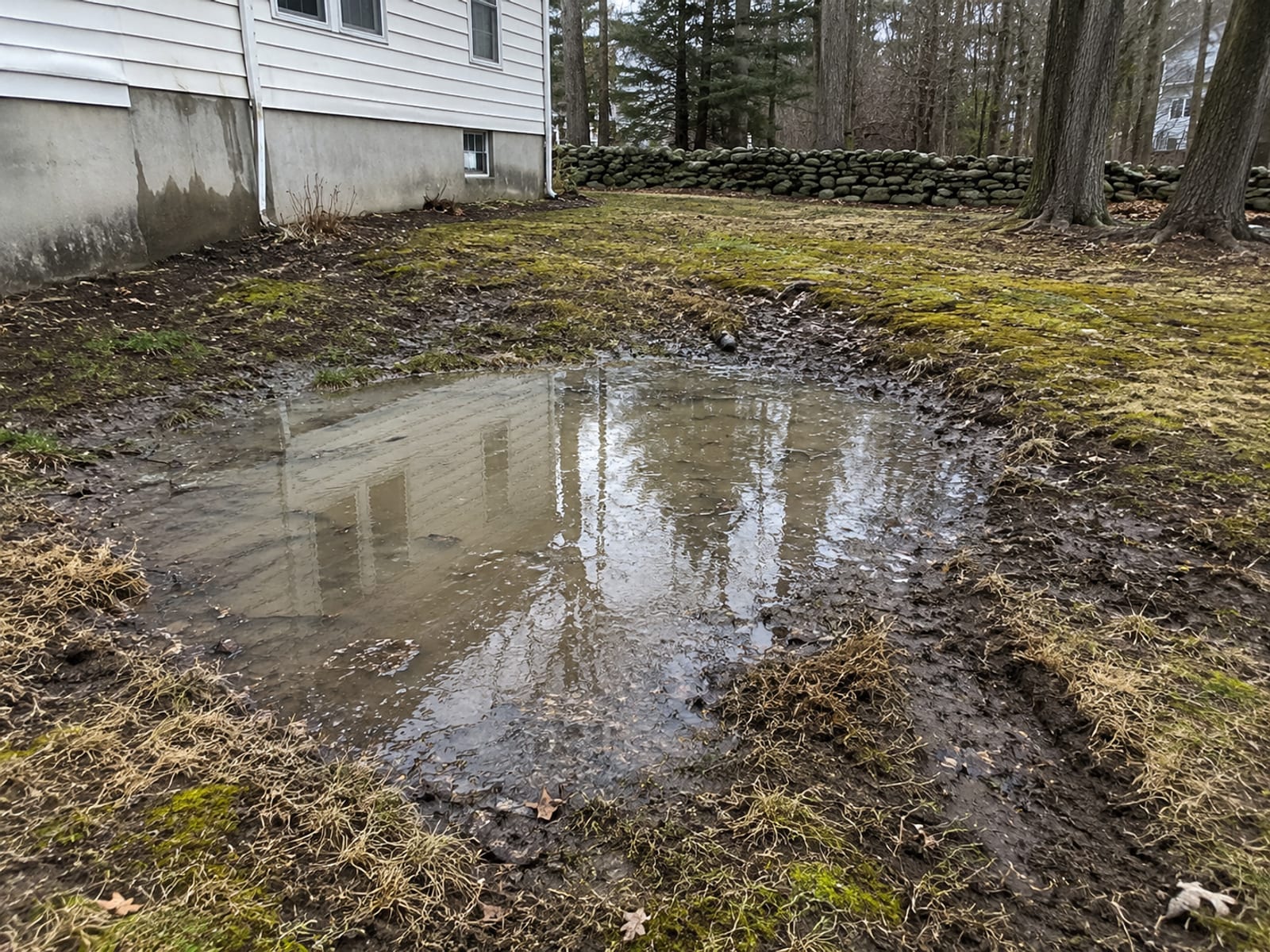
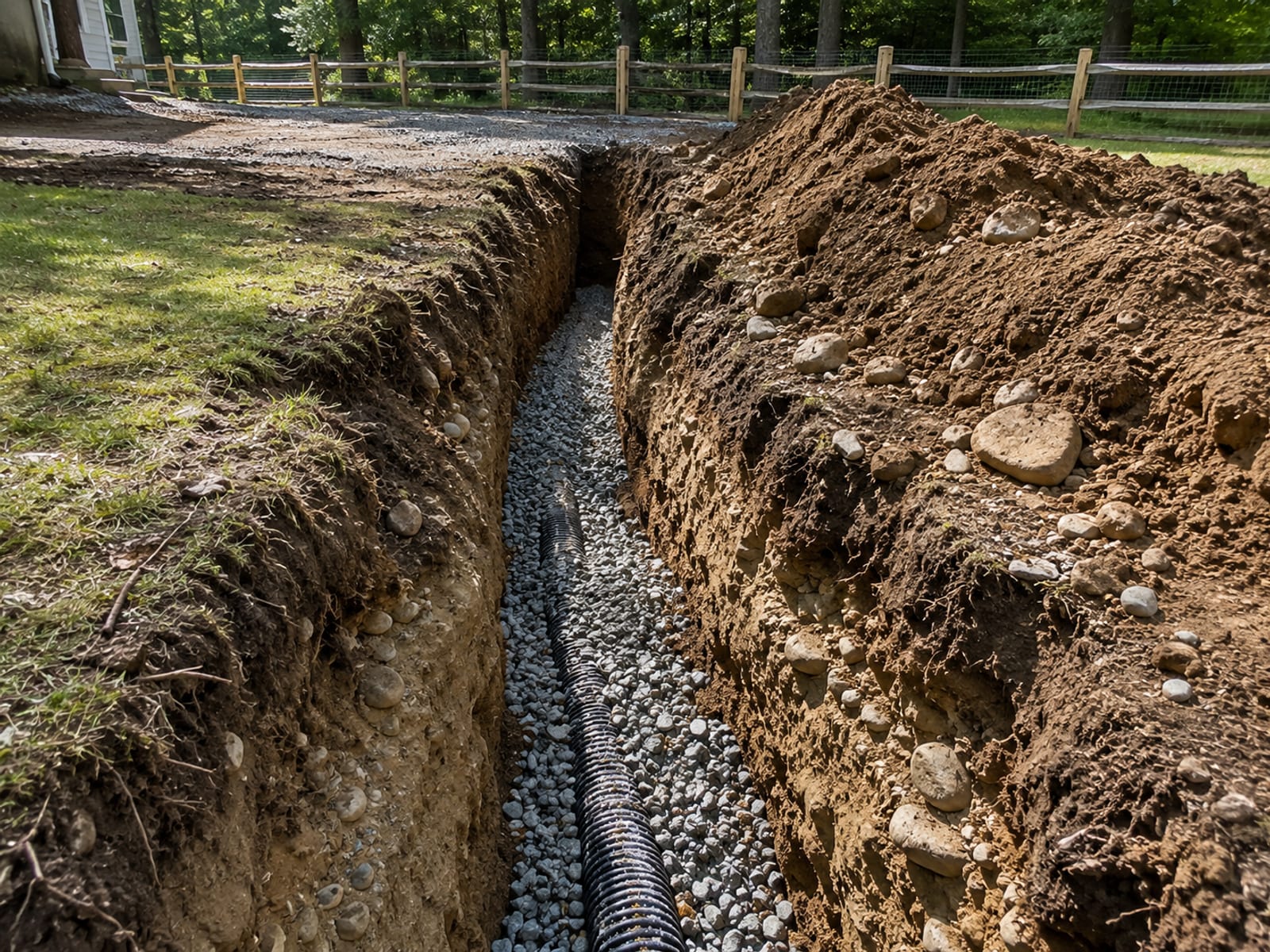
Standing water near the foundation, soggy patches in the yard, washed-out mulch beds, basement moisture after heavy rain, or runoff that consistently moves toward the house rather than away from it are all signs that grade or drainage isn't working. Fixing these problems often requires more than a surface adjustment. Excavation may be needed to reshape grade, install drainage pipe, add a catch basin, create a swale, or correct the way water flows across the property. The Connecticut Stormwater Quality Manual offers practical context on how stormwater management standards apply to residential sites, and the principles behind managing runoff apply directly to home drainage work.
Driveway washout or poor driveway pitch
Ruts, potholes, loose stone movement, soft edges, and water cutting across the driveway surface are signs that the base or drainage pitch is failing. Driveway excavation in Oxford CT may include removing poor base material, reshaping the profile, adding compacted aggregate base, and planning runoff control so water drains off the edge rather than sitting or washing through. Oxford Public Works notes that permits for road openings and new or replacement driveways are available online, which is worth knowing if your driveway connects to a town road.
Overgrown land, stumps, and buried obstructions
Raw or overgrown land often needs clearing before grading or construction can begin. Stumps, surface roots, boulders, and dense brush can block equipment, prevent stable grading, and make the property difficult to use or build on. Forestry mulching, stump grinding, rock removal, and excavation may all be part of the same site-prep plan, especially on wooded Oxford lots where the clearing and digging phases are closely linked.
3. Key Excavation Planning Factors
A well-prepared excavation plan looks at the whole site, not only the spot being dug. Before a machine moves, the contractor should have a clear picture of access, utilities, slope, water flow, soil conditions, material handling, permit needs, and the finished result the homeowner is working toward. Skipping any of these factors tends to create problems mid-project that slow things down or add unexpected cost.
Utility marking and private lines
Connecticut Call Before You Dig is a free service available to anyone excavating in Connecticut. Connecticut PURA confirms that excavators are required to contact CBYD before digging so that affected utilities can be notified and marked. This requirement applies before power-operated equipment breaks ground, without exception. What CBYD covers is limited to public underground utilities. Private lines, including irrigation systems, outdoor lighting, propane lines, private drainage pipe, or utility lines installed by a past owner, may not show up in a CBYD response. Homeowners should communicate everything they know about private underground features before excavation starts, and a careful contractor will ask.
Equipment access and property protection
The contractor needs to know where machines can enter, where they can turn around, where materials will be staged, and which areas of the property need to stay protected. This matters around existing lawns, septic fields, drilled wells, mature trees, retaining walls, patios, and neighboring property lines. On Oxford properties with winding driveways or tight lots, access planning can directly affect which machines get used and how much hand work is needed in tight areas. OSHA's trenching and excavation guidance covers safe work zone setup, which is part of how a professional crew manages a site.
Soil, rock, and hauling
Excavation cost and timing can shift noticeably when crews encounter ledge rock, buried boulders, poor fill from previous work, saturated soil, or heavy clay. These conditions are common enough in Oxford and across the Naugatuck Valley that they should be part of every estimate conversation rather than a surprise later. Before work begins, ask whether excavated soil, rock, stumps, brush, or old driveway base material will stay on site or be hauled away, because hauling adds cost and affects how the job is priced. Connecticut DEEP's soil erosion and sediment control guidelines are a useful reference for understanding how disturbed soil and earthmoving connect to erosion management on residential projects.
4. Permits, Safety, and Practical Rules
Permit requirements for excavation in Oxford CT depend on the scope and location of the work. Driveway work, road openings, building-related excavation, inland wetlands proximity, major grading changes, and work near a public road may each trigger a review process with a different town department or state agency. The safest approach is to check with the relevant Oxford department before work begins rather than assuming a project is too small to require review. Two areas come up most often for residential projects: driveway and road opening permits through Public Works, and planning, zoning, or wetlands review through the Building Department.
Oxford driveway and road opening considerations
Oxford Public Works handles permits for road openings and new or replacement driveways, and those permit documents are available online. The town's driveway requirements note that driveways longer than 500 feet must be reviewed by the Fire Chief or a designee before a permit can be issued, to confirm that emergency service apparatus can access the property. If your project involves a connection to a town road or a significant change to driveway access, confirm the permit review process early in planning.
Planning, zoning, and inland wetlands
Oxford's Building Department notes that Planning and Zoning Permits and Inland/Wetlands Permits moved online through OpenGov starting in May 2025. Excavation near wetlands, watercourses, property setbacks, or areas with significant grading changes may need review before any ground is disturbed. Connecticut's inland wetlands rules exist partly because disturbing soil near watercourses can affect downstream water quality in ways that go well beyond the project itself.
OSHA trench and excavation safety
OSHA identifies cave-ins as the greatest risk to workers during trenching and excavation. Protective measures, including sloping, benching, shoring, or trench shielding, are required depending on soil conditions and trench depth. Safe entry and exit points, keeping spoil piles away from trench edges, and site inspections before workers enter are also part of responsible trench work. For homeowners, this is less about memorizing regulations and more about recognizing whether a contractor treats these requirements as standard practice or as optional.
5. The Excavation Process Homeowners Can Expect
The exact sequence for any excavation project depends on what the site needs, but most residential jobs in Oxford CT follow a recognizable pattern from initial review through final grade. Understanding the general flow helps homeowners know what to expect, what questions to ask at each stage, and where a project is most likely to change in scope or timing. The five steps below cover what a well-run site work project looks like from start to finish.
Step 1: Site review and scope
The contractor reviews the work area, access path, slope, drainage patterns, soil conditions, nearby structures, trees, septic or well locations, and the finished result the homeowner wants. This is where the estimate scope gets defined, and it's also where local experience matters most. A contractor who knows Oxford's terrain will ask about ledge, buried boulders, and wet-season drainage before quoting, not after the machine has already moved. Connecticut's home improvement guidance for consumers recommends getting a written scope of work before any project begins.
Step 2: Utility marking and permit review
Before digging, the project should account for CBYD requirements, private utility concerns, and any applicable permits. If the work involves a driveway, road opening, building-related excavation, wetlands proximity, or a major grading change, the proper town department or state agency should be contacted before equipment arrives. Handling this step before mobilization prevents delays and protects both the homeowner and the crew from working in areas where underground conflicts haven't been cleared.
Step 3: Site preparation
Crews may clear brush, remove small trees, grind stumps, mark work limits, install erosion controls, prepare equipment access, and stage materials before the main excavation begins. On heavily wooded Oxford lots, forestry mulching can reduce vegetation on site quickly without generating large debris piles that need to be hauled away. This prep work sets up the excavation phase by giving equipment room to operate and giving the crew a clear picture of what's actually on the ground. DEEP's erosion and sediment control guidelines recommend having erosion controls in place before significant soil disturbance begins.
Step 4: Excavation, grading, and drainage work
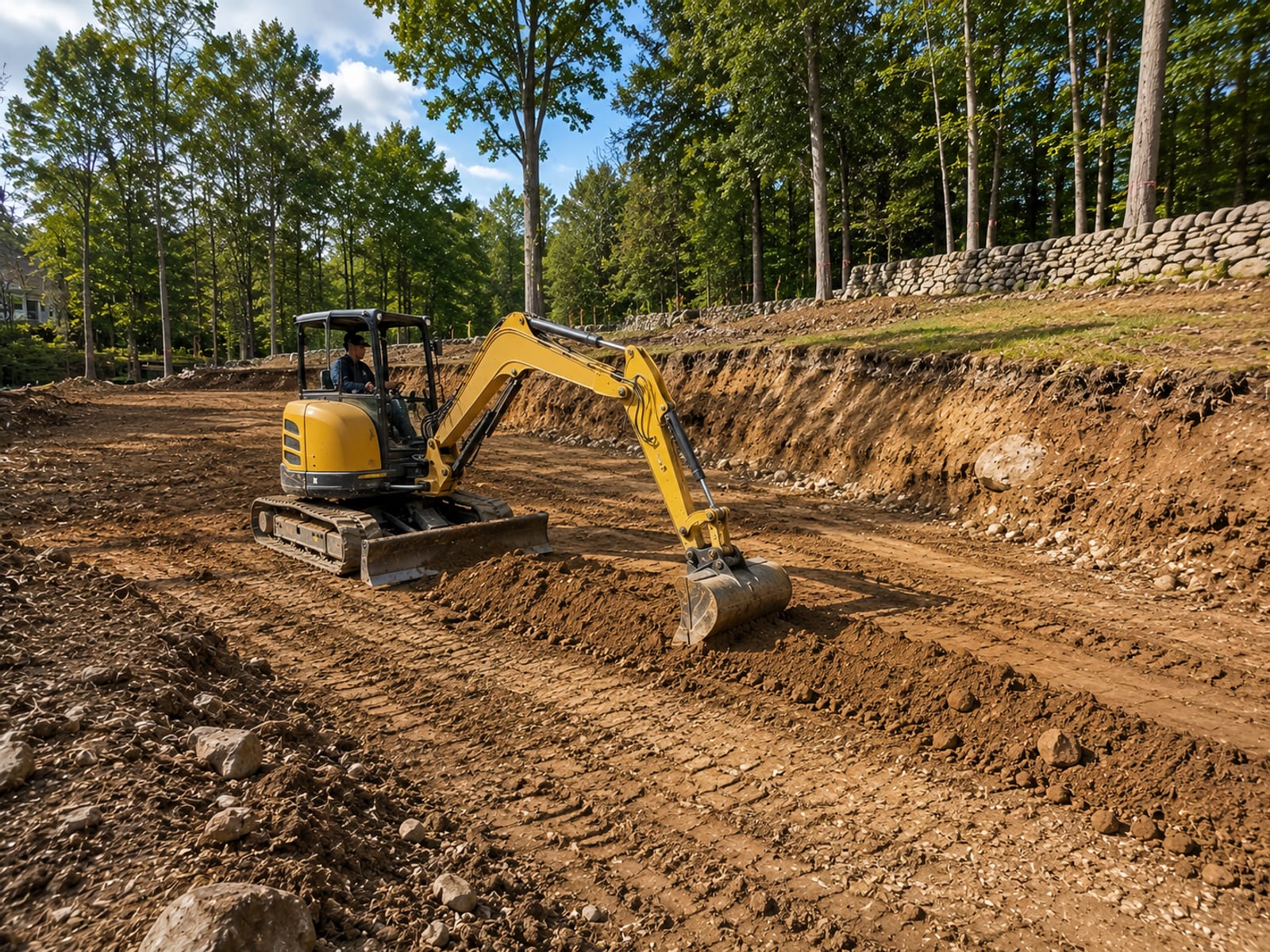
The contractor removes or moves soil, cuts grade, trenches for utilities or drainage, handles rock where needed, installs drainage features if included in the scope, and shapes the site to the planned elevation and pitch. This is the phase where soil type, ledge, buried boulders, and access constraints have the most direct effect on pace and cost. Drainage planning happens during this phase too, because the grade established during excavation determines where stormwater will flow once the project is complete.
Step 5: Final grade and cleanup
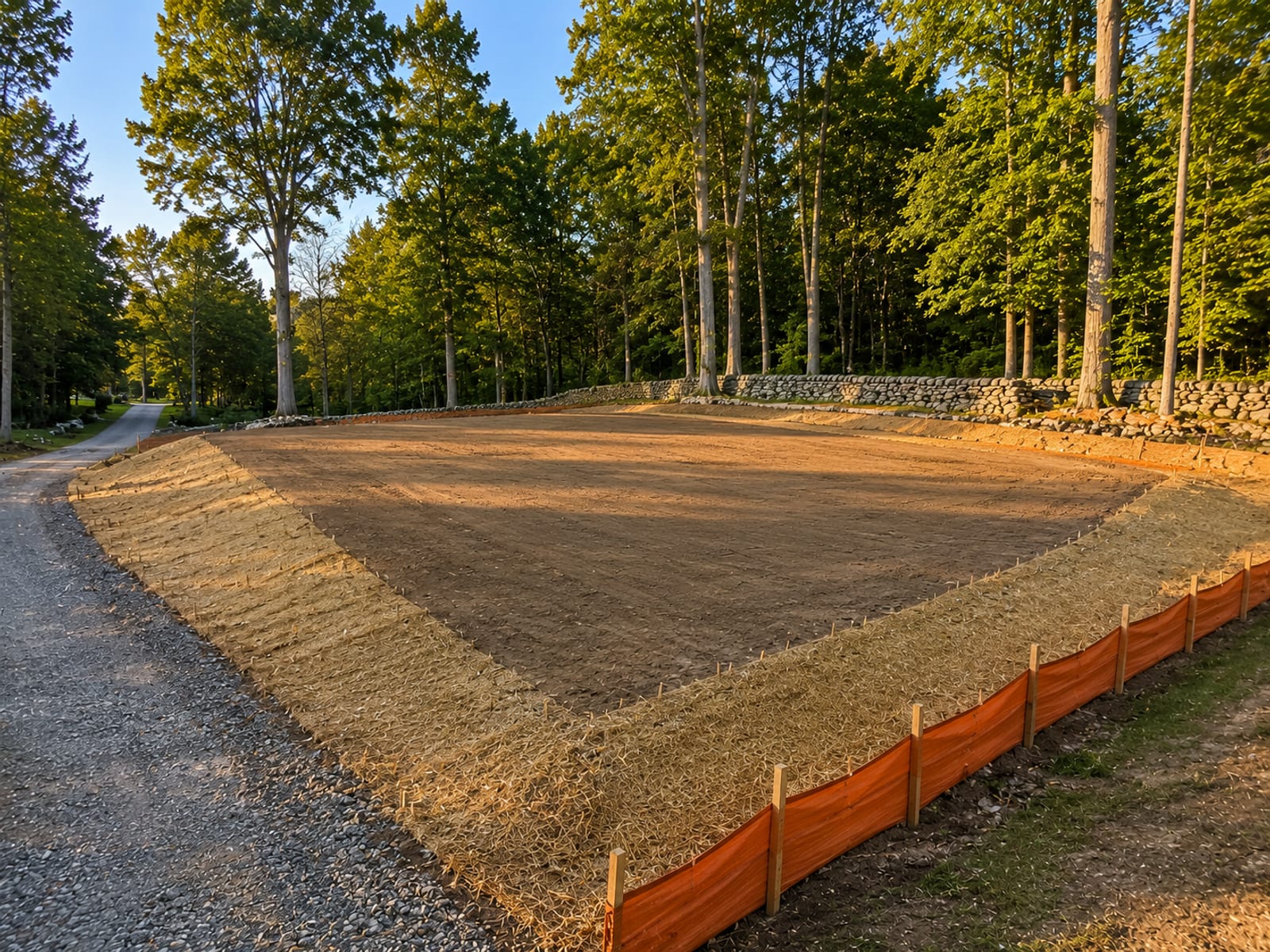
The job should finish with a clear final grade, safe transitions between slopes and flat areas, managed spoils, stable access, and a site that is ready for the next phase. Depending on scope, that next phase may be paving, seeding, retaining wall construction, drainage tie-in, building work, or landscape construction. A well-finished excavation site gives the next contractor a stable, properly drained base to work from rather than a rough cut that still needs repair.
6. Long-Term Site Protection After Excavation
Completing an excavation project doesn't mean the work on your property is finished. The first few months after grading and drainage work are when problems can appear, especially if exposed soil wasn't fully stabilized or if drainage outlets weren't sized correctly for heavy rain events. Watching how the site performs and catching small issues early is much less expensive than addressing a washout or drainage failure after it has had time to grow.
Manage runoff after the work is complete
After excavation, pay attention to how water moves during the first few heavy rains. Look for erosion channels forming along slopes, ponding in areas that should drain, sediment movement across driveways or into planted areas, blocked drain inlets, and soft spots in graded areas. These signs may indicate that a drainage outlet needs adjustment, that a swale needs reshaping, or that a drain inlet needs clearing. Catching these issues in the first season is much easier than addressing them after they've caused damage. UConn NEMO's stormwater management resources offer practical guidance on managing runoff and erosion on disturbed sites.
Stabilize exposed soil
Bare soil exposed by excavation or grading can wash away quickly during rain, especially on Oxford's sloped lots. Stabilization methods depend on the project and the time of year, but may include seeding, straw cover, erosion blankets, stone, mulch, or final landscaping. Getting ground cover established over exposed areas should be treated as part of the project scope, not an afterthought. Connecticut DEEP's guidance on soil erosion and sediment control applies to residential land disturbance and makes clear that stabilizing disturbed soil is not optional from a water quality standpoint.
Common Pitfalls
The biggest mistakes in residential excavation usually come from treating the job as simple digging instead of site planning. These are the ten most common ones homeowners run into:
- Starting without utility marking: Skipping CBYD where required puts underground utilities at risk and can stop a job entirely.
- Ignoring private utilities: Septic components, wells, irrigation lines, propane lines, and drainage pipe installed by past owners may not be marked by CBYD.
- Failing to check permit requirements: Driveway, road opening, zoning, building, or wetlands permits may apply before work begins.
- Moving soil without a drainage plan: Changing grade without planning where stormwater will go often creates new water problems on a different part of the property.
- Choosing a low estimate that omits key work: Hauling, drainage material, rock handling, final grading, and erosion control restoration all add to cost and should be in the scope.
- Using the wrong equipment for the site: Tight access, steep slopes, wet ground, and rocky soil each call for specific equipment choices.
- Leaving exposed soil unstabilized: Bare ground before heavy rain leads to erosion channels, sediment loss, and site damage.
- Installing drainage without a workable outlet: French drains, catch basins, and drainage pipe all need somewhere to discharge water safely.
- Skipping drainage planning for retaining walls and driveways: Both require drainage behind or alongside them to perform correctly.
- Starting without a written scope: A verbal estimate doesn't protect either party when conditions change.
Frequently Asked Questions About Excavation in Oxford CT
What does an excavation contractor do?
An excavating contractor prepares land by digging, grading, trenching, moving soil, removing rock, shaping driveways, and supporting drainage work. Site preparation work can also include land clearing, forestry mulching, stump grinding, retaining wall prep, and getting a site ready for construction, paving, or landscape work. The scope depends on what the property needs and what comes next.
Do I need a permit for excavation in Oxford CT?
It depends on the project. Driveway work, road openings, building-related excavation, zoning review, inland wetlands proximity, major grading changes, and work near a public road may each require review or permits. Oxford's Building Department handles planning, zoning, and inland wetlands permits through OpenGov. Oxford Public Works handles road opening and driveway permits. Checking with the proper department before work begins is always the safer approach.
Should utilities be marked before excavation?
Yes. Connecticut Call Before You Dig locates underground public utilities before excavation, and Connecticut PURA confirms that excavators are required to contact CBYD before digging. Private underground lines, including irrigation, propane, private drainage, and older installations, may need separate attention because they may not appear in a CBYD response.
Why does excavation cost vary so much in Oxford CT?
Cost can shift based on access, slope, soil type, buried boulders, ledge rock, depth, drainage materials, hauling requirements, permit fees, erosion control measures, weather delays, and the level of finish needed after digging. Oxford's glacial soil conditions make it common for a project to encounter unexpected rock or wet ground that affects both timing and price. A written scope that addresses these variables before work begins helps avoid surprises.
Can excavation fix drainage problems?
Excavation can be a key part of a drainage fix when the property needs regrading, swale installation, French drain installation, catch basin installation, drainage pipe work, culvert drainage, or erosion control. The right solution depends on where water starts moving, how it travels across the property, and where it can safely discharge. The Connecticut Stormwater Quality Manual provides detailed context on stormwater management standards that apply to these types of residential drainage improvements.
What should I ask before hiring an excavation contractor?
Ask about similar projects they've completed in Oxford or the Naugatuck Valley, proof of insurance and registration, how equipment will access your site, who handles CBYD utility marking, who is responsible for permit applications, how soil and rock will be handled, where water will drain after grading, what the hauling plan is, what the finished grade should look like, and what conditions could change the price. Connecticut's home improvement guidance for consumers is a helpful starting point for understanding what to look for before signing any home improvement contract.
Final Thoughts
Excavation in Oxford CT works best when it's planned as site preparation rather than just digging. Understanding your property's drainage, access, soil conditions, and permit needs before work begins puts you in a much better position to get a complete estimate, avoid mid-project surprises, and end up with a site that performs the way it should. The steps are logical once you see them in sequence: site review, utility marking, permit check, site prep, excavation, drainage, and final grade. Each one connects to the next, and gaps between them are where projects go sideways.
When those steps are handled by one crew that knows the full sequence, the results tend to be more consistent. There are fewer handoffs between contractors, fewer gaps where drainage or grading assumptions don't match, and fewer surprises when the machine encounters ledge or wet clay that the crew wasn't prepared for.
We're Prestige Property Maintenance, based in Oxford, CT and serving Seymour CT and 19 towns across the Naugatuck Valley and western Connecticut. Our crew handles the full sequence: land clearing, excavation, grading, drainage, rock removal, retaining walls, and finished site preparation, without handing work off to separate subs. We run forestry mulching equipment alongside our excavating fleet, which means clearing and digging happen together without waiting on a separate tree service or hauling debris off site between phases. If you've got a drainage problem, a failing driveway, a wooded lot to clear, or a site that needs to be ready for the next phase of construction, contact us to talk through what your property needs and what a realistic scope looks like.
Related Articles
Oxford CT Land Clearing Without the Budget Surprises
Prestige Property Maintenance offers land clearing in Oxford CT for homes, driveways, and build sites. One crew, clear pricing, and work that holds up long term.
Site Preparation and Excavation CT: A Complete Guide
Learn what site preparation and excavation CT projects really involve, from rocky ledge to permits, so you hire the right crew and avoid costly surprises.
Do You Need a Permit for Excavation in CT?
Worried about skipping a permit before you dig? Here's what Connecticut homeowners need to know about excavation permits before starting any project.