Oxford CT Excavation Contractor: What to Look For
Kash CochranePublished Updated
- hiring a contractor
- excavation cost
- residential excavation
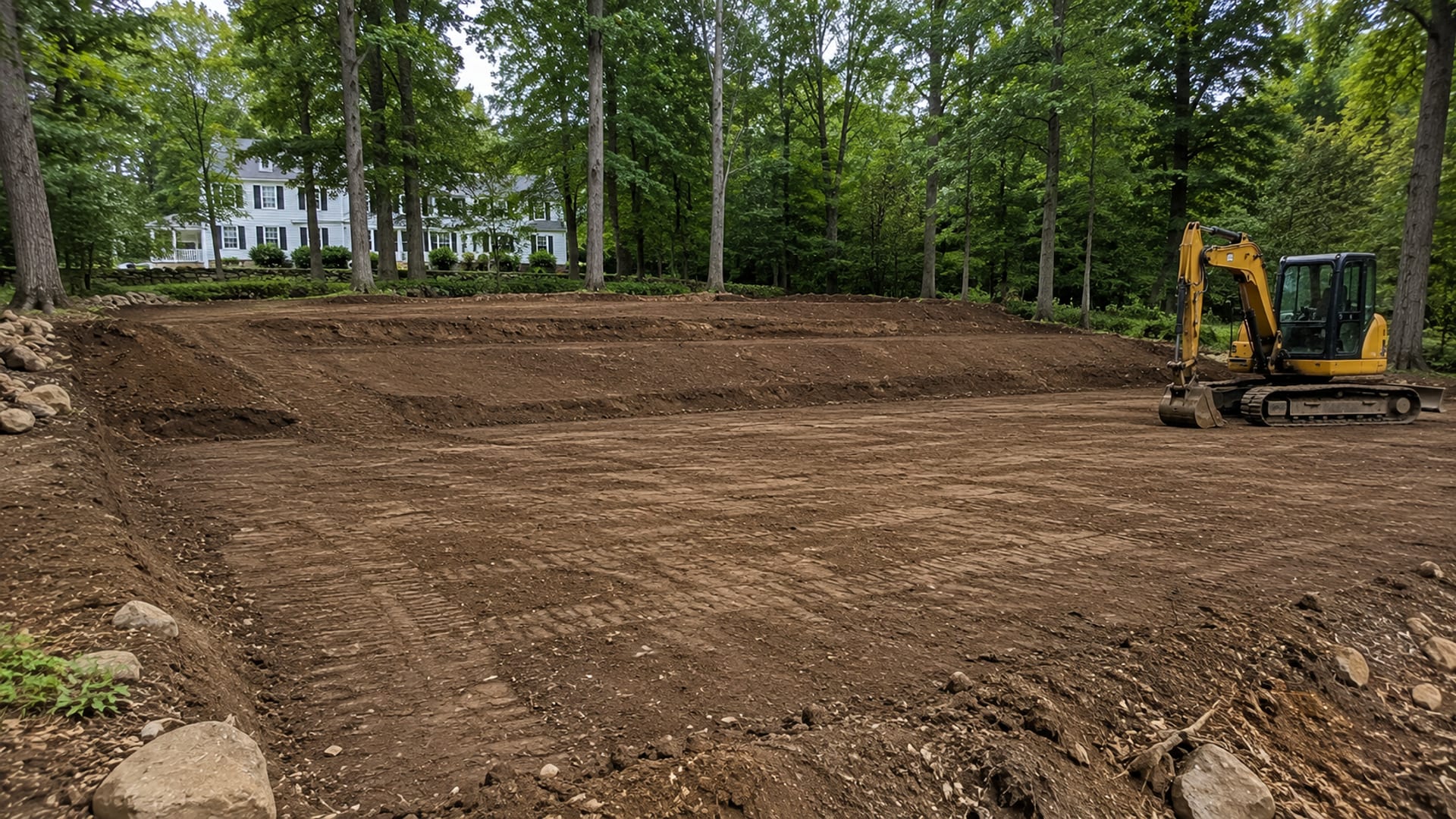
You've already searched "how to choose an excavation contractor near me in Oxford CT," and what you got back was a wall of names, phone numbers, and five-star ratings that all look exactly the same. There's no real way to tell from a Google listing who actually knows what they're doing on an Oxford property versus who just owns a machine and takes jobs. That gap is the real problem, and it's a reasonable thing to worry about. Hiring the wrong excavation contractor can leave you with worse drainage than you started with, a driveway base that fails in two years, or a slope that erodes every time it rains. The money isn't the only issue; it's the time, the disruption, and the work of fixing what someone else left behind. Oxford properties come with their own set of challenges that a contractor from outside the area may not plan for or even recognize. What follows is a practical look at what separates a contractor who can handle Oxford site conditions from one who just shows up and starts digging.
Key Takeaways
Choose more than a machine operator
A qualified contractor should understand grading, drainage, access, utilities, and site restoration, not just how to move dirt.
Local experience matters
Oxford properties often include ledge rock, buried boulders, clay soil, wooded lots, long driveways, septic systems, wells, and tricky drainage patterns.
Get a clear written estimate
The scope should spell out excavation, hauling, materials, grading, drainage, cleanup, and possible unknowns before any work starts.
Utility markouts are important
Connecticut's Call Before You Dig system may be required before excavation begins, and private utilities need attention too.
Permits may apply
Building, zoning, wetlands, driveway, stormwater, or erosion review can all apply depending on the scope of work.
Compare scope, not just price
The lowest quote may leave out drainage, compaction, hauling, or restoration work that the higher quote includes.
Why Choosing the Right Excavation Contractor Matters
Most people think of excavation as just moving dirt from one place to another, but that description misses most of what actually happens on a well-run job. Site work shapes how water moves across your property, how stable your driveway base will be ten years from now, how a retaining wall performs under pressure, and whether a foundation stays dry through a Connecticut winter. Poor excavation creates problems that are expensive to fix and hard to trace back to the original cause, which means the contractor who created them may be long gone by the time you feel the consequences.
A Good Contractor Evaluates the Full Site
Before any digging starts, a qualified contractor should walk the property and think through access, slope, soil type, rock, utilities, septic systems, wells, drainage patterns, nearby structures, and the intended finished use of the area. That kind of site review is how problems get caught before they become change orders or callbacks.
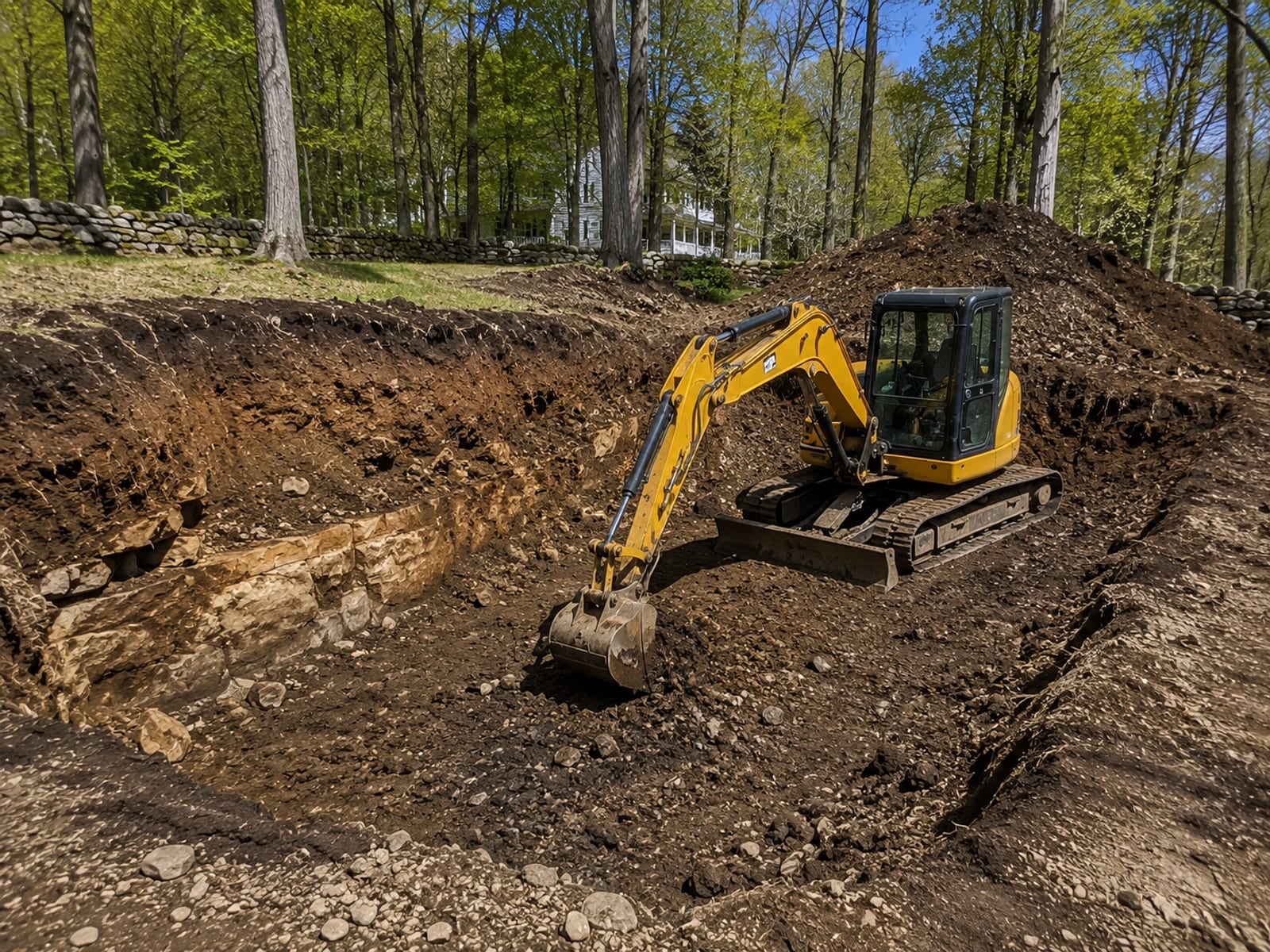
On an Oxford property specifically, this matters more than it might on a flat suburban lot in another part of the state. Oxford sits in western Connecticut's Naugatuck Valley, where properties regularly include glacial till with buried boulders, ledge rock that doesn't show itself until a bucket hits it, clay soil that holds water instead of draining it, and wooded slopes with drainage paths that aren't obvious until they're disturbed. A contractor who hasn't worked this terrain before may not price for those conditions, plan around them, or know how to handle them when they appear. That's when a project that looked straightforward on paper starts costing more and taking longer than expected.
Connecticut DEEP's soil erosion and sediment control guidelines make clear that disturbed soil can affect drainage and water quality well beyond the property line, which is another reason site planning needs to come before machine work.
Signs You Need a Professional Excavation Contractor
Homeowners often reach the point of calling a contractor because something on the property has stopped working: the driveway keeps washing out, the yard holds water after every rain, or a project like a patio or addition needs site preparation before construction can begin. Some of these problems look like surface issues but actually come from what's happening underneath. A professional excavation contractor should be able to tell the difference between a problem that can be patched and one that needs the ground opened up and corrected. The two situations below cover the most common reasons Oxford homeowners end up searching for site-work help.
Repeated Drainage or Driveway Problems
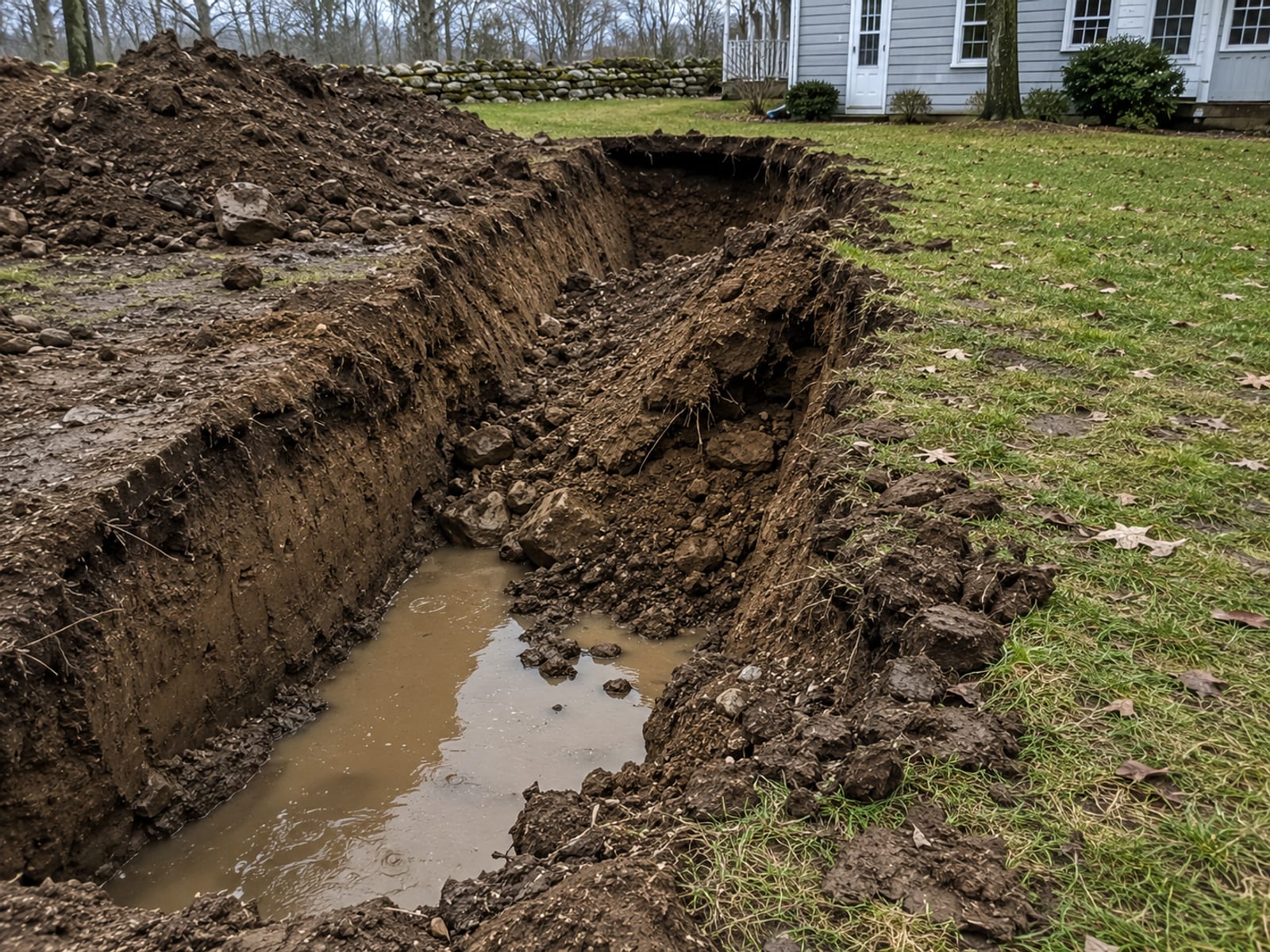
Standing water in the yard, soft spots on the driveway, washouts on slopes, and potholes that come back after every winter are common signs that something below the surface isn't working right. These aren't just cosmetic issues. Water that stays near a foundation can move into a basement, and a driveway with a weak or poorly graded base will keep breaking down no matter how much gravel gets added on top.
Excavation work that addresses drainage needs to account for how the whole site sheds water, not just the specific problem spot. That means looking at grading, soil type, slope, existing drainage paths, and where the water ends up after it leaves the site.
Construction or Site-Prep Needs
New foundations, patios, retaining walls, utility trenches, and driveway excavation all require site preparation before the next phase of work can begin. Land clearing on wooded Oxford acreage with stumps and buried debris is often the first step before any grading or excavation can happen. Stump grinding and forestry mulching can be part of that clearing phase, and having one contractor handle the full sequence keeps the work coordinated rather than creating gaps between different crews.
What to Look For Before Hiring
Not every contractor who owns an excavator is the right choice for a residential site-work project in Oxford. The difference between a good hire and a bad one often comes down to how clearly a contractor communicates scope, how honestly they talk about unknowns, and whether they've actually worked on properties like yours. The two areas below are worth examining carefully before you sign anything.
Licensed, Insured, and Locally Experienced
Connecticut requires home improvement contractors to be registered with the Department of Consumer Protection. That registration is a baseline, not a guarantee of quality, but it does mean the contractor has met the state's minimum requirements for operating legally on residential projects. Insurance coverage protects you if something goes wrong on your property during the work.
Beyond the paperwork, local experience with Oxford and the broader Naugatuck Valley region is what tells you whether a contractor can actually plan for the site conditions they're likely to find. A contractor who has worked through rocky soil, managed access on long wooded driveways, dealt with septic system locations, and handled clay drainage issues in this area is going to price the work more accurately and run into fewer surprises than one who hasn't.
Clear Written Scope
A written estimate for excavation work in Oxford should tell you more than a dollar amount and a general description. It should explain what area is being excavated and to what depth, how materials are handled (what stays, what gets hauled, and where it goes), what fill or stone is being brought in, how drainage is addressed, whether compaction is included, what erosion controls are in place during and after the work, and what the cleanup and site restoration plan looks like.
It should also tell you what isn't included, because that's where two estimates that look similar actually become very different. One contractor may price for basic digging. Another may include drainage materials, final grading, and hauling in the same line item. If you're comparing quotes without a clear scope from each contractor, you may be comparing very different amounts of work without realizing it.
Permits, Utilities, and Local Requirements
Excavation work doesn't happen in a regulatory vacuum, and skipping the permit and utility steps can create problems that cost far more to fix than the permit would have. Oxford has its own local departments that oversee building, zoning, and wetlands review, and state agencies like CT DEEP have requirements that apply depending on the size and type of the project. A contractor familiar with working in Oxford should be able to tell you upfront whether your project is likely to need any permits or reviews and should be willing to help coordinate that process. The three areas below cover the requirements that come up most often on residential excavation projects.
Utility Markouts
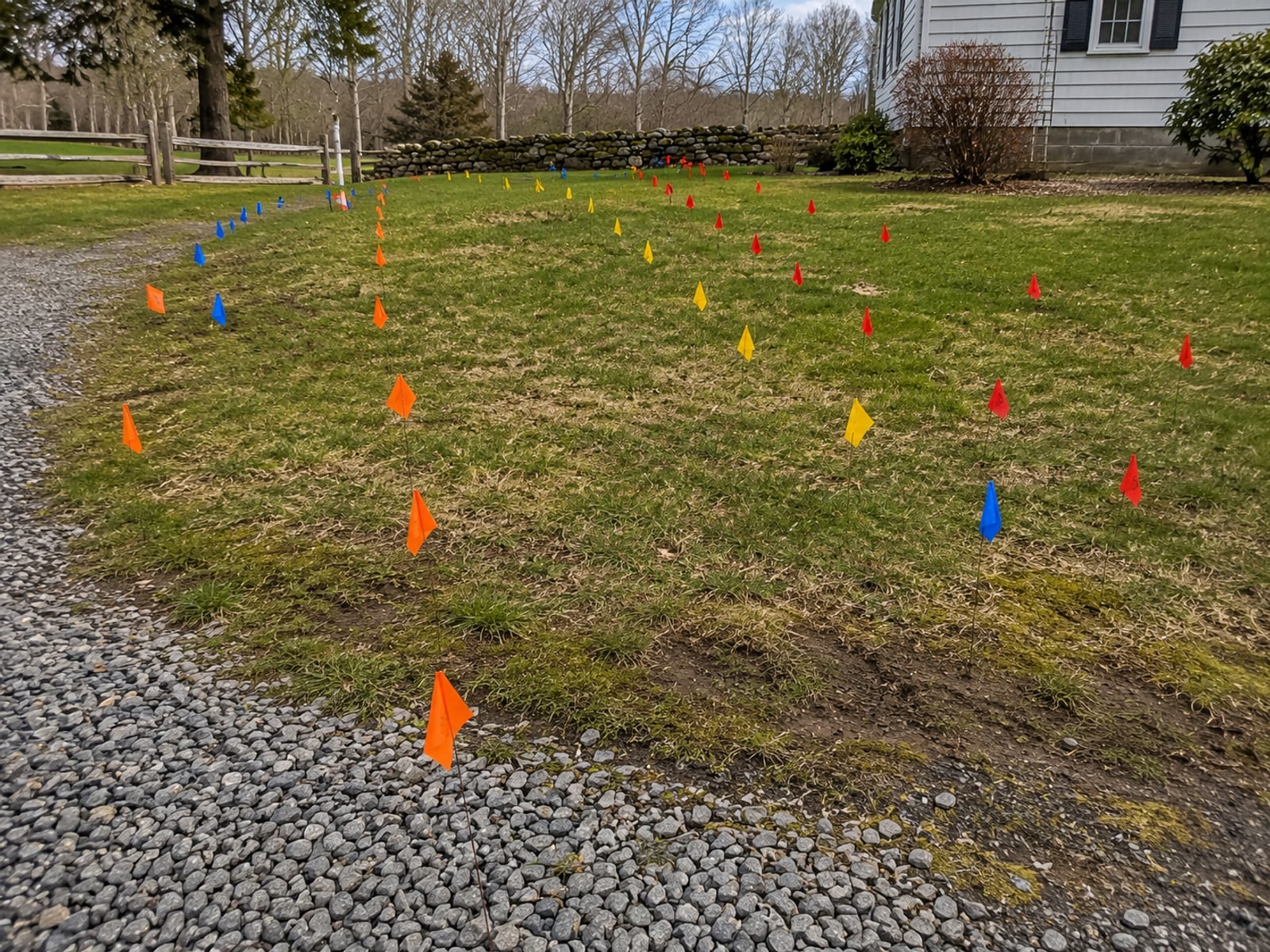
Connecticut's Call Before You Dig (CBYD) program is the system that identifies underground public utilities before excavation starts. PURA oversees CBYD and participating utilities are required to mark their lines when a request is submitted. This step is not optional when digging is involved; it's a safety requirement.
What CBYD does not cover is private utilities: septic systems, wells, drainage lines, irrigation, buried electrical for outbuildings, and similar features. Those need to be located separately, either through property records, the homeowner's own knowledge, or on-site investigation. On older Oxford properties especially, the locations of these private systems are not always where old plats say they are. A contractor who asks about private utilities before starting is one who is thinking about the job the right way.
Erosion and Sediment Control
Any project that disturbs soil creates the potential for sediment to move off the site and into storm drains, wetlands, or neighboring properties. Connecticut DEEP's erosion and sediment control guidelines set out the expectations for how disturbed soil should be managed, and the UConn NEMO program's soil erosion guidance offers additional practical direction for contractors and property owners.
For Oxford properties near wetlands or watercourses, the Oxford Inland Wetlands Agency may have review authority over projects that disturb soil within regulated setback distances. A contractor who doesn't raise this possibility on a wooded or wet property may be leaving a compliance issue for you to deal with after the fact.
Local Permits and Town Review
The Oxford Planning and Zoning Commission and the Oxford Building Department are the right starting points for understanding local permit requirements for your specific project. Depending on scope, projects involving significant drainage changes, driveway work near roads, retaining walls, or new construction may require review before work begins. Checking early costs nothing and prevents the kind of stop-work situations that set a project back by weeks.
The Contractor Selection Process
Choosing the right excavation company for an Oxford CT project doesn't have to feel like guesswork. A practical process lets you compare contractors based on what actually matters for your site, rather than who calls back fastest or quotes lowest. The two steps below cover most of what you need to make a confident decision.
Step 1: Define the Project
Before reaching out to contractors, get clear on what the work actually involves. Is this drainage correction, driveway excavation, foundation excavation, trenching for a utility line, rock removal, land clearing, retaining wall excavation, patio prep, yard leveling, or full site preparation for new construction? The answer shapes what kind of contractor you need, what equipment they should bring, and what the estimate should cover.
Oxford properties sometimes require multiple phases handled in sequence: clearing before grading, grading before drainage installation, drainage before final base preparation. If you're planning more than one phase of work, knowing that upfront lets you ask contractors how they handle the full sequence rather than just the first dig.
Step 2: Compare Scope and Communication
When estimates come in, read them side by side with attention to what each one actually covers. Ask each contractor whether hauling is included, whether drainage is addressed, whether compaction is part of the base work, and whether final grading and seeding or stabilization are in the price. A contractor who can answer those questions clearly and explain their reasoning is a better bet than one who gives you a number and moves on.
Communication style is a real signal here. If a contractor can't explain how they plan to handle drainage, access on a long driveway, or what happens if they hit ledge rock, that gap will likely show up on the job. The right contractor for your Oxford property is not necessarily the cheapest or the busiest. It's the one who has thought about your specific site before quoting it.

Long-Term Strategy for Better Site Work
The goal of any excavation project is to improve the property, not just move dirt around. That means the contractor needs to be thinking about the finished result: how water will move after the work is done, how the access will hold up over time, whether the graded area will stay stable, and how the work connects to whatever comes next on the property.
Connecticut's stormwater management performance standards offer a useful framework for understanding how water management is expected to work on disturbed sites. A contractor who thinks about post-construction drainage from the start, rather than treating it as someone else's concern, will leave your property in better shape than they found it.
For Oxford homeowners planning larger projects or future improvements, a site-work contractor who handles land clearing, grading, drainage, and rock removal in one coordinated sequence is worth more than separate specialists who each optimize for their own piece. Transitions between phases are where problems get missed, and having one contractor accountable for the full scope reduces that risk considerably.
Common Pitfalls
Homeowners who end up with bad excavation outcomes usually ran into one or more of the same avoidable problems. Choosing by price alone is the most common one: the lowest estimate often excludes hauling, drainage, or rock handling, and those items end up on a change order. Accepting a vague estimate is a close second, because you can't hold a contractor to work that isn't written down.
Other common mistakes include skipping utility markouts for private systems, ignoring wetlands setbacks, overlooking the need for permits or local review, failing to discuss cleanup expectations before work starts, and assuming that drainage will work itself out after the digging is done. On Oxford properties specifically, underestimating rock is a frequent source of cost overruns. A contractor who hasn't worked Connecticut's glacial soil may not budget for ledge or buried boulders at all.
Final Thoughts
Choosing an excavation contractor in Oxford CT comes down to one question: does this contractor know what your property is actually like, and have they planned for it? The right contractor should be able to look at a sloped, wooded Oxford lot and tell you before digging what the soil will likely do, where the water needs to go, and what conditions could change the scope. That level of planning is what separates a successful project from one that creates new problems. Compare contractors by the scope they offer and the way they communicate, not just the number at the bottom of the estimate.
The long-term payoff for getting this right is real. Site work done well supports everything that comes after it: a driveway that holds up for years, a drainage system that keeps water away from your foundation, a retaining wall that doesn't shift, and a yard that doesn't wash out every spring.
At Prestige Property Maintenance, we work across Oxford CT, Seymour CT, and 19 towns throughout the Naugatuck Valley and western Connecticut. Our crew handles the full sequence from land clearing and forestry mulching through excavation, grading, drainage, retaining walls, and rock removal, so there's one accountable contractor from the first clearing pass to final grade. We've worked Connecticut's rocky glacial soil long enough to plan for ledge, buried boulders, and clay before a machine ever moves, which means fewer surprises and more accurate pricing from the start. If you have a site-work project in Oxford and want to talk through what it actually involves, reach out to us at Prestige Property Maintenance to get the conversation started.
Frequently Asked Questions About how to choose an excavation contractor near me in Oxford CT
How do I choose an excavation contractor in Oxford CT?
Look for a contractor with local experience on Oxford and Naugatuck Valley properties, a clear written estimate that covers the full scope of work, knowledge of drainage and grading, awareness of permit and utility markout requirements, and a straightforward plan for cleanup and site restoration. Compare contractors by what their estimates actually include, not just the total price.
What questions should I ask before hiring an excavation contractor?
Ask whether the estimate includes hauling, stone, drainage, compaction, grading, erosion controls, and cleanup. Ask who handles the Call Before You Dig request and whether any permits or town reviews may apply. Ask how they'll manage drainage on your specific site, what happens if rock or unexpectedly wet soil is found, and how the site will be stabilized after the work is done.
Do excavation projects need permits in Oxford CT?
It depends on the scope and location of the work. Projects involving building construction, significant drainage changes, driveway work near roads, retaining walls, stormwater impacts, or soil disturbance near wetlands may require review by the Oxford Building Department, the Planning and Zoning Commission, or the Inland Wetlands Agency. Checking with the relevant Oxford town departments before work starts is always the right move.
Do utilities need to be marked before excavation?
When digging or trenching is involved, submitting a request through Connecticut's CBYD program is required to identify underground public utilities. Private utilities like septic systems, wells, drainage lines, and irrigation are not covered by CBYD and need to be located separately. A contractor who asks about private utility locations before starting is one who takes the safety side of this seriously.
Why should I compare excavation quotes by scope?
Two excavation estimates can show similar prices but cover very different amounts of work. One may include hauling, drainage materials, stone, compaction, final grading, and cleanup. Another may cover only basic digging. Without knowing what each estimate includes, you can't make a fair comparison, and the lower-priced option may end up costing more once the missing work is added back in.
Why does drainage matter when choosing an excavation contractor?
Poor drainage planning during excavation can cause standing water in yards, driveway washouts, moisture near foundations, erosion on slopes, and extra pressure on retaining walls. Connecticut's stormwater management standards address how disturbed sites are expected to manage water flow, and a contractor who understands those standards will plan for drainage as part of the original scope rather than leaving it as an afterthought.
Related Articles
Woodbury CT Excavation Company: What to Look For
Hire the right excavation company Woodbury CT homeowners trust by learning what to evaluate, what estimates should include, and how local conditions affect your project.
Residential Excavation Cost in CT: What to Expect in Oxford
Oxford CT excavation projects vary widely in cost. Here's what local soil conditions, rock, drainage, and site access really mean for your residential excavation budget.
What to Expect From an Excavation Company in Middlebury CT
Looking for a reliable excavation company in Middlebury, CT? Here's what the process should look like , from the first site visit to final grade.