

Do You Need a Permit for Excavation in CT?
Kash CochranePublished Updated
- permits and regulations
- residential excavation
- site preparation
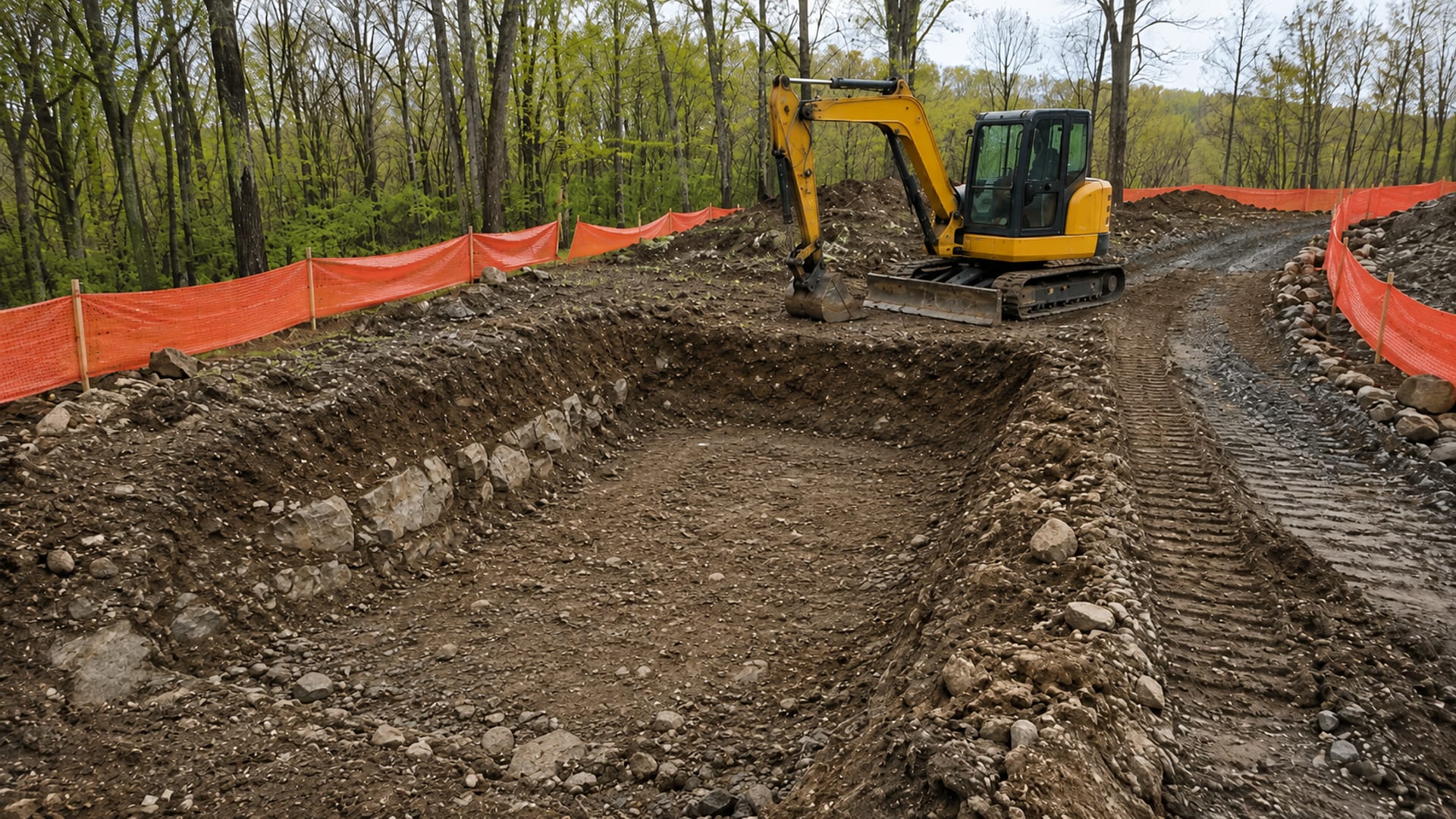
Getting a quote for excavation work and hearing the word "permit" mid-conversation can send anyone into a spiral. You're not sure if you actually need one, who to call, how long it takes, or whether skipping it will come back to bite you. The short answer to the excavation permit CT question is: it depends, and that's not a cop-out. Connecticut doesn't have a single statewide rule that covers every shovel of dirt. Permit requirements vary based on the type of work, how much soil gets disturbed, whether drainage will change, and which town your property sits in. If you're in Oxford, Seymour, or anywhere in the Naugatuck Valley, local rules carry real weight, and what applies to a neighbor's project two streets over may not apply to yours. Once you understand the basic framework, it stops feeling like a legal maze and starts feeling like a checklist. What follows is the practical breakdown you were hoping to find before making that next call.
Key Takeaways
Permit needs vary by project
Small yard work is different from foundation excavation, driveway work, drainage installation, retaining walls, or major grading.
Local rules matter
Connecticut towns handle building, zoning, wetlands, driveway, and site-work review independently, so requirements differ from one municipality to the next.
Call Before You Dig is separate
Utility markouts are a safety step, not the same as a permit, and may be required even when a building permit is not.
Wetlands and drainage can trigger review
Work near wetlands, watercourses, stormwater systems, or drainage paths may need extra attention from your town's inland wetlands agency.
Disturbed soil must be managed
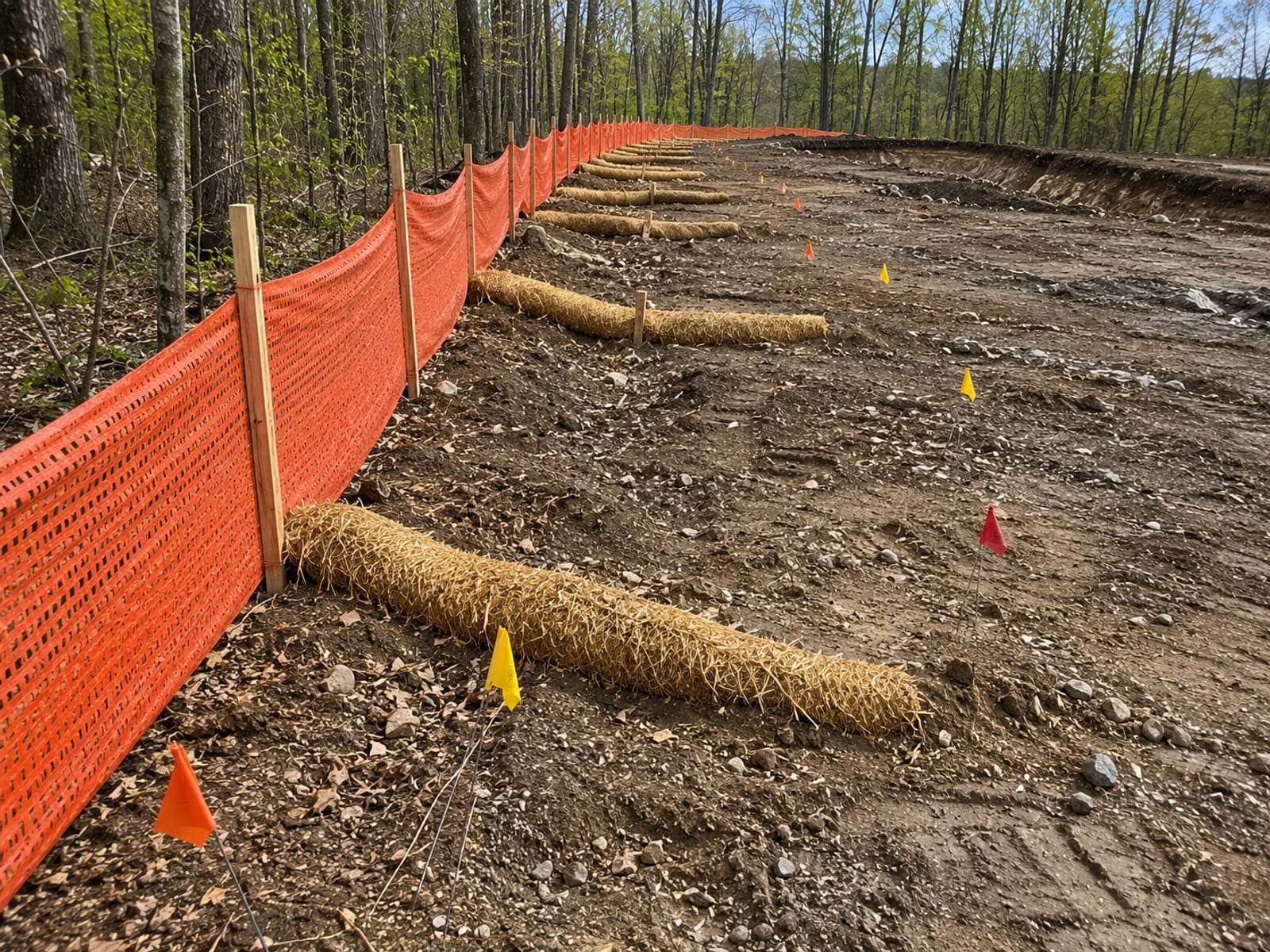
Erosion and sediment control may be required whenever excavation exposes soil, especially on sloped or drainage-sensitive properties.
Checking first can save money
Starting without review can lead to stop-work orders, fines, failed inspections, or costly rework that far outweighs whatever time you thought you were saving.
Why Excavation Permit Questions Matter
Most people searching for excavation permit requirements aren't trying to cut corners. They want to know what they're getting into before a machine touches their property. That instinct is exactly right, and the stakes are real enough to take seriously.
Digging changes more than the visible surface of a property. It can expose soil to erosion, redirect how rainwater moves across a site, affect the stability of nearby structures, and disturb underground utilities that nobody can see from the surface. A retaining wall project that looks straightforward in a backyard may sit close enough to a wetland buffer to require a separate review by your town's inland wetlands agency. A drainage fix that redirects runoff might change conditions for a neighboring property in ways that create liability. Even a driveway cut near a town road can trigger its own approval process.
Connecticut's state building code sets certain baseline standards, but excavation projects often touch multiple layers of local and state oversight at the same time. Understanding where those layers overlap is what keeps a project from getting stopped partway through.
Excavation Can Affect More Than the Work Area
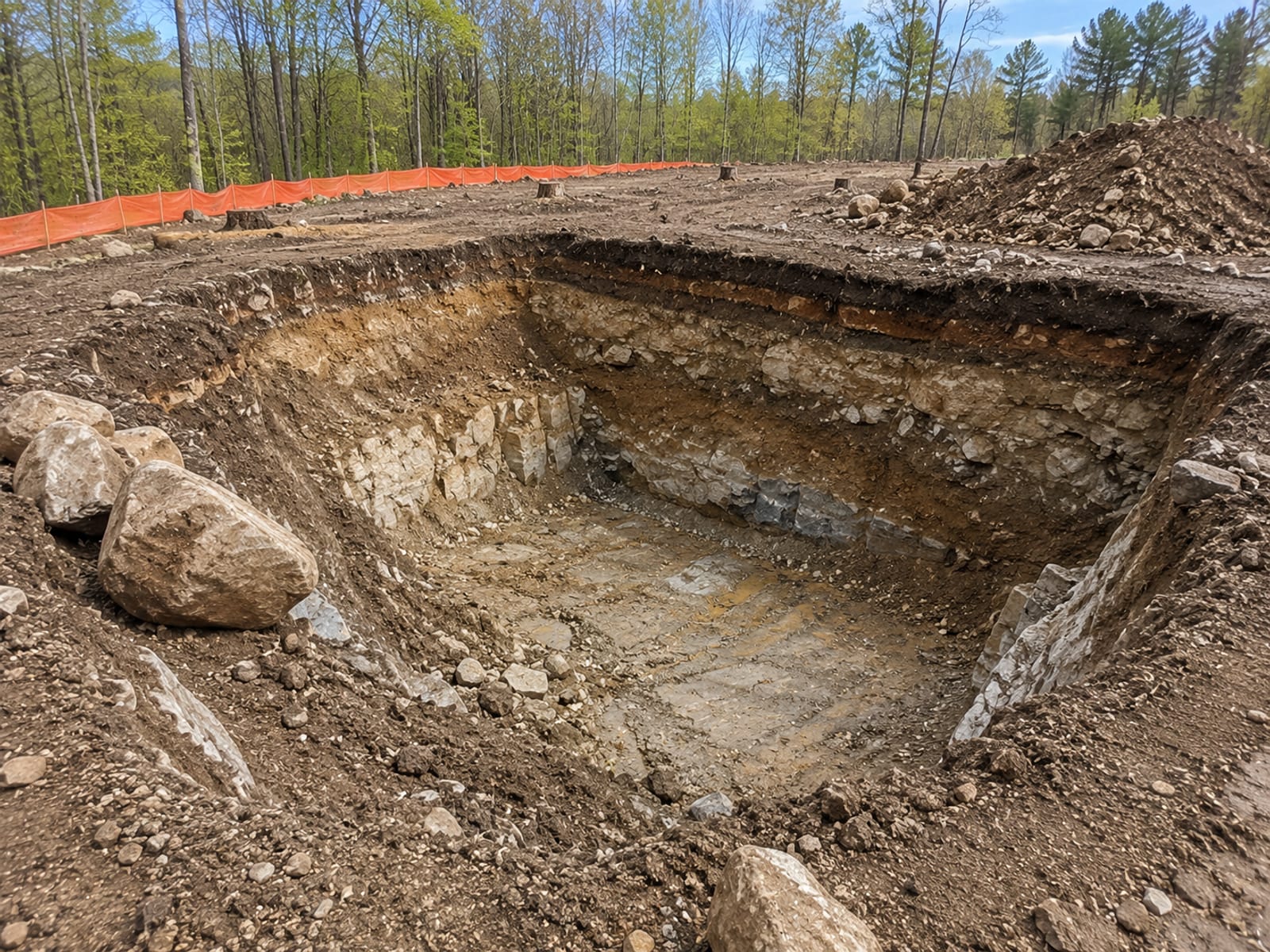
Connecticut's terrain adds a layer of complication that homeowners in other states don't always face. Glacial activity left behind ledge rock close to the surface, dense clay that holds water instead of draining it, and buried boulders that don't show up until the excavator is already in the ground. These conditions affect how soil moves, where water goes after a rainstorm, and how neighboring properties respond to changes on your site.
The Connecticut DEEP's soil erosion and sediment control guidelines exist precisely because exposed soil on a Connecticut hillside can move quickly in a rainstorm and reach a watercourse or storm drain before anyone realizes there's a problem. When an excavation project disturbs enough soil or sits close enough to a sensitive area, state and local review processes kick in to address those risks before the digging starts, not after.
Projects That May Need a Permit or Review
Not every excavation project triggers a permit, but a surprising number of common residential projects can. The category of work matters a lot, and so does where the property sits relative to wetlands, roads, drainage paths, and neighboring lots. Before any machine moves, it's worth knowing which types of projects attract the most scrutiny from local building, zoning, and wetlands offices. The examples below aren't exhaustive, and none of these projects automatically require a permit in every Connecticut town, but they give you a realistic picture of where review is more likely to come up.
Building-Related Excavation
Foundation excavation is almost always tied to a building permit. If you're digging for a new home, an addition, a garage, or a basement expansion, the excavation is part of a larger permitted project, and the building department is already involved. That's not a reason to worry; it's a reason to confirm early that all pieces of the permit are in place before the first cut.
Work connected to septic systems or utility trenches often requires its own approvals as well. Homeowners planning any of these projects should check with the Oxford CT building department or their own town's equivalent office early in the planning process, not after a contractor is already scheduled.
Drainage, Driveway, Wetlands, and Grading Work
Projects that change how water moves across a property are where many homeowners get surprised. These types of projects each carry their own review pathway, and those pathways don't always run through the same town office, so it pays to know which agency handles what before you start making calls.
Installing a drainage system, grading a slope, cutting a new driveway, or building a retaining wall can all change runoff patterns in ways that affect neighboring properties, town roads, or nearby watercourses. Connecticut's construction stormwater general permit applies to projects that disturb one or more acres of soil, but local rules often set lower thresholds. Driveway work near a town road may need approval from the town's public works or engineering office. Work within a wetlands buffer zone, which varies by town but commonly extends 100 feet or more from a wetland or watercourse, typically requires review by the inland wetlands agency. If the Oxford or Seymour planning and zoning commission has jurisdiction over your site's land use, zoning approval may be a separate step.
Permit Versus Call Before You Dig
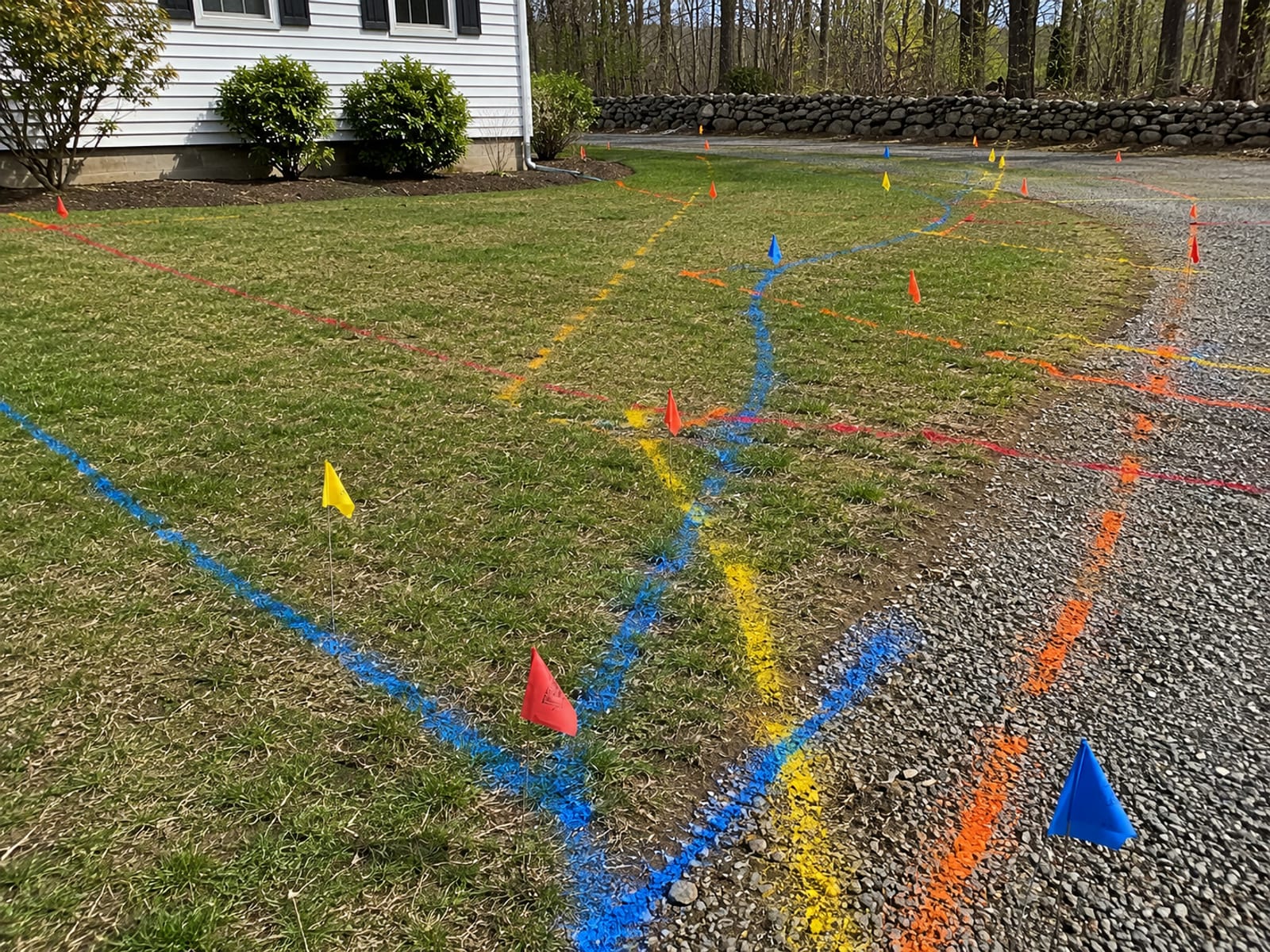
One of the most common points of confusion in any excavation project is the difference between a permit and a utility markout. They are not the same thing, and you may need both depending on the project. A permit is a formal approval from a town or state agency that the work meets applicable codes, zoning rules, or environmental standards before it begins. A utility markout is a safety process that identifies where underground utilities are buried so they don't get hit during excavation. Both are steps a responsible contractor handles before digging, but they go through completely different channels and serve different purposes.
Utility Markouts
Connecticut's Call Before You Dig system is the state's mechanism for identifying underground utilities before excavation starts. Contractors and homeowners submit a request, and utility companies send locators to mark the approximate location of buried lines in the work area. This step is required before digging in most situations and should happen regardless of whether a building permit is involved.
The Connecticut PURA reinforces this requirement as a pipeline and gas safety measure. Hitting a buried gas line, water main, or electrical conduit during excavation is a serious safety event, not just a project delay. Marking out utilities before the first pass of an excavator is one of the most consequential steps in any excavation project.
Local Permits
The permit side of excavation is more variable. Some projects require a building permit, some require zoning approval, some require inland wetlands review, and some require all three. Others may need driveway approval from public works or an erosion control plan filed with the town. The Connecticut state building code provides the baseline, but local departments interpret and apply those standards based on the specific project and property.
The only reliable way to know which permits apply is to check with the relevant local offices before work begins. Assuming your project is too small to need anything is one of the most common and costly mistakes in residential excavation.
Legal, Regulatory, and Practical Ties
Connecticut's excavation permit requirements don't live in one place. They spread across building codes, zoning ordinances, inland wetlands regulations, stormwater rules, erosion control guidance, and utility safety requirements. For a homeowner trying to figure out what applies to a single project, that can feel like a lot of overlapping rules, but each layer addresses a different kind of risk.
Building codes address structural safety. Zoning rules address land use and setbacks. Inland wetlands regulations address water quality and habitat protection. Stormwater and erosion control requirements address what happens to exposed soil and runoff during and after construction. None of these are arbitrary; each one exists because something went wrong at some point in the past.
Standards and Limits
The specific thresholds vary by town and project type. Oxford CT has its own building, zoning, and wetlands review processes, and the requirements there may differ from what applies in Seymour, Ansonia, or Shelton. A retaining wall over a certain height typically triggers a building permit. A grading project that disturbs a defined acreage threshold may trigger erosion control requirements. Work within a wetlands setback distance requires inland wetlands review regardless of what else is happening on the site.
The UConn stormwater manual provides detailed performance standards for managing stormwater on Connecticut construction projects, and the NEMO program's soil erosion guidance offers practical tools for understanding what erosion control measures may be expected. These are the standards your contractor and the town are working from, so being aware they exist helps you ask better questions during the planning process.
How to Check Before Excavation Starts
A good excavation contractor will walk through the permit and review process with you before any equipment is scheduled. If a contractor gives you a quote without asking about utility markouts, drainage conditions, or wetlands proximity, that's worth pausing on. The pre-project checklist is the difference between a project that finishes on schedule and one that gets stopped mid-dig by a town official.
Step 1: Define the Project Scope
Before contacting any town office, get clear on what the project actually involves. How deep is the dig? How much total soil area will be disturbed? Does the project change how water drains on or off the property? Is there a structure involved, like a foundation, retaining wall, or garage? Are there utilities, a septic system, or a well anywhere in the work area? Is the site near a wetland, stream, town road, or easement?
These questions aren't just for the permit process. They also help your contractor plan for conditions that often show up unexpectedly in Connecticut soil, including ledge rock at shallow depths and clay layers that hold water and complicate grading. Getting the scope right at the start is the most reliable way to avoid surprises later.
Step 2: Contact the Right Departments and Schedule Markouts
Once the project scope is clear, reach out to the relevant town offices. For most residential excavation projects, that means starting with the building department and asking whether a permit is required for the specific work. Depending on what the building department says, you may also need to check with the zoning office or the inland wetlands agency.
At the same time, arrange utility markouts through Connecticut's Call Before You Dig system before any soil is disturbed. This step should happen even for projects that don't require a building permit. The markout process takes time to schedule, so building it into the project timeline early avoids delays once equipment arrives on site.
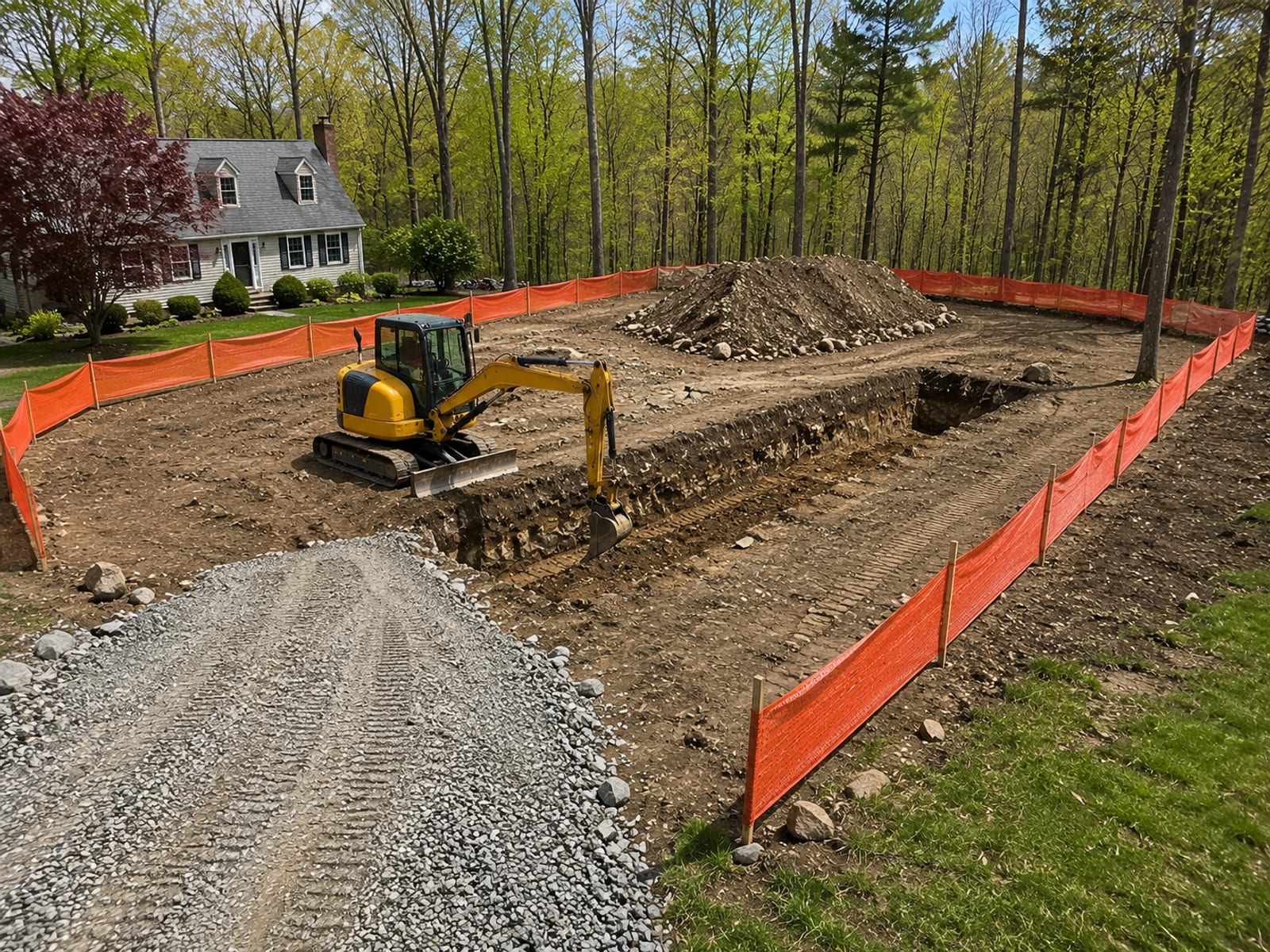
Long-Term Strategy for Permit-Safe Excavation
The cleanest approach to any excavation project is to confirm requirements before the first machine shows up, not after. A few questions are worth asking upfront with any contractor or town office: which permits apply and who is responsible for pulling them, when utility markouts will happen and how that schedule fits the excavation timeline, how exposed soil will be stabilized during and after the project, what erosion control measures are planned, and what happens to drainage on and off the site once grading is complete.
These questions matter more in Connecticut than in many other states because of what's in the ground. Clay soil that holds water, slopes that channel runoff toward roads or streams, and wetland buffers that show up unexpectedly near a planned work area all create situations where the permit and inspection process is doing real work to prevent real problems. The stormwater management standards applicable to Connecticut construction activity take sediment and drainage seriously, and for good reason.
Common Pitfalls
Most of the costly mistakes in Connecticut excavation projects come down to assumptions made before the project started. Knowing what to watch for doesn't require legal training; it just requires asking the right questions before work begins.
- Assuming no permit is needed: Small projects can still trigger review, especially if drainage changes or wetlands are nearby.
- Confusing Call Before You Dig with a permit: Arranging utility markouts is not the same as getting town approval. Both may be required.
- Ignoring wetlands proximity: Work within a wetland buffer zone typically requires inland wetlands review regardless of project size.
- Changing drainage without review: Redirecting runoff can affect neighboring properties and may require town approval or an erosion control plan.
- Overlooking driveway rules: Cuts near a town road often require separate approval from public works or the engineering office.
- Starting before utility markouts are complete: Excavating before buried utilities are marked is both dangerous and potentially a legal violation.
- Accepting a vague estimate: A quote that doesn't mention permits, utility markouts, erosion controls, or drainage conditions hasn't accounted for the full scope of the project.
Frequently Asked Questions About Excavation Permit CT
Do you need a permit for excavation in CT?
It depends on the town and the type of work. Foundation excavation, driveway changes, drainage systems, retaining walls, and grading projects near wetlands are among the work types most likely to require a permit or review. Small landscape grading may not require a building permit, but you should still check with the local building department and zoning office before assuming nothing applies. Residential excavation permit requirements in CT are set at the local level, so there's no universal answer.
Who decides whether an excavation permit is needed?
Local building, zoning, wetlands, and public works offices may each have jurisdiction depending on the project type and location. For most residential projects in Oxford CT or surrounding towns, the local building department is the right first call. If the project is near a wetland or watercourse, the inland wetlands agency is a separate office with its own review process.
Is Call Before You Dig the same as an excavation permit?
No. Connecticut's Call Before You Dig system is a utility safety process that identifies buried lines before excavation begins. A permit is a formal approval from a town or state agency that the work meets applicable codes or environmental standards. You may need both, and the markout process should happen before any digging regardless of whether a permit is required.
Do drainage excavation projects need permits in Connecticut?
They may, especially if the project changes runoff patterns, affects a wetland buffer, connects to a stormwater system, crosses near a town road, or disturbs a meaningful area of soil. Projects that trigger Connecticut's construction stormwater general permit or local erosion control requirements may need documentation before work begins. Check with the building and wetlands offices for any drainage excavation project.
Can I start excavation while waiting for permit answers?
It's safer to wait. Starting excavation before permit requirements are confirmed can lead to a stop-work order, which halts the entire project until the issue is resolved. Fines, required restoration of disturbed soil, and failed inspections are all possible outcomes. The time spent checking requirements before the first machine arrives is almost always less than the time lost dealing with a stop-work situation mid-project.
What should an excavation contractor explain before work begins?
A contractor working in Connecticut should be able to walk through project scope, utility markout timing, which permits may apply and who is responsible for them, how exposed soil will be managed for erosion, what drainage changes the project will create, and any site conditions like ledge, clay, or wetlands proximity that could affect the work. A contractor who can't speak to these questions before providing a quote may not be accounting for the full cost and risk of the project.
Final Thoughts
Whether you're planning foundation excavation, drainage work, a driveway cut, or major grading, the answer to "do I need a permit?" in Connecticut almost always starts with your local building department and ends with a set of checks across zoning, wetlands, utility markouts, and erosion control. Permit requirements vary by town, project scope, and site conditions, so the only reliable approach is to confirm what applies before work begins.
A project that proceeds with full local approval can be inspected, documented, and later disclosed without problems. One that skips a required step can create complications long after the excavator leaves the site, and those complications tend to cost far more than any permit fee would have.
We work through this process on every project we take on. At Prestige Property Maintenance, based in Oxford, CT and serving the Naugatuck Valley and surrounding towns including Seymour, we handle the full sequence from land clearing and excavation through grading, drainage, and retaining walls. Our crew plans for Connecticut's ledge, clay, and wetland conditions before equipment ever enters the ground. If you're trying to figure out where your project stands before you commit to a start date, contact us and we'll help you think through what the job actually requires.
Related Articles
Excavation in Oxford CT: A Homeowner's Guide to Getting It Right
Oxford CT excavation covers more than digging. Here's what homeowners need to know about rock, permits, utilities, and getting the site done right.
Site Preparation and Excavation CT: A Complete Guide
Learn what site preparation and excavation CT projects really involve, from rocky ledge to permits, so you hire the right crew and avoid costly surprises.
What to Expect During Residential Excavation for New Home Construction
Residential excavation for new home construction involves more than digging. Here's the full sequence Connecticut homeowners need to know before work begins.