Site Preparation and Excavation CT: A Complete Guide
Kash CochranePublished Updated
- site preparation
- residential excavation
- grading
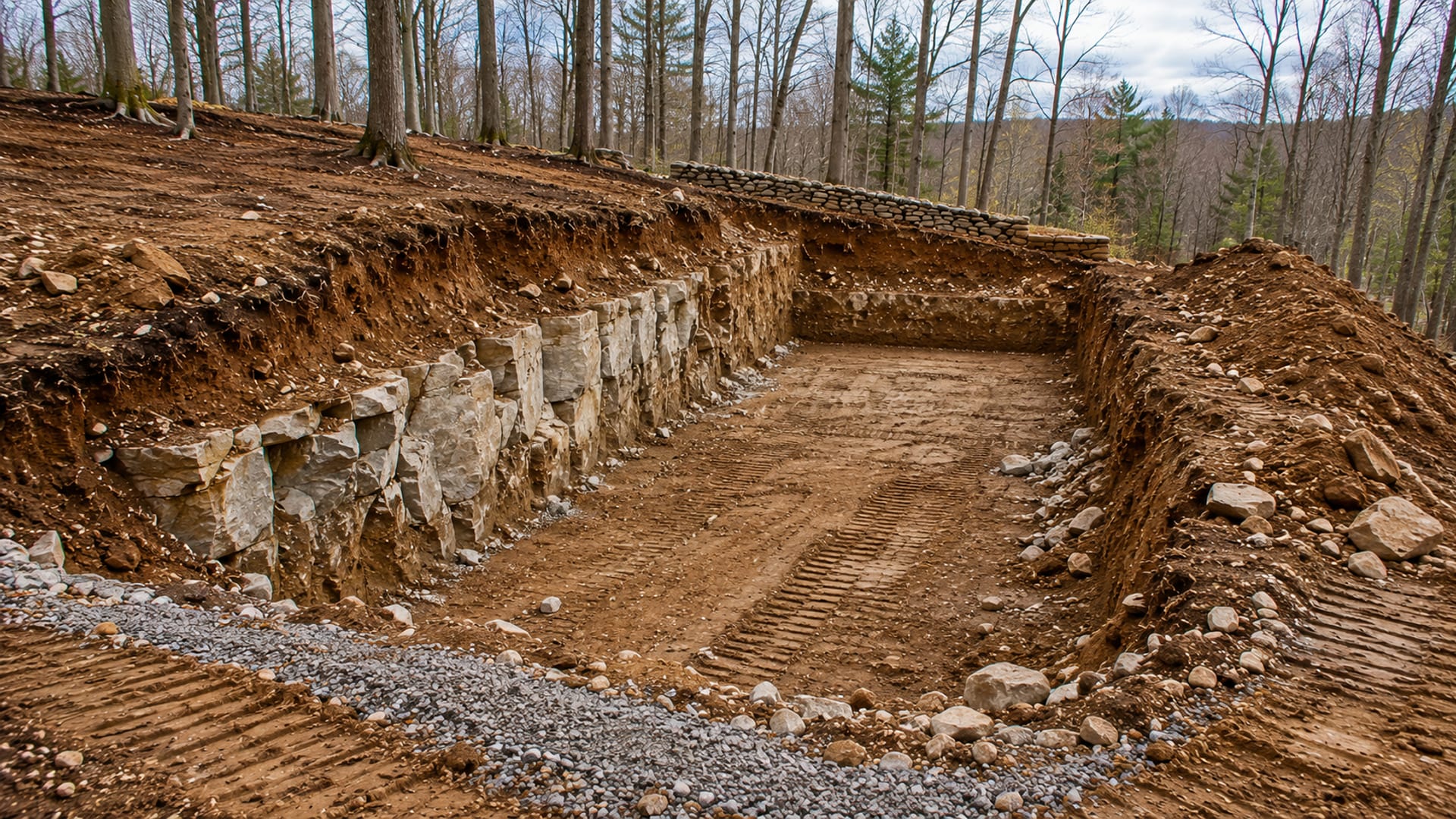
Whatever you are planning, a new foundation, a proper driveway, a yard that stops flooding every April, it all starts with the ground. Site preparation and excavation CT isn't a single service you can just call and schedule like a haircut. It's a sequence of connected work, and if that sequence is handled poorly, you'll be paying for it long after the equipment leaves. Connecticut's soil doesn't make this easier. Beneath the surface of most residential lots in the Naugatuck Valley and beyond, you're likely to find some combination of rocky glacial deposits, buried boulders, heavy clay that holds water, or ledge sitting closer to grade than anyone expected. That's not a worst-case scenario; it's Tuesday for a crew that works this region. What separates a smooth project from a drawn-out, expensive one isn't luck. It's whether the contractor walking your property actually knows Connecticut's ground and plans for it before the first machine moves.
Key Takeaways
Site preparation is the full process
It can include clearing, excavation, grading, drainage, trenching, erosion control, and stabilization, often handled as one connected scope of work.
Excavation is one part of site work
Digging, soil movement, trenching, and rock removal all support the larger preparation plan rather than standing alone.
Connecticut properties need local planning
Rock, slopes, wetlands, septic systems, wells, and long driveways can all affect the project scope, timeline, and cost.
Drainage matters early
Poor water control can damage foundations, driveways, retaining walls, lawns, and finished surfaces long after the crew has gone.
Permits and utilities must be checked
Local review and Call Before You Dig may be required before any excavation or trenching begins.
A complete estimate reduces surprises
The scope should spell out hauling, materials, grading, drainage, rock handling, cleanup, and restoration so there are no hidden costs.
1. Why Site Preparation and Excavation Matter
Most people think of construction as what you see going up: the framing, the poured concrete, the paving. What actually determines whether those visible elements hold up over time is what happened to the ground before any of that started. Every phase that follows depends on the ground being ready, stable, drained, and accessible, and that's exactly what site preparation is designed to deliver.
The Hidden Work That Affects Everything Above It
A foundation excavated into poorly drained, uncompacted soil can settle and crack. A driveway cut through a wooded slope without proper grading and drainage will wash out. A retaining wall built on a base that wasn't excavated and prepared correctly may shift within a few years. None of those failures announce themselves before the project is done; they show up later, and fixing them costs far more than doing the prep work right the first time.
CT DEEP's guidelines on soil erosion and sediment control make clear that disturbed soil needs to be managed from the beginning of a project, not treated as an afterthought. That philosophy extends beyond erosion. Grading, drainage, compaction, and soil stabilization all affect the long-term performance of whatever gets built on top. The most important work on a construction site may be the work that gets buried when the job is finished.
2. What Site Preparation Includes
Site preparation is a planned sequence of connected services, and the specific combination depends on the property, the project goal, and the conditions underfoot. Homeowners searching for an excavation contractor in CT often ask for "grading" or "excavation" without realizing those words describe parts of a much larger process. Understanding the full picture helps you ask better questions and read estimates more accurately. The sections below break down the two main groupings of work that make up a typical residential site prep scope.
Clearing, Grading, and Earth Moving
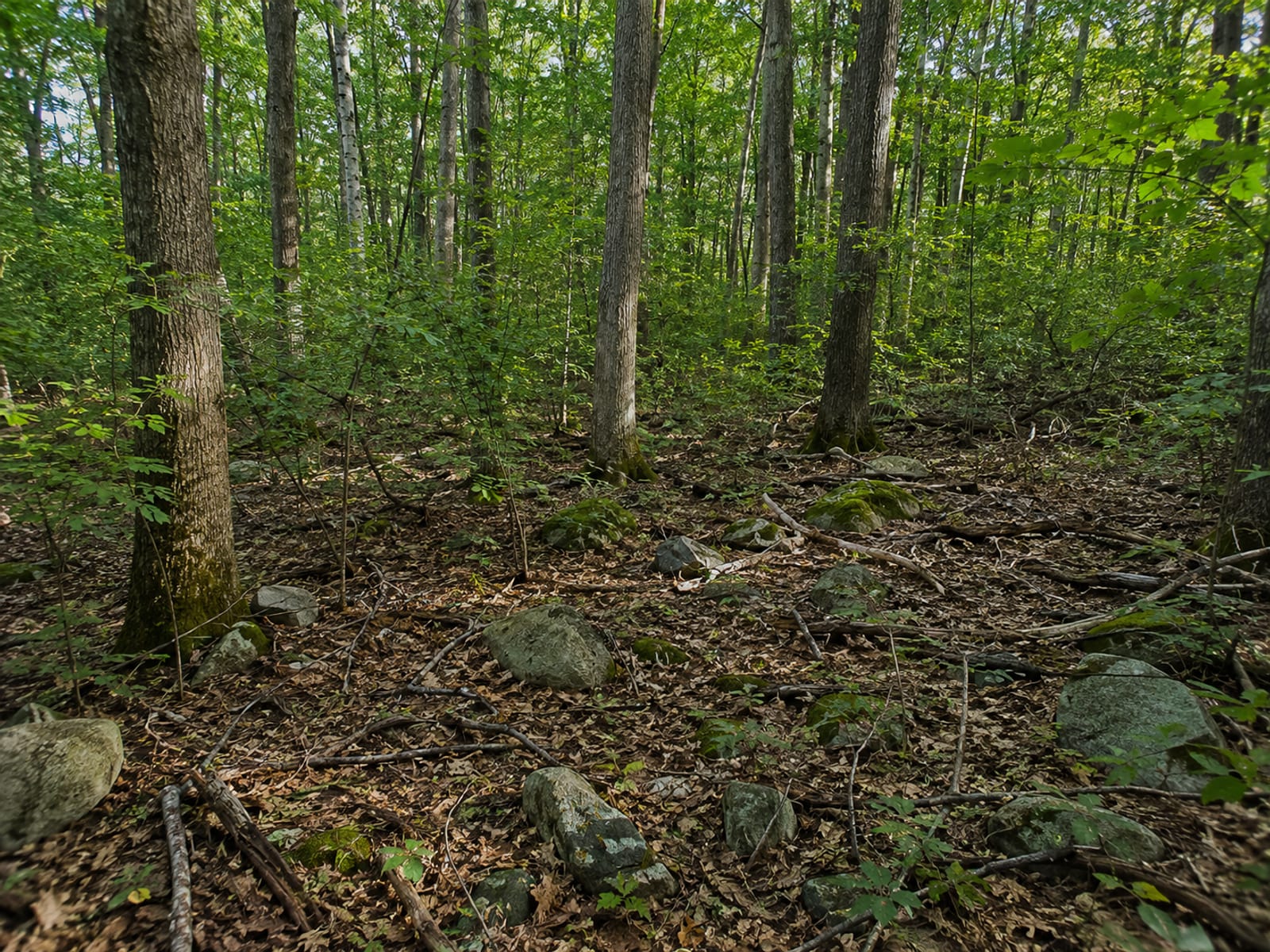
Land clearing is often the first step. It may include forestry mulching, tree removal tied to site work, stump grinding, root and debris removal, and topsoil stripping. After clearing, rough grading shapes the site to direct water away from structures and prepare a working surface. Finish grading follows later to establish final elevations and slopes. Earth moving, which covers cutting high spots and filling low ones, ties all of this together.
For wooded lots in towns like Oxford, Seymour, or Southbury, the clearing phase can be substantial. A contractor running forestry mulching equipment alongside an excavating fleet can clear and prepare ground at the same time, without waiting on a separate tree service or hauling debris off site.
Drainage, Trenching, Rock Removal, and Erosion Control
Drainage excavation, utility trenching, retaining wall base excavation, and patio or hardscape excavation are all common parts of residential site work in Connecticut. Rock removal and boulder removal come up regularly in this region because of the glacial geology. When rock is sitting where a foundation, drainage line, or driveway needs to go, it has to be broken and hauled, and that affects both the schedule and the budget.
Erosion and sediment control is part of the scope from day one, not something added at the end. Silt fence, stabilized access points, temporary seeding, and proper drainage routing all protect the disturbed soil, the surrounding property, and the finished project from runoff damage. The UConn NEMO soil erosion guidance is a practical reference for understanding what responsible site management looks like on a working construction site.
3. Key Connecticut Site Conditions
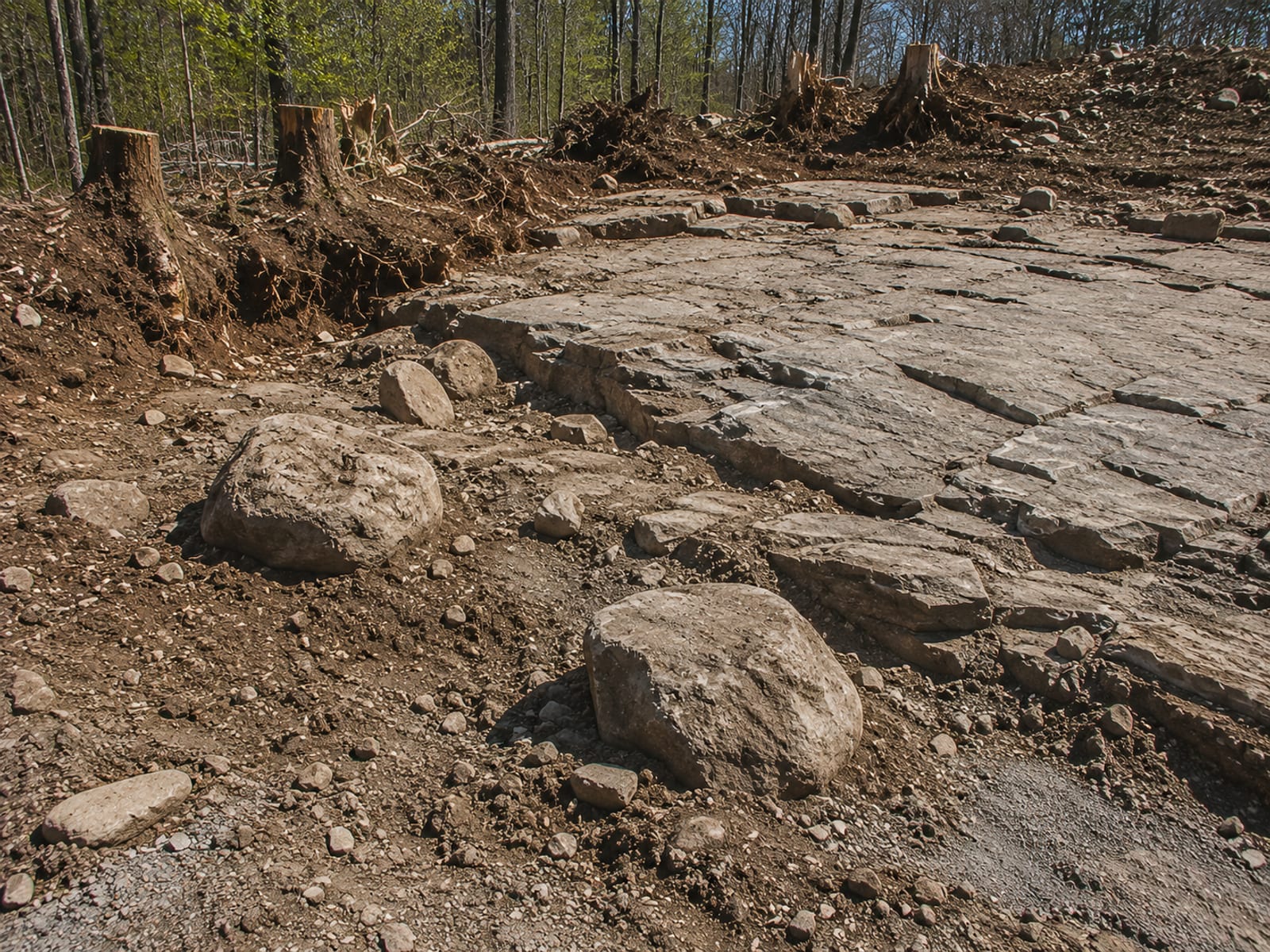
If you've spent any time around construction in this state, you've heard someone say "we hit ledge" or "the whole back of the lot is wet." That's not bad luck specific to one property; it's Connecticut. The glacial history of this region left behind a mix of soil types and subsurface conditions that make site preparation here genuinely more complicated than it would be on a flat, sandy lot in another part of the country. A contractor who doesn't know that going in will be surprised. One who works here regularly plans for it. The two subsections below cover the conditions that come up most often and carry the most weight when it comes to cost and schedule.
Rock, Boulders, and Uneven Terrain
Rocky glacial soil, buried boulders, and subsurface ledge are common across the Naugatuck Valley and most of western Connecticut. These conditions affect equipment choice, how long digging takes, hauling requirements, and final cost. A site that looks straightforward from the surface can turn into a rock removal and boulder removal project once the machine starts working. Tight residential access adds another layer: a long, narrow driveway that bends through trees may limit which equipment can get in and require extra planning for staging and material movement.
The contractors who handle this well are the ones who assess the site before committing to a number, not the ones who quote from a phone call and figure it out when they arrive.
Water, Drainage, and Wetlands Proximity
Heavy clay soil, spring runoff, and freeze-thaw cycles combine to make water management a consistent challenge in Connecticut. Clay holds moisture rather than letting it drain, so areas that seem dry in August can be saturated in March. Grading that doesn't account for this leads to standing water near foundations, driveways that turn into streams during heavy rain, and patchy lawns that never quite drain right.
Wetlands proximity adds another layer. Connecticut has strong inland wetlands protections, and work that disturbs soil near a wetland or watercourse may require review before it begins. The Oxford Inland Wetlands Agency is one example of the local review boards that oversee this work at the town level. The CT DEEP Construction Stormwater General Permit may apply to larger projects that disturb more than one acre of soil. A good contractor knows when those conversations need to happen and doesn't leave that discovery to the homeowner.
The UConn stormwater management standards outline performance criteria for managing water on construction sites, and those standards exist because water mismanaged during site work creates real damage to surrounding properties, roads, and natural areas.
4. Permits, Utilities, and Practical Requirements
Site preparation and excavation in Connecticut connects to several regulatory and safety requirements depending on the scope, location, and type of work involved. These aren't bureaucratic extras; they're practical steps that protect the project, the property, and the people working on it. Requirements vary by town and scope, so the right move is to check with your local building, zoning, and inland wetlands departments before work begins. The three areas below are where most residential projects run into requirements worth knowing about upfront.
Utility Markouts Before Any Digging Starts
Connecticut's Call Before You Dig system exists specifically to prevent excavation and trenching work from hitting underground utilities. Electric lines, gas lines, water mains, and other buried infrastructure can run through residential lots in unexpected locations. Utility markout isn't optional when digging or trenching is involved; it's a required step that protects workers, property, and neighbors. The CT PURA page on Call Before You Dig has additional background on how the system works.
Permits, Building Code, and Local Review
Depending on the project, your town may require building permits, zoning review, inland wetlands approval, or driveway permits before site work begins. The Connecticut State Building Code sets baseline standards, but local requirements often add to those. Oxford's Building Department and Planning and Zoning Commission are good examples of the town-level offices that handle this review. Retaining walls above a certain height, driveway changes near a town road, and any work near a wetland buffer are the most common triggers for local review in residential site work.
Erosion and Sediment Control as a Project Requirement
Disturbed soil doesn't stay where you put it. Rain moves it onto roads, into storm drains, toward wetlands and waterways, and onto neighboring properties. CT DEEP's erosion and sediment control guidelines set the standard for how disturbed areas should be managed during construction. On a well-run job site, erosion control measures are installed early and maintained throughout the project, not added after someone complains.
5. The Site Preparation Process
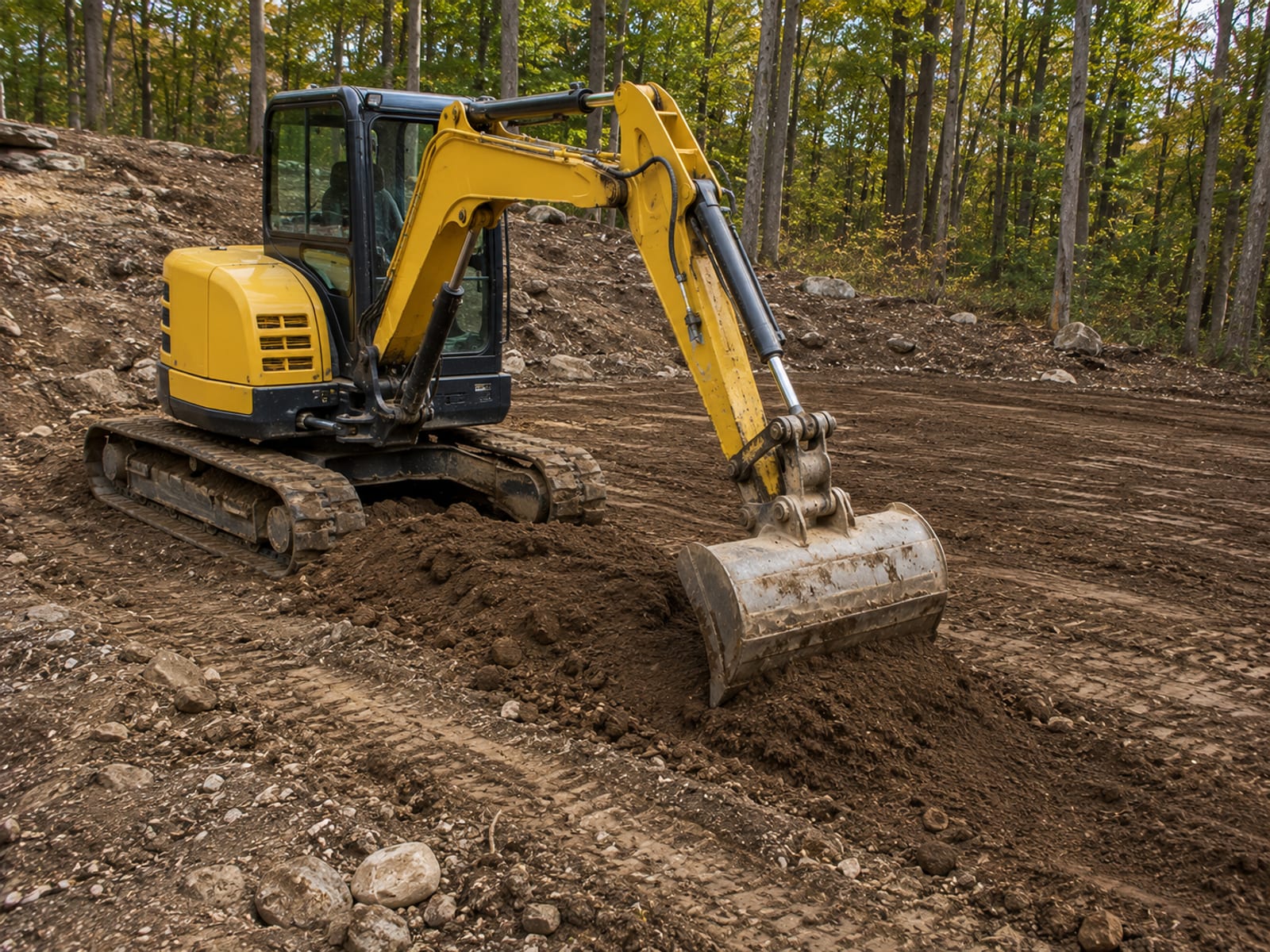
A professional site preparation project follows a clear sequence, and knowing that sequence helps you understand what a contractor should be doing and when. It also helps you spot the difference between a crew that has a plan and one that's working reactively. The two steps below reflect how residential site work in Connecticut typically unfolds from first contact through final stabilization, and what a contractor's work should look like at each stage.
Step 1: Assess, Plan, and Prepare Access
Before any machine moves, the contractor should walk the property with the project goal in mind. That means looking at slope, access, soil type, drainage patterns, existing utilities, septic system location, well location, tree coverage, and any obvious signs of buried rock or wet ground. Staging areas for equipment and material need to be identified. Permit needs, utility markouts, and any wetlands review should be flagged at this stage, not discovered mid-project.
This assessment is where a contractor's local knowledge actually matters. A crew that has worked in Oxford, Seymour, Southbury, and the surrounding Naugatuck Valley towns knows what to look for before the ground tells them the hard way.
Step 2: Clear, Excavate, Grade, Drain, and Stabilize
With the assessment done and requirements addressed, the work moves through a connected sequence. Site clearing comes first, whether that's forestry mulching, stump grinding, or selective tree removal tied to the construction area. Excavation follows, including foundation excavation, driveway excavation, drainage excavation, and any trenching for utilities. Rock removal happens as encountered, with material hauled or processed on site depending on the project.
Grading shapes the site throughout the process: rough grading to establish working elevations, then finish grading to set final slopes and prepare surfaces. Drainage work runs alongside grading because the two are inseparable. Soil stabilization and erosion control close out the active work, protecting the site until permanent cover is established. Clearing, grading, and drainage should always be treated as one connected plan, not three separate problems.
6. Long-Term Strategy for Better Site Work
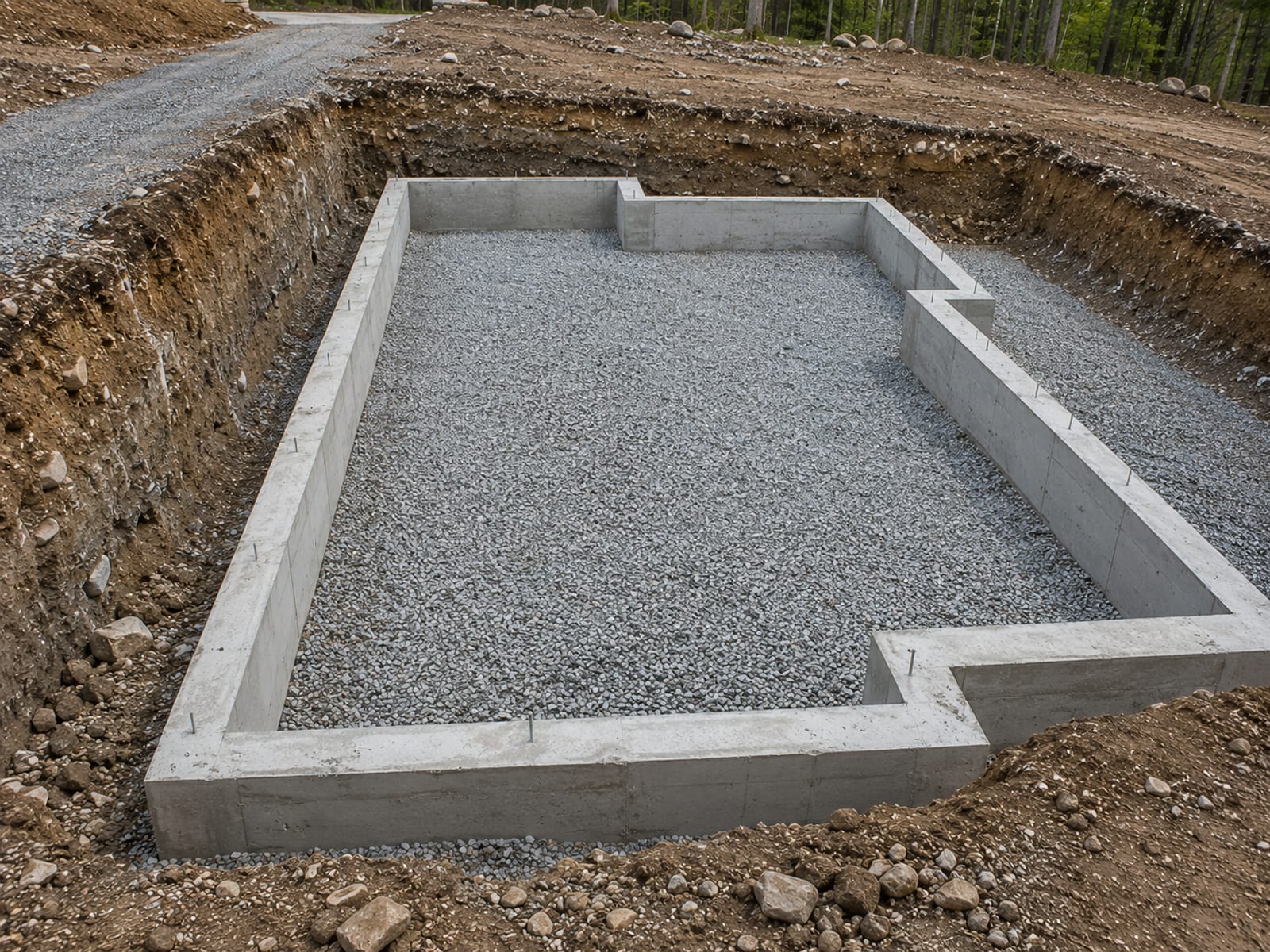
The best site preparation projects are planned around the finished use of the property, not just the immediate construction task. Homeowners who think about this early tend to avoid the expensive surprises that come from treating each phase of a project as isolated. A few practical questions, asked before the work starts, can shape the entire plan and keep the budget from expanding mid-project.
How will water move across the finished site? What soil or rock will be removed, and where does it go? What fill material or stone will be brought in, and does it meet the compaction standards needed for the intended use? How will equipment access be maintained during the project without damaging areas that need to stay intact? And what does the finished site need to look like, including final grade and cover, so that it stabilizes properly and stays that way?
These questions apply whether you're planning new home site preparation on a raw lot, land development on a larger parcel, or a more focused project like a new driveway, drainage system, or retaining wall. Getting the answers before the work starts is what separates a well-managed project from one that requires repeat visits and corrective work.
Common Pitfalls in Site Preparation and Excavation CT
Homeowners who've been through a poorly managed site work project often point to the same set of mistakes. Most come down to starting work before the planning is complete or accepting an estimate that doesn't spell out the full scope. Recognizing these patterns in advance gives you a practical way to screen contractors before you commit.
- Skipping utility markouts: Starting any excavation or trenching without contacting Call Before You Dig puts underground utilities at risk and can create significant liability.
- Ignoring drainage from the start: Water that isn't managed during site work will find its own path, and that path often runs toward foundations, driveways, and neighboring properties.
- Underestimating rock: In Connecticut, buried boulders and subsurface ledge are common enough that any estimate should address how rock will be handled and what happens if more is found than expected.
- Leaving hauling costs out of the estimate: Excavated soil, rock, and debris have to go somewhere. Hauling and disposal costs are real and should appear in the estimate, not surface after the fact.
- Failing to stabilize disturbed soil: Once vegetation and topsoil are removed, the site is vulnerable to erosion until permanent cover is established. Leaving it exposed through a rainy season can cause significant damage.
- Assuming permits aren't needed: Requirements vary by town and project scope, but assuming they don't apply without checking can stop a project mid-construction.
- Accepting a vague estimate: An estimate that doesn't separate clearing, grading, drainage, hauling, rock handling, erosion controls, and restoration makes it impossible to know what's included or what might show up as an add-on later.
- Treating clearing, grading, and drainage as separate jobs: These three are connected. A site preparation plan that doesn't address all three together creates gaps that tend to cause problems after the work is done.
Frequently Asked Questions About Site Preparation and Excavation CT
What is site preparation and excavation?
Site preparation is the full process of getting land ready for construction or improvement work. Excavation is the digging, trenching, soil movement, and material removal that takes place as part of that process. A complete site preparation job may also include clearing, grading, drainage planning, erosion control, and final stabilization. In Connecticut, factors like rocky glacial soil, slopes, wetlands proximity, and buried utilities make site-specific planning especially important.
What services are typically included in residential site preparation CT?
Depending on the property and project, services may include land clearing, forestry mulching, stump grinding, topsoil stripping, rough grading and finish grading, foundation excavation, basement excavation, driveway excavation, drainage excavation, utility trenching, rock removal and boulder removal, retaining wall excavation, patio excavation, paving prep, erosion control, soil stabilization, and final restoration.
Do site preparation projects in Connecticut need permits?
It depends on the town, project scope, type of construction, amount of soil disturbance, proximity to wetlands, and whether drainage or driveway changes are involved. The Connecticut State Building Code sets state-level requirements, but local building, zoning, and inland wetlands departments often have their own review processes. Checking with those departments before work begins is the right move, not after.
Do utilities need to be marked before excavation begins?
Yes. When any digging or trenching is involved, Connecticut's Call Before You Dig system should be contacted before work starts. This step identifies underground utilities including gas, electric, water, and other buried lines, and it helps prevent damage that can be both dangerous and costly.
Why does drainage matter so much during site preparation?
Drainage affects the long-term performance of everything built on a site. Poor water management during site work can cause foundation problems, driveway washouts, retaining wall failure, and lawn damage that shows up months or years after construction is finished. The UConn stormwater management standards describe why managing water from the beginning of a project matters for property stability and surrounding areas.
What should a site work contractor's estimate include?
A solid estimate for site preparation and excavation CT should clearly cover the work area and project goal, clearing scope, excavation depth or area, equipment access plan, soil handling, rock and boulder handling, hauling and disposal, fill or topsoil to be brought in, grading and compaction, drainage work, trenching, erosion and sediment controls, utility markout expectations, permit responsibilities, cleanup, and final restoration. An estimate that leaves these items vague is one where the surprises tend to come out of your pocket.
How is an Oxford CT excavation contractor different from a general contractor?
A site work contractor focuses specifically on the land preparation phase, including clearing, digging, grading, drainage, and stabilization. A general contractor typically manages the broader construction project and may subcontract the site work. For homeowners who want one accountable crew handling the ground from start to finish, working directly with a site work contractor can reduce handoffs and scheduling gaps between phases.
Final Thoughts
Site preparation and excavation in Connecticut is more involved than moving dirt. It requires planning around the specific conditions of your property, coordinating permits and utility markouts before the first machine arrives, and managing drainage and erosion from day one. The difference between a project that runs cleanly and one that turns into a series of unpleasant surprises usually comes down to how thoroughly the contractor understood the ground before starting. Connecticut's rocky soil, buried ledge, heavy clay, and spring water movement are real factors, and they should be addressed in the plan, not discovered mid-project.
When site preparation is done right, the payoff extends well beyond the construction phase. A properly graded and drained site protects your foundation, stabilizes your driveway, and keeps water moving away from structures and toward where it belongs. That kind of groundwork holds up through years of Connecticut winters and wet springs, and it reduces the likelihood of needing repeat work on the same problem.
At Prestige Property Maintenance, we handle the full sequence of site work for homeowners, builders, and developers across Oxford, Seymour, and 19 towns throughout the Naugatuck Valley and western Connecticut. We bring land clearing, forestry mulching, excavation, grading, drainage, and rock removal under one crew, so there are no handoffs between separate subs and no gaps in accountability between phases. We've worked Connecticut's glacial soil long enough to plan for ledge, boulders, and water-holding clay before the first machine moves. If you're ready to get the ground right before anything else happens, contact us at Prestige Property Maintenance to talk through your project.
Related Articles
Excavation in Oxford CT: A Homeowner's Guide to Getting It Right
Oxford CT excavation covers more than digging. Here's what homeowners need to know about rock, permits, utilities, and getting the site done right.
Do You Need a Permit for Excavation in CT?
Worried about skipping a permit before you dig? Here's what Connecticut homeowners need to know about excavation permits before starting any project.
What to Expect During Residential Excavation for New Home Construction
Residential excavation for new home construction involves more than digging. Here's the full sequence Connecticut homeowners need to know before work begins.