

Drainage Excavation to Eliminate Standing Water in Oxford CT
Kash CochranePublished Updated
- drainage
- erosion control
- oxford ct
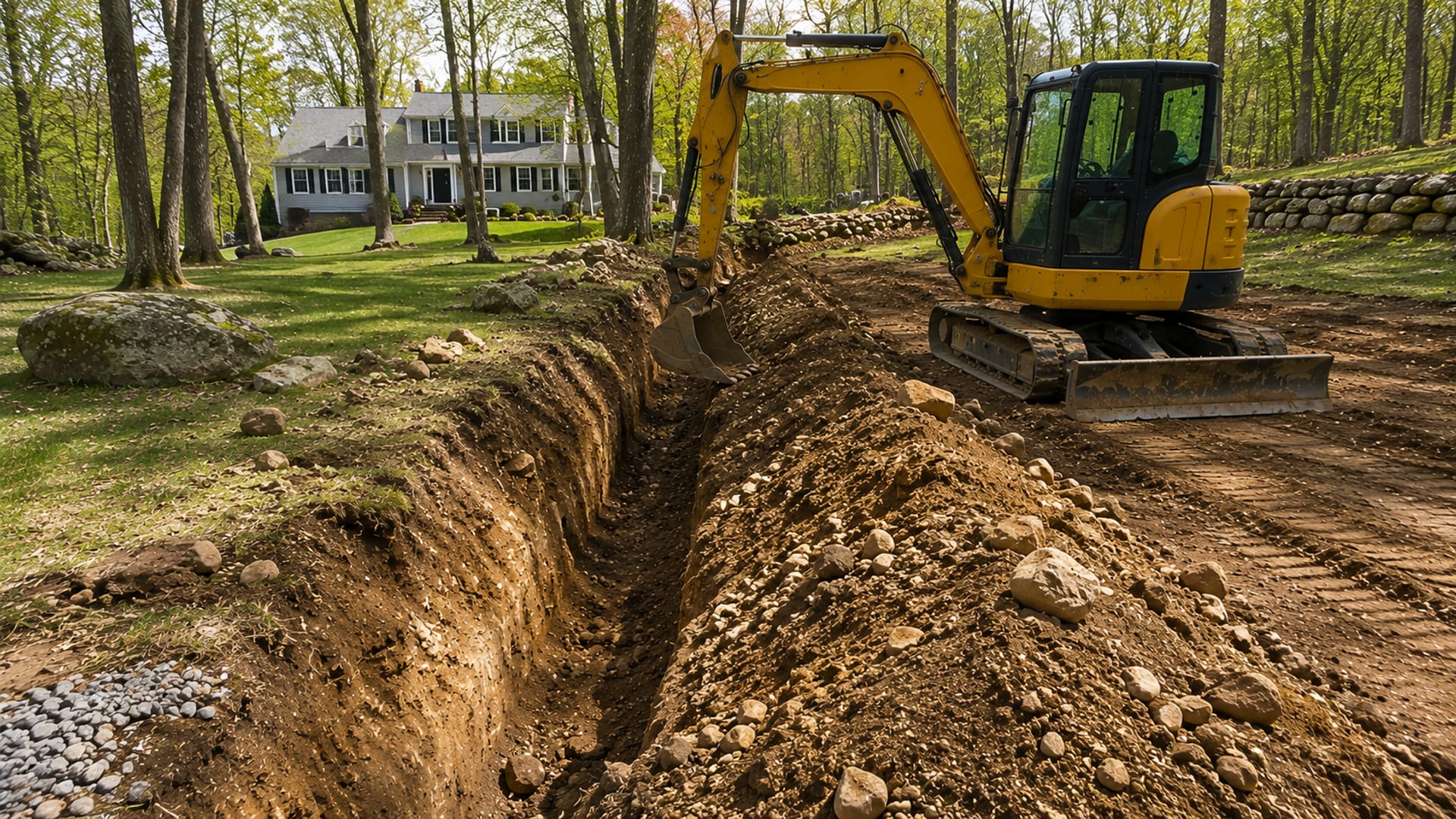
You have probably stood in your backyard after a heavy rain, watching the same low spot fill up again and wondering why nothing you have tried seems to work. Maybe you redirected a downspout, added some topsoil to a soft area, or called around for estimates and got answers that were vague enough to tell you almost nothing. The water keeps coming back, the grass stays matted and wet, and now you are starting to wonder whether the driveway will wash out again before spring is over. Drainage excavation in Oxford CT is often the answer that surface-level fixes cannot be, but the reason most attempts fail is not the solution itself. It is that the full water path was never understood before the work began. Oxford properties come with a specific set of conditions that can make a simple puddle into a recurring problem, and understanding what is actually going on beneath your yard changes how you think about a fix. What follows is a practical look at why standing water behaves the way it does here, when excavation becomes the right call, and what a qualified contractor should do before a single trench is opened.
Key Takeaways
Standing water usually has a cause
Poor grading, compacted soil, runoff from roofs or driveways, blocked drainage paths, or persistent low areas may all be responsible for water that will not clear.
Drainage excavation creates a water path
Trenches, swales, drainage pipe, catch basins, and culverts can be used to collect and move water away from problem areas safely.
Oxford properties can be challenging
Slopes, rocky glacial soil, wooded lots, septic systems, wells, and long driveways all affect how a drainage plan needs to be designed.
Grading and drainage work together
A drain installed without correcting the surrounding grade may fail because water still moves in the wrong direction.
Utility markouts matter
Drainage trenches should not be opened without checking underground utilities through Connecticut's Call Before You Dig system when required.
Restoration completes the project
Disturbed soil needs grading, stabilization, and cleanup after excavation is done, not just a trench refilled and left.
Why Drainage Excavation Matters in Oxford CT
Standing water rarely shows up without a reason. When water pools in the same corner of the yard after every storm, or the same stretch of driveway washes out every spring, the property is signaling that water has no clear path away from that area. In Oxford CT, heavy rain, spring snowmelt, rocky soil, natural slopes, and wooded lot conditions can push those signals from minor annoyance to property-level problem fairly quickly.
The CT Stormwater Management Standards describe how water that has no managed outlet can cause erosion, soil saturation, and runoff patterns that affect neighboring land. That is exactly what Oxford homeowners are often dealing with, and it is why yard drainage problems here tend to get worse without intervention rather than better. Understanding whether the issue is a surface flow problem, a subsurface soil condition, or a grading failure shapes every decision that follows.
Standing Water Is a Site Problem, Not Just a Puddle
A persistent wet spot is usually the visible result of something happening across a wider area of the property. Water may be arriving from an uphill neighbor's lot, coming off a roof without proper diversion, running along the driveway and collecting at the low end, or moving through soil that has become too compacted to absorb it. The NEMO soil erosion guidance from UConn points out that runoff and erosion problems are often connected to the full surface and subsurface conditions of a site, not just the spot where the damage shows up.
This matters for drainage excavation because a contractor who only looks at the wet spot and digs there may simply move the problem a few feet. The right approach is to trace where the water starts, follow the path it takes, identify why it collects where it does, and plan a discharge route that handles the volume safely. That kind of site reading is what separates a lasting fix from one that fails before the next wet season.
Signs You May Need Drainage Excavation
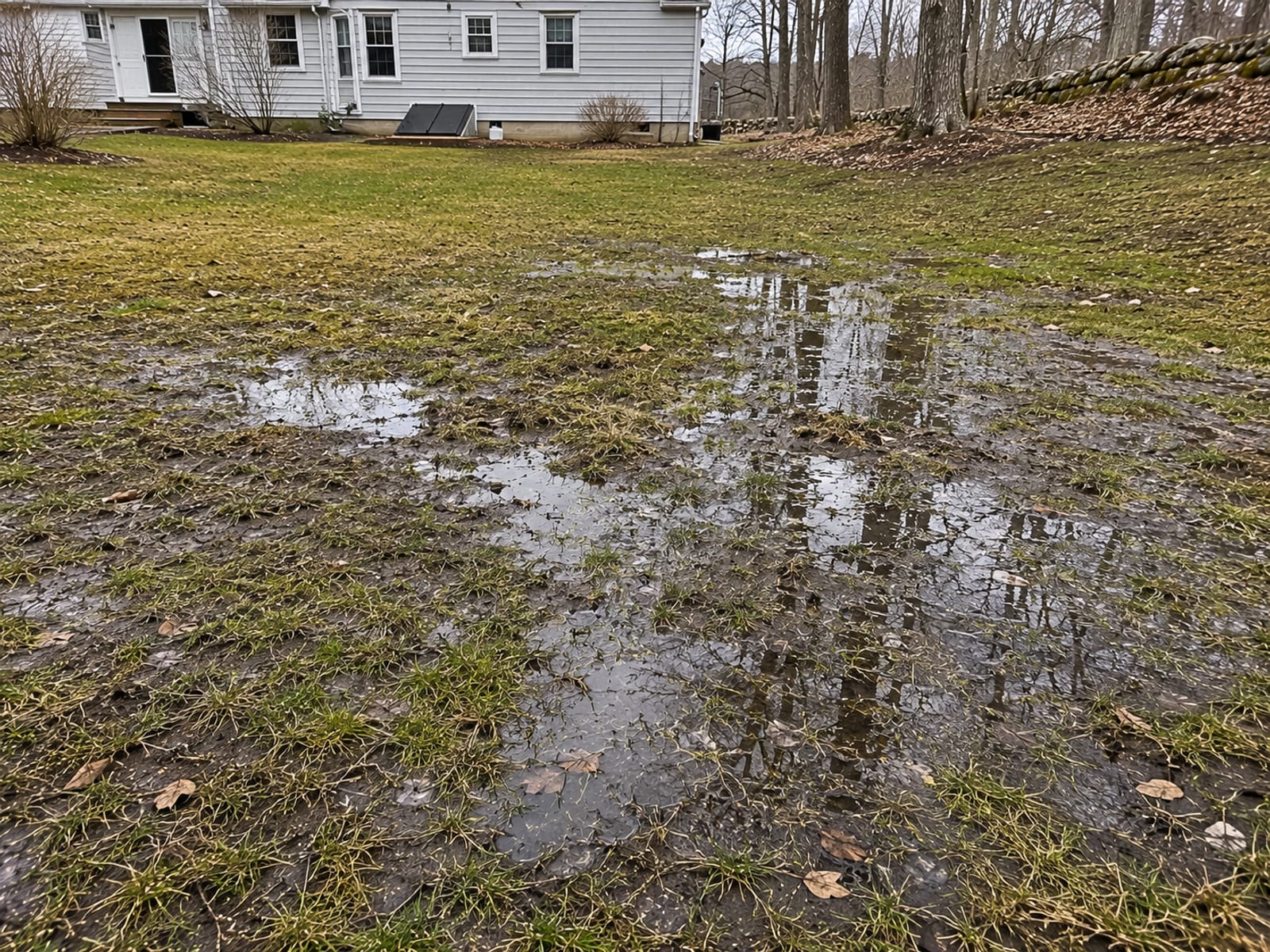
Not every soft or wet area calls for excavation right away. Some issues can be improved with light regrading or surface shaping. But there are patterns that suggest the problem goes deeper than topsoil, and recognizing them early helps you decide when to call an excavation and drainage contractor rather than trying another surface patch. The Connecticut Guidelines for Soil Erosion and Sediment Control document how uncontrolled surface water can progressively damage soil structure over time, which is why early signs often get worse if the drainage situation is not corrected. Two situations come up more than any other on Oxford properties, and both point to the same underlying issue: water has somewhere it needs to go and no clear way to get there.
Standing Water That Will Not Drain
If water sits in the same low area for days after a rain event, the yard may need regrading, a French drain trench, a catch basin, a properly shaped swale, or some combination. The key question is not just "where is the water?" but "why is it stopping here?" A clay pocket two feet below the surface, a high water table during wet seasons, or a low spot with no outlet elevation can all hold water in place even when the ground a few feet away is dry.
For Oxford homeowners dealing with rocky glacial soil, that answer sometimes comes back to how the ground was deposited centuries ago. Pockets of clay laid down between zones of gravel and rock can trap water in ways that are completely invisible from the surface. French drain excavation in Oxford CT often turns up these conditions once the trench is opened.
Erosion, Mud, and Driveway Washouts
If rain is carrying away gravel from the driveway, cutting channels through bare soil, or moving mulch out of planting beds with every storm, you are looking at a surface flow problem that needs to be intercepted. Driveway drainage in Oxford CT is a common call because long rural driveways often run downhill with no cross-drainage to slow or redirect the water. Repeated washouts signal that water is moving across the surface with enough velocity to carry material, and a surface-only fix rarely lasts more than a season or two.
Drainage trenching along a driveway edge, a properly graded swale to pull water off the drive, or a catch basin at a low collection point can address this kind of problem at the source. The NEMO erosion guidance describes how intercepting runoff before it gains velocity is more effective than trying to manage it after erosion has already started.
Drainage Excavation Solutions
The right drainage solution depends on where the water is coming from, how steep the slope is, what the soil is like, where a discharge point can be established, and how the property is actually used. There is no single answer that works for every wet yard in Oxford, and a contractor who offers the same system for every job without a site visit is not giving you a plan. The approaches below cover the main systems used on Oxford properties and when each one tends to apply, which should give you a useful frame of reference before any contractor walks your lot.
French Drains, Pipe, and Catch Basins
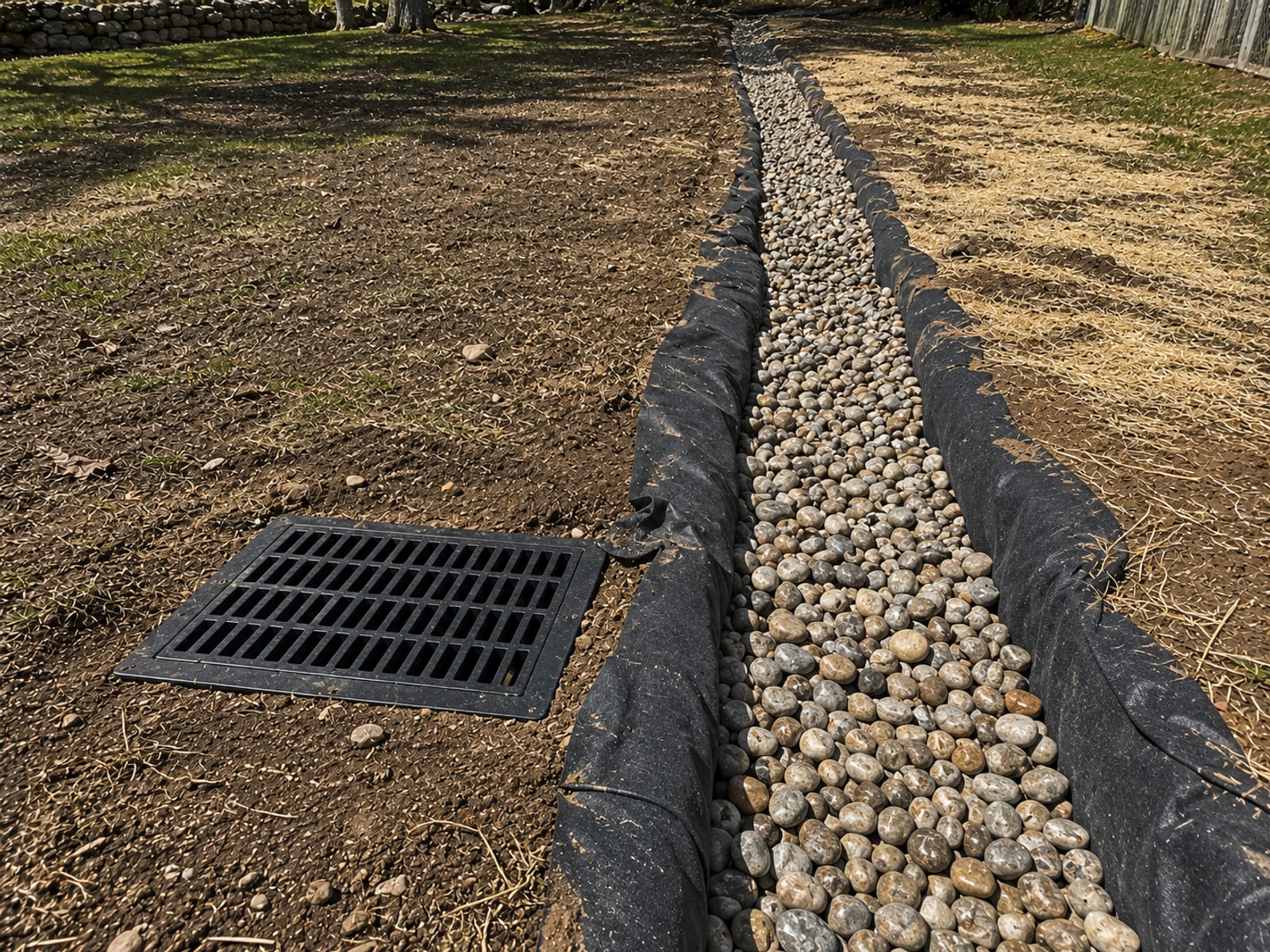
French drain excavation is one of the most common drainage solutions for soggy lawns and water pooling in yards. The basic system involves digging a trench, laying perforated pipe in a bed of stone, and routing the collected water to a safe outlet. The trench intercepts subsurface water that is moving laterally through the soil and gives it a path that does not involve your lawn or foundation.
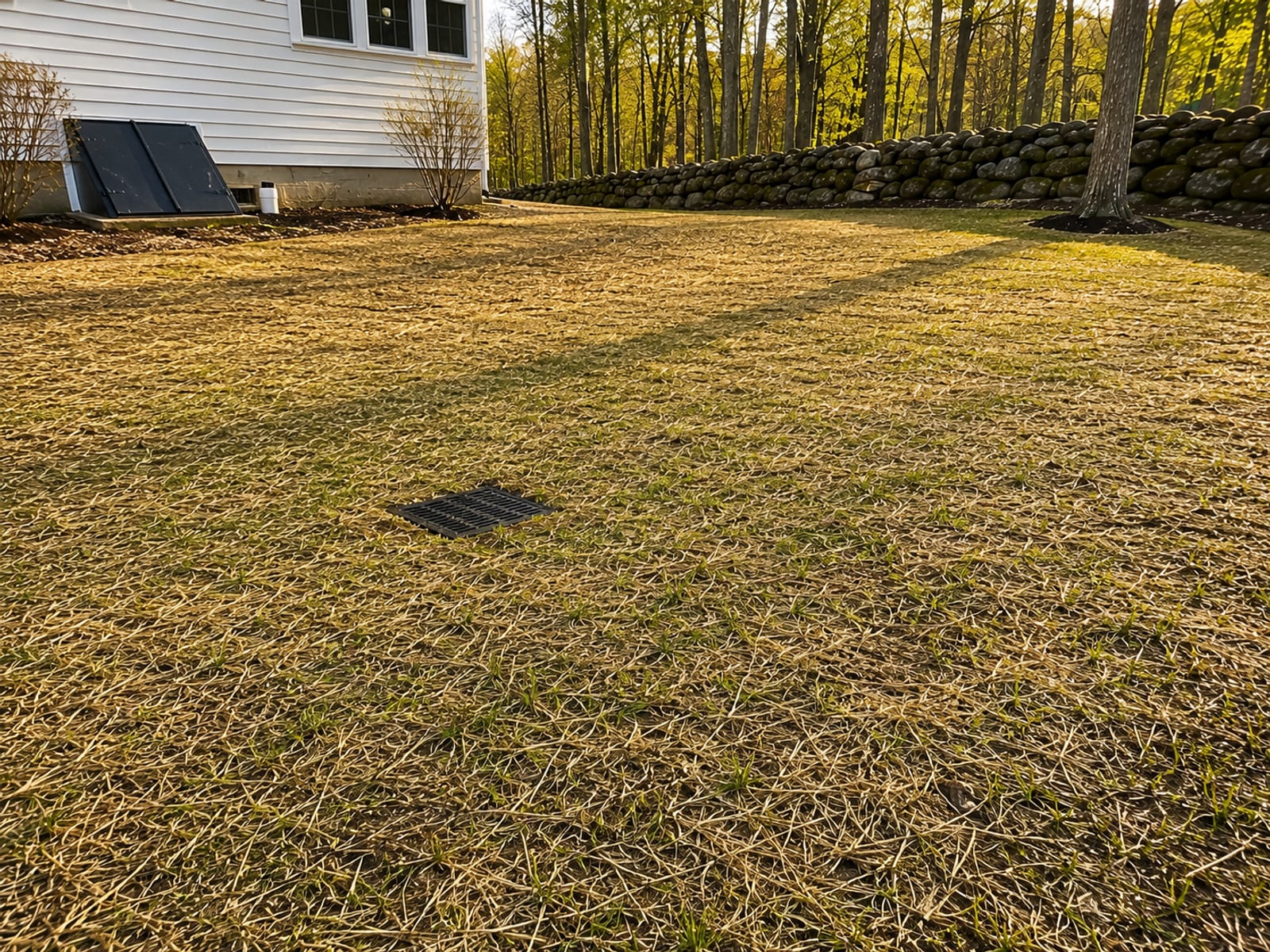
Catch basin installation works well where surface water collects in a defined low point. A grated basin set at grade collects water and connects to an outlet pipe, which carries the flow away from the problem area. These are often used in driveways, at the base of slopes, near downspout discharge zones, and in yard areas where water reliably collects after rain. Drainage pipe trenching connects these components, carrying water from where it is collected to where it can safely discharge, whether that is a vegetated area, a road ditch, a dry well, or another managed outlet.
Swales, Grading, and Surface Drainage
In some situations, surface shaping is the better answer, or an important part of the answer alongside underground drainage. A swale is a shallow, gently sloped channel that guides water across the surface toward a safe discharge point. When designed and graded correctly, a swale can handle significant runoff without any underground pipe. Swale excavation in Oxford CT is particularly useful on sloped properties where water is moving quickly across the surface and needs to be directed away from structures or toward a lower area of the lot.
Grading alone can also resolve problems where a low spot simply needs to be raised, or where the yard pitches toward the house rather than away from it. Foundation drainage excavation often starts with correcting the grade immediately around the home before installing any underground system. The CT Stormwater Manual describes how surface grading and underground drainage work together as part of a complete stormwater management approach.
Permits, Utilities, and Discharge Rules
Drainage excavation is not just a digging project. It changes where water moves across and off your property, which can bring it into contact with local regulations, neighboring property lines, wetlands buffers, and underground infrastructure. Getting these details right before work starts is part of what separates a professional drainage job from one that creates new problems. The Town of Oxford's Building Department and Planning and Zoning Commission are good starting points when questions come up about scope and approval requirements for a specific project, and the sections below cover the two areas that trip up the most Oxford drainage projects.
Utility Markouts
Before any drainage trenching or excavation starts, underground utilities need to be identified. Connecticut's Call Before You Dig (CBYD) system coordinates with utility providers to mark the location of buried lines before a contractor opens the ground. Gas, electric, water, and telecommunications lines can all be present in areas where drainage trenches would otherwise be placed. Skipping this step creates a real safety risk and can result in expensive repairs to damaged lines, regardless of how straightforward the trench path looks on the surface.
Wetlands, Stormwater, and Erosion Controls
Oxford has an Inland Wetlands Agency that reviews work near wetlands and watercourses. If your drainage project is located near a mapped wetland, a stream, or a stormwater outlet that connects to a watercourse, there may be review requirements before work begins. The Connecticut DEEP Construction Stormwater General Permit applies to certain larger disturbance areas. Erosion control during the work itself is also a consideration, since open trenches and disturbed soil can generate sediment runoff that may require silt fencing or other controls on site.
The Drainage Excavation Process
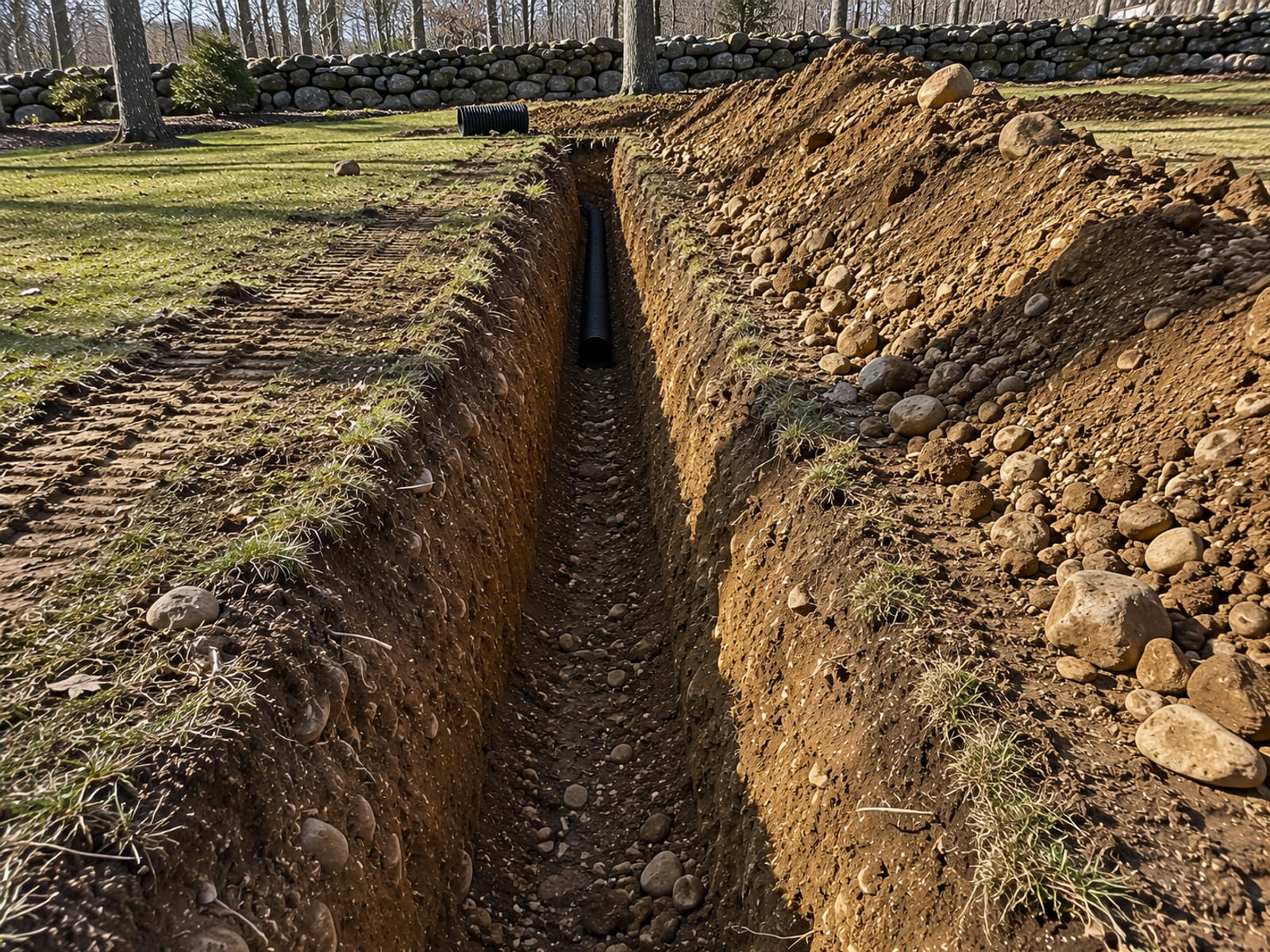
A drainage project that holds up over time follows a defined sequence. Cutting corners at any stage tends to show up later, either in drainage that does not perform as expected or in soil that settles, erodes, or creates new problems after the work is complete. The CT DEEP soil erosion and sediment control guidelines outline the importance of both pre-construction planning and post-construction stabilization, and a qualified drainage contractor should be working within that kind of structure on any significant project. The two steps below describe what that process should look like in practice.
Step 1: Inspect the Full Water Path
Before any equipment moves, a contractor should walk the property and trace the water path from where it enters to where it currently collects to where it can safely go. That means looking at roof drainage, driveway pitch, yard slope, existing drainage structures if any, soil type, rock presence, discharge options, utility locations, proximity to wetlands, and equipment access routes.
This step is where vague estimates and unplanned work show up. A contractor who skips the site read and goes straight to a price per linear foot of French drain is not accounting for what Oxford properties actually look like. Rocky soil may require rock removal along the trench line. A septic system may route around the obvious pipe path. A well may limit where a discharge point can be placed. A sloped lot may need a catch basin and outlet pipe rather than a simple trench. The inspection defines the plan.
Step 2: Excavate, Install, Grade, and Stabilize
Once the plan is set, the work moves through excavation, installation, grading, and stabilization in sequence. Trenches are opened to the required depth and width, stone and pipe are installed to spec, catch basins are set at grade, and any swales are shaped to the correct pitch and cross-section. After the drainage elements are in place, the surrounding grade is restored or corrected so that surface water flows toward the new system rather than around it.
Final stabilization is not optional. Disturbed soil left bare after drainage excavation can erode before it establishes, undoing part of the work. Seeding, erosion control blankets, or stone cover should follow the grading work based on site conditions. Wet yard repair in Oxford CT is not finished when the trench is backfilled; it is finished when the soil is stable and the drainage system is performing as planned.
Long-Term Strategy for Standing Water Control
The most durable drainage results come from treating the property as a whole system rather than addressing one wet spot at a time. Water does not care about property lines or previous repair attempts. It follows grade, soil permeability, and available flow paths. When one low spot is filled without addressing the flow that fed it, the water usually finds the next low point nearby.
A long-term strategy for standing water control in Oxford CT starts with the right questions: Where does the water originate? Why does it collect where it does? Where can it discharge safely without affecting another part of the property or a neighboring lot? Does the grade need to be corrected, or just the drainage below it? How will disturbed soil be stabilized after the work is done? Homeowners who ask these questions before agreeing to a scope of work tend to get better results because they are making sure the contractor has thought through the full picture. The CT Stormwater Manual supports this approach, describing stormwater management as a site-wide concern rather than a spot treatment.
Common Pitfalls in Drainage Excavation
Drainage work goes wrong in predictable ways, and most of them trace back to skipping a step in the planning or execution process. Understanding these pitfalls can help you evaluate a contractor's proposal before work starts, rather than after something fails.
- No discharge plan: Digging a trench without establishing where the water will go after collection is one of the most common mistakes. Water that has no outlet backs up, saturates the surrounding soil, or surfaces elsewhere on the property.
- Ignoring grade: A French drain or catch basin surrounded by soil that still pitches the wrong way will underperform. Surface grade and subsurface drainage need to be designed together.
- Moving water toward a neighbor: Redirecting water off your property without a proper outlet can create liability and may violate local ordinances. Oxford's Planning and Zoning regulations and state stormwater standards both address how water discharge is managed.
- Skipping utility markouts: Opening a trench without checking underground utilities through CBYD is a safety and cost risk. Buried lines can be damaged, and repairs can be expensive.
- Wrong material for the application: Using fill soil in a French drain trench instead of clean stone, or undersized pipe for the expected flow volume, reduces system performance and longevity.
- No soil stabilization after the work: Leaving disturbed areas bare after drainage excavation can lead to erosion and sediment issues, which the CT DEEP erosion control guidelines specifically address.
- Assuming every wet yard needs the same solution: A soggy flat lawn, a washout-prone driveway, and a foundation drainage problem may each call for a different system, and treating all three the same way usually means at least one of them is handled poorly.
Frequently Asked Questions About Drainage Excavation Oxford CT
What is drainage excavation?
Drainage excavation is the digging, trenching, and grading work used to install or repair drainage systems such as French drains, swales, catch basins, drainage pipes, and culverts. It may also include regrading the surrounding area so that surface water flows toward the new drainage system rather than away from it.
Can drainage excavation eliminate standing water?
It can address standing water when the cause is poor grading, blocked drainage, compacted soil, lack of a safe water outlet, or subsurface water moving laterally through the soil. Some properties need both grading and drainage installation to get results that last. The CT Stormwater Manual outlines how these solutions work together to manage water at the site level.
Do drainage projects need permits in Oxford CT?
It depends on the scope, location, proximity to wetlands, any work near town roads or culverts, and where the water will discharge. The Oxford Building Department and the Inland Wetlands Agency are the right starting points for project-specific questions. Local permit requirements should be checked before any work begins.
Do utilities need to be marked before drainage excavation?
When excavation is involved, utility markouts should be completed through Connecticut's Call Before You Dig system before digging starts. This applies to drainage trenching, French drain installation, catch basin excavation, and any other work that breaks ground.
Is a French drain always the best fix for standing water in Oxford CT?
Not always. The best drainage solution depends on the water source, soil type, slope, available discharge point, and how the property is laid out. Some Oxford properties are better served by swales, catch basins, regrading, culvert installation, or a combination of systems. A site inspection is the only way to know which approach fits a specific property.
What should a drainage excavation estimate include?
A complete estimate should account for excavation and trenching, stone, drainage pipe, catch basins if applicable, grading, soil hauling, rock removal if the soil requires it, erosion controls, final stabilization, and cleanup. It should also note any conditions that could affect scope once the trench is open, such as buried rock, unexpected soil layers, or access limitations.
How do Oxford's soil conditions affect drainage excavation?
Oxford's soil is typical of much of Connecticut's glacial terrain, with rocky deposits, clay pockets, and variable permeability. These conditions can slow drainage naturally and may require rock removal along trench lines, deeper excavation to reach a permeable layer, or different pipe sizing to handle higher flow volumes. A contractor familiar with wet yard repair in Oxford CT should factor these conditions into the estimate rather than discovering them mid-project.
Final Thoughts
Standing water on an Oxford property is rarely a mystery once the full picture is understood. Poor grading, rocky glacial soil, clay pockets, runoff from slopes or driveways, and lack of a clear discharge point are the usual reasons a yard stays wet long after a storm has passed. Drainage excavation addresses these conditions at the source by creating the physical path that water needs to move safely away from lawns, foundations, driveways, and low yard areas. When grading, trenching, pipe installation, and soil stabilization are handled together as one coordinated plan, the results tend to hold up through Connecticut's wet seasons rather than needing to be redone.
Getting drainage right the first time has real long-term value. A property that drains correctly protects its own foundation, retaining walls, driveway base, and lawn from the kind of repeated water damage that compounds over years. It also means parts of the yard that have been unusable for seasons can become functional again, which matters whether you are trying to maintain a landscape, protect a structure, or simply use your yard after it rains.
At Prestige Property Maintenance, we handle drainage excavation, grading, trenching, French drain installation, catch basin installation, swale excavation, culvert work, rock removal, erosion control, driveway drainage correction, and site restoration for properties in Oxford CT, Seymour CT, and the surrounding area. Our work covers the full scope of what a drainage problem actually requires, from the first site inspection through final stabilization, so nothing gets left to chance between steps. If you have standing water that has not responded to surface fixes, a driveway that keeps washing out, or water moving toward your foundation, contact us to schedule a site visit and get a clear plan that starts with understanding the problem before any equipment arrives.
Related Articles
Stop the Washout: Erosion Control and Grading in Oxford CT
Oxford CT homeowners: erosion control starts with grading, not just seed and silt fence. See how Prestige Property Maintenance fixes the real source of runoff damage.
Grading in Bethany, CT: Taming a Sloped, Wooded Yard
No flat ground and runoff carving channels every spring? Here is what grading in Bethany, CT actually involves on a wooded, sloped property like yours.
Excavation in Oxford CT: A Homeowner's Guide to Getting It Right
Oxford CT excavation covers more than digging. Here's what homeowners need to know about rock, permits, utilities, and getting the site done right.