

Stop the Washout: Erosion Control and Grading in Oxford CT
Kash CochranePublished Updated
- erosion control
- grading
- drainage
- oxford ct
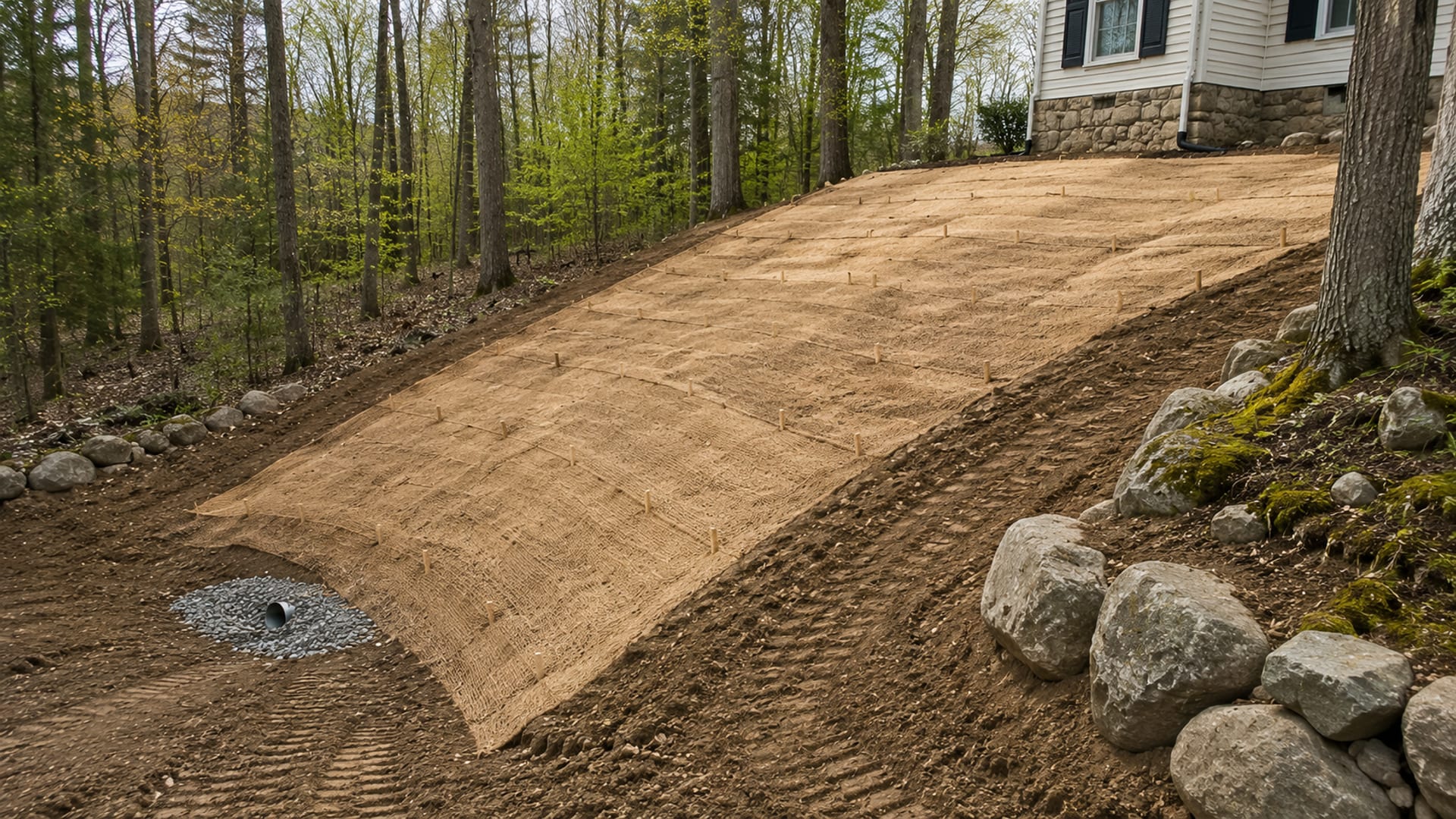
Watching your yard wash away after heavy rain is discouraging, and you already know how it feels. Erosion control in Oxford CT is one of those problems that can feel like a moving target. You fix one spot, and the next storm opens up a new gully somewhere else. Maybe you've reseeded the same bare patch three times, stacked straw bales along the slope, or had someone throw down silt fence and call it a day. And yet, the gravel is still scattered across the driveway apron, the soil near the foundation is still muddy, and that slope looks a little more stripped than it did last spring. The frustration here is not about neglect. Most Oxford homeowners dealing with repeat washouts have been trying to fix the problem; they just haven't had the right starting point. The missing piece, more often than not, isn't the seed or the mulch. It's the water. Understanding where runoff starts, where it travels, and what the shape of your land is doing to concentrate or scatter that flow is what separates a temporary patch from a real fix.
Key Takeaways
Erosion usually starts with water movement
Runoff that moves too fast or concentrates in one spot can wash away soil, gravel, and mulch before any surface treatment has a chance to hold.
Proper grading is a long-term fix
Grading reshapes the land so water moves in a controlled path instead of cutting its own channel through your yard.
Drainage may also be needed
Swales, French drains, catch basins, culverts, and stone-lined channels may be needed when grading alone cannot safely move water off the property.
Oxford properties can be erosion-prone
Slopes, clay-heavy soil, glacially deposited rock, wooded lots, long driveways, and wet areas all increase erosion risk on local properties.
Disturbed soil needs stabilization
Seed, mulch, stone, erosion control matting, or a combination of these can protect exposed soil while the ground settles and establishes.
Temporary fixes may fail
Replacing washed-out material without correcting water flow tends to produce the same results after the next storm.
Why Erosion Control Matters in Oxford CT
Uncontrolled runoff does more than ruin a lawn. Over time, it can wash away topsoil, expose tree roots, undermine landscape beds, damage driveway edges, create muddy low spots, and carry sediment into roads, stormwater drains, wetlands, and neighboring properties. The Connecticut DEEP's soil erosion and sediment control guidelines recognize that sediment movement is one of the most widespread water quality concerns in the state, and residential properties are a significant contributor when runoff isn't managed correctly. For Oxford homeowners, the stakes go beyond aesthetics. A slope that keeps washing out can eventually threaten a driveway, a retaining wall, a foundation, or a septic system.
Oxford's terrain makes this problem harder than average. The town sits in a part of Connecticut shaped by glacial activity, which left behind a mix of rocky ledge just below the surface, clay-heavy soil that sheds water instead of absorbing it, and uneven grades that send runoff in directions that don't always match what a homeowner expects. When rain hits clay soil on a slope, it doesn't soak in. It runs. And when that running water picks up speed and volume, it starts moving soil, gravel, and mulch with it. That's the cycle that keeps repeating.
Erosion Is Often a Drainage and Grading Problem
The reason so many surface fixes fail is that they treat erosion as a material problem when it's actually a water-flow problem. Research from UConn's stormwater management program consistently points to concentrated runoff as the driver behind most residential soil loss. If the land sends water down the same path during every storm, that path will keep eroding until the grade or drainage is corrected. Seed won't hold on a slope that's funneling a sheet of water across it, and mulch won't stay in a bed that sits at the bottom of an uncontrolled drainage channel. The surface treatment isn't the problem; the water movement is.
Signs You Need Erosion Control
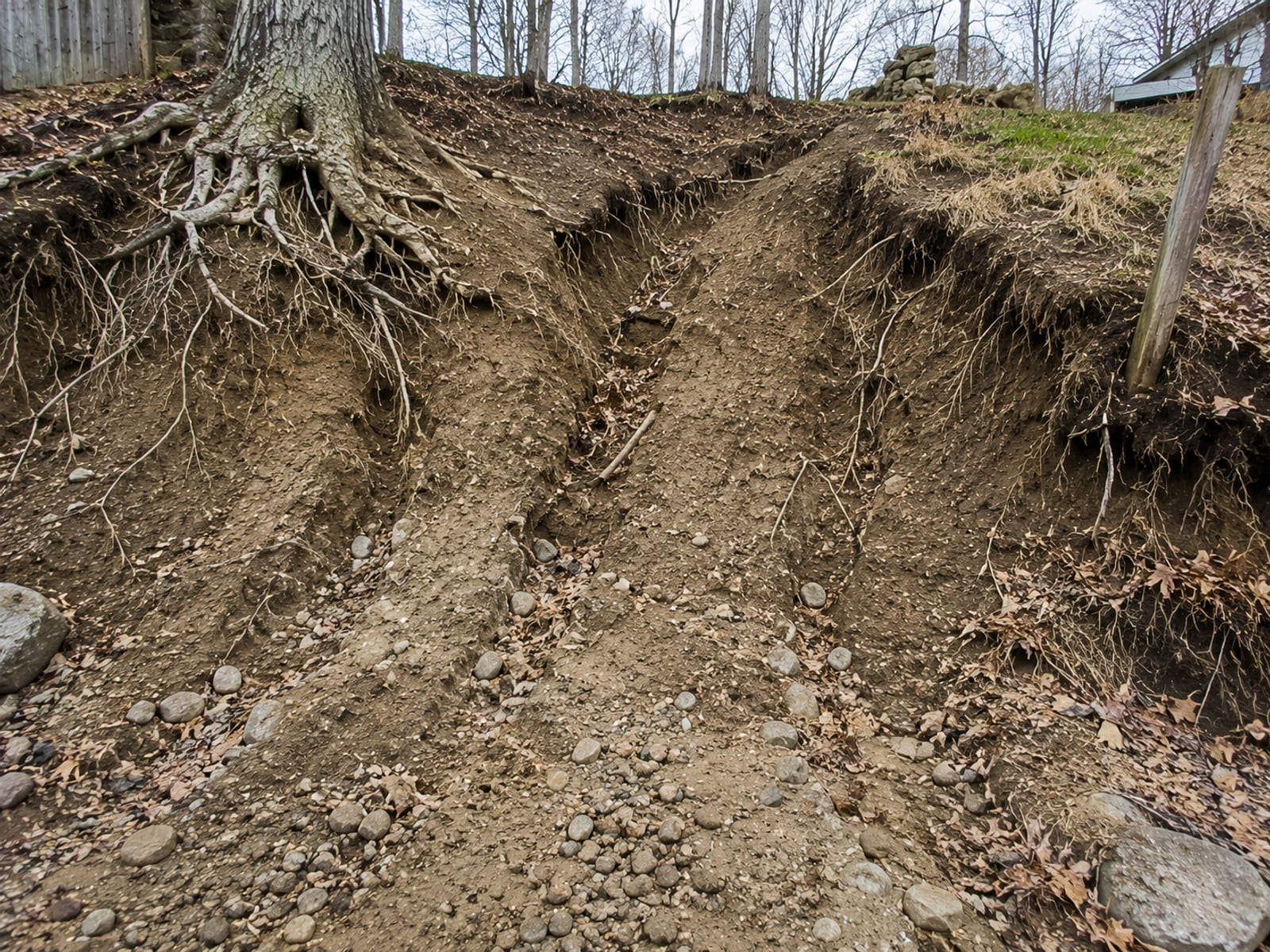
Most Oxford homeowners searching for yard erosion repair don't arrive at that search on a calm day. They arrive after a storm, standing in front of something that looks worse than it did before. Recognizing the signs of active erosion early can help you address the problem before it gets expensive. The symptoms on the surface often point directly to what's happening with water flow and grade, and reading those clues correctly is the first step toward finding a real fix.
Driveway or Gravel Washouts
A washed-out gravel driveway is one of the most common erosion complaints in Oxford, and it's also one of the clearest signs that runoff is not being managed. When gravel migrates down the driveway or piles at the base after heavy rain, the surface is acting as a drainage channel. The solution is rarely just adding more gravel. Driveway washout repair typically requires looking at how the surface is pitched, whether water is entering from adjacent slopes, and whether a culvert, swale, or stone-lined channel is needed to redirect flow before it crosses the driving surface. Ignoring the drainage component and just replacing gravel is a cycle that can repeat indefinitely.
Exposed Soil, Roots, and Gullies
Exposed tree roots are a sign that soil erosion has been happening for a while. By the time roots are visible above ground, the surrounding soil has already been displaced, often over multiple seasons of runoff. Gully formation, where a channel has been cut into the lawn or slope, tells a similar story: water has been concentrating in that spot repeatedly, carrying soil with it each time. UConn's NEMO program notes that these visible symptoms are indicators of an underlying runoff problem, not just a surface condition. Addressing them means tracing the water back to its source, not just filling in the channel and reseeding.
How Proper Grading Helps Control Erosion
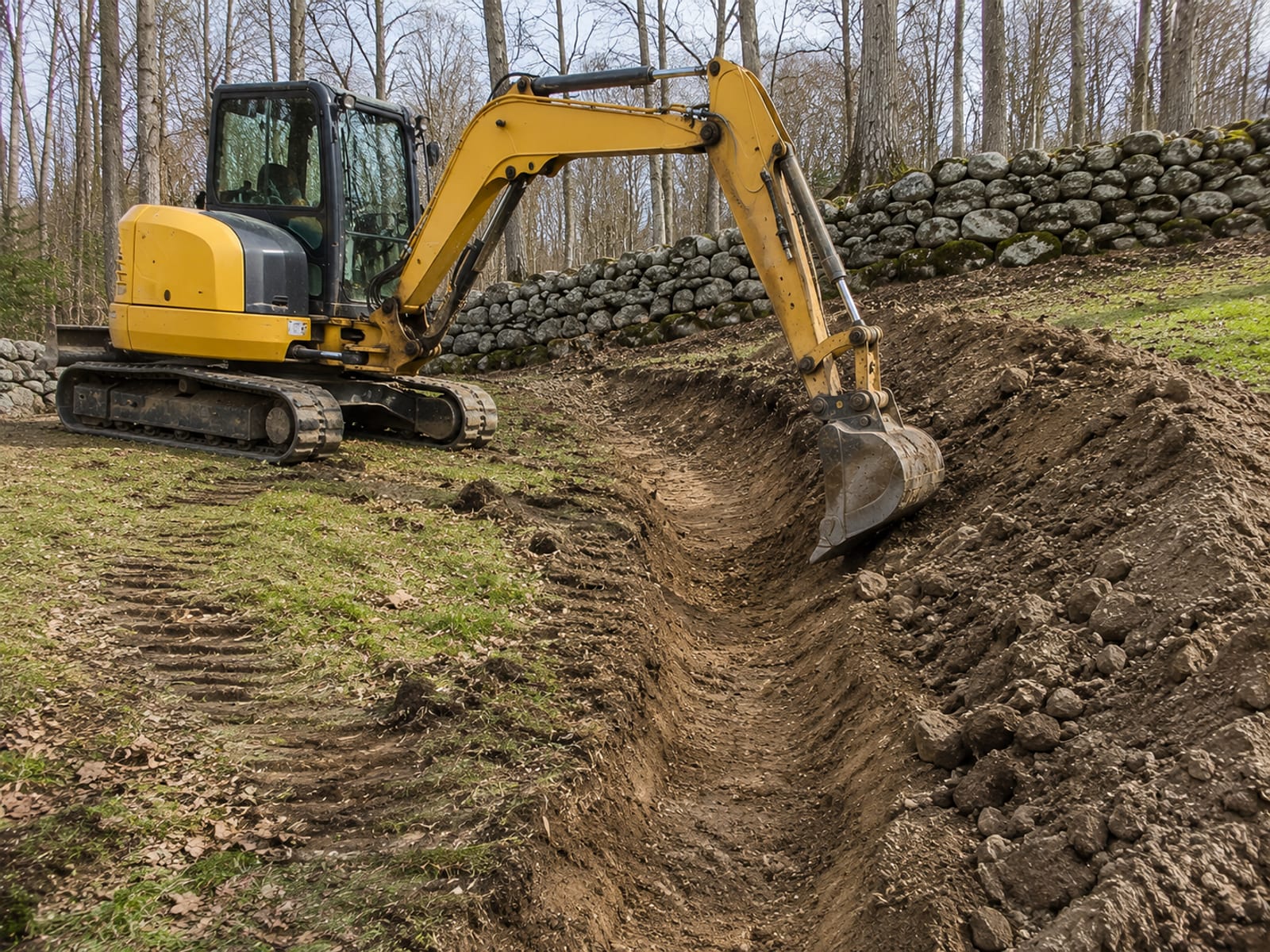
Grading is the process of reshaping the land so water moves in a direction and at a speed that doesn't damage the ground it crosses. A property that's graded correctly guides runoff toward a safe outlet: a swale, a drainage pipe, a stone channel, or an area that can absorb or slow the water without creating new problems. When the grade is wrong, or when it hasn't been considered at all, every rain event becomes an uncontrolled experiment in where the water will go next.
Oxford's mix of ledge, clay, and steep wooded lots means that grading isn't always straightforward. Buried rock can force water to the surface in unexpected places. Clay holds water on top of the ground rather than letting it drain through. Steep slopes speed runoff up before it has a chance to spread out. These conditions need to be accounted for before any grading work begins, because the goal isn't just to move dirt. It's to understand what the water is doing and reshape the land to work with it rather than against it.
Slope Correction
Slope correction is often the first grading step on properties where erosion has created gullies or stripped soil from a hillside. By reshaping the angle of a slope, a contractor can reduce the speed at which water moves across it, spread runoff more evenly, and prevent the concentrated flow that cuts channels through the ground. In some cases, slope correction also involves breaking a long uninterrupted grade into shorter segments with level or near-level areas in between, which gives water a chance to slow down and spread before it picks up speed again.
Swales and Drainage Paths
A swale is a shallow, gently sloped channel designed to carry runoff across a property in a controlled way. When graded correctly, a swale can move water away from a foundation, around a driveway, or toward a safe discharge point without concentrating flow in a damaging way. Connecticut's stormwater management standards describe swale design as a core component of residential stormwater management, and on many Oxford properties, adding or regrading a swale is the most practical first step in stopping repeat erosion. When a swale alone isn't enough, a stone-lined drainage channel, French drain, or catch basin may be added to handle higher runoff volumes.
Permits, Utilities, and Site Rules
Before any grading, drainage excavation, or erosion control work begins in Oxford CT, a few regulatory factors can affect how a project proceeds. Local departments may be involved depending on the scope and location of the work, and skipping the review step can create problems down the road. The Oxford Building Department, the Planning and Zoning Commission, and the Inland Wetlands Agency each have jurisdiction over different types of site work, so the right point of contact depends on the nature of the project. Properties near wetlands, watercourses, or sensitive drainage areas warrant an extra look before work begins.
Utility Markouts
Any project that involves excavation, trenching, or drainage pipe installation requires a utility markout before digging starts. Connecticut's Call Before You Dig system, managed through CBYD, is the process for requesting that underground utilities be located and marked prior to excavation. This applies to erosion control and drainage projects the same way it applies to any other digging work. Skipping this step isn't just a legal risk; it can turn a straightforward drainage project into a much more complicated situation if a gas line, water line, or buried cable is hit.
Disturbed Soil and Sediment Control
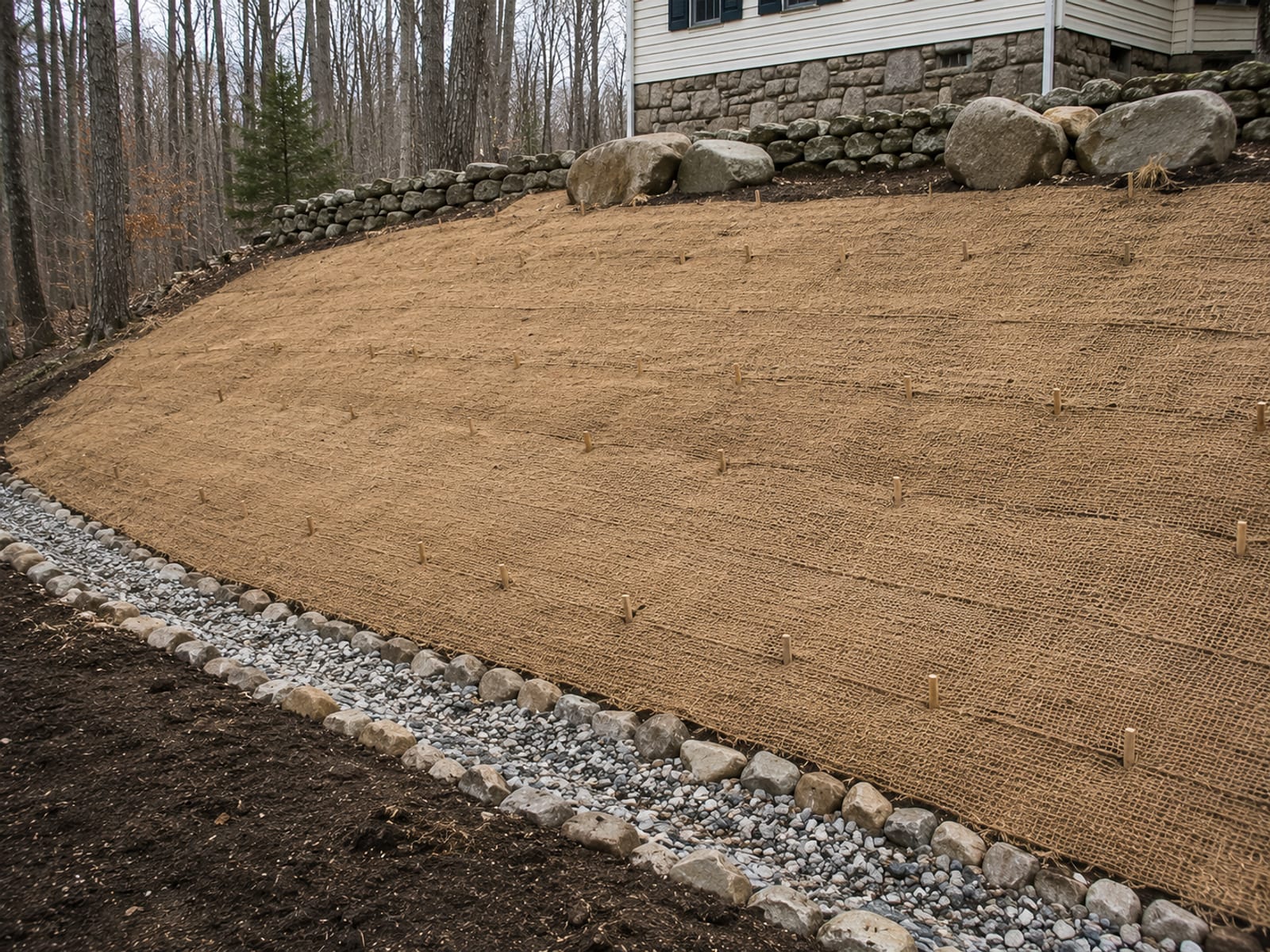
Any time soil is disturbed during grading or drainage work, there's a window when that soil is vulnerable to washing away before it stabilizes. Connecticut's soil erosion and sediment control guidelines require that disturbed soil be managed so sediment doesn't migrate into roads, drainage systems, wetlands, or neighboring properties. On a residential project, this typically means using silt fence, erosion control blankets, or temporary stabilization measures during construction, then completing final grading and seeding as quickly as possible after the work is done.
The Erosion Control Process
A well-run erosion control project follows a clear sequence, and the most common mistake homeowners make is skipping the first step. It's tempting to jump straight to the fix: add stone here, regrade that slope, install a drain. But without a clear picture of where the water is coming from and where it's going, even well-executed work can miss the actual source of the problem. A professional site evaluation looks at the whole property, not just the spot that's currently washing out. Understanding that sequence from assessment through final stabilization is what keeps a repair from becoming a repeat.
Step 1: Identify the Water Source
The first step is reading the site. That means looking at slope angle, runoff paths, roof drainage, driveway pitch, drainage outlets, low spots, soil type, buried utility locations, wetlands proximity, and the areas where erosion is actively occurring. On Oxford properties, this also means accounting for buried ledge that may be redirecting water underground before it surfaces in an unexpected place, and clay layers that prevent water from draining vertically. A contractor who skips this evaluation and goes straight to grading or stone placement is working without a map.
Step 2: Grade, Drain, Stabilize, and Restore
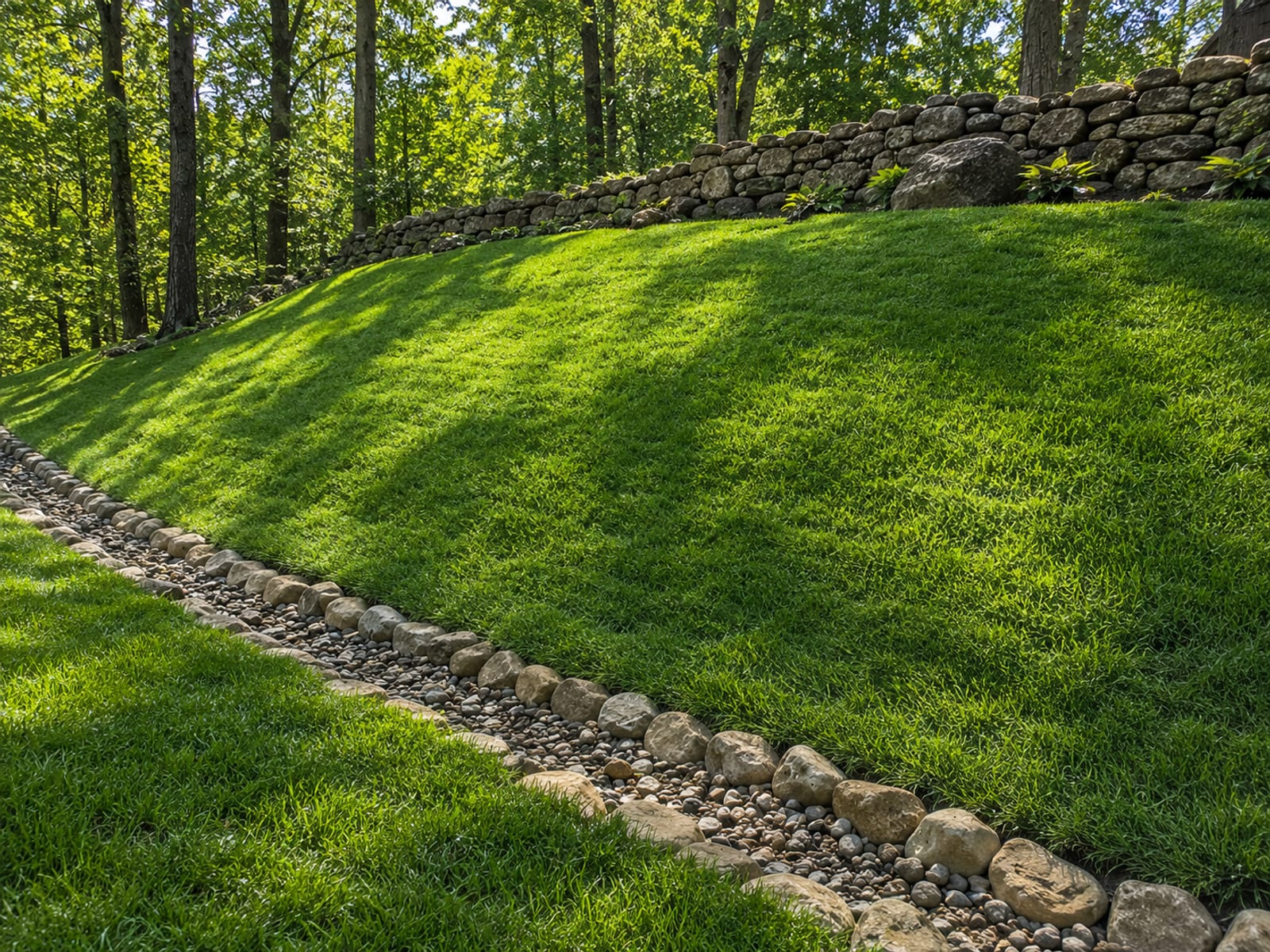
Once the water flow is understood, the work can follow a logical sequence. Grading reshapes the land to direct runoff safely. Drainage elements such as catch basins, French drains, culverts, and stone-lined channels are added where grading alone can't move the water volume or reach a safe outlet. Stone, riprap outlet protection, or erosion control blankets stabilize areas that are vulnerable to washing during and after construction. Finally, topsoil, seed, and mulch restore disturbed areas so the ground can re-establish and hold over time. Each of these steps depends on the ones before it, which is why treating them as a connected system matters more than any single piece of the solution.
Long-Term Strategy for Erosion Prevention
The goal of any erosion control project isn't just to stop the current washout; it's to set up the property so the next storm doesn't restart the cycle. That means thinking through the full path of water on the site, from where it enters the property to where it safely leaves. Connecticut's stormwater management performance criteria describe this kind of site-wide water management as the standard for residential stormwater control.
Before committing to a contractor or a scope of work, homeowners should be able to answer a few basic questions about their property. Where does the runoff start? Where is it going now, and where should it go? Is grading alone enough to redirect it, or does the volume require a drainage system? How will the exposed soil be stabilized after work is complete, and who is responsible for that final step? A contractor who can walk through these questions clearly, and who adjusts the plan based on what they find on the site, is more likely to deliver a result that holds.
Common Pitfalls in Erosion Control
Property owners dealing with slope erosion or repeat washouts often run into the same set of mistakes, whether they're managing the work themselves or hiring someone who isn't thinking about the full picture. Replacing washed-out soil without fixing the runoff path is probably the most common, but it's far from the only one. Making a slope too steep during regrading can speed water up rather than slow it down, creating new erosion problems below the work area. Redirecting water toward a neighbor's property can create both practical and legal complications. Ignoring driveway drainage when grading the surrounding yard can leave the driveway as an unintended channel that concentrates runoff. Skipping utility markouts before excavation adds unnecessary risk. Leaving exposed soil without temporary stabilization, even for a few days between grading and seeding, can undo a significant amount of work if a storm moves through. Choosing a temporary fix for what is clearly a long-term water management problem is the pattern that keeps homeowners going in circles.
Frequently Asked Questions About Erosion Control Oxford CT
What causes erosion on residential properties?
Erosion on residential properties is usually caused by runoff moving across exposed or unprotected soil. Steep slopes, poor grading, concentrated drainage, driveway washout, disturbed ground after construction, and clay-heavy soil that sheds water instead of absorbing it can all contribute. In Oxford, buried ledge can also redirect water to the surface in unexpected places, which makes the erosion pattern harder to read without a site evaluation.
Can proper grading stop erosion?
Proper grading can stop or significantly reduce erosion by reshaping the land so runoff moves in a controlled direction rather than cutting through the ground wherever it finds the lowest point. However, some properties also need drainage systems, stone channels, or soil stabilization to handle water volume or reach a safe discharge point. Connecticut's stormwater management standards treat grading and drainage as connected parts of the same system rather than separate options.
Do erosion control projects need permits in Oxford CT?
It depends on the project scope, the amount of soil disturbed, the type of drainage changes involved, proximity to wetlands, driveway work, and stormwater impact. Oxford's Building Department, Planning and Zoning Commission, and Inland Wetlands Agency each cover different aspects of site work. Local requirements should be checked before work begins rather than after the fact.
Do utilities need to be marked before erosion control work?
When excavation, trenching, or drainage installation is involved, yes. Connecticut's Call Before You Dig system through CBYD is used to identify underground utilities before digging starts. This applies to drainage excavation, French drain installation, catch basin work, and any other aspect of an erosion control project that involves breaking ground.
Why does my driveway keep washing out?
Driveway washouts in Oxford usually happen because runoff is concentrating on the driveway surface or along its edges, and the driveway is acting as a drainage channel rather than a driving surface. Grading the adjacent areas, installing a culvert or swale to intercept and redirect water before it reaches the driveway, and stabilizing the driveway edges with stone or riprap can all be part of the solution. Replacing the gravel without addressing the drainage path tends to produce the same result after the next storm.
What should an erosion control estimate include?
A thorough estimate should explain the grading work involved, what excavation is needed, whether drainage systems are part of the scope, how stone or riprap will be used, how exposed soil will be stabilized during and after construction, and what cleanup and surface restoration looks like. An estimate that only addresses one part of the problem, such as regrading without mentioning sediment control or surface restoration, is worth questioning before work begins.
Erosion in Oxford isn't an unsolvable problem, but it does require looking at the right variables. The surface symptoms, washed gravel, bare slopes, muddy low spots, exposed roots, are signs of what water is doing to your property, not the cause of it. When grading, drainage, and soil stabilization are addressed together as a connected system, the fix tends to hold. When only one piece is treated, the next storm usually finds a way to restart the cycle.
Taking the right steps now protects more than your lawn. A property with stable grades, controlled runoff paths, and properly stabilized soil is less likely to see driveway damage, foundation moisture problems, or sediment migrating toward roads, drains, or neighboring properties. That's a return that compounds over time as your land stays where you put it.
We work on Oxford properties every season, and we understand what makes this terrain difficult: the clay that won't drain, the buried ledge that forces water to the surface, the long wooded driveways that turn into rivers during a storm. At Prestige Property Maintenance, we handle the full sequence of site work from grading and drainage excavation to retaining walls and final surface restoration, all with one crew that knows Oxford CT and the surrounding Seymour CT area. If you're tired of guessing at surface fixes and want someone to evaluate what the water is actually doing on your property, contact us at Prestige Property Maintenance to get started.
Related Articles
Grading in Bethany, CT: Taming a Sloped, Wooded Yard
No flat ground and runoff carving channels every spring? Here is what grading in Bethany, CT actually involves on a wooded, sloped property like yours.
Drainage Excavation to Eliminate Standing Water in Oxford CT
Standing water in Oxford CT means more than a soggy lawn. See how drainage excavation fixes the real problem beneath the surface before it damages your home.
Excavation in Oxford CT: A Homeowner's Guide to Getting It Right
Oxford CT excavation covers more than digging. Here's what homeowners need to know about rock, permits, utilities, and getting the site done right.