

Why Your Oxford CT Driveway Keeps Failing: And How Excavation Fixes It
Kash CochranePublished Updated
- driveway excavation
- paving prep
- oxford ct
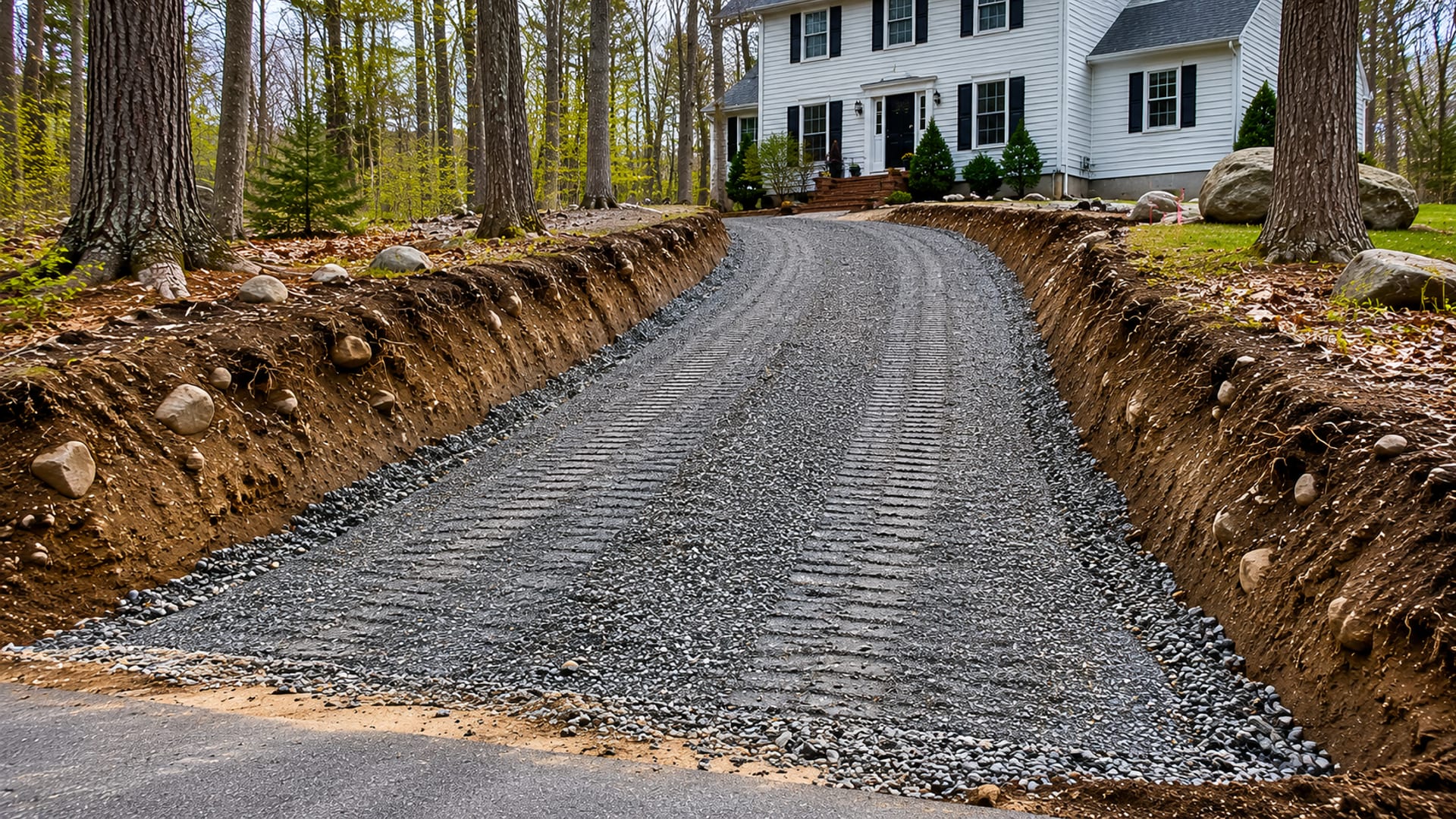
You've added gravel. You've filled the ruts. You've watched the same soft spot swallow another load of stone, and now you're standing at the edge of your driveway wondering if you're just throwing money into the ground. If you're searching for answers about driveway and roadway excavation in Oxford CT, there's a good chance you already sense that the problem is bigger than what's sitting on the surface. Most driveway failures in Oxford have almost nothing to do with the gravel itself. They come from what's underneath it, from a base that was never right, water that was never managed, or soil that simply won't hold up under load and freeze-thaw cycles. Oxford's rocky glacial terrain, its clay-heavy soils, and its wet winters create a very specific set of conditions that routine surface repairs can't fix. Adding more stone to a bad base is like painting over a rotting board; it looks better for a season, but the board is still rotting. What you're reading now is a straight answer to what's actually happening beneath your feet.
Key Takeaways
The base controls driveway performance
A weak or poorly drained base can cause potholes, rutting, and settlement no matter how much surface material you add.
Drainage is the most overlooked factor
Water that crosses, pools on, or moves beneath your driveway will soften the subgrade, wash out gravel, and shorten the life of any surface material.
Oxford driveways have specific challenges
Long grades, rocky glacial soil, wooded lots, steep slopes, clay layers, and aging culverts all affect how excavation needs to be planned and executed.
Excavation often beats resurfacing
When failures keep repeating, the problem is almost always below the surface, and full excavation with base reconstruction is often the more cost-effective long-term choice.
Permits and local review may apply
Driveway entrances, drainage changes, culvert work, wetlands proximity, and connections to town roads can trigger review by Oxford's building, planning, or inland wetlands departments.
A detailed estimate matters
Any quote you accept should spell out excavation scope, base material, compaction, drainage, hauling, rock removal, and cleanup, not just a price per load of stone.
Why the Surface Is Never the Real Problem
Most people think of a driveway as a surface. It's not. The surface is just the last thing that gets installed, and it only performs as well as everything underneath it allows. When a contractor lays gravel or asphalt over a weak subgrade, poor compaction, or unmanaged water, the result isn't a finished driveway so much as a delayed failure.
A properly built driveway has layers, each doing a specific job. The subgrade, which is the native soil at the bottom, needs to be stable and well-drained. On top of that goes a base layer of compacted crushed stone, deep enough to spread load and resist frost. Then comes the surface material, whether that's gravel, pavement, or something else. If any one of those layers is missing or done wrong, the whole system breaks down.
Oxford CT's soil conditions make this especially relevant. The town sits on glacial till left behind by the last ice age, which means the ground can shift between rocky outcrops, dense clay layers, and pockets of fine-grained soil within the same driveway run. Clay holds water. Water weakens the base. A weakened base under repeated vehicle loads and winter freeze-thaw cycles produces exactly the ruts, soft spots, and potholes you're dealing with right now. Connecticut's stormwater management guidelines make clear that drainage and base stability go hand in hand, and that surface fixes applied over drainage problems will not hold.
Signs Your Driveway Actually Needs Excavation
Not every driveway problem requires full excavation. But certain patterns almost always point to something deeper, and knowing the difference can save you from another round of surface repairs that won't stick.
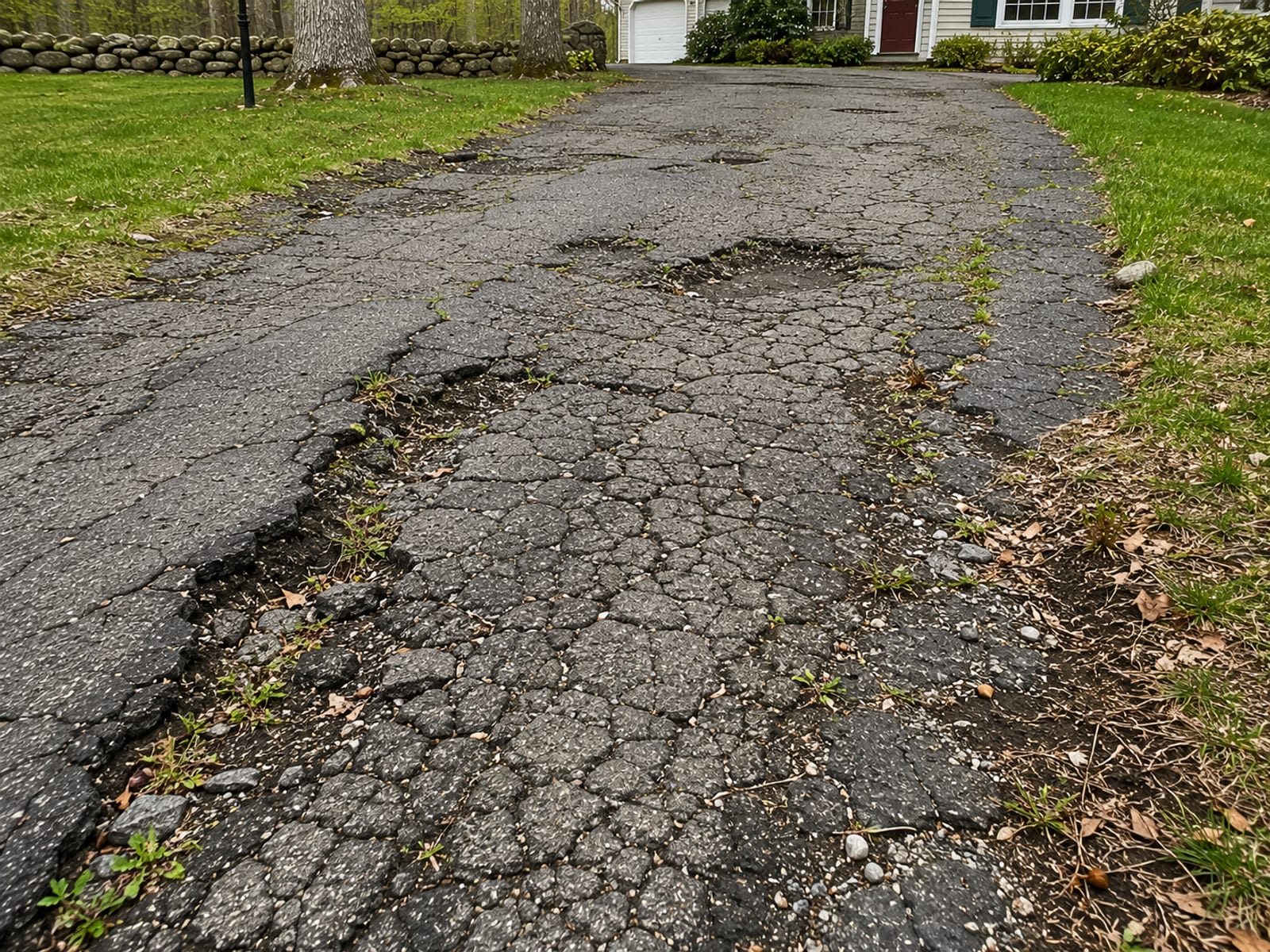
The clearest sign is repetition. If you've fixed the same rut, pothole, or soft spot more than once and it keeps coming back, the surface isn't the problem. The base is soft, poorly compacted, or sitting on soil that holds water. Adding gravel on top doesn't change any of that. The following two failure types are worth understanding on their own, because each one points to a different underlying cause.
Potholes, Ruts, and Soft Spots
Potholes and vehicle ruts that return season after season are one of the most common signs that the base beneath the driveway has failed. This can happen because the original excavation was too shallow, the base material was inadequate, or the subgrade soil was never properly compacted before the surface went down. In Oxford, clay-heavy subgrade soil is a frequent contributor. Clay expands when it freezes and contracts when it thaws, which gradually destabilizes the base above it and creates sinking, soft zones that feel springy underfoot or under tire. A proper gravel driveway reconstruction addresses this by removing the failed material, correcting the subgrade, and building back up with properly compacted stone.
Washouts and Standing Water
When water moves across your driveway during storms, or when gravel keeps washing into the ditch along the same stretch, that's a grading and drainage problem, not a gravel problem. Similarly, if water pools on the surface after rain and doesn't drain off, the driveway pitch is wrong, the base is too dense to absorb runoff, or there's no proper outlet for water to flow away from the drive. Connecticut's soil erosion and sediment control guidelines point to unmanaged water movement as one of the primary drivers of driveway surface degradation and erosion. If your driveway shows any of these patterns, drainage correction needs to be part of any real fix.
What Makes Oxford CT Driveways Particularly Difficult
Driveway problems in Oxford aren't generic. The town's terrain and soil conditions create a specific set of challenges that standard surface repair advice doesn't account for, and understanding what you're working with is the first step toward fixing it correctly. Oxford is largely rural and semi-rural, with long driveways that run through wooded lots, down slopes, and across wet areas. Many properties have driveways that predate modern base preparation standards, built on cut-and-fill grades with no drainage pipe and no engineered base. Over decades, those conditions catch up. The three factors below show up most consistently in failed Oxford driveways.
Rocky Glacial Soil and Hidden Ledge
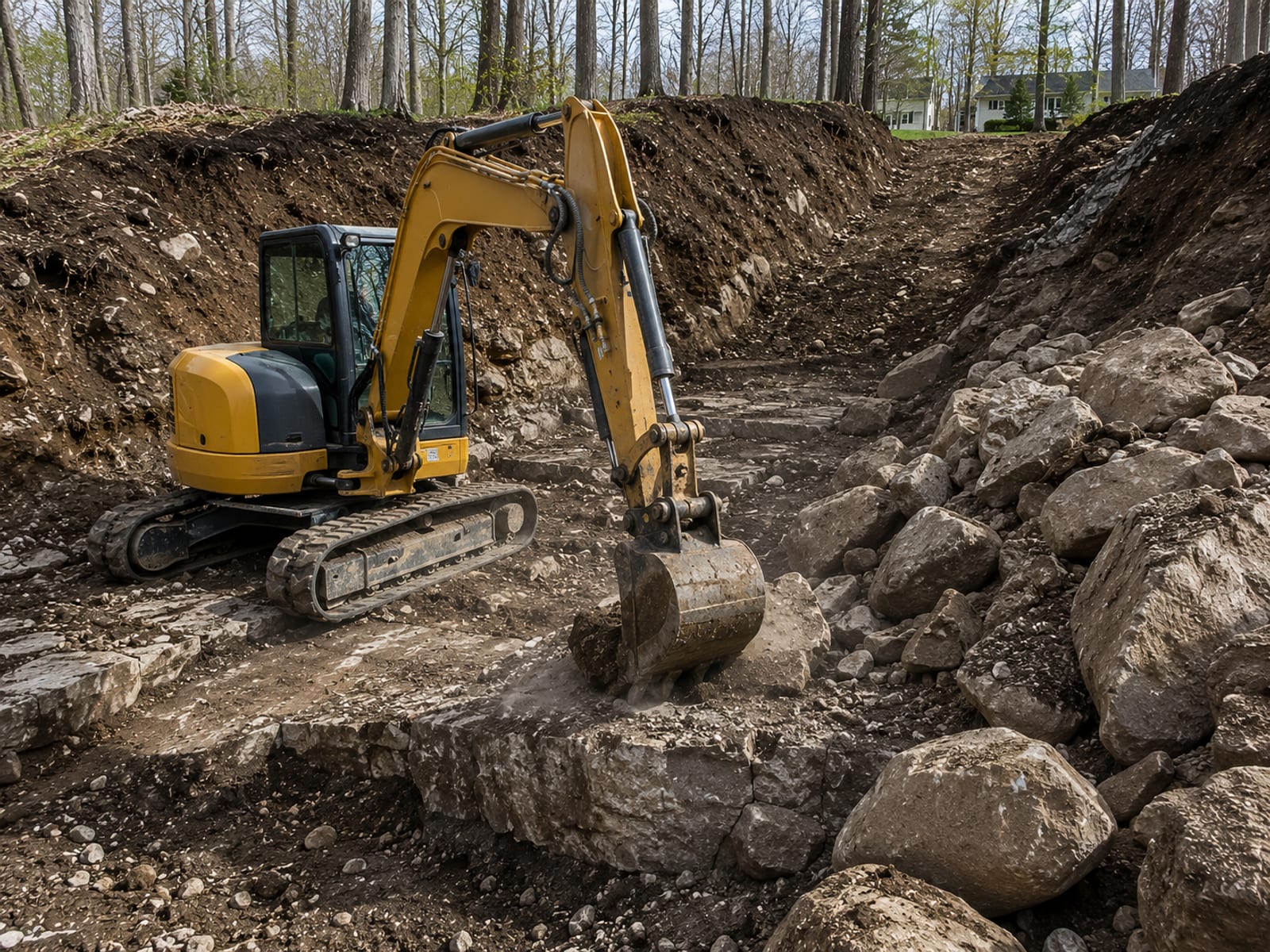
Connecticut's glacial till means buried boulders and ledge can appear anywhere, often with no warning until a machine hits something unexpected. For driveway excavation, this matters because rock removal adds significant scope to a project. Hitting ledge mid-excavation requires different equipment, changes the schedule, and affects cost. A contractor who works this region regularly will plan for rock before the first machine moves rather than treating it as a surprise. Driveway grading in Oxford often involves navigating around or through material that a contractor in flatter terrain would never encounter.
Clay Soil and Freeze-Thaw Damage
Clay soils hold water rather than draining it, and that water goes through freeze-thaw cycles every winter. Each cycle lifts and drops the base slightly, loosening compaction and creating gaps where more water can collect. Over several seasons, a driveway base that was never properly engineered to handle clay can break apart entirely. The ruts get deeper each spring and the soft spots spread. Adding stone gives temporary relief, but the clay underneath keeps doing what clay does.
Long Grades and Slope Drainage
Many Oxford driveways run up a significant grade. On a steep slope, water accelerates as it runs down the drive surface, picking up gravel and eroding the edges as it goes. Without proper swale grading, cross-pitch correction, or drainage pipe at strategic intervals, a sloped driveway will wash out repeatedly no matter how often it's regraded. Driveway drainage in Oxford often requires more than a simple crown; it may need culverts, stone-lined channels, or subsurface pipe to actually keep water where it belongs.
The Right Way to Fix It: What Excavation Actually Involves
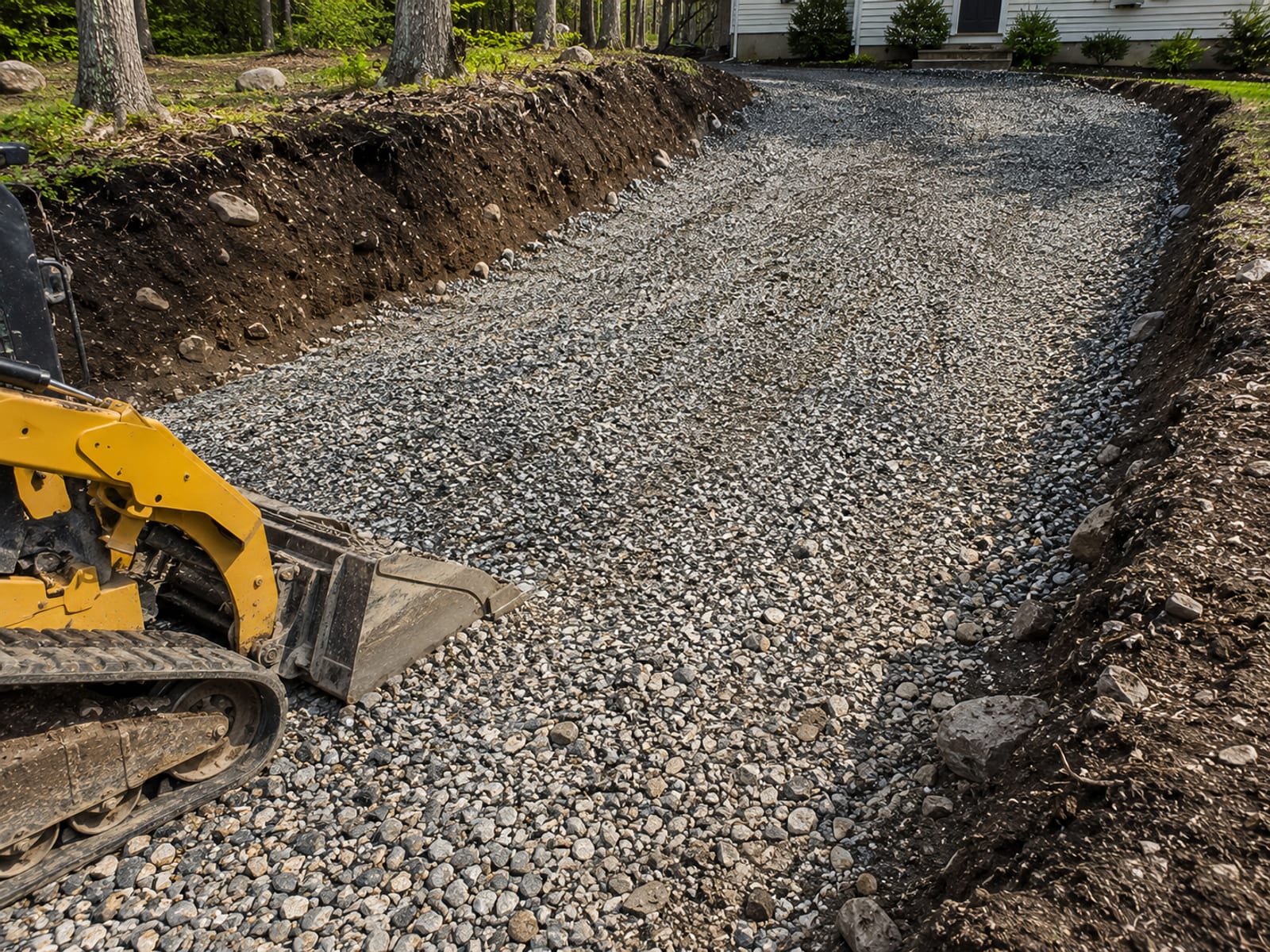
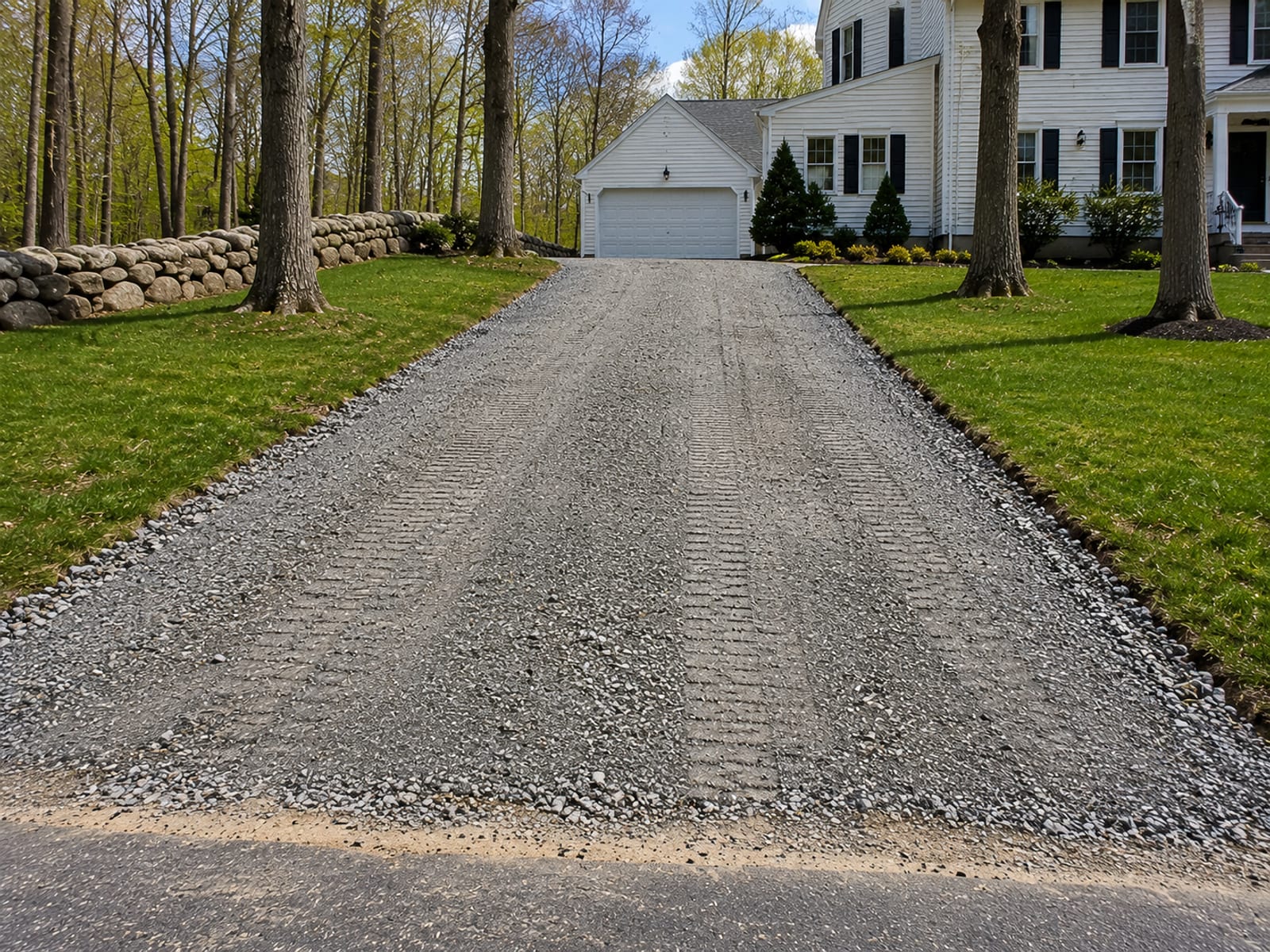
When a driveway has failed at the base level, the fix is to go back to the ground and build it correctly. That means excavating down to stable soil, correcting drainage, installing an appropriate base with proper compaction, and then preparing the surface. It's more work than adding gravel, but it's also the only approach that actually lasts. A professional driveway and roadway excavation project follows a logical sequence, and understanding that sequence helps you know what to expect and what to ask for when you're getting estimates.
Step 1: Site Inspection and Planning
Before any equipment moves, a good contractor walks the driveway the way a diagnostician looks at a patient. That means checking the slope and how water currently flows, looking for soft spots and wet zones, assessing the existing base, identifying any culverts or drainage features that are blocked or undersized, and thinking about what equipment can access the site. In Oxford, that inspection also means looking for signs of ledge, checking for septic system proximity, and thinking about how grade changes will affect drainage once excavation is done.
Step 2: Excavation, Base Preparation, and Drainage
The actual work involves removing unsuitable material, which can mean clay, organic soil, old failed base, or rock, depending on what the site has. Once the subgrade is exposed and soft zones are addressed, base material goes in, typically crushed stone in compacted lifts. Drainage correction happens at this stage too, whether that's installing culvert pipe, cutting swales, adding a catch basin, or re-pitching the drive to get water moving away from the surface. Proper stormwater management during construction also means controlling sediment so disturbed soil doesn't wash into neighboring properties, roads, or waterways.
Permits, Utilities, and What You Need to Know Before Work Starts
Driveway excavation in Oxford can involve more than just digging. Depending on the scope and location of your project, there may be local requirements worth checking before work begins, and knowing what applies to your situation ahead of time prevents delays and surprises mid-project. Most residential driveway projects move forward without significant regulatory friction, but a few specific conditions do trigger review. If your driveway connects to a town road, any changes to the apron or entrance may need review by the Oxford building department. If drainage changes could affect a wetland area, the Oxford Inland Wetlands Agency may need to be involved. Significant soil disturbance can also fall under state stormwater construction permit requirements, and the Oxford Planning and Zoning Commission may be relevant depending on how the access route relates to the lot.
Utility Markouts Before Any Digging
Any project that involves digging or trenching in Connecticut requires utility identification before work starts. Connecticut's Call Before You Dig (CBYD) system coordinates with utility companies to mark underground lines before excavation begins. This applies to driveway drainage pipe installation, culvert excavation, and any trenching associated with base preparation. It's a straightforward process, but it needs to happen before machines go in the ground.
Erosion and Sediment Control During Construction
Disturbed soil and exposed gravel can generate significant runoff during construction. Connecticut's erosion and sediment control guidelines describe the practices used to keep that material on site, including silt fencing, stabilized construction entrances, and staged grading. A contractor working in Oxford should manage site erosion as part of the project scope, not as an afterthought.
What a Good Estimate Should Actually Cover
If you get a quote that says "deliver and spread X tons of gravel," that's a materials delivery quote, not a driveway repair estimate. A real excavation estimate gives you enough information to understand what work is being done and why, so you can actually compare bids against each other rather than just comparing numbers.
Look for an estimate that covers driveway length and width, excavation depth and scope, material removal and hauling, base stone type and depth, compaction methods, drainage elements such as pipe or culverts, rock removal if applicable, erosion controls, cleanup and edge stabilization, and who handles permit or utility markout responsibilities. Comparing estimates by scope rather than price alone is the only way to know whether two quotes are actually for the same work. An estimate that skips drainage or compaction isn't cheaper because the contractor is more efficient. It's cheaper because those things aren't being done.
Frequently Asked Questions About Driveway and Roadway Excavation Oxford CT
What is driveway and roadway excavation?
Driveway and roadway excavation is the process of digging down to stable ground, removing unsuitable or failed material, correcting drainage and grade, building a compacted stone base, and preparing the surface for gravel, paving, or long-term use. It addresses the underlying site conditions that cause surface failures rather than adding material on top of an existing problem.
When does a driveway need excavation instead of resurfacing?
Excavation is the right call when the driveway shows repeated potholes, soft spots, ruts that return after grading, washouts along the edges, standing water that won't drain, or a base that visibly moves or settles under vehicle weight. Resurfacing works when the base and drainage are already sound. If they're not, resurfacing is a temporary fix on a problem that will keep coming back.
Why does driveway drainage matter so much?
Water is the most common cause of driveway base failure. When water gets into the base material and can't escape, it softens the soil beneath, loosens compaction, and accelerates frost damage during winter. Poor drainage can wash out gravel, undercut edges, and shorten the life of any surface material significantly. Fixing the surface without fixing the drainage means the surface fails again.
Do driveway excavation projects need permits in Oxford CT?
It depends on the scope and location. Work that affects a town road connection, changes drainage patterns, disturbs soil near a wetland, or involves culvert installation may need review by Oxford's local departments or state agencies. It's worth checking before work starts rather than finding out mid-project.
Do utilities need to be marked before driveway excavation in Connecticut?
Yes, when digging or trenching is involved. Connecticut's Call Before You Dig system should be contacted before any excavation, drainage pipe installation, or culvert work begins. This applies to private residential projects, not just commercial or municipal work.
What should a driveway excavation estimate include?
A solid estimate should spell out excavation depth and scope, material removal and hauling, base stone type and depth, compaction methods, drainage elements such as pipe or culverts, rock removal if applicable, erosion controls, cleanup and edge stabilization, and who handles permit or utility markout responsibilities. If an estimate doesn't address drainage and compaction, those items are probably not included in the work.
What is private roadway excavation?
Private roadway excavation covers longer access routes on residential or rural properties that function like small roads rather than simple driveways. These routes often need to support heavier loads including delivery trucks and emergency vehicles, which means the base, width, and drainage requirements are more demanding than a standard residential driveway. The excavation process is similar but typically involves greater depth, wider clearing, and more drainage planning.
Final Thoughts
If your Oxford driveway keeps failing season after season, the reason is almost never the surface material. It's the base, the drainage, or the grade beneath it. That's not a reason to feel frustrated about past repairs; it's a reason to stop doing the same repair and actually fix the cause. Proper driveway and roadway excavation addresses the ground conditions that surface repairs can't reach, and when those conditions are corrected, the surface holds. Oxford's rocky glacial soil and clay-heavy terrain make base preparation and drainage more demanding than in other parts of Connecticut, but those challenges are manageable when the work is planned correctly from the start.
Fixing a driveway the right way tends to cost less over time than fixing it the wrong way repeatedly. A properly excavated and drained driveway doesn't need annual regrading, repeated stone delivery, or emergency repairs after every wet spring.
We're Prestige Property Maintenance, based in Oxford CT and serving communities across the Naugatuck Valley including Seymour CT and the surrounding region. Our crew handles the full scope of this work, from site inspection and excavation through base preparation, drainage installation, grading, and rock removal, all with one accountable team. If you're past the point of wondering whether more gravel will fix it, we're happy to walk your driveway with you, tell you what we see, and give you a straight answer about what the job actually needs. Contact us to set up a site visit and get an estimate that covers the whole picture.
Related Articles
Driveway Excavation Bethany CT: Fixing a Drive That Won't Hold
Tired of adding stone that disappears from your long Bethany driveway? Driveway excavation in Bethany, CT fixes the failed subgrade, not just the top.
Paving Prep in Derby, CT: What a Proper Base Actually Means
A contractor blamed your old base and wants to repave. Before you agree, learn what paving prep in Derby, CT actually requires, layer by layer.
Driveway Excavation in Derby, CT: Stop Patching, Start Rebuilding
Patching the same spot on a steep Derby driveway every spring? Driveway excavation in Derby, CT starts by finding whether the base or drainage is failing.