
Oxford CT Land Clearing Without the Budget Surprises
Kash CochranePublished
- land clearing
- oxford ct
- site preparation
- hiring a contractor
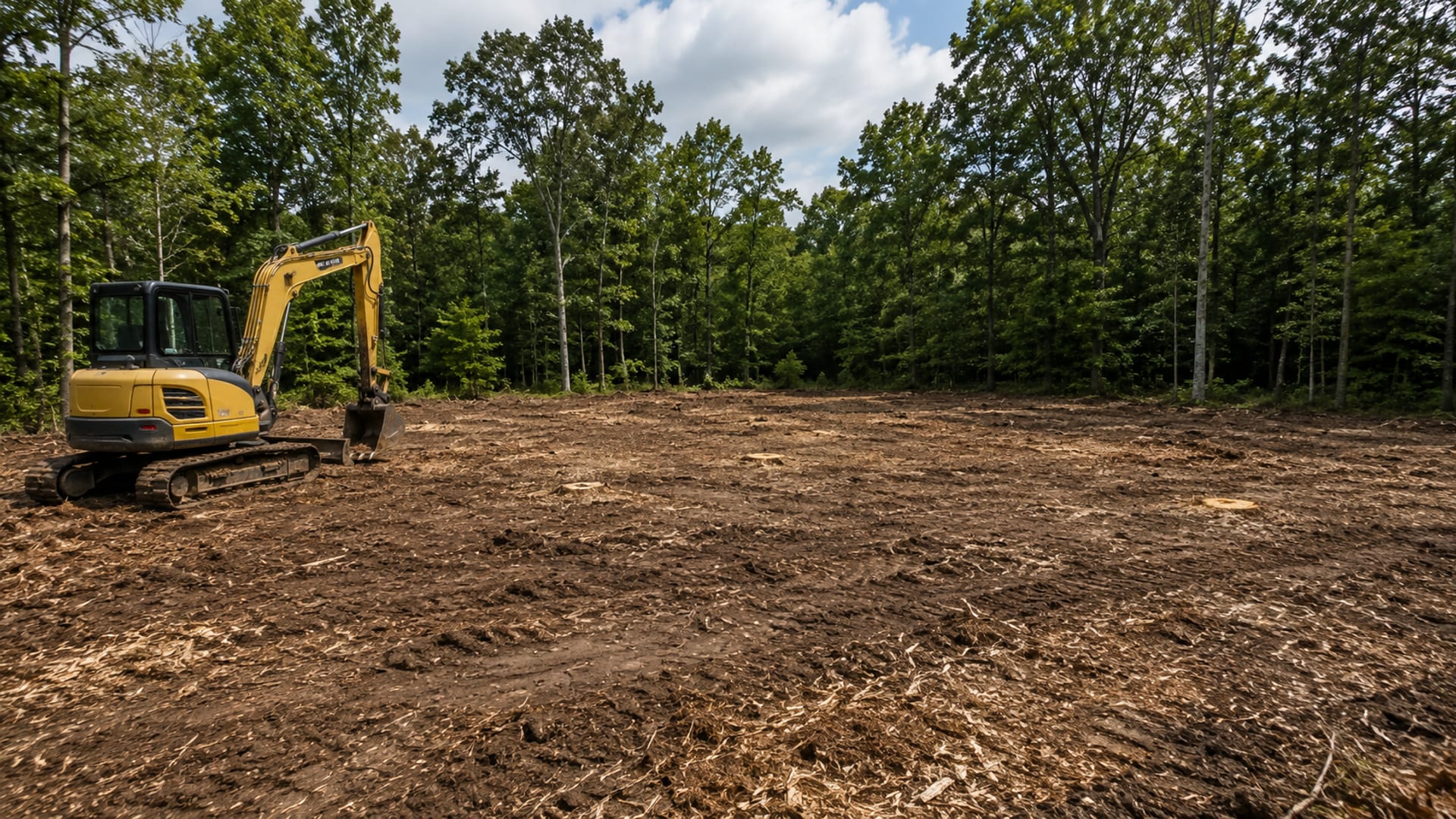
You call around for land clearing in Oxford CT, get a couple of numbers, and somehow walk away more confused than before you picked up the phone. One contractor gives you a price that sounds reasonable, another gives you one that sounds too low, and neither has explained what is actually included. Will they grind the stumps? Who handles the rocks? What happens to all that brush? And after the equipment leaves, will you be looking at a muddy, rutted mess that costs more to fix than the clearing itself? That fear is exactly why so many Oxford homeowners put off clearing work they know they need done. Land clearing on a rocky, sloped lot in western Connecticut is a different job than clearing a flat field, and a contractor who does not account for those differences upfront will often leave you holding the bill for them later. Understanding what actually goes into a well-planned clearing project helps you ask better questions, read estimates more carefully, and avoid the budget surprises that turn a reasonable project into a frustrating one.
Key Takeaways
Land clearing is more than brush removal
In Oxford CT, clearing often connects directly to grading, drainage, stump grinding, rock removal, and full site preparation for the next use.
Affordable means correct scope, not just a low number
Choosing the right method for the property and the goal often costs less over the full project than a cheap quote that leaves problems behind.
Local conditions shape the plan
Rocky glacial soil, ledge, clay pockets, slopes, wet areas, and wooded terrain can change equipment choices, timing, and what the finished grade needs to look like.
Permits may apply
Wetlands, zoning, driveway access, right-of-way work, and significant soil disturbance can trigger Oxford town review before work begins.
Call Before You Dig is required
When clearing includes any ground disturbance, stump removal, grading, or trenching, Connecticut's Call Before You Dig program is a required step, not an optional one.
The next use of the land should drive the clearing plan
A future driveway, lawn, building pad, drainage system, or trail each needs a different approach and a different finish standard.
Why Land Clearing Matters in Oxford CT
Oxford CT properties cover a lot of different terrain. Some lots are mostly flat with overgrown field edges. Others have steep wooded slopes, seasonal wet pockets, long private drives, and buried rock that does not show up until a machine hits it. That variety means a clearing contractor needs to understand what they are getting into before the first machine rolls off the trailer. A rough woods-edge cleanup is not the same job as clearing a driveway route, preparing a building pad, or opening up space for a drainage improvement. The scope has to match the goal, or the work will either fall short or create new problems.
Local Property Conditions in Western Connecticut
Most of Connecticut's rocky glacial soil came from the last ice age, which left behind a mix of ledge, buried boulders, glacial till, and unpredictable pockets of water-holding clay. In Oxford and nearby Naugatuck Valley towns like Seymour, Ansonia, and Shelton, this geology shows up constantly in clearing and excavation work. A lot that looks like a straightforward brush job may have three-foot boulders just below the surface, or a high water table that makes equipment work difficult in wet seasons. A contractor who has spent real time working Oxford's planning and zoning districts and the terrain that comes with them will plan for those conditions before quoting the job, not after the machine is already in the ground.
Signs Your Property Needs Land Clearing
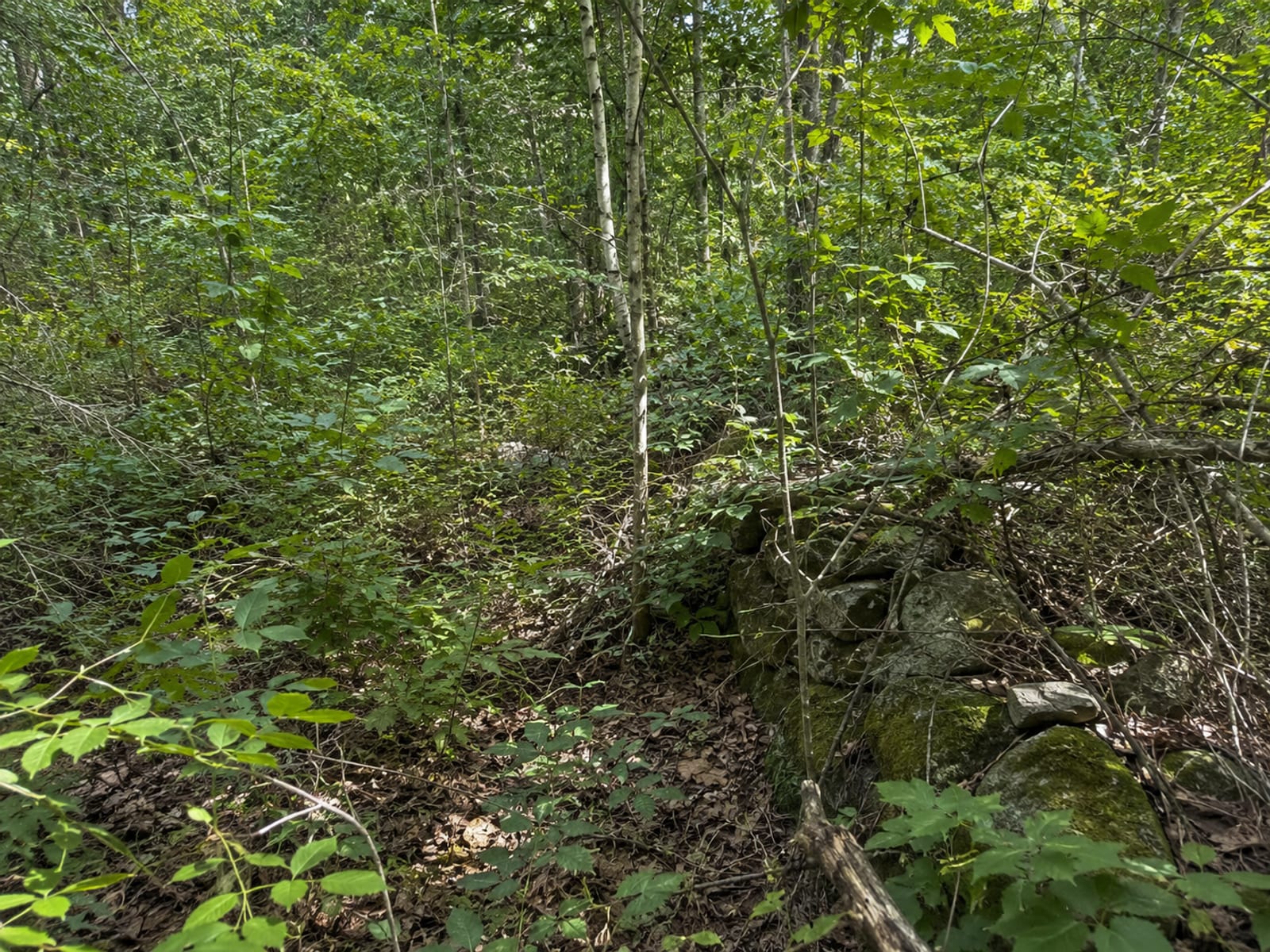
Most homeowners recognize the surface-level problem: the back edge of the lot has become a wall of brush, or there is a stretch of wooded acreage that was supposed to become a yard two owners ago and never did. The less obvious signs are worth paying attention to as well, because they often point toward a scope that goes beyond simple brush removal. When overgrowth starts affecting how water drains, where equipment can access, or what can be built, the clearing plan needs to account for more than cutting down trees. Thinking through those connected problems before work starts can save a lot of time and money on the back end.
Sign A: Overgrowth Is Blocking Use or Access
Dense brush, saplings, fallen limbs, and thorny invasive growth can cut off parts of a property entirely. Homeowners dealing with this kind of blocked access may need overgrown property clearing to reopen yard space, field edges, trail routes, or driveway lines that have grown in over time. The clearing method depends on how the area will be used after the work is done. An access path that needs to stay rough and natural is a very different job than a cleared corridor that will become a gravel driveway.
Sign B: The Land Needs to Support a New Project
If the cleared area will become a driveway base, shed pad, garage, addition, drainage system, retaining wall, or lawn, the clearing plan has to account for what comes next. Stumps, roots, and buried rock left in the ground can interfere with grading, base material installation, and future construction. Connecticut's soil erosion and sediment control guidelines also apply when land clearing exposes soil or changes how runoff moves across the site, so drainage planning should start at the same time as clearing, not after.
What Affects the Cost of Land Clearing
Cost is where most homeowners get tripped up, and it usually comes down to scope. A quote that only covers cutting and chipping brush is not the same as a quote that covers stump removal, rock handling, debris hauling, rough grading, and erosion control. Both quotes might be for the same piece of property, but they describe two very different finished conditions. The lowest number does not always mean the best value, especially if the work left behind requires another contractor and another mobilization to finish what the first one did not. Understanding what actually drives the price of lot clearing in Oxford CT makes it easier to compare estimates fairly.
Factor A: Clearing Method
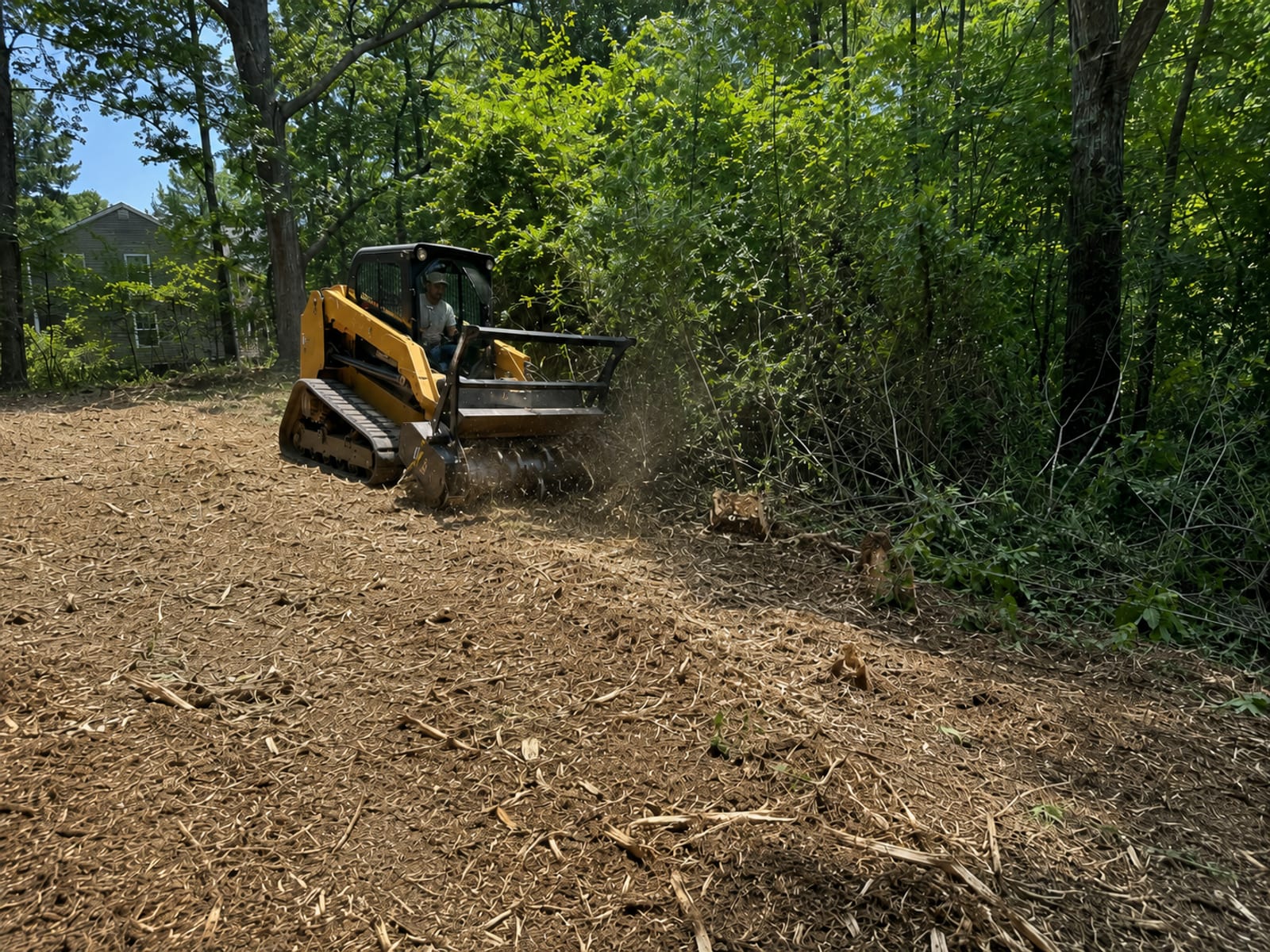
The two most common approaches for clearing land in Oxford CT are forestry mulching and traditional excavator work, and they are not interchangeable. Each has conditions where it makes the most sense, and choosing the wrong one for the site often costs more in the long run than getting it right from the start.
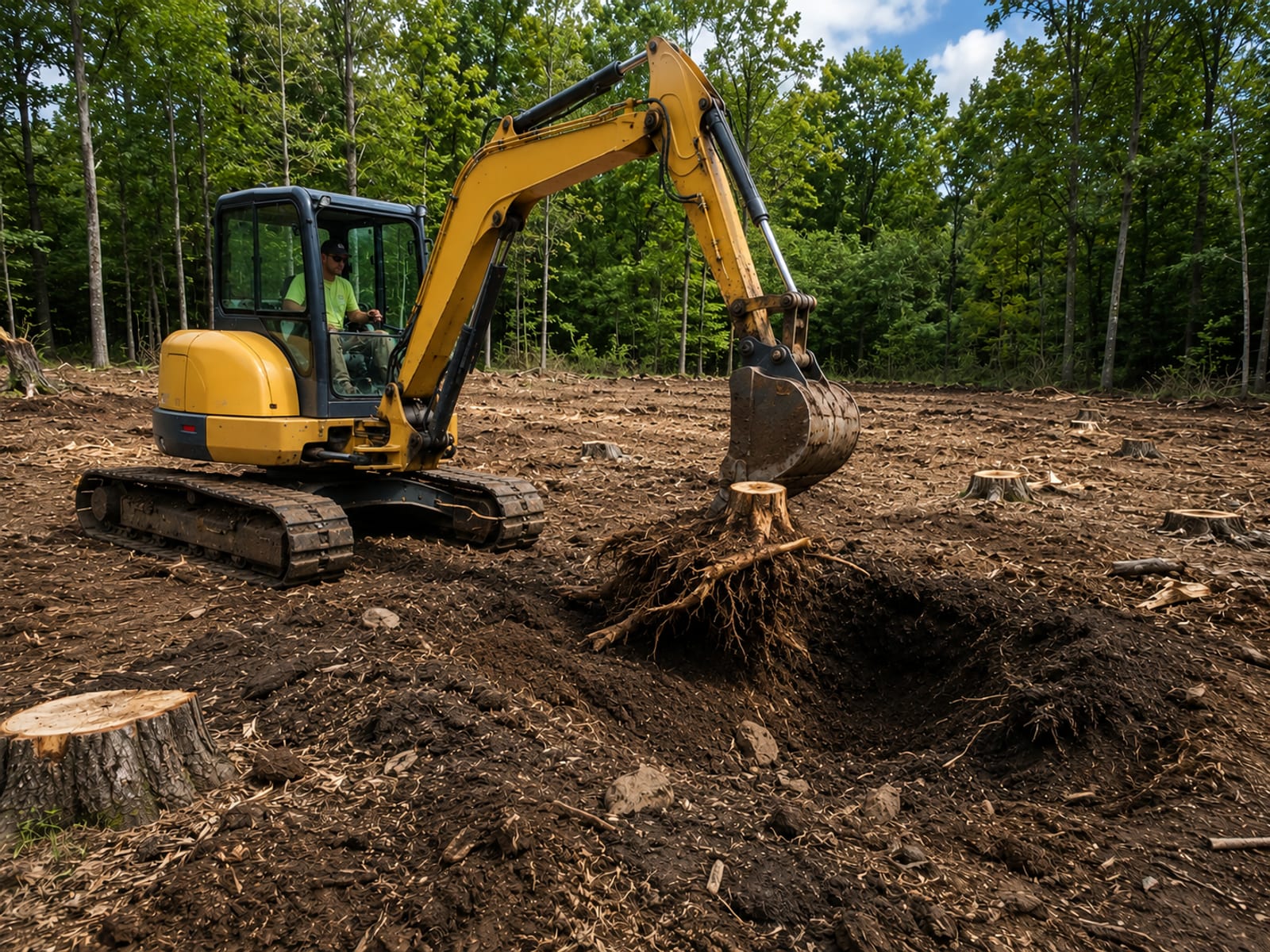
Forestry mulching can be a cost-effective choice when the goal is to reclaim overgrown acreage, open trails, clean up property lines, or reduce brush and small trees without hauling debris away. The mulching head grinds vegetation in place and leaves a layer that can improve soil over time. This works well where the ground does not need to be reshaped and the mulch layer is acceptable for the end use. Traditional clearing with an excavator is often the better fit when stumps need to come out, grade changes are needed, boulders have to move, or the area will support construction. Best management practices for topsoil and mulch movement are worth reviewing for projects where mulch material is being redistributed on site. The right choice depends on the property, the soil, the slope, and the next use of the land.
Factor B: Final Use of the Cleared Area
A cleared trail, a rough field edge, a future lawn, a driveway base, a building pad, and a drainage route each need a different finish standard. Clearing for a driveway means the ground needs to be shaped and compacted to support base material. Clearing for a lawn means stumps need to come out and the grade needs to pitch correctly for drainage. Clearing for a trail may need very little follow-up work at all. Planning for that final use before the equipment arrives prevents paying for clearing twice: once to remove the vegetation and once to fix what the clearing approach left wrong.
Permits, Wetlands, Utilities, and Erosion Control
Oxford's regulatory requirements around land clearing and site preparation are not always obvious from the outside, and assuming a project is permit-free can create real problems if a town review was actually required. The scope of the clearing, the location of the parcel, and the planned use of the land all affect whether permits apply. It is worth calling the town before work begins, especially for any project that involves wetlands, watercourses, major grading, or driveway access from a public road. Getting ahead of the permit question early keeps the project moving and avoids the cost of stopping work mid-job.
Oxford CT Permit Requirements and Practical Limits
Oxford's Building Department handles building permits, while Planning and Zoning Permits and Inland Wetlands Permits are processed online through OpenGov. For projects near wetlands or watercourses, local review may be needed before any clearing or grading begins. Connecticut's Forest Practices Act also addresses wetlands and forestry, which is relevant for wooded parcels close to regulated areas. When clearing includes excavation, stump grinding, grading, or driveway work, Connecticut Call Before You Dig is a required step to identify underground utility pipes and cables before ground disturbance begins. Private utilities including irrigation lines, drainage pipe, propane lines, and owner-installed electric runs may not appear in a standard utility locate, so homeowners should identify those separately before work starts. OSHA's site clearing standards also apply to professional clearing operations, covering equipment requirements and protection from site hazards like irritant plants and falling limbs.
The Land Clearing Process
A well-run clearing job follows a clear sequence, and that sequence starts before any equipment arrives. The steps look different depending on whether the project is a simple brush cleanup, a forestry mulching pass on overgrown acreage, a driveway excavation, a building site preparation, or a storm damage cleanup. What stays consistent is that the site review drives everything else: equipment selection, debris handling, the permit check, and the finish standard all flow from what gets identified before work begins. Skipping or rushing the planning step is usually where budget surprises start.
Step 1: Site Review and Scope
A thorough site review is where the actual cost drivers get identified, and it sets the foundation for every decision that follows. The contractor walks the work area and notes access points, slope, wet spots, tree size, stump count, visible rock, drainage direction, utility locations, and the desired condition when the job is done. On Oxford CT properties, this review often turns up conditions that change the approach entirely.
The review should also flag whether permits, wetlands review, or Call Before You Dig notifications are needed before work starts. A slope that limits equipment access, a wet area that needs to stay dry to move machines safely, a stone wall that needs to be protected, or a septic system that affects where material can be staged are all things that come out of a proper walkthrough. A contractor who skips this step and quotes blind is likely to either underbid the job and cut corners or come back with a change order after the equipment is already on site.
Step 2: Clearing, Stump Work, Rock Handling, and Grading
Once the scope is confirmed, the crew removes or mulches brush, handles trees and stumps as specified, moves rock or debris, and shapes the ground for the next step. For projects where the cleared area will become a usable yard, driveway base, construction space, or drainage route, grading should be addressed as part of the same scope, not added on later. Leaving the ground in a rough, uncontrolled state after clearing can allow water to pool, sediment to run off, and soil to become unstable before the next phase of work begins. Connecticut's erosion and sediment control guidance is relevant here, particularly for projects that expose significant areas of bare soil or change existing drainage patterns.
Long-Term Strategy After Land Clearing
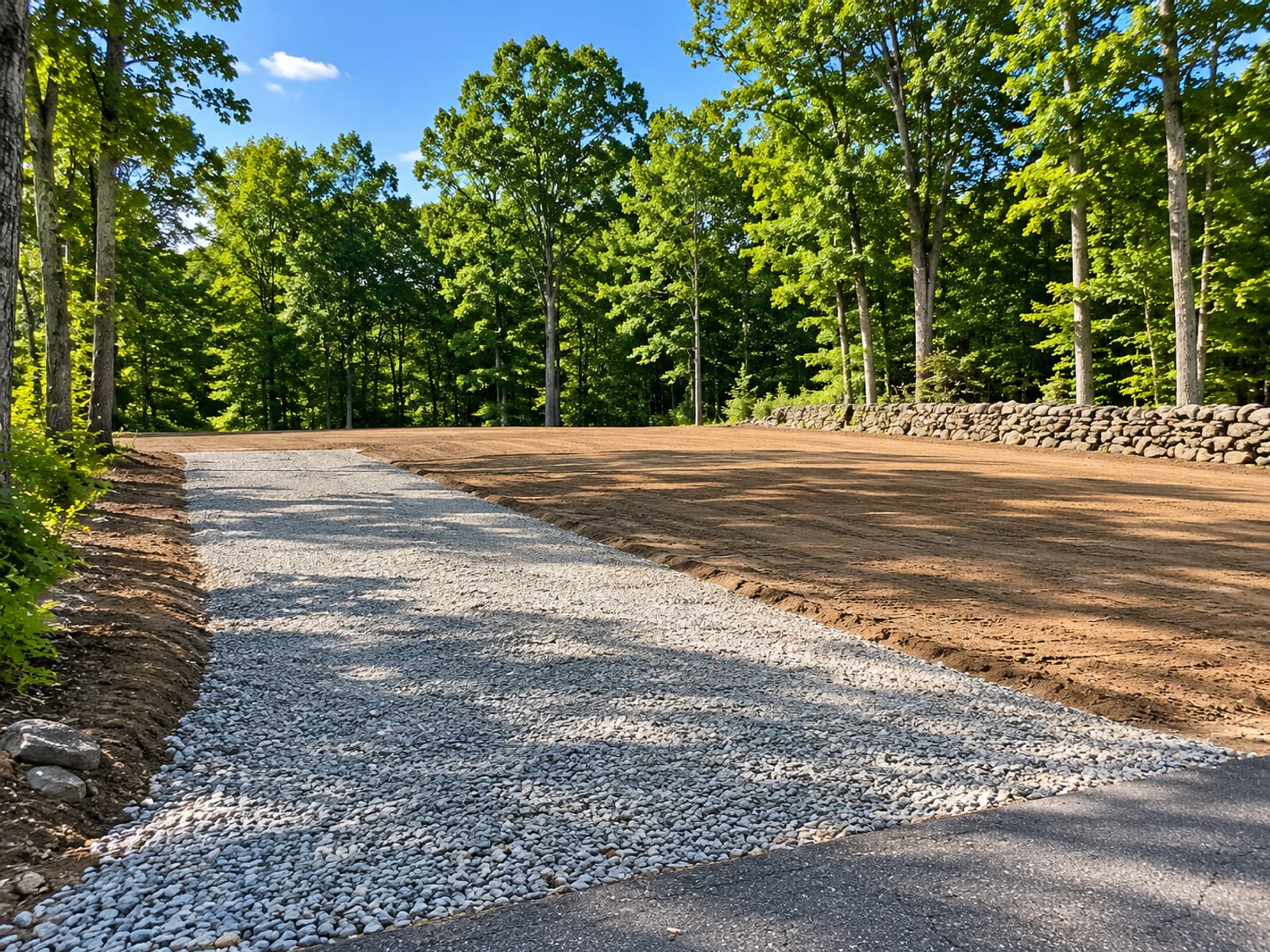
Getting the land cleared is the first step, not the last. Once vegetation is removed and stumps are gone, the property needs to be stabilized and set up for its next use. Exposed soil can erode quickly, especially on slopes or near drainage paths, and a property that looks clean right after clearing can become a muddy problem within a few weeks if follow-up work is not planned. The right post-clearing steps depend on what the land is meant to do.
If the cleared area will become a lawn, it may need finish grading, topsoil, seeding, and erosion blankets during establishment. If it will become a driveway base, compacted stone and proper drainage are the next steps. If water has been a problem on the site, clearing may reveal low spots, blocked outlets, or grade issues that need swales, French drains, catch basins, or piping to address properly. UConn's soil erosion guidance for municipal stormwater programs outlines many of the approaches that apply to residential site work as well. For any property that tends to grow back quickly with invasive brush, scheduled maintenance clearing can keep the work from having to start over from scratch in a few years.
Common Pitfalls in Land Clearing Projects
Most budget surprises in clearing work come from the same few mistakes. Clearing without checking permit needs can stop a project mid-job and create legal exposure. Ignoring drainage during clearing can cause erosion that costs more to correct than the clearing itself. Assuming forestry mulching is right for every project may leave stumps and roots in the ground where future grading or construction will require them to come out anyway. Failing to call before digging can result in damaged utility lines and serious liability.
Underestimating buried rock is a common issue in Oxford and other Naugatuck Valley towns where glacial geology puts boulders just below the surface. Choosing a quote that does not cover cleanup, hauling, erosion control, or final grade often means the homeowner ends up paying for those things separately, at a higher combined cost than a more complete original scope would have been. Connecticut's home improvement consumer protection resources offer useful background on what homeowners can expect from a contractor and what a written contract should cover.
Frequently Asked Questions About Land Clearing in Oxford CT
How much does land clearing cost in Oxford CT?
Cost depends on acreage, brush density, tree size, stump count, rock, slope, access, debris hauling, permits, erosion control, and whether the area needs grading after clearing. Because Oxford properties often include rocky glacial soil, ledge, wet pockets, and steep slopes, a site visit is usually needed before any accurate scope can be put together. Quotes without a site visit tend to leave out the conditions that actually drive the price.
Is forestry mulching cheaper than traditional land clearing?
It can be more cost-effective for brush, small trees, trails, and overgrown acreage where the mulch layer can stay on site and the ground does not need to be reshaped. Traditional clearing is often the better fit for construction prep, stump removal, boulder removal, and major grading. The right method depends on the property and the end goal, not just the size of the area.
Do I need a permit to clear land in Oxford CT?
Permit needs depend on wetlands proximity, zoning district, the amount of soil disturbance, driveway access, right-of-way work, and future building plans. Planning and Zoning Permits and Inland Wetlands Permits are handled online through OpenGov as of 2025. Checking with Oxford's Planning and Zoning department before work starts is the clearest way to know whether review is needed for a specific project.
Should utilities be marked before land clearing?
Yes, when clearing includes any digging, stump removal, grading, trenching, or driveway work. Connecticut's Call Before You Dig program helps identify underground utility infrastructure in the proposed work area. Private utilities like irrigation, drainage pipe, and owner-installed lines may not be included in a standard locate, so those should be identified separately.
Can land clearing help with drainage problems?
Clearing can be part of a drainage improvement, but it does not automatically fix water problems. Removing vegetation reveals how water actually moves across the site, and that often points toward grade changes, outlet issues, or low spots that need swales, piping, or catch basins to address properly. The grade, water source, soil type, and drainage outlet all need to be reviewed before deciding on the right fix.
What should be included in a land clearing estimate?
A good estimate should define the work area, the clearing method, how trees and brush will be handled, stump and rock handling, debris hauling or on-site mulching, equipment access, erosion control, final grade, exclusions, and what conditions could change the price. If an estimate does not address stumps, rock, drainage, and the finished condition of the ground, ask those questions directly before signing anything.
Land clearing in Oxford CT works best when the whole scope is thought through before the first tree comes down. The terrain in western Connecticut makes surprises likely for contractors who do not plan carefully; buried ledge, saturated clay, steep grades, and wetlands-adjacent parcels are common enough that they should be expected, not treated as exceptions. When the clearing method, the stump plan, the drainage situation, and the finish standard are all accounted for in the original scope, the project costs what it should and leaves the property ready for the next step.
Taking the time to get that scope right pays off long after the equipment leaves the site. A property that has been properly cleared, graded, and stabilized holds its value, supports construction, and does not require a second round of expensive corrective work. That outcome is within reach on most Oxford CT properties when the planning is done upfront.
We handle the full sequence of site work at Prestige Property Maintenance, from the first clearing pass through final grading, and we operate out of Oxford CT while serving communities across the Naugatuck Valley including Seymour CT. Our crew runs forestry mulching equipment alongside an excavating fleet, which means clearing and digging happen in sequence without waiting on separate subcontractors or hauling debris off site unnecessarily. We have spent years working Connecticut's rocky glacial soil, and we plan for ledge, buried boulders, and water-holding clay before a machine ever moves. If you have an overgrown lot, a wooded parcel, or a site that needs preparation before construction, contact us to schedule a site visit and get a scope that actually accounts for what is on your property.
Related Articles
Land Clearing in Derby, CT: What Is Under the Brush?
An overgrown Derby parcel hides more than brush. Learn how land clearing in Derby, CT reveals ground conditions, limits, and drainage before you build.
Land Clearing Bethany, CT: Wetlands, Scope, and Where to Start
Most of Bethany carries a land constraint, wetlands, slope, or poor septic soil. Land clearing in Bethany, CT starts by finding out which ones apply.
Excavation in Oxford CT: A Homeowner's Guide to Getting It Right
Oxford CT excavation covers more than digging. Here's what homeowners need to know about rock, permits, utilities, and getting the site done right.