

Excavating Rocky Terrain in Oxford, CT
Kash CochranePublished Updated
- rock removal
- residential excavation
- oxford ct
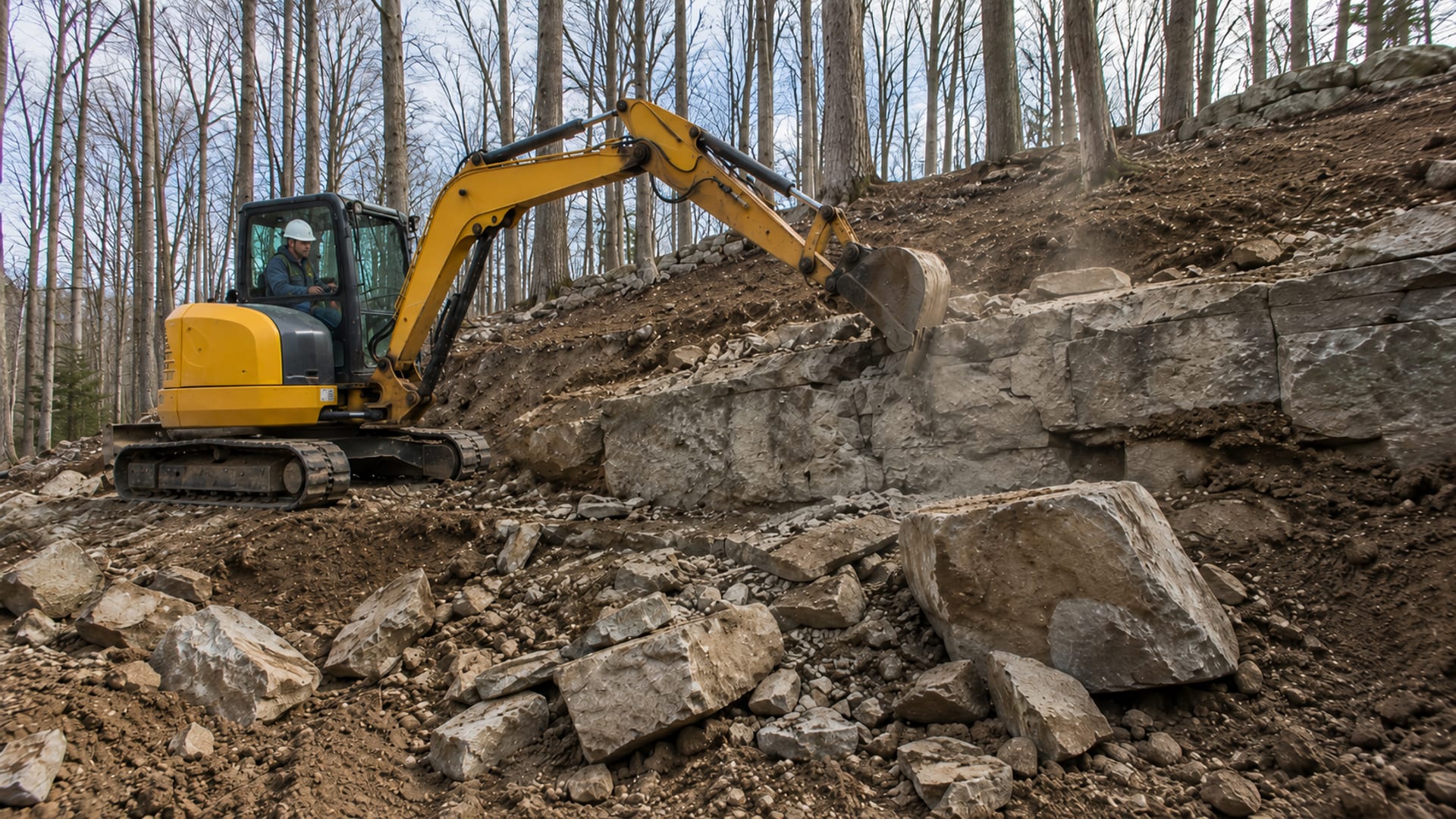
Rocky terrain excavation in Oxford, CT has a way of turning straightforward projects into something more complicated than anyone planned. You may have already had a contractor walk your lot, look at the slope and the trees, and get quieter with every step. Or maybe a machine broke ground last week and hit something solid that wasn't on any plans. Either way, you've started asking questions that didn't feel relevant a month ago: What happens if they have to blast? How much does boulder removal cost? Is this project going to stretch into next season?
Those are reasonable questions without easy answers until someone has eyes on the specific property. What this page can do is walk you through what actually changes when rock enters the picture, why some rocky jobs stay on track and others spiral, and what good preparation looks like before a single bucket of dirt moves. Oxford's soil conditions are not a mystery to contractors who have worked this county for years. The glacial geology running through the Naugatuck Valley leaves behind buried boulders, shallow ledge, compacted hardpan, and clay pockets that hold water in ways that catch people off guard. You need to understand the problem well enough to have a real conversation with the right crew.
Key Takeaways
Rock changes the excavation plan
Buried boulders, hardpan, shallow ledge, and compacted glacial soils can affect time, equipment, and overall project scope in ways that aren't always visible before digging starts.
Oxford properties often need site-specific planning
Slopes, wooded lots, rocky soil, septic systems, wells, and long driveways each add their own layer of complexity to any site work.
Drainage still matters on rocky ground
Hard subsurface conditions can increase surface runoff, create wet low spots, and make trenching or grading more difficult than expected.
Utility markouts are not optional
Digging in hard ground, especially with heavier equipment or deeper trenches, should never happen without identifying underground utilities first.
Rock can affect both cost and timeline
Hidden boulders or difficult soil conditions may add machine time, hauling trips, and restoration work that wasn't in the original scope.
A complete contractor looks beyond the dig itself
Grading, erosion control, drainage, site access, cleanup, and the final use of the land all matter as much as what comes out of the ground.
Why Rocky Terrain Excavation Matters in Oxford
Rocky terrain excavation matters because what's underground doesn't stay underground. Every project that requires moving earth, whether it's a foundation dig, a driveway cut, a drainage trench, or a retaining wall base, has to deal with whatever the soil and rock are doing beneath the surface. In Oxford and the surrounding Naugatuck Valley towns, that often means glacial material left behind by retreating ice sheets: boulders that settled at unpredictable depths, ledge that runs close to the surface in areas that look completely normal from above, and compacted soil layers that resist digging the way poured concrete would. A project that ignores these conditions doesn't just cost more. It can fail.
When Rock Affects More Than the Digging
The reach of rocky soil goes further than most homeowners realize at the start. When a trench for a French drain hits a buried boulder at three feet, the route has to change, and so does the drainage plan. When a driveway excavation in Oxford hits shallow ledge where the base material was supposed to go, the grading calculation changes. Foundation excavation in rocky soil may require equipment that's heavier or more specialized than what a standard residential contractor keeps on the lot. Connecticut's stormwater management standards recognize that site conditions, including soil type and slope, directly affect how water moves during and after construction, which is part of why planning matters before work starts rather than after a problem shows up.
Rock is not just a digging problem. It affects trench depth, driveway base preparation, foundation layout, drainage routing, equipment access, hauling, and the final grade. A contractor who treats it as a one-variable problem is going to miss something.
Signs That Rocky Soil May Be Affecting Your Project
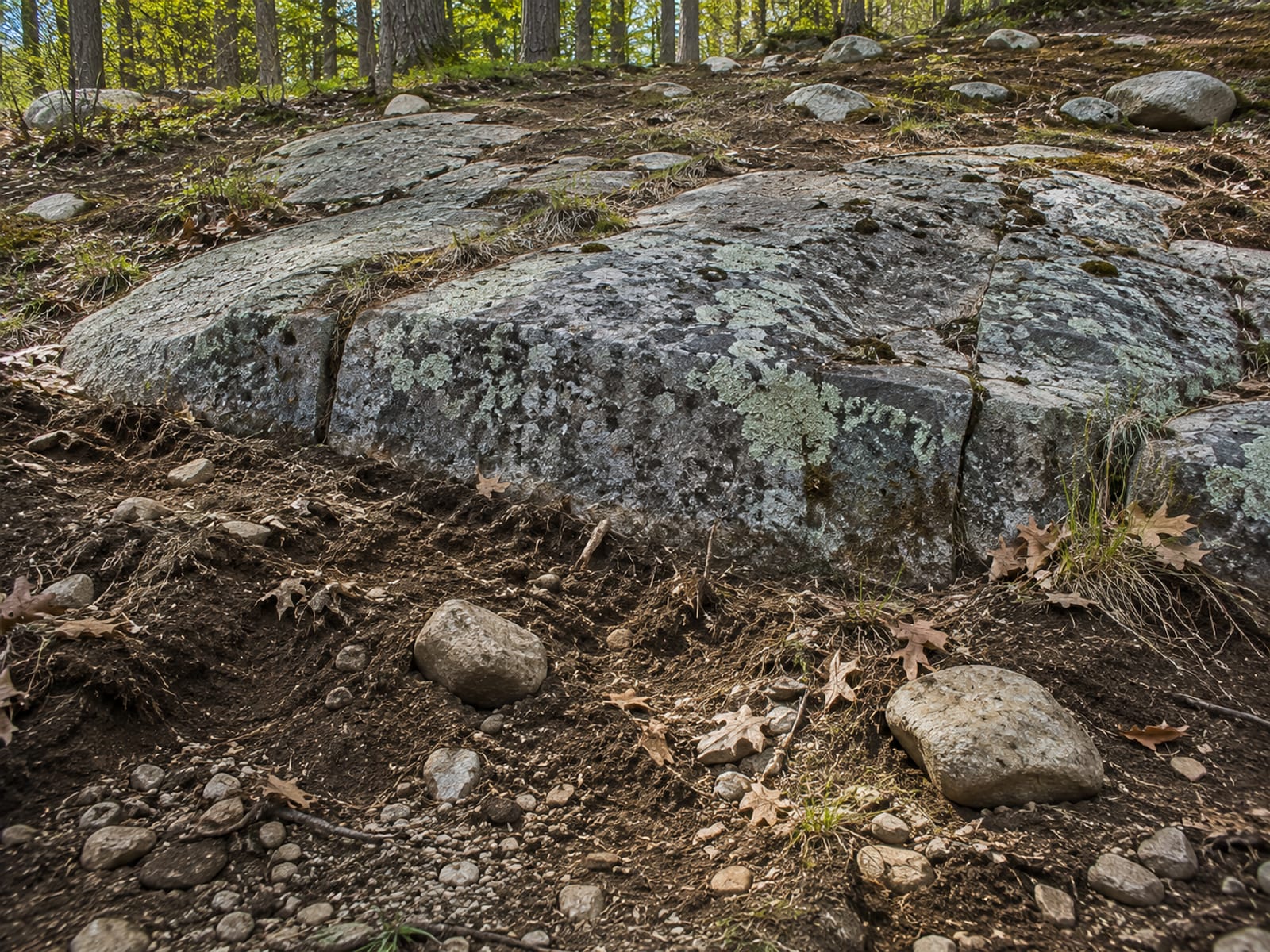
Most homeowners don't know they have a serious rock situation until they're already into a project. There's no warning label on a lot. But there are patterns that tend to show up on Oxford properties, and recognizing them early can save time and money before the heavy equipment arrives.
Buried Boulders and Shallow Rock
The most common surprise in this region is buried boulders. They don't appear on surveys, they aren't always obvious from the surface, and they tend to show up exactly where you need to dig. A shallow rock shelf running under a proposed patio area or foundation footprint can require completely different equipment or a redesigned layout. Boulder removal in Oxford, CT often involves more than just pulling a rock out of the way. Depending on size and position, a buried boulder may need to be broken up mechanically, lifted and relocated, or hauled off the property entirely. The time involved can be significant, and if it wasn't built into the original quote, that's where costs start to climb.
Water Moving Across Hard Ground
Rocky soil and shallow ledge don't absorb water the way loamy or sandy soils do. When rain hits ground with limited infiltration capacity, it runs across the surface, collecting at low points, washing across driveways, and pooling in areas that weren't designed to hold water. Connecticut's stormwater management guidelines make clear that site conditions affect how runoff behaves and how it needs to be managed. If your yard has a spot that stays wet long after rain, or a driveway that washes out regularly, rocky subsurface conditions are often part of the reason. Drainage excavation in rocky soil isn't simply about running a pipe from point A to point B. The rock dictates where trenches can go, how deep they can go, and what kind of water management system will actually work.
Key Rocky Excavation Considerations Before Work Starts
Getting rocky excavation right comes down to what happens before the first machine moves. A site visit isn't a formality. For properties in Oxford with slopes, wooded areas, and the kind of unpredictable subsurface conditions typical of this region, a thorough site review can be the difference between a project that stays on schedule and one that runs into problems two days in. The considerations below cover the factors that matter most and that often get underestimated on rocky residential sites.
Equipment and Site Access
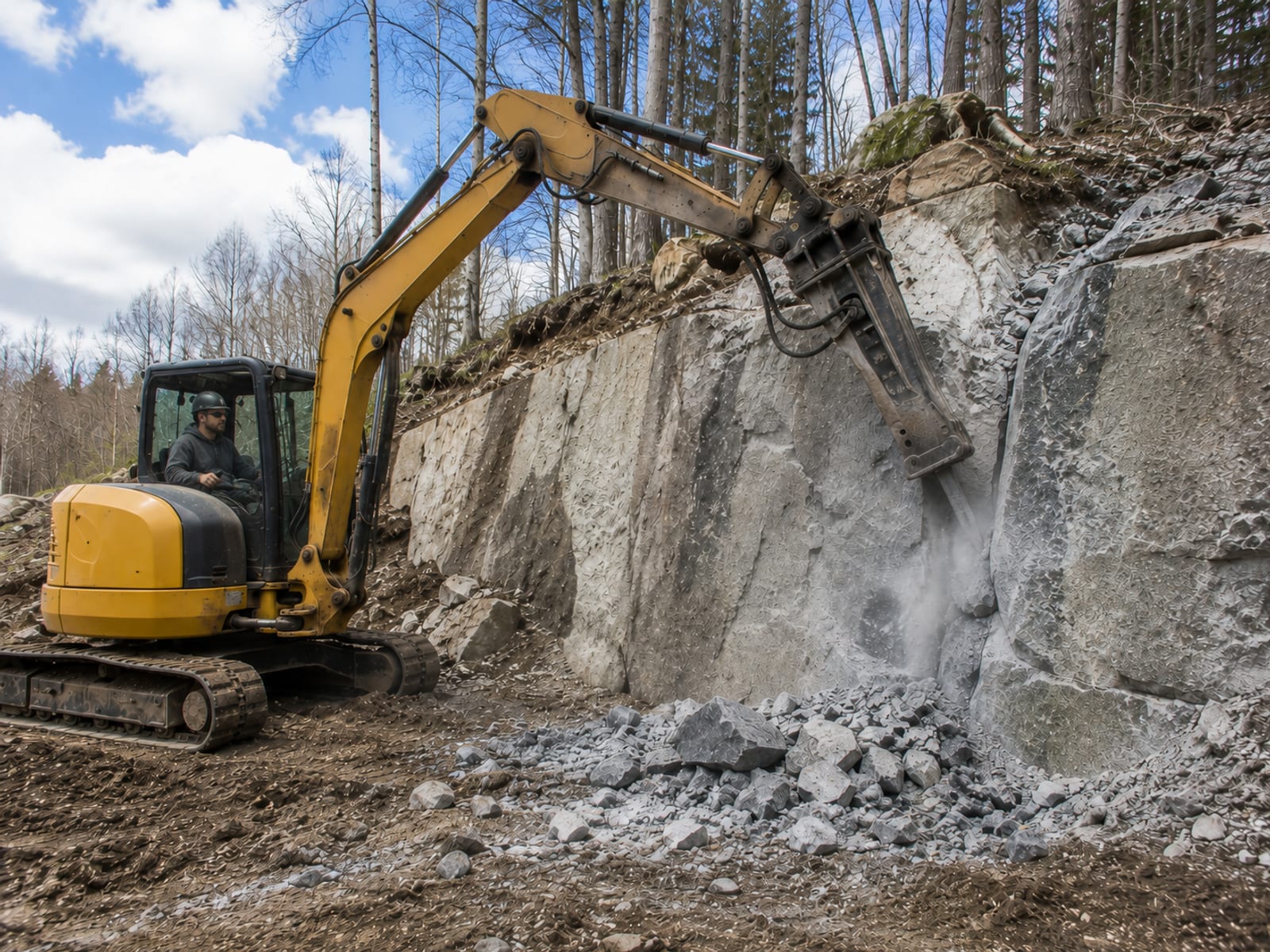
Not every machine is right for every job, and not every job site can handle every machine. Hard ground excavation may require equipment with more force than a standard residential excavator, and some boulder removal situations call for specific attachments or a larger operating footprint. Before any excavation begins, the contractor should assess whether the work area can physically handle the equipment needed for digging, rock removal, loading, hauling, and grading. Oxford lots with long driveways, narrow access points, steep slopes, or mature trees can limit what can be brought in and how it moves around the site. Ignoring access planning means the equipment ends up in the wrong place at the wrong time, which costs time and can cause damage to the surrounding property.
Rock Handling and Reuse
Not all removed rock has to leave the property. Depending on the size of the material, the project layout, and the end use of the site, some rock may be usable for site features, grading fill, or base material. Larger boulders that come out during foundation excavation or land clearing sometimes get relocated to serve as natural retaining elements or landscape features. Other material, particularly fractured ledge or very large boulders that can't be broken down economically on site, may need to be hauled away. Every load that leaves the property is a truck, a driver, disposal fees, and time. A contractor who can identify what's worth keeping and what needs to go is helping to manage the budget, not just the rock pile.
Permits, Utilities, and Erosion Control
Rocky terrain excavation in Oxford doesn't happen in a regulatory vacuum. Depending on the scope of the project, the disturbed area, and the proximity to wetlands or drainage systems, there may be local review requirements that affect when and how work can proceed. The Oxford Building Department, Planning and Zoning Commission, and Inland Wetlands Agency each have authority over different types of site work. A contractor familiar with Oxford's local requirements can help identify what needs review and what doesn't, which avoids delays after equipment is already on site. The three areas below tend to trip up rocky excavation projects most often.
Utility Markouts
Digging blind in hard ground is a risk that goes beyond project complications. Striking an underground utility line, whether gas, electric, water, or communications, can be dangerous and expensive. Connecticut's Call Before You Dig system provides a process for identifying underground utilities before excavation begins, and it applies to residential excavation the same as it does to large commercial projects. In rocky terrain, heavier equipment and deeper digging increase the consequences of an unexpected strike. Utility markouts are not a box-checking exercise. They're a practical protection for the property and the crew.
Disturbed Soil and Runoff Control
Rocky excavation disturbs soil. When slopes, hard material, and proximity to drains or wetlands are all in the mix, that disturbed soil can move quickly during rain events. Connecticut DEEP's guidelines for soil erosion and sediment control set out what's expected during construction-related ground disturbance, and Oxford properties near wetland buffers or natural drainage paths may be subject to specific erosion control measures. Silt fencing, stabilized construction entrances, and seeding disturbed areas aren't just regulatory requirements in many cases. They're practical steps that keep the project from creating a secondary problem on top of the one being solved. NEMO's soil erosion guidance is a useful reference for understanding what controls apply to different site conditions.
The Rocky Terrain Excavation Process
A well-run rocky excavation project follows a sequence that keeps surprises manageable and decisions informed. The process isn't complicated, but skipping steps is where projects get into trouble. On a site with unknown subsurface conditions, the order of operations matters as much as the equipment.
Step 1: Assess the Site Before Anything Moves
The first step is a real site assessment, not a quick walkover. A contractor working rocky soil in Oxford should be looking at access points, slope angles, surface rock indicators, existing drainage patterns, septic system locations, well setbacks, tree positions, and the specific goal for the finished site. All of that information shapes what happens next. If the assessment turns up signs of shallow ledge or large buried boulders in a critical area, those findings should change the plan before a machine starts, not after. This is also the step where utility markouts get scheduled, permit requirements get flagged, and the contractor starts thinking about rock handling and hauling logistics. The assessment determines whether everything else goes smoothly.
Step 2: Excavate, Handle Rock, Grade, and Stabilize
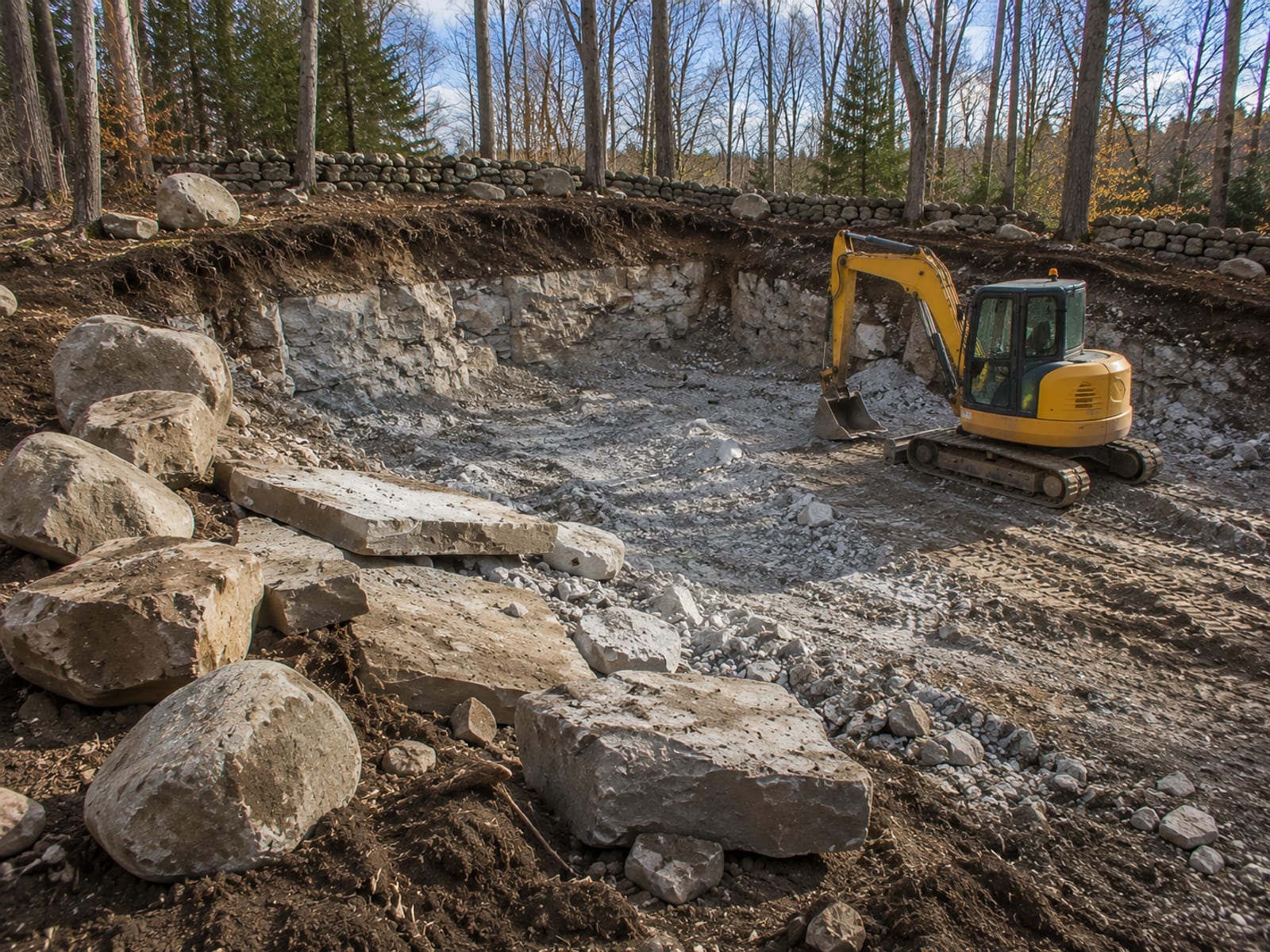
Once the site is assessed and the plan is in place, the excavation work can proceed with fewer surprises. The contractor excavates according to the project requirements, handles boulders and rock material as planned, adjusts grade for drainage and final use, manages hauling or on-site reuse, and stabilizes disturbed soil before leaving the site. On rocky residential sites, this phase often involves more coordination than a standard dig. Equipment may need to shift. A trench route may need to adjust around a buried obstacle. A drainage plan may need a slight redesign based on what the machine finds at depth. A contractor who has worked Connecticut's glacial soil conditions before knows how to make those adjustments without losing the thread of the original project goal.
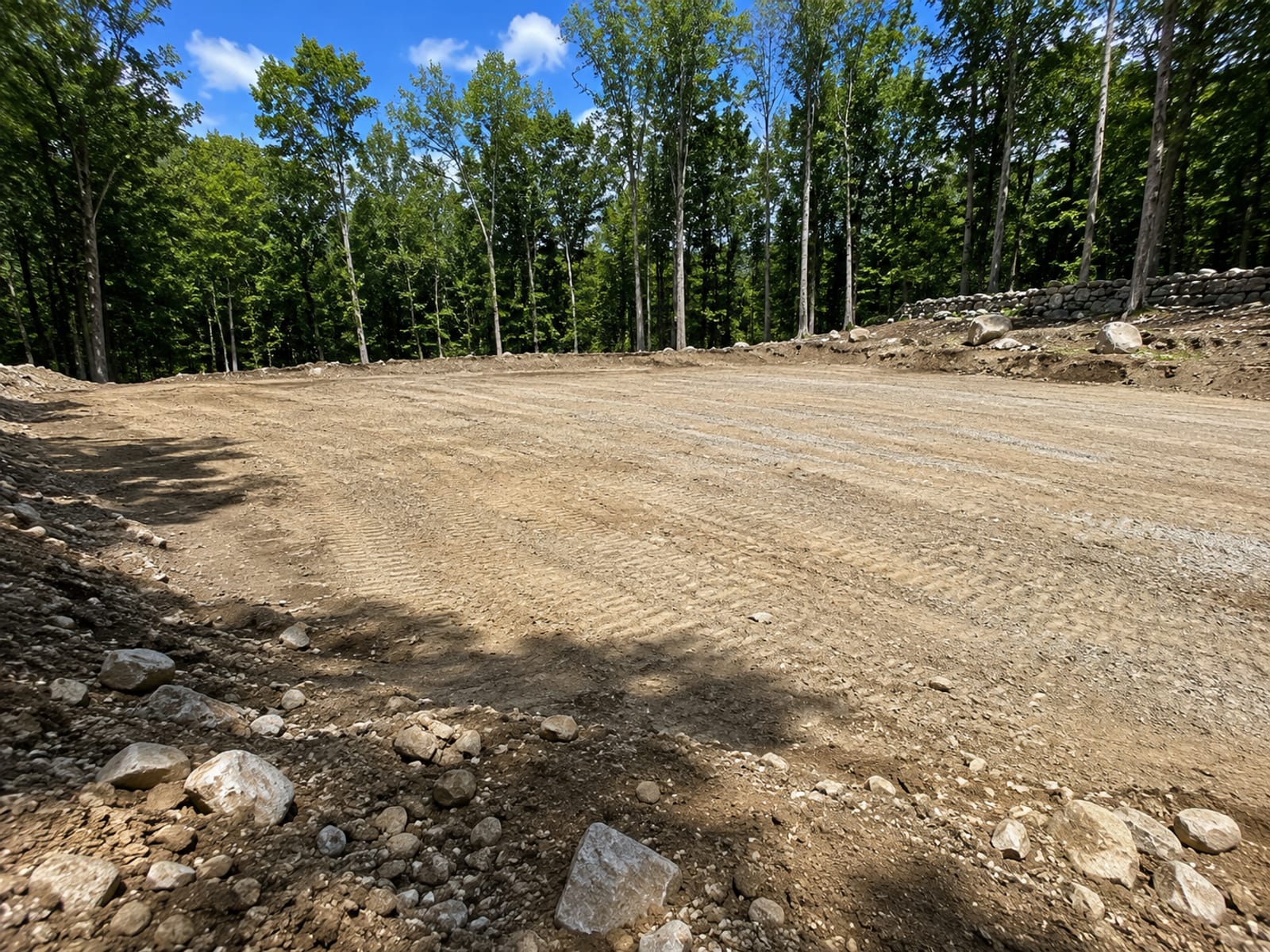
Long-Term Strategy for Rocky Properties
The best approach to a rocky property isn't to fight every foot of ground. It's to plan the full site with rock in mind from the beginning. Homeowners who have dealt with one rock-related problem on their Oxford property often find themselves dealing with another one later, usually because the first solution addressed the immediate problem without looking at the bigger picture. A driveway that gets regraded without accounting for where the water will go after the rock is removed can develop drainage problems within a season or two. A foundation dig that removes boulders without stabilizing the surrounding slope can create erosion issues that show up the following spring.
The right long-term approach starts with understanding how rock, water, slope, and soil all interact on a specific piece of land. Good site planning accounts for where surface water goes after a rain event, which areas are likely to develop drainage problems as the site changes, and how grading decisions made during excavation will affect the property for years afterward. Connecticut's stormwater performance standards reflect this kind of whole-site thinking, and it's the same approach that separates a job done right from one that needs revisiting.
When getting an excavation estimate for rocky soil, ask the contractor to explain specifically how rock will be handled, where water will go after grading, what areas will be disturbed, what restoration is included in the scope, and what conditions underground could change the price. If a contractor can't answer those questions clearly before work starts, that's worth paying attention to.
Common Pitfalls in Rocky Terrain Excavation
Rocky excavation jobs go sideways for predictable reasons, and most of them come down to what didn't get planned before work started.
- Underestimating buried boulders: Surface rock doesn't tell the whole story. Boulders can sit just below a clean-looking surface and show up exactly where the trench or foundation footprint needs to go.
- Skipping drainage planning: Removing rock changes how water moves. A plan that doesn't account for post-excavation drainage often creates wet problems in areas that weren't wet before.
- Ignoring utility markouts: Heavier equipment and deeper digging in hard ground make underground utility strikes more likely and more serious. Call Before You Dig exists for exactly this reason.
- Assuming rock removal is straightforward: Boulder removal and ledge excavation in CT vary widely depending on size, depth, position, and what surrounds the material. There's no universal answer on time or cost.
- Failing to plan equipment access: A machine that can't reach the work area efficiently costs time on every pass. Access planning is part of the excavation plan, not an afterthought.
- Overlooking hauling in the budget: Every load of material that leaves the property has a cost. A quote that doesn't address hauling is a quote that may grow after work starts.
- Choosing a quote that ignores rock-related unknowns: A low number that doesn't account for possible subsurface conditions isn't a deal. It's a number that will change once the machine hits something solid.
Frequently Asked Questions About Rocky Terrain Excavation Oxford CT
What is rocky terrain excavation?
Rocky terrain excavation is the process of digging, grading, trenching, and preparing land where rock, boulders, shallow ledge, hardpan, or uneven subsurface conditions affect normal excavation. In Oxford, CT, this type of site work is common due to the region's glacial soil history, which left behind buried boulders, compacted layers, and rocky soil throughout the Naugatuck Valley.
Does rocky soil increase excavation cost?
It can, and often does. Rock adds machine time, may require heavier or specialized equipment, creates hauling needs, and can force changes to trench routes, grading plans, or foundation layouts. The actual cost depends on what's in the ground and where it sits relative to the work area. A solid excavation estimate for rocky soil should acknowledge these variables rather than ignore them.
Can rocky terrain affect drainage?
Yes, and this is one of the most underestimated consequences of rocky soil. Hard subsurface conditions limit how much water can absorb into the ground, which increases surface runoff, creates wet low spots, and can wash out driveways and slopes. Connecticut's stormwater standards reflect the relationship between soil conditions and water movement, and drainage excavation in rocky soil requires routing decisions that account for where the rock is and where water will go after grading.
Do utilities need to be marked before rocky excavation?
Yes. Underground utilities should be identified through Connecticut's Call Before You Dig system before any excavation begins. This applies to residential projects the same as commercial ones. In hard ground excavation, the equipment being used and the depths required can make an unmarked utility strike more likely and more serious.
Can rock removed during excavation be reused on the property?
Sometimes. Depending on the size, condition, site layout, and project goals, removed rock may be usable for grading material, natural retaining elements, or landscape features. Larger boulders and fractured ledge that can't be used practically on site will typically need to be hauled away. A contractor familiar with the site can identify what's worth keeping and what needs to go before the hauling decision gets made.
What should a rocky excavation estimate include?
A complete estimate for rocky terrain excavation should explain access planning, excavation scope, rock handling methods, hauling logistics, grading, drainage provisions, erosion controls, site cleanup, restoration, and the conditions that could change the scope if something unexpected turns up underground. If the estimate doesn't address those items, it's worth asking why.
Does rocky terrain excavation always require blasting?
No. Many residential rocky excavation projects in Oxford, CT are handled with mechanical digging, specialized excavator attachments, and boulder removal without blasting. The method depends entirely on the type of rock, its depth, its position relative to structures and utilities, and the project requirements. A site visit is the only way to determine what approach makes sense for a specific property.
Rocky terrain excavation in Oxford, CT is not a one-size situation. Every property has its own combination of slope, soil, buried rock, drainage patterns, and access conditions. The difference between a project that finishes on time and on budget and one that doesn't almost always comes down to what gets discovered and planned for before the first machine moves. Rock changes the timeline, the equipment, how drainage works, and the cost if those factors aren't built into the plan from the start.
Taking the time to plan rocky excavation properly pays off well beyond the project itself. A foundation dug with rock and drainage in mind will perform better over time. A driveway excavated with the right base preparation won't wash out or settle unevenly after the first hard winter. A graded yard that accounts for how water moves across rocky soil won't develop the wet problem areas that seem to appear out of nowhere on properties where drainage wasn't part of the original conversation.
We work on rocky properties throughout Oxford, CT and across the Naugatuck Valley, and our crew comes to every site expecting Connecticut's glacial conditions rather than being surprised by them. At Prestige Property Maintenance, we handle the full sequence from land clearing and forestry mulching through excavation, rock removal, grading, drainage, and retaining walls with one crew from start to finish. We're based in Oxford, CT and also serve Seymour, CT along with 17 surrounding towns. If your property has boulder removal needs, a foundation dig, a driveway project, or drainage work complicated by rocky soil, the first step is getting eyes on the site. Contact Prestige Property Maintenance to schedule a site visit and find out what you're actually working with before anything else changes.
Related Articles
Excavation in Oxford CT: A Homeowner's Guide to Getting It Right
Oxford CT excavation covers more than digging. Here's what homeowners need to know about rock, permits, utilities, and getting the site done right.
Residential Excavation Cost in CT: What to Expect in Oxford
Oxford CT excavation projects vary widely in cost. Here's what local soil conditions, rock, drainage, and site access really mean for your residential excavation budget.
Rock Removal in Derby, CT: When the Dig Hits Ledge or a Boulder
Hit something hard mid-dig? Rock removal in Derby, CT starts with figuring out what you are dealing with before anyone reaches for a breaker or a permit.