Residential Excavation Cost in CT: What to Expect in Oxford
Kash CochranePublished Updated
- excavation cost
- residential excavation
- oxford ct
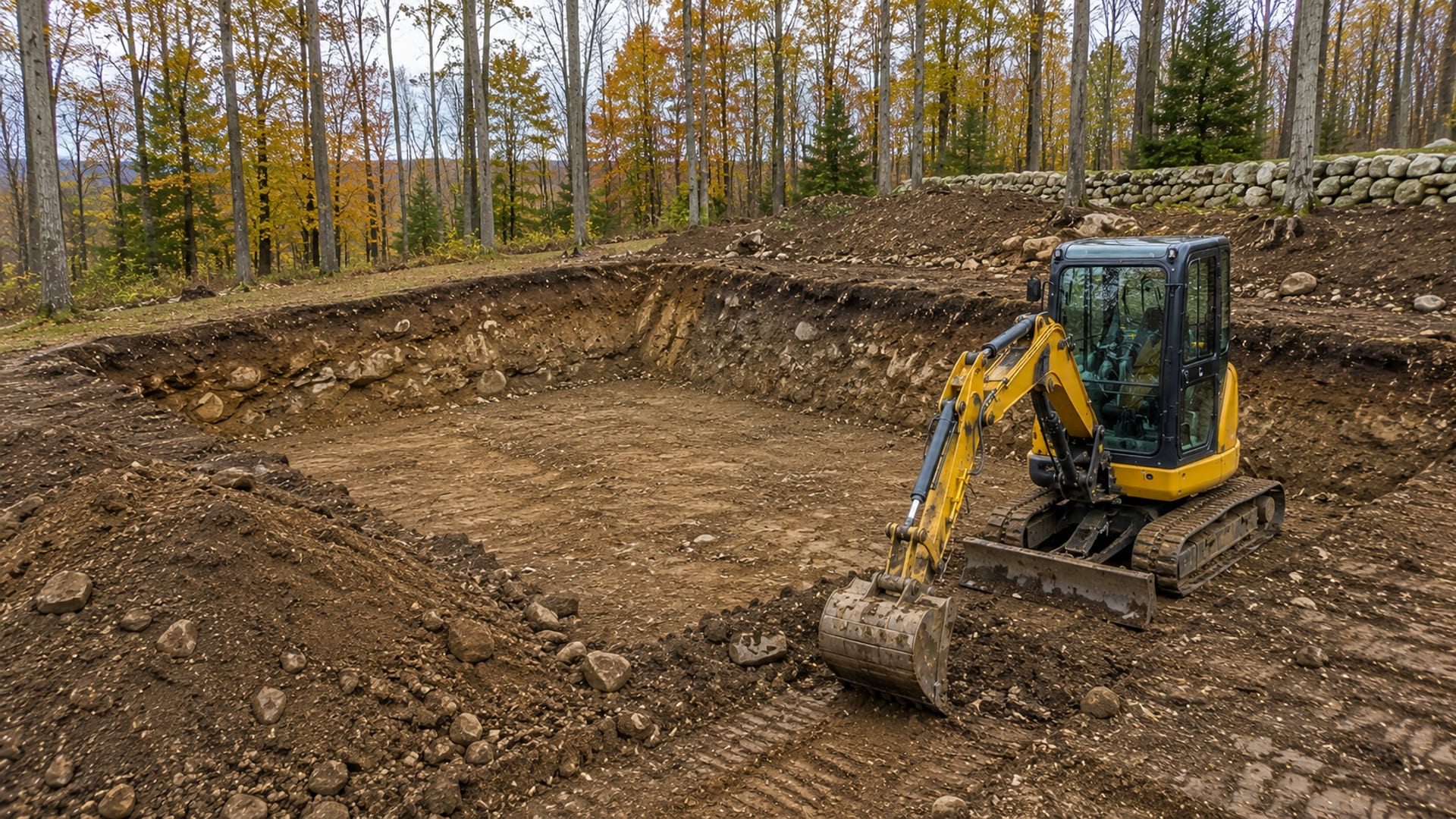
Residential excavation cost in Oxford CT is one of those topics where two homeowners can compare notes and realize their quotes are thousands of dollars apart, and both numbers might be completely fair. If you've recently gotten a quote that made you pause, or two quotes that don't seem to be describing the same job, you're not alone in that confusion. The price of excavation in this part of Connecticut doesn't follow a simple formula, and that's not because contractors are making things up. It's because your property has its own set of conditions underground and on the surface that no online calculator can see. Oxford's rocky glacial soil, wooded lots, sloped terrain, long driveways, and proximity to wetlands all play a real role in how long a job takes, what equipment it needs, and what it costs to finish correctly. The goal here isn't to give you a number to shop with. It's to help you read an estimate the way a contractor does, so you can tell the difference between a padded price and a well-reasoned one.
Key Takeaways
There is no single excavation price
Cost depends on the project type, property conditions, soil, equipment, access, and what level of finish the job requires.
Oxford soil can affect cost
Rock, buried boulders, slopes, wet areas, and wooded lots can change equipment needs, crew time, and overall timelines.
Hauling and materials matter
Fill, stone, topsoil, disposal, and base material can be major line items that don't always appear in a basic quote.
Drainage can change the scope
Water problems may require pipe, stone, swales, catch basins, grading, or erosion controls that add to the project cost.
Permits and utility markouts can affect timing
Local review and Call Before You Dig may be required steps before any excavation begins.
Compare quotes by scope
The lowest price may not include cleanup, restoration, compaction, drainage, or hauling. Matching what each quote actually covers is the only fair way to compare.
1. Why Residential Excavation Cost Varies in Oxford CT
There's a common assumption that excavation is excavation. You hire someone with a machine, they dig, and the price reflects how long it takes. That's true in the simplest sense, but it skips over everything that makes one job harder and more expensive than another. A flat, open lot with easy truck access is priced very differently from a wooded, sloped property with wet soil and no clear path for equipment. Both might be described as "yard excavation," but the work involved isn't the same.
In Oxford, those differences show up constantly. The town sits on rocky, glacial-origin terrain, which means the soil can shift from soft sandy loam to clay to buried boulders within a few feet of depth. A driveway excavation on one end of town might go smoothly, while a nearly identical project on the next road runs into ledge-like rock conditions that require different equipment and significantly more time. That's not a contractor padding the price. It's the property doing what Oxford properties do.
The Project Type Sets the Baseline
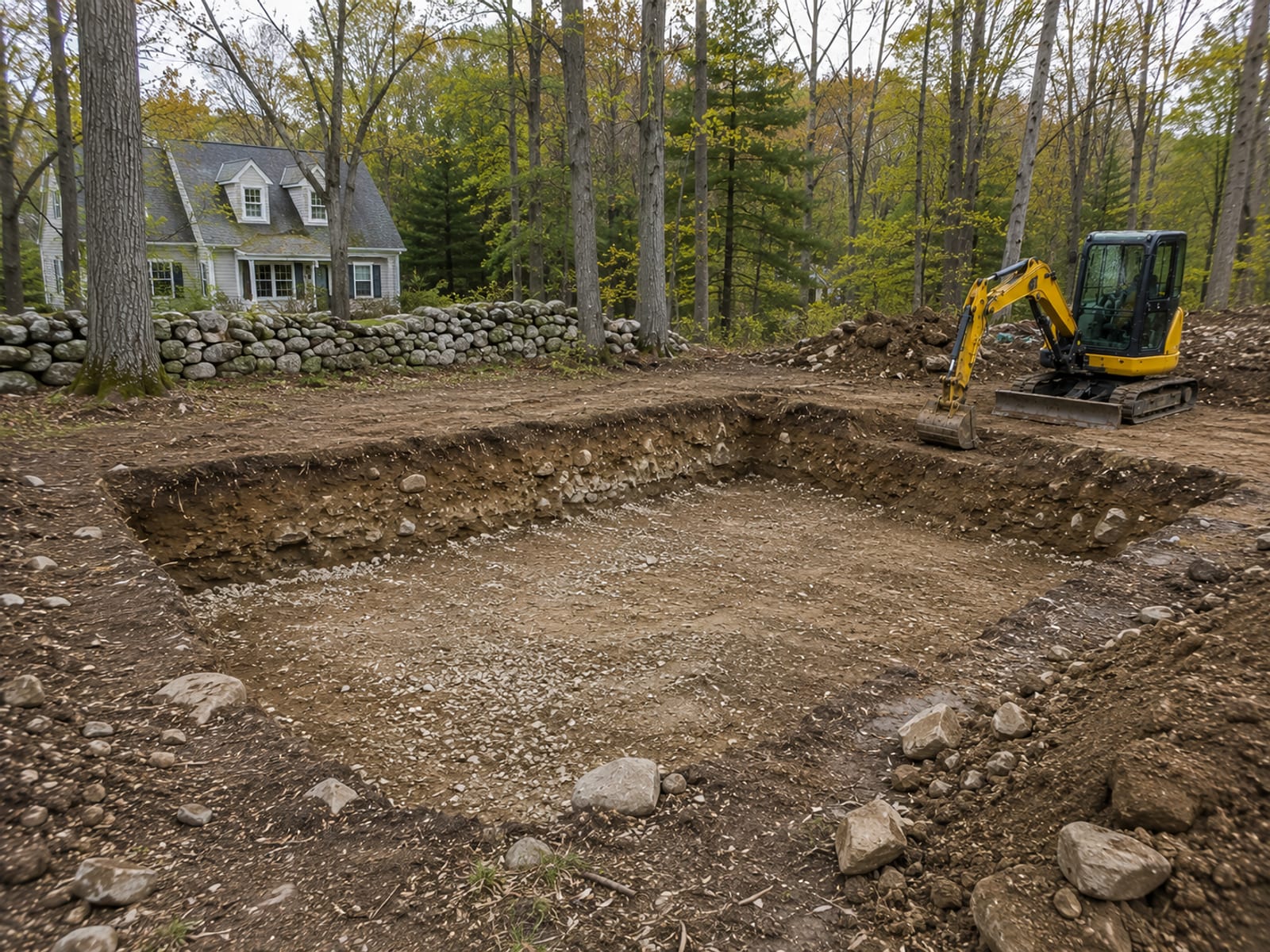
Foundation excavation, drainage trenching, driveway excavation, site preparation, yard grading, and retaining wall excavation all start from different baselines when it comes to labor, equipment, material, and planning. Drainage excavation cost in Oxford CT, for example, depends on trench length, depth, the type of pipe and stone required, where the water needs to discharge, and how much restoration work the yard needs afterward. Foundation excavation adds coordination with a builder, specific depth and dimension requirements, soil hauling, and often drainage considerations at the base. Grading cost in Oxford CT depends on how much material needs to move, whether the slope can be cut and filled on-site, and whether soil needs to be brought in or taken away.
The Site Conditions Set the Final Number
Soil type, rock, access, and drainage conditions have a larger effect on excavation pricing than most homeowners realize. Connecticut's rocky glacial soil and sediment control requirements reflect just how variable the ground can be across this part of the state. When a contractor walks your Oxford property, they're looking at access for equipment, slope, visible drainage issues, signs of rock near the surface, tree and root density, and where trucks can stage and turn around. All of that gets folded into the estimate before the first machine moves.
2. What Drives Residential Excavation Cost
The biggest mistake homeowners make is thinking about excavation as just machine time. The machine is one piece of a longer list of cost drivers that can all shift depending on how the project develops. Understanding what actually moves the number is more useful than any average price you'd find in a general search.
Project Type and Depth
Each project category comes with its own cost structure. Driveway excavation cost in CT depends on the length, width, and depth of the cut, the amount and type of base material needed, drainage requirements, compaction, and hauling. Site preparation for a new structure includes clearing, grubbing, rough grading, drainage planning, and coordination with the builder or engineer. Retaining wall excavation cost depends on the wall's height and length, base preparation requirements, the drainage layer behind the wall, backfill material, and access. Trenching cost in CT, whether for utilities or drainage, depends on trench dimensions, soil conditions, pipe type, stone, and restoration of the disturbed area. Each of these starts at a different price point and grows from there based on what the ground presents.
Rock, Soil, and Access
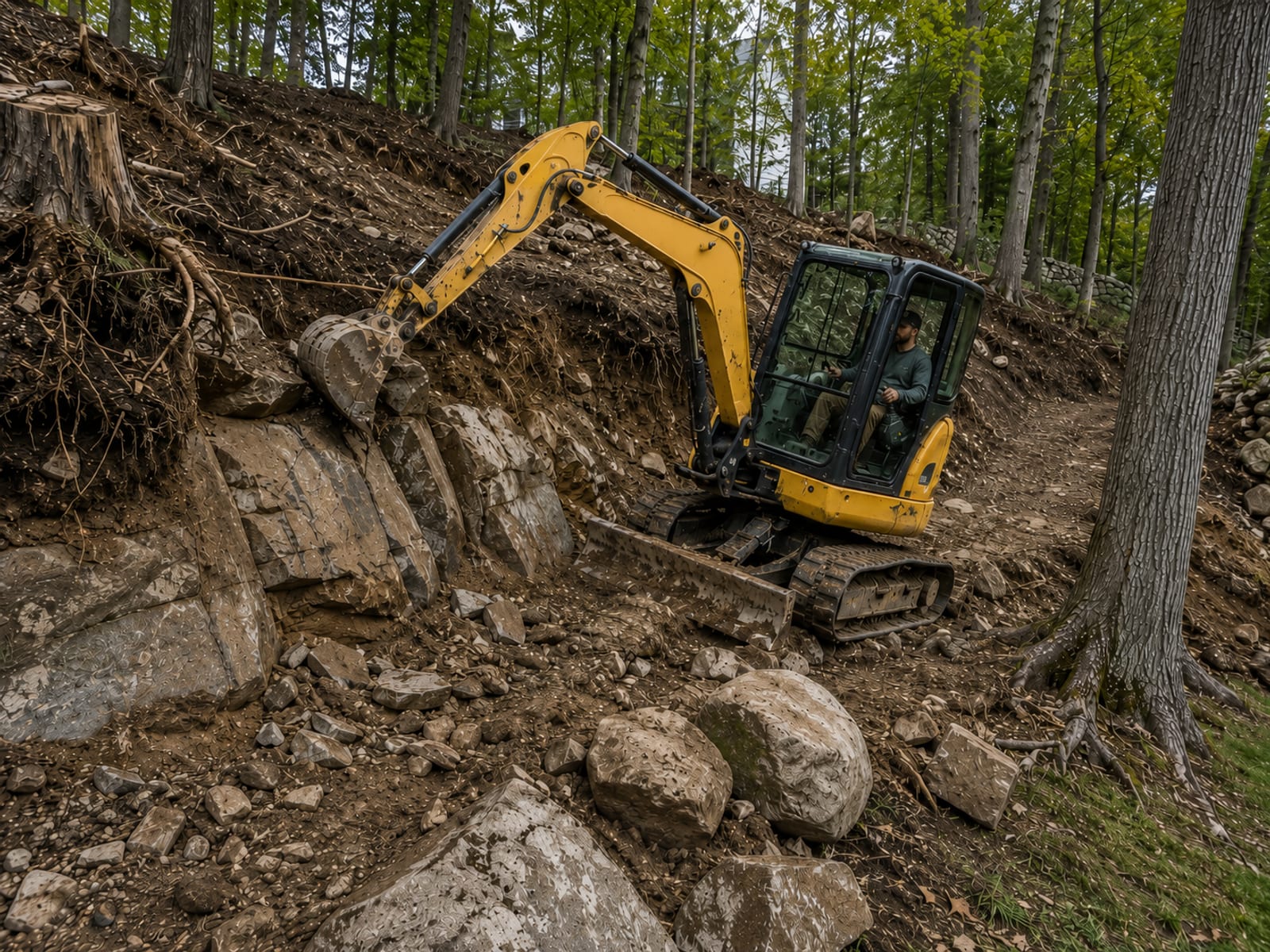
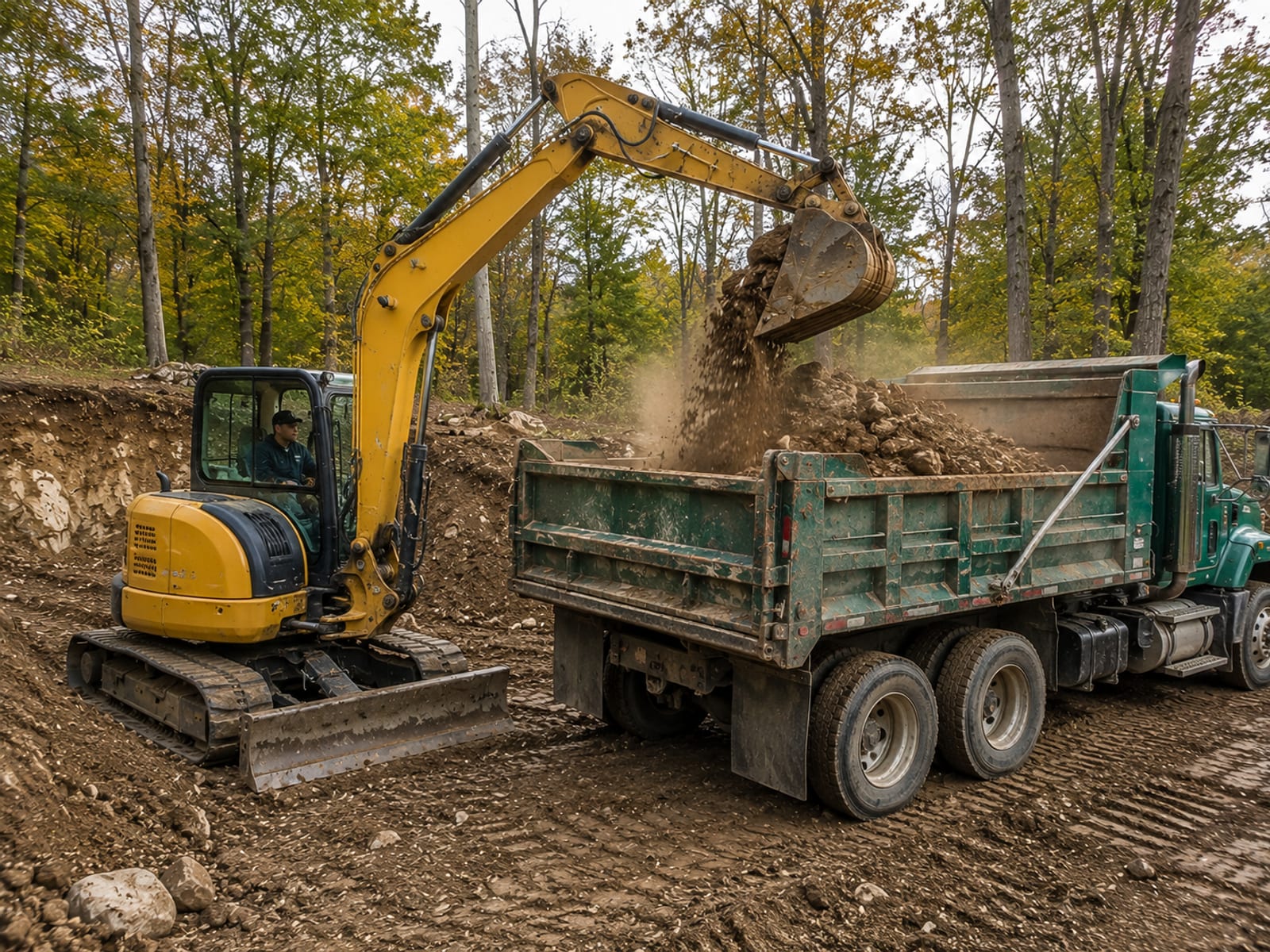
Rock removal cost in CT is one of the more unpredictable line items in any excavation budget. Buried boulders, near-surface ledge, and rocky glacial soil can slow a job significantly, require different equipment, and add hauling volume that wasn't part of the original scope. Boulder removal cost in CT can vary widely depending on the size, depth, and number of boulders encountered. Clay soil adds its own challenges: it holds water, drains slowly, and can become unstable when disturbed, which affects how the site needs to be managed and restored.
Access matters in ways that aren't always obvious. A tight driveway, a sharp turn from the road, overhead wires, a septic system near the work area, or limited space for a truck to stage can all slow the job and require more planning. Wooded lots may need clearing before excavation equipment can even reach the work area, which is why land clearing cost in Oxford CT and forestry mulching cost in CT sometimes become part of the same project budget.
3. What Should Be Included in an Excavation Estimate
A residential excavation estimate isn't just a number at the bottom of a page. A well-written estimate explains the work, the assumptions behind the price, and what could change the total if conditions differ from what the contractor expected. When you receive one, read it as a list of commitments. Each item that appears is something the contractor has agreed to handle. Each item that's missing is something you may end up paying for separately.
What the Estimate Should Cover
A complete residential excavation estimate may include machine time, crew time, access preparation, hauling and disposal of excavated material, fill or stone delivery, drainage materials such as pipe and catch basins, rough and finish grading, compaction, erosion and sediment controls, cleanup of the work area, and restoration of disturbed ground. Depending on the project, it may also include utility markout coordination, permit fees, or allowances for conditions that aren't yet confirmed. Connecticut's home improvement contractor licensing requirements are part of the backdrop for any residential site work, and a licensed and insured contractor should be able to speak to their compliance as part of the estimate conversation.
What to Ask About Upfront
Before accepting any estimate, ask directly what is not included. Ask whether hauling is in the price or separate. Ask whether the stone, fill, and topsoil needed for restoration are part of the scope. Ask what happens if rock is encountered. Ask whether final grading and cleanup are included or whether those get added at the end. These questions take five minutes and can prevent a significant misunderstanding once the job is underway.
4. Permits, Utilities, and Practical Cost Factors
Some of the costs connected to excavation work aren't about digging at all. Permits, utility safety markouts, stormwater controls, and wetlands review can all affect the timeline and sometimes the total cost of a residential excavation project in Oxford. These steps don't always add cost directly, but skipping them can create problems that cost far more to resolve than the original project. Understanding when these requirements apply, and who is responsible for handling them, is part of getting a complete picture from any contractor you're considering.
Utility Markouts and Safety
Connecticut's Call Before You Dig system is a required step before any ground is broken near underground utilities. The CT PURA also provides guidance on CBYD requirements for homeowners and contractors alike. Utility trenching cost in CT can be affected significantly if undocumented lines are encountered during a dig. Older Oxford properties in particular may have underground lines that weren't consistently mapped. A contractor who understands this will plan for it rather than treat it as a surprise.
Erosion, Sediment, and Stormwater Controls
When soil is disturbed, it can move off-site in ways that affect neighboring properties, storm drains, wetlands, and waterways. Erosion control and sediment management are part of responsible site work on any project that disturbs more than a small area of ground. Connecticut DEEP's soil erosion and sediment control guidelines set the standard for how disturbed areas need to be managed. UConn's NEMO program also provides practical soil erosion guidance used widely by contractors and municipalities across Connecticut. Stormwater management requirements on construction projects may require specific controls depending on the size of the disturbed area, and the CT stormwater manual addresses performance standards that apply to residential and commercial work.
Oxford's proximity to wetlands and watercourses adds another layer. The Oxford Inland Wetlands Agency reviews projects that may affect wetland areas or regulated upland buffers, and the Oxford Planning and Zoning Commission handles zoning-related approvals. The Oxford Building Department is the starting point for understanding whether a permit is needed for a given scope of work. Requirements depend on the project type, the amount of soil disturbed, drainage changes, proximity to wetlands, and whether the work involves a driveway, retaining wall, or new structure.
5. How the Estimate Process Works
A good estimate doesn't come from a phone call description or a quick text exchange. It comes from someone who has actually looked at the property, understood the project goals, and thought through what it will take to complete the work correctly. That site visit is where a contractor earns their estimate, and it's where you can learn the most about whether they understand what they're looking at. When you schedule one, treat it as a conversation about your property, not just a transaction where someone measures and leaves.
Step 1: The Site Review
The contractor should look at access, slope, soil conditions, visible drainage patterns, the location of utilities and septic systems, trees and root zones, truck staging options, and any signs of wet or unstable ground. They should ask about your goals: what you want the finished property to look like, how the space will be used, and whether there are any related projects happening at the same time. A contractor who focuses only on the immediate dig without asking about drainage, restoration, or access is giving you a partial picture.
Step 2: Scope and Pricing
After the site review, the contractor should be able to explain what the work involves in plain terms. That explanation should cover the excavation itself, the materials needed, hauling and disposal, drainage if required, grading and compaction, cleanup and restoration, and any steps connected to permits or utility markouts. Known unknowns, like the possibility of hitting rock at depth or encountering wet soil in a specific area, should be named upfront with a clear explanation of how they would affect the price. An estimate that accounts for real conditions is more reliable than a low number based on best-case assumptions.
6. Long-Term Strategy for Better Value
Choosing an excavation contractor based only on price can lead to costs that show up later rather than never. A job that skips proper compaction may produce a settling driveway. A drainage plan left out of the budget may result in water problems the following spring. Cleanup and restoration that weren't priced in may leave you with a disturbed yard and no clear path to finishing it.
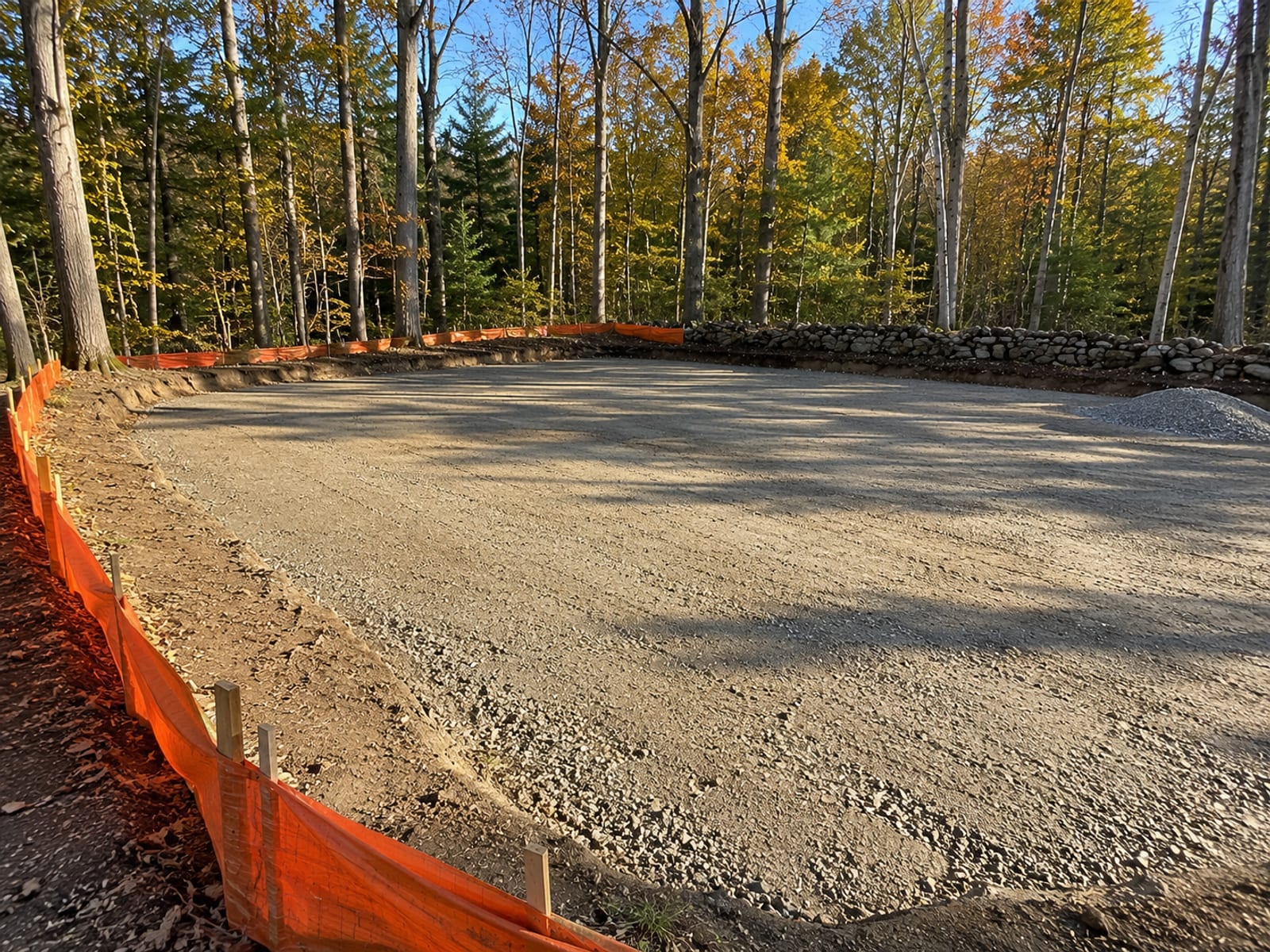
The best value in excavation is a complete scope of work that accounts for what the property actually needs, carried out by a contractor who understands the conditions they're working in. When comparing quotes, look at whether each one covers the same scope. Paving prep and driveway base preparation costs can vary significantly depending on whether base material, compaction, drainage, and finish grading are included or not. Stump grinding and excavation can overlap when wooded lots need clearing before digging begins. A quote that appears lower may simply be describing less work.
Common Pitfalls to Avoid
Several mistakes come up repeatedly when homeowners are comparing excavation quotes in Oxford.
- Comparing quotes without matching scope: Two quotes covering different work are not comparable. Ask each contractor what is included before putting the numbers side by side.
- Ignoring hauling and material costs: Excavation hauling and fill and stone costs are often major line items. A quote that doesn't mention them may not include them.
- Skipping drainage planning: Water problems that aren't addressed during excavation tend to become bigger problems after the job is done. Ask whether drainage is part of the plan.
- Underestimating rock: Boulder and rock removal are not rare surprises in Oxford. Ask every contractor how they handle rock and what the pricing looks like if it's encountered.
- Assuming permits are included: Approvals may or may not be part of a quote. Ask directly, and check with the Oxford town offices if you're unsure what's required.
- Choosing a contractor without local experience: A contractor who doesn't know Oxford's soil conditions, drainage patterns, and local permit requirements may be quoting based on assumptions that don't apply to your property.
- Skipping the cleanup conversation: Final cleanup and restoration are sometimes treated as optional or extra. Ask whether they're included, and what the finished site will look like before the crew leaves.
Frequently Asked Questions About Residential Excavation Cost Oxford CT
How much does residential excavation cost in Oxford CT?
It depends on project type, access, soil conditions, rock, drainage, hauling, materials, permits, cleanup, and restoration. A site-specific estimate from a contractor who has visited the property is the most reliable way to price any excavation work in Oxford.
Why do excavation costs vary so much between quotes?
Excavation cost varies because hidden rock, wet soil, slopes, access limitations, hauling requirements, drainage needs, and material specifications can change the scope significantly. Two quotes may also include different line items, which makes the price difference look larger than the actual difference in work.
What should an excavation estimate include?
A complete estimate should explain machine time, crew time, access preparation, hauling and disposal, fill and stone, drainage components, grading, compaction, erosion and sediment controls, cleanup, and restoration. If any of those items are missing, ask whether they're excluded or simply not applicable to your project.
Can rocky soil increase excavation cost in Oxford?
Yes. Buried boulders, rocky glacial soil, and near-surface ledge conditions can require more equipment time, specialized rock handling techniques, and additional hauling. Because Oxford sits on glacial terrain, rock is a real possibility on many properties rather than an unlikely exception.
Do permits affect excavation cost in Oxford CT?
They can. Requirements depend on the town, the project scope, drainage changes, proximity to wetlands, driveway work, retaining wall construction, utility work, and the total area of disturbed soil. The Oxford Building Department is the right starting point for questions about what your specific project may require.
Is the lowest excavation quote always the best choice?
Not always. A lower quote may exclude hauling, drainage materials, stone, compaction, final grading, cleanup, or restoration. When those items are missing, the homeowner either pays more later to have them added, or ends up with a job that isn't finished. Comparing quotes by what they include is a more reliable measure than comparing the bottom-line numbers alone.
What can cause the excavation price to increase after work begins?
Hidden boulders, wet or unstable soil, undocumented utilities, blocked drainage lines, limited access that wasn't visible during the estimate, and changes to the project scope can all add cost once a job is underway. A good contractor will name the most likely unknowns before the first machine moves and explain how they would be handled.
Final Thoughts
Residential excavation cost in Oxford CT doesn't have a single answer because no two properties present the same conditions. The rocky glacial soil, wooded lots, slopes, drainage patterns, and access challenges that define Oxford properties mean that a fair estimate has to account for what's actually there. Once you understand what drives excavation pricing, the gap between two quotes starts to make sense, and you're in a much better position to judge which one is actually describing the work your property needs.
Taking the time to get a site-specific estimate, ask the right questions, and compare quotes by scope protects you from paying for work twice or ending up with an unfinished job. A well-executed excavation project handles the drainage, the grading, the cleanup, and the restoration in one complete sequence. That's the kind of result that holds up over time instead of creating new problems the following season.
At Prestige Property Maintenance, we work in Oxford, Seymour, and 19 towns across the Naugatuck Valley and western Connecticut, and we understand what this ground actually looks like before a machine ever starts. Our crew handles the full sequence from land clearing and forestry mulching through excavation, grading, drainage, retaining walls, and rock removal, so you're working with one accountable team from the first pass to finished grade. If you've got a quote in hand that doesn't add up, or you're just starting to plan a project and want to understand what the work will actually involve, call us or reach out through our website to schedule a site visit.
Related Articles
Excavation in Oxford CT: A Homeowner's Guide to Getting It Right
Oxford CT excavation covers more than digging. Here's what homeowners need to know about rock, permits, utilities, and getting the site done right.
Oxford CT Excavation Contractor: What to Look For
Hiring an excavation contractor in Oxford CT? This guide covers what to ask, what a solid estimate should include, and why local site experience makes all the difference.
Excavating Rocky Terrain in Oxford, CT
Learn how rocky terrain excavation in Oxford CT affects your project timeline, costs, and drainage, and what to expect from Prestige Property Maintenance before digging starts.