

Excavation for Patios in Oxford CT: Start Here Before You Build
Kash CochranePublished Updated
- patio excavation
- site preparation
- oxford ct
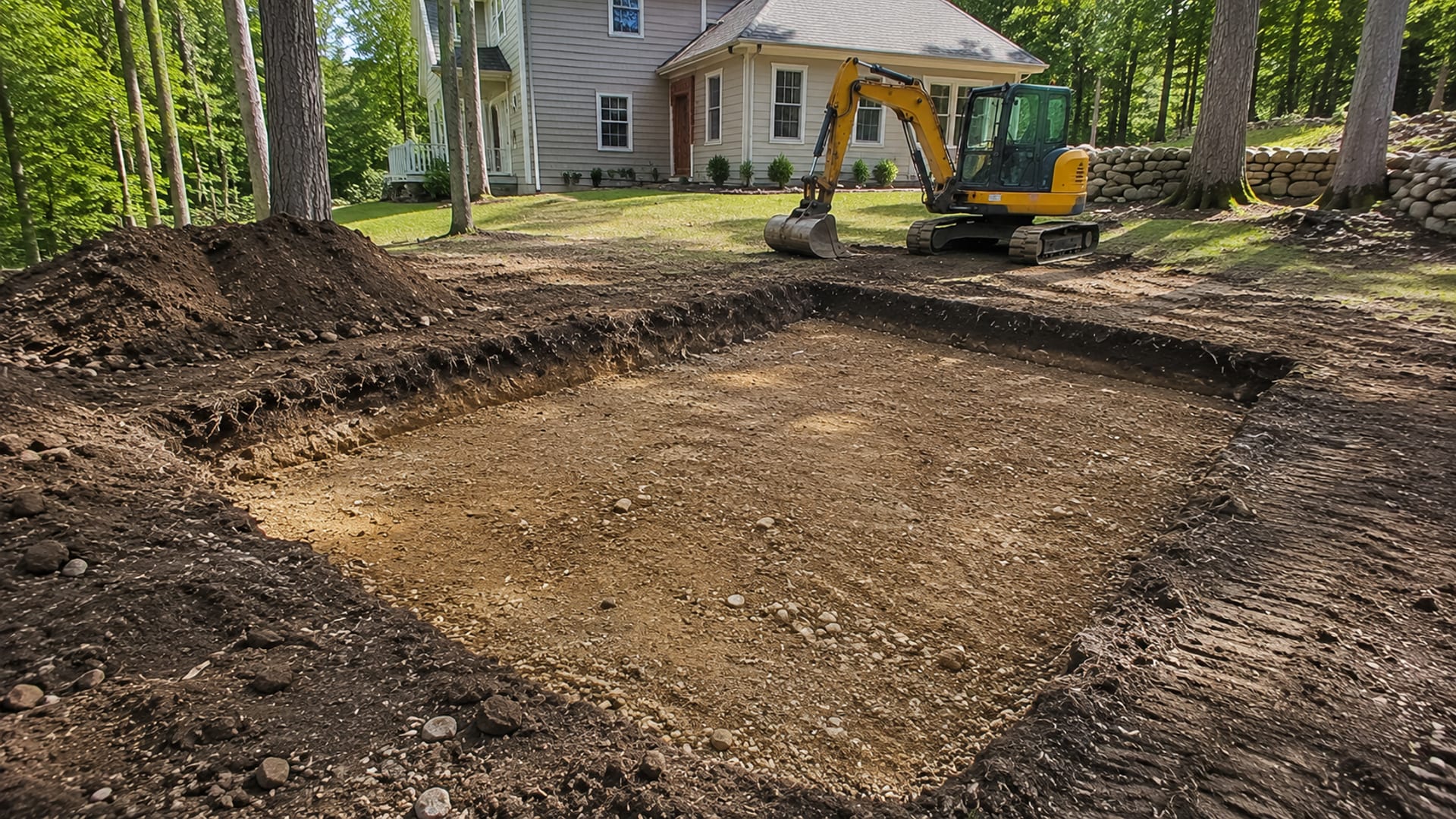
You've done the planning. You have a general idea of where the patio will go, maybe even a rough sense of size and materials. But now you're actually standing in that spot in your Oxford backyard, and the ground is telling a different story than the inspiration photos did. There's a low corner that holds water after rain. A slope that runs toward the house. A cluster of tree roots you hadn't really thought about. Maybe the yard is mostly fine except for that one area where the soil always feels soft underfoot. Patio excavation in Oxford CT is the step that either solves those problems before installation begins or leaves them buried underneath a finished surface that fails in a few years. Most people focus on the patio material, the pattern, the edge detail, and that's completely understandable. But the surface is only as reliable as the ground beneath it, and in Oxford, the ground has a habit of being more complicated than it looks. Rocky glacial soil, water-holding clay, slopes, buried boulders, wet spots, and mature root systems are common on properties throughout the area. None of these conditions make a great patio impossible. They just make site preparation the part of the project that actually determines the outcome.
Key Takeaways
The patio base starts with excavation
The finished patio depends on what is removed, shaped, compacted, and stabilized below it before a single paver or stone goes down.
Drainage matters before installation
Water needs a clear path away from the patio and the home, and that path is shaped during excavation, not after.
Oxford soil can affect the work
Rock, roots, slopes, wet ground, and wooded lots all change what excavation requires in terms of equipment, depth, and approach.
A flat patio still needs pitch
The surface should be usable and level-feeling while still allowing water to move off it in a controlled direction.
Utility markouts may be needed
Excavation should not happen near buried utilities, septic systems, or drainage lines without identifying what is underground first.
Site preparation affects lifespan
Poor excavation can lead to settling, heaving, puddling, cracking, or edge failure that shows up months or years after installation.
Why Patio Excavation Matters
Patio excavation matters because the finished surface needs something stable underneath it to perform the way it should. Every time it rains, every time the ground freezes and thaws, every time weight is placed on the surface, the base beneath the patio is either holding things steady or slowly giving way. The difference between those two outcomes is almost entirely determined during excavation and site preparation, before any surface material arrives.
The Hidden Base Supports the Finished Patio
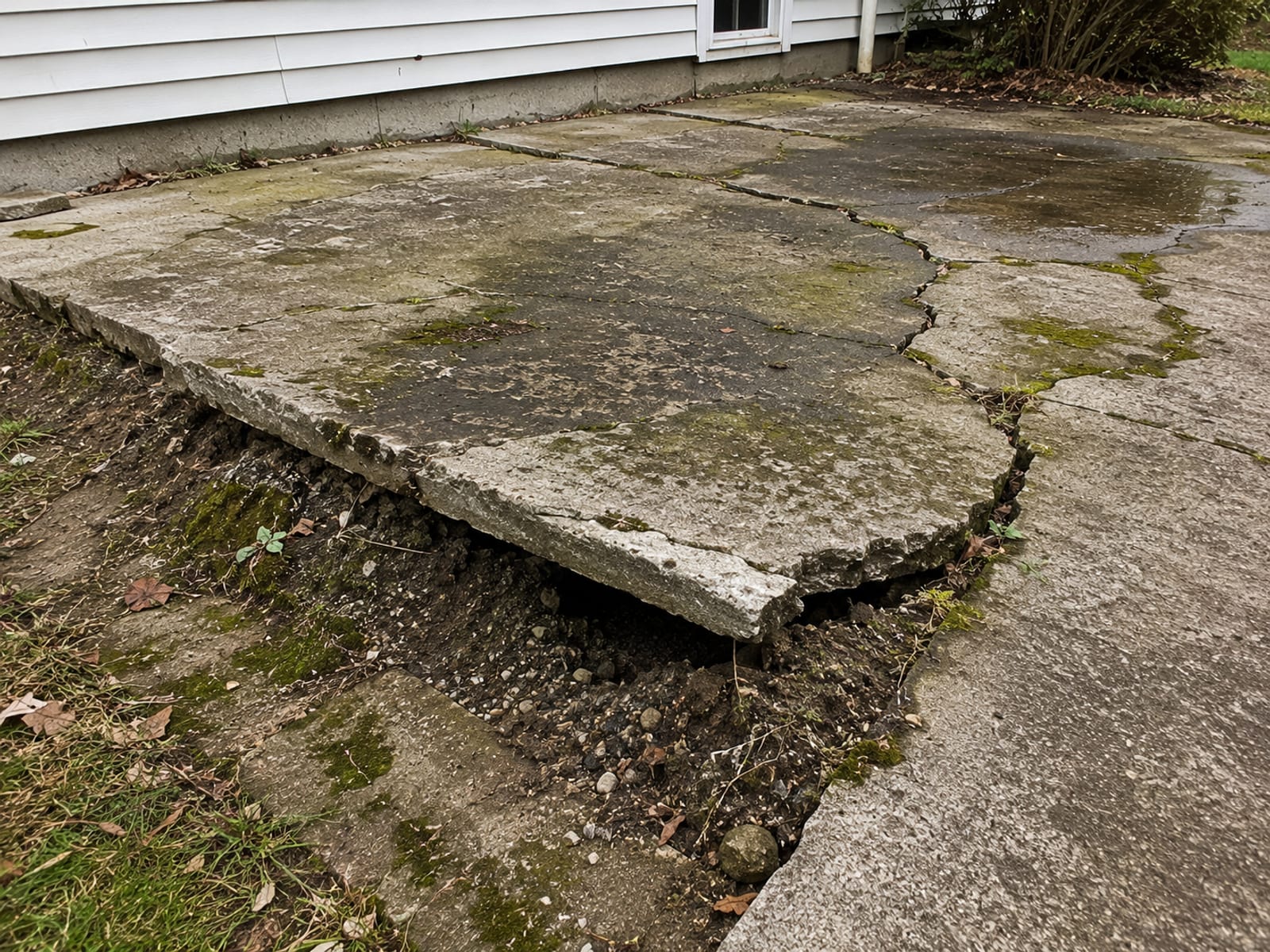
The visible patio is the last layer installed, and also the least forgiving of what was done poorly underneath it. Whether the finished surface is pavers, natural stone, concrete, or compacted gravel, it depends on a properly prepared subgrade and base system to stay level and drain correctly. Connecticut's stormwater management guidance is clear that surface drainage needs to be planned from the ground up, not treated as an afterthought once the hardscape is in place. If organic topsoil is left under the base, it will compress over time. If the subgrade is uneven or soft in spots, those spots will eventually show through the surface. If water has nowhere to go, it will find the path of least resistance, which may be straight through the base material or directly toward the foundation. Excavation done correctly removes all of those future problems before they start.
Signs a Patio Area Needs Extra Preparation
Almost every patio project needs some form of excavation, but certain site conditions make the preparation work more involved than others. Oxford properties vary widely: some are relatively flat and well-drained, others sit on slopes, have wet corners, or back up against wooded areas with years of root growth and organic buildup. Recognizing the conditions on your specific property helps set realistic expectations for what site preparation will actually involve. A contractor should be walking that area with you before any numbers are discussed.
Low or Wet Patio Areas
When water collects in the area where a patio will go, that is a signal that drainage correction, grading, or base improvements will be part of the job. A low spot that holds water after rain is not just a drainage inconvenience. It is a problem that will follow the patio into service. A saturated base leads to soft spots, frost heave in winter, and eventual settling as the material beneath the surface loses its stability. Solutions in these situations may include regrading the area, installing drainage pipe, adjusting the surrounding grade to redirect water, or incorporating a catch basin depending on how water is entering the low spot. The approach depends on where the water is coming from, not just where it ends up.
Sloped or Uneven Ground
A sloped yard can absolutely support a beautiful patio, but the excavation plan has to account for how the finished surface will relate to the surrounding grade. Slope correction often involves cutting into the uphill side and building up the downhill side with compacted base material, or combining excavation with retaining wall construction to hold the grade change in place. Connecticut's soil erosion and sediment control guidelines apply when grading changes disturb soil that can wash toward neighboring properties, roads, or waterways. A contractor working on a sloped Oxford lot should have a clear plan for how cut material will be managed and how the surrounding ground will be stabilized after grading is complete.
Key Patio Excavation Considerations
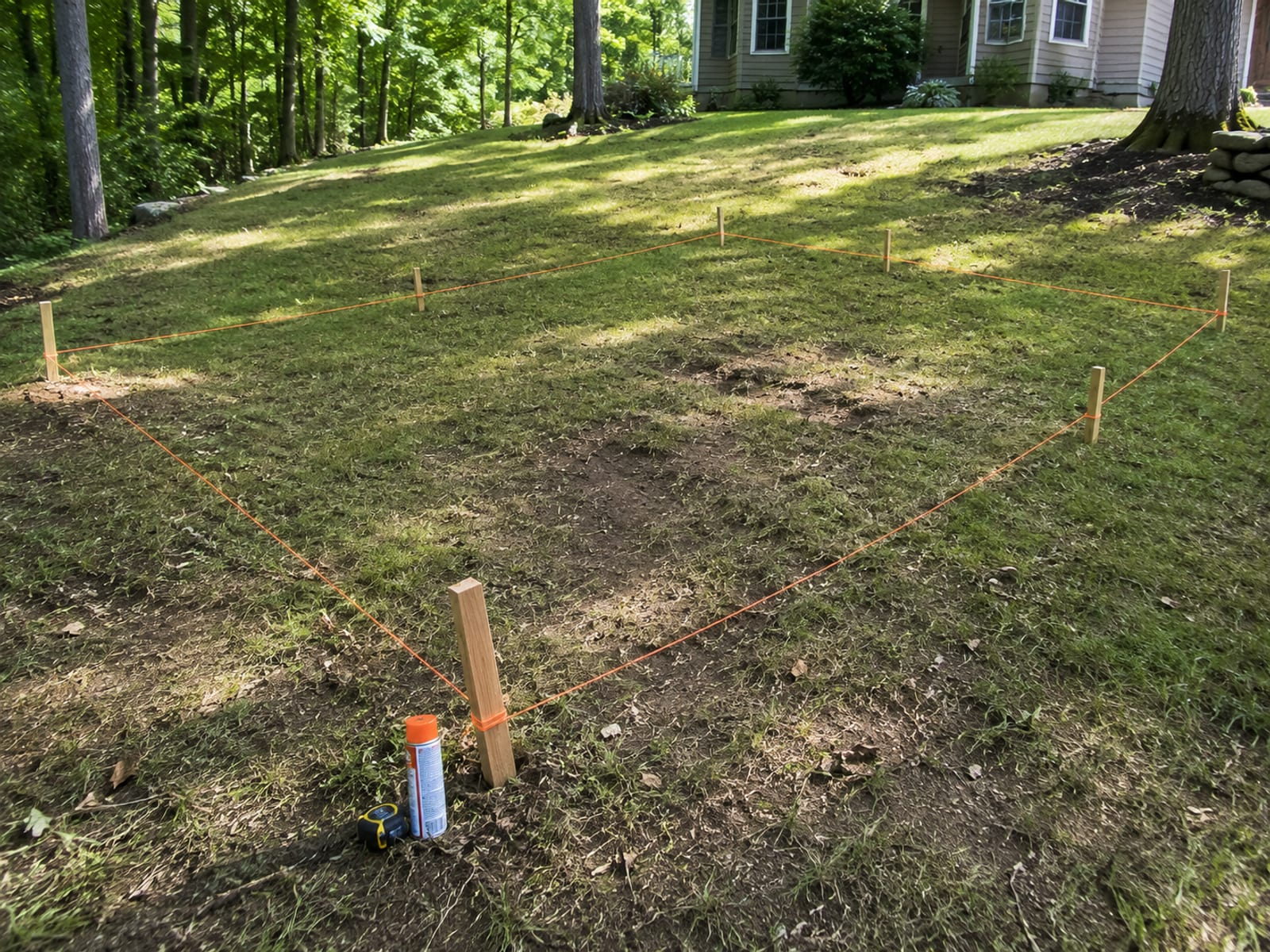
Patio site preparation in Oxford CT involves evaluating the soil, slope, drainage pattern, proximity of utilities and structures, the type of patio being installed, and how the space will be used over time. Each of those factors influences excavation depth, equipment selection, base requirements, and how disturbed areas around the patio footprint will be handled. A contractor who skips that evaluation phase and simply shows up to dig is working without the information needed to do the job correctly.
Subgrade and Compaction
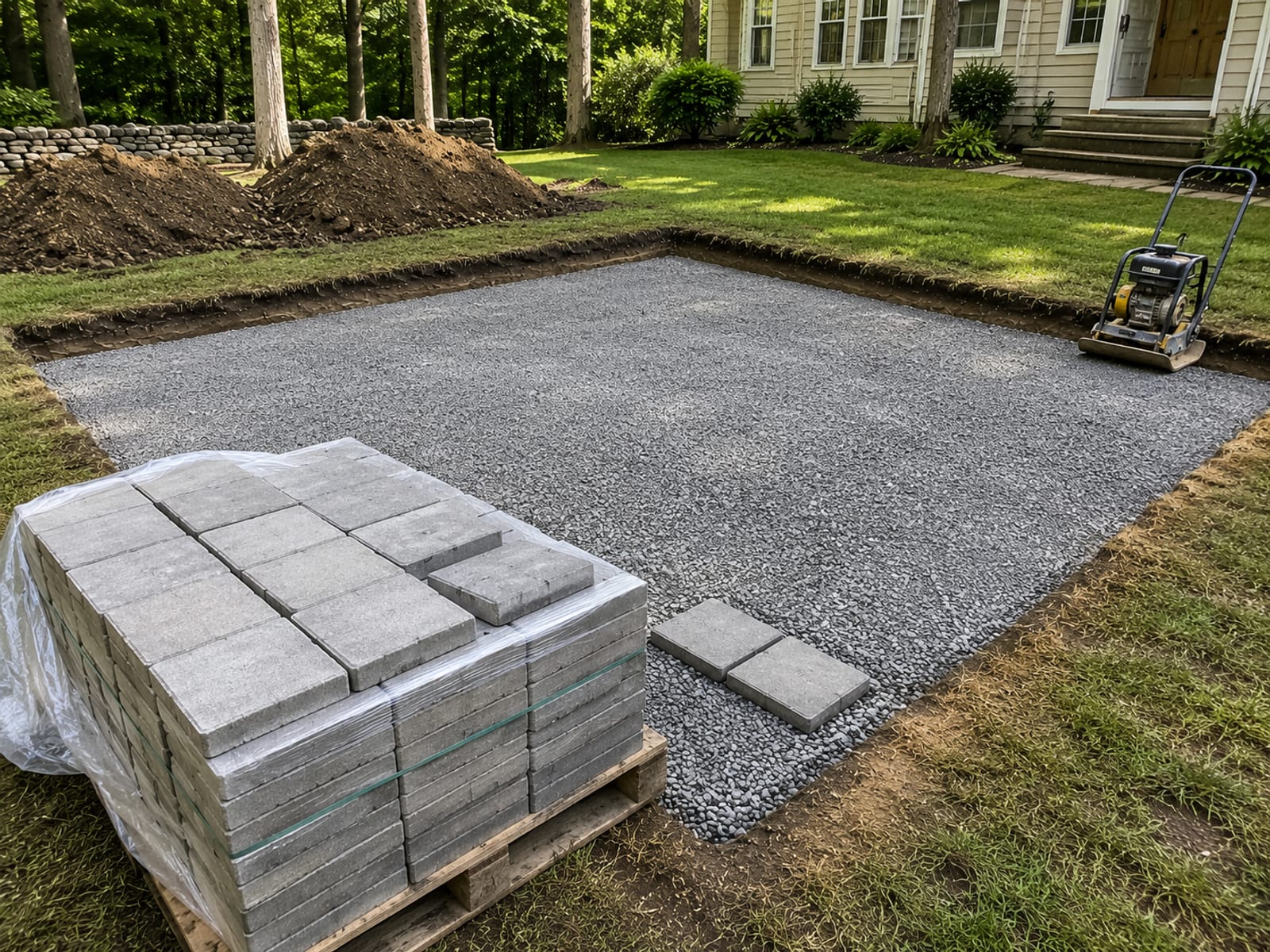
The subgrade is the native soil left in place after excavation is complete, and it is the foundation that everything else rests on. Before base stone goes in, unsuitable material including topsoil, organic matter, roots, and soft or unstable soil needs to come out. What remains should be shaped to the correct grade and compacted so it does not shift once weight is applied. Skipping or shortcutting compaction is one of the most common reasons paver patios settle unevenly after a few winters. Connecticut's freeze-thaw cycles put real stress on any outdoor hardscape, and a properly compacted subgrade is the first line of defense against frost heave working its way up through the base and into the surface layer.
Drainage and Pitch
Patio drainage is planned during excavation, not corrected after the fact. The patio area needs to be shaped so water moves away from the home and does not collect on the surface or saturate the base. According to UConn's NEMO stormwater program, grading during construction is one of the most effective tools for managing stormwater runoff from hardscape areas. A patio that is perfectly level will hold water. A patio that pitches toward the house creates a different problem. The target is a surface that feels usable and flat to the eye while still carrying water off the edge in a controlled direction. On some Oxford properties, that may also mean installing drainage pipe, a swale along one edge, or stone drainage layers beneath the base material to handle water that would otherwise have nowhere to go.
Permits, Utilities, and Site Rules
Before excavation starts on any Oxford property, it is worth understanding what local rules and site conditions apply to the project. Patio projects that involve significant grading, drainage changes, retaining walls, or work near wetlands may require review by Oxford's Planning and Zoning Commission or the Inland Wetlands Agency. Oxford's local regulations are accessible through the town's Building Department, and project scope is the determining factor for what review, if any, applies. These requirements exist to protect property owners and neighbors from drainage and erosion problems that originate on one lot and affect others.
Utility Markouts
Knowing what is buried on a residential property before equipment moves is not optional. Connecticut's Call Before You Dig (CBYD) system is the standard process for marking buried utilities before work begins, and Oxford properties can have electrical service, gas lines, cable, water lines, septic systems, drainage lines, irrigation, and outdoor lighting in areas that are not obvious from above grade. Marking these systems before digging protects the contractor, the homeowner, and the utility infrastructure. Hitting a buried line is not just a safety risk; it can create delays, repair costs, and additional permit requirements that set a project back significantly.
Disturbed Soil and Erosion Control
Excavation exposes bare soil, and exposed soil can wash. Connecticut DEEP's erosion and sediment control guidelines set expectations for how disturbed areas should be stabilized so that sediment does not move toward roads, storm drains, wetlands, or neighboring properties. On most residential patio projects, this is handled through straightforward measures: protecting stockpiled material, stabilizing disturbed edges after grading, and minimizing how long bare soil is exposed. A contractor familiar with these requirements handles erosion control as part of the work rather than as an afterthought.
The Patio Excavation Process
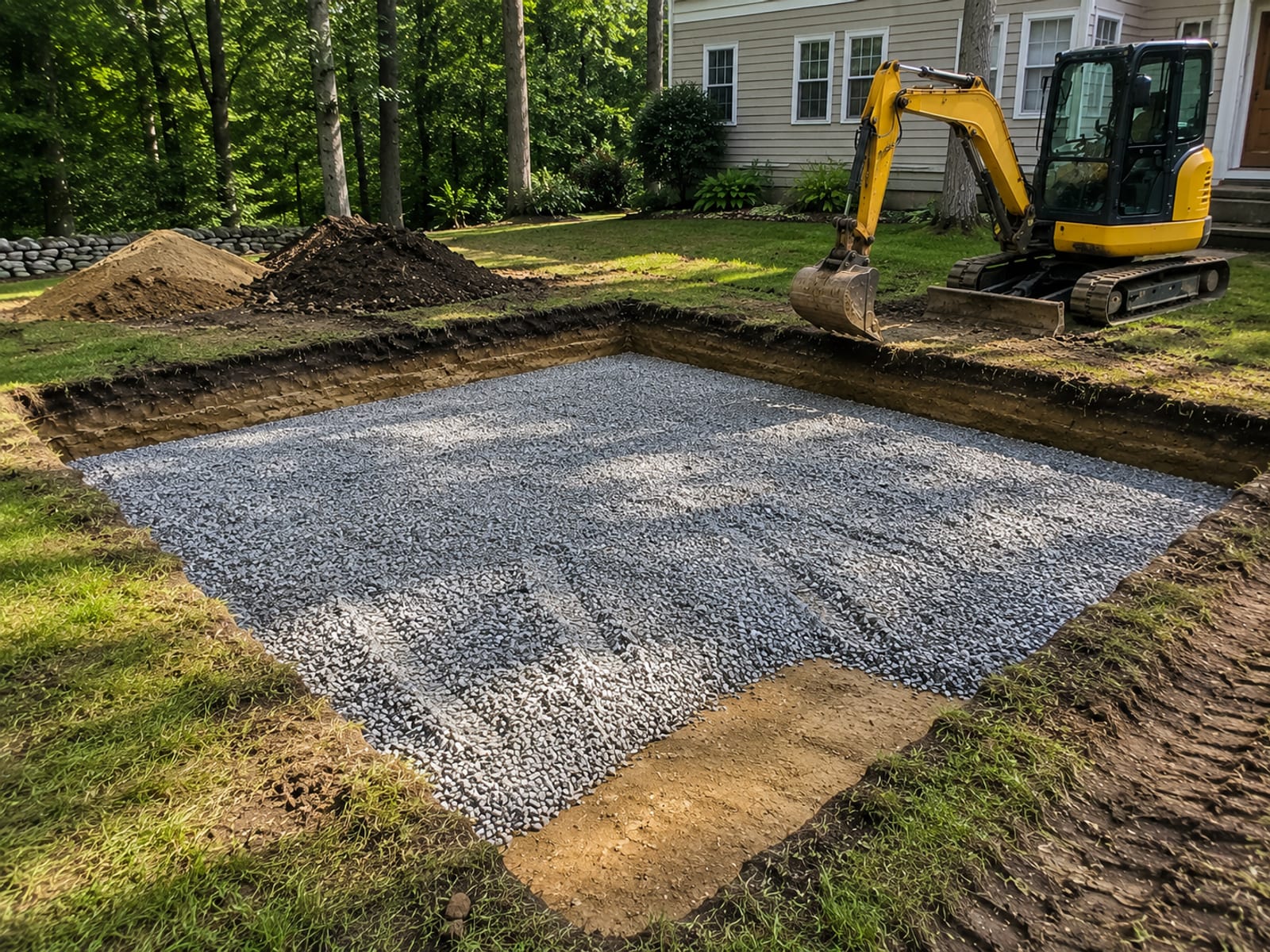
Professional patio excavation follows a clear sequence, and each step feeds into the next. The process is not the same on every property, because site conditions in Oxford vary too much for a one-size approach. What matters is that the contractor evaluates the site before work begins and adjusts the plan based on what is actually there, not just what was visible from the street.
Step 1: Review the Patio Area
Before any digging starts, a qualified contractor should walk the patio footprint and evaluate slope, drainage patterns, access routes for equipment, soil conditions, proximity to utilities and structures, and what the finished patio will need to perform well. This review is where buried boulders get factored in, where the drainage plan takes shape, and where tree roots or nearby septic systems get accounted for. Oxford properties that back up against wooded areas or sit on older lots with established drainage patterns often have site conditions that are only visible once someone is standing in that specific spot and watching how water moves and where the soil changes character.
Step 2: Excavate, Grade, Compact, and Prepare
Once the plan is set, the actual excavation work begins. This typically means removing sod and topsoil from the patio footprint, excavating to the depth required by the patio system being installed, removing unsuitable material, handling any rock or root obstacles, and shaping the grade so the base will drain properly. Rock removal is not unusual in Oxford. The area sits on glacial geology, and buried boulders that never show at the surface can become significant obstacles once a machine starts digging. After excavation is complete, the subgrade is compacted and the area is prepared for base material installation. Erosion control around the work area should be addressed before the crew leaves the site, particularly if the project spans more than a day or involves graded slopes exposed to rain.
Long-Term Strategy for a Better Patio
The decisions made during patio excavation shape how the finished surface performs for years. Homeowners who ask the right questions before work begins tend to end up with patios that stay level, drain cleanly, and do not require repairs after a few New England winters. The questions worth asking are direct: How will water move away from this patio? What material is being removed, and where does it go? How is the subgrade being prepared and compacted? Is drainage being planned into the grading, or added as a separate step? How will the disturbed areas around the patio footprint be restored?
Connecticut's stormwater standards and soil erosion guidance both point to the same principle: how water is managed during and after construction directly affects how the finished project holds up. A patio is not isolated from its surroundings. It changes how water moves across the property, and that change needs to be planned for during excavation, not discovered after the first hard rain.
Common Pitfalls in Patio Excavation
Most patio failures trace back to what happened, or did not happen, during site preparation. Understanding the most common mistakes helps homeowners recognize whether an estimate they receive is actually accounting for the work the site requires.
- Organic soil left under the base: Topsoil and organic material compress over time. Leaving it in place creates a base that will settle unevenly under a finished patio surface.
- No drainage plan: A patio without a drainage plan is a future water problem. The excavation phase is when this gets solved.
- Surface too flat: A perfectly level patio will hold water on the surface and allow it to saturate the base below. Some pitch is always needed.
- Skipped compaction: An uncompacted subgrade moves under load and through freeze-thaw cycles. Settling pavers and cracked concrete are often the result.
- Freeze-thaw cycles ignored: Connecticut winters push frost into the ground every year. A properly prepared base minimizes how much that movement affects the surface above.
- Utilities not marked: Digging without knowing what is below grade is a safety and liability risk that is easily avoided through CBYD.
- Rock underestimated: Boulder removal in Oxford can add time and cost. A contractor who does not account for this upfront may pass that surprise on to the homeowner mid-project.
- Excavation treated as separate from patio performance: The excavation work and the patio installation need to be aimed at the same outcome. When they are not coordinated, gaps appear in the base system.
Frequently Asked Questions About Patio Excavation Oxford CT
What is patio excavation?
Patio excavation is the process of removing sod, topsoil, unsuitable material, roots, and rock from the patio area and preparing the ground so a stable base and patio surface can be installed properly. It includes grading, compaction, and drainage planning.
Why does a patio need excavation?
Excavation removes organic soil that would compress over time, corrects slope, prepares the subgrade for base material, and shapes the grade so water drains away from the patio and the home. Without it, settling, water pooling, and frost heave are likely.
Does patio excavation need drainage planning?
Yes. Patio areas should be graded so water moves away from the home and does not collect on or under the surface. On some Oxford properties, drainage solutions such as drainage pipe, swales, or stone layers beneath the base may also be needed depending on site conditions.
Do utilities need to be marked before patio excavation?
When excavation is planned, underground utilities should be identified through Connecticut's Call Before You Dig system before digging starts. Oxford properties may have buried electrical, gas, water, septic, drainage, or irrigation lines in or near the patio area.
Can rocky soil affect patio excavation in Oxford CT?
Yes. Oxford sits on glacial terrain, and buried rock, boulders, and ledge are common even on properties where the surface looks clear. Rocky conditions can affect excavation depth, equipment needs, timeline, and cost. A contractor familiar with the area should factor this into the estimate rather than treating it as a surprise.
What should a patio excavation estimate include?
A thorough estimate should explain the excavation scope, grading approach, how rock or roots will be handled, base preparation steps, drainage considerations, compaction, cleanup, and how disturbed areas around the patio footprint will be restored after work is complete.
Is a permit required for patio excavation in Oxford CT?
It depends on the project. Grading changes, retaining wall construction, work near wetlands, and larger disturbed areas may require review by Oxford's Building Department or other local bodies. Checking with the town before work begins is the right approach.
What other work often connects to patio excavation?
Hardscape excavation in Oxford CT often connects to land clearing, stump removal, rock removal, drainage excavation, retaining wall construction, and grading. A sloped or wooded patio area may need several of these steps before the patio base can be installed.
Patio excavation in Oxford CT is more involved than moving some dirt. The finished patio everyone is looking forward to depends on what happened at ground level before any surface material was placed. Getting the subgrade right, planning drainage, handling rock and roots, compacting the base, and protecting disturbed soil are all part of the same job, and skipping any of those steps creates problems that show up later in the surface. When site preparation is done correctly from the start, a patio can hold up through Connecticut winters for many years without settling, heaving, or shedding water in the wrong direction.
We handle patio excavation, grading, drainage, rock removal, land clearing, and retaining wall construction for homeowners across Oxford CT, Seymour CT, and nineteen towns throughout the Naugatuck Valley and western Connecticut. At Prestige Property Maintenance, we work Connecticut's rocky glacial soil on every project, which means we plan for buried boulders, water-holding clay, and difficult slopes before the equipment moves rather than after surprises show up mid-dig. If you are ready to start your patio project on the right foundation, contact us to talk through your site conditions and what the ground preparation will actually involve.
Related Articles
Excavation in Oxford CT: A Homeowner's Guide to Getting It Right
Oxford CT excavation covers more than digging. Here's what homeowners need to know about rock, permits, utilities, and getting the site done right.
Oxford CT Land Clearing Without the Budget Surprises
Prestige Property Maintenance offers land clearing in Oxford CT for homes, driveways, and build sites. One crew, clear pricing, and work that holds up long term.
Land Clearing in Derby, CT: What Is Under the Brush?
An overgrown Derby parcel hides more than brush. Learn how land clearing in Derby, CT reveals ground conditions, limits, and drainage before you build.