

How Long Will Your Yard Be Torn Up During Residential Excavation in Connecticut?
Kash CochranePublished Updated
- residential excavation
- project timeline
- grading
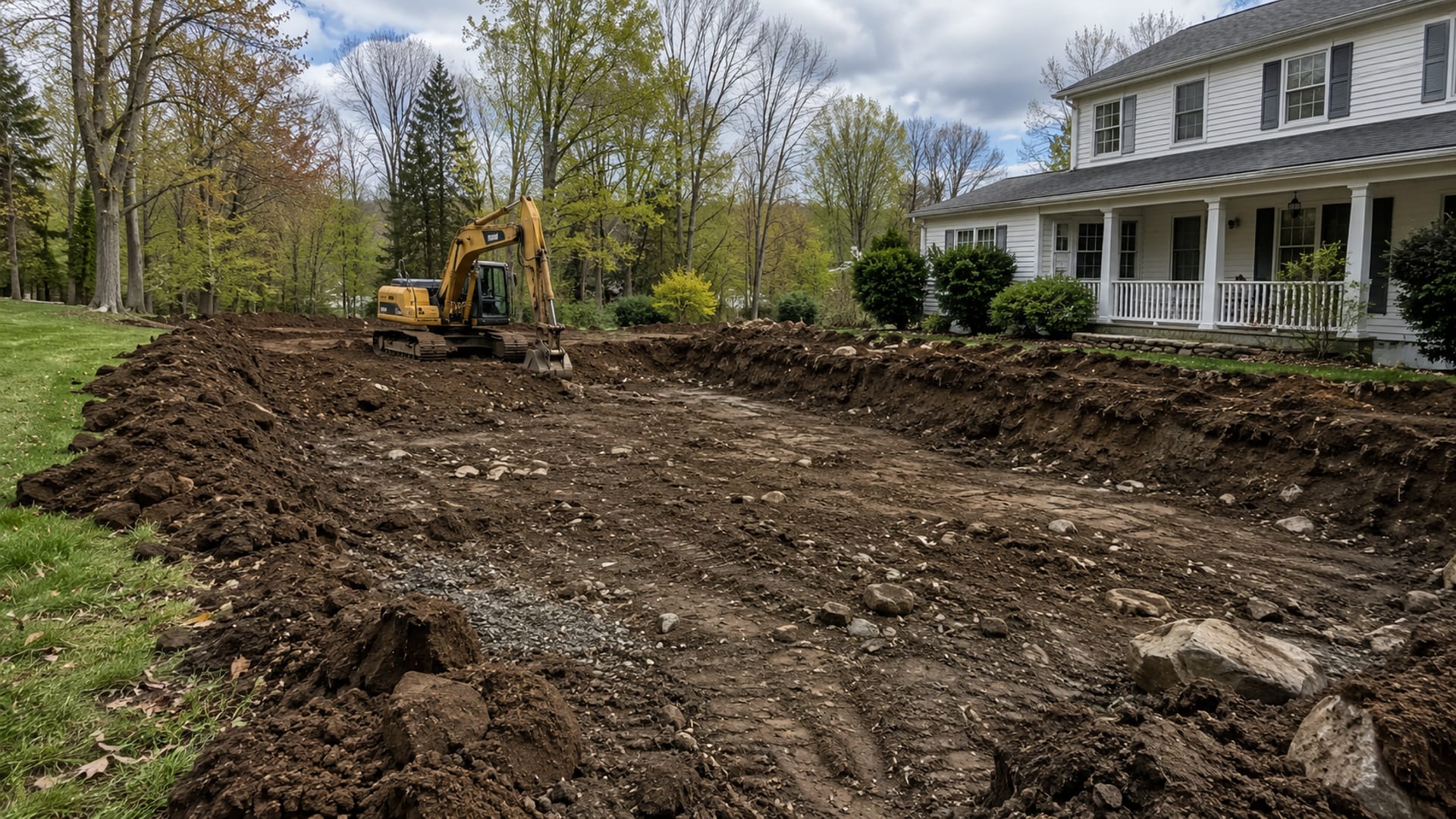
How long does residential excavation take? That question might seem simple, but for homeowners in Southbury, Oxford, Newtown, and the surrounding towns of the Naugatuck Valley, the answer depends on far more than a shovel hitting dirt. You may already know you need the work done. The cost estimate is sitting there. What is slowing you down is probably not the number on that page. It is the mental image of a yard that gets torn apart and stays that way, equipment parked across your driveway for weeks, the school year starting before your property looks normal again. That anxiety is real, and it is worth taking seriously. The good news is that most residential excavation projects in Connecticut finish in days to a few weeks, not months, and the ones that run long almost always do so because of conditions that a prepared contractor can identify and plan around before work ever begins. What you are about to read will walk you through what actually drives an excavation timeline on a Connecticut property, what the realistic ranges look like for common projects, and what you can do to keep things moving.
Key Takeaways
Most residential excavation projects finish in days or weeks, not months
Small drainage and trenching jobs often wrap up in one to three days, while larger site preparation work typically runs one to three weeks.
Site conditions affect timeline more than equipment size
Rocky glacial soils, buried ledge, and poor drainage are the most common reasons a Connecticut excavation project takes longer than expected.
Utility markouts and permits can affect start dates
Connecticut law requires utility notification before digging, and some projects need town-level permit review before work can begin.
Weather is a major scheduling factor in Connecticut
Spring mud season, freeze-thaw cycles, and heavy rain can slow or pause work, particularly on properties with long rural driveways or soft soil.
Rock and drainage issues can extend projects
Hitting ledge or an unexpected drainage problem mid-project adds days, sometimes more, and is one of the most common surprises in Naugatuck Valley soils.
Restoration planning shortens overall disruption
Contractors who plan final grading, seed, and site cleanup before mobilizing can move through the restoration phase faster and leave your property looking normal sooner.
1. Why Excavation Timelines Matter
For most families, an excavation project does not happen in isolation. It connects to something else, a driveway paving appointment, a foundation pour, a landscaping install, or a school calendar. When the excavation phase runs over, everything behind it gets pushed, and that is where the real cost shows up. Temporary arrangements stretch longer than planned. Permits that were approved on a schedule sit idle. A contractor scheduled for the next phase has moved on to another job. Understanding what drives an excavation timeline in Connecticut is about staying in control of your project from start to finish.
Property Access and Daily Life
One of the first things homeowners want to know is whether they will be able to use their driveway, yard, and outdoor space while work is happening. The answer depends heavily on where the work is located and how the project is sequenced. A drainage correction in a back corner of the yard may not affect driveway access at all. A full driveway excavation and base preparation, on the other hand, may require you to park on the street or use a neighbor's access for a few days.
Connecticut's Call Before You Dig (CBYD) program requires that utilities be marked before any digging begins, and that markout process takes time to schedule and complete. This step protects you, your property, and the crew from hitting a gas, water, or electrical line, and it means that on the day the excavator arrives, the crew already knows what is underground and where they need to work carefully. Knowing that information in advance often speeds up the actual excavation because there are no surprises that force a work stoppage mid-project.
Homeowners should also know that different sections of the property are typically affected at different times. A good contractor sequences the work so that disruption is contained to the active area rather than spread across the entire yard at once. Your property is not necessarily unusable for the full duration of the project, and that distinction matters a lot when you are trying to plan around daily life.
2. What Determines How Long Excavation Takes?
The factors that control an excavation schedule are mostly below the surface, which is part of why timelines can feel unpredictable from the outside. A project that looks straightforward from the street may run into conditions that add a day or two once the machine starts moving dirt. Connecticut has a few site conditions that come up repeatedly and are worth knowing about specifically, and understanding them before work begins is the difference between a schedule that holds and one that keeps slipping.
Site Conditions
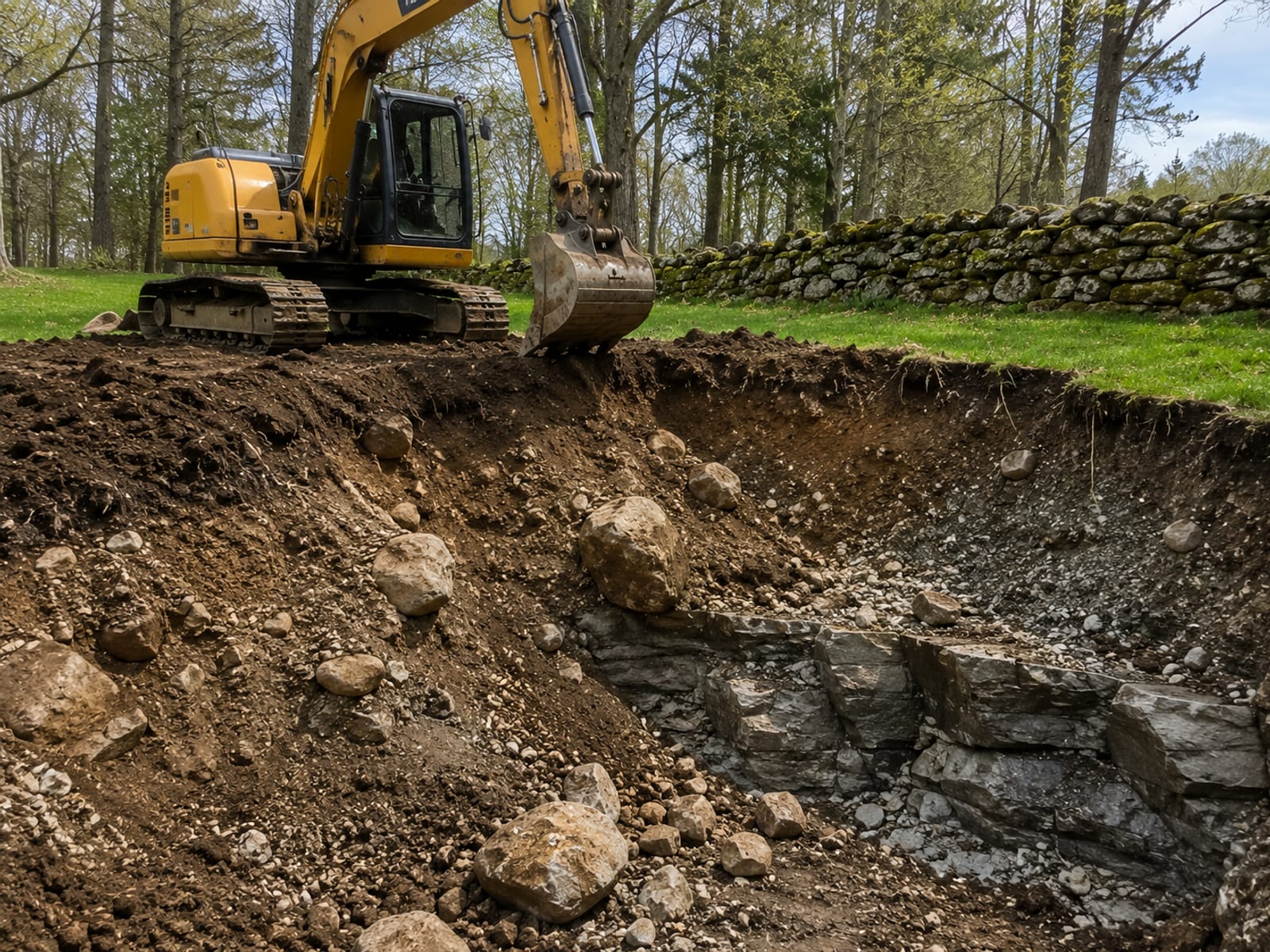
Connecticut soil is not uniform. The Naugatuck Valley and the towns around it sit on top of glacial deposits left behind by the last ice age, which means the ground can contain anything from sandy loam near the surface to large boulders and solid ledge just a few feet down. Connecticut's stormwater management standards account for the variability in soil type across the state, and that variability is real. A contractor who works regularly in Oxford, Southbury, and Newtown has almost certainly hit ledge on a job that looked clean on the surface. When that happens, a standard excavation timeline extends by at least a day or two, sometimes more depending on the size of the rock and what equipment is available to deal with it.
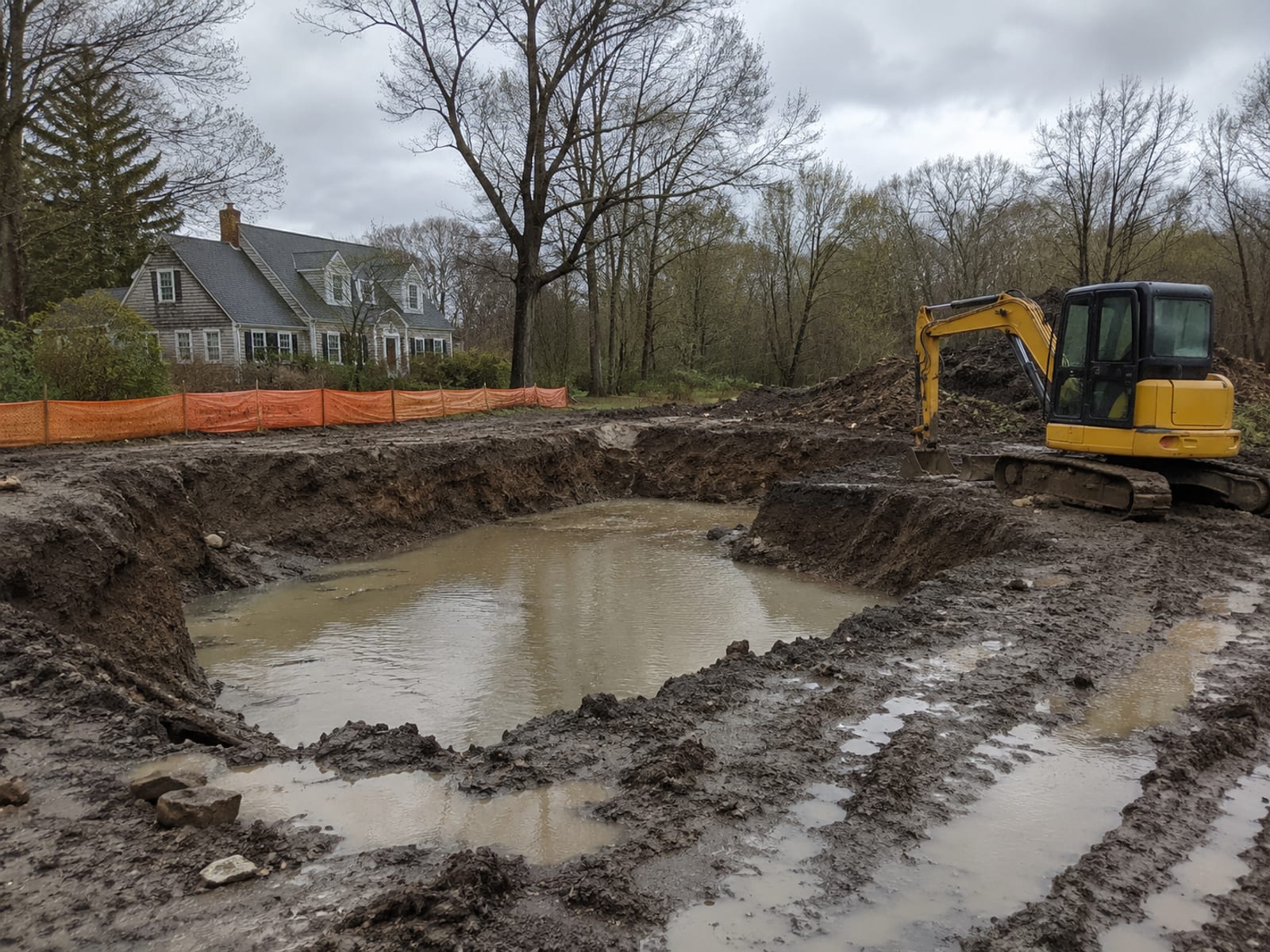
Beyond rock, slope and drainage conditions matter. A property that sheds water poorly or sits at the bottom of a grade may need additional drainage work that was not visible during an initial site visit. Wet soil reduces how much a machine can move in a day and can create compaction problems if work continues when the ground is saturated. Connecticut's soil erosion and sediment control guidelines exist precisely because disturbed soil on a sloped or wet site can become a problem for the property and for neighboring land if not managed carefully.
Access is another factor that does not always get discussed upfront. A long rural driveway, a tight gate, or a property with overhead wires crossing the access route can limit what equipment fits and how efficiently it can move. These are the kinds of details that a contractor should identify during the site review, not after mobilization.
Project Scope
The type of work being done is the other major variable. A small drainage trench and a full site preparation for an addition are both called excavation, but they have almost nothing in common in terms of how long they take. Driveway excavation and base preparation runs on a different schedule than a retaining wall project that requires precise grading and significant material movement. Trenching for utilities is a different timeline than land clearing followed by rough grading. Project scope should always be matched to a realistic timeline range before the first machine arrives on your property.
3. Common Residential Excavation Timeline Ranges
Having a general sense of how long different project types take gives you something concrete to plan around. These ranges reflect what Connecticut homeowners typically experience, and every property is different, but they are reasonable starting points for scheduling.
Small projects that involve focused work in a limited area tend to move quickly:
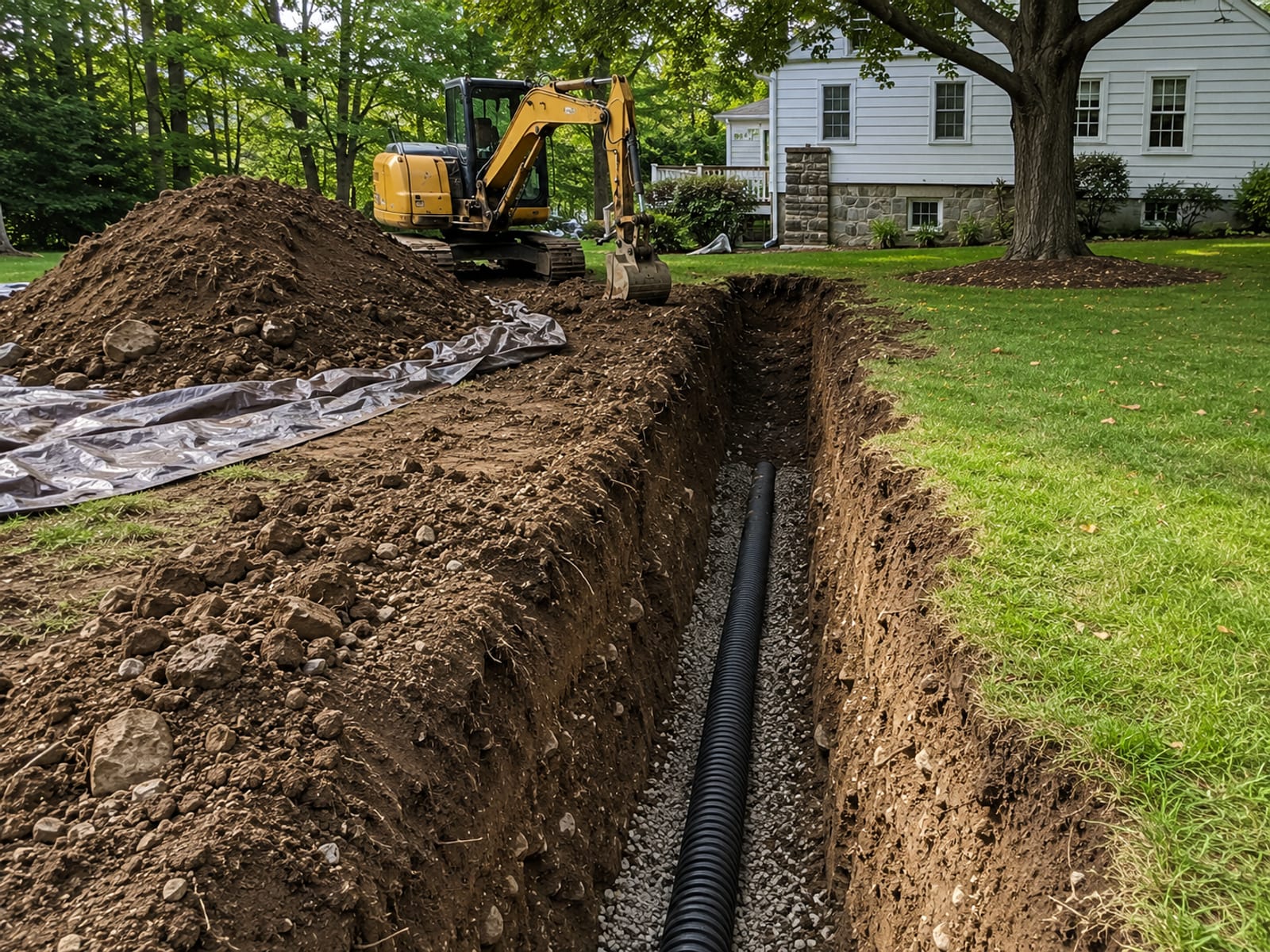
- Small drainage trench: 1 to 2 days, depending on length, depth, and soil conditions
- Stump and root excavation: 1 to 3 days, depending on stump size and root system extent
- Utility trenching: 1 to 3 days for most residential runs, though utility conflicts can add time
Larger projects that involve multiple phases, significant material movement, or site-wide grading take longer:
- Driveway excavation and base preparation: 2 to 5 days for a standard residential driveway, longer if rock is encountered or existing material needs significant removal
- Site preparation for an addition: 3 to 10 days depending on lot conditions, existing vegetation, and required grades
- Retaining wall excavation and preparation: 3 to 10 days depending on wall length, height, and drainage requirements
- Land clearing combined with excavation: 5 days to several weeks depending on lot size and what is being cleared
- Large site preparation projects: 1 to 4 weeks or longer for complex residential sites
The yard is not at its worst condition for the entire duration of a project. Work moves through the site in phases, and restoration often begins in completed sections while other areas are still active. Asking your contractor to walk through the project sequence during the estimate is one of the most useful things you can do before signing anything.
4. Permits, Utilities, and Practical Delays
Before a machine ever touches your yard, there are administrative and regulatory steps that affect when the project can start. These are not obstacles specific to any one contractor. They apply to everyone working in Connecticut, and they exist for good reasons. What separates a well-organized contractor from a disorganized one is whether these steps are handled before the scheduled start date or scrambled through at the last minute.
Utility Markouts
Connecticut's Call Before You Dig law requires that utilities be notified before any digging begins. The CBYD notification process triggers a window during which utility companies send locators to mark the positions of underground gas, electric, water, sewer, and telecommunications lines at the project site. This window is typically a few business days, which means the notification needs to go in before the crew is scheduled to arrive.
Skipping or rushing this step is one of the most common causes of work stoppages and unexpected costs. Hitting an unmarked utility line mid-project can shut down work for hours or days while the utility company assesses and repairs the damage. A contractor who builds the markout window into the project schedule as a standard step keeps the project on track from the beginning.
Permit Requirements
Not every residential excavation project requires a permit, but some do, and the review timeline varies by town. Projects that involve significant grading, land disturbance, proximity to wetlands, or connection to town infrastructure may require review and approval before work can begin. Home improvement contractor registration is a separate requirement in Connecticut and applies to contractors performing work on residential properties. Some larger sites may also require a construction stormwater permit through Connecticut's DEEP, particularly when the project disturbs more than one acre.
If your project is in an area with wetland buffers, your town's inland wetlands commission may need to review the plan before work starts. These reviews add time to the pre-construction schedule, sometimes several weeks. The right time to find out about permit requirements is during the planning phase, not after you have already committed to a start date.
5. What Happens During the Excavation Process?
Understanding the sequence of work helps you see why the yard looks the way it does at each stage and when things will start coming back together. Most residential excavation projects in Connecticut move through several identifiable phases, and each one has a visible effect on the property. Knowing what to expect at each step makes the process feel less chaotic, even when the yard is at its roughest during active work.
Step 1: Site Review, Utility Marking, and Access Planning
Before any equipment is loaded onto a trailer, a thorough site review should happen. This phase includes walking the property with the homeowner, identifying where underground utilities run, noting any access limitations, and talking through what the finish grade needs to look like. The utility markout gets called in during this phase so the locating window is complete before the mobilization date. If permits are required, the application process starts here. Any potential site conditions that could affect the schedule, such as rock, wet areas, drainage conflicts, or tight access, get identified and planned around rather than discovered mid-project.
Good preparation at this stage is what keeps the project from stalling later. A contractor who shows up on day one without having walked the property or called in the markout is setting up for delays that will push back everything that follows.
Step 2: Excavation, Grading, Drainage, and Restoration
Once the site is prepared and utilities are marked, active work begins. The excavation phase involves removing soil, rock, or existing material to achieve the grade or depth the project requires. Depending on the project type, this phase may run parallel to drainage installation, base material delivery, or rough grading. As sections of the project are completed, backfill and compaction begin, followed by final grading to establish the finished surface. Connecticut's construction stormwater general permit requires that erosion and sediment controls be in place on qualifying sites throughout active work, which affects how and when disturbed areas are stabilized.
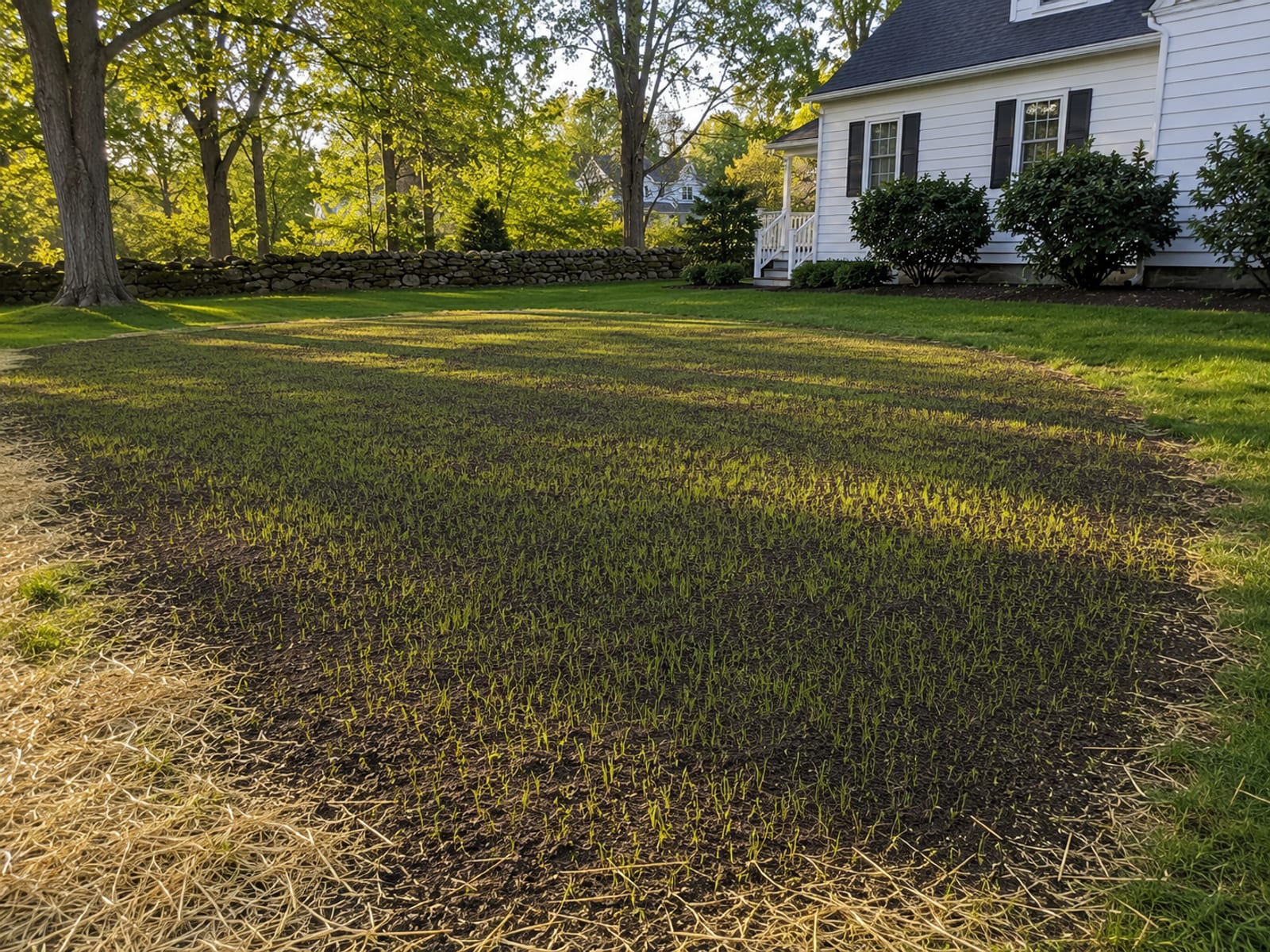
Restoration, which includes final grading, seeding, or surface preparation for pavement, is the last phase and the one that brings the property back to normal. When restoration is planned as part of the project from the beginning rather than tacked on at the end, it moves faster and produces better results.
6. How to Minimize Yard Disruption
Keeping your project on schedule and your yard disruption short comes down to preparation and clear communication with your contractor before work begins. Most of the delays that stretch a project from two weeks to four weeks are things that could have been anticipated. There are practical steps that make a real difference.
- Schedule during dry conditions when possible: Spring mud season in Connecticut can slow equipment significantly on soft ground, particularly on properties with long unpaved driveways or low-lying areas. Late spring through fall tends to offer better working conditions, though any time of year can bring weather delays.
- Get the utility markout done early: Calling in the CBYD notification as soon as a start date is set means the marking window does not eat into your scheduled work days.
- Walk the property with your contractor before mobilization: This is the single best way to surface potential problems before they become delays. Ask specifically about rock, drainage, and access.
- Talk about restoration upfront: Know before work starts what the finished surface will look like, what materials are included, and what the timeline from excavation to final grade looks like.
- Avoid tight calendar constraints around active excavation: If you have a paving contractor scheduled to arrive the day after excavation is supposed to finish, you are building in zero margin for any weather or site condition that adds a day.
Common Pitfalls to Avoid
Some of the longest and most stressful residential excavation projects share the same root causes, and most of them are avoidable. Choosing a contractor based only on the lowest price often means working with someone who has not thought through the site conditions, does not carry the right equipment for Connecticut soils, and will charge for problems as they come up rather than planning around them. Ignoring drainage problems at the planning stage is another pattern that extends projects, because drainage corrections often have to happen before final grading can be completed.
Unrealistic timelines set at the estimate stage are also a common source of frustration. A contractor who tells you a driveway excavation will take one day when the site has a rocky slope and limited access is either not being straight with you or has not actually looked at the property carefully. The timeline conversation should happen at the site visit, not over the phone.
Failing to discuss restoration before work begins often means the property sits in a rough-graded state longer than necessary because the contractor is waiting on materials or scheduling a second visit. A clear restoration plan agreed on before mobilization closes that gap.
Frequently Asked Questions About How Long Residential Excavation Takes
How long does residential excavation usually take?
Most residential excavation projects in Connecticut take between one day and three weeks depending on project scope, site conditions, soil type, drainage requirements, and restoration. Small drainage or trenching work often finishes in one to three days. Larger site preparation projects, driveway excavation, or retaining wall work can run one to three weeks. Project specifics from Prestige Property Maintenance illustrate how widely these timelines vary based on what is actually in the ground.
What causes excavation delays?
The most common causes are conditions that were not visible before work began. Buried ledge or large boulders, wet soil after heavy rain, underground utility conflicts, permit revisions, and additional drainage requirements are all frequent causes. In Connecticut specifically, glacial soils in the Naugatuck Valley area can hide rock at shallow depths. Septic systems and wells are also common on rural residential properties and require working around carefully. CBYD utility markout requirements add a scheduling window that, if not planned for in advance, can delay the start date.
Can excavation continue in rain?
Sometimes, but wet conditions reduce productivity and can create problems with soil compaction, erosion, and equipment movement. Connecticut's construction stormwater regulations require that qualifying sites maintain erosion and sediment controls during active work, which means work practices change in wet weather even when digging continues. Heavy rain on a soft or sloped site often means a pause until conditions allow safe and productive work.
Does utility marking add time to the excavation schedule?
Yes, but the time it adds comes before the project starts, not during it. Connecticut's Call Before You Dig process requires notification ahead of digging, and the locating window takes a few business days to complete. Contractors who factor this into the schedule rather than calling it in after mobilization is set keep the project start date intact. The marking step prevents damage to utilities that can cause far longer delays if a line is struck mid-project.
Will my driveway be unusable the entire time?
Not necessarily. Access restrictions depend on where the project is located on your property and how the work is sequenced. A project in the backyard may not affect driveway access at all. Driveway excavation itself may require off-street parking for a few days while base material is installed. Ask your contractor specifically about access during the site walk so you can plan around it rather than find out the morning work starts.
When is the best time of year for excavation in Connecticut?
Late spring through fall tends to offer the most reliable working conditions. Spring mud season can make soft or low-lying properties difficult to work on until the ground firms up. Winter frost can affect both soil conditions and equipment performance. That said, Connecticut's soil erosion and sediment control guidelines apply year-round, and a contractor experienced in local conditions can often work through a wider seasonal window than homeowners expect. Ground conditions matter more than the calendar date.
Most residential excavation timelines in Connecticut fall within a predictable range once the site conditions are known. Small projects wrap up in days. Larger projects take one to three weeks. The projects that run long almost always do so because of things that were in the ground before the first machine arrived and were not identified in advance. Preparation before mobilization is what keeps the schedule honest and keeps your property from sitting torn up longer than necessary.
When the project is done right, the disruption is temporary and the result lasts. A properly graded driveway, a corrected drainage problem, or a retaining wall that holds the slope through a Connecticut winter adds long-term stability to your property that more than justifies the short-term disruption. The yard comes back. The soggy low spot or the driveway that kept washing out does not.
At Prestige Property Maintenance, based in Oxford, CT, we work on exactly the kinds of projects described here every season across the Naugatuck Valley and surrounding towns. We cover excavation, land clearing, forestry mulching, grading, drainage solutions, retaining wall construction, driveway and roadway excavation, rock removal, site preparation, trenching, stump grinding, and erosion and sediment control. We know what Connecticut soil looks like from the inside, and we plan around it before the equipment arrives. If your project is on the calendar or still in the decision-making stage, call us and we will walk the site with you, give you a realistic timeline, and tell you what is in the ground before it becomes a problem.
Related Articles
Site Preparation and Excavation CT: A Complete Guide
Learn what site preparation and excavation CT projects really involve, from rocky ledge to permits, so you hire the right crew and avoid costly surprises.
Landscape Construction in Bethany, CT: Ground Work First
Told your Bethany patio needs the earthwork done first? Landscape construction in Bethany, CT starts with grading sloped, wooded ground, not pavers.
Grading in Bethany, CT: Taming a Sloped, Wooded Yard
No flat ground and runoff carving channels every spring? Here is what grading in Bethany, CT actually involves on a wooded, sloped property like yours.