

Tree Root Removal Near Me Oxford CT: What to Expect
Kash CochranePublished Updated
- tree root removal
- land clearing
- oxford ct
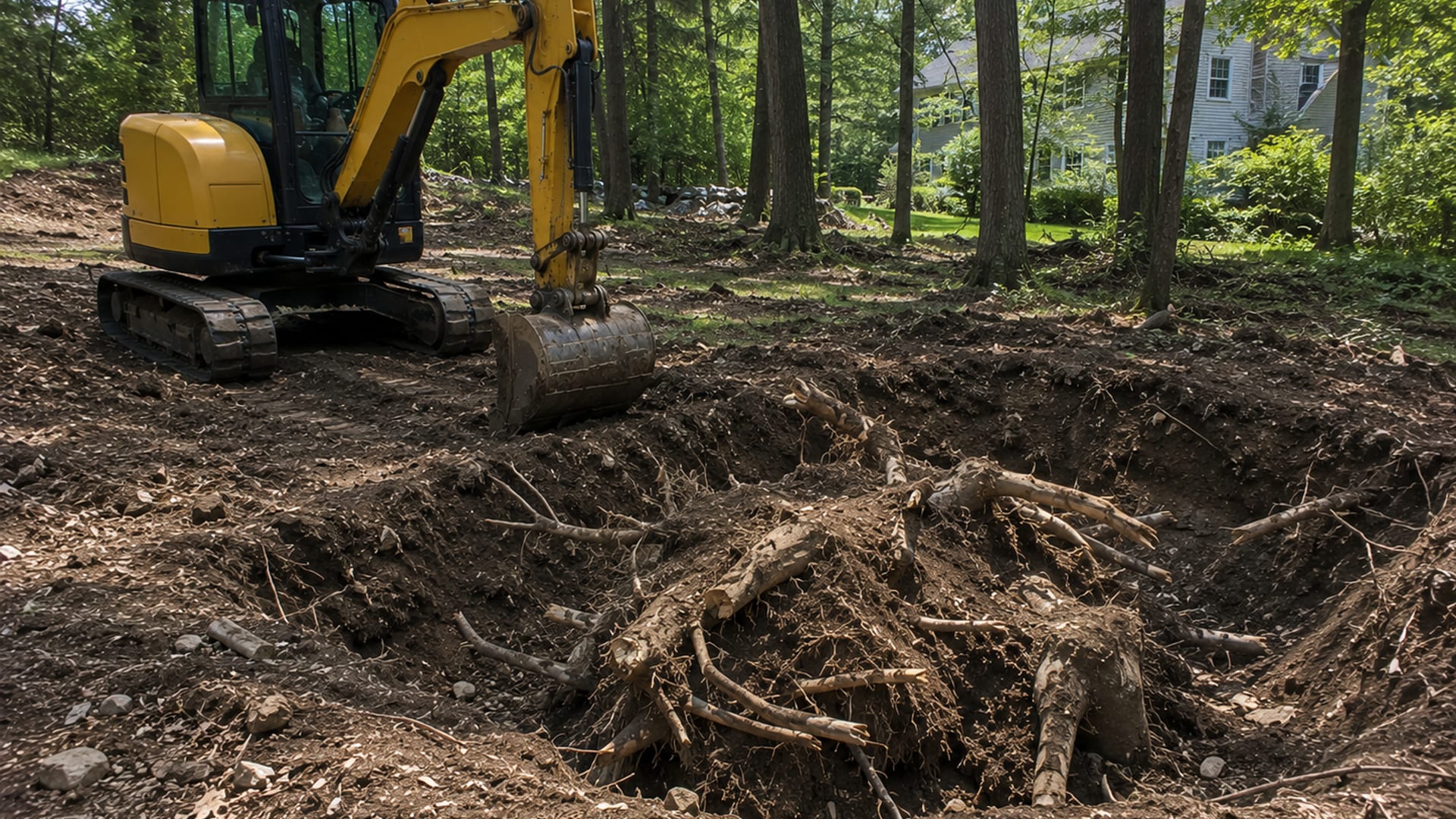
The tree is gone. The stump grinder came through, did its work, and left. But now, months later, the ground is still heaving in places, the lawn dips where the old root system is slowly rotting out, or a contractor just handed you a quote for a new driveway and told you the roots have to go before anything can be built. If you searched for tree root removal near me Oxford CT, you already know that removing the tree was not the end of the problem. For a lot of Oxford homeowners, it was just the beginning of a different one.
The frustration is real: you paid to have the tree dealt with, and now someone is telling you there is more work to do underground that you cannot see and do not know how to price. What makes this harder is that "root removal" can mean very different things depending on what you are trying to do next. Whether you need a shovel, a stump grinder, or a full excavator depends almost entirely on what that patch of ground is supposed to become. This article walks through exactly what a site-work crew looks at when they show up to an Oxford property, what the process actually involves, and what you can expect from start to finish.
Key Takeaways
Root removal is site preparation
The goal is to prepare the ground for grading, drainage, lawn restoration, driveways, patios, or construction, not just to get rid of visible roots.
Stump grinding and root removal are different
Grinding addresses the stump area, while root removal may require excavation around larger root systems that extend well beyond where the stump sat.
Oxford properties can be complicated
Rocky glacial soil, slopes, septic systems, wells, mature trees, and drainage paths can all affect the plan and the equipment needed.
Utilities should be checked before digging
Public markouts through Connecticut's Call Before You Dig system and private site features like septic lines and irrigation both need to be identified before a machine moves.
Backfill and grading complete the job
Root removal leaves disturbed soil that needs to be filled, compacted, graded, and stabilized so the area is actually usable when the work is done.
This is not tree pruning work
The focus here is excavation, land clearing, stump grinding, and site preparation. An arborist handles living trees; a site-work crew handles what is left in the ground.
1. Why Tree Root Removal Matters
Most homeowners think about tree removal as a single event. The tree comes down, the stump gets ground, and the yard goes back to normal. What actually happens on a lot of Oxford properties is different. The stump grinder addresses what is visible above grade, but a mature tree can have a root system that spreads 20 to 30 feet from the base, with woody material sitting just below the surface across a wide area. As that organic material breaks down, it creates voids, causes the ground to settle unevenly, and can hold water in places that were never meant to drain that way. According to Connecticut DEEP's soil erosion and sediment control guidelines, disturbed and uneven ground is also more prone to erosion, which compounds the problem if left unaddressed.
The bigger issue comes when a homeowner has a plan for that ground. Lawn restoration is one thing. But if the goal is a driveway, a patio, a retaining wall, or any kind of graded drainage path, leaving roots and organic material in place is not a neutral choice. Those materials will eventually break down, and when they do, they take the surface above them with them.
Roots Can Affect Future Site Work
Roots remaining under a driveway, patio base, or graded drainage area can prevent proper compaction and create settling as the organic material decomposes. The Connecticut Stormwater Quality Manual notes that subgrade conditions directly affect how well drainage and surface systems perform over time. A base layer over decaying root material is not a stable base; it is a slow-motion problem waiting to show up as a cracked patio or a driveway with a soft spot in the middle. Root excavation done before construction is the work that makes everything built on top of it actually last.
2. Signs You May Need Root Removal
Not every property with a tree stump needs full root excavation. Oxford properties tend to have older trees, wooded lot edges, and varied soil conditions that can make root systems harder to read from the surface alone. Recognizing where you actually fall on that range is what a site visit is for, but there are some common patterns worth knowing before you make that call. The signs below come up repeatedly on properties across the area, and if any of them match what you are looking at in your yard, root removal is likely part of the solution.
Uneven Ground After Tree Removal
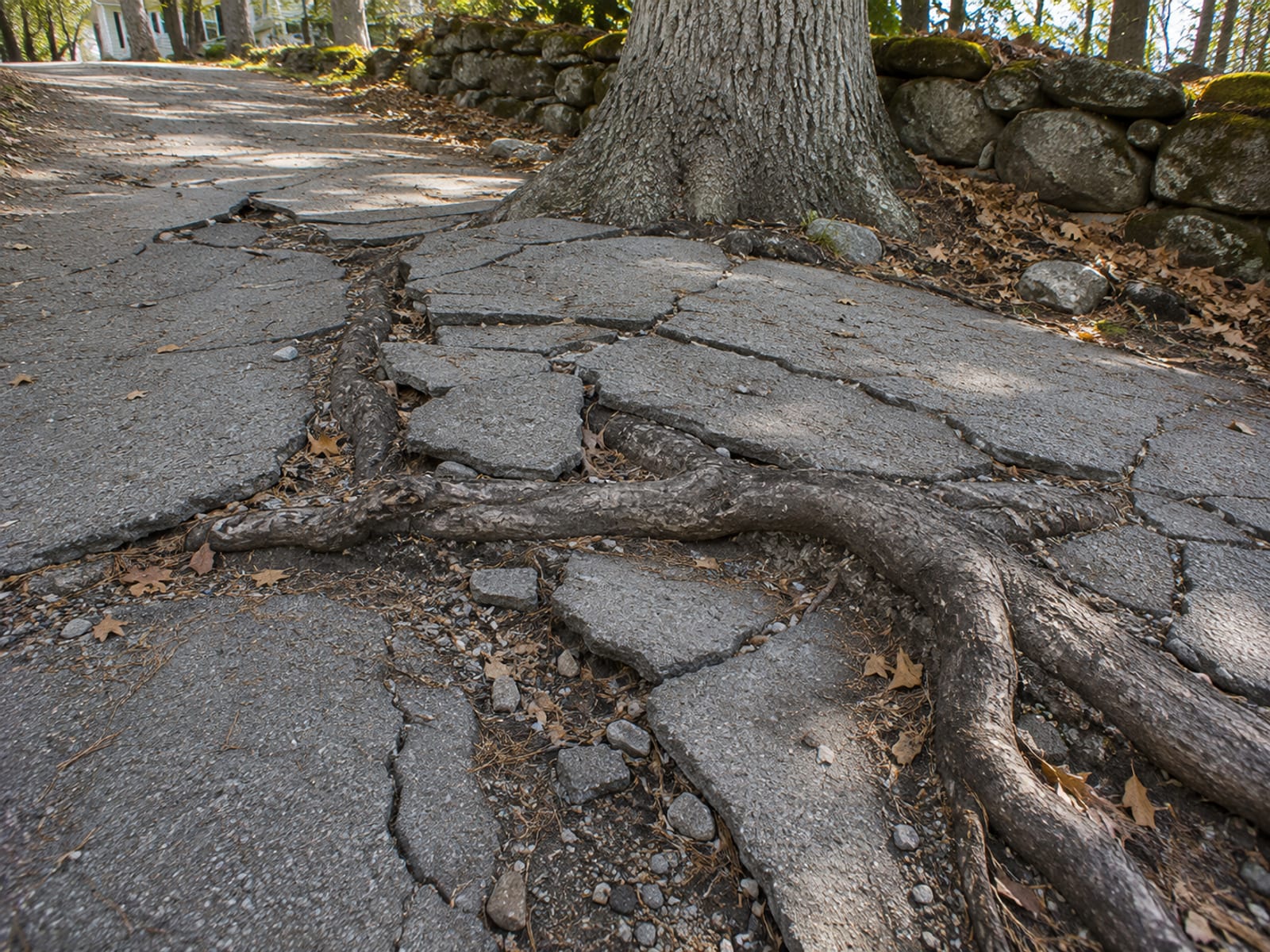
Low spots, raised surface roots, soft areas, or rough soil where a tree once stood are common indicators that the root system is still doing something underground. As roots decay, they lose volume, and the ground above them sinks. That settling can be gradual enough that it takes a season or two to become obvious. If you are planning to grade or level that area for any reason, including basic lawn restoration, those voids need to be addressed. A proper fix involves excavating the problem area, removing what remains of the root mass, backfilling with clean material, compacting, and grading the surface back to where it should be.
Roots Blocking Drainage or Hardscape Work
Root systems can sit directly in the path of a planned drainage trench, patio excavation, retaining wall base, or driveway subgrade. When a contractor finds a root mat in the way, the work stops until it is dealt with. In these situations, root removal is less about cosmetics and more about clearing the path so the actual project can proceed. If you have already gotten a quote for drainage, a patio, or a driveway and the contractor flagged roots as a condition of the work, that is an accurate read of what is in the ground, not an upsell.
3. Root Removal, Stump Grinding, and Excavation
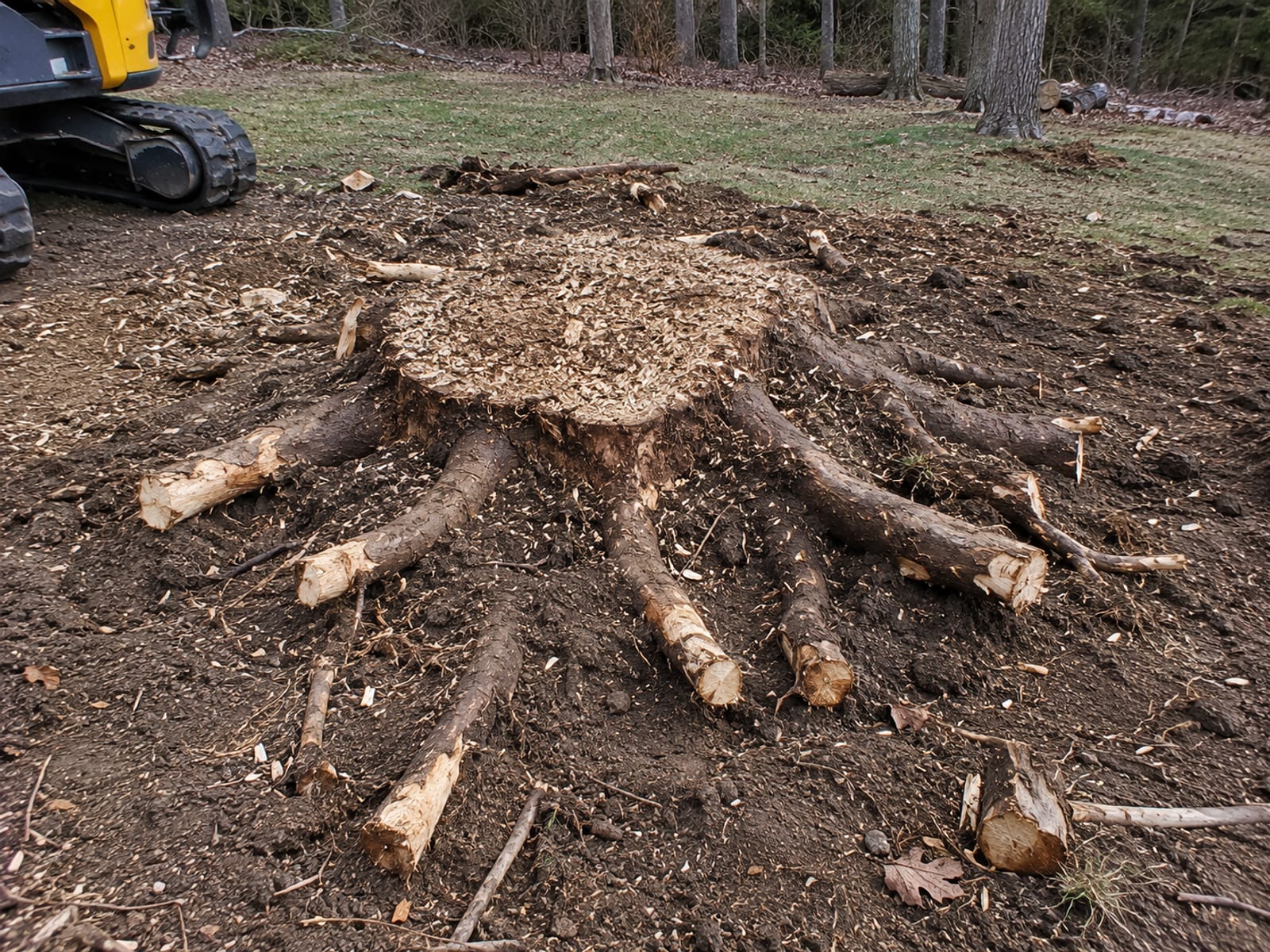
Root removal and stump grinding are not the same thing, and understanding the difference helps set realistic expectations about what a project will actually involve. Stump grinding is a specific process: a machine grinds down the visible stump and the immediate root material around it to some depth below grade, leaving wood chips and disturbed soil behind. Root excavation is a broader site-work operation that may involve removing root masses extending well beyond the stump area, correcting the subgrade, and preparing the ground for whatever comes next. Depending on the property and the intended use, a project may need one, the other, or both in sequence.
Stump Grinding
Oxford CT stump grinding is often the right starting point when the primary concern is the stump itself and the immediate area around it. Grinding makes the stump area workable for lawn restoration or general site cleanup and removes the bulk of the above-grade and near-grade root material. For light applications like reclaiming a patch of lawn, stump grinding may be all that is needed. Where it falls short is in situations where the root system extends further out, where the area will be built on, or where the subgrade needs to be properly prepared for drainage or compaction. Assuming stump grinding alone solves every root-related site problem is one of the most common mistakes on Oxford properties.
Excavation for Larger Root Systems
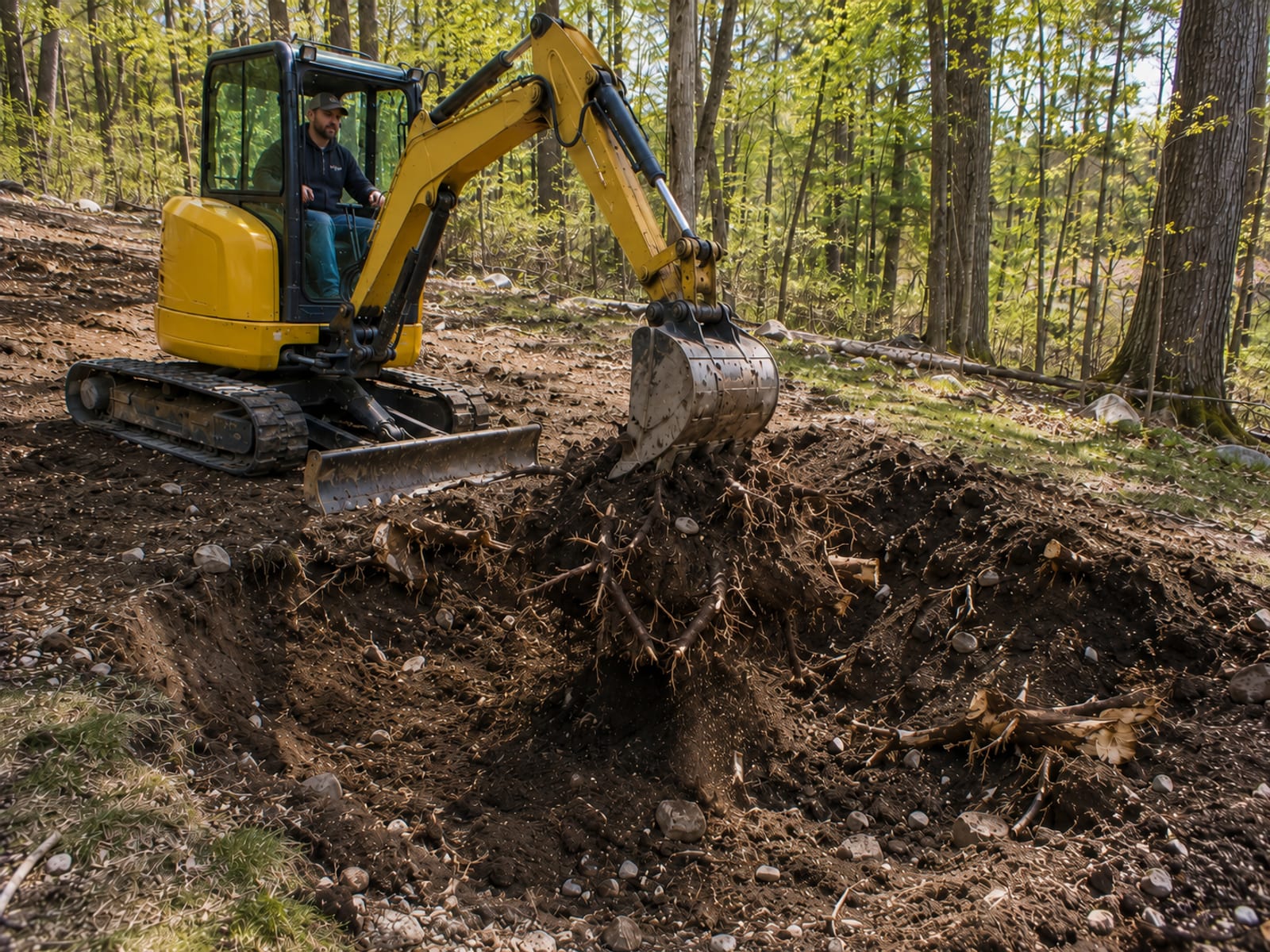
When root masses extend into the path of driveway work, patio excavation, retaining wall construction, or drainage trench installation, a stump grinder is not the right tool. That work calls for an excavator. The process involves opening up the affected area, physically removing the root mass and associated debris, hauling or processing the material, and then backfilling and grading the disturbed ground. On wooded Oxford lots, this can mean working around rock, navigating slopes, and planning carefully around septic systems and drainage lines. Residential excavation in Oxford CT for root removal is essentially site preparation work; the root removal is the step that makes the ground ready for what comes next.
4. Permits, Utilities, and Site Rules
Before any digging starts on an Oxford property, there are two categories of underground hazards to take seriously: public utilities and private site features. Missing either one can turn a straightforward root excavation into an expensive problem. Oxford properties also carry the added complexity of town regulations that may apply depending on the scope of work, the proximity to wetlands, or whether the project connects to a larger construction or grading effort. It is worth getting clear on all of this before equipment arrives.
Utility Markouts
Connecticut's Call Before You Dig system marks the location of public underground utilities including gas, electric, water, and communications lines before excavation begins. This is a required step for most digging work in the state, and it applies to root excavation just as it does to any other ground disturbance. The Connecticut PURA Call Before You Dig resource has additional guidance on how the process works. Markouts typically need to be requested several business days in advance, so this should be part of the planning process, not an afterthought.
Septic, Wells, Drainage, and Private Lines
Public utility markouts do not cover everything buried on an Oxford property. Septic systems, private wells, irrigation lines, low-voltage landscape lighting, and private drainage infrastructure are common on residential lots in this area, and none of them show up on a public locator. Before digging, homeowners should pull whatever records they have on their septic system layout and let the contractor know about any private lines or buried features they are aware of. Root systems from large trees can grow directly toward septic components, drainage leach fields, and old clay tile drains, and digging without knowing where those systems are can cause damage significantly more expensive than the root removal itself. Depending on the scope of the project and its proximity to wetlands, a review with Oxford's Inland Wetlands Agency or the building department may also be appropriate.
5. The Tree Root Removal Process
A professional root removal project on an Oxford property follows a clear sequence, and understanding that sequence helps homeowners know what to expect and what questions to ask. Each step needs to happen in the right order. Skipping steps, especially at the back end of the job, is where problems tend to appear later. What follows is how a site-work crew should approach this kind of work.
Step 1: Inspect the Site
The site inspection is where the actual scope of the work gets defined. A contractor should walk the affected area and look at the root problem directly, but also at the final intended use of the ground, access routes for equipment, soil and rock conditions, drainage patterns, slopes, nearby structures, and the location of any utilities or septic components. On Oxford properties, this inspection often turns up things that change the approach: a ledge shelf that makes excavation shallower than expected, a septic riser near the root mass, or a drainage swale running through the work area. The inspection is also when the contractor should ask what the area is going to be used for when the work is done, because the answer changes the backfill material, compaction requirements, and grading approach significantly.
Step 2: Remove, Backfill, Grade, and Stabilize
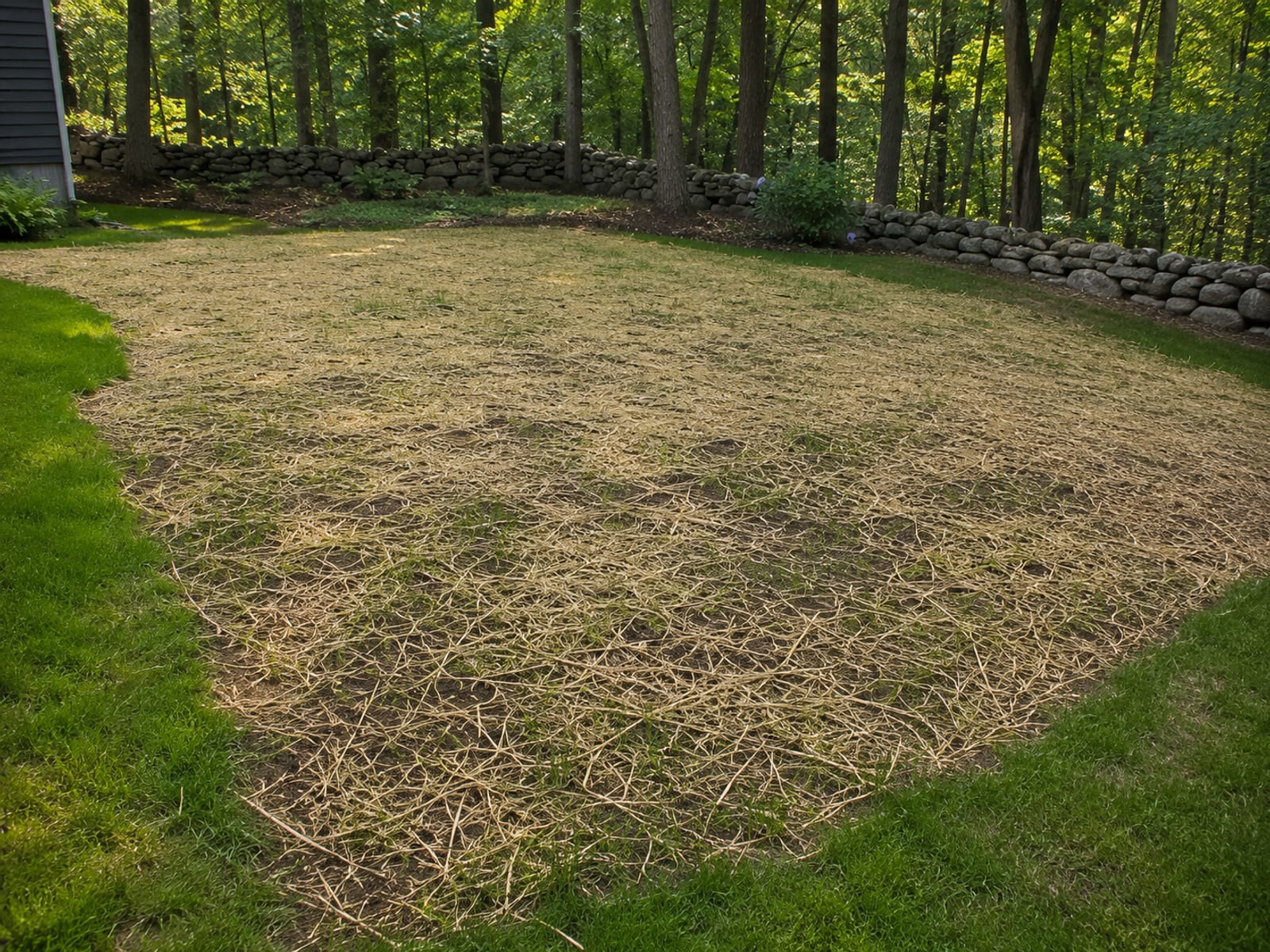
Once the scope is clear and utilities are marked, the actual work begins. Depending on the situation, this may start with stump grinding to address the immediate stump area before excavation opens up the surrounding root zone. The root mass is then excavated, debris is removed or processed on site, and the void left behind is filled with appropriate material. Compaction comes next where the area will support hardscape or be graded for drainage. After compaction, the area is graded to blend with the surrounding ground and direct water where it should go. The final step is stabilization, which matters more than a lot of homeowners expect. Per UConn NEMO's soil erosion guidance, bare disturbed soil left without cover is vulnerable to erosion, and a rain event on a freshly graded area can undo a significant amount of finished grade work. Seeding, mulching, erosion blanket, or other stabilization measures should be part of the plan from the start.
6. Long-Term Strategy After Root Removal
What happens after root removal is just as important as the removal itself, and the right approach depends entirely on what the area is going to become. Grading for a future lawn looks different from preparing a base for a driveway, and both of those look different from setting up a drainage path or a retaining wall footing. Getting this part right means knowing the end use before the first machine moves, so that backfill material, compaction depth, and grading tolerances are appropriate for the application.
For lawn areas, the goal is clean fill compacted lightly enough to support turf without creating drainage problems. For driveways and patios, the subgrade needs to be free of organic material and compacted to a level that supports the base course above it. For drainage work, grading should direct surface and subsurface water where it needs to go without creating new low spots or erosion points. The Connecticut Stormwater Quality Manual outlines performance standards for graded and stabilized areas that are relevant whenever drainage and runoff patterns are being changed. Planning the end use from the beginning avoids the situation where root removal gets done correctly but the ground still does not drain, settle, or support what was built on it.
Common Pitfalls
Root removal projects on Oxford properties tend to go wrong in predictable ways. Knowing these ahead of time helps homeowners ask better questions and hold a contractor to a complete scope of work.
- Removing roots without backfilling properly: Leaving voids under the surface without filling and compacting them creates the same settling problem the roots were going to cause anyway.
- Ignoring private utilities and septic: Public utility markouts through Call Before You Dig are a start, not a finish. Private lines, septic systems, and wells need to be identified separately.
- Leaving organic material under a hardscape base: Roots, wood chips, and decomposing debris under a patio or driveway base will break down and cause uneven settling. All organic material should be removed from the subgrade before base course goes in.
- Skipping soil stabilization after grading: Bare disturbed ground erodes quickly, especially on sloped Oxford lots. Stabilization is part of the job, not an optional add-on.
- Overlooking drainage: Root removal changes how water moves through the affected area. Grading should address drainage as part of the finish work, not as a separate problem to solve later.
- Assuming stump grinding alone is enough: Stump grinding is the right tool for the stump. For anything built on that ground afterward, a more thorough look at what is in the subgrade is usually warranted.
Frequently Asked Questions About Tree Root Removal Near Me Oxford CT
What does tree root removal include?
It may include digging out root systems, removing root debris, stump grinding, backfilling voids with clean material, compacting, grading the area to the correct finished elevation, and stabilizing disturbed soil. The specific scope depends on the size of the root system and what the area will be used for when the work is done.
Is tree root removal the same as stump grinding?
No. Stump grinding reduces the visible stump and nearby surface material, which is appropriate for some applications. Root removal may involve excavation to address larger root masses that extend beyond the stump area and affect grading, drainage, or hardscape preparation. Some projects need both, in sequence.
Do utilities need to be marked before root excavation?
When digging is involved, Connecticut's Call Before You Dig system should be used to mark public underground utilities before work starts. Private features like septic systems, wells, and irrigation lines are not covered by public markouts and need to be identified separately by the homeowner.
Can roots affect patios or driveways?
Yes. Roots and organic material left under a base area will eventually decay, lose volume, and cause the ground above to settle unevenly. For driveway or patio projects, all organic material should be removed from the subgrade before base course is installed.
Do root removal projects need permits in Oxford CT?
It depends on the scope. Larger soil disturbance, proximity to wetlands, significant grading changes, drainage work, or projects connected to new construction may require review by Oxford's building department, the Planning and Zoning Commission, or the Inland Wetlands Agency. Local requirements should be checked before work begins.
What should happen after roots are removed?
The disturbed area should be backfilled with appropriate material, compacted where the application requires it, graded to direct drainage correctly, and stabilized to prevent erosion. The right backfill and compaction approach depends on whether the finished use is lawn, driveway, patio, drainage path, or another application.
What equipment is used for tree root removal in Oxford CT?
Depending on the size and depth of the root system, work may involve a stump grinder, a mini excavator, a full excavator, or a combination. Tight backyard access or steep slopes on Oxford properties sometimes limit which equipment can reach the work area, which is something a contractor should assess during the site inspection.
Final Thoughts
Tree root removal near Oxford CT is a solvable, clearly defined problem once you know what you are actually dealing with and what the ground needs to become afterward. The fear of unknown scope is the biggest thing that keeps homeowners stuck, and that fear goes away quickly once a site-work crew walks the property and explains what they see. Stump grinding, root excavation, backfill, grading, and stabilization are connected steps in a single process, not separate problems to hand off to different contractors. Getting the right crew on site early saves time, money, and the frustration of finishing a driveway or patio only to watch it settle the following spring.
When root removal gets done correctly, the ground is actually ready for whatever comes next. A properly graded and compacted subgrade supports driveways and patios that hold their surface. A correctly filled and stabilized area grows lawn without soft spots or drainage pooling. Addressing the root system as part of a complete site preparation plan means the work you do on that ground afterward actually lasts.
Prestige Property Maintenance handles the full sequence of this work from our base in Oxford, CT, serving homeowners across the Naugatuck Valley and into western Connecticut, including Seymour CT and the surrounding area. We run land clearing, stump grinding, excavation, grading, drainage solutions, rock removal, retaining wall construction, and erosion control as a single crew, which means you are not coordinating between a tree service, an excavator, and a grading contractor to get one yard ready. If you have a root problem that is holding up a project or just making your property harder to use, reach out to us directly. We will walk the site, tell you what we see, and give you a clear picture of what the work involves before anything starts.
Related Articles
Oxford CT Land Clearing Without the Budget Surprises
Prestige Property Maintenance offers land clearing in Oxford CT for homes, driveways, and build sites. One crew, clear pricing, and work that holds up long term.
Land Clearing in Bethany, CT: What the Property Looks Like After
Agreed to land clearing in Bethany, CT and picturing a bulldozed lot? Here is what actually happens to trees, stumps, and debris once work begins.
Land Clearing in Derby, CT: What Is Under the Brush?
An overgrown Derby parcel hides more than brush. Learn how land clearing in Derby, CT reveals ground conditions, limits, and drainage before you build.