

Regrading Your Yard Away From the House in Connecticut
Kash CochranePublished
- grading
- drainage
- permits
- connecticut
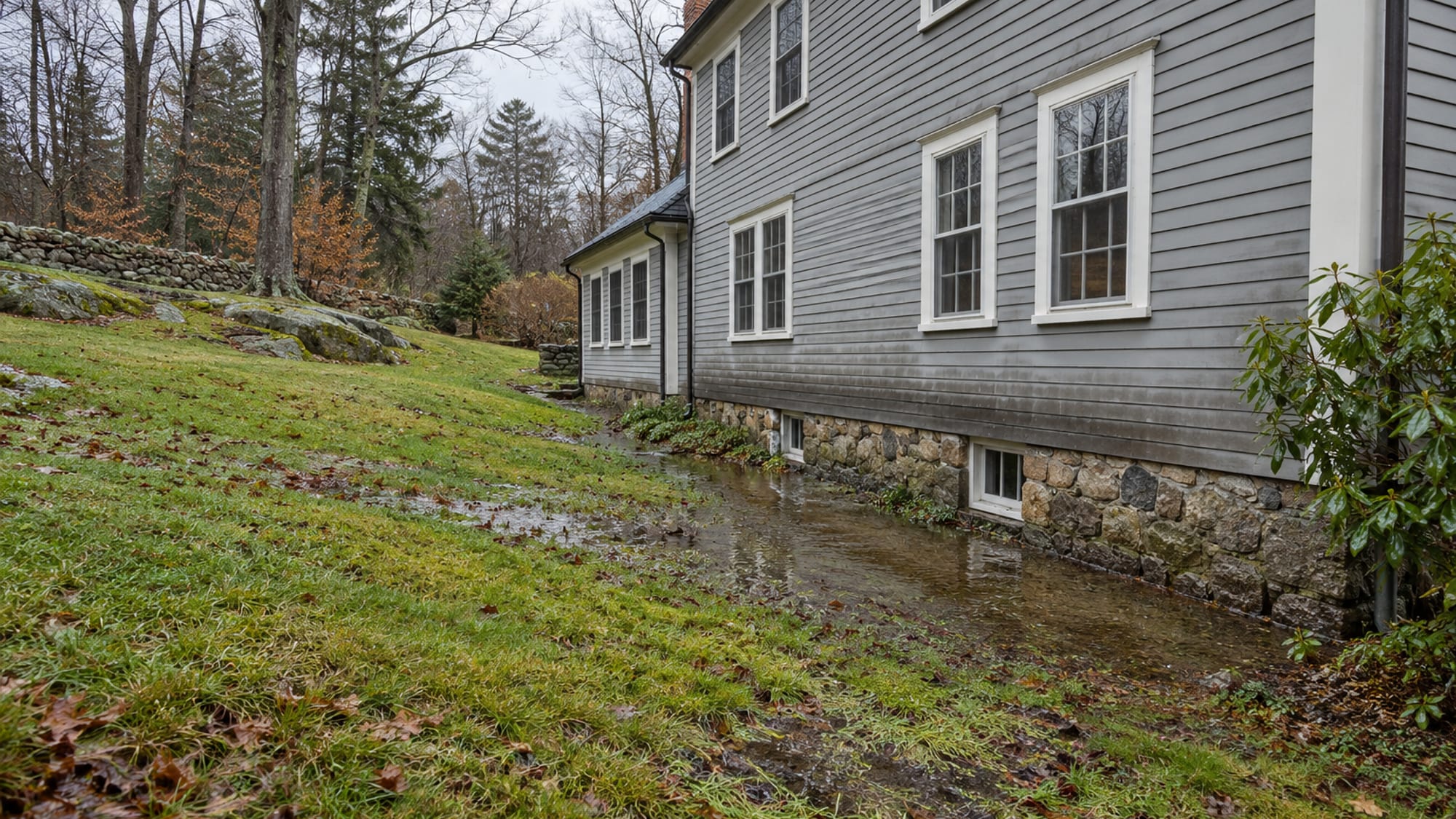
The rain stopped an hour ago, and you are out back in boots, looking at the low spot along the foundation wall. Water is standing there, dark against the siding, and the lawn tilts toward the house instead of away from it. Someone has already told you the fix is to regrade.
That advice is often right. What decides whether it holds is how much fall the ground needs, what soil goes back, and which town office has to hear about it first.
Regrading is one of the services we offer at Prestige Property Maintenance, an excavating contractor based in Oxford, and the questions below apply whether you hire us, hire anyone, or correct a small spot yourself. Start with the number the code sets, then the water, then the paperwork.
Key Takeaways
Check the fall before anything else
Connecticut's building code adopts the 2021 International Residential Code, which asks for at least 6 inches of fall within the first 10 feet from the foundation, a 5 percent slope.
Grade only does part of the work
Roof water, a downspout, an uphill neighbor or a driveway can send more water than a lawn slope can carry, so gutters, a swale or a French drain often belong in the plan.
Ask the town before soil moves
Building, zoning, engineering and inland wetlands offices may each have a say, and the wetlands agency, not the owner, decides whether work near wetlands is regulated.
Find Where the Water Comes From Before Moving Any Soil
Water against a foundation usually traces back to one of three conditions. Surface water may be collecting right at the wall. The existing grade may be sending runoff toward the house. Or water from the roof, the driveway, a neighboring lot or the higher part of your own lot may be arriving faster than the drainage you have can move it.
Regrading answers the first two directly and only part of the third. So the first decision is whether a change in surface grade can solve the problem, or whether the site also needs gutter corrections, extended downspouts, a swale, a subsurface drain, erosion controls, or a wetland review.
A little homework before anyone brings a machine makes that decision easier:
- Photograph the water: ponding, saturated soil, basement seepage, downspout outlets, window wells and the direction the water moves during or after a rain.
- Trace the source: roof, uphill ground, driveway, public right-of-way or a neighboring parcel.
- Call the town offices: zoning, building, engineering and inland wetlands, before any soil is moved.
- Plan for 811: powered digging needs a utility notice first, covered below.
Whatever the plan, it should say where the water goes afterward. The discharge point is half the job, and it belongs in the plan before the first bucket of soil moves.
The Code Asks for Six Inches of Fall in the First Ten Feet
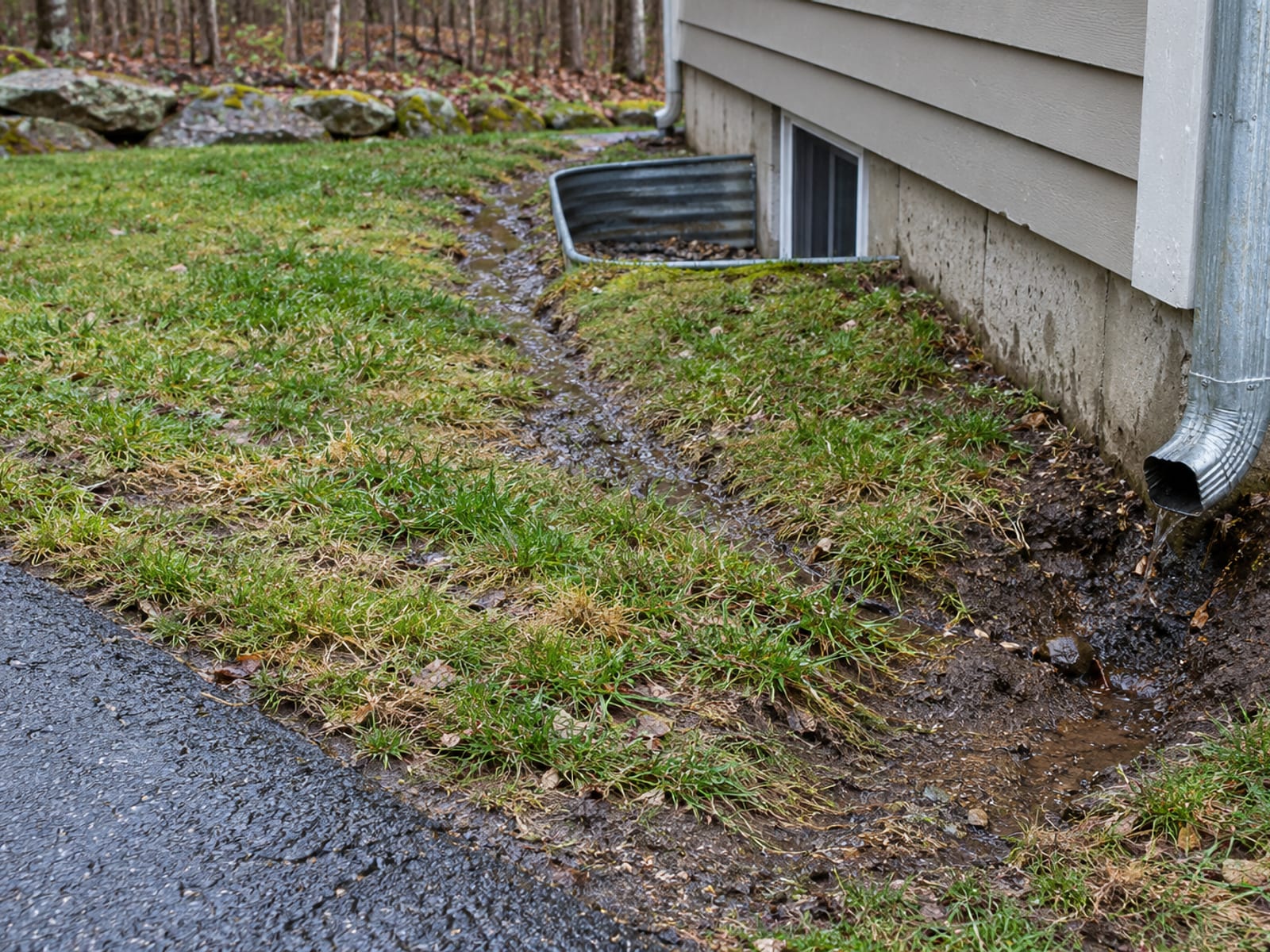
Connecticut's current State Building Code applies to permit applications filed from October 1, 2022, and it adopts the 2021 International Residential Code. Section R401.3 of that code, in the 2021 IRC foundations chapter, says lots must be graded to drain surface water away from foundation walls, with a fall of at least 6 inches within the first 10 feet.
That works out to a 5 percent slope. On a typical lot, the ground at the 10-foot mark should sit at least half a foot lower than the ground beside the foundation. The measure is vertical fall over horizontal distance, not how deep the soil is piled against the wall.
You can check your own yard in a few minutes. Set a stake 10 feet out from the wall, hold a string level at the height of the soil beside the foundation, and measure down to the ground at the stake. Six inches or more of drop meets the target for that stretch; less means the grade is working against you.
Hard surfaces get their own number. Patios, walkways and driveways within 10 feet of the foundation should slope at least 2 percent away from the building.
| What to check | What the code asks for |
|---|---|
| Fall of the ground within the first 10 feet of the foundation | At least 6 inches, about a 5 percent slope |
| Patios, walkways and driveways within 10 feet | At least 2 percent slope away from the building |
| A lot line, wall or slope blocks the fall | Drains or swales must carry water away from the structure |
| Runoff that creates a hazard or nuisance to neighbors | A violation; the building official can require approved disposal |
Some lots cannot reach 6 inches of fall because a lot line, a wall or a slope gets in the way. In that case the code allows drains or swales to take the water away from the structure instead. The outlet matters as much as the slope. Connecticut's code adds that surface or roof drainage creating a structural or health hazard, or a nuisance to neighboring owners, occupants or the public, is a violation, and the building official can require disposal by an approved method, as the 2018 code packet explains.
Compacted Fill Builds the Slope and Topsoil Only Finishes It
A regrade has two layers with two different jobs. Suitable mineral fill, free of buried stumps, trash and frozen chunks, forms the slope. Topsoil goes on top as the planting layer for seed or sod.
Topsoil carries organic matter and is meant to grow grass, not to hold a shape, so it is not a dependable stand-in for compacted fill.
Fill goes in controlled layers, called lifts, and each lift is compacted with equipment suited to the soil and the access. The right method depends on moisture, soil type, lift thickness, slope, and whether the fill supports a structure, pavement, a wall or only lawn. Clay-rich or silty soils hold water and can be hard to compact when wet. Sandy or gravelly material drains more readily but may need stabilizing against erosion.
Connecticut's erosion and sediment control guidelines point out that soil characteristics affect infiltration and how well soil resists being carried off. USDA soil series records document sandy soil in at least some Connecticut series, while individual lots may also hold dense glacial material, wet soil, shallow bedrock, ledge or old fill. What sits under your lawn is worth knowing before the fill is specified.
Finished grade also has to stay below the weak points in the wall. The new surface should not bury siding, bridge the sill area, block vents, cover door thresholds or close off the drainage path from a window well. Window wells need a positive outlet or other drainage where the surrounding ground cannot shed water on its own. Raising the ground without keeping those clearances can push water into the wall or basement even when the yard looks like it slopes away.
If fill will carry a foundation or another structural element, the code calls for undisturbed natural soil or engineered fill, and the building official may require soil testing where questionable conditions are likely. Digging near footings also has to account for frost conditions and the support of the existing foundation, which the state building code treats as part of frost protection.
Gutters, Downspouts, and Swales Handle Water the Grade Cannot
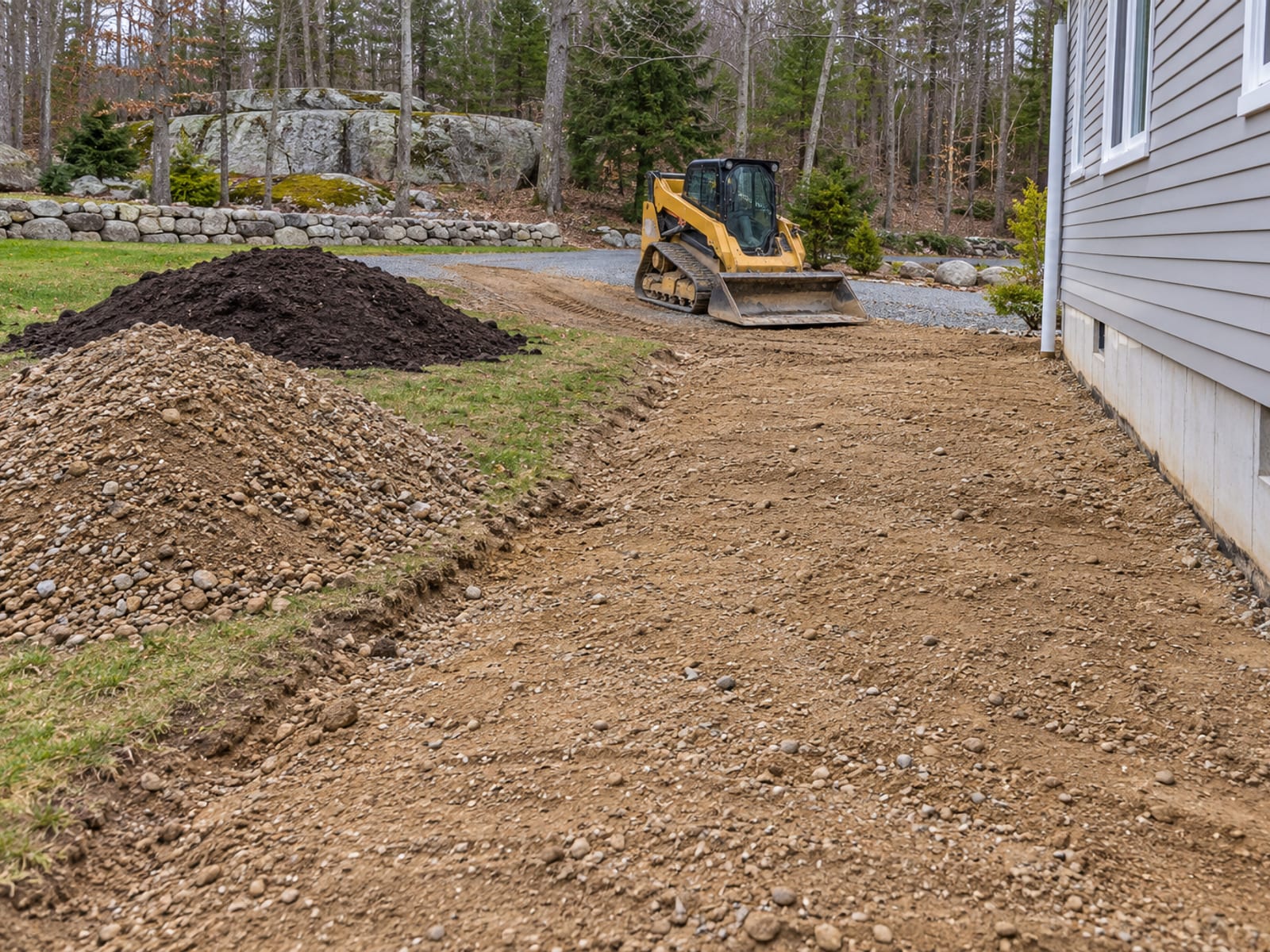
Where the water comes from decides how much grade alone can do. When it arrives from above the foundation, or faster than a surface slope can carry it, regrading works best alongside a companion fix. Our drainage solutions work covers several of these, and each one answers a different source:
- Gutters and downspouts: gutters collect roof water, and downspouts should discharge somewhere that does not return it to the foundation.
- Swale: a shallow channel that intercepts and redirects surface flow while staying open for inspection and maintenance.
- French drain or other subsurface drain: a fit where groundwater, seepage or a low area cannot be corrected with surface grading alone.
- Hard surfaces: a driveway, patio or walkway may need its own positive slope and a way to collect water.
Every one of these ends at a discharge point, and that point must be lawful for the site. It cannot create a structural or health hazard, a nuisance, an erosion problem, or concentrated flow onto a neighbor. A connection to a municipal storm sewer, a roadside drainage feature, a culvert or the public right-of-way may need municipal approval, so the outlet is worth confirming with the town before pipe is laid.
Exposed soil needs a plan too. The state's erosion guidelines note that longer and steeper slopes increase runoff rate and erosion potential, so erosion and sediment control measures may be part of the job while the ground is bare. Connecticut DEEP lists sediment, nutrients, bacteria and trash among the common stormwater pollutants, so keeping soil on your own lot protects more than the lawn.
The Town Decides Which Permits and Reviews Apply
There is no single statewide answer for every residential regrade. Who reviews yours depends on the town, how much soil is cut or filled, whether drainage changes, and whether wetlands or a watercourse are nearby. The building official, the zoning or planning office, engineering or public works, and the inland wetlands agency may each have a role, so the practical move is to ask all of them before work starts.
Wetlands are the review that surprises owners most. Under Connecticut's municipal inland wetlands permitting system, grading, excavation, filling, piping and clearing near wetlands or watercourses may require review or a permit. Each town has its own inland wetlands agency, and the agency, not the property owner, decides whether an activity is regulated.
| Office | What to ask |
|---|---|
| Building official | Whether the grading, drains or retaining structures need a permit |
| Zoning or planning | How local rules treat grading, drainage, driveways, setbacks and walls |
| Engineering or public works | Whether the outlet can connect to a storm sewer, roadside drainage or culvert |
| Inland wetlands agency | Whether the work is regulated when a wetland or watercourse is nearby |
A permit or review can be triggered by the amount of cut or fill, a change in drainage, work near a wetland, soil disturbance, a retaining structure, or work that touches a public drainage system. Placing gravel can be regulated too when it changes drainage, creates a drive or parking area, or affects a wetland or watercourse, so confirm with the town before spreading it.
Larger disturbance brings state rules. DEEP's construction stormwater program addresses land-disturbing projects of one acre or more, with locally approvable private projects running from one to five acres. Whatever the answer from town, the new grade may not send concentrated water onto a neighbor's land, and the homeowner stays responsible for that outcome.
Utility Marking and Soil Conditions Set the Timing
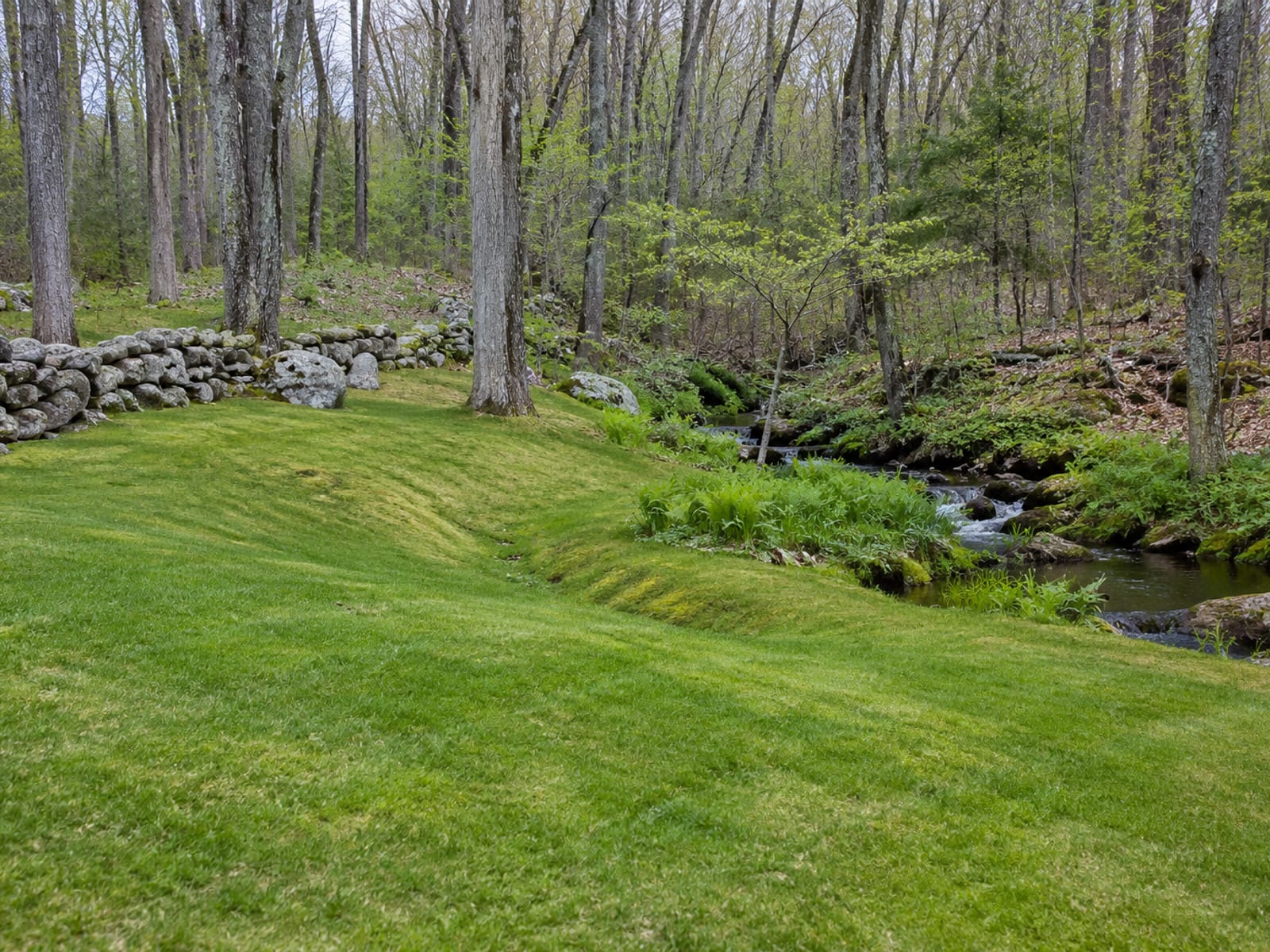
Connecticut requires anyone using power-operated excavation equipment to notify Call Before You Dig, which you reach at 811 or 1-800-922-4455. The notice must come at least two full days ahead, excluding Saturdays, Sundays and holidays, and no more than 30 days before digging, as the Call Before You Dig provisions lay out. The rule covers anyone using powered excavation equipment, including a homeowner working on their own lot.
Small surface corrections can be a reasonable job for an experienced homeowner when access is clear, utilities are located, the soil is workable, the drainage route is known and no regulated resource is involved. If you take that on, you remain responsible for avoiding utility damage, protecting the foundation, keeping runoff off other properties, getting any local approvals, and stabilizing the disturbed soil.
The work gets more involved when it needs heavy equipment, a large amount of fill, ledge removal, retaining structures, subsurface drainage, erosion controls, or digging close to the foundation. Those are the jobs that call for a contractor who can document that kind of work.
The calendar follows the soil. Connecticut's erosion guidance flags spring thaw and early spring rains as periods of higher erosion risk, and wet or thawing ground is prone to rutting and frost heaving. Fill is best placed when the soil is dry enough to compact and when the finished surface can be stabilized soon after. Review timing also varies by town, so ask the responsible offices for current submission requirements before settling on a start date.
A Regrade's Scope Changes With Ledge, Fill, Access, and Where the Water Goes
Two yards with the same 6-inch target can call for very different work. The area to be regraded and the height difference between existing and proposed grades come first, followed by how much soil is cut, filled, brought in, hauled out or removed because it is unsuitable. Soil type, moisture and groundwater affect how the fill behaves.
What is buried matters as much as what is on top. Shallow ledge, old foundations, stumps and undocumented fill all change the work, and ledge may call for rock removal before grading can proceed. Equipment access, and the distance between the work area and where machines can get in, shapes how material moves. So does what sits close to the work: foundation, steps, decks, patios, driveways, septic systems, wells and utilities.
Add the companion work and the list grows. Gutter and downspout changes, swales, French drains, catch basins and outlet piping each add scope. A steep drop may need a retaining wall or other slope stabilization. Wetlands, flood-prone ground and public drainage features add review. Erosion controls and restoration of lawn, plantings, pavement, a wall or a fence add more, and so do surveying, engineering, soil testing and permit applications.
Because those items vary so much from one yard to the next, the figure for a regrade comes after we have seen the property. Seeing the slope, the access and the likely outlet tells us which of these items apply, and the number follows from that list.
A Written Scope Names the Grades, the Soil, and the Discharge Point
Connecticut home-improvement contractors working on residential property generally must be registered with the Department of Consumer Protection, and you can check a registration through the department's home improvement pages and its eLicense lookup. Look up the legal business name and registration number, and see that the registration is active. We are licensed and insured, and our Connecticut home improvement registration number is HIC #0704432.
Home-improvement contracts must be written. According to the Department of Consumer Protection's contract guidance, the contract includes the contractor's registration number, a project description, dates, materials, who is responsible for permits, payment terms and a cancellation notice. The cancellation right runs three business days, and Saturday counts as a business day.
Beyond the contract basics, ask for references on comparable grading and drainage work, and ask who will obtain each permit or review, who will make the Call Before You Dig notice, and how unsuitable soil, excess material, buried debris and ledge will be handled. A scope that names the following items can be compared line by line with any other proposal:
| Item | What it should say |
|---|---|
| Finished grades | Existing and proposed elevations at the foundation and at the property line |
| Area of work | The limits of disturbance |
| Soil | Fill and topsoil specifications, and how unsuitable or excess soil is handled |
| Compaction | How each lift of fill is compacted |
| Building clearances | Where finished grade sits relative to siding, sill areas, vents, doors and window wells |
| Drainage | Gutters, downspouts, swales, drains, piping, outlets and the discharge point |
| Erosion controls | What protects bare soil until it is stabilized |
| Utilities | Locating and protection before digging |
| Permits | Who handles each permit or review |
| Restoration | Materials and limits, plus cleanup and correction responsibilities |
Proposals that list the same items are easier to compare than proposals that differ only in the bottom line. A scope that leaves out the discharge point leaves the biggest question open.
Five Questions to Test Your Yard Plan
1. How much should the grade fall within the first 10 feet from the foundation?
2. What slope should a patio or driveway within 10 feet of the foundation have?
3. What is the job of topsoil in a regrade?
4. Who decides whether work near a wetland or watercourse is regulated?
5. How much notice does Call Before You Dig require before powered excavation?
Pick an answer to begin.
Regrading a Yard Away From the House: Common Questions
Do I need a permit to regrade my yard in Connecticut? It depends on the town and the project. The building official, the zoning or planning office, and the inland wetlands agency may each have a role, and a permit or review can be triggered by the amount of cut or fill, a change in drainage, work near a wetland or watercourse, or a retaining structure. Ask all of those offices before soil moves, and describe the work as specifically as you can.
Can I regrade my backyard myself? You may do work on your own property, but powered excavation still needs a Call Before You Dig notice, and you stay responsible for utilities, the foundation, runoff onto neighbors, local approvals and stabilizing the soil. Small surface corrections with clear access and known drainage are the most manageable. Heavy equipment, large amounts of fill, ledge, walls or subsurface drains raise the difficulty quickly.
Can I use topsoil to grade away from the house? Topsoil works as the finish layer, not as the main grading material. Compacted mineral fill establishes the slope, and topsoil goes near the surface for vegetation. Either layer has to be placed without burying siding, sill areas, vents, doors or window wells.
What soil should I use to regrade my yard? Use suitable mineral fill for the grading mass and compact it in controlled lifts, then add topsoil as the planting layer. The right material depends on the existing soil, the drainage goal, the slope, groundwater and frost conditions, and on whether the surface will support a structure or hardscape.
What time of year is best to regrade a yard? Soil condition matters more than the date. Spring thaw and early spring rains raise erosion risk, and wet or thawing ground is hard to compact. Plan the work for a stretch when the soil can be placed and compacted without excess moisture and the finished surface can be stabilized promptly.
Can a landscaping crew regrade my yard? A landscaping business can do grading if it has the qualifications, equipment, registration, insurance and experience that fit the scope. Work involving excavation, drainage systems, erosion controls, wetlands, ledge, retaining structures or large elevation changes calls for a contractor who can document those capabilities.
Do I need a permit to put gravel on my property? Gravel can be regulated when it changes drainage, creates a driveway or parking area, disturbs wetlands, affects a watercourse or creates runoff and erosion. Confirm the plan with the town before placing it.
What if my yard cannot reach 6 inches of fall? Where a lot line, wall or slope blocks the fall, the code allows drains or swales to carry water away from the structure. The outlet still has to be lawful and cannot concentrate water onto a neighbor.
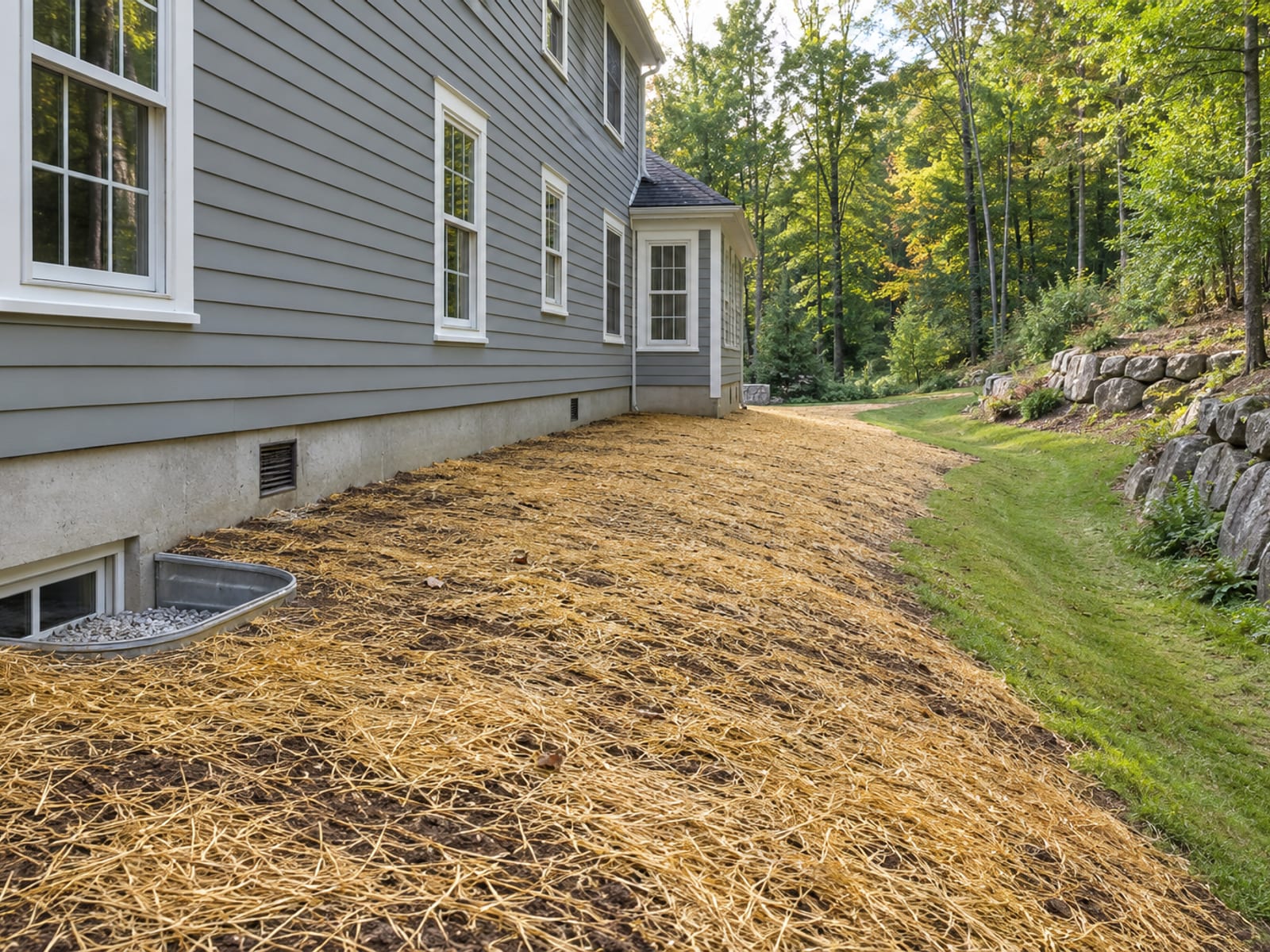
Planning a Regrade on Your Lot
A regrade starts with a number and a source. Six inches of fall in the first 10 feet is the target, compacted fill and a topsoil finish shape the slope, and gutters, a swale or a drain handle the water that grade alone cannot. The town offices, a utility notice and a written scope fill in the rest.
Done in that order, the work gives you a foundation that sheds water, a yard that does not send it onto the neighbor, and a record of what was built and where the water goes.
Prestige Property Maintenance is based in Oxford, CT, and one crew works from clearing through finished grade, so a regrade that starts with brush or stumps stays with the same team. If you would like us to walk your yard, call (203) 258-3395 or contact us. We start with the slope, the source of the water and the outlet.
Words You Will Hear on a Regrading Job
Tap a term to see what it means.
Grade. The slope or elevation of the ground surface. Finished grade is the final surface after fill and topsoil are placed.
Related Articles
Inland Wetlands Permit in CT: When One Is Needed
Wetlands are identified by soil, so a dry-looking corner can still count. Check the town map and soil survey, then ask the agency for a ruling.
Inground Pool Excavation in Connecticut: What to Expect
The pool plan starts the job. Learn how ledge, groundwater, septic and well distances, permits and final grading shape an inground pool dig in Connecticut.
Gravel Driveway Preparation in Connecticut, Layer by Layer
Gravel driveway preparation starts with the ground. Cover the subgrade, fabric, base, crown and the approvals your Connecticut drive may need.