
August 19, 2026
Land Clearing in Bethany, CT: What the Property Looks Like After
Agreed to land clearing in Bethany, CT and picturing a bulldozed lot? Here is what actually happens to trees, stumps, and debris once work begins.
Bethany, Connecticut
Prestige Property Maintenance handles land clearing, forestry mulching, grading, and drainage across Bethany and the surrounding towns. Rural lots, wooded ground, long driveways, and septic country, worked by one crew from clearing through finished grade.
Prestige Property Maintenance provides excavation, land clearing, forestry mulching, grading, and drainage for properties in Bethany, Connecticut. Bethany covers about 21.4 square miles of wooded upland in New Haven County, bordering Woodbridge and Seymour, with Route 63 and Route 69 carrying most of the through traffic. Work here is usually measured in acres rather than yards, and the two things that set the scope are how much wooded material has to come off and how water moves across sloping ground once it does. You get a scoped estimate before anything starts, and one crew carries the job from clearing through final grade.
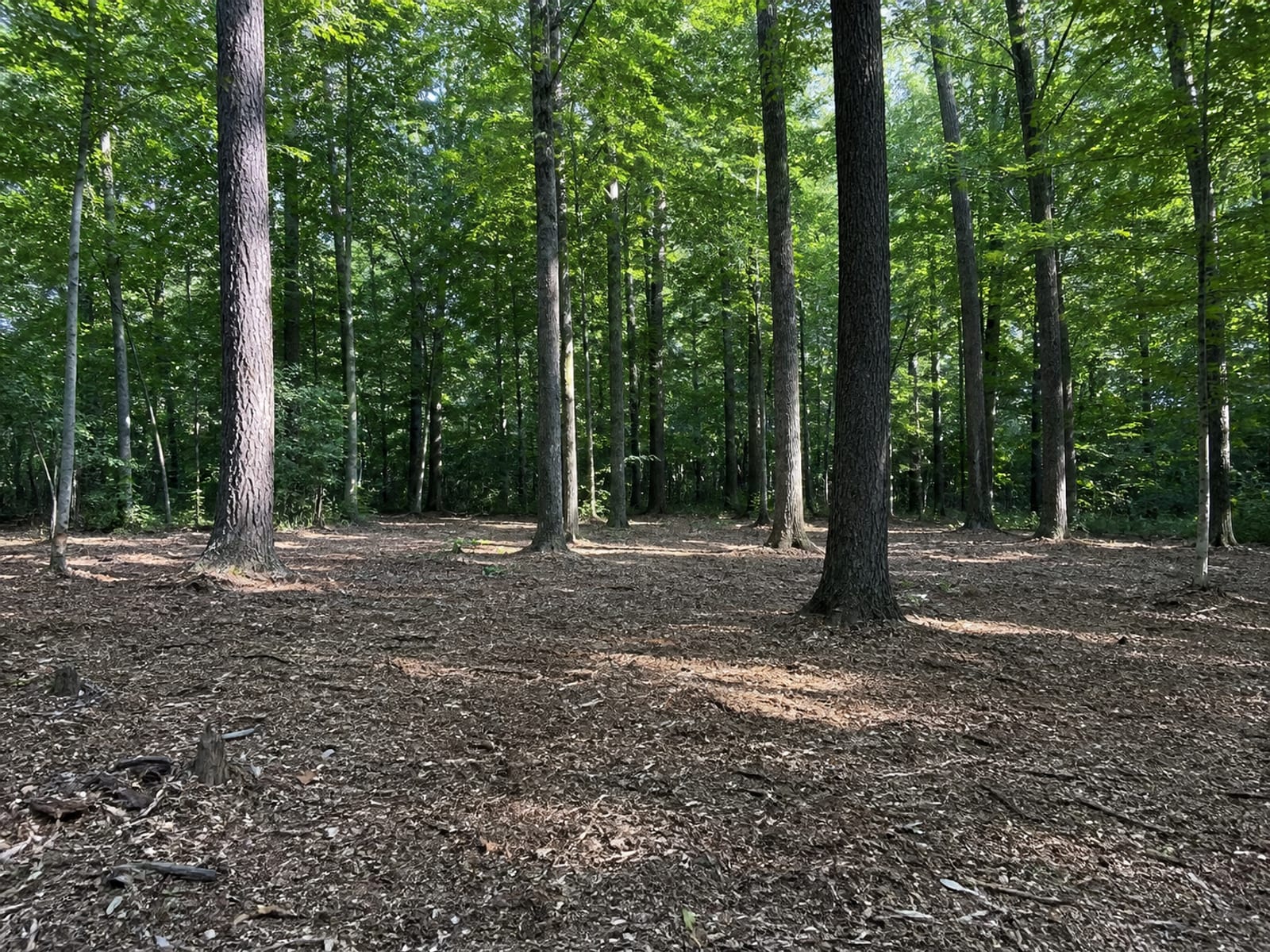
Bethany is a low-density town of wooded residential property and open space rather than a village or a suburban grid, and homeownership sits at about 97.2%. That means most work here happens on private land, at the end of a private drive, with no municipal infrastructure waiting at the property line to connect to. It is a different starting point from a valley city lot, and it changes the order the work has to happen in.
The defining feature is the woods. Working ground across the town is predominantly wooded upland broken by wetlands, streams, reservoirs, ridges and ravines. Town and land trust records document wetlands and forested ridges, steep escarpments and a ravine at the Three Sisters Preserve, and marked upland to lowland changes elsewhere. Clearing is therefore rarely just clearing. It is clearing plus a decision about what happens to the material, and plus a wetland setback that may sit somewhere in the middle of the parcel.
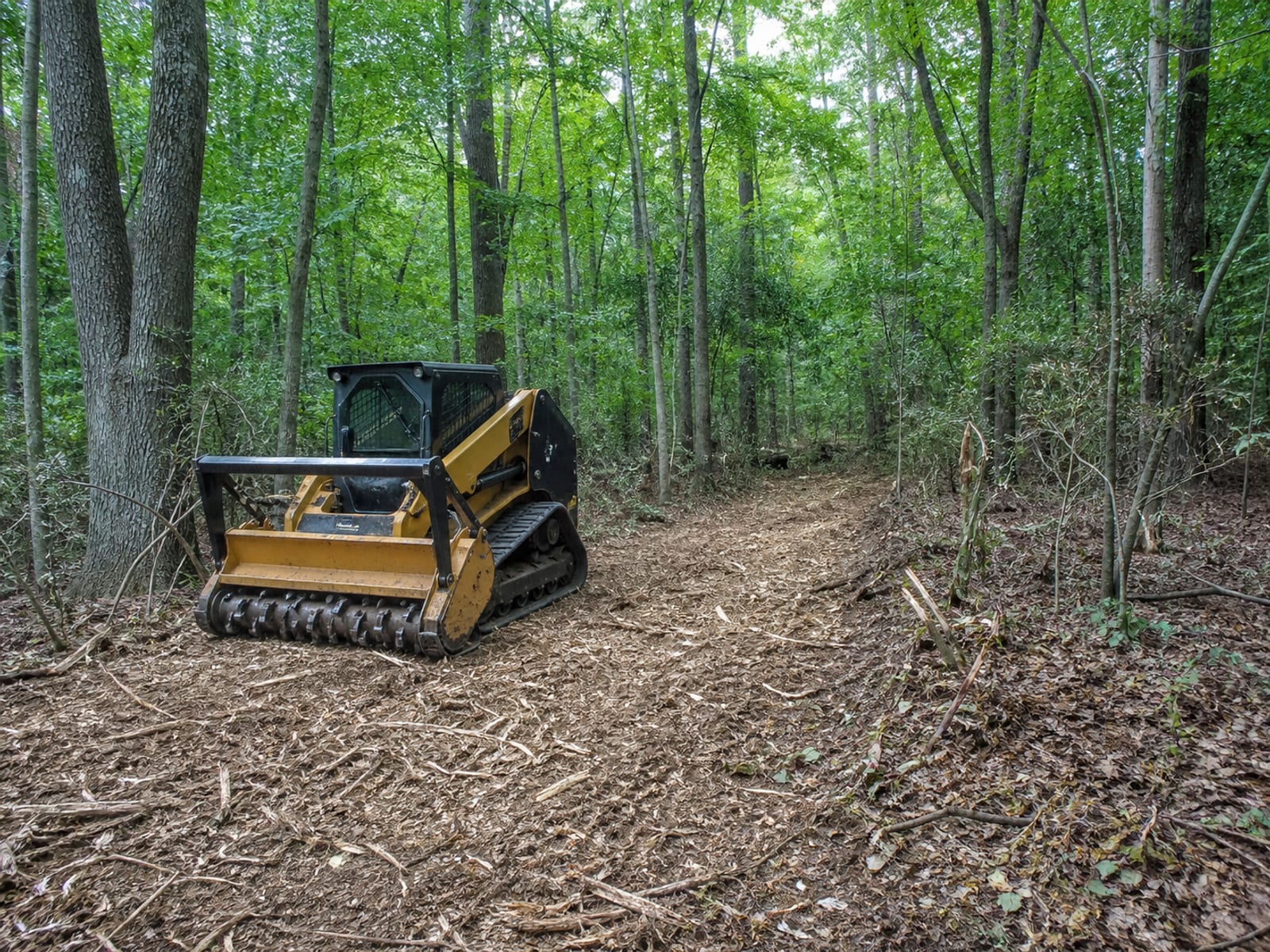
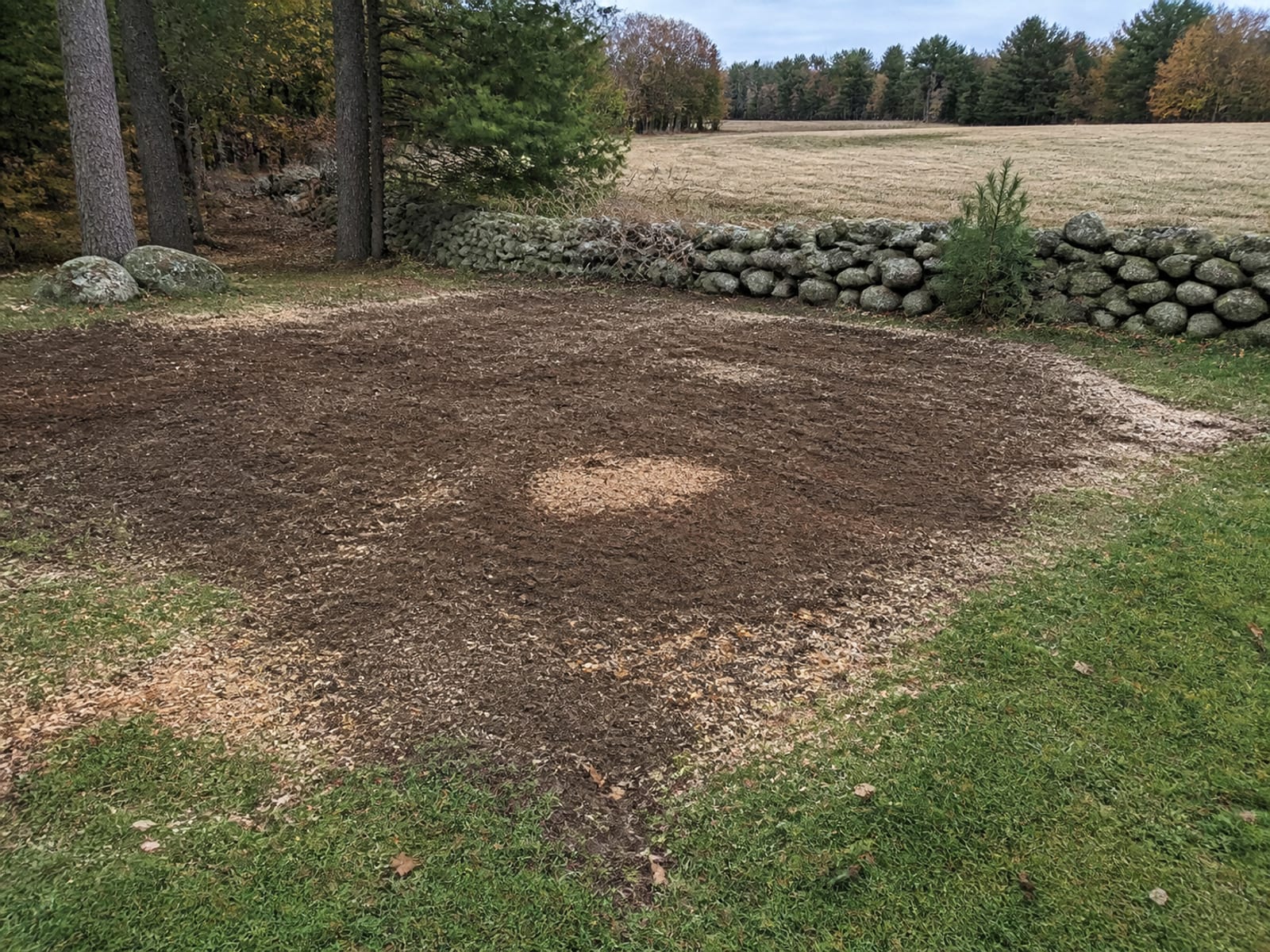
That is where forestry mulching earns its place. Grinding growth in place leaves organic material on site as ground cover instead of loading it into trucks, and on a rural lot at the end of a long drive the difference in truck movements is substantial. It is faster, it is cleaner, and it avoids turning a narrow country road into a haul route for a week. Most local excavators do not offer it.
The second factor is that most of the town has no public sewer. On-site systems and private wells are the norm, and both change how a site can be graded and where material can be moved. You cannot regrade across a leach field or stack spoil on a reserve area without consequences, so those get located before a machine moves rather than after. Well head protection and the direction surface water travels afterward matter for the same reason.
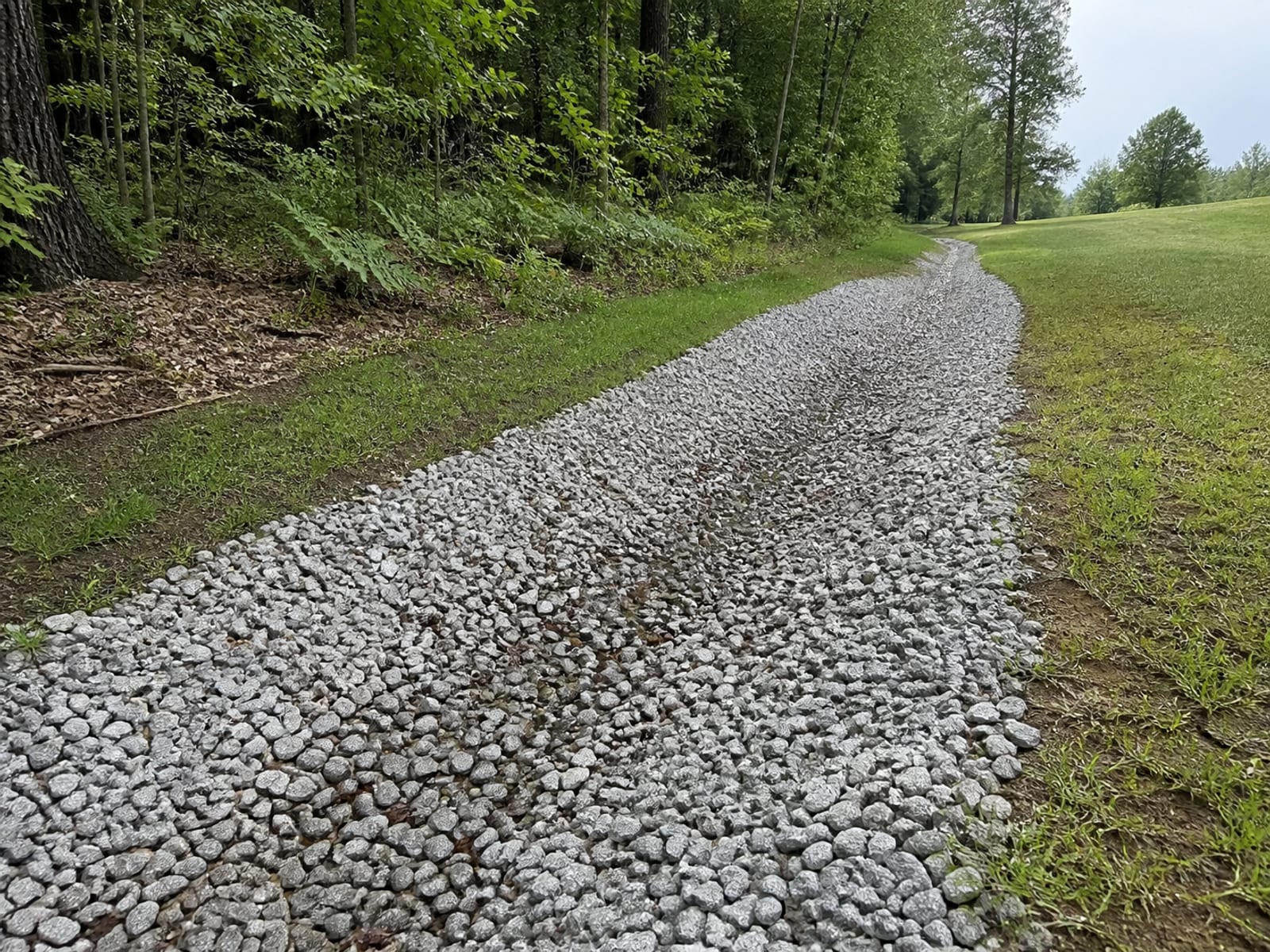
Slope and water do the rest. Wetlands, streams, and reservoirs run through the town, and ridges and ravines mean the same rainfall behaves completely differently a few hundred feet apart. Connecticut's freeze and thaw cycle works on all of it every winter, and on a long gravel or unpaved drive that is exactly what turns a passable approach into ruts and washouts by spring. Late spring through autumn gives compaction, grading, and drainage installation the best window to set before the next freeze.
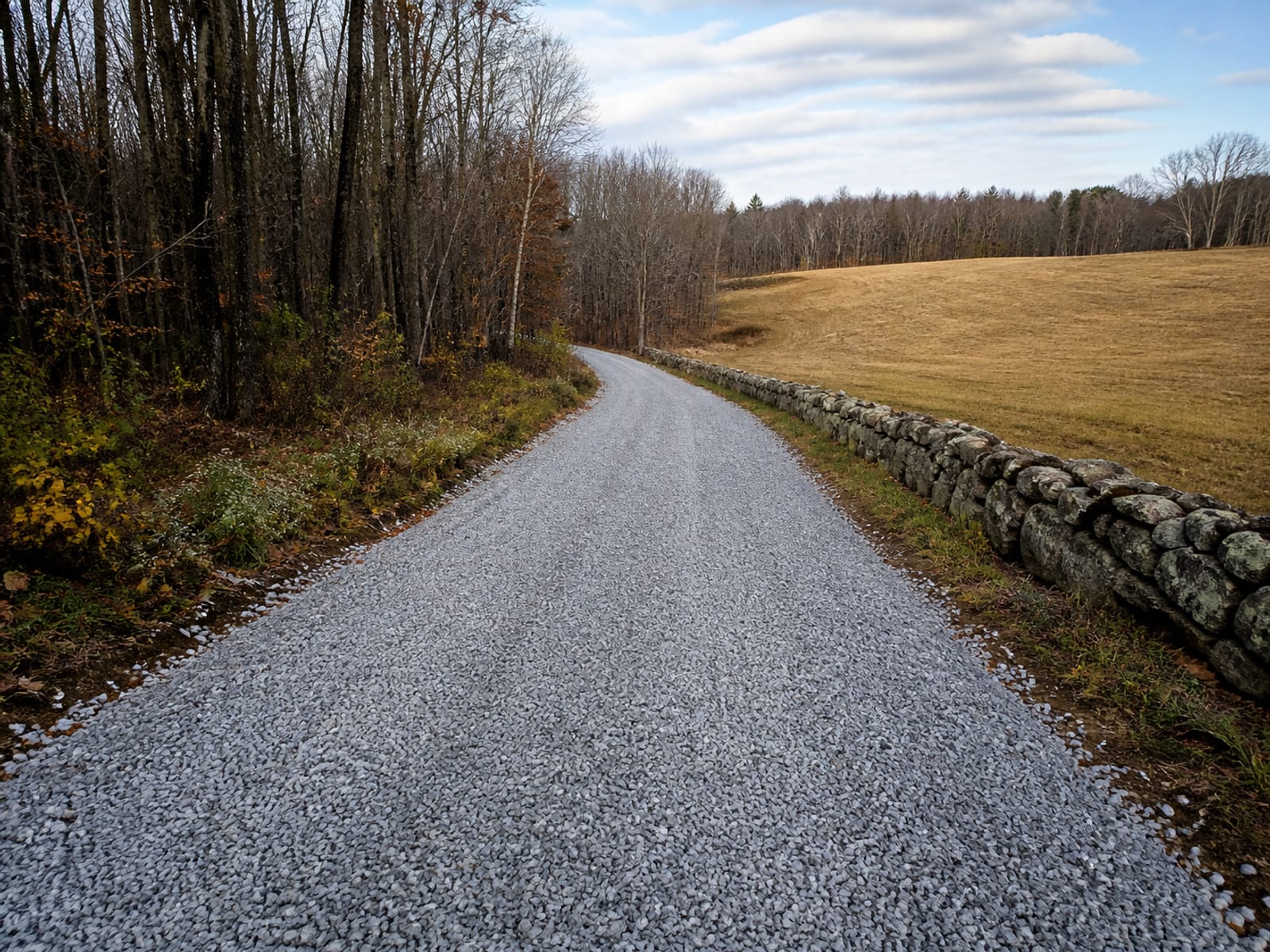
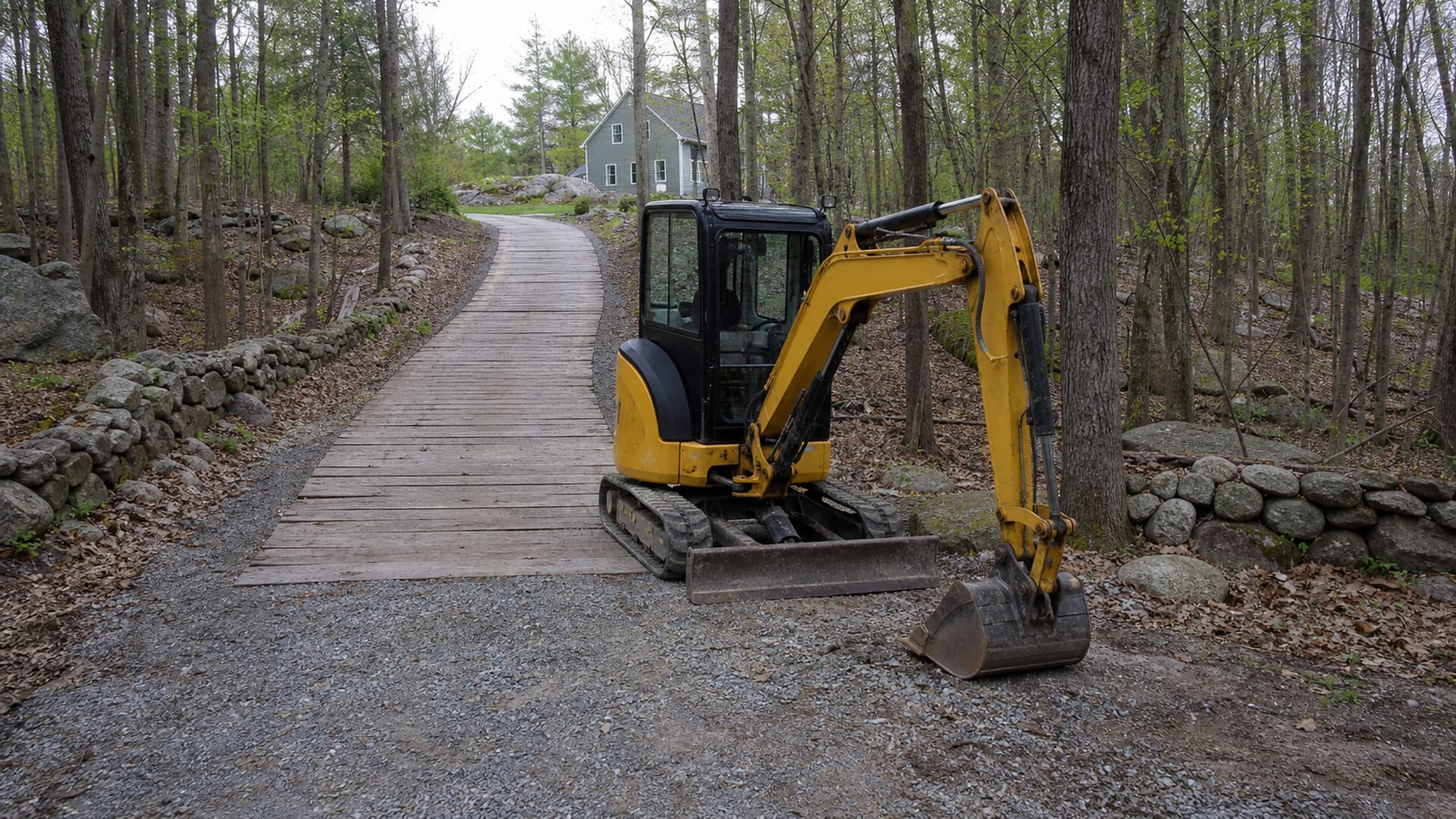
Access is its own line item here in a way it simply is not on a village lot. A long private drive has to carry a loaded truck, not just a car, and overhead clearance through mature trees decides what can physically reach the work. Where a drive crosses a low spot or a watercourse, that crossing is often the first thing that has to be built properly before anything else can start, because everything after it depends on getting material in and out.
None of this town publishes a single answer for what is under your particular parcel. Upland glacial ground in this part of New Haven County produces ledge and buried boulders regularly, and it does so unevenly, so two clearings on the same property can behave differently. Where depth to rock could move the price, it gets established on site rather than assumed, and rock removal is priced as its own item so it is visible instead of hidden in a contingency.
The full sequence runs under one crew, so nothing waits on another contractor's schedule.
Clearing that grinds growth in place and leaves the organic material on site as ground cover. On wooded rural acreage this is usually the fastest and cleanest way to open ground, and it keeps trucks off a narrow country road.
Learn more about Forestry MulchingOpening wooded lots for building, pasture, paddock, or usable yard. On larger parcels the plan starts with what stays, where the wetland edges are, and where material can go.
Learn more about Land ClearingTaking trees down as part of the same job rather than as a separate contractor's visit, which matters on a property where access itself runs through the trees.
Learn more about Tree RemovalGrinding stumps out after clearing so the ground can actually be graded, seeded, or built on rather than worked around.
Learn more about Stump GrindingSwales, piping, and surface work that move water off a sloping wooded property deliberately, and away from the drive, the structure, and the septic area.
Learn more about Drainage SolutionsReshaping ground so water leaves rather than collects. On ridge and ravine terrain, grading is often the entire fix rather than a finishing pass.
Learn more about GradingBuilding and rebuilding the long private drives this town runs on, including the sub base that frost heave and spring runoff have spent years working on.
Learn more about Driveway & Roadway ExcavationGetting a rural parcel ready to build on: clearing, rough grade, access, and drainage established before anything is poured.
Learn more about Site PreparationBreaking out and removing ledge and buried boulders, which upland glacial ground in this part of New Haven County produces regularly.
Learn more about Rock RemovalHolding a grade change in place so a sloping wooded lot yields a level, usable area.
Learn more about Retaining Wall ConstructionSilt fencing, stabilization, and runoff controls that keep soil on site during land work, which matters more where wetlands and streams cross the property.
Learn more about Erosion & Sediment ControlUtility, drainage, and service trenching cut to line and depth, with backfill and compaction that will not settle out a year later.
Learn more about TrenchingThe ZIP code here is 06524, and we work throughout the town. Locally used areas include Bethany Center, Church Corner, Bethany Farms, Hockanum, Lake Bethany, Lake Chamberlain, Beacon Hill, Davidsons Corner, and Bethany Wood. On a town this size the useful directions are usually the road and the water rather than a neighbourhood name, which is why crews work from the through roads.
Route 63, known locally as Amity Road, along with Route 69 and Route 42 or Beacon Road, carry most of the through traffic. The named local roads that come up most on job addresses are Carrington Road, Falls Road, Peck Road, Sperry Road, and Bethany Mountain Road. Landmarks people use to place a property include Lake Bethany, Lake Chamberlain, Hockanum Lake, Peck Pond, Naugatuck State Forest, Bethany Airport, Veterans Memorial Park, and the Three Sisters Preserve.
Bethany borders Beacon Falls, Cheshire, Hamden, Naugatuck, Prospect, Seymour, and Woodbridge. We work in Naugatuck, Prospect, Seymour, and Woodbridge. The town sits in the South Central Connecticut Planning Region and is served by the South Central Regional Council of Governments, while much of the surrounding territory Prestige Property Maintenance covers sits in the Naugatuck Valley region next door. In practice that means a job that crosses a town line does not need a second contractor.
One practical consequence of a town this rural: the useful unit of work is the property, not the street. A job here is scoped by acreage, by how much wooded material has to come off, and by where that material can be placed or processed, rather than by frontage. That is why the walkthrough matters more than a phone description, and why an estimate given without one is usually wrong in one direction or the other.
You get a scoped number before any machine moves. Four steps, and nothing is priced from guesswork.
On acreage that means walking the actual work area, the access route in, and the ground between them. Where the machine can reach and what it has to cross usually shapes the plan more than the work itself does.
Septic field and reserve area, well head, wetland edges, and watercourses get established before scoping. On a property with no public sewer these are the constraints that decide where material can move and where it cannot.
Written, itemized, and based on what the site actually shows, including clearing method and what happens to the material. If something is genuinely uncertain we name it and what would change the number rather than burying it.
Clearing, mulching, stump grinding, excavation, grading, and drainage run under the same crew. There is no gap where a tree service hands off to an excavator and a week disappears while two companies wait on each other.
What Prestige Property Maintenance brings to rural work in this part of New Haven County.
It clears wooded ground faster, leaves organic material on site as cover, and keeps a week of truck traffic off a narrow rural road. On acreage that is often the difference between a two day job and a two week one.
Learn more about Forestry MulchingRaw land clearing through grading, drainage, and finished landscape construction runs under a single contractor, so you are not coordinating a tree service, an excavator, and a landscaper across three calendars.
Prestige Property Maintenance works across the Naugatuck Valley and western Connecticut, so upland glacial till, ledge, wetland setbacks, and freeze and thaw behaviour are familiar rather than a surprise found mid job.
The same crew covers the surrounding towns, so a project that runs across a municipal boundary needs no second contractor and no second mobilisation.
Grinding growth in place rather than trucking it out is not just faster. It means fewer machine movements across ground you want to keep intact, and less disturbance to the parts of a wooded property you are paying to preserve.
Written for Bethany properties specifically, covering the ground conditions, local approvals, and groundwork questions that come up most often here.
August 19, 2026
Agreed to land clearing in Bethany, CT and picturing a bulldozed lot? Here is what actually happens to trees, stumps, and debris once work begins.
August 16, 2026
Wondering what to expect from an excavation company in Bethany, CT? See how a crew protects your long drive and wooded lot from call to cleanup.
August 12, 2026
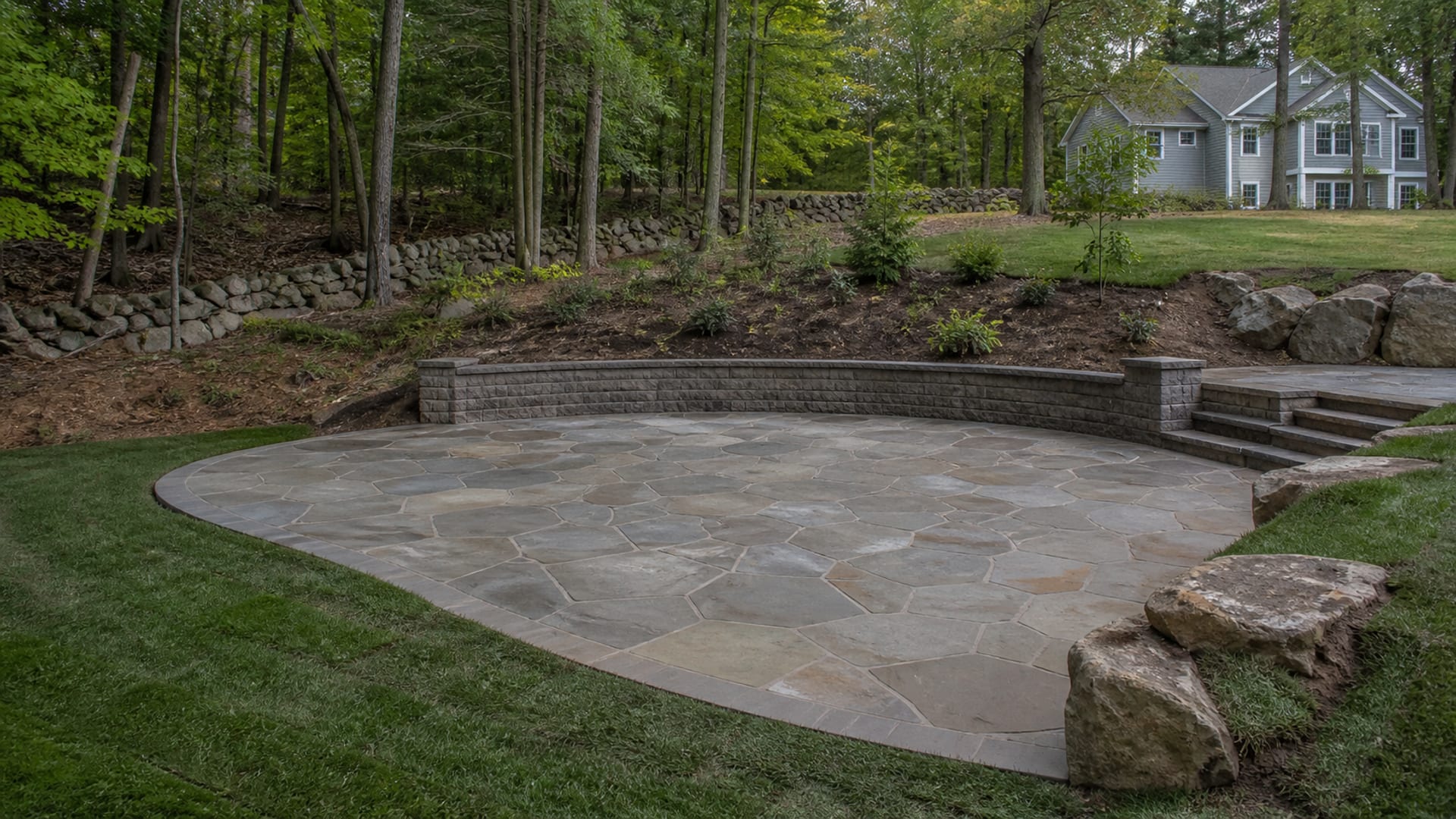
Told your Bethany patio needs the earthwork done first? Landscape construction in Bethany, CT starts with grading sloped, wooded ground, not pavers.
August 9, 2026
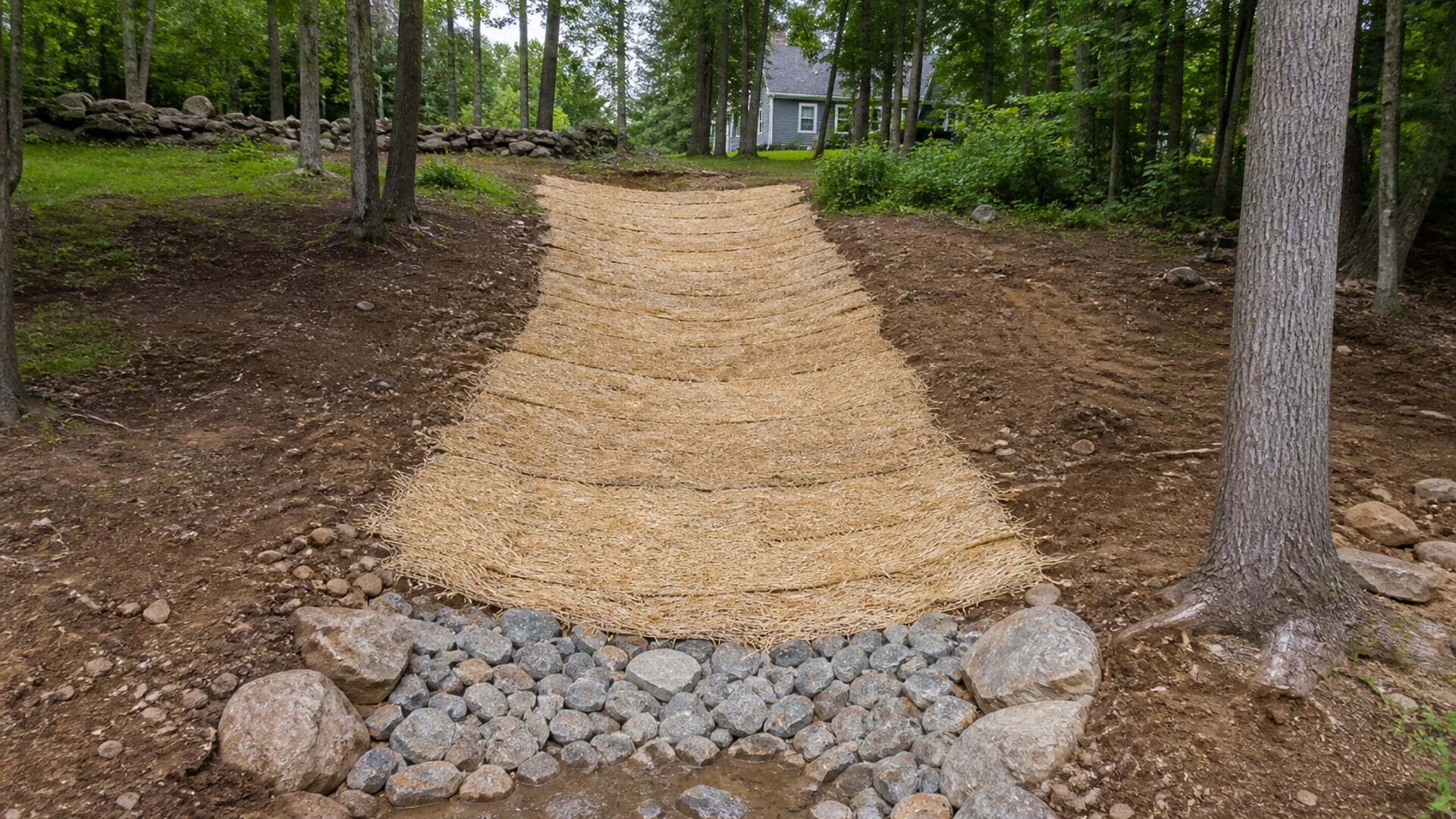
A washout near a wetland is not just a mess, it can be a regulatory issue too. Here is how erosion and sediment control in Bethany, CT works, start to finish.
August 5, 2026
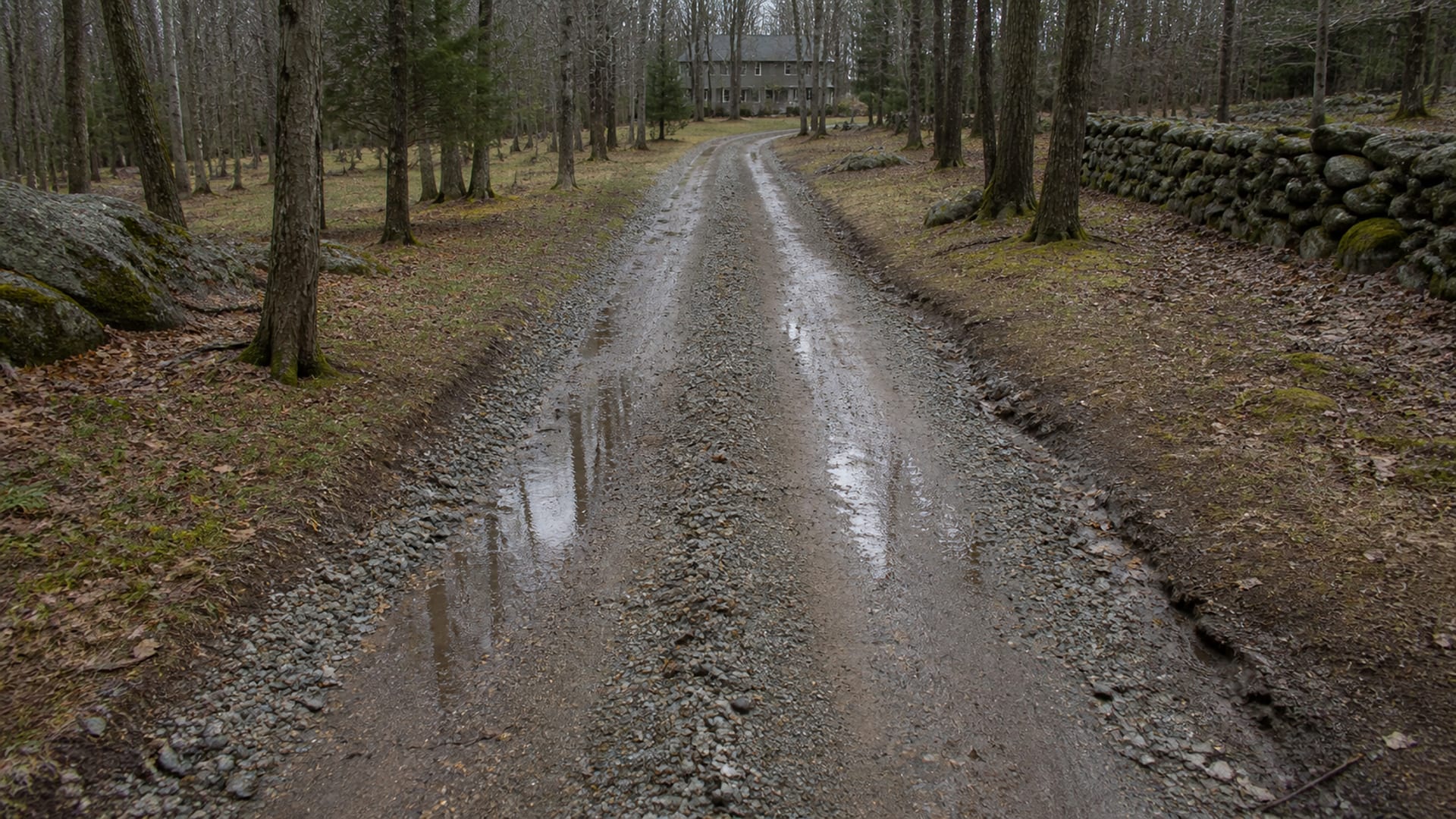
Tired of adding stone that disappears from your long Bethany driveway? Driveway excavation in Bethany, CT fixes the failed subgrade, not just the top.
August 2, 2026
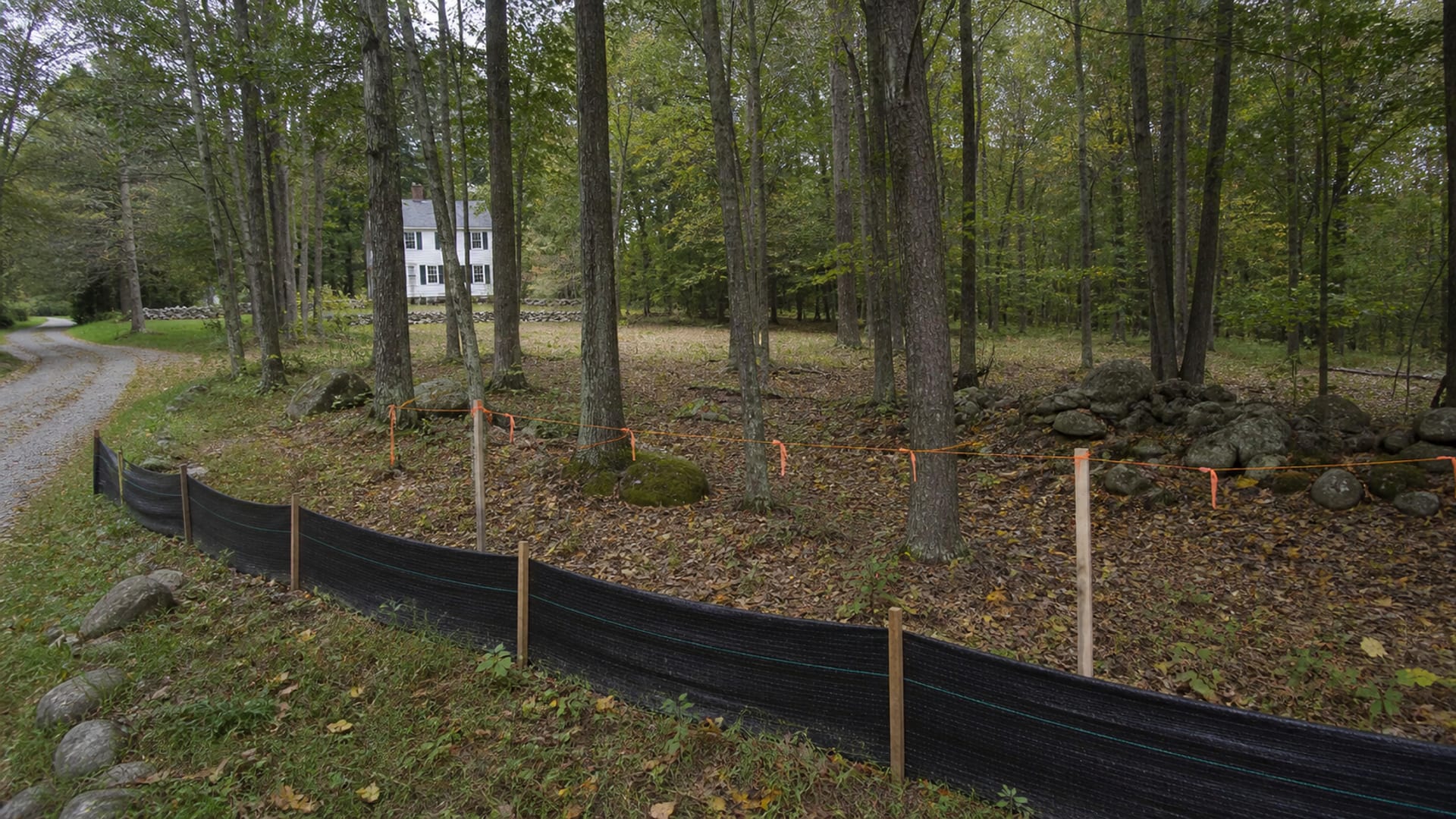
Site preparation in Bethany, CT follows a set sequence, from erosion controls to footing inspection. See what has to happen before you can build.
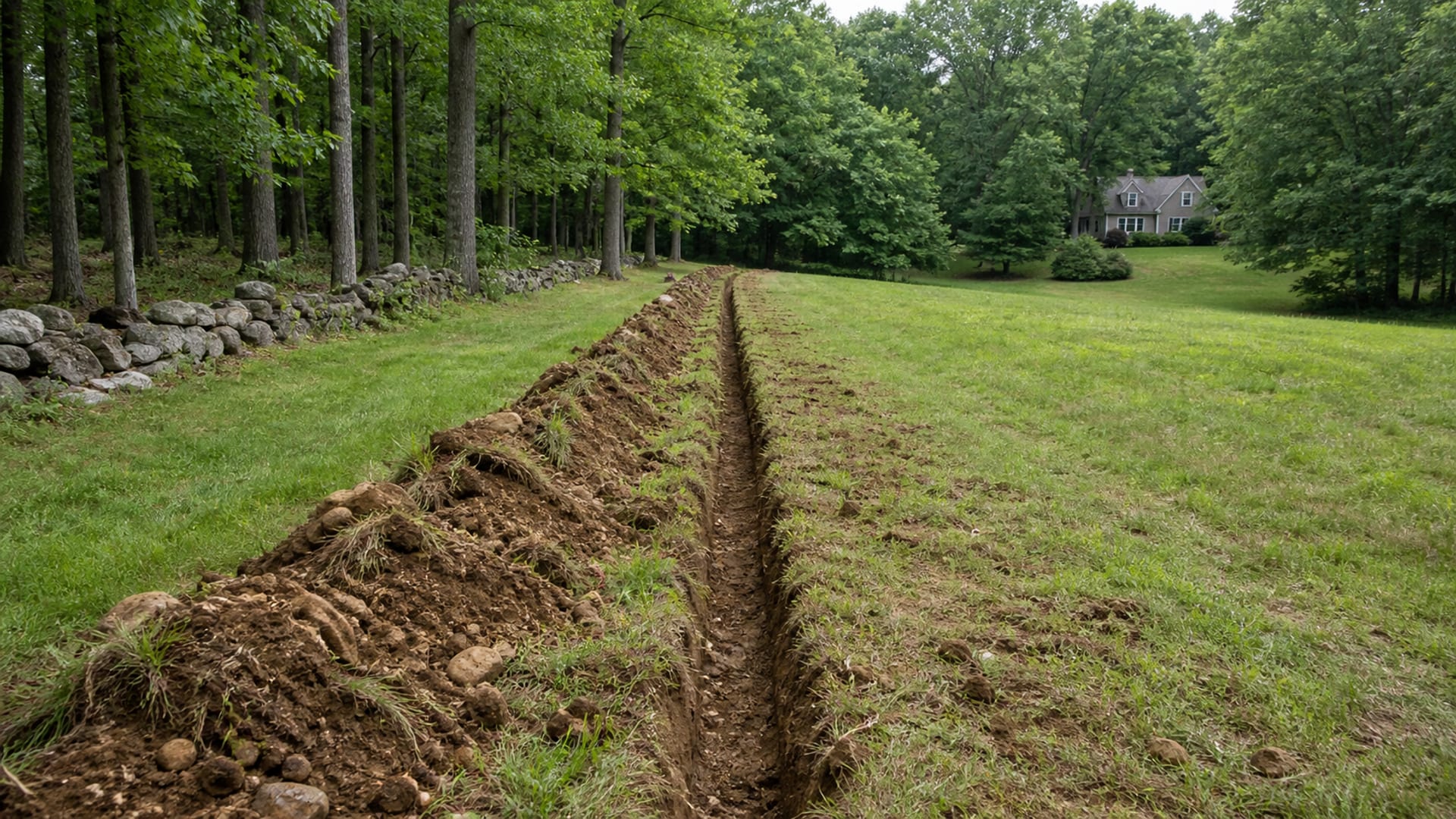
July 29, 2026
No single depth covers every utility line. Trenching in Bethany, CT depends on whether you are routing water, power, or a septic line through rock.
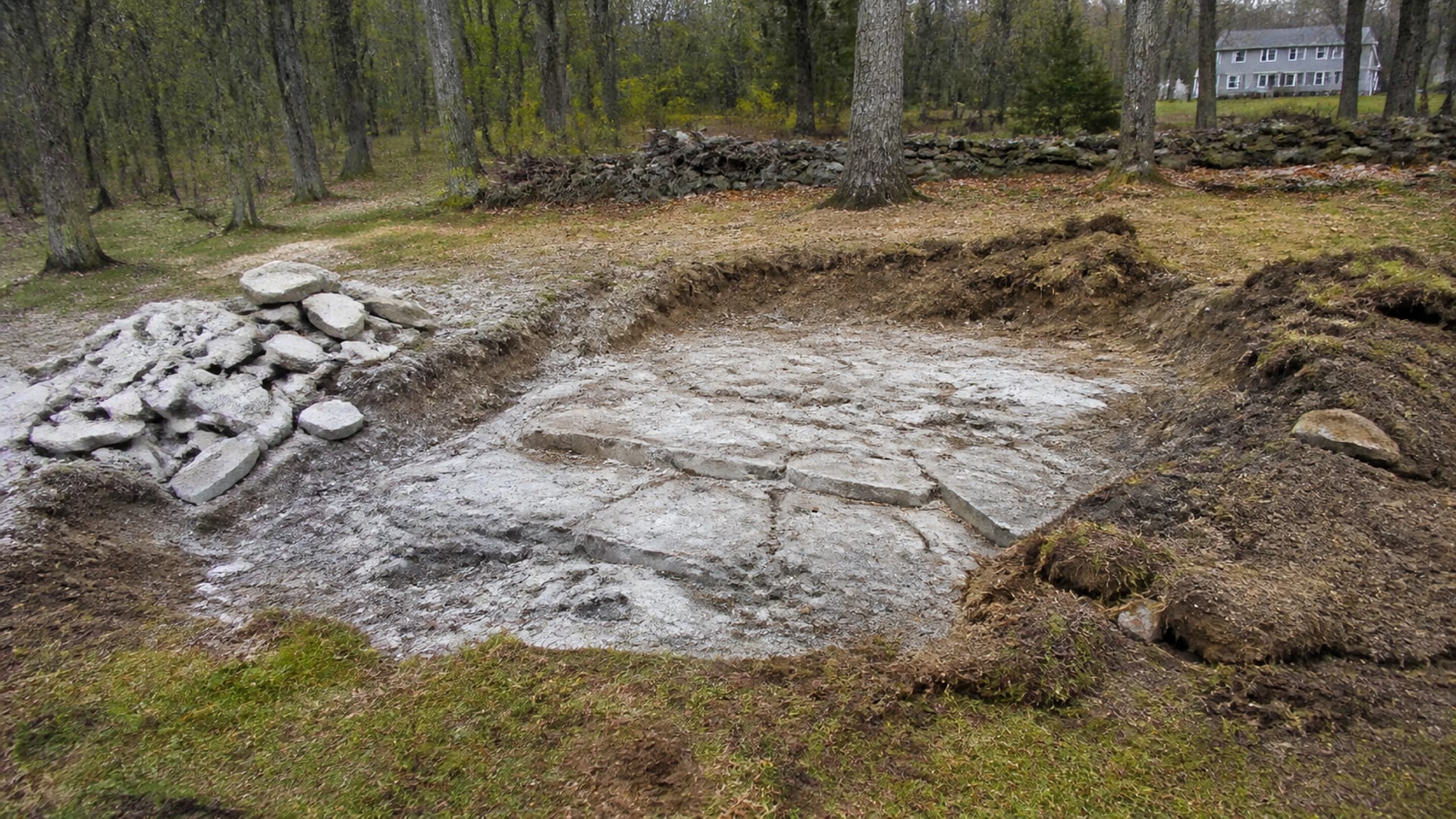
July 26, 2026
Bethany sits on glacial till, so hitting a boulder or ledge mid-dig is common, not bad luck. Here is how rock removal in Bethany, CT actually works.
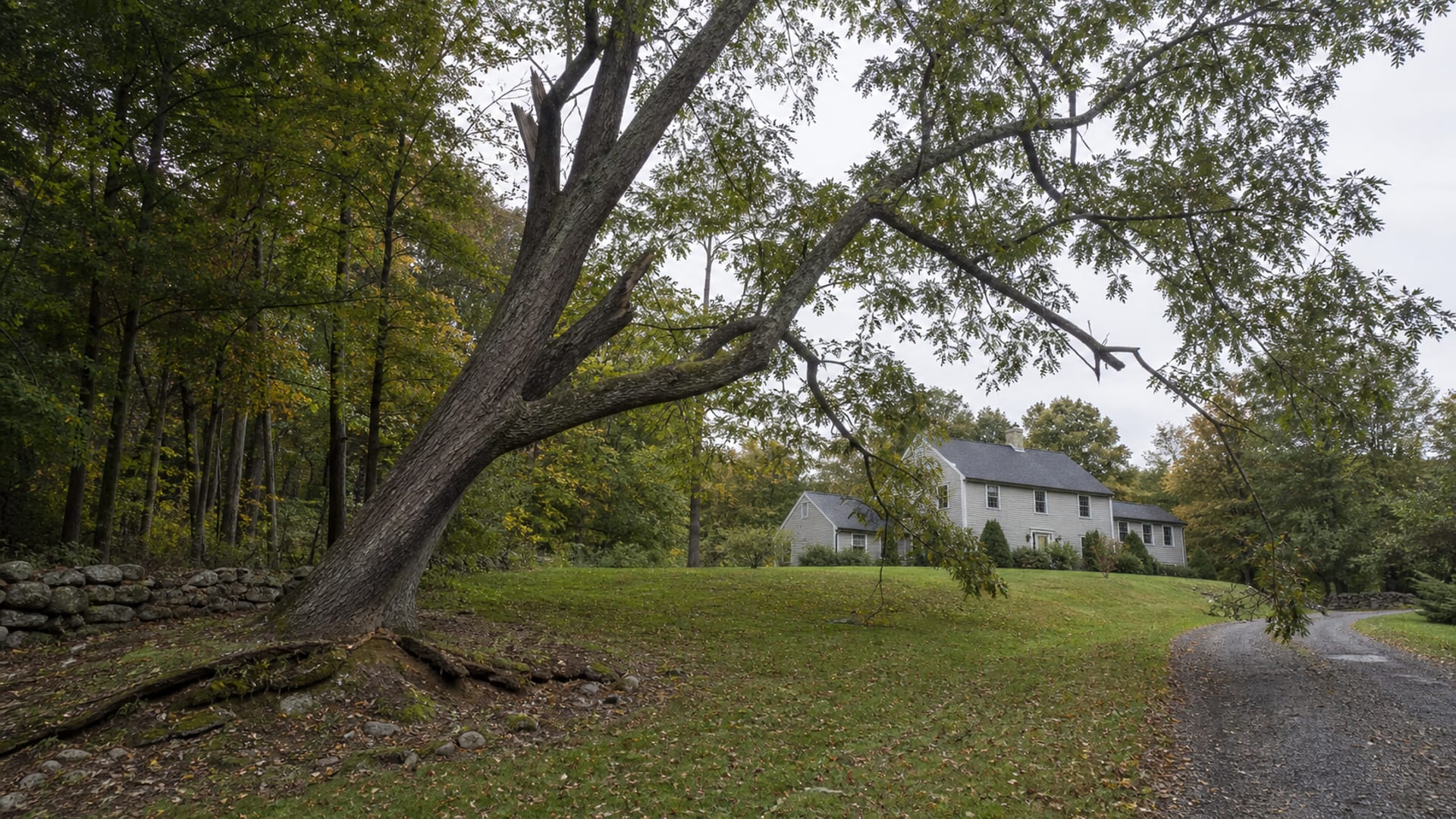
July 23, 2026
Tree removal in Bethany, CT means different things for a hazard versus a routine job. Learn how to tell them apart and stay safe while you wait.
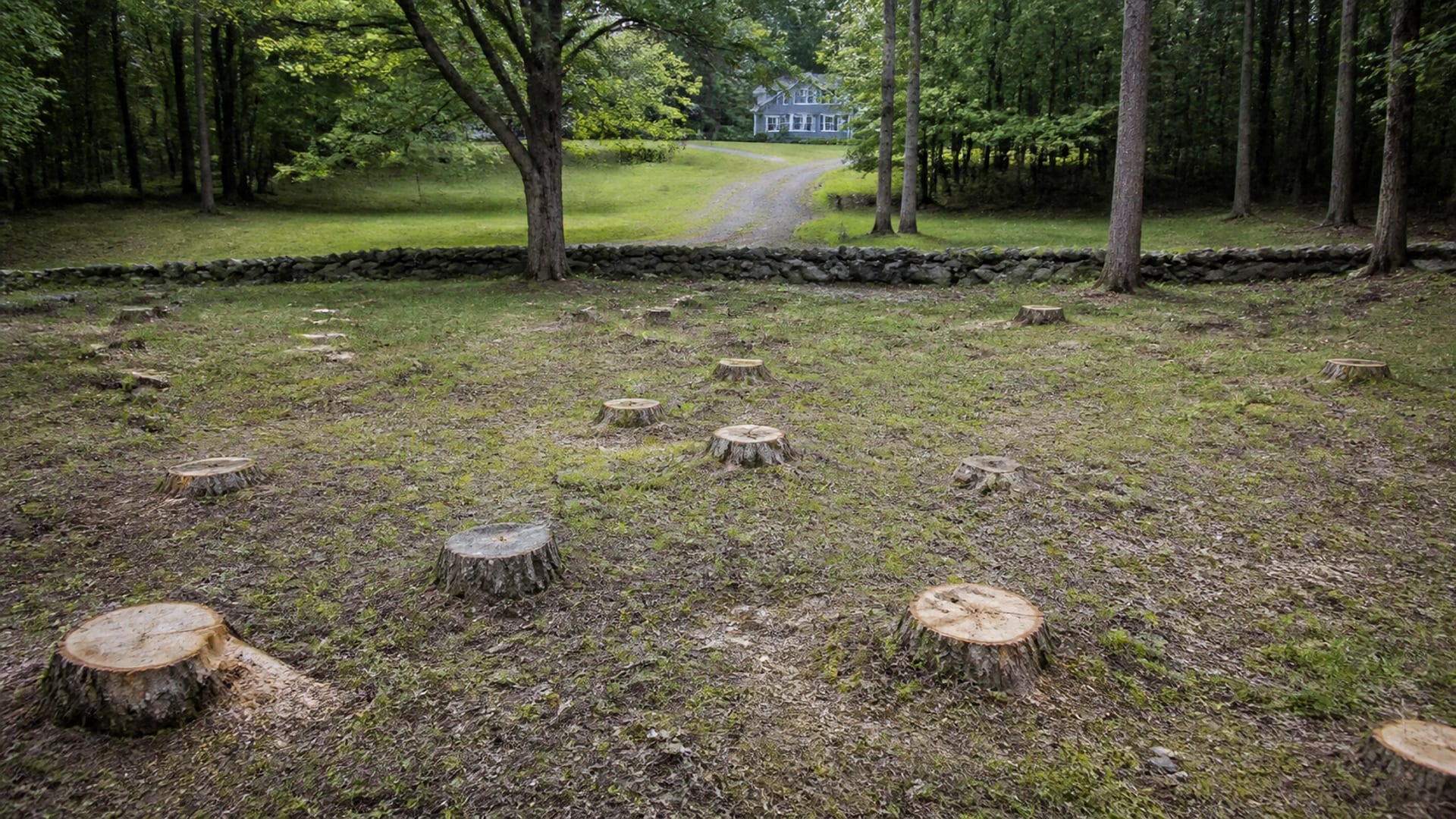
July 19, 2026
Can not mow or build until the stumps are gone? Here is how stump grinding in Bethany, CT works, and when grinding alone will not be enough.
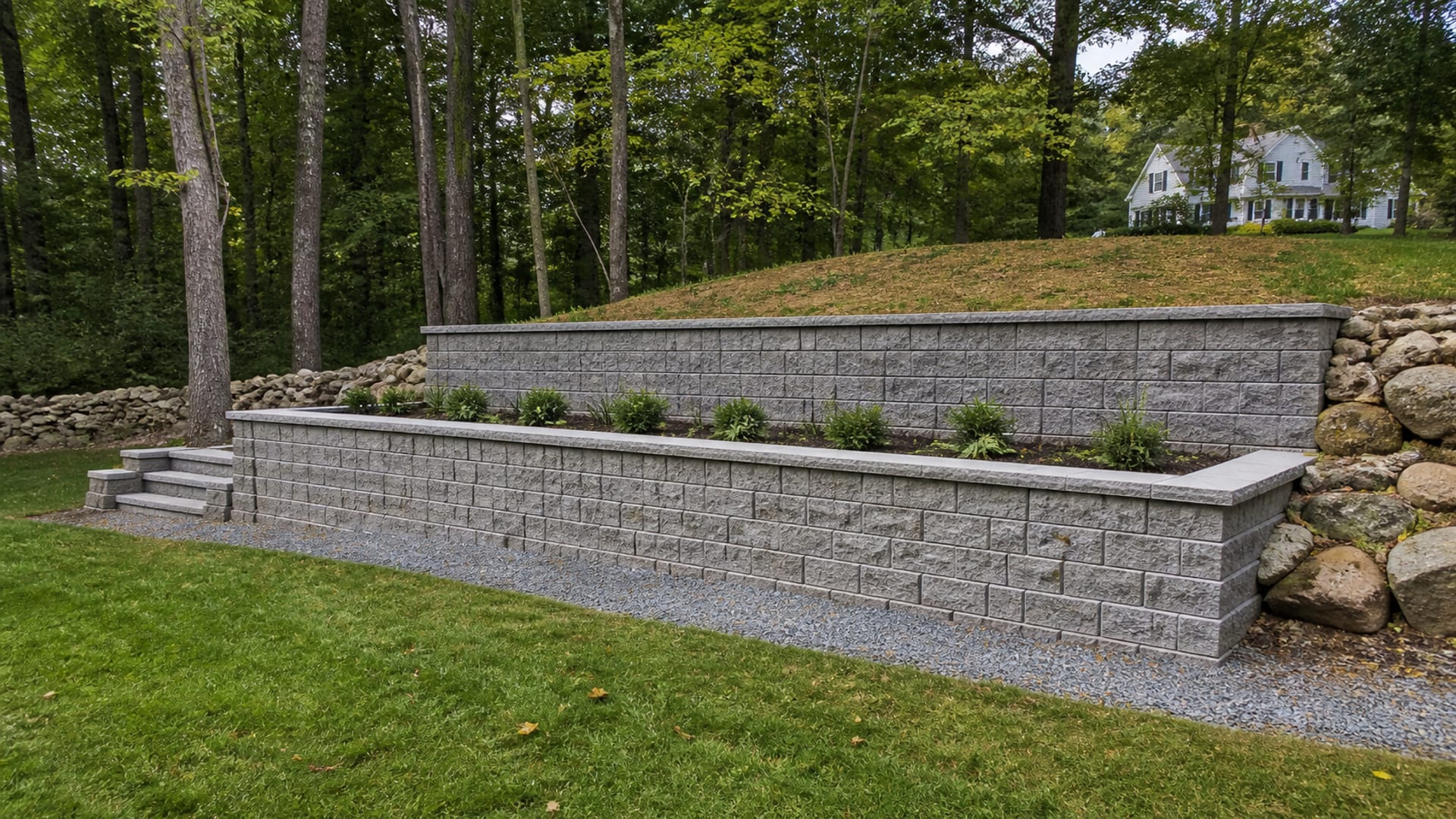
July 16, 2026
Worried your Bethany retaining wall will lean after a few winters? Retaining wall construction in Bethany, CT depends on frost depth and drainage.
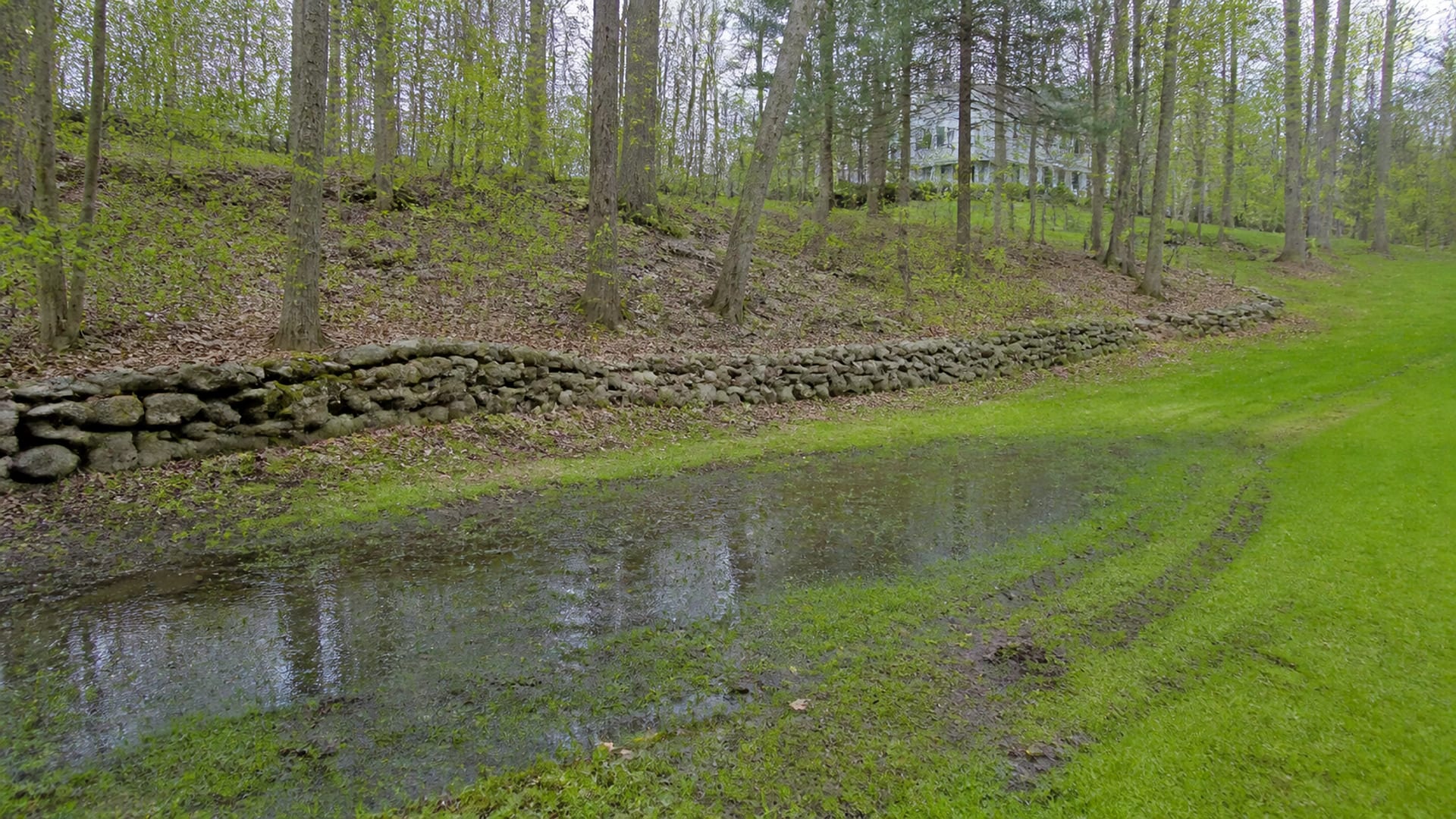
July 12, 2026
Not every wet yard needs the same fix. Drainage solutions in Bethany, CT depend on whether water comes from your roof, a neighbor's slope, or groundwater.
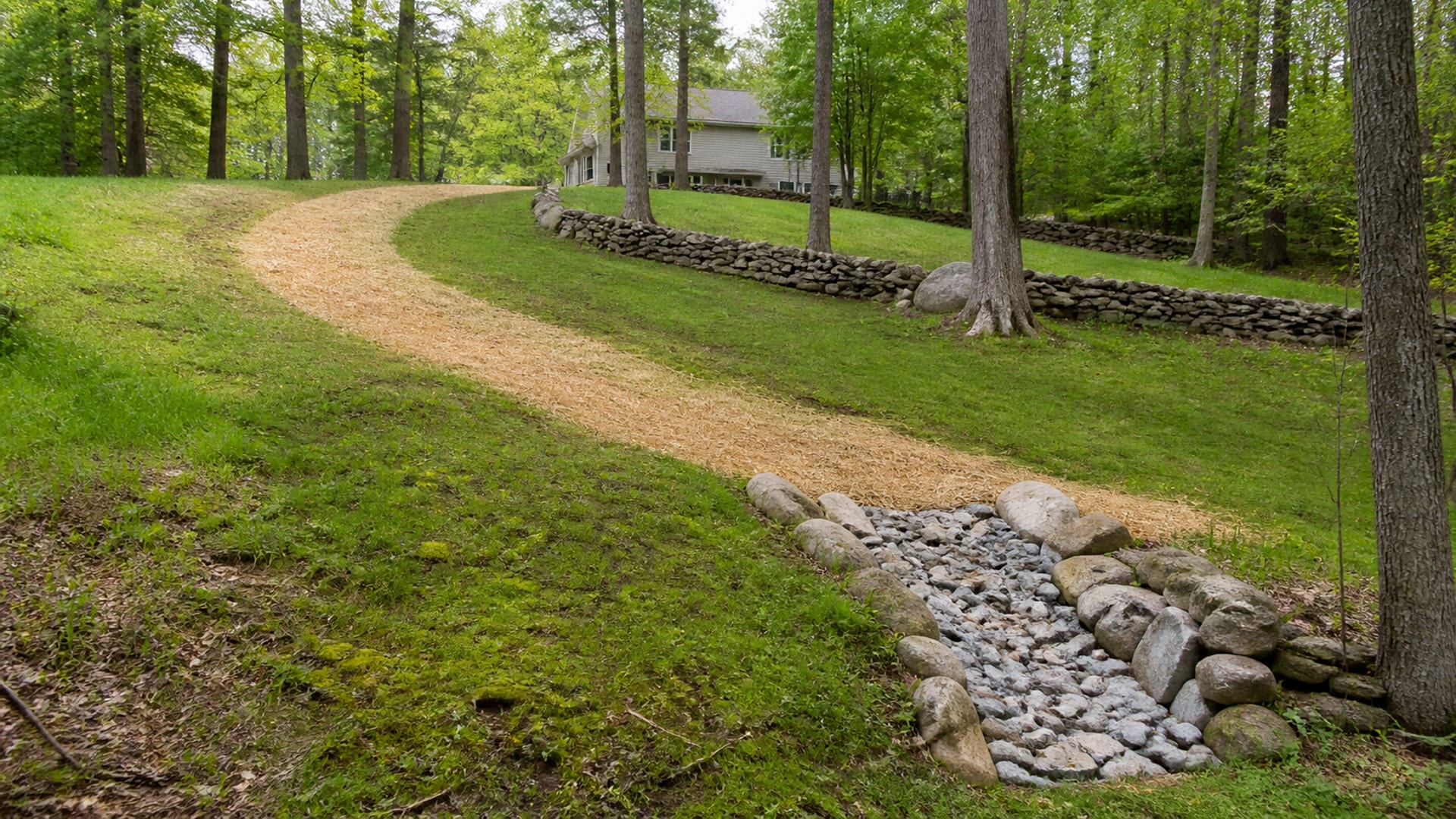
July 9, 2026
No flat ground and runoff carving channels every spring? Here is what grading in Bethany, CT actually involves on a wooded, sloped property like yours.
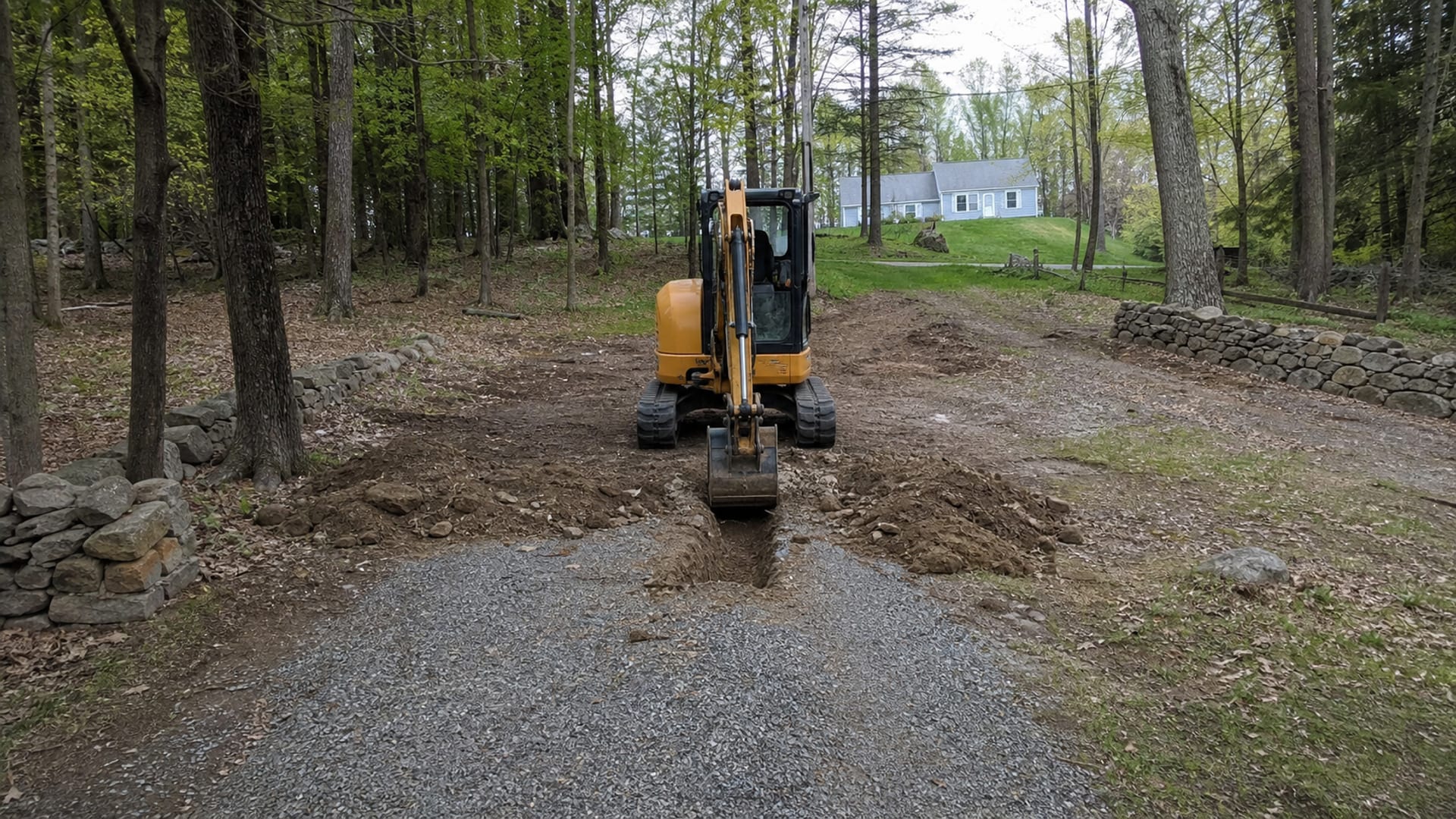
July 6, 2026
Worried about ledge, wet ground, or a long driveway before excavation in Bethany, CT? See what a site visit actually confirms before work begins.
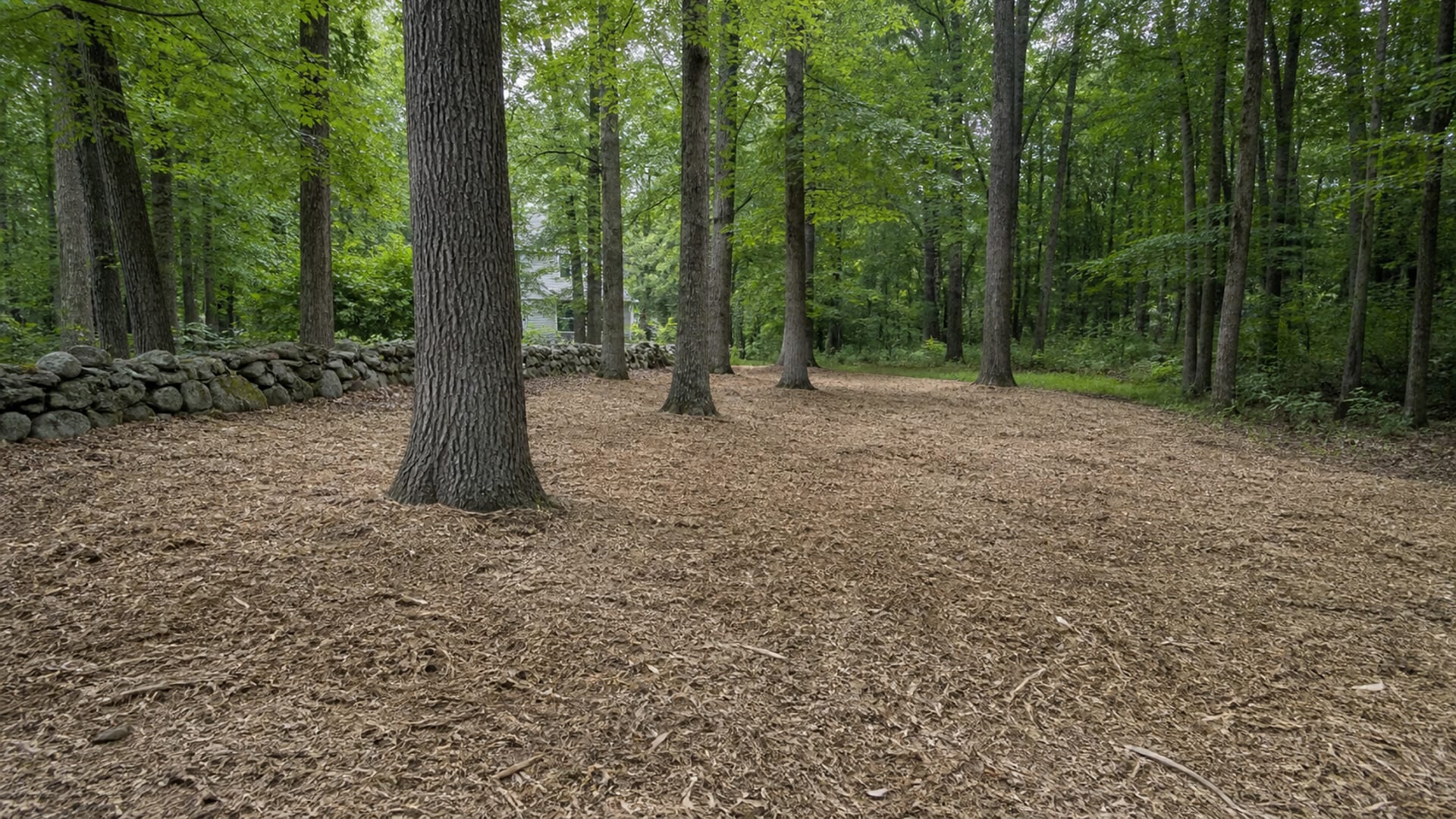
July 2, 2026
Want your Bethany woods opened up without a clear cut? Forestry mulching in Bethany, CT clears brush and understory while mature trees stay standing.
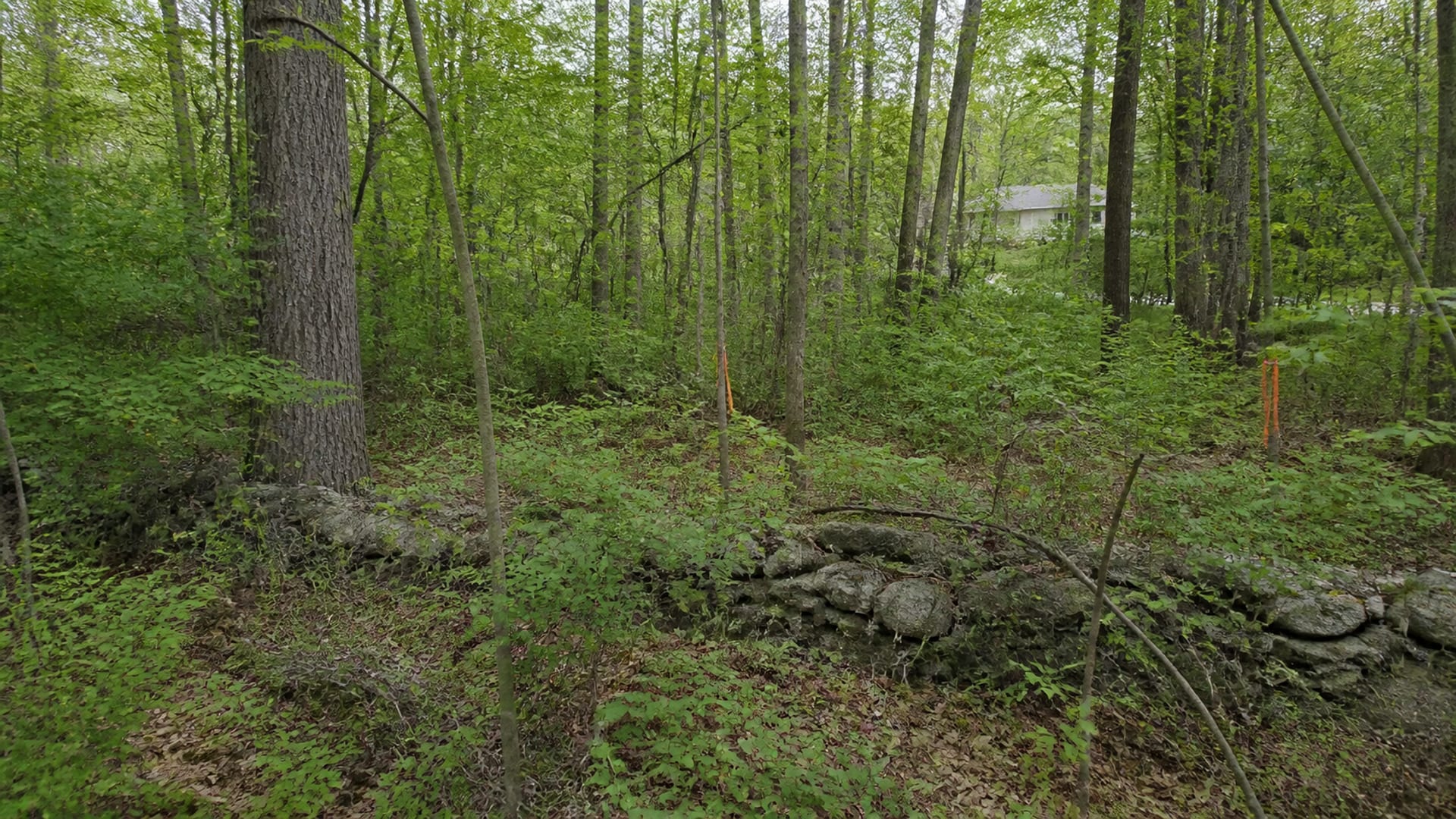
June 29, 2026
Most of Bethany carries a land constraint, wetlands, slope, or poor septic soil. Land clearing in Bethany, CT starts by finding out which ones apply.
Tell us what the property needs and we will tell you what it takes to do it properly.
The questions property owners here ask most.
It depends on acreage, how dense the growth is, the clearing method, and what happens to the material afterward. Forestry mulching often costs less overall than conventional clearing on wooded rural lots because it removes the hauling and disposal entirely. You get an itemized estimate after a site walk, not a rate over the phone.
Not if the system is located first, which is why we do that before scoping. The septic field, its reserve area, and the well head are established at the walkthrough, and the work plan routes equipment and material away from them. On a property with no public sewer this is the single most important constraint on site.
Yes. We carry insurance for the excavation and site work we perform and can provide a certificate before the job starts. Ask when you book and it goes out with your estimate.
For estimates we are usually on site within a few business days. Situations where water is actively reaching a structure or a drive has become impassable move up the list. You will be told honestly where you land in the schedule rather than promised a date that cannot be held.
Usually, and it is normally a drainage problem rather than a surfacing one. Water arriving from uphill has to be intercepted and sent somewhere deliberate before a rebuilt sub base will hold. Rebuilding the surface without fixing where the water comes from is what makes it a recurring annual expense.
Often, yes. Wetlands, streams, and reservoirs run through this town, and work near them carries requirements that work on dry upland does not. We identify the edges during the site visit and tell you what your project needs before it is scheduled.
Usually, and that gets confirmed at the walkthrough rather than assumed on the day. Access width, overhead clearance, grade, and what the surface will carry when loaded all get checked first, because discovering a problem with a machine on a trailer costs you a day.