Residential Excavation Services in CT: Choosing the Right Contractor
Kash CochranePublished Updated
- residential excavation
- hiring a contractor
- site preparation
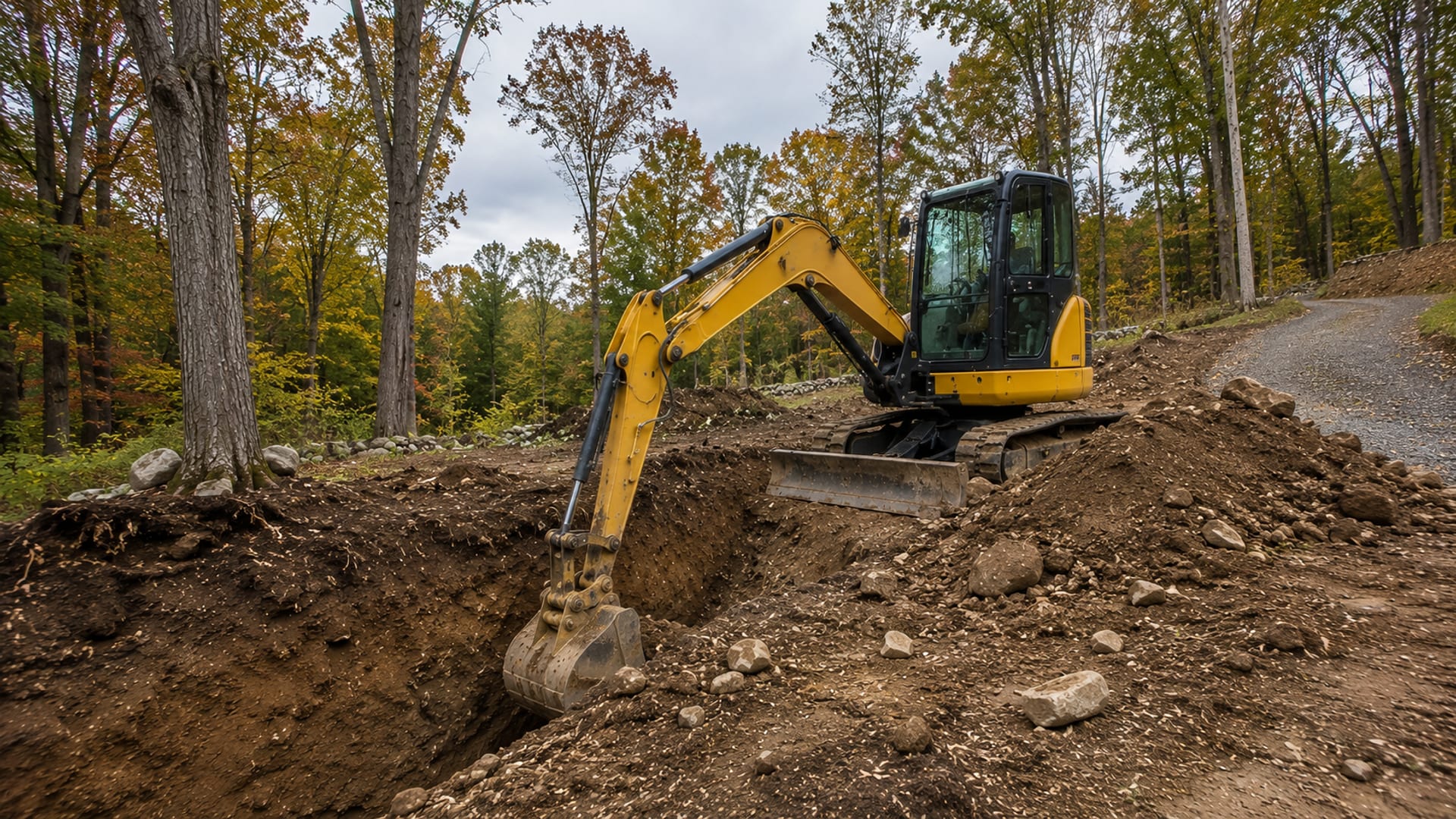
Residential excavation services in CT cover a lot more ground than most homeowners expect when they first start making calls. Maybe you have a corner of the yard that turns into a pond every March, a driveway that keeps sinking no matter how many times it gets patched, or a back lot you want to build on but have no idea what condition the ground is actually in. You've gotten a quote or two, heard words like "sub-base" and "grading" thrown around, and now you're wondering whether the contractor with the lowest number actually included all the work, or whether you're looking at a muddy mess and a surprise invoice six weeks from now. That worry is legitimate, and it happens more than it should. Connecticut residential excavation is not a simple category. The work can involve land clearing, rock removal, drainage planning, base preparation, and erosion control, all before a single finished surface gets installed. The soil conditions here, rocky glacial deposits, wet pockets, clay-heavy subsoils, add variables that contractors from outside the region often underestimate. What follows is a practical look at what residential site work in CT actually involves, what separates a contractor who protects your property from one who creates new problems, and what questions you should be asking before anyone starts an engine.
Key Takeaways
Residential excavation is site preparation, not just digging
The work may include grading, trenching, drainage planning, base preparation, and restoration in addition to moving earth.
Connecticut soil conditions matter
Rocky glacial soil, slopes, wet areas, and buried boulders can affect cost, timeline, and equipment choice on any given project.
Permits may be required
Local building, zoning, inland wetlands review, driveway, stormwater, or erosion control rules may apply depending on your town and project scope.
Utility markouts are a legal requirement
Connecticut's Call Before You Dig system helps locate underground utilities before excavation begins, and skipping this step is both dangerous and illegal.
Drainage should be planned from the start
Poor grading or excavation can redirect water toward homes, driveways, or neighboring properties in ways that are expensive to fix after the fact.
A written scope protects you
Estimates should spell out machine time, hauling, fill, stone, compaction, drainage materials, cleanup, and restoration so you know exactly what you're paying for.
Why Residential Excavation Services Matter in Connecticut
When a homeowner hires an excavation contractor, they're usually focused on a specific problem: the soggy yard, the failing driveway, the planned addition. What many people don't realize is that the excavation work underneath sets the condition for everything that comes after. If the ground is not shaped, compacted, and drained properly, the finished project will often settle, hold water, or fail before its time.
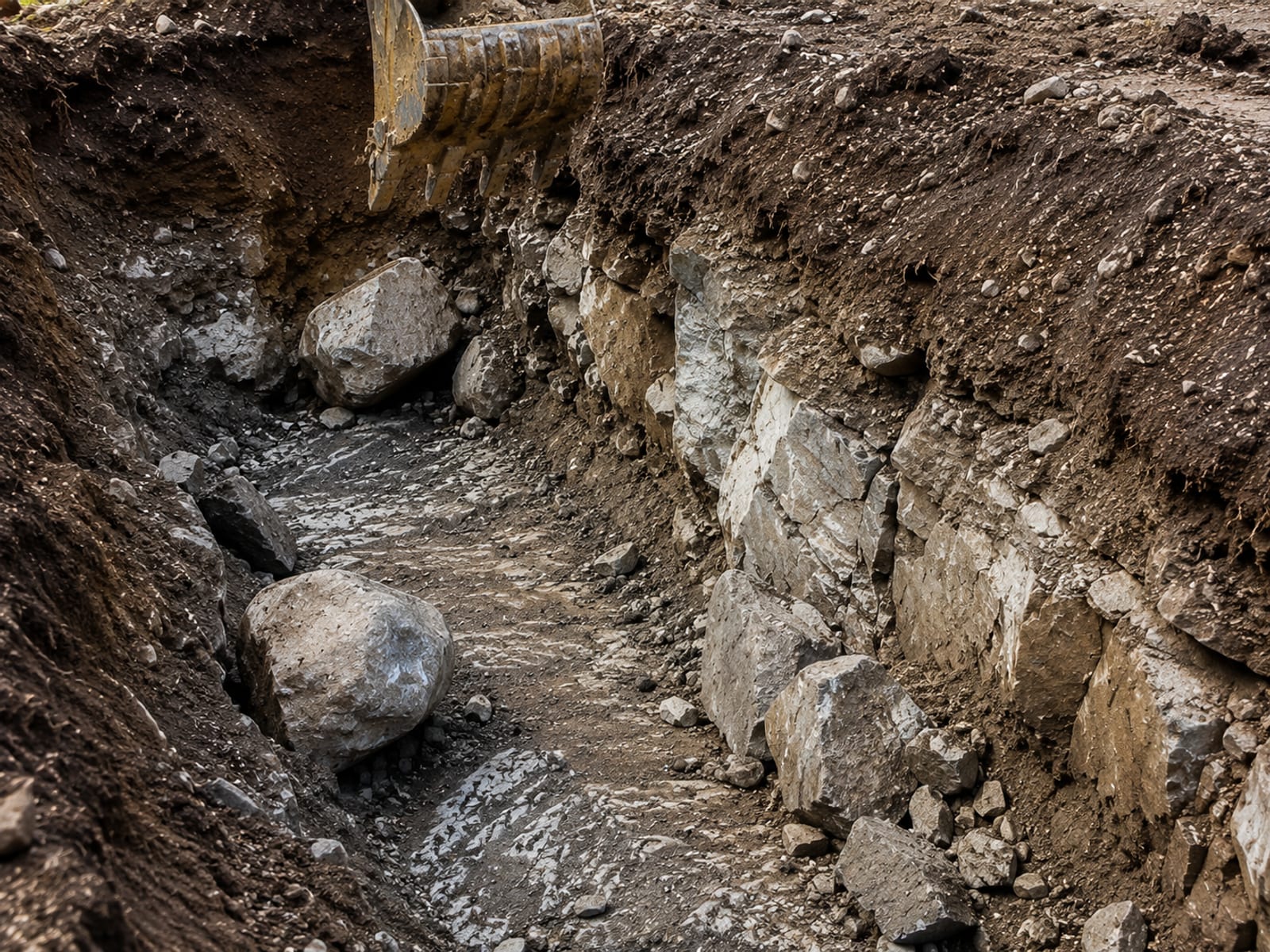
Connecticut adds its own layer of difficulty to all of this. The state's soil erosion and sediment control guidelines acknowledge what anyone who has dug here already knows: this is not flat, predictable Midwest farmland. You're often working with glacially deposited material that can shift from sandy loam to dense clay to ledge rock within twenty feet. Slopes are common, drainage patterns can be old and informal, and the freeze-thaw cycle each winter puts constant pressure on anything that wasn't prepared correctly. A grading contractor in CT needs to think about more than just moving dirt. They need to think about where the water goes when it rains in November, what happens to a base course after January frost, and whether the drainage solution they install today will still work after the ground settles.
Excavation Affects Everything That Comes After
Poor site preparation is one of the leading reasons that driveways fail early, retaining walls lean, and wet basements stay wet even after expensive interior fixes. The CT Stormwater Manual's performance criteria make clear that managing where water moves across a site is not an afterthought. It's a design consideration. A driveway base, building pad, retaining wall footing, or drainage trench is only as reliable as the preparation work underneath it, and that preparation starts with excavation done right the first time.
When Homeowners Need Residential Excavation
Most homeowners searching for an excavation contractor in Connecticut aren't searching because they love heavy equipment. They're searching because something on their property isn't working, or because a planned project requires ground work before anything else can happen. Understanding which type of excavation your situation calls for helps you ask better questions and compare estimates more accurately.
There are several common situations that point to a need for residential site work in CT, and they don't all look the same when it comes to scope, equipment, or cost.
Drainage and Wet-Yard Problems
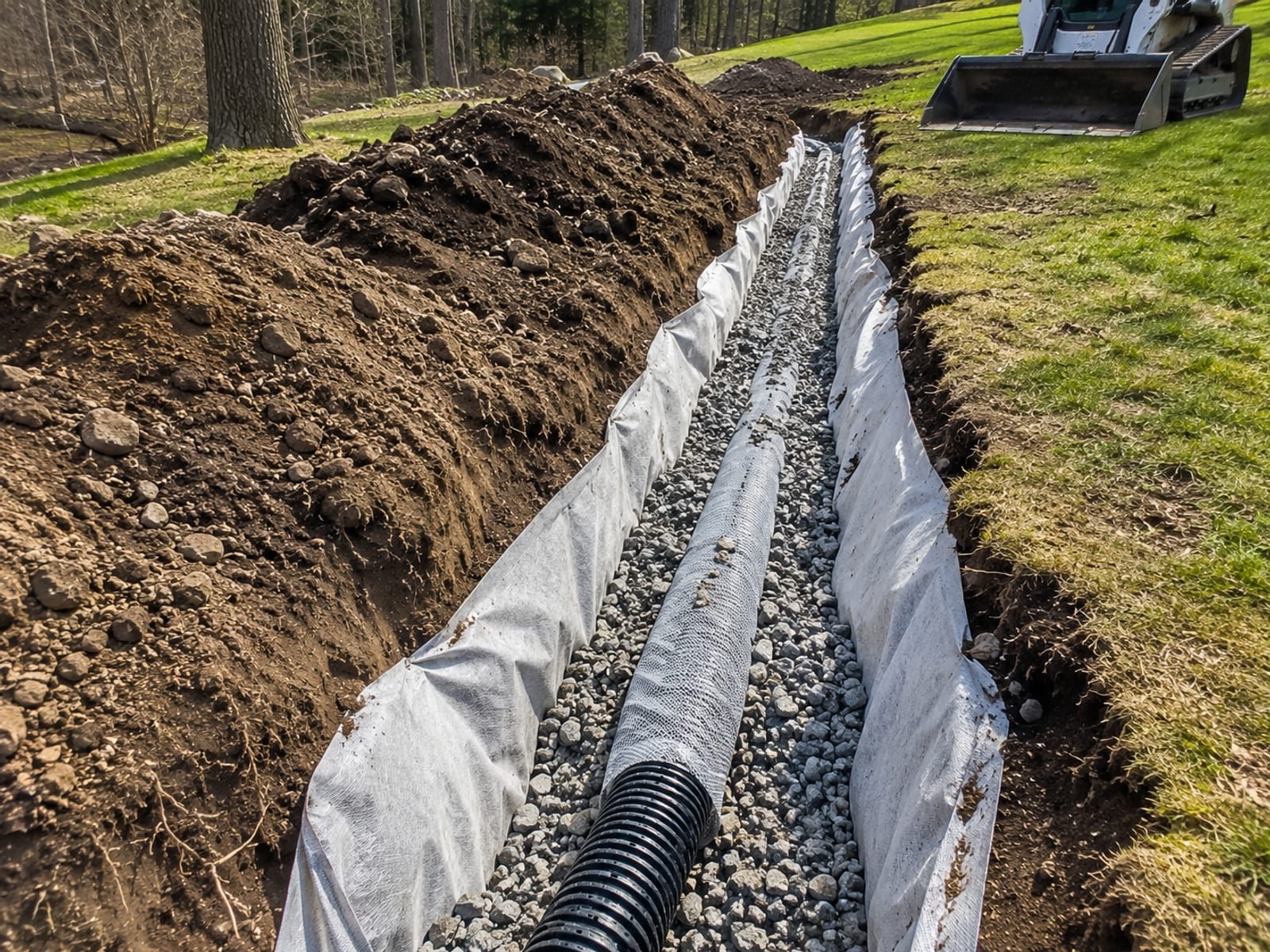
Standing water in the yard, damp areas along a foundation, driveway washouts, and soil erosion after rain are often signs of a grading or drainage problem at the ground level. Yard drainage excavation may involve reshaping the grade, cutting a swale, installing a French drain, adding a catch basin, or running perforated pipe to redirect water away from structures. The CT DEEP construction stormwater general permit applies to larger disturbance areas, but even smaller residential drainage projects need to be planned so that the water you're redirecting doesn't create a new problem for a neighbor or for your own foundation. Drainage excavation in CT isn't just about digging a trench. It's about understanding where the water comes from, where it needs to go, and what the ground between those two points will actually do.
Driveway, Site Prep, and Utility Work
Driveway excavation in CT requires more planning than many homeowners expect. A driveway base that was never properly excavated and compacted will flex, crack, and sink, especially through Connecticut winters. Driveway base preparation typically involves removing existing material, excavating to the right depth, installing compacted gravel in layers, and shaping the grade so water sheds to the sides rather than pooling in the middle. Utility trenching follows a similar logic: the depth, bedding material, backfill, and compaction around a buried line all matter for the long-term stability of both the line and the surface above it. Some towns, including Windsor, require permits for driveway and excavation work, so checking local requirements before starting is always the right move.
Foundation excavation, addition prep, garage site preparation, and retaining wall excavation each have their own depth, width, and compaction requirements. The common thread is that all of them depend on getting the ground conditions right before the visible work begins.
What to Look for in a Connecticut Excavation Contractor
Choosing a residential excavation contractor in CT based on price alone is one of the most common mistakes homeowners make. The lowest bid is often low because something was left out: grading, compaction, hauling, base material, drainage, restoration, or erosion control. By the time you realize what's missing, the crew is gone and you're left coordinating a second contractor to fix what the first one didn't finish.
A qualified excavation contractor in Connecticut should ask questions about your property before they ever quote a number. They should want to know about access, slope, soil type, drainage patterns, nearby trees, septic systems, wells, and what's underground. A contractor who shows up, looks around for five minutes, and gives you a number off the top of their head is telling you something about how they work. The two sections below cover what a written estimate should actually contain, and why local soil knowledge is not something you can substitute with general construction experience.
What a Written Scope Should Actually Cover
A useful excavation estimate is a document, not a number. It should tell you what equipment will be used, how long the work is expected to take, what materials are included (stone, fill, pipe, filter fabric), how debris and excavated material will be handled, and what the site will look like when the contractor leaves. Ask specifically about hauling and disposal costs, since these can be significant on rocky Connecticut properties where blasted ledge or excess fill needs to go somewhere.
Ask the contractor directly: what could change this price? Honest contractors will tell you that hidden rock, unexpected water, or unstable soil can affect the scope. That's a fair answer. A contractor who says nothing will change the price before they've seen what's underground is either inexperienced or not being straight with you.
Local Soil and Drainage Knowledge
Connecticut's glacial soil conditions are not a generic variable. In the Naugatuck Valley and surrounding towns like Oxford and Seymour, you'll often find properties with buried boulders, ledge close to the surface, steep slopes, and drainage patterns that were established long before any house was built there. An experienced excavation contractor working in this area knows which equipment handles those conditions, when rock removal becomes a separate scope item, and how to grade a sloped yard so it drains without eroding. That kind of local knowledge is hard to fake and easy to spot when it's missing.
Permits, Utility Markouts, and Practical Rules
Before excavation work starts, there are two things that should happen on every project: a permit check and a utility markout. Skipping either one can create problems that are far more expensive than taking care of them upfront. Permit requirements vary by town and by project scope, so what applies in one municipality may not apply in another, but the principle is the same everywhere.
Connecticut's permitting picture for residential excavation involves multiple possible layers depending on what the project touches. The state's home improvement contractor registration requirements cover certain residential work, and towns add their own building, zoning, inland wetlands, right-of-way, and erosion control requirements on top of that. Retaining walls above a certain height, drainage work near wetlands, driveway work affecting a town road, and projects disturbing significant soil area can all trigger review processes you weren't expecting.
Utility Markouts: Not Optional
Connecticut's Call Before You Dig program is a legal requirement before excavation begins. The system notifies utility companies so they can mark the locations of underground gas, electric, water, communications, and drainage lines before a machine touches the ground. This is not a bureaucratic formality. Connecticut properties, especially older ones, can have underground infrastructure in unexpected locations, and striking a gas or electric line is dangerous and costly. A reputable residential excavation contractor will initiate the markout process as a standard step, not as something they do only if a homeowner asks.
Erosion and Sediment Control
Once soil is disturbed, it moves. Rain carries it into storm drains, onto neighboring properties, and into wetlands and waterways. Connecticut's erosion and sediment control guidance gives contractors and municipalities tools for managing runoff during construction, and many towns require that controls like silt fencing, hay bales, or stabilized construction entrances be in place before work starts. A contractor who doesn't mention erosion control during the planning conversation is leaving out a real cost and a real responsibility.
The Residential Excavation Process Step by Step
A well-run residential excavation project follows a clear sequence, and understanding that sequence helps you know what to expect at each stage. It also helps you spot when a contractor is skipping steps they shouldn't be skipping. The general path from first call to finished site looks predictable in theory, but Connecticut soil conditions mean that flexibility is built into every stage. The steps below walk through how that sequence actually unfolds, from the first site visit through final cleanup.
Step 1: Site Assessment Before Any Equipment Arrives
The site assessment is where a qualified contractor earns their fee before the work even begins. They should look at access points, the slope and shape of the ground, visible drainage patterns, the location of any structures or utilities, and the condition of existing driveways or landscaping. For projects near septic systems or wells, those locations need to be identified early so the excavation plan works around them. Trees close to the work area may have root systems that extend further than the canopy suggests. All of this information shapes the scope, the equipment choice, and the timeline.
The DEEP soil erosion and sediment control guidelines recommend that site conditions be evaluated before work begins so that erosion controls can be matched to the actual conditions rather than applied as an afterthought. A contractor who does a serious site review upfront will give you a more accurate estimate and fewer surprises during the job.
Step 2: Permits, Utility Markouts, and Access Planning
Once the scope is defined, the permit and markout steps happen before equipment is scheduled. Depending on the town and the project, this may involve submitting for a building or grading permit, getting inland wetlands review, or simply confirming that no town permits are required for the specific work. Call Before You Dig gets initiated so utilities can be marked. Access to the work area gets planned: where the machine enters, where excavated material will be staged, and how traffic around the site will be managed.
Step 3: Excavation, Grading, and Base Work
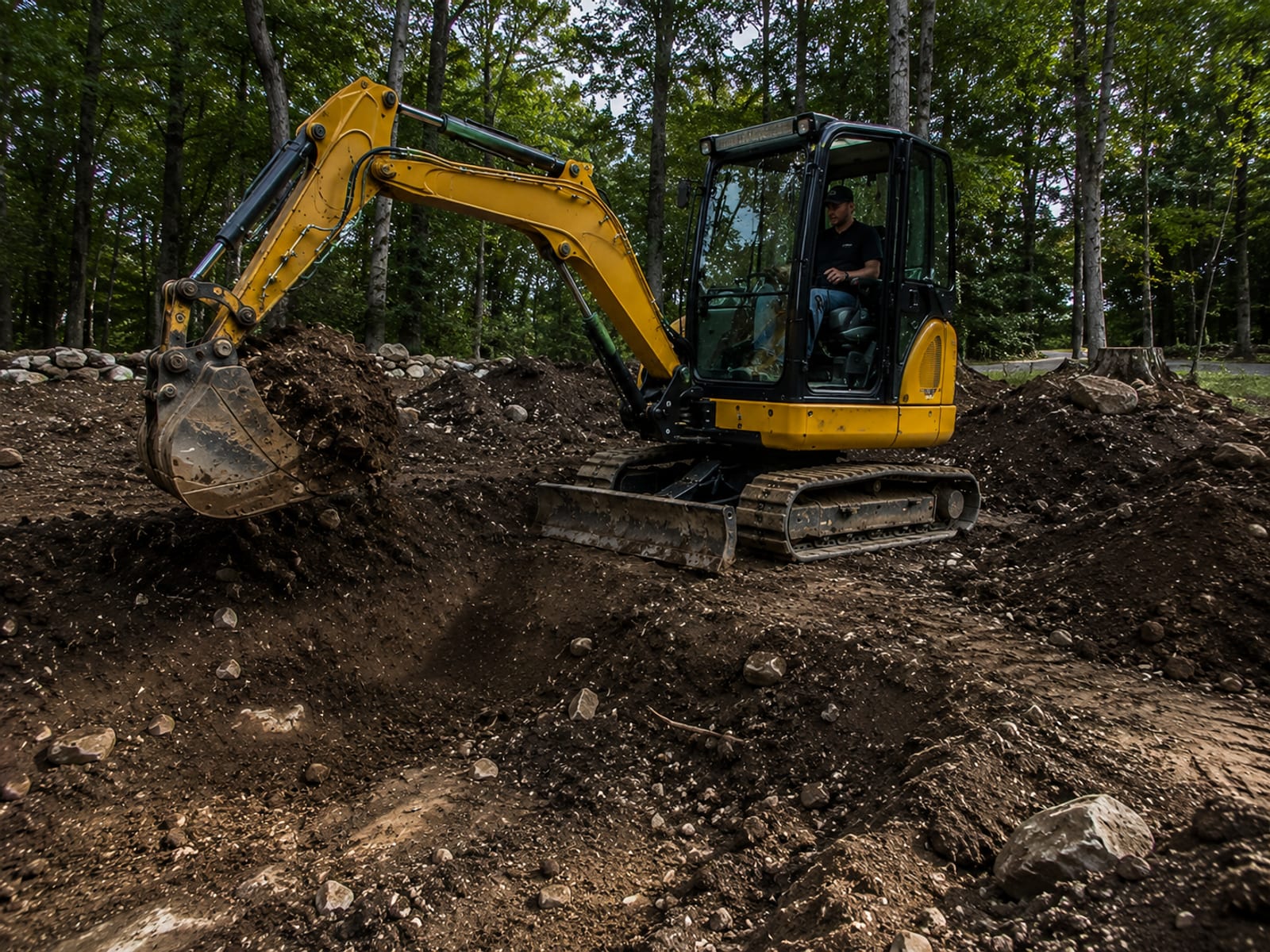
With the site prepared and utilities marked, the actual earth moving begins. Depending on the project, this may involve stripping topsoil for reuse, excavating to depth, removing rock or boulders, installing drainage pipe or structures, placing base material in compacted lifts, and shaping the final grade. Each of these steps affects the next one. Compaction, for example, is not just a finishing step; it's done in layers as fill is placed to prevent settlement later.
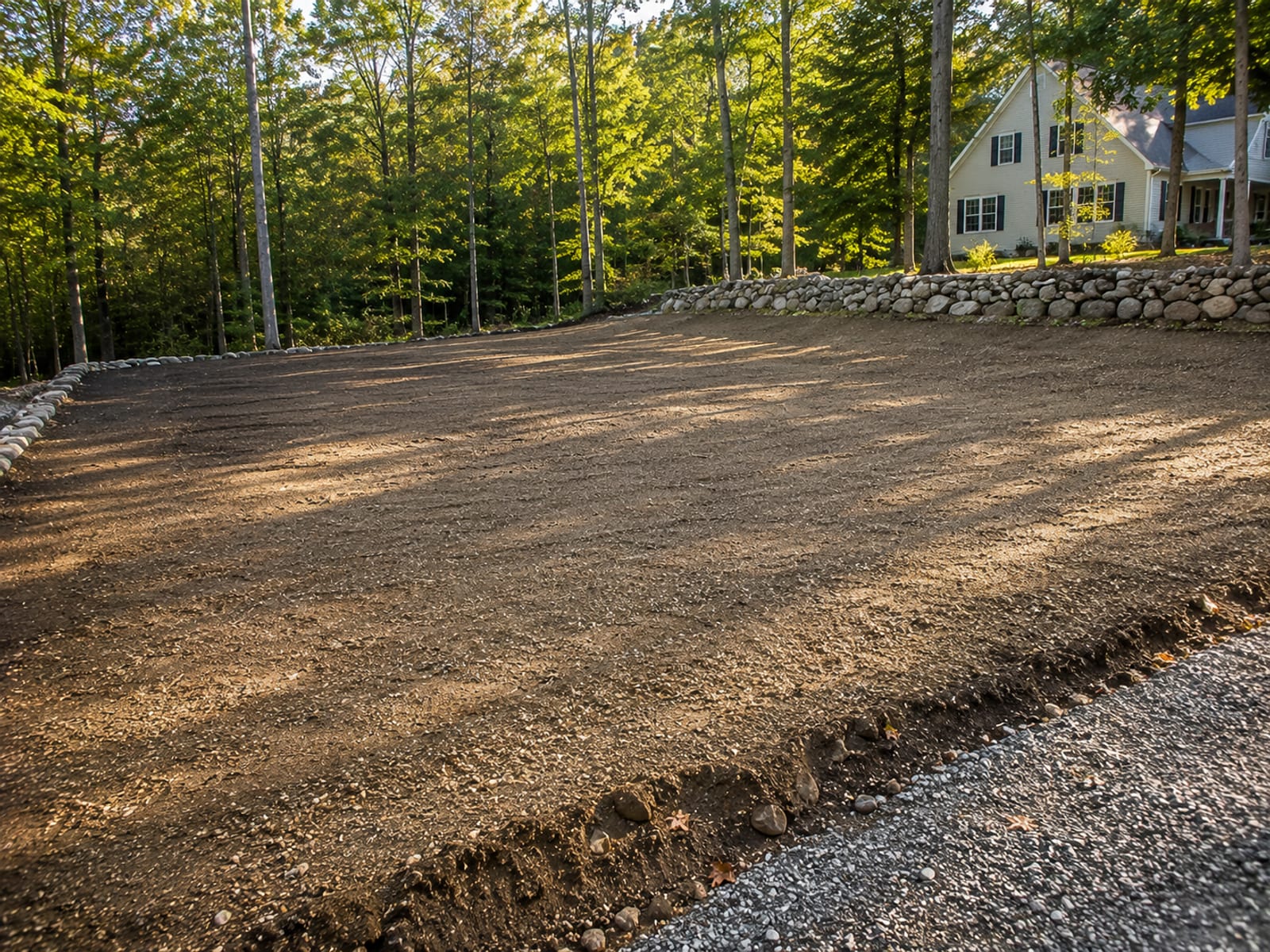
After the primary excavation and base work are complete, the site gets its final grading, erosion controls are checked or installed, and cleanup removes excess material, debris, and equipment tracks. The site should be left in a condition that matches what was described in the written scope.
Long-Term Strategy for Better Results
One of the most common ways CT homeowners end up disappointed with excavation work is by treating the project as a single isolated task rather than part of how the whole property works. Fixing a wet corner of the yard without looking at where the water comes from upstream often just moves the problem. Installing a driveway without thinking about how stormwater drains off it creates washout problems later. A contractor who thinks about the property as a system will give you better results than one who digs the hole and leaves.
The CT Stormwater Manual's performance criteria lay out the logic behind this clearly: stormwater management on a site is about where water enters, how it moves, and where it exits without causing damage. That's practical advice for any homeowner who wants the work they paid for to still be working five years from now.
Think about where water moves across your property in a heavy rain before the project starts. Talk to your contractor about what the finished grade will look like and where runoff will go. Ask whether the drainage solution being proposed handles the volume of water your site actually sees. A contractor who can answer those questions specifically is one who has thought about your property, not just the hole they're about to dig.
Common Pitfalls to Avoid
Getting residential excavation right comes down to avoiding a handful of predictable mistakes. These aren't rare or unusual situations; they're the things that come up repeatedly when homeowners reflect on what went wrong.
- Choosing based only on price: The cheapest quote often excludes grading, compaction, hauling, base material, or drainage. Always compare what's included, not just the bottom line.
- Skipping the utility markout: Not calling 811 or initiating a Call Before You Dig request before excavation is both dangerous and a legal issue in Connecticut.
- Ignoring drainage: Moving earth changes how water flows. A project without a drainage plan can send water toward a foundation, a neighbor's property, or a low yard area.
- Assuming no permit is needed: Many CT homeowners don't realize that driveway changes, retaining walls, drainage work near wetlands, or projects disturbing significant soil area may require local review before work begins.
- Accepting a vague estimate: An estimate that says "excavation and grading" without specifying materials, hauling, compaction, and cleanup is not a complete picture of what you're agreeing to.
- Treating site prep as separate from the finished project: The quality of what goes on top depends entirely on what was done underneath. Poor sub-base work and poor grading create visible problems eventually, even if the surface looks fine at first.
Frequently Asked Questions About Residential Excavation Services CT
What are residential excavation services?
Residential excavation services include digging, grading, trenching, drainage excavation, driveway excavation, site preparation, rock removal, and related ground work for home projects. The work often also includes base preparation, compaction, erosion control, and final grade restoration depending on the project type.
Do I need a permit for residential excavation in CT?
It depends on your town and the specifics of your project. Permits or reviews may be required for building work, driveway changes near a town road, drainage changes, projects near inland wetlands, retaining walls above a certain height, utility work, or projects disturbing larger areas of soil. Check with your local building or zoning office before work starts, and ask your contractor whether they're familiar with the permit requirements in your town.
Should utilities be marked before excavation?
Yes. Connecticut's Call Before You Dig program is a legal requirement before excavation begins. It notifies utility companies so underground gas, electric, water, and communications lines can be located and marked. Any contractor who starts digging without initiating this process is taking a serious risk with your property and your safety.
Why does drainage matter during excavation?
Excavation changes the shape of the ground, and that changes how water moves across your property. Poor grading can send runoff toward your foundation, across your driveway, into a low area of the yard, or onto a neighboring property. Proper drainage planning as part of the excavation scope helps the finished project hold up over time rather than creating new problems after the first heavy rain.
What should be included in an excavation estimate?
A solid estimate should spell out machine time, hauling and disposal, fill or stone material, base preparation, compaction, any drainage materials or structures, erosion controls, final grading, site cleanup, and restoration of disturbed areas. If permits or utility markouts are part of the scope, those should be referenced as well. If an estimate doesn't cover these items, ask why before signing anything.
How do I choose the right residential excavation contractor in CT?
Look for a contractor who carries insurance, has experience working with Connecticut's rocky and variable soil conditions, asks questions about your site before quoting, provides a written scope, knows the utility markout process, understands local permit requirements, and has the equipment to handle rock, steep slopes, and wet conditions. A contractor who handles clearing, grading, drainage, and rock removal without handing you off to a second or third crew will almost always give you a more consistent result.
Getting It Right the First Time
Getting residential site work done right in Connecticut means understanding that the ground here comes with its own rules. Rocky soil, wet seasons, variable drainage patterns, and local permit requirements all factor into how a project needs to be planned and executed. The homeowners who end up with the best outcomes are usually the ones who asked the right questions before work started: what's included in the estimate, how will drainage be handled, what happens if you hit rock, and what will the site look like when you're done.
When you get those answers in writing, with a clear scope that covers materials, hauling, compaction, drainage, and cleanup, you're protecting yourself from the kind of mid-project surprises that turn a reasonable budget into a stressful overrun. The work underneath matters as much as the finished surface above it, and skipping steps in site preparation almost always costs more to correct later than it would have to do correctly the first time.
Prestige Property Maintenance serves homeowners in Oxford, CT, Seymour, CT, and across the surrounding region with excavation, land clearing, forestry mulching, grading, drainage solutions, rock removal, retaining wall construction, driveway and roadway excavation, paving prep, trenching, stump grinding, tree removal, and erosion and sediment control. If your project needs one crew that can take the site from raw ground to ready-to-build, contact us to talk through what your property needs and get a written estimate that tells you exactly what you're paying for.
Related Articles
Excavation in Oxford CT: A Homeowner's Guide to Getting It Right
Oxford CT excavation covers more than digging. Here's what homeowners need to know about rock, permits, utilities, and getting the site done right.
Oxford CT Land Clearing Without the Budget Surprises
Prestige Property Maintenance offers land clearing in Oxford CT for homes, driveways, and build sites. One crew, clear pricing, and work that holds up long term.
Oxford CT Excavation Contractor: What to Look For
Hiring an excavation contractor in Oxford CT? This guide covers what to ask, what a solid estimate should include, and why local site experience makes all the difference.