Residential Grading & Leveling: Fix Your Yard's Slope
Kash CochranePublished Updated
- grading
- drainage
- yard leveling
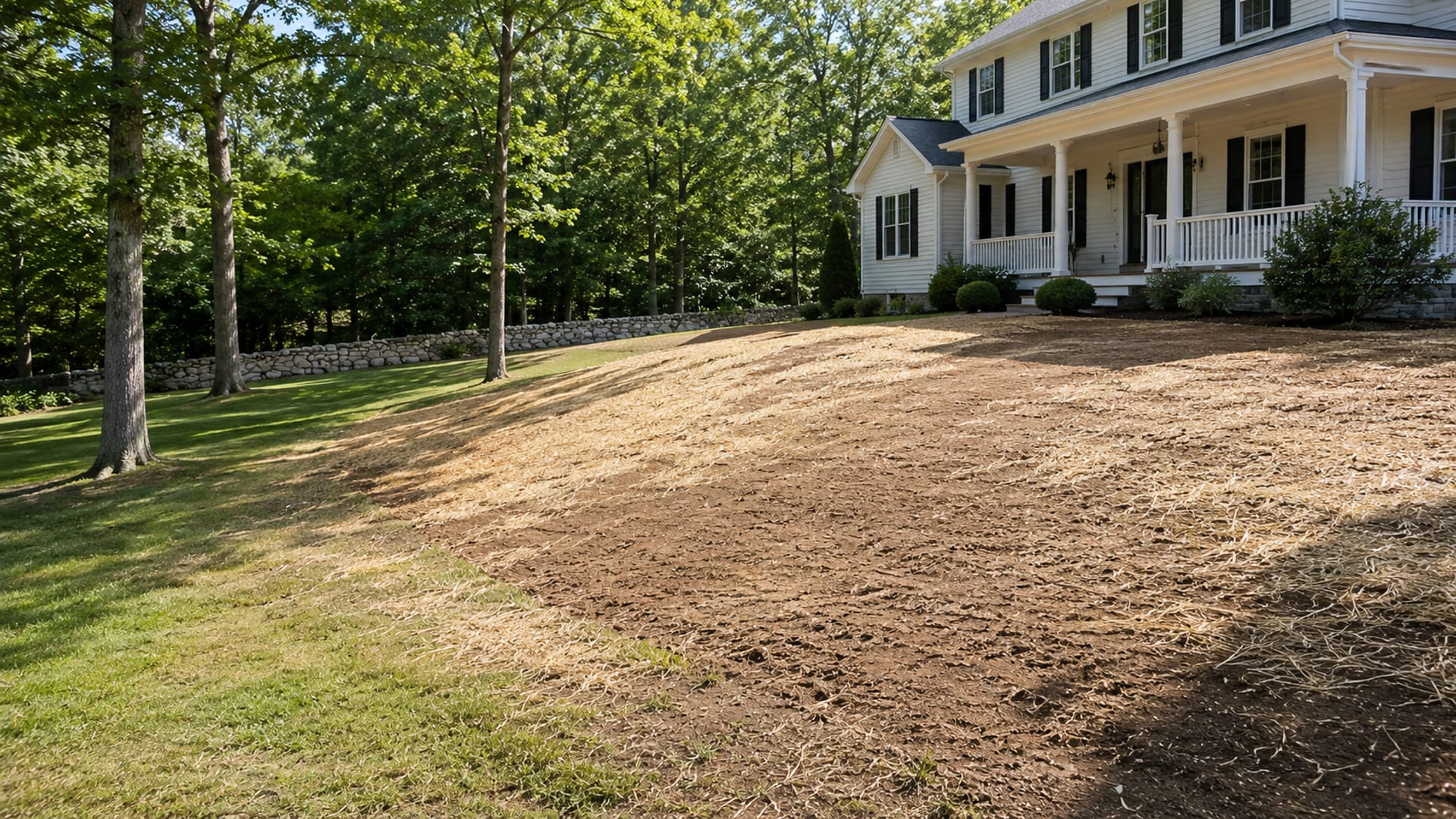
You've watched the water pool against the back of the house after every heavy rain. Maybe you've tried redirecting a downspout, thrown some topsoil at a low spot, or convinced yourself it would improve once the season changed. It didn't. Residential grading and leveling is often the answer homeowners arrive at after those smaller fixes fail, but figuring out what's actually wrong with the yard takes more than a bag of fill dirt and good intentions. The slope of your lot controls where water goes, and when that slope is working against you, no amount of surface patching will hold for long. Connecticut's weather doesn't help. Spring thaw, heavy rain events, and freeze-thaw cycles through the winter can expose grading problems that lay quiet during drier months, then suddenly turn a manageable wet spot into a soggy corner you can't ignore. What many homeowners don't realize is that a grading problem and a drainage problem often look identical from the outside, but they may need different solutions. Reading your yard correctly before any work starts is the difference between fixing the problem and just moving it somewhere new.
Key Takeaways
Grading is about water control
A yard should be shaped so runoff moves safely away from the home and problem areas.
Level does not always mean better
A perfectly flat yard may still hold water if it lacks proper pitch.
Drainage and grading often work together
Wet yards may need swales, drains, pipe runs, or catch basins along with reshaping.
Connecticut soil creates challenges
Rock, clay pockets, slopes, and freeze-thaw cycles can affect grading work.
Disturbed soil must be stabilized
Erosion and sediment control help prevent runoff problems during and after the project.
A good contractor checks the whole site
Access, utilities, slope, soil, structures, wells, septic systems, and water discharge all matter.
Why Residential Grading and Leveling Matters
The shape of the ground under your feet controls where water goes when it rains. That sounds simple, but the consequences of getting it wrong can show up slowly over time in ways that are hard to trace back to the yard. Water moving toward the foundation, sitting against a garage slab, or draining across a driveway base doesn't announce itself as a grading problem. It just keeps showing up, storm after storm, until the damage is visible enough to take seriously.
In Connecticut, stormwater management starts at the lot level. When a yard lacks the right pitch, runoff can travel toward structures, collect in low areas, cross neighboring properties, or saturate the soil near the foundation in ways that get worse over time. Spring thaw and heavy summer rain are the two moments most Connecticut homeowners notice this, but the slope problem exists year-round. Getting the grade right is the starting point for controlling where that water actually goes.
Grading Protects Everything Built on Top of It
A lawn, patio, retaining wall, or driveway can fail earlier than it should when the ground under it isn't shaped correctly. Driveways need proper base preparation and slope so water doesn't pool or wash away the gravel. Retaining walls need grading behind and around them to manage pressure from saturated soil. Patios need enough pitch to send water off the surface. If the site isn't graded correctly before construction starts, water finds its way into the foundation of whatever gets built, and the structure pays for it over time.
Signs Your Yard Needs Grading or Leveling
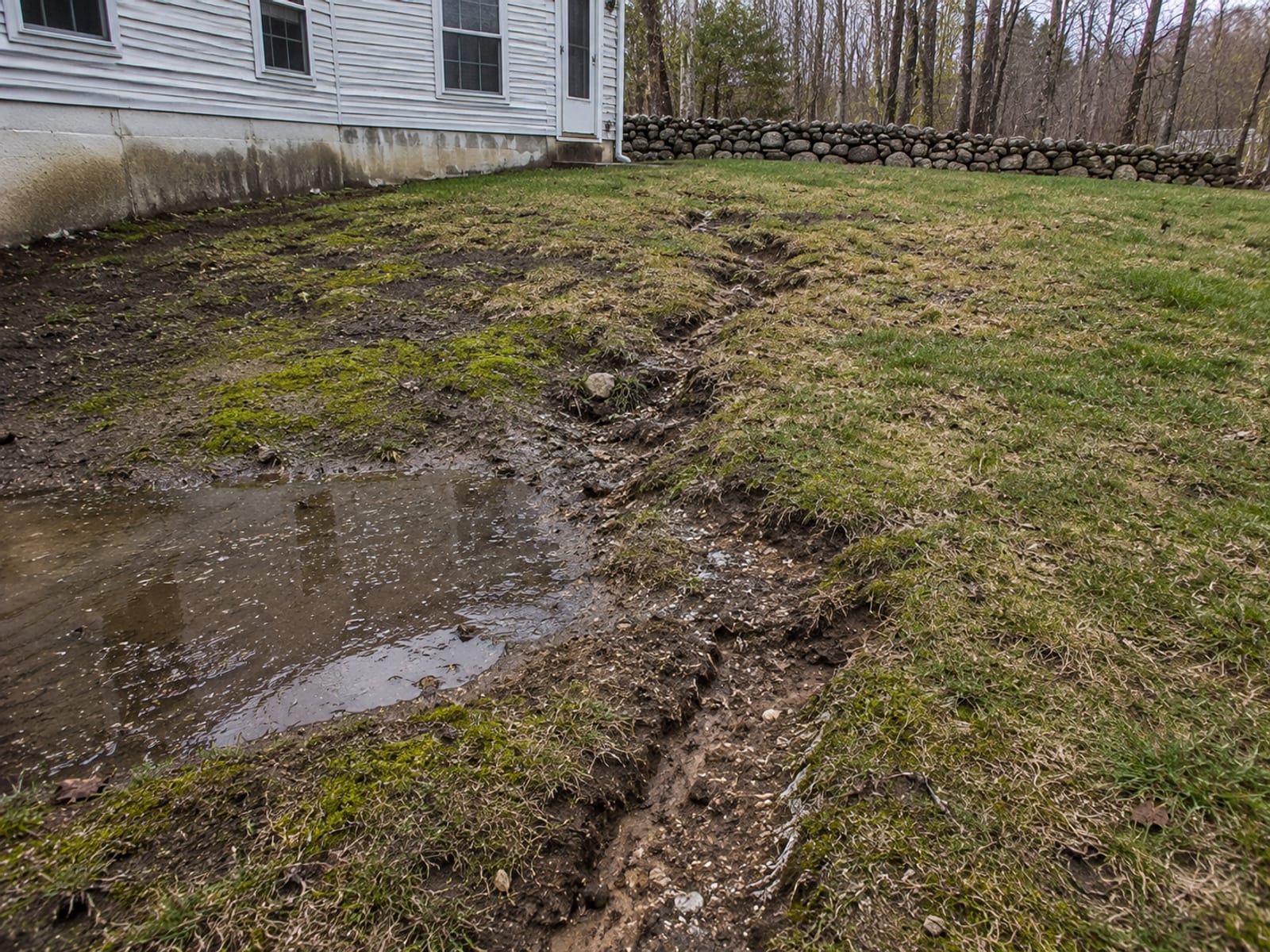
Most homeowners don't start researching a grading contractor because they've read about proper slope ratios. They start searching because something is visibly wrong. The yard is too wet, the soil keeps washing away, or there's a corner of the lawn that turns muddy after any significant rain. These are real signals, and learning to read them the way a contractor reads them can help you describe the problem accurately when you call for an estimate.
Not every wet yard has the same root cause. Some problems come from poor slope. Some come from a yard that has the right overall pitch but nowhere for water to go once it reaches the low point. Some lots in the Naugatuck Valley have enough buried rock that reshaping the surface only tells part of the story. The visible symptoms are the starting point, not the diagnosis.
Standing Water or Wet Spots
Low spots that hold water after rain may need grading, drainage, or both. If the yard pools regularly and takes days to dry out, it may not have enough pitch to move water off the surface, or it may have a defined low point with no outlet. According to Connecticut stormwater performance standards, surface drainage needs to move water to a safe point of discharge. When that outlet doesn't exist or isn't working, the water just sits.
A yard that drains slowly after light rain but stays flooded after heavy storms may be a grading problem layered on top of a soil problem. Clay soil, which is common across much of Connecticut, slows water absorption significantly. Grading can help move surface water off the yard faster, but if the soil underneath can't absorb what remains, a drainage solution like a French drain, catch basin, or pipe run may be needed alongside the regrading work.
Erosion and Soil Washout
If mulch, topsoil, or gravel migrates downhill during storms, the slope is too steep, the surface material is wrong, or the yard lacks a way to slow water velocity as it moves. Connecticut DEEP's erosion and sediment control guidelines are clear that disturbed or poorly stabilized soil can carry sediment into storm drains, roadways, and neighboring properties. Erosion on a residential lot isn't just a yard problem. It's a stormwater problem with a wider reach.
Yard erosion repair often involves reshaping the slope to reduce water velocity, installing swales or stone-lined channels to redirect flow, and stabilizing the surface with seed, mulch, or erosion matting. In some cases, a retaining wall may be the right long-term answer for a slope that's too steep to stabilize with grading alone.
Grading Versus Leveling: What's the Difference
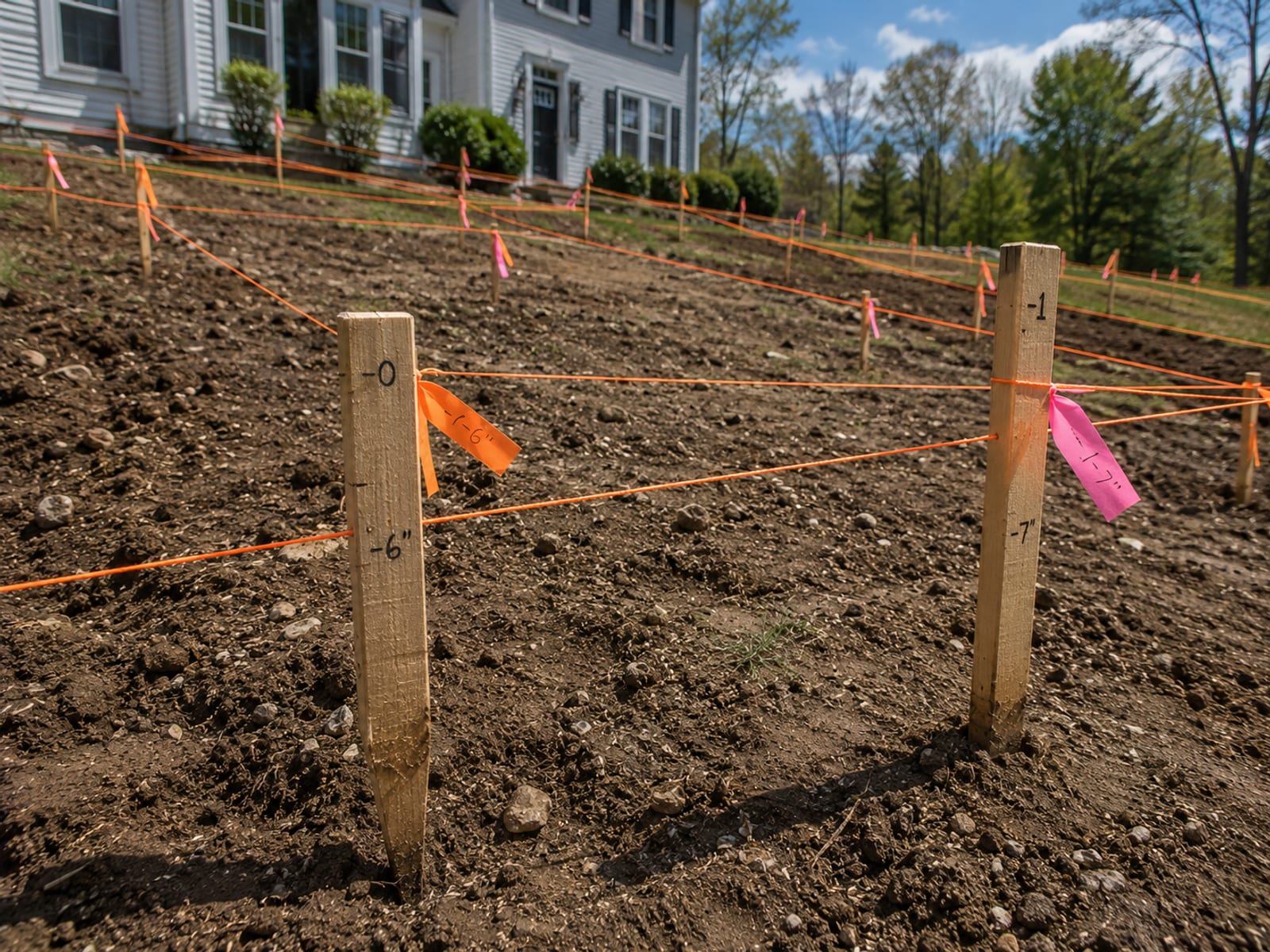
These two terms get used interchangeably by homeowners, but they describe different goals. Grading shapes the land so water moves in the right direction. Leveling creates a more even, usable surface. The two often happen together, but the priority changes depending on what the yard needs.
A yard can look level and still drain poorly. A flat surface with no pitch holds water rather than moving it. On the other hand, a yard with some slope can be perfectly functional even if it isn't perfectly even. The goal isn't a billiard table. The goal is a stable surface that water moves across predictably rather than pooling, eroding, or running somewhere it shouldn't.
Grading for Drainage
Grading for drainage focuses on slope correction and water movement. This work may involve reshaping the rough grade across a larger portion of the yard, building swales to direct flow, correcting pitch near the foundation, or creating a channel for water to reach a safe discharge point. Finish grading alone isn't enough when the underlying slope is sending water the wrong direction, so a contractor needs to think about the full path water will travel after the work is done.
On rocky Connecticut lots, this work can be harder than it looks from the surface. Buried boulders and ledge can limit how much the grade can be changed without rock removal or blasting. A contractor who has worked on Naugatuck Valley properties understands that the soil you see is only part of the story, and the estimate should reflect what's underground, not just what's visible.
Leveling for Usability
Backyard leveling may be needed when a homeowner wants to create a usable lawn area, prepare for a patio, install a shed, improve mowing conditions, or restore disturbed ground after stump grinding or utility trenching. The goal here is a smoother, more functional surface rather than fixing a major drainage direction problem. This work can involve cutting high spots, filling low spots, bringing in topsoil, and seeding the restored surface.
Even in leveling work, some pitch is typically left in the surface to prevent water from pooling. A good grading contractor won't just make the ground flat. They'll leave it draining in a direction that makes sense for the rest of the property.
Permits, Utilities, and Erosion Control
Before any grading work begins, there are practical requirements that affect both the contractor and the homeowner. These aren't just formalities. They protect the property, the neighbors, and the quality of the finished work. Skipping this part of the process is one of the more common ways a grading project goes sideways before the first bucket of dirt moves.
Connecticut regulates construction stormwater through the Construction General Permit, which applies to projects that disturb soil above certain thresholds. Residential grading projects that involve larger areas, wetland proximity, drainage changes, or retaining wall work may require local review or permits depending on the town. Oxford and surrounding Naugatuck Valley towns each have their own thresholds, so it's worth confirming with the municipality before work starts.
Utility Markouts
Any grading project that involves digging, trenching, or drainage installation needs utility markouts before a machine touches the ground. Connecticut's Call Before You Dig system coordinates with utilities to mark underground lines, including gas, electric, water, and telecommunications. This step isn't optional, and a contractor who doesn't mention it before excavation work begins is worth asking harder questions of.
On residential properties with private wells or septic systems, the contractor also needs to know where those systems are located before any earth moving starts. Grading near a septic system or drain field requires careful planning to avoid disrupting the system or changing how water flows around it.
Erosion and Sediment Control During the Project
Whenever soil is disturbed, there's a window of time where it's vulnerable to washing into roads, storm drains, waterways, and neighboring properties. UConn NEMO's soil erosion guidance describes how construction-period sediment movement is one of the most common stormwater problems at the residential scale. Good practice during a grading project includes silt fence at the downslope edge, a stabilized construction entrance, and temporary seeding or mulch cover on disturbed areas that won't be worked immediately.
This isn't just a regulatory consideration. It's a practical one. A yard that's regraded in the fall and left bare through a wet winter can lose topsoil faster than the grade work improved it. Asking the contractor what stabilization is included in the scope is a reasonable question before work begins.
The Residential Grading Process
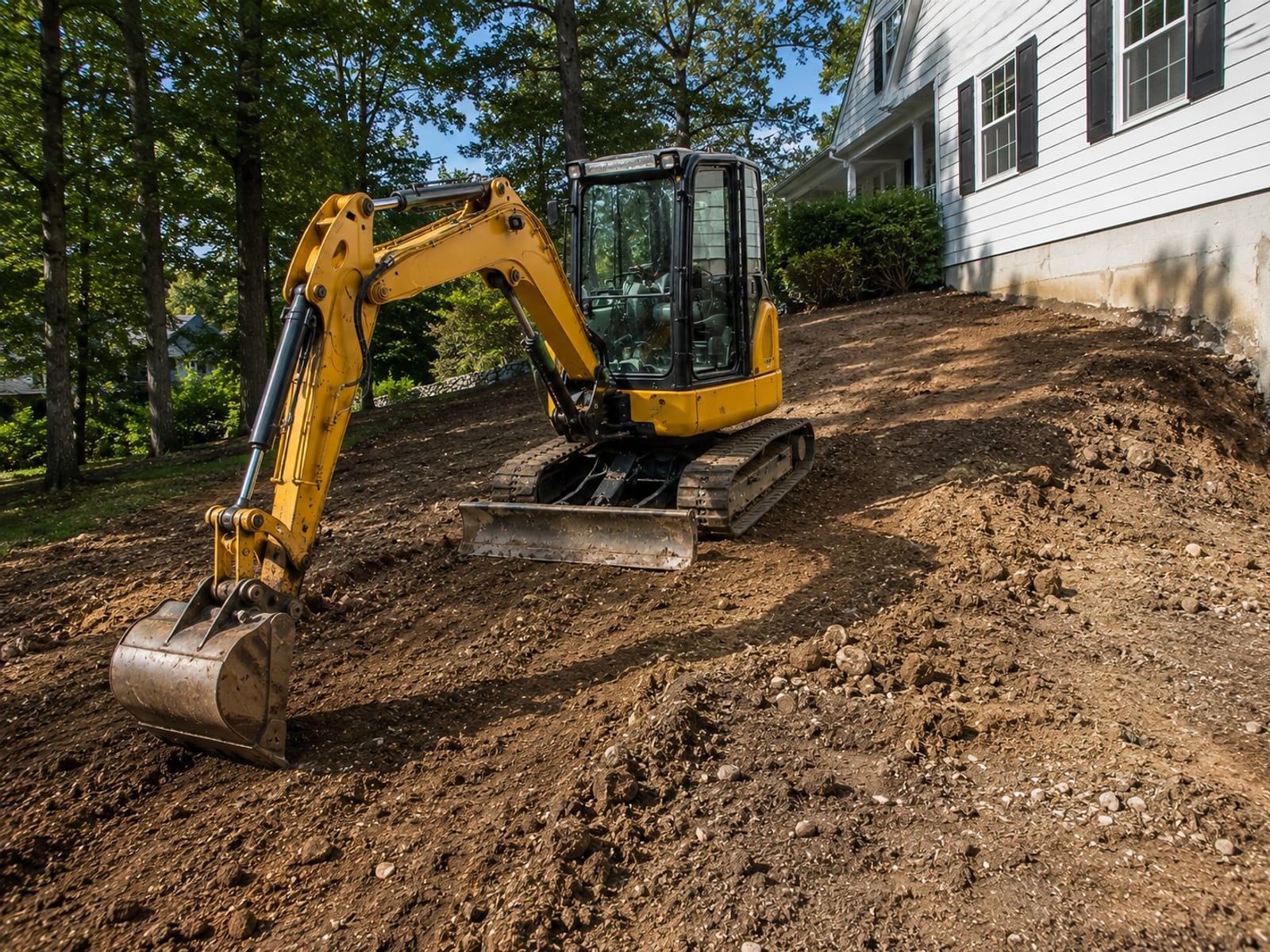
Understanding what a professional grading project actually looks like can help homeowners know what to expect, ask better questions during the estimate, and recognize whether a contractor is cutting corners. The process is straightforward in concept, but site conditions in Connecticut often add layers that need to be accounted for before any equipment arrives.
A grading project isn't just moving dirt until the surface looks better. It involves reading the site, planning where material goes, understanding what the end use of the yard will be, and making sure the finished grade connects logically to everything around it, including the house, the driveway, neighboring lots, and any drainage systems already on the property. The two steps below cover how that typically unfolds on a residential lot.
Step 1: Site Assessment
The first step is a thorough site review. A contractor looking at a wet yard or sloped yard should be asking about more than just the surface. Slope direction, soil type, access for equipment, proximity to utilities, septic system location, well location, existing drainage structures, nearby retaining walls, trees that may need to be worked around, and the intended final use of the yard all affect how the work should be approached.
This is also where a contractor can tell the difference between a property that needs grading alone and one where drainage work will be part of the answer. If the yard can be shaped to move water toward a natural outlet, grading may solve the problem. If there's no good outlet and the low point is a foundation wall or a neighbor's fence line, a pipe run, catch basin, or swale will need to be part of the plan.
Step 2: Earth Moving, Shaping, and Stabilization
Once the plan is clear, the actual work involves reshaping the ground, moving or bringing in material where needed, and compacting areas that will carry load or need to hold their shape over time. Compacted fill is different from topsoil. A driveway base, patio subgrade, and retaining wall backfill each need structural fill compacted in lifts. A lawn restoration area needs finished topsoil over the rough grade. Using the wrong material in the wrong place is one of the more common reasons grading work fails over time.
After the rough grade is set and drainage improvements are installed, disturbed areas get stabilized. Lawn restoration typically involves finish topsoil, seed, and straw or erosion matting to hold the surface until grass establishes. This is also when any remaining erosion control measures are addressed before the project closes out.
Long-Term Strategy for a Better Yard
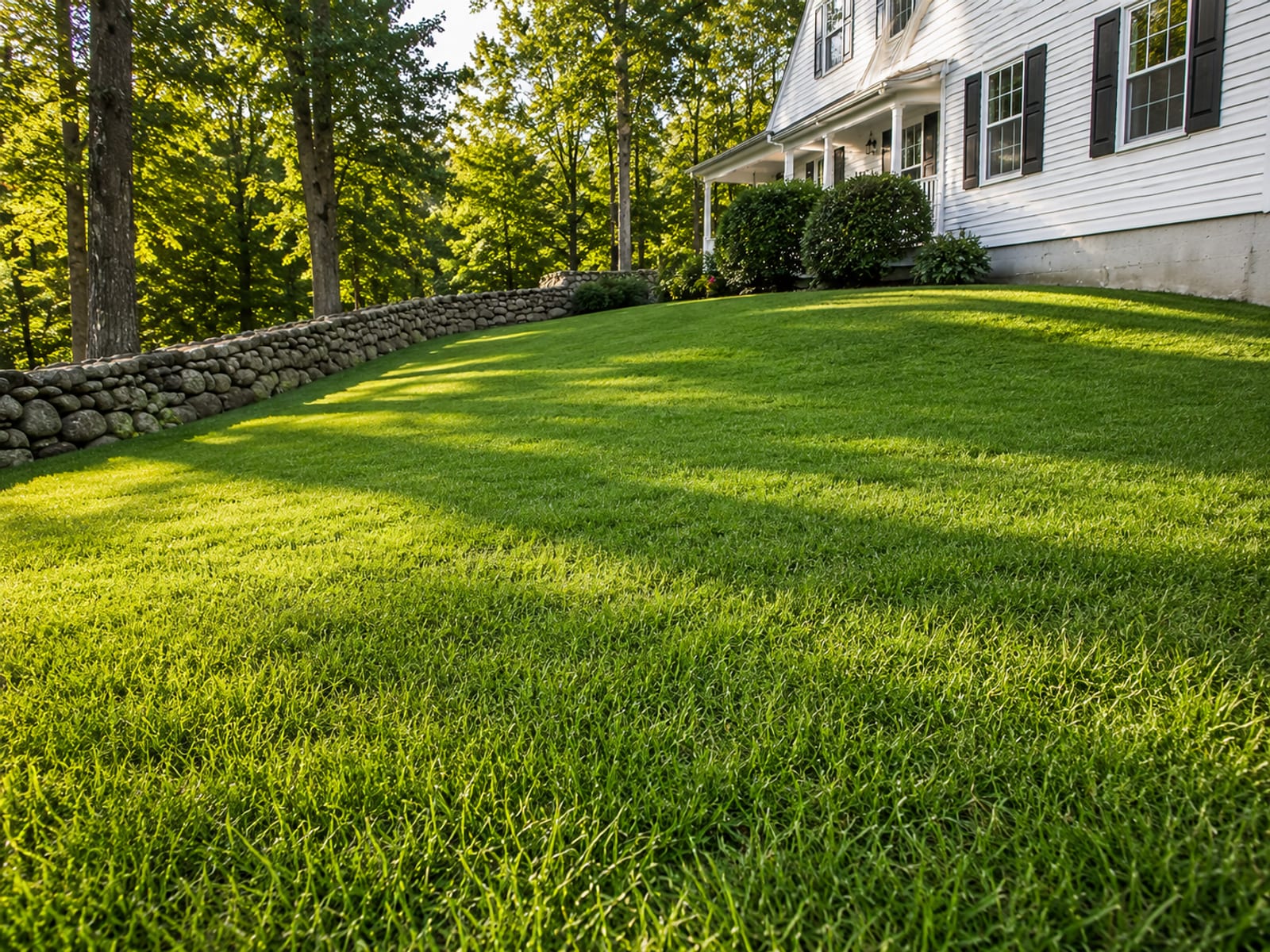
The best residential grading and leveling outcomes come from thinking about the property as a connected system rather than a collection of individual problems. A yard that gets regraded without a plan for where water goes next can look better temporarily while sending runoff toward the foundation, the driveway base, or a neighbor's yard. Reshaping the ground is the beginning, not the end.
Homeowners planning grading work should ask their contractor four direct questions: Where will water go after this work is done? What fill material will be used and why? What compaction is involved? And what restoration is included before the project closes out? A contractor who answers those questions clearly has thought through the project the right way.
Common Pitfalls to Avoid
Yard slope correction done without a discharge plan is the most common way grading creates new problems. A slope that used to send water to a low corner may, after regrading, send it toward the house instead if the new pitch isn't planned carefully. Other common mistakes include making the yard too flat, using unsuitable fill that settles or doesn't drain, skipping compaction under load-bearing areas, leaving disturbed soil bare through a wet season, and grading toward the foundation rather than away from it.
Choosing a grading estimate based on price alone is another place homeowners can end up disappointed. A quote that doesn't include stabilization, restoration, or drainage consideration may look cheaper at the start but require a second project to address what the first one missed.
Frequently Asked Questions About Residential Grading and Leveling
What is residential grading and leveling?
It is the process of reshaping and smoothing a yard so the land is more usable and water drains properly. Grading controls water direction by creating the right slope. Leveling improves the evenness of the surface for usability. Most residential projects involve some combination of both, depending on what the site requires.
Is grading the same as leveling?
No. Grading shapes the yard so water moves in the right direction. Leveling creates a more even surface. A yard can look level and still drain poorly if there isn't enough pitch built into it. A grading contractor will typically address both slope and surface during the same project.
Can grading fix standing water in my yard?
Sometimes. If the water pools because the yard lacks pitch or sends water to a low spot with no outlet, regrading may help significantly. If the yard has the right slope but water has nowhere to safely discharge, drainage solutions such as catch basins, pipe runs, or French drains may also be needed. The two problems often show up together.
Do I need a permit to grade my yard in Connecticut?
It depends on the town and the scope of the project. Projects that disturb larger areas of soil, involve wetlands proximity, change drainage patterns, include retaining wall construction, or affect a driveway may require local review or permits. The Connecticut Construction General Permit also applies to projects above certain disturbance thresholds. Checking with your municipality before work starts is the right move.
Will grading damage my lawn?
Grading disturbs soil by nature. A well-planned project should include a clear explanation of what lawn restoration looks like, including finish topsoil, seed, stabilization, and cleanup. Ask about this before the work starts so you know what's included in the scope.
How do I know if I need grading, drainage, or both?
A site assessment is the best way to find out. If water pools because the yard lacks slope, grading may be the primary answer. If the yard has decent slope but water collects at the low point with nowhere to go, drainage work is likely part of the solution. Many Connecticut properties need both, particularly on sloped lots with rocky soil that limits how much the grade can be changed on its own.
How do I choose the right grading contractor?
Look for a contractor who evaluates slope, drainage paths, soil conditions, equipment access, utilities, septic and well locations, and what the yard will be used for after the work is done. The estimate should cover the grading plan, the material being used, any drainage improvements, and how disturbed areas will be stabilized and restored. A contractor who handles excavation, grading, and drainage as connected parts of the same project is better positioned to address what the yard actually needs.
Final Thoughts
Residential grading and leveling is one of those projects that looks straightforward until you start asking the right questions. The slope of your yard controls more than you might expect, from how long water sits against your foundation to whether a patio base holds up over time. Getting the grade right means understanding water movement across the whole property, not just filling a low spot or pushing dirt toward the fence line. When grading and drainage are planned together, the result is a yard that actually functions through a Connecticut spring rather than one that just looks better in dry weather.
A yard that drains correctly is easier to maintain, more usable, and less likely to develop the kind of moisture problems that are expensive to address once they've worked their way inside a foundation or under a slab. The work done above grade protects what's happening below it, and that payoff compounds over time.
At Prestige Property Maintenance, based in Oxford, CT, we work on exactly the kind of properties this article describes: sloped Naugatuck Valley lots with rocky soil, drainage situations that need more than a graded surface, and homeowners who have already tried the simpler fixes and are ready for the real answer. Our work spans excavation, grading, drainage, retaining wall construction, earth moving, erosion and sediment control, site preparation, trenching, and land clearing, so we can look at what your yard is doing and address the full picture, not just the most visible part of it. If you've been watching the water and wondering whether it's time to call, we're ready to take a look. Reach out to schedule a site visit and get a straight answer about what your yard actually needs.
Related Articles
Grading in Bethany, CT: Taming a Sloped, Wooded Yard
No flat ground and runoff carving channels every spring? Here is what grading in Bethany, CT actually involves on a wooded, sloped property like yours.
Stop the Washout: Erosion Control and Grading in Oxford CT
Oxford CT homeowners: erosion control starts with grading, not just seed and silt fence. See how Prestige Property Maintenance fixes the real source of runoff damage.
Level Uneven Yards With Expert Excavation in Oxford, CT
Standing water, rough slopes, and bumpy lawns need more than topsoil. Learn how yard leveling in Oxford, CT works when excavation and drainage are involved.