Retaining Wall Excavation: Get the Groundwork Right
Kash CochranePublished Updated
- retaining walls
- grading
- drainage
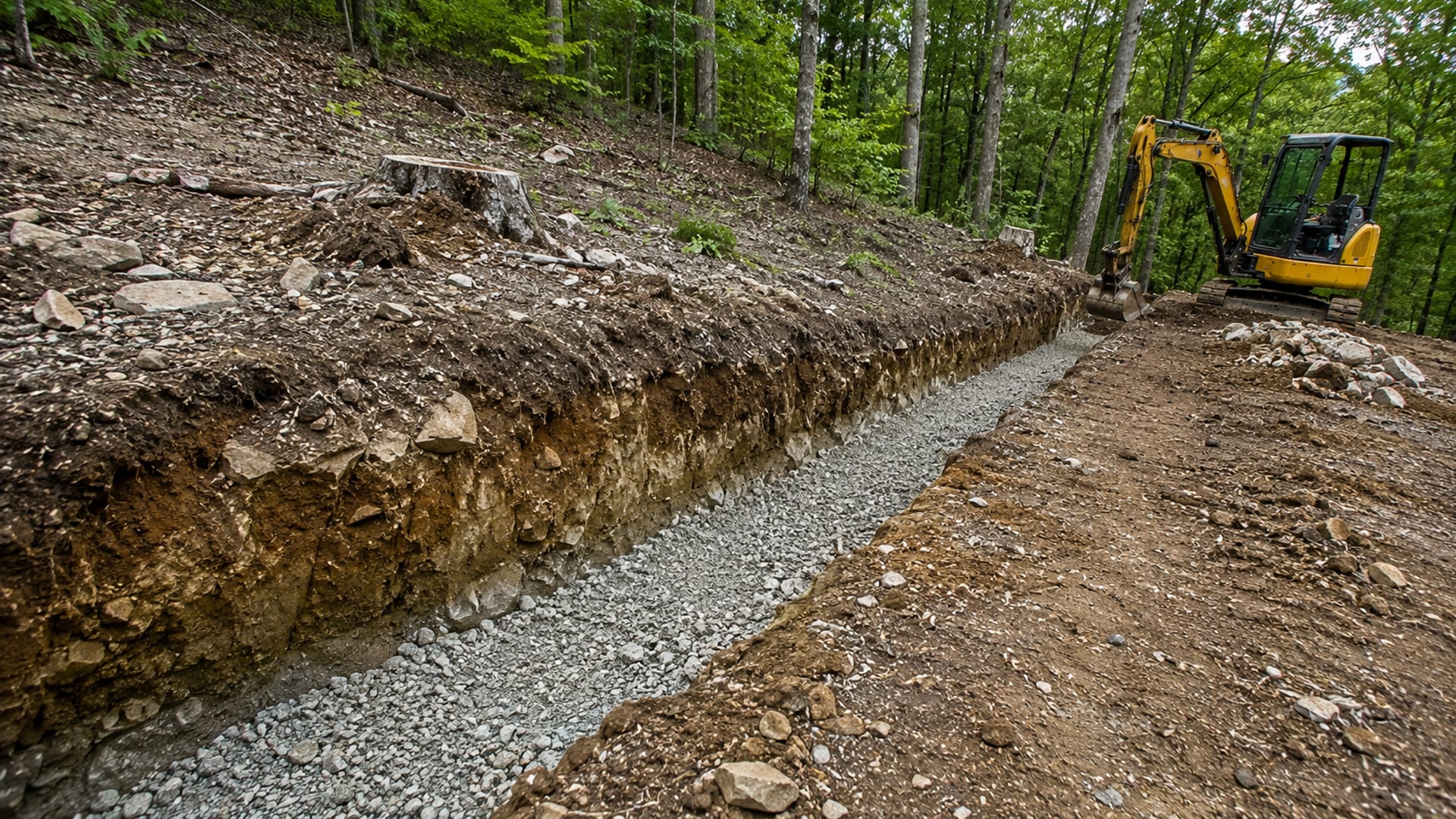
Retaining wall excavation is the part of the job that most homeowners never see, and that's exactly why it causes so many problems down the road. You can pick the best-looking block, hire someone who charges a fair price, and still end up with a wall that leans after three winters, because the work that actually holds everything together happens underground. If you're standing at the edge of a slope on your Connecticut property, looking at a wall that's starting to push outward or a yard that keeps washing out, you probably already know something went wrong below the surface. The frustrating part is that most of the information out there either buries you in engineering specs or stays too vague to actually help. What you really want to know is whether the contractor you're about to call understands what's happening under your yard, not just what's going on at face level. That question matters more than material selection, more than aesthetics, and more than the price on the estimate. The wall you can see is not the wall that matters most.
Key Takeaways
The base matters most
A retaining wall needs a properly excavated and compacted base to reduce settling and movement over time.
Drainage is not optional
Water trapped behind a wall increases pressure and can lead to leaning, bulging, or outright failure.
Connecticut soil adds complexity
Rocky glacial soil, buried boulders, clay pockets, and freeze-thaw cycles can all affect excavation depth, access, and cost.
Permits may be required
Wall height, location, wetlands proximity, drainage changes, and total soil disturbance can all trigger local review.
Utility markouts protect everyone
Digging near yards, driveways, and structures may require contacting Connecticut's Call Before You Dig system before work begins.
A retaining wall is a site-work project
Excavation, grading, drainage, backfill, compaction, and cleanup all affect whether the finished wall holds up or falls short.
Why Retaining Wall Excavation Matters
Most people think about a retaining wall in terms of what they can see: the block, the stone, the timber, the finish. But a wall's long-term performance depends almost entirely on what gets buried before the first course goes in. The work done below and behind the wall, including base preparation, drainage planning, backfill selection, and compaction, determines whether the structure handles soil pressure, water movement, and freeze-thaw stress year after year. Skipping or cutting corners on any of those steps doesn't show up right away, which is part of what makes it so easy for contractors and homeowners alike to underestimate how much they matter.
The Hidden Work Supports the Visible Wall
Retaining wall excavation creates the space for everything the wall depends on: a level, compacted base; drainage stone behind the block; perforated pipe where water needs to move; filter fabric to keep fines out of the drainage zone; and properly graded backfill that won't push the wall out of position. According to the National Concrete Masonry Association's segmental retaining wall best practices guide, proper base preparation and drainage are among the most critical factors in wall performance. When those steps are done well, the wall above them handles soil pressure the way it was designed to. When they're skipped or rushed, the wall above them starts to move, and no amount of good-looking block changes that outcome.
Connecticut Soil Can Work Against You
Connecticut properties often include conditions that make retaining wall site preparation more demanding than in many other parts of the country. Glacial deposits left behind rocky soil, buried boulders, and clay pockets that don't drain well and don't compact predictably. Slopes can concentrate spring runoff directly behind a wall. Clay-heavy soil holds water rather than letting it pass through, which increases the pressure on whatever is holding the hillside back. And the freeze-thaw cycles that hit Oxford and the surrounding area every winter can expand trapped moisture, shift base material, and push a wall out of alignment over several seasons. These aren't theoretical risks. They're conditions that show up regularly in real Connecticut yards, and they're part of why excavation decisions that might be straightforward somewhere else require more careful evaluation here.
Warning Signs the Groundwork Wasn't Done Right
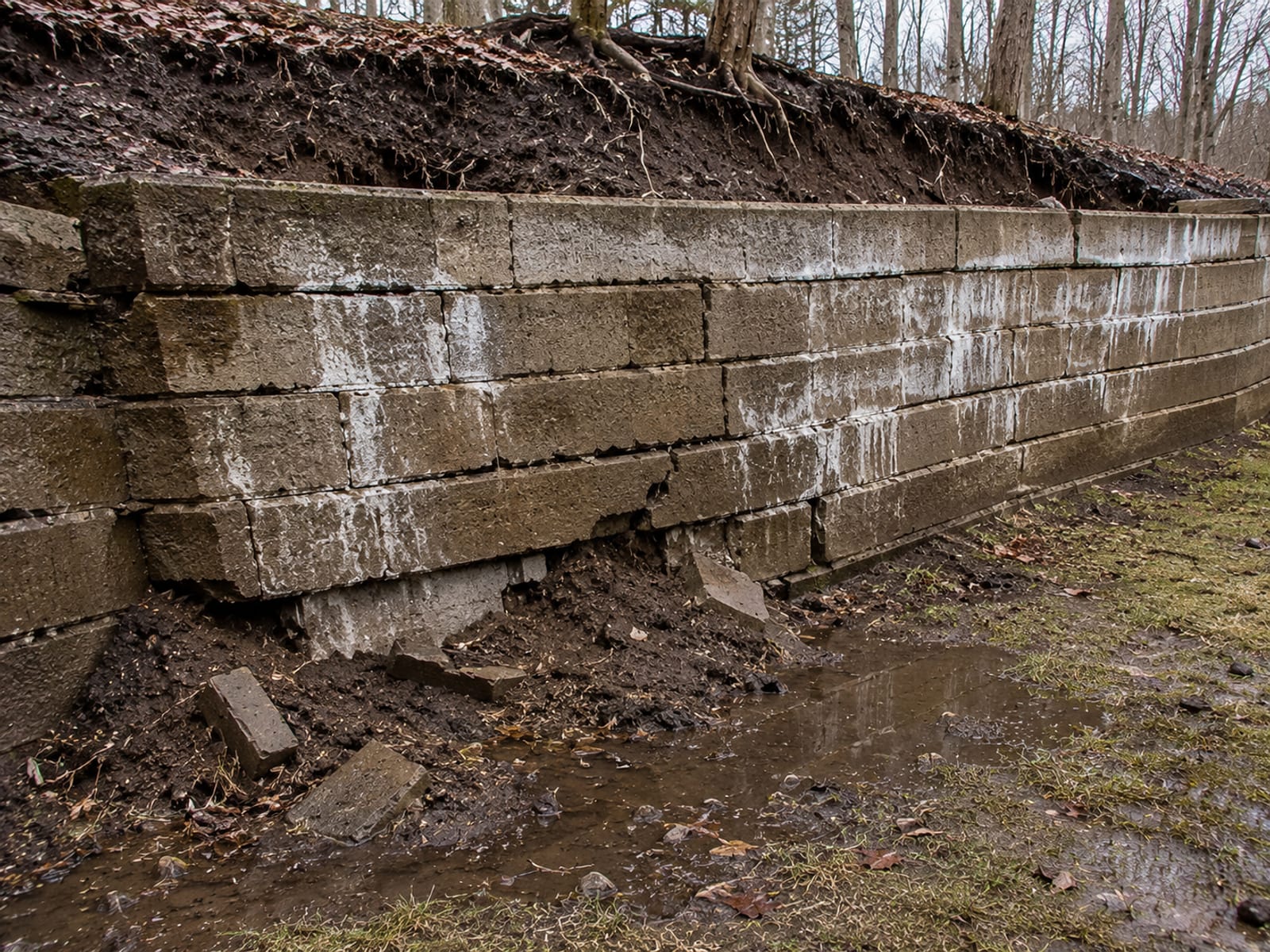
A wall that's starting to show problems is usually telling you something about what happened during excavation, not just about the wall itself. Most retaining wall failures trace back to decisions made before the first block was ever placed, which means that understanding the warning signs also means understanding what the excavation should have included. Recognizing these signs early can help you address a failing wall before the repair becomes significantly more involved than the original build would have been.
Leaning or Bulging Wall
A leaning or bulging retaining wall is one of the most common signs that something went wrong underground. Outward movement typically points to one of a few root causes: poor base preparation that allowed the bottom course to shift, inadequate drainage that let water pressure build up behind the wall, improper backfill that created uneven loading, or a combination of all three. In Connecticut's rocky soil, a base that wasn't excavated to a consistent depth can also leave the wall sitting unevenly from the start, and freeze-thaw movement can accelerate that lean over time. A leaning retaining wall isn't just an aesthetic issue. It's a sign of a structural problem that tends to get worse, not better, without addressing what's happening behind and below it.
Water Collecting Behind the Wall
Water is one of the most consistent causes of retaining wall failure. When water gets trapped behind a wall rather than draining away from it, the hydrostatic pressure that builds up can push the wall outward, cause settlement at the base, and accelerate erosion of the backfill material. Signs of drainage problems include soil washing out from the base or between courses, water staining on the wall face, puddles forming at the base after rain, and soft or saturated ground near the foundation zone. If you're seeing these signs on an existing wall, or if you're planning a new wall on a slope that regularly holds water, drainage is not something to negotiate away from a bid.
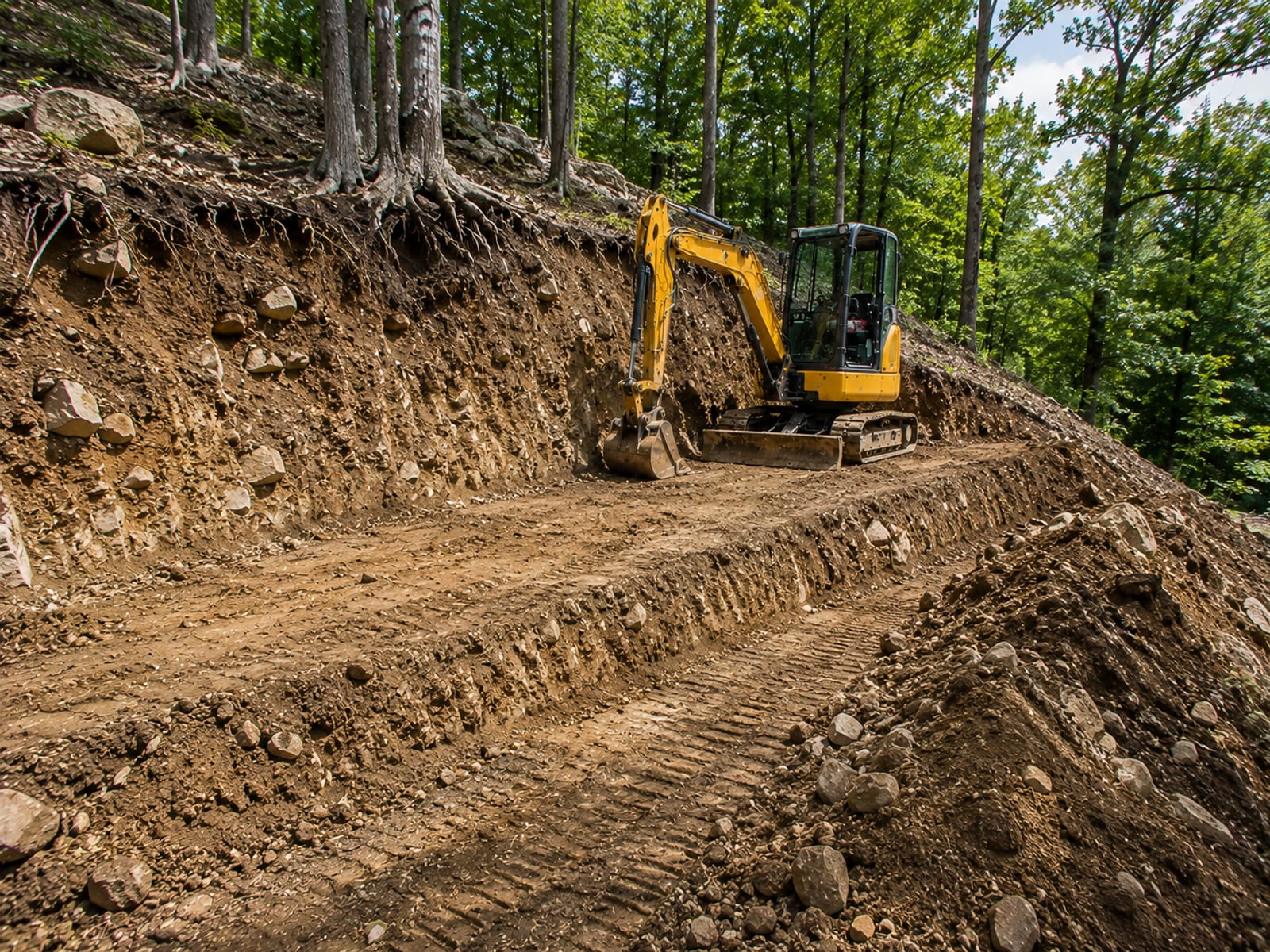
Key Excavation Considerations for Connecticut Properties
Retaining wall excavation involves more than cutting into a slope and setting block. It requires a site-specific approach that accounts for wall height and type, existing soil conditions, water movement patterns, access constraints, utility locations, and the final grading plan once the wall is in place. The right approach looks different depending on whether you're dealing with a dry hillside behind a patio, a wet slope near a driveway edge, or a yard where spring runoff has been washing out the same area for years. Getting these details right upfront is what separates a wall that handles five winters without a problem from one that starts showing movement by the second.
Base Preparation: The Foundation Beneath the Foundation
Retaining wall base preparation begins with excavating to a depth and width appropriate for the wall type, height, soil conditions, and design requirements for that specific wall system. A stable base typically requires removing loose or unstable material, bringing in compacted aggregate, and establishing a level starting course before any block or stone goes in. The exact depth varies based on site conditions, wall height, and soil type, which is why a contractor who looks at your specific slope and soil is giving you more useful information than any general number from a resource that doesn't know your yard. In Connecticut, rocky soil and clay pockets can change the base excavation significantly. A boulder that sits right where the base trench needs to go changes the entire approach, and a contractor who hasn't done retaining wall rock removal in this region may not account for that until they're already on-site.
Drainage and Backfill: What Goes Behind the Wall
Drainage behind a retaining wall typically involves clean crushed stone placed directly behind the block, a perforated pipe where water volume warrants it, filter fabric to prevent fine soil from migrating into the drainage stone and clogging it over time, and a planned outlet that actually gets the water somewhere. Connecticut's stormwater management standards recognize that managing water movement on slopes requires both structural and drainage solutions working together. Proper backfill means using material that compacts well, drains appropriately, and doesn't add unnecessary lateral pressure to the wall. Using clay soil dug from behind the wall and placed right back can undo good drainage work by holding water in the zone where you most need it to move.
Permits, Utilities, and Site Rules
Retaining wall projects in Connecticut can trigger requirements that go well beyond picking a contractor and getting started. Whether your project needs a permit depends on the town, the wall's height and location, how close the work comes to wetlands, how much soil disturbance is involved, and whether the drainage patterns on your property will change as a result. Some municipalities in the Oxford area have specific thresholds for when a building permit or wetlands review applies to site work. Two other requirements that often catch homeowners off guard are utility markouts and erosion control obligations, both of which apply to most excavation projects regardless of permit status.
Utility Markouts Before Excavation Begins
Any retaining wall trench involves digging, and digging without knowing what's underground can become an expensive problem quickly. Before excavation starts, Connecticut's Call Before You Dig system should be contacted to mark underground utilities. This applies even in residential yards where you might not expect buried lines. Irrigation systems, electrical service, drainage pipes, gas lines, and septic system components can all run through areas where retaining wall work happens. A contractor working near a driveway retaining wall or a slope adjacent to a home's foundation should treat utility markouts as a standard part of the preparation, not an optional step.
Connecticut's DEEP erosion and sediment control guidelines also apply to retaining wall excavation projects that disturb soil on a slope. Managing runoff, stabilizing disturbed areas, and controlling sediment during construction are part of doing the work correctly. A contractor who handles erosion control as part of their regular site work is better positioned to manage this than one who treats it as an afterthought.
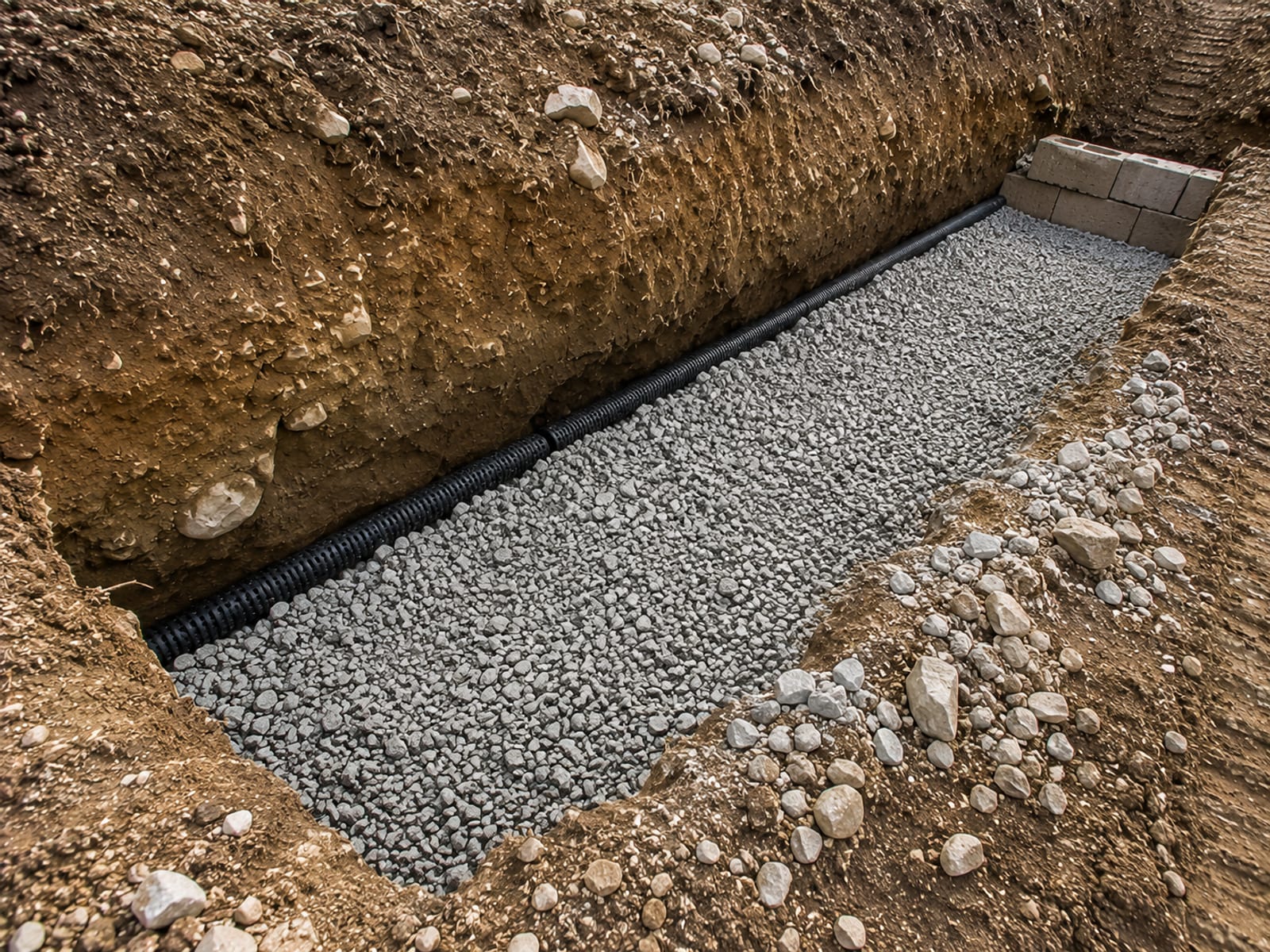
The Retaining Wall Excavation Process
A well-run retaining wall project follows a clear sequence of site-work steps, and understanding that sequence helps you ask better questions when you're talking to a contractor. The process connects slope assessment, utility coordination, excavation, drainage installation, backfill, compaction, and soil stabilization into a single workflow where each step affects the one that follows. A contractor who sees these as separate tasks rather than connected parts of one project is more likely to leave gaps that show up later.
Step 1: Site Assessment
Before any digging starts, the site needs a real evaluation. That means looking at the slope gradient, identifying where water moves during and after rain, locating utilities, noting any structures or driveway loads nearby, and understanding what the finished grade needs to look like once the wall is in place. It also means identifying soil conditions that might affect the base excavation, including rock, clay, wet areas, or buried debris. A contractor who skips this step and goes straight to pricing based on wall footage isn't accounting for the variables that most often drive cost and performance outcomes on Connecticut properties. Site preparation on a rocky Oxford CT slope looks different from site prep on a level suburban lot, and the estimate should reflect that.
Step 2: Excavation, Base, Drainage, and Backfill
With a clear site assessment in hand, the excavation phase addresses the wall's footprint and base zone, removes unstable material, and creates room for compacted aggregate at the correct depth. Drainage stone goes in behind the wall as construction progresses, pipe gets installed where water volume calls for it, and the outlet location is planned before backfill closes off access. Compaction happens in lifts as backfill is added, not all at once at the end. Disturbed soil gets stabilized to manage erosion and sediment runoff during and after construction, consistent with Connecticut DEEP soil erosion guidance. Final grading ties the wall back into the surrounding property so water doesn't collect in new places once the job is done.
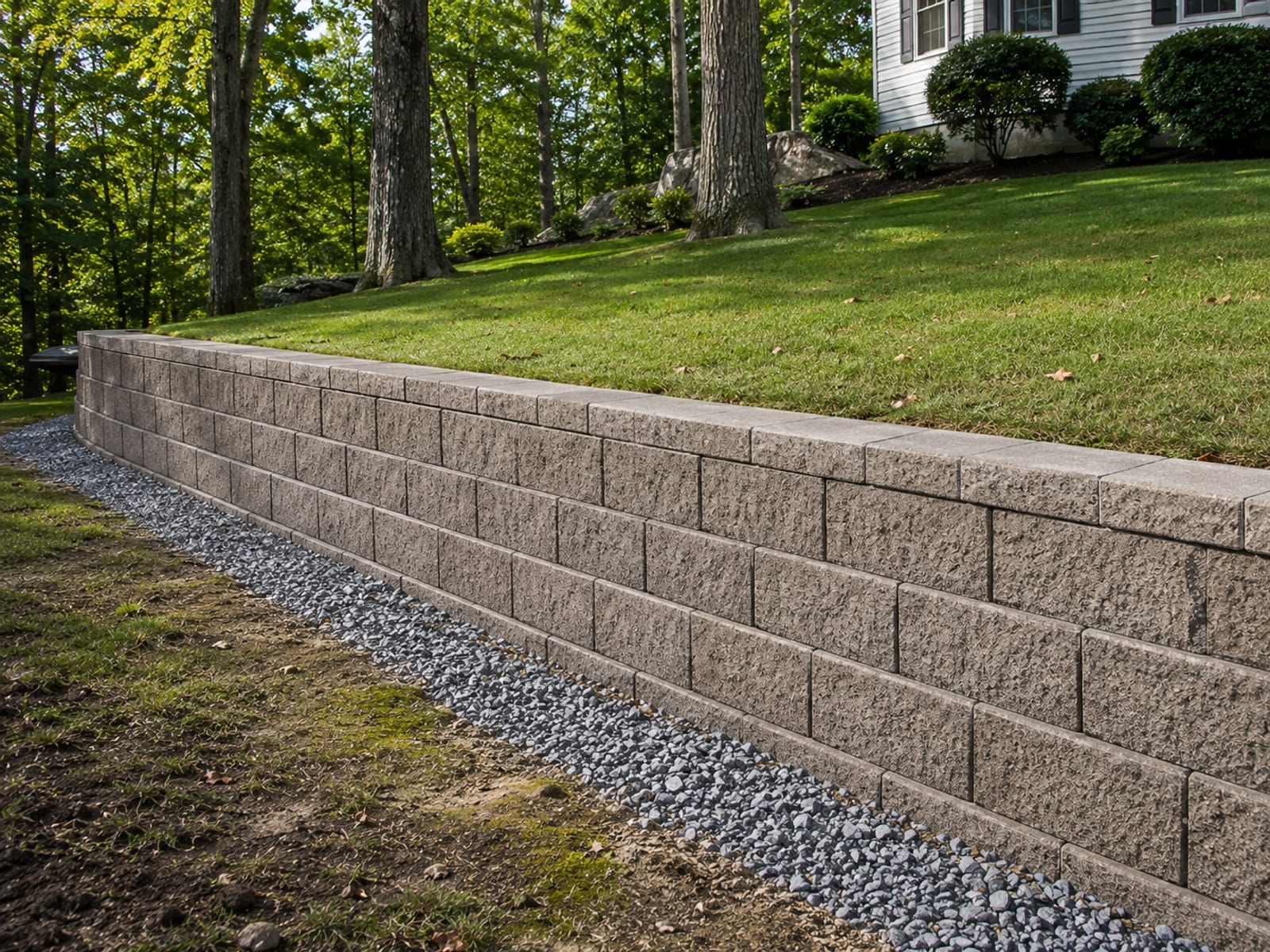
Long-Term Strategy for a Better Wall
The homeowners who end up with walls that hold up well over time tend to share one thing in common: they treated the retaining wall as part of the full site, not as an isolated structure. That means asking where the water will go after the wall redirects it, whether the grading behind and around the wall supports drainage or fights it, and whether the contractor's scope includes the work that needs to happen beyond the wall's footprint. A wall that's well-built but surrounded by poor grading can still collect water in the wrong places. A wall with good drainage stone but no planned outlet just moves the problem a few feet. A contractor who handles drainage solutions alongside excavation and wall construction is asking these questions as part of the job, not leaving them for someone else to sort out later.
The questions worth asking before you hire anyone: How deep will you excavate the base, and how will you determine that depth for this specific site? What drainage material and configuration are you including, and where does the water outlet? What backfill are you using and how will you compact it? How will you stabilize the disturbed area when the wall is done? If a contractor can answer those questions with specifics tied to your site, that's a good sign. If the answers are vague or the questions seem unfamiliar, that's worth paying attention to.
Common Pitfalls in Retaining Wall Excavation
Most retaining wall failures that show up a few years after construction trace back to decisions made during or before excavation, not during block placement. The most common mistakes follow a recognizable pattern.
- Building on an unstable base: Skipping proper excavation depth or compacted aggregate leads to uneven settling and wall movement.
- No drainage behind the wall: Missing drainage stone, pipe, or a planned outlet allows water to build pressure that the wall wasn't designed to handle.
- Wrong backfill material: Using excavated clay or fine soil directly behind the wall creates water-holding conditions that work against the drainage system.
- Poor compaction: Adding backfill without compacting in lifts leads to settling that can pull the wall inward or create voids behind it.
- Ignoring water discharge: Installing drainage without planning where the water goes just moves the problem somewhere else on the property.
- Skipping utility markouts: Starting excavation without checking for underground utilities creates safety risks and potential damage costs that dwarf the price of the markout.
- Underestimating rock: Connecticut's glacial soil regularly produces buried boulders that change excavation time, equipment needs, and cost significantly.
- Choosing based only on wall price: A low bid that doesn't include proper base preparation, drainage, and backfill compaction isn't a savings. It's a deferred repair cost.
Frequently Asked Questions About Retaining Wall Excavation
What is retaining wall excavation?
Retaining wall excavation is the process of preparing the ground, base area, drainage zone, and backfill space before a retaining wall is built. It involves cutting into the slope or ground to create room for a compacted aggregate base, drainage stone, and properly placed backfill. According to the NCMA's segmental retaining wall best practices, this groundwork phase is critical to the wall's long-term performance.
Why does drainage behind a retaining wall matter?
Water that collects behind a retaining wall creates hydrostatic pressure that pushes outward against the wall face. Over time, that pressure can cause leaning, bulging, settling, or failure. The Connecticut Stormwater Manual addresses how water movement on slopes needs to be managed structurally, and drainage behind a retaining wall is one of the primary ways that happens.
Does a retaining wall need a compacted base?
Yes. A stable compacted base helps the wall sit evenly and reduces settlement or movement over time. The specific base depth and aggregate type depend on the wall system, wall height, soil conditions, and site-specific factors. A contractor should evaluate your site before determining the correct base preparation for your project.
Do I need utility markouts before retaining wall excavation?
If excavation is involved, yes. Connecticut's Call Before You Dig system helps identify underground utilities before digging starts. This applies to residential yards as well as commercial properties. Gas lines, electrical service, irrigation systems, and drainage components can all run through areas where retaining wall work happens.
Can poor excavation cause retaining wall failure?
Yes. Poor base preparation, inadequate drainage, improper backfill selection, and insufficient compaction can all contribute to wall movement or failure, sometimes within just a few years of construction. The wall above ground may look fine initially, but the underground work determines how it holds up over time.
Do retaining walls require permits in Connecticut?
It depends on the town, wall height, location, drainage impacts, wetlands proximity, and total soil disturbance involved. Connecticut's construction stormwater general permit may apply to larger projects that disturb a certain area of soil. Homeowners should check with their local building and zoning office before work begins.
What makes Connecticut retaining wall excavation different from other states?
Connecticut's glacial geology means many properties have rocky soil, buried boulders, clay pockets, and uneven drainage patterns. Add freeze-thaw cycles that can move and shift inadequately drained base material, and the excavation requirements become more demanding than in regions with more predictable soil. A contractor familiar with retaining wall rock removal and drainage in Connecticut's specific conditions is better positioned to handle what shows up once digging starts.
Final Thoughts
Retaining wall excavation is where a wall's long-term success or failure gets decided. The base depth, the drainage stone, the backfill material, the compaction, and the outlet planning are all invisible once the job is done, but they're the difference between a wall that holds through five winters without moving and one that starts leaning by the second. Connecticut properties add real complexity to that work: rocky glacial soil, clay pockets, wet slopes, and freeze-thaw pressure all require a contractor who's actually thought through what's happening underground, not just what the finished wall will look like.
Homeowners who invest in getting the excavation right tend to avoid the cycle of repairing or rebuilding walls every few years. A wall that's properly prepared, drained, and backfilled does its job quietly for a long time, and that's exactly what it should do.
At Prestige Property Maintenance, based in Oxford, CT, we handle the full scope of work that a retaining wall project actually requires. That includes excavation, land clearing, grading, rock removal, drainage, trenching, erosion and sediment control, and retaining wall construction, all coordinated as one process so the site-work decisions that affect your wall's performance don't get split across multiple contractors. If you're dealing with a leaning wall, a slope that keeps washing out, or a new wall that needs to be done right from the ground up, we'd be glad to take a look and talk through what the work actually involves. Contact us to get started.
Related Articles
Building a Retaining Wall in Bethany, CT That Lasts
Worried your Bethany retaining wall will lean after a few winters? Retaining wall construction in Bethany, CT depends on frost depth and drainage.
Grading in Bethany, CT: Taming a Sloped, Wooded Yard
No flat ground and runoff carving channels every spring? Here is what grading in Bethany, CT actually involves on a wooded, sloped property like yours.
Stop the Washout: Erosion Control and Grading in Oxford CT
Oxford CT homeowners: erosion control starts with grading, not just seed and silt fence. See how Prestige Property Maintenance fixes the real source of runoff damage.