

Driveway Excavation in Derby, CT: Stop Patching, Start Rebuilding
Kash CochranePublished
- driveway excavation
- derby ct
- base failure
- driveway drainage
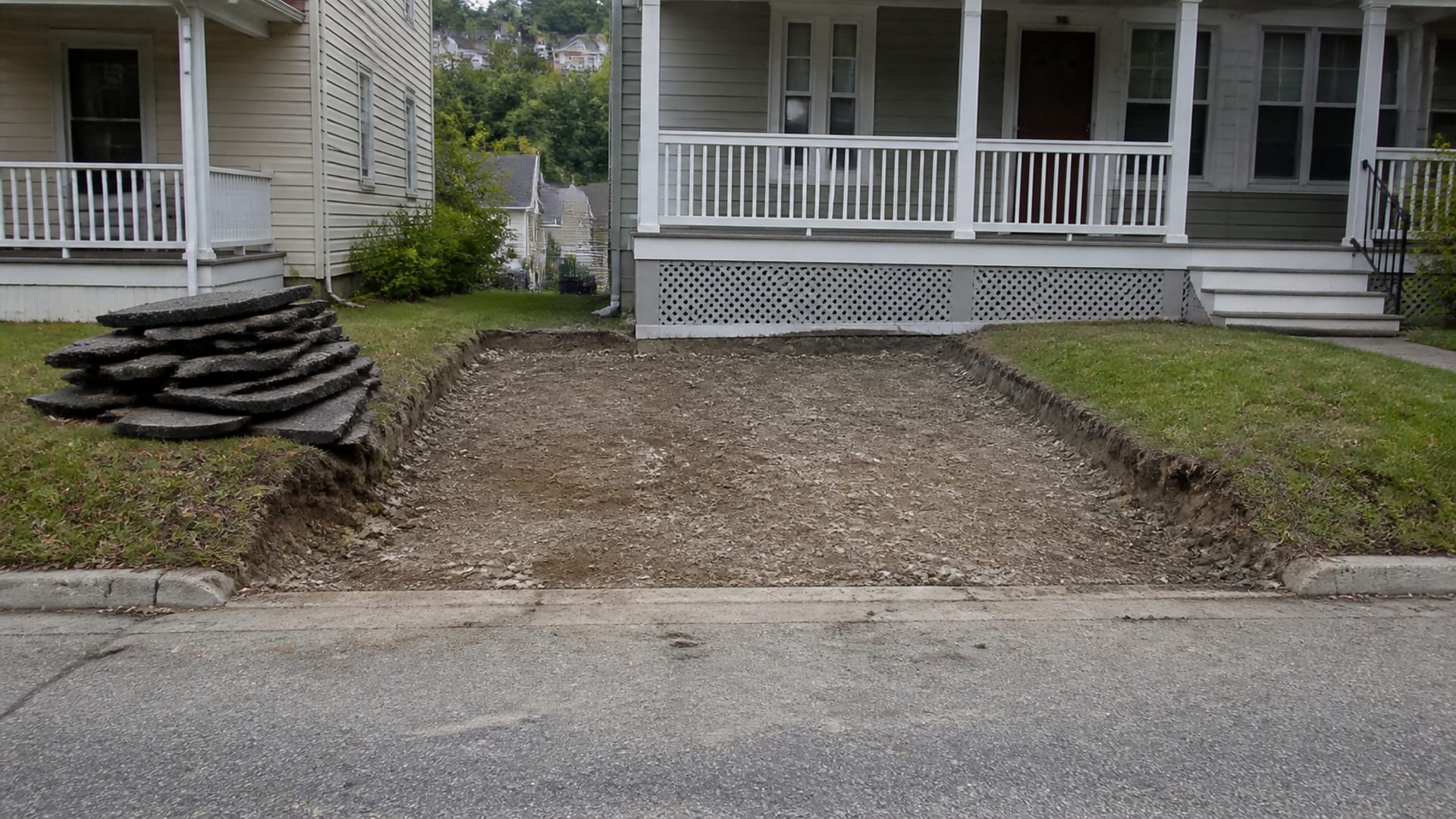
You have patched the same spot every spring for years. Cold patch, then hot patch, then a load of stone, then cold patch again. The crack comes back in the same place, the low spot gets a little lower each thaw, and after a heavy rain there is a channel where the water crosses. At some point the honest question stops being which product to buy and becomes why this keeps happening. It almost always keeps happening because the problem is not on the surface. On a short, steep Derby driveway, the base, the drainage path, and the subgrade decide whether a resurface holds or fails again by next winter, and none of them are visible from the top.
Key Takeaways
Recurring failure is a drainage and subgrade question
settlement or washout that returns in the same place after every thaw is a reason to investigate what is under the surface before buying another surface.
Excavation here is diagnostic, not cosmetic
exposing enough area to find the cause is what separates a rebuild that lasts from a resurface that repeats the failure.
Derby treats driveway runoff as a real issue
the City's stormwater guidance says runoff from hard surfaces including driveways reaches storm drains and then rivers and ponds, and names soil from unpaved driveways as a pollutant source.
Private driveway and public way work are different approval paths
Derby Ordinance 172 requires a street opening permit for work in a public street, highway, or right of way, and a state highway also has a CTDOT encroachment path. Neither automatically applies to work entirely on your own property.
811 applies to homeowners too
the notification requirement covers a homeowner using power operated equipment, not only contractors.
Recurring Settlement Means the Base or the Water Is Failing
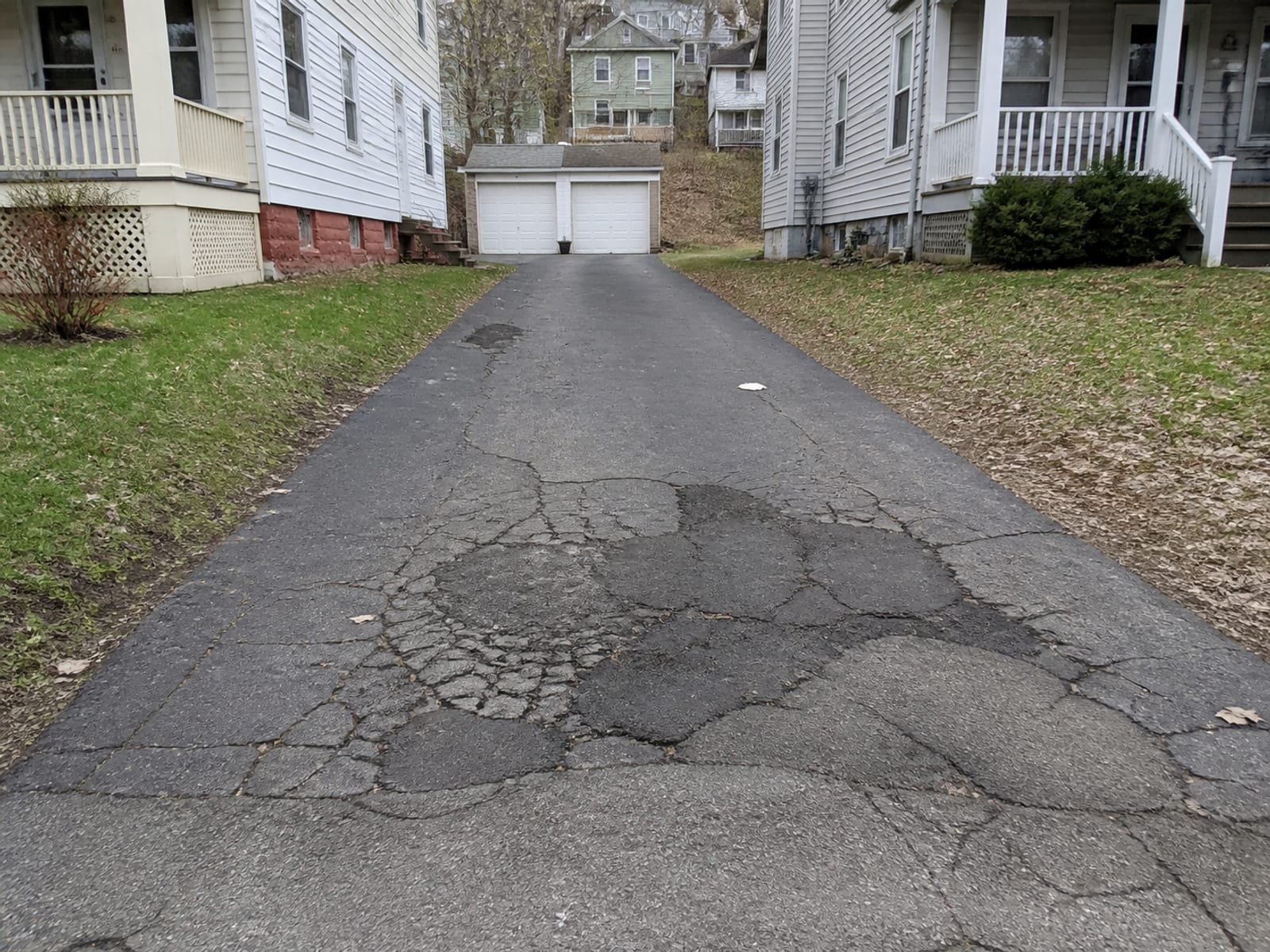
There is a useful distinction between an isolated defect and a pattern. A single crack from a frost cycle, a scuffed corner, a spot where a delivery truck sat, those are surface events. What you are describing is different: the same location, every year, getting slightly worse.
That pattern points at one of two things, and usually both. Either the base has lost support, so the surface above it is spanning a void and cracking under load, or water is crossing or sitting where it should not be, softening the subgrade and taking the fines with it. Adding stone or asphalt over either of those buys a season.
The investigation questions are concrete. Where does runoff enter the driveway and where does it leave? Does the failure follow a thaw, a heavy rain, or both? Is the defect isolated or broad? Has the surface lost support, or is it just worn? Do the existing grades send water toward the house, toward a neighbor, or toward a storm drain? On a steep approach, does the water run down the driveway itself because there is nowhere else for it to go?
| What you are seeing | What it usually points at | Likely scope | What to check first |
|---|---|---|---|
| One isolated crack or a worn surface, no settlement | Surface wear | Surface repair may be appropriate, once base and drainage are ruled out | Whether the defect moves or grows between seasons |
| Broad depressions, a spot that sinks a little more each year | Loss of base support | Expose the base to find the cause before choosing a surface | Whether water reaches that spot, and what the subgrade looks like under it |
| Washout, channels, loss of fines after heavy rain | Water crossing or running along the driveway | Correct the water path first, then rebuild what it damaged | Where the runoff enters, and whether there is an outlet |
| Soft or pumping surface after a thaw | Saturated or unsuitable subgrade | Drainage and subgrade correction, not more stone on top | Whether groundwater or trapped water is the source |
Water Is the Variable Most Driveway Quotes Skip
Derby sits in the Housatonic River watershed, and the City's own public guidance is explicit that runoff from hard surfaces including driveways reaches storm drains and travels on to rivers and ponds. It also identifies soil from unpaved driveways and construction sites as a pollutant source. That is a legitimate reason to look past the top layer rather than a bit of environmental garnish: a driveway that is losing material is losing it somewhere.
The City's Plan of Conservation and Development maps alluvial and floodplain soils, poorly drained and very poorly drained soils, floodway, and 100 year and 500 year flood zones along the river corridors. On a compact, low lying, or river adjacent property, the driveway's runoff route, its outlet, and any disturbed soil deserve the same attention as the pavement itself. That is a reason to check your parcel, not a finding about it.
Derby's zoning rules also show that the City treats driveway grade and runoff as design questions when the scope triggers that section. For flag lot access strips, the regulations cap grade at 10 percent, and at 3 percent within 25 feet of the street intersection, require a 15 foot paved access strip, and prohibit stormwater discharge onto adjacent properties. Those are flag lot provisions rather than universal rules for every existing driveway, but they make the point: grade, access, and where the water goes are treated as site design matters, not afterthoughts.
Six Things Set the Scope, and the Price Follows Them
No official Derby or Connecticut source publishes a defensible homeowner price range for driveway excavation or replacement, so a figure quoted before someone has looked at the base is invented. What a real quote should separate out:
Drainage, runoff, and where the water actually goes
Whether the fix needs a swale, an inlet, pipe, an outlet, edge containment, or simply corrected cross slope. This is the item most often missing from a cheap quote and most often the reason the cheap quote fails.
Excavation depth, unstable subgrade, rock, and disposal
How far down the failure goes is discovered, not assumed. Unsuitable soil, ledge, or saturated ground each change the method and the hauling.
Access, slope, staging, and material delivery
A steep approach and a tight lot change what equipment can work and where material can sit. Delivery access affects the sequence as much as the price.
Aggregate base, compaction, and the surface choice
The base is the part that carries the load. Compaction in controlled lifts is what makes it a base rather than loose stone, and the surface choice sits on top of that decision rather than replacing it.
Utilities and the 811 process
Connecticut requires the notification before power operated excavation, at least two full days ahead excluding Saturdays, Sundays, and holidays, and no more than 30 days ahead. That applies to a homeowner using powered equipment, and where a contractor is hired, the contractor performing the excavation makes the notification.
Permits, wetlands, and whether the work reaches the public way
Which of these applies depends entirely on where the work limits fall, which is worth settling before anyone quotes.
Private Driveway Work and Public Way Work Are Not the Same Project
This distinction is worth being precise about, because conflating the two misleads people in both directions.
Work entirely on your own property, replacing a driveway more or less like for like, did not turn up a universal Derby permit requirement in the sources reviewed. That is not the same as saying no permit applies to your project. Confirm the address and the scope with Derby Planning and Zoning before scheduling.
Work in a Derby public street, highway, sidewalk, curb, or public right of way is different. Derby Ordinance 172 requires a street opening permit from the Street Commissioner or designated agent before opening, excavation, driveway construction, or other construction work there. The ordinance also states that the City street opening permit is required before CTDOT issues its permit for a state highway within Derby. CTDOT separately describes its encroachment permit as covering use of state highway right of way, including driveway curb cuts and excavations.
So the apron where your driveway meets the road can put you in a different process from the rest of the same job. Establishing where the work limits actually fall is a scoping question, not a formality.
| Trigger | What is needed | Who administers it |
|---|---|---|
| Powered excavation anywhere on the property | CBYD notice at least two full days ahead of non emergency work, excluding weekends and holidays | Call Before You Dig, overseen by Connecticut PURA |
| Work in a Derby public street, highway, or right of way, including driveway construction there | City street opening permit before work | Derby Street Commissioner or designated agent, under Ordinance 172 |
| Work in a state highway right of way, including a curb cut or excavation | CTDOT encroachment permit, with the Derby permit first under the City ordinance | Connecticut Department of Transportation |
| Regulated wetland or watercourse activity | Address screening and filing where a regulated activity is proposed | Derby Inland Wetlands Agency and Wetlands Enforcement Officer |
| Private construction disturbing one acre or more | Construction stormwater authorization path, and a Stormwater Pollution Control Plan as applicable | Derby local review, and CT DEEP for stated five acre or more private projects |
New Gravel Does Not Fix a Failing Subgrade
Gravel is a legitimate surface with real advantages on a rural or semi rural drive, and it is often the right answer. What it is not is a remedy for saturated or failing ground underneath.
Regrading and adding new aggregate makes sense where the problem is the surface itself: lost crown or cross slope, fines washed out, erosion at the edges, no edge containment. Those are maintenance issues on a functioning base, and correcting the shape so water sheds rather than runs down the middle is most of the fix.
Where the subgrade is soft, saturated, or unstable, new stone placed on top disappears into it. The fines migrate, the surface pumps under load, and within a season you are back where you started with a larger bill. The order has to be: understand the water, correct the subgrade, then build the base, then choose the surface.
What a Real Driveway Excavation Job Looks Like
| Stage | What happens |
|---|---|
| Site walk, drainage diagnosis, approvals screen | Where runoff enters and leaves, whether the failure is isolated or broad, existing grades, whether the work reaches curb, sidewalk, road, or a regulated area |
| 811 notice and utility response | Filed with the required lead time, marks preserved and worked to, private lines identified separately |
| Access, staging, and erosion control setup | Truck route, material drop, spoil location, and controls in place before the surface comes up |
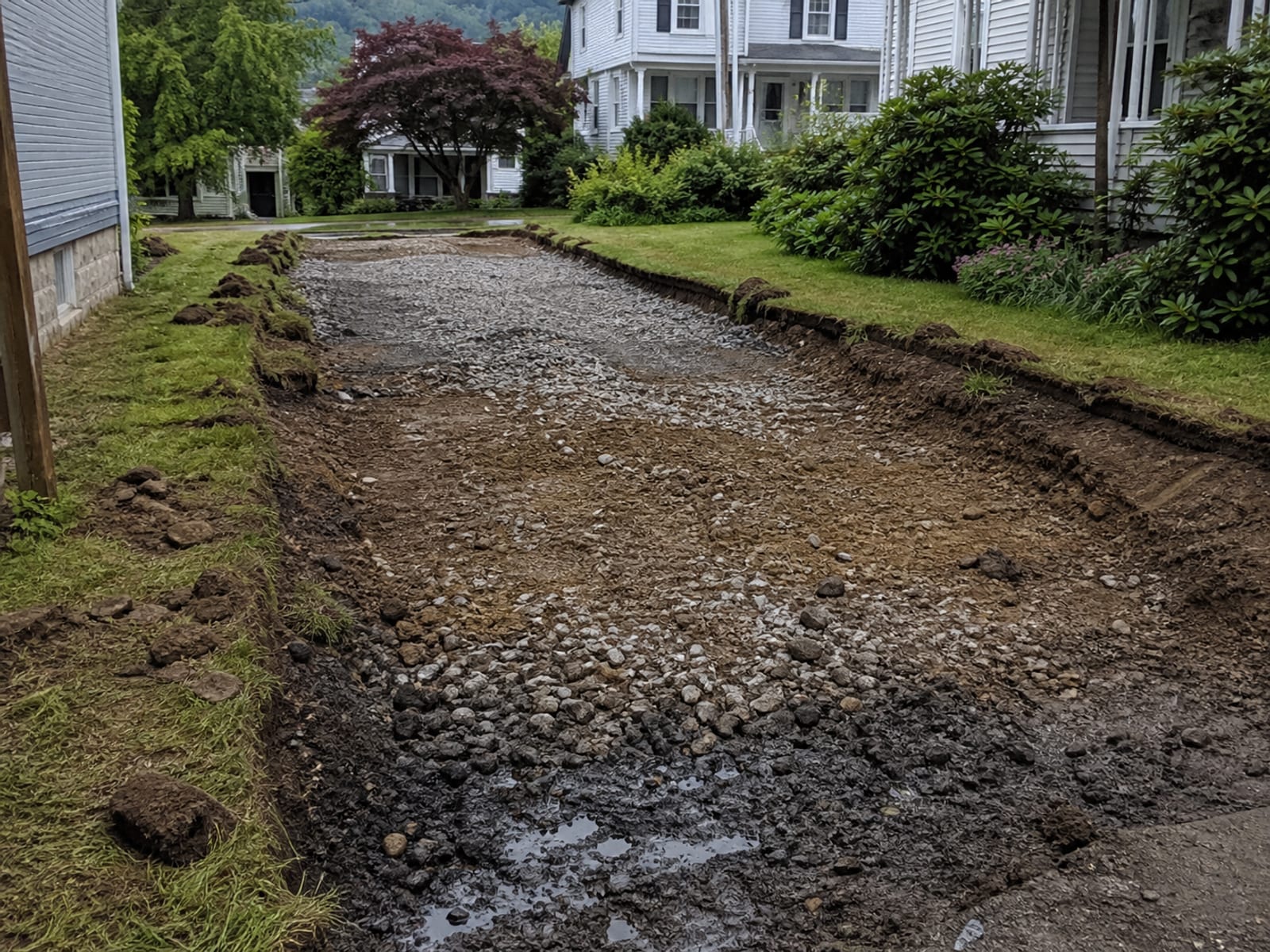
| Removal, excavation, and subgrade inspection | Enough area exposed to find the actual cause, with unsuitable material identified rather than buried |
| Drainage installation and grading | The water path corrected first, with a real outlet, so the new structure is not built into the same problem |
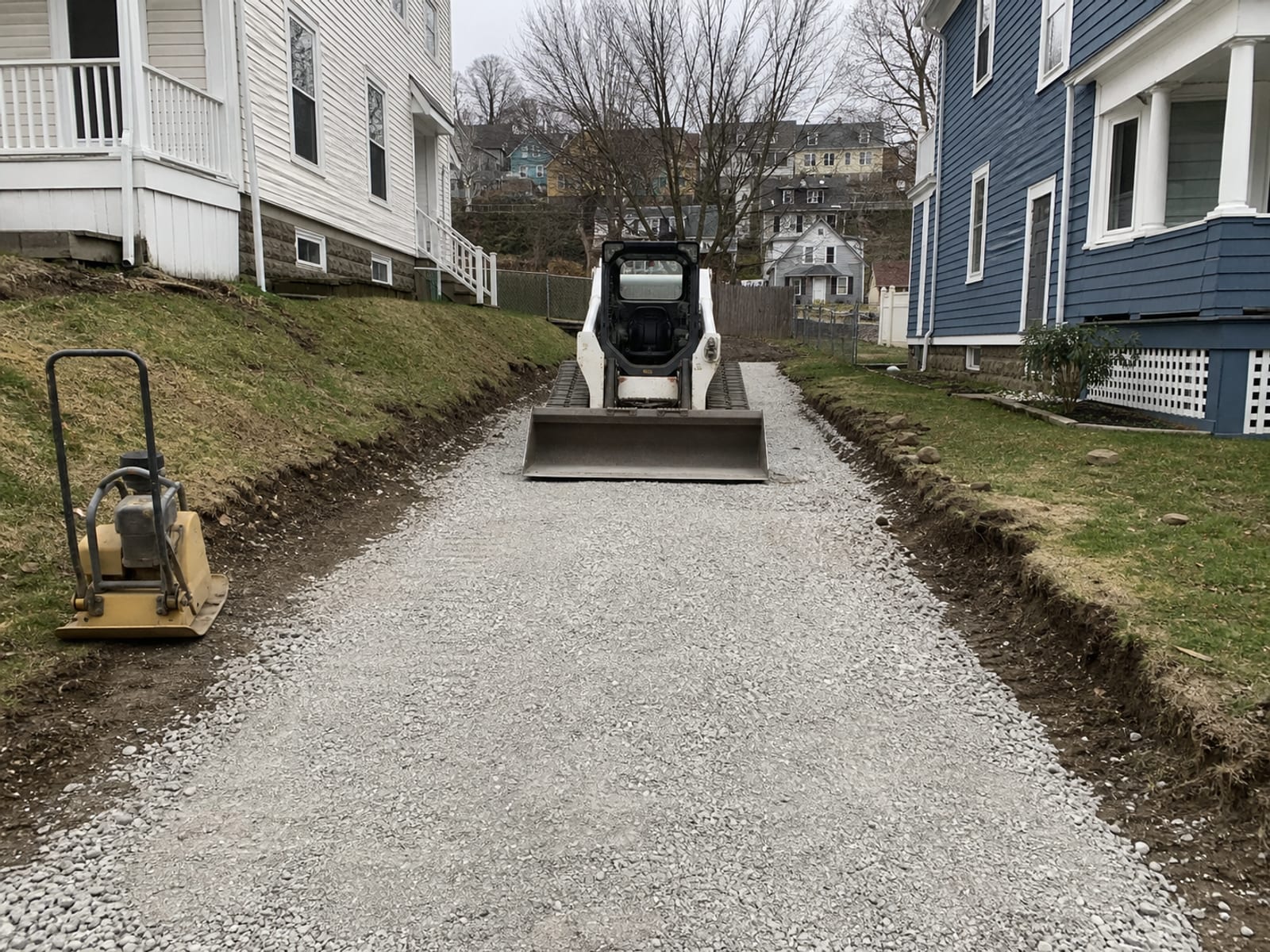
| Aggregate placement and compaction | Base built in controlled lifts and compacted, because that is what carries the load |
| Surface, restoration, and a final water check | Surface installed to the material's requirements, disturbed areas restored, and performance confirmed with water actually running |
No publicly sourced completion duration for a private Derby driveway excavation exists either, so a promised number of days before a site visit is a guess. Access, quantity, weather, material delivery, utility markouts, and any approval path all set the schedule.
Five Mistakes That Guarantee You Patch It Again
- Patching the surface before finding the water path. This is the loop you are already in.
- Skipping 811, or assuming a private lot has nothing buried. Services, old drains, and irrigation all live under driveways.
- Adding stone over saturated soil. Without separation, drainage, or a subgrade fix, the stone goes into the ground and the problem stays.
- Sending runoff toward the house, a neighbor, a storm drain, a wetland, or a watercourse without review. Moving a problem is not solving it, and in Derby it can be a regulated matter.
- Treating curb, sidewalk, or right of way work as ordinary private driveway work. Different process, different authority, and finding out late is expensive.
Use This Checklist Before You Call Anyone
Does water cross the driveway, or run along it? Is the defect isolated or broad? Does it recur after a thaw, after heavy rain, or both? Is there a steep approach or tight truck access? Is the driveway near a watercourse or a visibly wet area? Does the work touch curb, sidewalk, road, or a state route? Are the utility marks complete and current?
The answers point at the next step rather than the solution. Several yeses on drainage and recurrence mean a contractor site visit with the base exposed. Anything touching the public way means a municipal screening conversation first. Active erosion carrying material off the property is the one that should not wait.
Hire It Out at Powered Excavation
The line sits at machine work and anything structural or regulated: powered excavation, utility exposure, drainage structures, major regrading, steep sites, and public way or regulated area work.
Before work starts, a contractor should be able to tell you the planned drainage route and where the water will end up, the base and compaction approach, how spoil and material will be handled, and who is responsible for which permit. If the proposal is a surface price with no mention of the base, no drainage detail, and no named outlet, it is a quote to repeat the failure at a competitive rate. Prestige Property Maintenance works out of Oxford and serves Derby rather than from a Derby yard, which matters for how access and material delivery get planned.
Is It the Surface or the Base?
1. The same spot on your driveway settles a little more every spring. What does that suggest?
2. Your driveway washes out after heavy rain. What comes first?
3. Does an 811 notice apply if you do the digging yourself?
4. Your driveway apron meets a Derby public street. What changes?
Pick an answer to begin.
Frequently Asked Questions About driveway excavation derby ct
What is the typical price range for driveway excavation in Derby, CT? No official Derby or Connecticut source publishes a defensible range, so a number offered before an on site scope is not based on anything. A real quote separates mobilization and access, demolition and disposal, excavation depth, imported aggregate, drainage components, ledge or unsuitable soil handling, compaction, surface material, restoration, permits, and any engineering or wetland work. That itemization is what lets you compare two proposals honestly.
How do I know whether driveway replacement is better than another patch? Repeated settlement, washout, or drainage failure in the same place is the signal. A patch is reasonable for an isolated defect on a sound base. Once the pattern repeats seasonally, the base and the water path need investigating, because another surface layer is being asked to bridge a problem underneath it.
Can a gravel driveway fix a washed out driveway? Only after the water path and the subgrade are addressed. New gravel on a functioning base with corrected shape and drainage works well. New gravel over saturated or unstable ground migrates into it, and the washout returns.
Do I need to call 811 for driveway work in Derby? Yes, for excavation using power operated equipment. Connecticut requires the advance CBYD notice, and the requirement applies to a homeowner using powered equipment as well as to a contractor. Where you hire a contractor, the contractor performing the excavation makes the notification.
When does roadway excavation in Derby need a permit? Work in a Derby public street, highway, or public right of way requires a City street opening permit under Ordinance 172, which covers opening, excavation, driveway construction, and other construction work there. Work in a state highway right of way has a CTDOT encroachment path, and the City ordinance states the Derby permit comes before CTDOT issues its permit.
Do wetlands or a watercourse change a driveway project? They can. Contact Derby's Inland Wetlands Agency for address specific screening before disturbance. Proximity on a map is not a final regulated area determination, and the Agency makes that call rather than the contractor.
What time of year is best for driveway excavation? No universal Derby seasonal schedule exists. Plan around groundwater, freeze thaw, wet soil, erosion control, approval lead time, and whatever the surface material's own requirements are for placement temperature and conditions. Those constraints are real but they are scheduling inputs rather than a closed season.
Driveway Terms Worth Knowing
Tap a term to see what it means.
Subgrade. The natural ground beneath the base. If it is soft, saturated, or unsuitable, everything built on it inherits the problem.
What This Means for You
You already suspected the surface was not the problem, and the pattern you are describing supports that. A defect that returns in the same place after every thaw, or a channel that reappears after every heavy rain, is telling you about the base and the water rather than the top layer. That is genuinely good news, because it means there is something to fix rather than an annual maintenance tax.
The order that works is unglamorous: find where the water comes from and where it can go, expose enough of the failure to see the actual cause, correct the drainage, rebuild the base properly with compaction that means something, and only then choose a surface. Skipping to the surface is what has cost you the last several springs.
If your Derby driveway keeps failing in the same spot, Prestige Property Maintenance will look at the water and the base rather than quoting a resurface. We handle driveway and roadway excavation along with the drainage solutions, grading, and paving prep that usually have to happen with it, with one crew out of Oxford across the Naugatuck Valley. Call us at (203) 258-3395 or contact us and we will tell you whether this is a repair, a drainage correction, or a rebuild, with the reasoning behind it.
Related Articles
What to Expect from Drainage Work in Derby, CT, Start to Finish
Hired someone for drainage work in Derby, CT and wondering how torn up the yard gets? Here is the real sequence, from utility mark-out to grading.
What to Expect from an Excavation Company in Derby, CT
A machine on your small Derby lot does not have to be stressful. Learn what to expect from an excavation company, step by step, before you hire one.
Land Clearing in Derby, CT: What Is Under the Brush?
An overgrown Derby parcel hides more than brush. Learn how land clearing in Derby, CT reveals ground conditions, limits, and drainage before you build.