Land Clearing in Derby, CT: What Is Under the Brush?
Kash CochranePublished
- land clearing
- derby ct
- overgrown lots
- site preparation

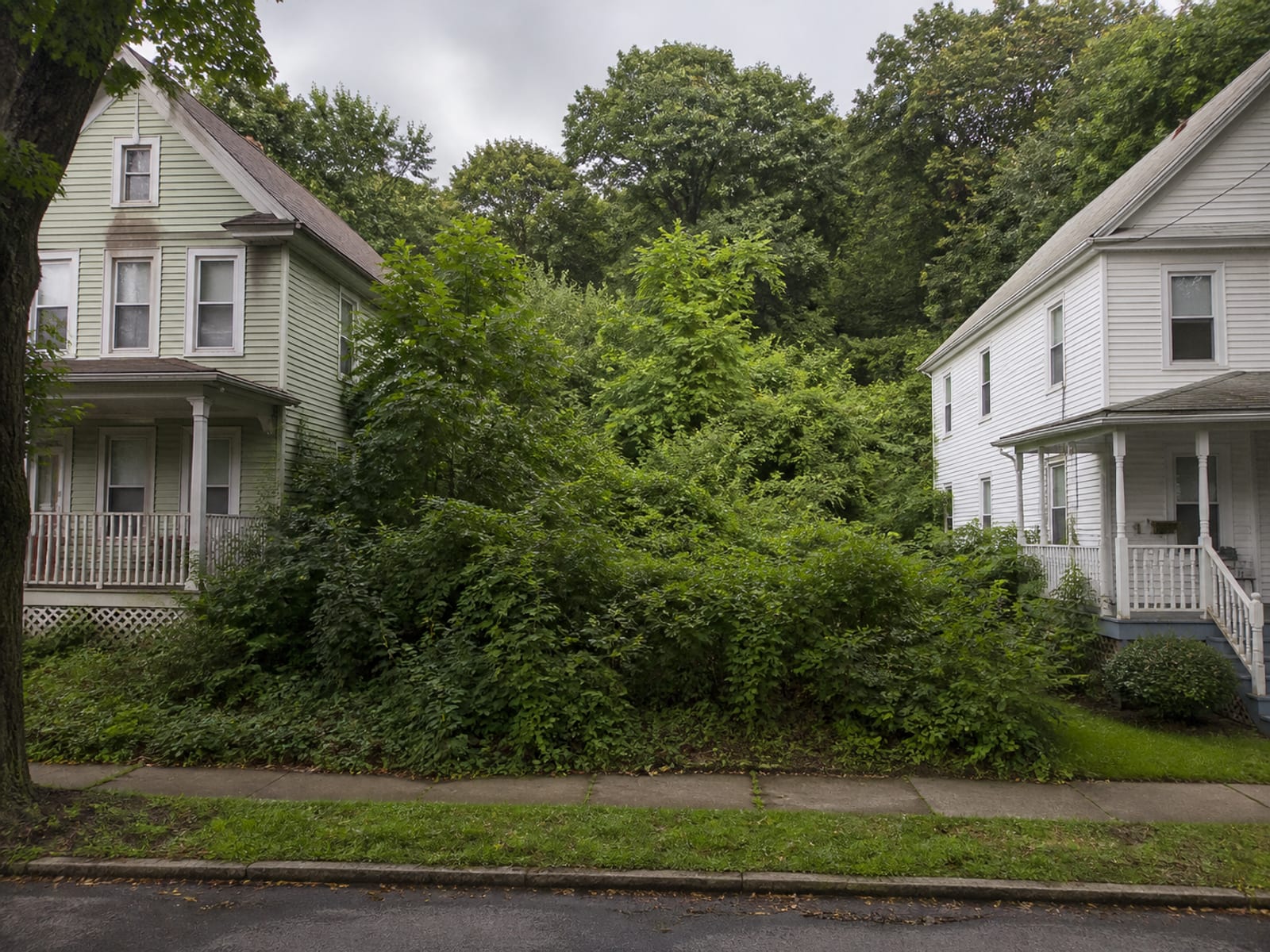
The parcel has been left alone long enough that you cannot see the ground. Not the corners, not the grade, not where the water goes, not the old foundation somebody mentioned, not whether that dip at the back is a low spot or a watercourse. Every decision you want to make, about a driveway, a building area, or simply a usable yard, waits behind that. The temptation is to send a crew in to cut everything back and see what turns up. On a compact Derby parcel that is the expensive version of finding out, because clearing vegetation and disturbing soil are two different regulatory events, and it is much easier to keep them separate on purpose than to explain afterward that they got mixed up.
Key Takeaways
Cutting vegetation and moving soil are treated differently
Derby's earth material provisions cover digging, excavating, scraping, disturbing, or moving soil, or filling, unless an exemption applies, and the listed exemption for an area of one half acre or less is not a blanket exemption from wetlands, floodplain, building, utility, or site plan review.
Half an acre of disturbance triggers a certified plan
Derby requires a certified soil erosion and sediment control plan where a regulated use, building, structure, or site development has a disturbed area of one half acre or more, or wherever the regulations otherwise require erosion control.
Burning is not a disposal route
Connecticut does not allow open burning to clear land or to dispose of construction debris, household trash, or leaves, so the debris plan has to be arranged before the first cut.
A map is not a wetland boundary
Connecticut's position is that municipal wetlands mapping is a general planning tool and does not substitute for field delineation by a soil scientist where the site specific boundary matters.
See the Ground Before You Decide What to Do With It
On an overgrown parcel the most valuable early work is diagnostic rather than productive. You are not trying to finish anything, you are trying to make the site legible so that the real scope can be written.
The things worth uncovering first are the ones that change every later decision. Where the boundaries actually run, ideally against a survey rather than a fence somebody built in 1974. What the grade does, and which way water crosses the parcel. Whether there is a wet area, a channel, or a swale in there, dry or otherwise. What is already built or buried: an old slab, a former driveway, a filled cellar hole, a septic system, a well, dumped material. Where a machine could get in, and where a truck could turn.
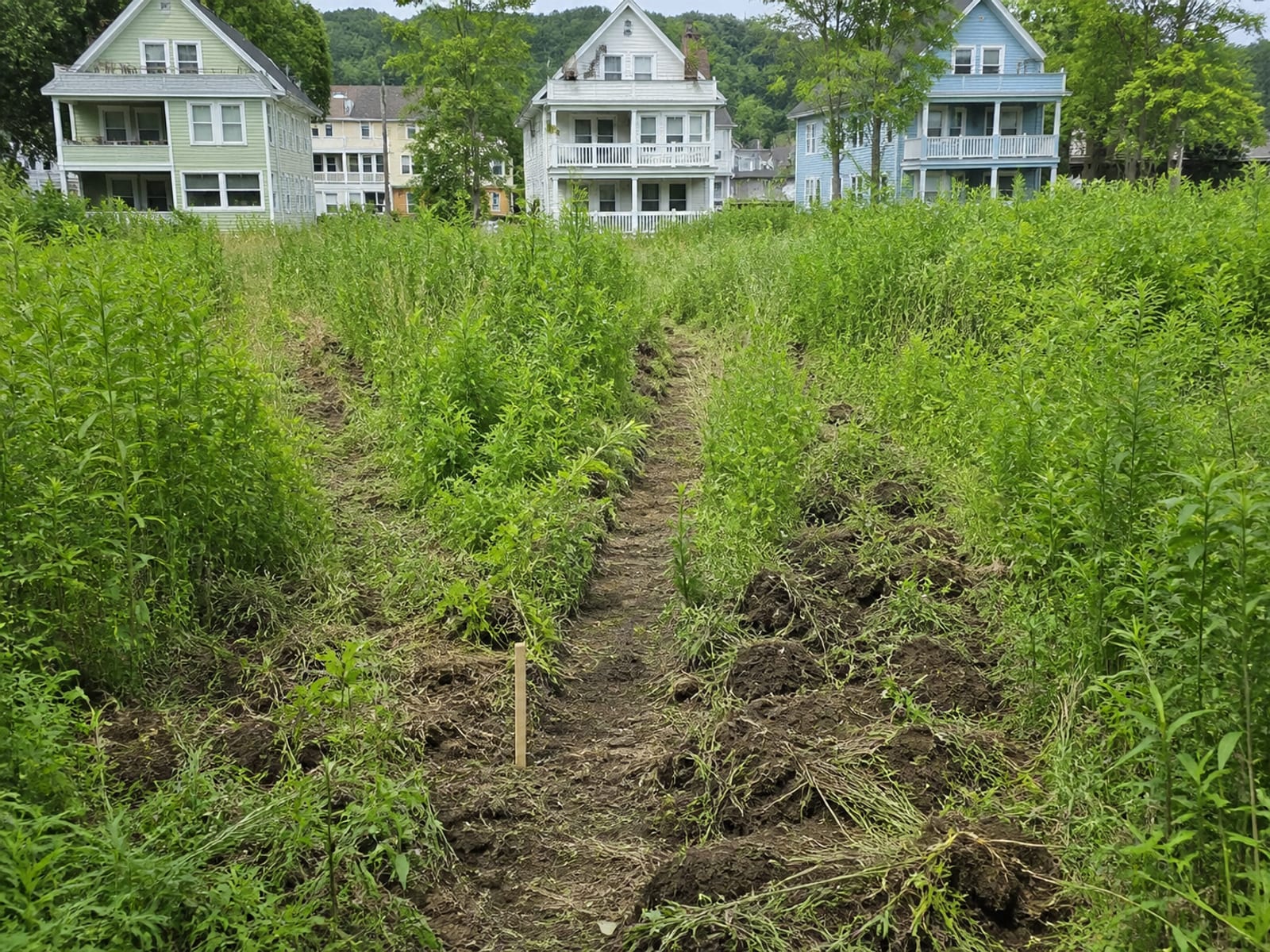
A phased approach handles that well. Cut narrow lines through the vegetation to reach the corners and cross the parcel, expose enough ground to see the grade and the drainage path, and stop. That is a small, low disturbance piece of work, and what it produces is information that makes the next scope accurate rather than speculative.
The alternative, clearing everything on day one, commits you to the largest version of the project before anybody knows what the parcel needs.
Choose Between Three Levels of Clearing
| Your goal | The likely scope | The constraint to check first | What to ask for |
|---|---|---|---|
| Visibility and access on an overgrown lot in Derby, CT | Brush clearing, vegetation only, little or no soil disturbance | Utilities, boundaries, wetlands, and the debris disposal route | A defined limit, what stays, and a lawful material plan |
| A vacant lot that has to become usable | Lot clearing: brush, debris, stumps, and only the approved level of ground work | Whether stump and grading work crosses into regulated earth disturbance | Written scope separating vegetation work from soil work |
| Ground ready for construction or redevelopment | Site clearing led by an approved plan, with limits, controls, drainage, and stabilization | The full approval path, since this is site development rather than maintenance | Clearing limits, erosion controls, and the stabilized final condition |
| Heavy overgrowth hiding the site conditions | Phased diagnostic clearing first, decisions second | Nothing much. That is the point of doing it first | Narrow access lines and enough exposure to see grade, drainage, and limits |
Brush clearing in Derby, CT when visibility is the goal
The lightest scope, and often the correct first step. Vegetation is cut and removed, the ground is largely undisturbed, and what you gain is sight of the parcel. It still needs the boundaries and the utilities established first, and it still needs a debris route, but it is the version least likely to create a compliance question.
Lot clearing in Derby, CT when the parcel has to become usable
The middle scope, and the one where projects quietly change character. Adding stump removal means soil disturbance. Adding grading means soil disturbance. Both can move the job from vegetation management into Derby's earth material provisions, and it is worth deciding deliberately rather than drifting there because the machine was already on site.
Site clearing in Derby, CT when construction follows
The largest scope and the most structured. It is led by an approved plan: layout and clearing limits, protected resource review, erosion controls installed before disturbance, clearing and grubbing within the limits, material handling, approved grading and drainage, and stabilization at the end. The distinction that matters is that this is plan led rather than judgment led, and the sequence is set by the approval rather than by convenience.
Understand Why Cutting and Digging Are Different Regulatory Events
| Trigger | What applies | Who |
|---|---|---|
| Digging, excavating, scraping, disturbing, or moving soil, or filling | Derby's earth material provisions, unless an exemption applies. The listed exemption covers excavation, grading, removal, or filling of an area of one half acre or less, and it is not a general clearance | Derby Planning and Zoning |
| A regulated use, building, structure, or site development with a disturbed area of one half acre or more | A certified soil erosion and sediment control plan. Derby defines disturbed area as land where cover is removed or destroyed and accelerated erosion can occur | Derby Planning and Zoning |
| Clearing, grading, excavating, filling, piping, culverting, or construction that could affect a wetland or watercourse | Municipal wetlands review. An owner cannot self determine that an activity is exempt or nonregulated | Derby Inland Wetlands, with the Zoning Enforcement Officer identified as Inland Wetland Enforcement Officer |
| Private, non governmental construction disturbing at least one acre and less than five acres | Treated as locally approvable small construction where a municipal land use commission reviews and gives written approval of erosion and sediment controls. Five acres or more adds state registration | Derby land use commission, under the CT DEEP program |
| Any powered or mechanized excavation or demolition | A Call Before You Dig ticket at least two full days ahead, excluding Saturdays, Sundays, and holidays, and no more than 30 days ahead. The excavator is responsible for obtaining it | CBYD, at 811 |
The point of that table is not that clearing is difficult. It is that the trigger is the activity rather than the label on the invoice. Cutting brush and hauling it away is one thing. Pulling stumps, moving soil to level an area, or filling a low spot is another, and the second one has a different set of questions attached. Deciding in advance which one you are doing, and confirming the path with Planning and Zoning, keeps the project on the simple side of that line for as long as possible.
Plan the Debris Route Before the First Cut, Because Burning Is Not One
An overgrown parcel produces a startling volume of material, and where it goes is a decision to make before it exists rather than after.
The one option that is off the table is burning. Connecticut does not permit open burning to clear land, or to dispose of construction debris, household trash, or leaves. It is worth being explicit about this because it is the assumption people arrive with on a rural feeling parcel, and it is not available.
Nor is burying it. Woody material buried on site decomposes, and if anything is later built over that area the settlement is somebody's problem, quite possibly yours.
What remains is a lawful route: processing material on site where the design supports it, hauling to an appropriate destination, or recycling where the material stream allows. Each has a cost and a logistics implication, particularly on a compact parcel where there may be nowhere to stockpile between cutting and hauling. That constraint alone sometimes decides how the work is phased.
Separate the streams while you are at it. Brush, usable wood, stumps and root balls, rock, soil, and any dumped material that turns out to be there are different problems with different destinations, and separating them at the point of cutting is far cheaper than sorting a mixed pile later.
Treat a Wetlands Map as a Question, Not an Answer
Municipal wetlands mapping is useful and it is not a determination. Connecticut is clear that it is a general planning tool and does not substitute for field delineation by a soil scientist where the site specific boundary matters.
On an overgrown Derby parcel that matters twice over. First because wetlands are defined by soil rather than by visible water, so a dry looking area under heavy brush can still be regulated. Second because you cannot see the ground, which means neither you nor a contractor can form a reliable impression of what is there until some of it is exposed.
The practical sequence is: check the mapping as a screen, look at what the diagnostic clearing reveals, and where there is any indication of a wet area, a channel, or a watercourse, take it to the town before doing anything that could affect it. The determination is the municipality's to make, not the owner's, and clearing near a resource without one is the version of this project that goes badly.
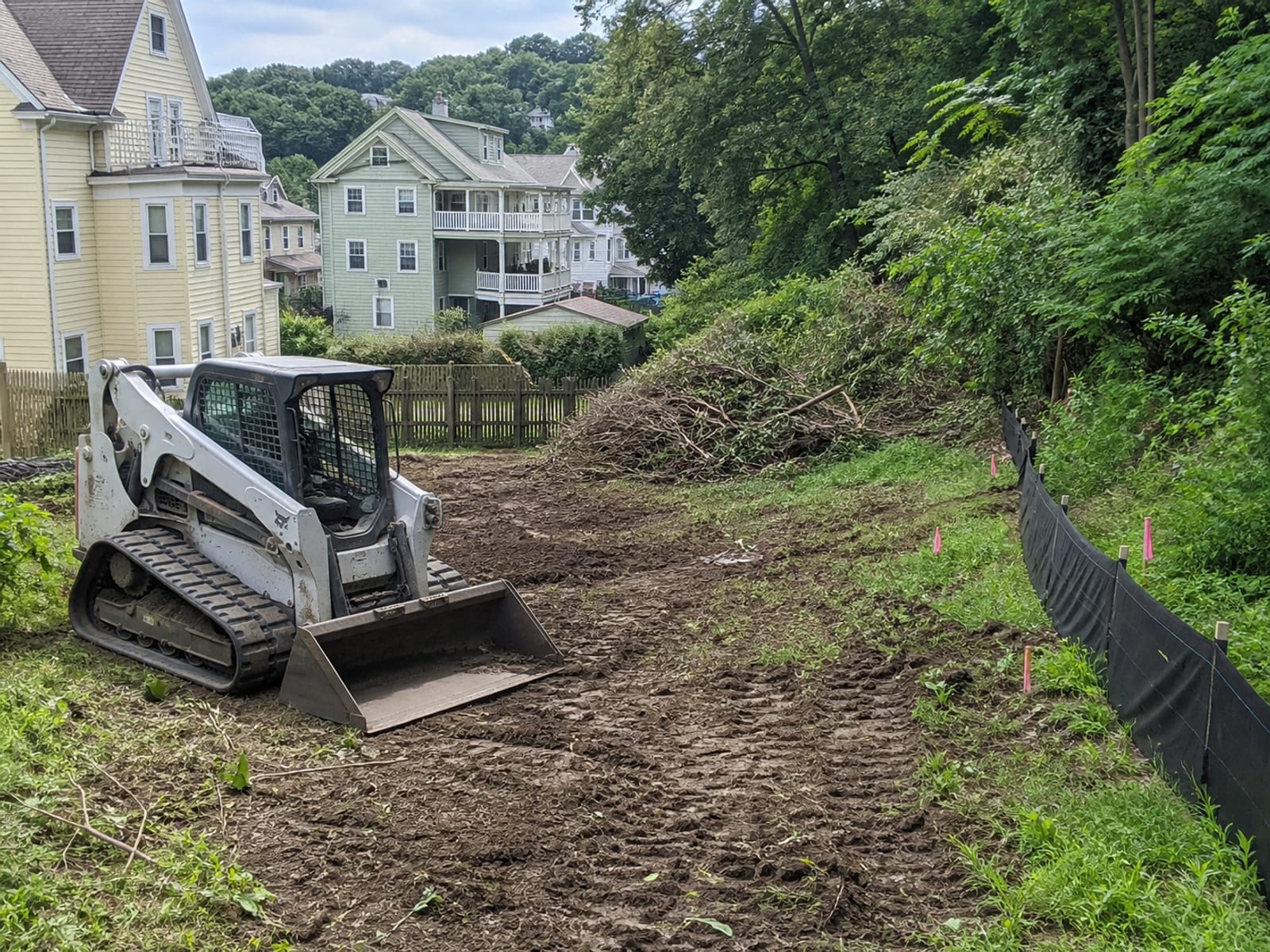
Work Through the Seven Steps for an Overgrown Lot in Derby, CT
1. Define the finish condition and the clearing limits. What has to be visible or usable when the work is done, what vegetation stays, and where the limit line runs. 2. Review the constraints. Property lines, utilities, wetlands and watercourses, floodplain conditions, drainage, access, and which approvals the scope needs. 3. Obtain the approvals and the locate ticket. Municipal and state approvals where they apply, and the CBYD ticket before any powered excavation, with private lines identified separately. 4. Install access and erosion controls, then clear in sequence. Controls before disturbance, a stabilized access where the site needs it, and clearing phased rather than done all at once. 5. Handle the material lawfully. Streams separated, and each one routed to processing, recycling, or an appropriate disposal destination. 6. Do only the approved stump, grading, drainage, and stabilization work. This is the step where scopes creep, and the approval is the boundary. 7. Inspect the final condition and keep it stabilized. A cleared parcel with bare soil is an erosion problem until cover is established, and it stays that way through whatever gap there is before the next phase.
Price the Scope, Not the Acreage
No Derby specific, source supported price range for land clearing was found, and acreage on its own is a poor predictor here. Two half acre parcels in the same neighborhood can differ by a large multiple depending on what is under the brush.
The drivers to separate in an estimate:
- The scope itself, meaning brush only, brush with stumps, or plan led site clearing.
- Access and staging, which on a compact developed parcel is often the largest single factor, since material has to reach a truck somehow.
- Vegetation density and stump size, plus anything embedded that slows the work.
- Hidden debris, meaning old structures, dumped material, or buried fill, which is genuinely unknown until the parcel is legible.
- The disposal route, and the distance and destination for each material stream.
- Ground and water constraints, including wet areas, drainage that has to be preserved or corrected, and any resource nearby.
- Approvals and controls, including a certified erosion and sediment control plan where the disturbed area reaches the threshold.
- The required finish, meaning what the surface has to look like and be stabilized to at the end.
Ask any bidder to state which of those they have assumed and what condition would trigger a written change. On a parcel nobody can see into, a scope with an honest change mechanism is worth more than a low number.
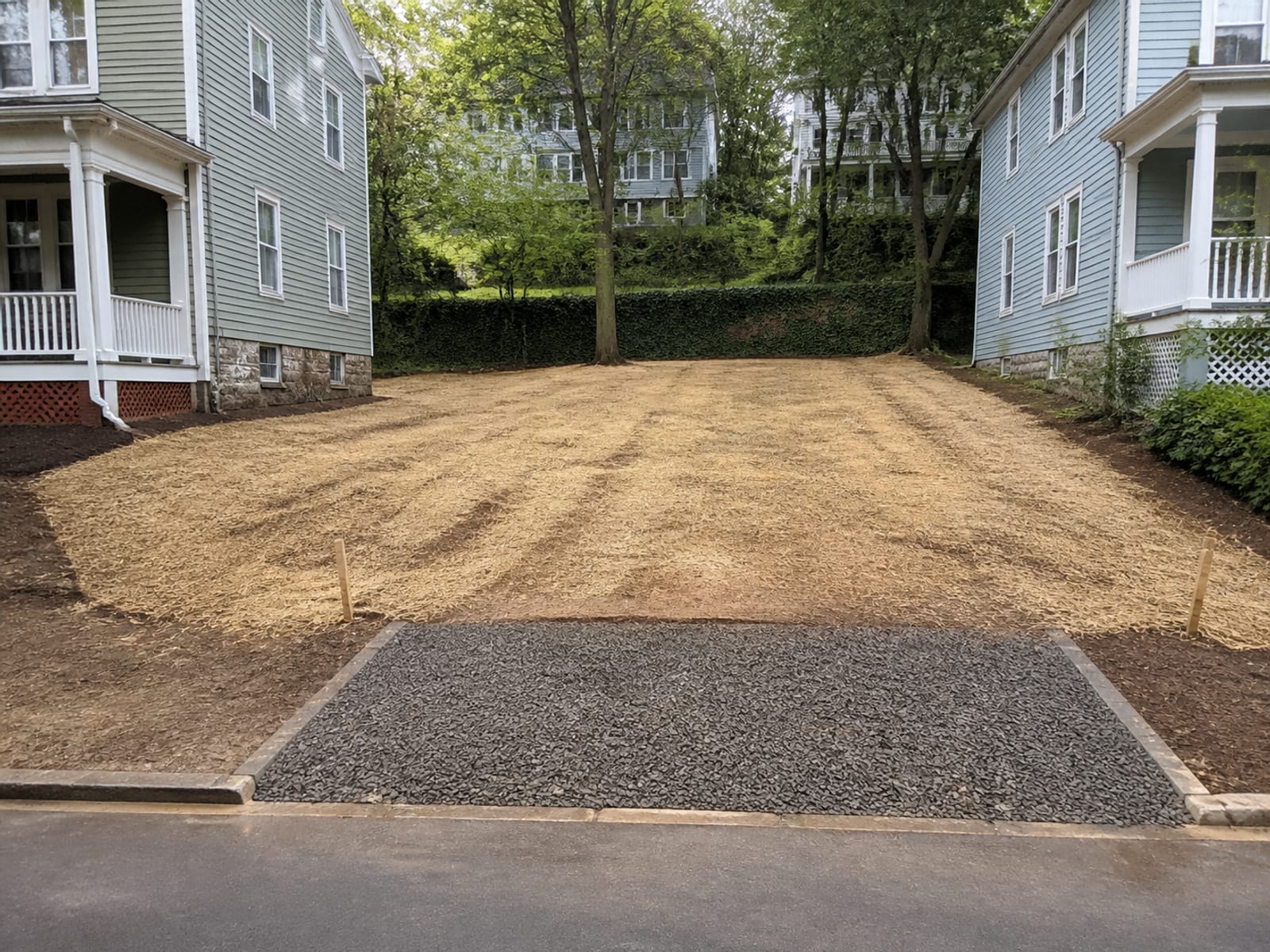
Skip the Five Mistakes That Cost an Overgrown Parcel Twice
- Treating every overgrown lot as a brush only project. Stumps and grading change the regulatory picture, and the machine being on site is not a reason to keep going.
- Skipping the wetlands, floodplain, drainage, and erosion control screen. All four are harder to address once the parcel is open.
- Starting machine work before the locate window has run and the responses are in. The excavator owns that obligation, and an overgrown parcel is exactly where unmarked private lines hide.
- Burning or burying the debris. Neither is a lawful disposal route, and burial creates settlement under whatever gets built later.
- Clearing broadly before defining the final grade and stabilization plan. Bare soil with no plan behind it is an erosion problem you paid to create.
Pick a Season That Suits the Stabilization
Winter clearing is not prohibited and it has real advantages on an overgrown parcel: the vegetation is down, sight lines are better, and firm ground carries equipment well.
The limits are on the ground rather than the cutting. Connecticut guidance recommends avoiding disturbance of large or critical areas during frozen ground and spring thaw where scheduling allows, and frozen conditions restrict fill operations. The same guidance expects the plan to provide temporary protection where seasonal conditions prevent permanent vegetative cover from establishing.
Translated: a winter clearing job is often a good idea, a winter grading job needs more thought, and either way the plan has to say how the exposed ground is held until permanent cover can take. That is a line in the scope rather than an afterthought in April.
Four Questions Before You Clear an Overgrown Parcel
1. What is the most useful first step on a parcel you cannot see into?
2. Can clearing debris be burned on site in Connecticut?
3. At what disturbed area does Derby require a certified soil erosion and sediment control plan?
4. A municipal wetlands map shows nothing on your parcel. What does that establish?
Pick an answer to begin.
Frequently Asked Questions About land clearing derby ct
What does land clearing in Derby, CT cost? No Derby specific, source supported range was found, and acreage alone would be misleading because what is under the brush varies so much. The price follows the scope, the access and staging on a compact parcel, the vegetation density and stump size, any hidden debris or old structures, the disposal route for each material stream, the ground and water constraints, the approvals and erosion controls required, and the finish condition. A parcel specific scope written after a diagnostic look is the only reliable basis for a number.
Is brush clearing in Derby, CT different from lot clearing in Derby, CT? Yes, though people use them interchangeably. Brush clearing can be a vegetation focused scope with little or no soil disturbance. Lot clearing usually adds debris, stumps, some soil disturbance, grading, and stabilization. The right label follows the end condition and the approvals that apply, not the phrase used in a search, and the difference matters because soil disturbance is the thing that changes the regulatory position.
Do I need permission to clear an overgrown lot in Derby, CT? It depends on what the work affects. Earth disturbance, wetlands and watercourses, floodplain conditions, site development, demolition, and construction each trigger their own review, and a project can touch several. Derby Planning and Zoning should confirm the path for your actual proposal before work begins. Describing the scope accurately, particularly whether stumps and grading are included, is what makes that a short conversation.
Do I need to call 811 for site clearing in Derby, CT? Before any powered or mechanized excavation, yes, with the ticket obtained at least two full working days in advance, excluding weekends and holidays, and no more than 30 days before the work. The excavator is responsible for obtaining it. On an overgrown parcel the private lines are the ones to worry about, since the markout covers participating utility facilities and not the feed somebody ran to a shed thirty years ago.
Can I burn the brush from my lot? No. Connecticut does not allow open burning to clear land, or to dispose of construction debris, household trash, or leaves. Plan a lawful recycling, processing, or disposal route before cutting begins, and separate the material streams as you go. Burying woody material is not an alternative either, because it decomposes and produces settlement under anything built there later.
Can a property owner decide from a map that there are no wetlands? No. Connecticut's position is that municipal wetlands maps are general planning tools and do not substitute for field delineation by a soil scientist where the site specific boundary matters. On an overgrown parcel that caution has extra weight, since nobody can see the ground. Where there is any indication of a wet area or a channel, the determination belongs to the municipality rather than to you or your contractor.
Is winter a bad time to clear a property? Not automatically, and it is often a good time for the vegetation work. The caution is on ground disturbance: Connecticut guidance recommends avoiding disturbance of large or critical areas during frozen ground and spring thaw where possible, and frozen conditions restrict fill operations. Where seasonal conditions prevent permanent vegetative cover from establishing, the plan has to provide temporary protection until it can.
Wrapping Up
The problem with an overgrown Derby parcel is not the brush, it is the uncertainty underneath it. So the sequence that saves money is the one that resolves uncertainty in the cheapest order: define what the finished parcel needs to be, do enough diagnostic clearing to see the boundaries, the grade, and the drainage, then write the real scope against what is actually there.
Keep the two events separate for as long as you can. Cutting vegetation is one thing, and moving soil is another with its own approvals attached. Sort the debris route before the first cut, since burning is not available. And treat the wetlands question as the town's to answer rather than a judgment call made under six feet of bittersweet.
If you have a parcel in Derby, CT that nobody can see into, Prestige Property Maintenance can start with a phased look, expose the limits and the drainage, and then write a scope against real conditions rather than assumptions. We handle land clearing, forestry mulching, site preparation, and erosion and sediment control with one crew working out of Oxford, so the clearing, the ground work behind it, and the stabilization at the end are one responsibility. See how we work across Derby, call (203) 258-3395, or contact us to walk the parcel.
Clearing Vocabulary
Tap a term to see what it means.
Diagnostic clearing. Limited, phased cutting done to make a parcel legible, revealing boundaries, grade, drainage, and hazards before the full scope is written.
Related Articles
Paving Prep in Derby, CT: What a Proper Base Actually Means
A contractor blamed your old base and wants to repave. Before you agree, learn what paving prep in Derby, CT actually requires, layer by layer.
Site Preparation in Derby, CT: From Approved Plans to Pour
Derby's compact, river adjacent lots make site preparation its own decision. Find out what a plan review and site visit actually confirm before you build.
Excavation in Derby, CT: What Homeowners Need to Know
Planning excavation in Derby, CT? See how floodplain rules, zoning approvals, access, and 811 timing shape your project before any machine arrives.