

What to Expect from Drainage Work in Derby, CT, Start to Finish
Kash CochranePublished
- drainage
- derby ct
- what to expect
- yard restoration
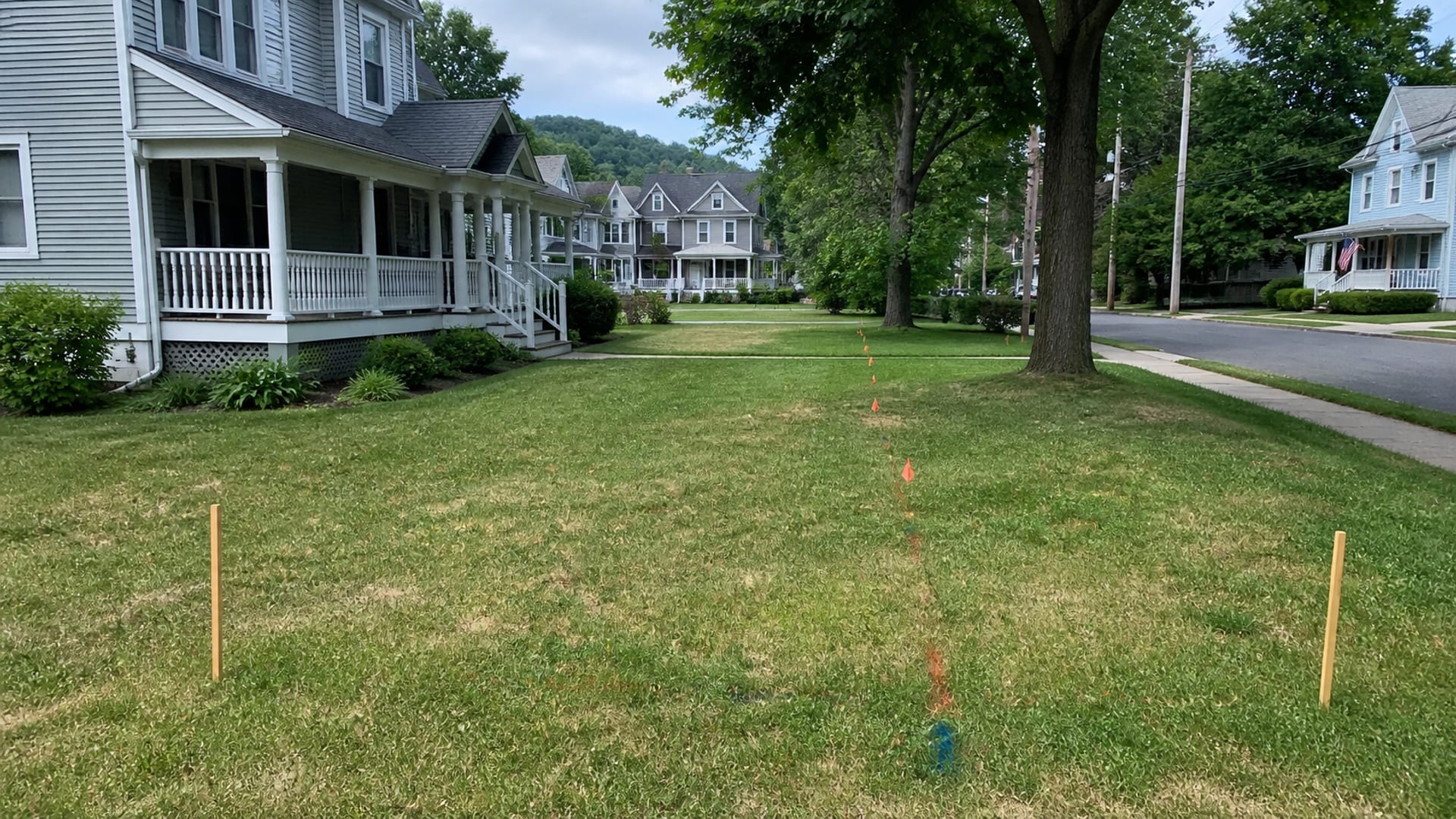
Signing off on the work turned out to be the easy part. Somebody is coming to fix the water, the scope is agreed, and now a different set of questions has taken over: how much of the yard gets dug up, how long does it look like that, does the grass come back, and what exactly is going to be happening out there while you are at work. Those are fair questions and they have real answers. What follows is the actual sequence, from the utility markings appearing on the lawn to the last rake mark, along with an honest explanation of the parts nobody can promise in advance.
Key Takeaways
The utility notification runs before anything is dug
Connecticut requires notice at least two full days ahead, excluding Saturdays, Sundays, and holidays, and no more than 30 days ahead, outside an emergency, after which utility owners mark their registered facilities.
The order of work is set by erosion guidance, not convenience
define the limits, protect sensitive areas and install controls where required, excavate, install the approved work, backfill, grade, and stabilize, with construction sequencing described as site specific and required for all projects regardless of size.
The open corridor is narrower than people imagine, and it moves
drainage work is usually a strip rather than an area, and a competent crew opens only what is being worked that day.
Trench work is not a spectator activity
OSHA identifies cave ins, water, falling loads, hazardous atmospheres, and mobile equipment as excavation hazards, with a competent person assessing soil and rock, water, protective systems, and changed conditions.
How Much of the Yard Actually Gets Opened?
Less than the mental picture, and for a shorter time, provided the work is sequenced properly.
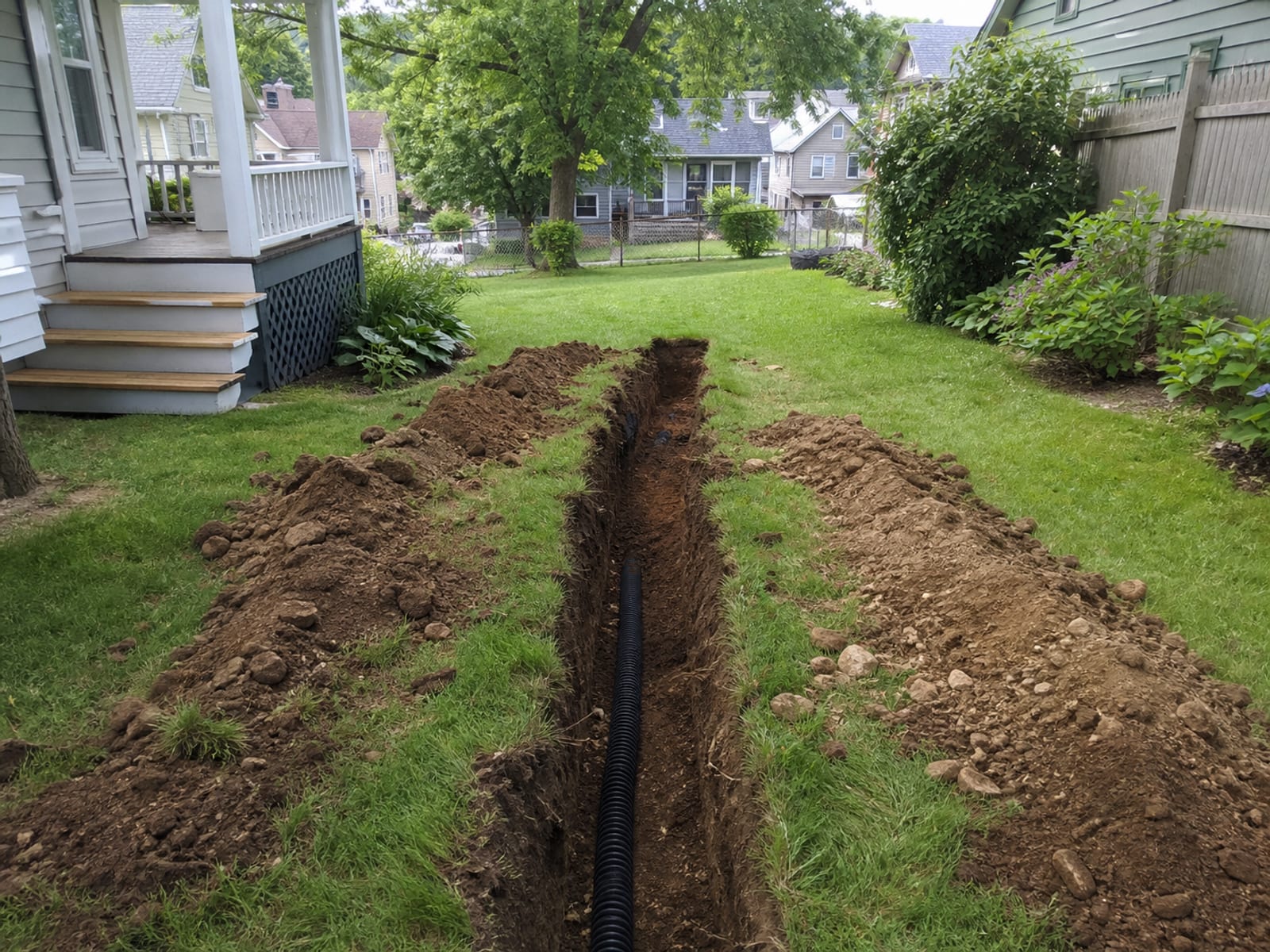
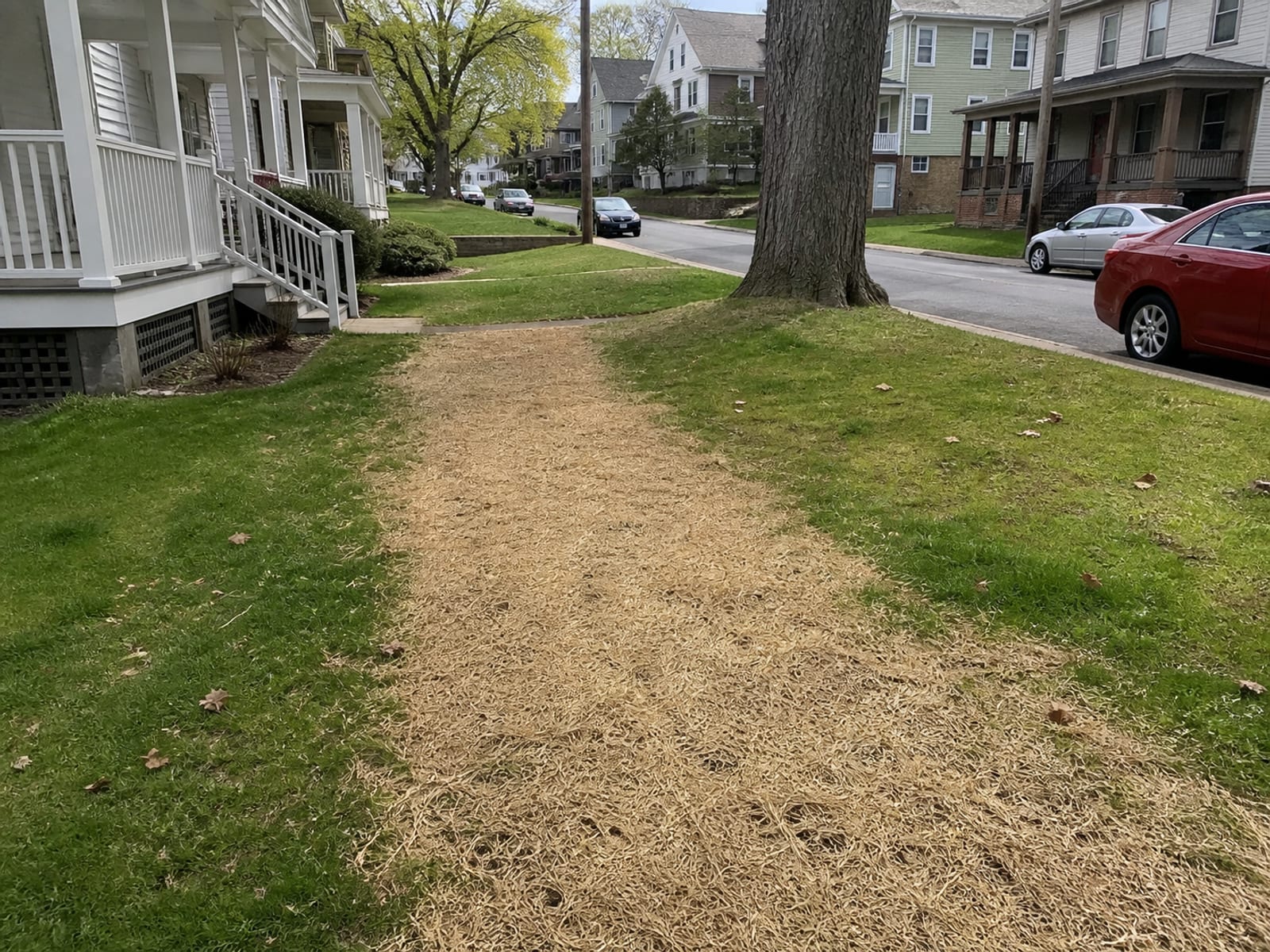
Drainage work is linear. A collection point, a line running to an outlet, and whatever has to be built at each end. So what gets disturbed is a corridor rather than a field: the trench itself, a working strip beside it wide enough for the machine and for spoil, and staging for pipe, stone, and anything being removed. On most residential jobs that is a band a few feet wide following the route, plus a working area at each end.
Two things widen it. Spoil has to go somewhere, and on a lot with no room for a stockpile it gets loaded straight into a truck, which means truck access becomes part of the disturbed area. And the machine has to reach the work, so the route from the street or the drive to the trench gets used repeatedly and shows it.
What keeps it manageable is opening only what is being worked. A crew that trenches, installs, and backfills in sections leaves you with a moving disturbance rather than the whole route open for a week. If that matters to you, and on a small lot it usually does, it is worth asking for explicitly before work starts.
What Happens Before Anyone Digs?
Three things, and none of them look like progress from the kitchen window.
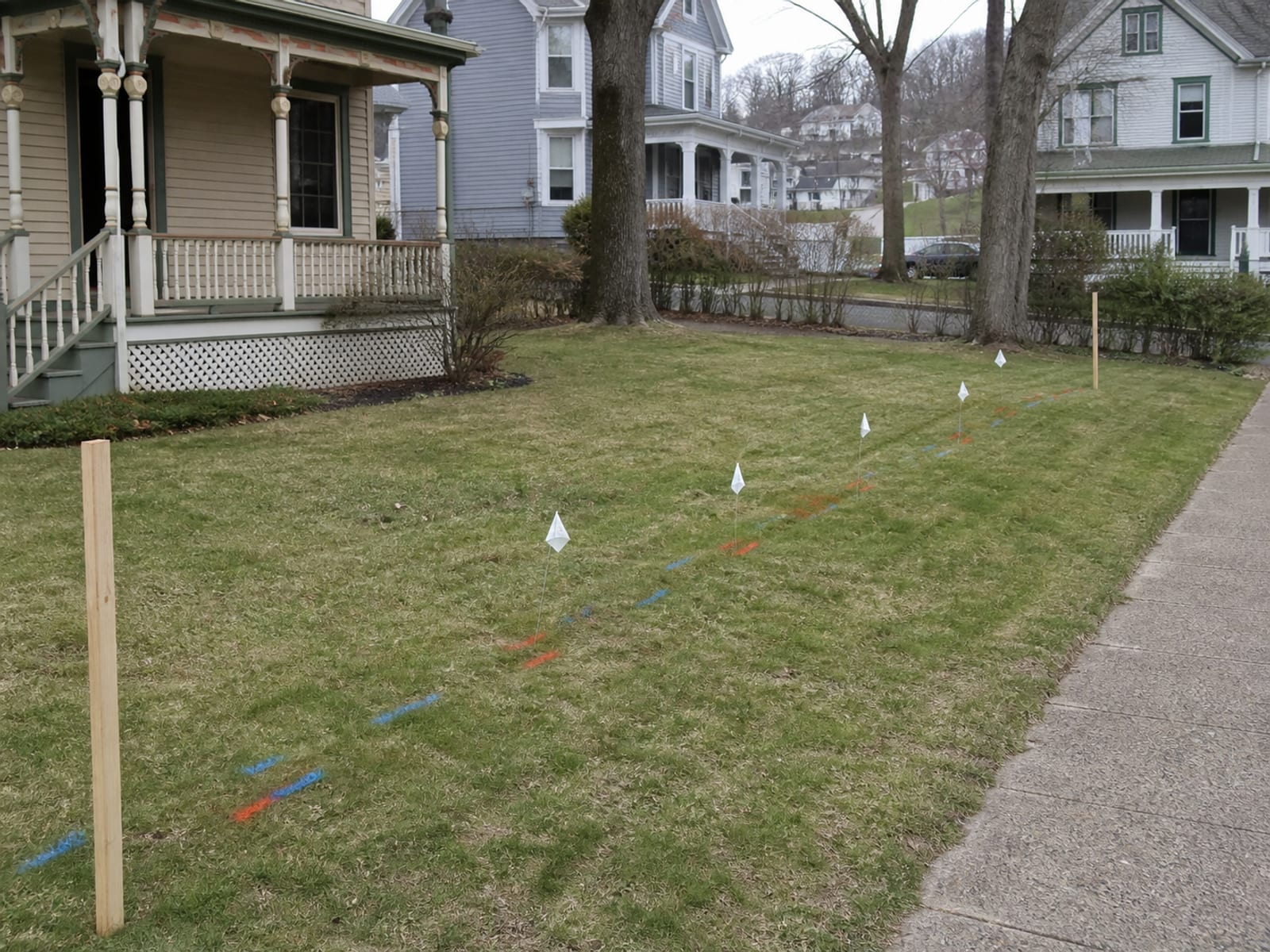
The route and the outlet get confirmed on the ground. Where the water is collected, where the line runs, where it discharges, and whether that discharge point is stable and appropriate. Marking that route physically is what turns an agreed scope into a work plan.
The utility notification goes in. The locate request with its required notice period, then the markings appear: paint on the grass and the pavement, flags along the route. Those marks are the first visible sign that the job is real. They cover facilities registered with the system, which is why you will also be asked what you know about private lines, meaning irrigation, low voltage lighting, an invisible fence, a propane run, or an old drain somebody installed decades ago.
The approval position gets confirmed. Whether the scope and its location need any Derby review is settled before mobilization, since not every drainage job needs every approval and the applicable office is who answers that.
Only after those does anything get opened. If markings appeared on your lawn and then nothing happened for a couple of days, that is the process working rather than a delay.
What Does the Drainage Installation Process in Derby, CT Look Like Day by Day?
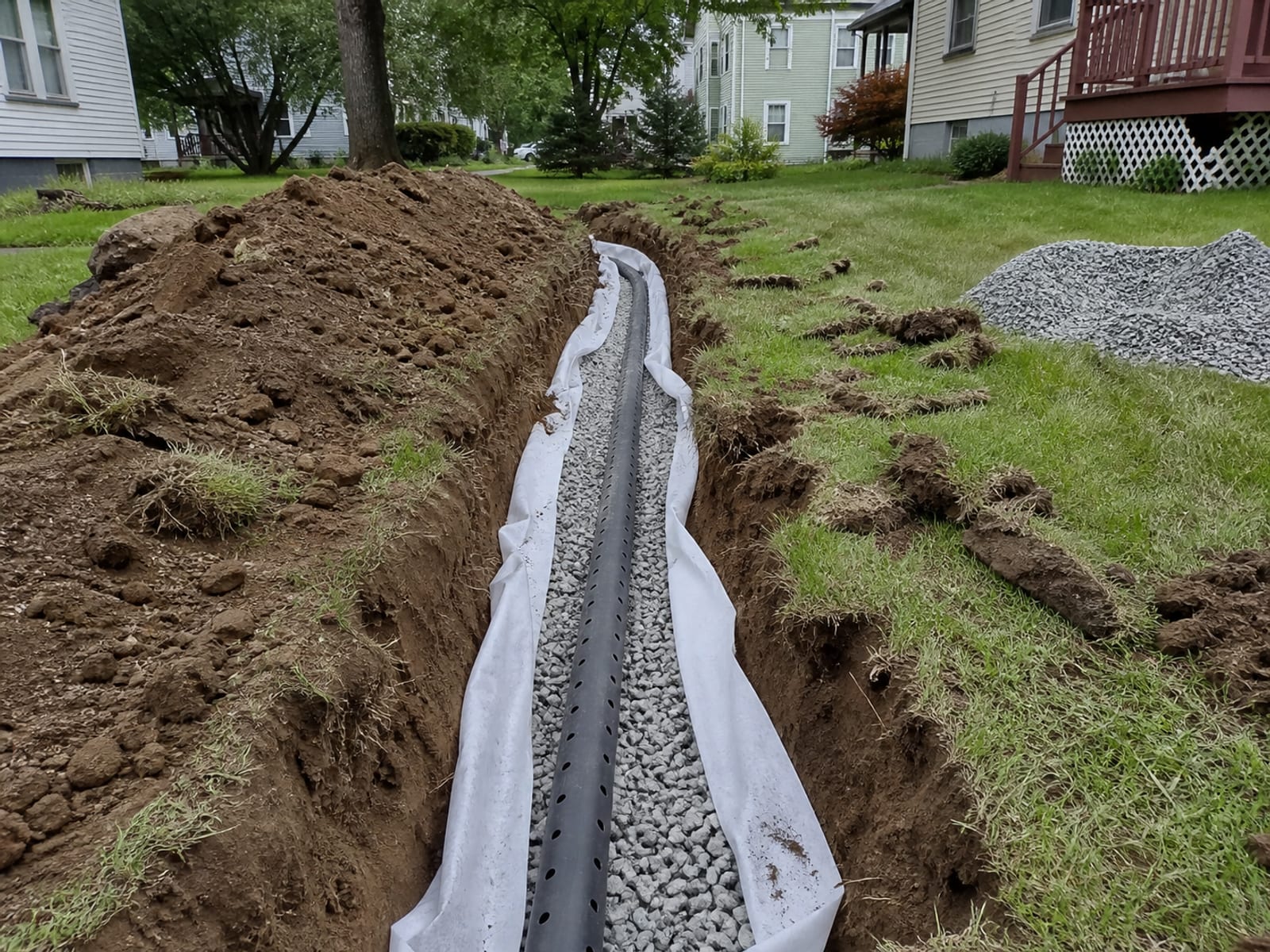
1. Limits and protection. The work limits made visible, the areas that stay untouched identified, access protected, and temporary erosion controls installed where the job calls for them. 2. Staging. Pipe, stone, fittings, and any structures delivered and placed where they do not block the work or your access, plus a plan for where spoil goes from the first bucket. 3. Excavation. The trench opened along the marked route, worked in sections rather than end to end, with hand exposure where the route crosses a marked utility. 4. Installation. The approved system built: bedding, pipe, any collection points or structures, filter treatment where specified, and the outlet with its protection. The specifics follow the design rather than a standard detail. 5. Checks before covering. Where the design or an approval requires something to be verified before backfill, that is a hold point, and nothing gets covered ahead of it. 6. Backfill and compaction. Material returned in a controlled way rather than pushed in, with compaction where the design or the surface above requires it. 7. Grading and stabilization. The surface brought back to the intended grade, disturbed ground stabilized, and the finished condition delivered as the written scope describes it.
Safety runs through all of that rather than sitting at one step. Nobody enters an unprotected trench, and conditions get reassessed rather than judged once on the first morning, which is exactly why rain changes a schedule.
Why Will Nobody Give You a Firm Calendar Date?
Because two of the biggest variables are fixed by other people and one is underground.
| Factor | Why it moves the date | Who controls it |
|---|---|---|
| Utility notification | The notice period runs before any powered excavation, with no compressed version for a non emergency job | Fixed by rule |
| Approvals | Where a review applies, it runs on its own timeline and the applicable office decides | The City, where applicable |
| Route length and depth | More trench and deeper trench is more work, straightforwardly | The design and the site |
| Access | Whether the machine reaches the work directly or has to work in stages or with smaller equipment | The property |
| Soil, rock, and water | What is actually in the ground, established as it is opened rather than beforehand | Unknown until exposed |
| Existing utilities | Crossings needing hand exposure, and anything found that was not marked | Partly unknown |
| Weather | Rain changes trench conditions and can stop work for safety rather than comfort | Nobody |
| Restoration | Surface repair, seeding, and any hardscape replacement, plus the season for planting | The scope and the calendar |
No universal Derby field duration for a residential drainage job exists in any authoritative source, and any date offered before the route, the ground, and the approvals are known is a hope rather than a schedule. What you should get instead is a realistic window with the dependencies named, and an update once the trench is open and the ground has told everybody what it is.
What Will You Actually See on Site?
In roughly this order, so you can follow along:
- Marks and flags on the lawn and the pavement, then a pause.
- Stakes or paint defining the work limits and the route.
- Materials delivered, usually pipe, stone, and any structures, stacked out of the way.
- Controls installed, which might be silt fence, inlet protection, or matting depending on the job.
- A machine and a spoil pile, or a machine and a truck if there is nowhere to stockpile.
- An open trench in sections, rather than the whole route at once.
- Pipe and stone going in, which is the fastest looking part of the job and usually the shortest.
- Backfill and compaction, then the trench line disappearing.
- Grading, cleanup, and restoration, which is the part that decides how it looks a year later.
What you will not see is the design thinking and the safety assessment, both of which are happening continuously. A crew standing and looking at a trench is not idling, it is doing the part that keeps everyone out of trouble.
Which Derby Approvals Might Apply to Your Job?
| Item | When it can apply | Who |
|---|---|---|
| Zoning review | Drainage, excavation, grading, fill, or a discharge route, depending on the scope. The City states its Zoning Enforcement and Wetland Division reviews and issues zoning and wetlands permits | Derby Zoning Enforcement and Wetland Division |
| Temporary special exception for earth material work | Derby's zoning regulations require it before soil is dug, excavated, scraped, disturbed, or moved, or filled, unless an exemption applies. Listed exemptions include work of one half acre or less, and necessary foundation and trench work on a lot with issued zoning and building permits, subject to the regulation's limits | Derby Planning and Zoning |
| Wetlands or watercourse review | Where the work is in or likely to affect a wetland or watercourse, which the municipal agency determines | Derby Inland Wetlands |
| Building related approvals | Where the drainage work is tied to construction or a structure | Derby Building Department |
| Call Before You Dig | Before any powered excavation, at least two full days ahead excluding weekends and holidays, and no more than 30 days ahead | CBYD, at 811 |
Two honest notes. Not every drainage job needs every one of those, and assuming an exemption applies is not the same as confirming it. The applicable office is who establishes whether a requirement attaches to your specific proposal, and that conversation happens before mobilization rather than after somebody notices.
What Makes a Drainage Estimate Move?
No average Derby residential drainage price exists in any authoritative source, and the drivers are what a good estimate separates.
Route length, depth, and width, since that is the volume of the work. Access and staging, which on a compact lot can rival the trenching. What is in the ground, meaning rock, groundwater, or unsuitable material, none of which is fully known until exposed. Utility crossings needing careful hand work. The outlet, its construction, and its protection, which is frequently more work than expected. Dewatering if the trench takes water while it is open. And the restoration: surface repair, seeding, and anything hard that has to be removed and replaced.
Worth confirming explicitly in the scope, because these are the items most often left ambiguous: removal and replacement of any hardscape, disposal of spoil, planting and lawn restoration, engineered plans if required, permits and any wetland or floodplain review, dewatering, and how difficult subsurface conditions are handled if they turn up.
What Happens If It Rains Mid Job?
Work usually stops, and that is the correct outcome rather than a delay to be pushed through.
Water changes trench conditions. It softens walls, adds weight, and makes ground that was stable in the morning unreliable by the afternoon, which is precisely why conditions are reassessed after rain rather than assumed to hold. An open trench in a wet period is also a sediment source, which is why controls are installed and maintained rather than put in once.
Practically, expect a rain day to mean the open section gets made safe and left, or backfilled if it is complete, and the crew returns when conditions allow. On a low lying Derby parcel, where mapped soils along the river areas include alluvial, poorly drained, and very poorly drained types, that is a more likely scenario than it would be on higher ground, and it belongs in the schedule expectation from the start.
What Can You Do Yourself While the Work Is Happening?
A useful amount, none of it involving the trench.
Before: move vehicles, furniture, hoses, planters, and anything else out of the corridor and off the access route. Tell the crew where your private lines are, since your knowledge is the only source for those. Note where water currently goes during a storm, and photograph it, which gives everybody a before picture. Talk to the neighbor if the access or the outlet is anywhere near a boundary.
During: keep children and pets away from the open work, keep the access route clear, and raise anything that looks wrong while it is still open rather than after it is covered. If you see something you do not understand, ask. Every crew would rather answer a question than reopen a trench.
After: water the restored area if seeding is part of the scope and the season calls for it, and walk the property during the first significant storm to confirm that the water does what it is now supposed to do.
What is not owner work is entering the excavation for any reason, moving the utility marks, or deciding on your own that a wet area near the work is not a regulated resource. Those are contractor and municipal questions.
What Does the Yard Look Like When It Is Finished?
The honest answer is that it depends on what the written scope says, which is why that document matters more than any verbal reassurance.
At minimum the trench line should be backfilled and compacted so it does not sink, the surface brought back to the intended grade with no depressions along the route, spoil and debris removed, hard surfaces reinstated if they were removed, and disturbed soil stabilized.
Expect some settlement along the line in the first season. That is normal as backfill consolidates, and the useful thing is to have agreed in advance who comes back to top dress it and when, rather than discovering that nobody owns it.
Expect the lawn to take a season to blend, depending on when the work happened. Seed established in autumn or spring looks very different from seed put down in July, and where the season is wrong, temporary protection and a return visit is a better plan than pretending otherwise.
Four Things to Expect During Drainage Work
1. The utility markings appeared and then nothing happened for two days. What is going on?
2. How much of the yard is typically disturbed?
3. What does a crew do when it rains mid job?
4. What should you expect along the trench line in the first season?
Pick an answer to begin.
Frequently Asked Questions About what to expect from drainage work in derby ct
How long does drainage work take in Derby, CT? The fixed part is the utility notice: at least two full days before powered excavation, excluding Saturdays, Sundays, and holidays, and no more than 30 days ahead. Any approval that applies runs on its own timeline on top of that. The field work itself has no universal local duration in any authoritative source, because route length and depth, access, soil, rock, water, utility crossings, weather, and restoration all vary. Expect a window with the dependencies named, and an update once the ground is open.
Will drainage work tear up my yard? It will disturb a corridor along the route and a working area at each end, plus the access the machine uses. It should not disturb the whole yard, and a crew working in sections leaves a moving disturbance rather than the entire route open at once. How it looks afterward is governed by the written restoration scope, which should state the backfill and compaction, the finished grade, what happens to any hard surfaces, and whether seeding is included.
Do I need a permit for drainage work in Derby? It depends on the scope and where the work is. Derby's zoning regulations require a temporary special exception before soil is dug, excavated, scraped, disturbed, or moved, or filled, unless an exemption applies, with listed exemptions including work of one half acre or less and necessary foundation and trench work on a lot with issued zoning and building permits, subject to the regulation's limits. Wetlands and building related paths run separately. Confirm applicability with the City rather than assuming an exemption.
Do I need to call 811 before drainage work? Yes, before any powered excavation, apart from an emergency. The notice must be at least two full days ahead, excluding Saturdays, Sundays, and holidays, and no more than 30 days ahead, and utility owners then mark their registered facilities. Where you have hired a contractor, they make the request. Your part is telling them about private lines, because those are not covered by the markout and you are the only source.
What makes a drainage estimate change? Conditions that were not visible when it was written. Rock, groundwater, unsuitable material, an unmarked utility, an outlet that turns out to need more construction than expected, or a review requirement that attaches to the scope. Weather can affect it too where dewatering becomes necessary. The protection is a written change process: what triggers a change, who documents it, and who authorizes it before further work happens.
Can I install drainage myself? Observing, documenting, clearing access, and preparing the area are all reasonable. Excavation is a different matter, and this article deliberately does not give trench installation instructions. OSHA identifies cave ins, water, falling loads, hazardous atmospheres, and mobile equipment as excavation hazards, and a competent person assesses soil and rock, water, protective systems, and changed conditions. Add to that the utility notification requirement and the possibility of a municipal review, and the sensible boundary is fairly clear.
What if the yard is wet or it rains during work? Expect the schedule to move rather than the crew to push through. Wet conditions change what is safe in and around a trench, they can make backfill and compaction unreliable, and they increase the sediment risk from an open corridor. The correct response is to make the open work safe, reassess, and continue when conditions allow. On a low lying parcel that is a realistic possibility rather than an unlucky one.
The Bottom Line
Drainage work looks more dramatic in the imagining than in the doing. What actually happens is a marked route, a couple of days of nothing while the utility notice runs, a corridor opened in sections, a system installed, and then a week or two of the yard looking untidy before it goes back together.
The two things worth pinning down in writing are the restoration and the change process. Restoration decides what you are looking at afterward, and the change process decides how the unknown parts of the ground get handled without an argument. Everything else about the job follows a sequence that is well established and, once you know it, fairly easy to follow from the window.
If you are planning drainage work in Derby, CT, Prestige Property Maintenance can walk the route with you, look at the outlet, and put a scope in writing that names the corridor, the restoration, and how surprises get handled. We handle drainage solutions, excavation, trenching, and grading with one crew working out of Oxford, serving Derby along with the other towns across the Naugatuck Valley and western Connecticut. See how we work across Derby, call (203) 258-3395, or contact us to get the sequence set out for your property.
What the Crew Means When They Say It
Tap a term to see what it means.
Corridor. The strip of ground disturbed by a linear job: the trench plus the working space beside it. Usually much narrower than people expect.
Related Articles
Landscape Construction Derby CT: Patios on Small City Lots
On a small Derby lot, landscape construction means drainage, grade, and approvals before design. See how it works on a dense, in town property.
Land Clearing in Bethany, CT: What the Property Looks Like After
Agreed to land clearing in Bethany, CT and picturing a bulldozed lot? Here is what actually happens to trees, stumps, and debris once work begins.
What to Expect from an Excavation Company in Derby, CT
A machine on your small Derby lot does not have to be stressful. Learn what to expect from an excavation company, step by step, before you hire one.