

What to Expect from an Excavation Company in Derby, CT
Kash CochranePublished
- excavation
- derby ct
- hiring a contractor
- permits
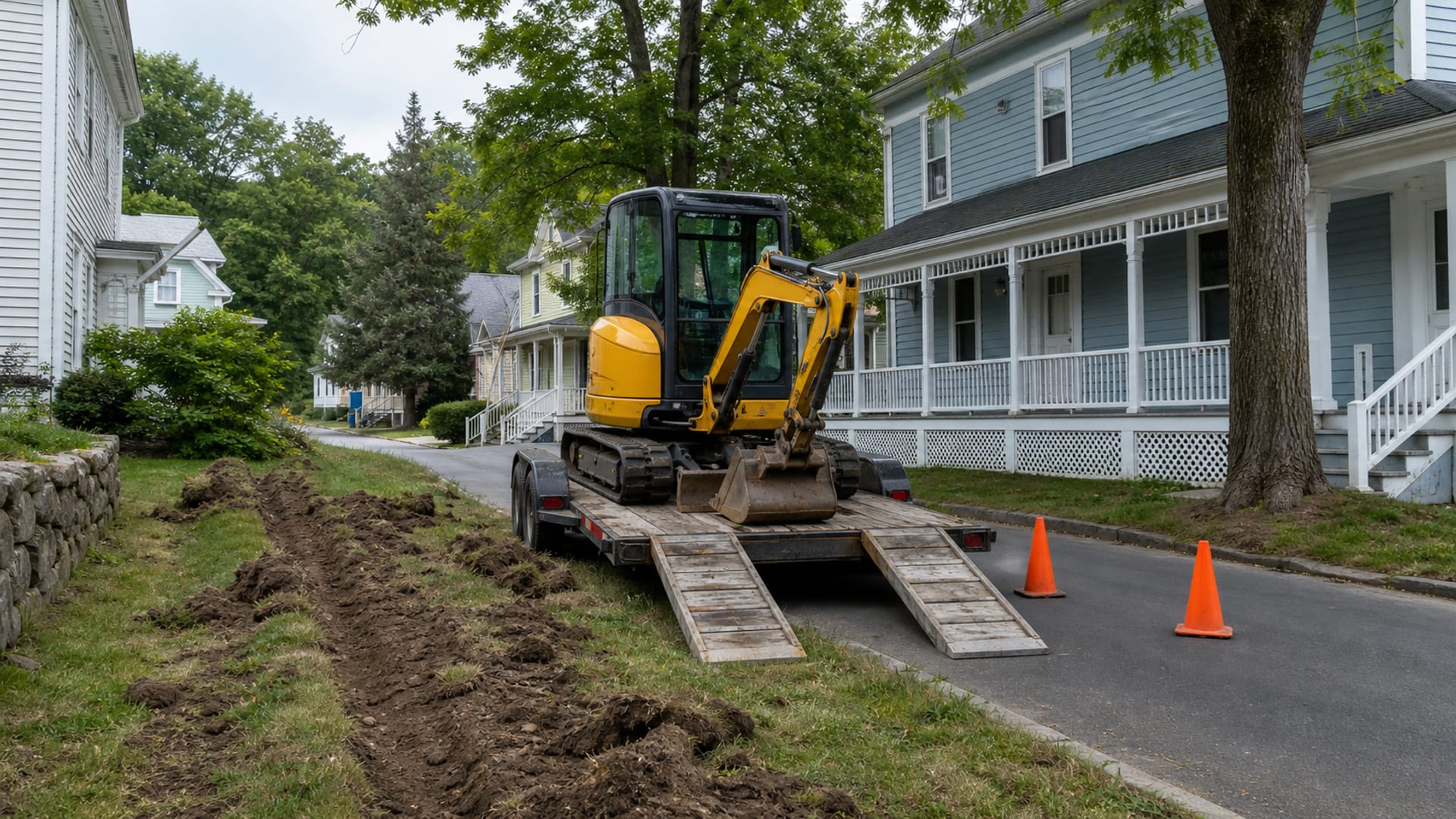
Hiring heavy equipment for the first time is an odd feeling. You are inviting a machine, a truck, and people you have never met onto a lot where the house, the fence, the drive, and the neighbor's yard are all within a few feet of where the digging happens. Most of the anxiety is not about the hole. It is about not knowing the sequence: who arrives when, what happens before anything is dug, what the days look like, and what the property looks like when the last truck leaves. Here is that sequence, end to end, so nothing about the visit is a surprise.
Key Takeaways
The utility notice is a hard floor, not a courtesy
Connecticut requires excavators using power operated equipment to notify the clearinghouse at least two full days ahead, excluding Saturdays, Sundays, and holidays, and no more than 30 days ahead, outside an emergency.
Derby's approval path is project specific
the zoning regulations generally require a temporary special exception before soil is disturbed or moved, with listed exemptions including work of one half acre or less and necessary foundation or trench work on a lot that already has zoning and building permits where it does not exceed one half acre.
On a compact lot, protecting what surrounds the hole is most of the visit
access, staging, surface protection, and where spoil sits shape the day more than the digging does.
Trench depth changes the safety requirements
OSHA requires protective systems for trenches five feet deep or more unless the excavation is entirely in stable rock, with soil, water, weather, stored material, equipment, adjacent structures, and traffic all affecting what is required.
Nobody honest quotes a fixed price or date before the site visit
the estimate depends on access, volume and haul off, ground and water conditions, utilities, approvals, drainage, and restoration, all of which are established by looking.
You Probably Need Equipment for One of Five Reasons
Homeowners reach this point from a small number of directions, and knowing which one you are in shapes the whole conversation.
A foundation or an addition, where the excavation is part of a permitted construction project and has to hit specified elevations. A drainage or grading problem, where water is going somewhere it should not and the ground has to be reshaped or a system installed. A utility route, where a water, electrical, or septic line has to run from one point to another. Removal or import of material, where soil has to leave or fill has to come in. Or a site correction, where something settled, washed out, or was never built right in the first place.
Each of those carries a different approval question and a different definition of finished. Being clear about which one you are asking for is the single most useful thing you can bring to a first phone call.
What Excavation Contractors Do in Derby, CT Covers Three Kinds of Work
Foundation and site excavation
Digging to a design: specified elevations, a subgrade somebody will inspect, and a sequence tied to a construction schedule. Building related excavation usually sits inside a zoning and building permit framework, and the exact permit scope is confirmed with the City rather than assumed from the project's size.
Utility and drainage trenching
Opening a route for a line or a drainage system. Powered digging brings the locate requirement, and any trench a worker enters brings OSHA's protective system requirements with it. This is the category where the safety plan is a real part of the scope rather than a paragraph in a document.
Grading, soil removal, and fill
Reshaping ground, taking material away, or bringing material in. This is the category most likely to run into Derby's earth material provisions, and the one where the disturbed area, the permit status of the lot, and the actual square footage decide the path. It is not something to self classify from an article, including this one.
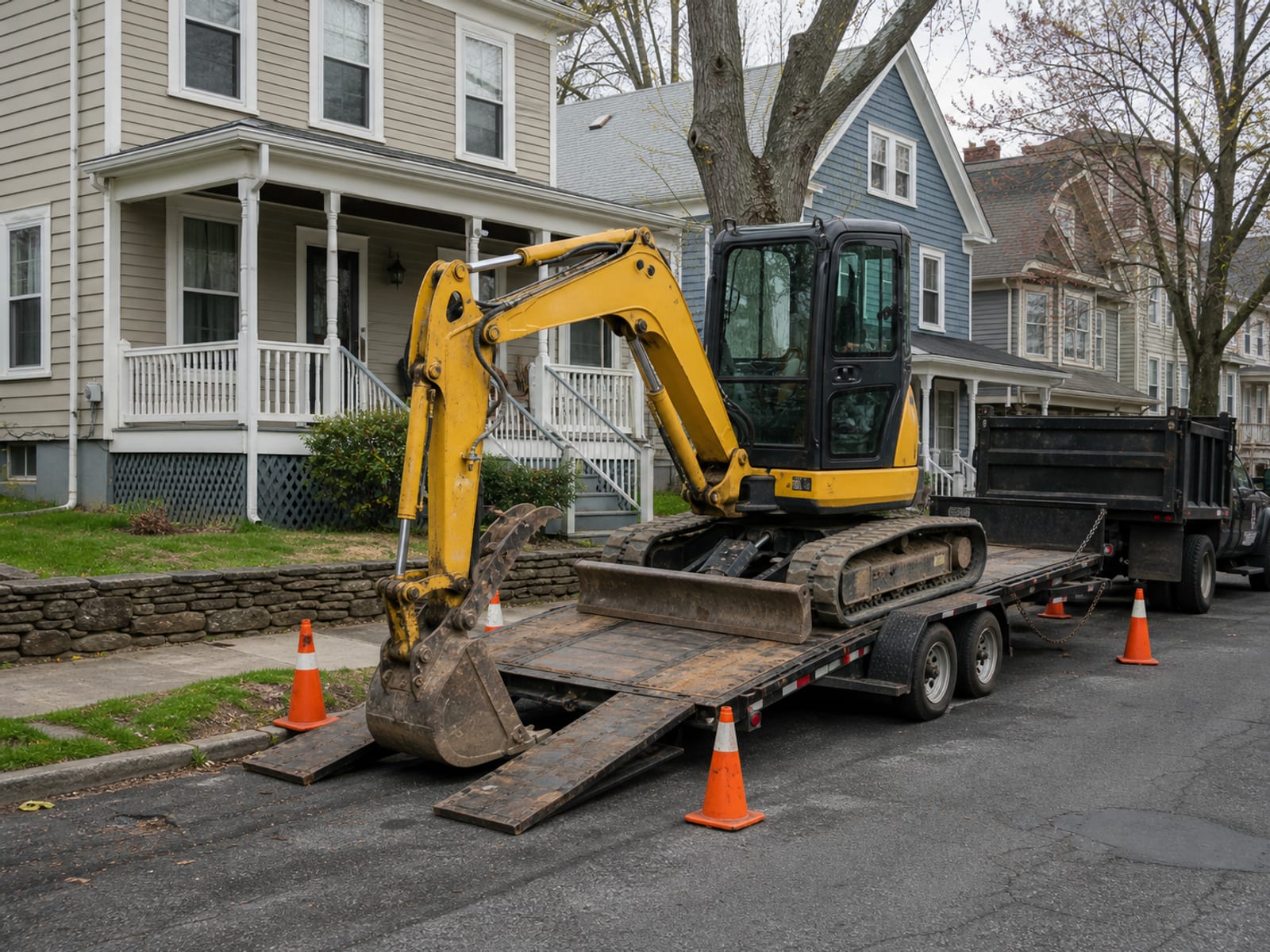
Hiring an Excavation Company in Derby, CT Starts Before Anyone Visits
You can shorten the whole process by having a few things ready.
The project brief. What you want the finished ground to do, roughly where the work limits are, photographs of the area including the access route, any known water problems, and your intended timing. A description of the outcome is more useful than a description of the work, because the outcome is what a contractor scopes against.
Records. Any survey or plot plan, previous permits, a septic as built, well location, and whatever you know about private lines somebody buried over the years. The utility locate covers facilities registered with the system, so your own lines are yours to identify.
The estimate questions. Ask what is included in the excavation itself, hauling, imported fill, drainage, backfill, compaction, final grading, erosion controls, and restoration, and ask for the assumptions and exclusions in writing. A scope that states what it excludes was written by somebody who has done this before.
The Excavation Contractor Process in Derby, CT Runs in Seven Steps
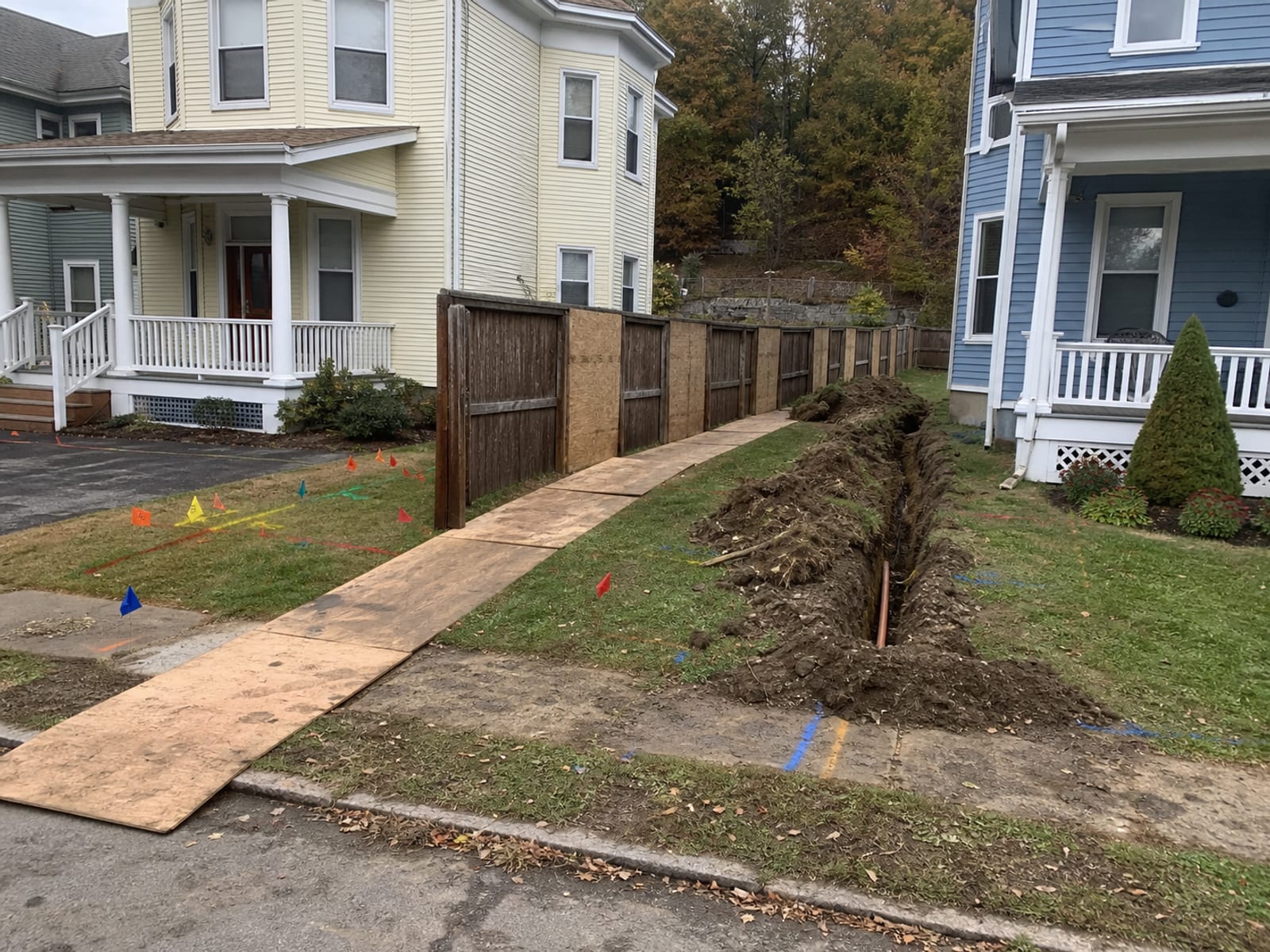
1. Initial call and site visit. You describe the outcome, we look at the ground, the access, the water, and what surrounds the work area. Nothing about a compact lot is knowable from an address. 2. Scope, access, soil, drainage, and approval screening. What the work involves, how equipment reaches it, what the ground appears to be, where water goes, and which approvals the proposal needs. Where a wetland or watercourse could be affected, that is screened before anything is scheduled, since the municipal agency makes that determination. 3. Utility notification and markings. The locate request filed with the required notice, the responses verified, and private lines identified separately with you. 4. Mobilization and site protection. Equipment brought in, the work zone established, and everything around it protected: pavement, lawn, walls, fencing, and the route the machine uses to reach the work. 5. Excavation, material handling, and open excavation safety. The dig itself, spoil managed deliberately rather than piled where it lands, and the protective measures the depth and conditions require. 6. Required checks before covering work. Where an inspection or a utility connection has to happen before backfill, that is a hold point. Nothing gets covered ahead of it. 7. Backfill, grading, cleanup, and restoration. Compaction where the design calls for it, final grades, the surface put back, and the site left in the condition the scope described.
The 811 Notice Is a Hard Floor, Not a Courtesy
This one deserves its own note because it surprises people who are working to a deadline.
The notice period is at least two full days, excluding Saturdays, Sundays, and holidays, and no more than 30 days ahead. That is a statutory floor, not a suggestion, and there is no version of a non emergency job where it gets compressed to suit a schedule. If somebody offers to start tomorrow morning on a job called in this afternoon, that tells you something.
The emergency exception exists for genuine emergencies, meaning immediate danger to life, health, or property, and not for a project that is running behind.
It is also worth understanding what the markout produces. Utilities registered with the system mark their facilities. Your irrigation line, an invisible fence, propane, a feed to a garage, and an old drain do not appear, and on an older Derby lot several of those may exist. Identifying them is part of the site review rather than something the paint takes care of.
Protecting the Space Around the Hole Is Most of the Work on a Small Lot
On an open site, the excavation is the job. On a compact city lot, the excavation is maybe half of it, and the rest is everything you can see from the kitchen window.
Access has to be planned rather than improvised: the route the machine takes in, whether it crosses the drive, the lawn, or a walk, and what protects those surfaces while it does. Where the truck stands, which frequently means the street, and how that affects your neighbors and your own parking.
Staging has to be decided in advance. Spoil goes somewhere from the very first bucket, and on a small lot that somewhere is usually either a truck or a defined stockpile area, not an expanding pile against a fence. Materials arriving have to land somewhere too.
Protection around the excavation matters more the closer things are. Fences, walls, mature planting, a shed, a neighbor's structure, and the house itself may all sit within reach of the work, and how each is protected belongs in the conversation before the machine arrives rather than after something gets marked.
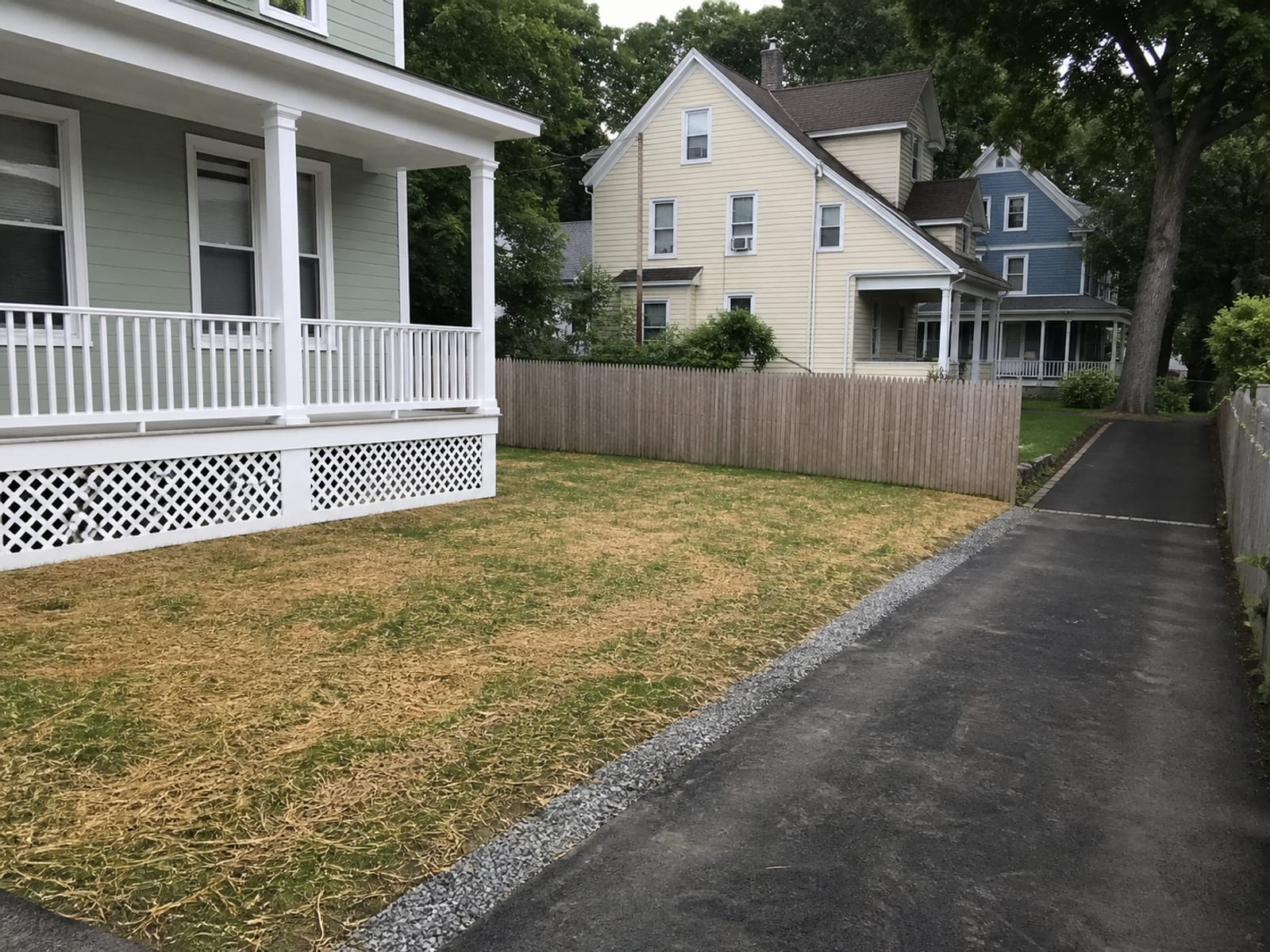
Finally, restoration. A machine crossing a lawn leaves evidence. What gets put back, to what standard, is a line in the scope, and a contractor who raises it before you do is one who intends to deal with it.
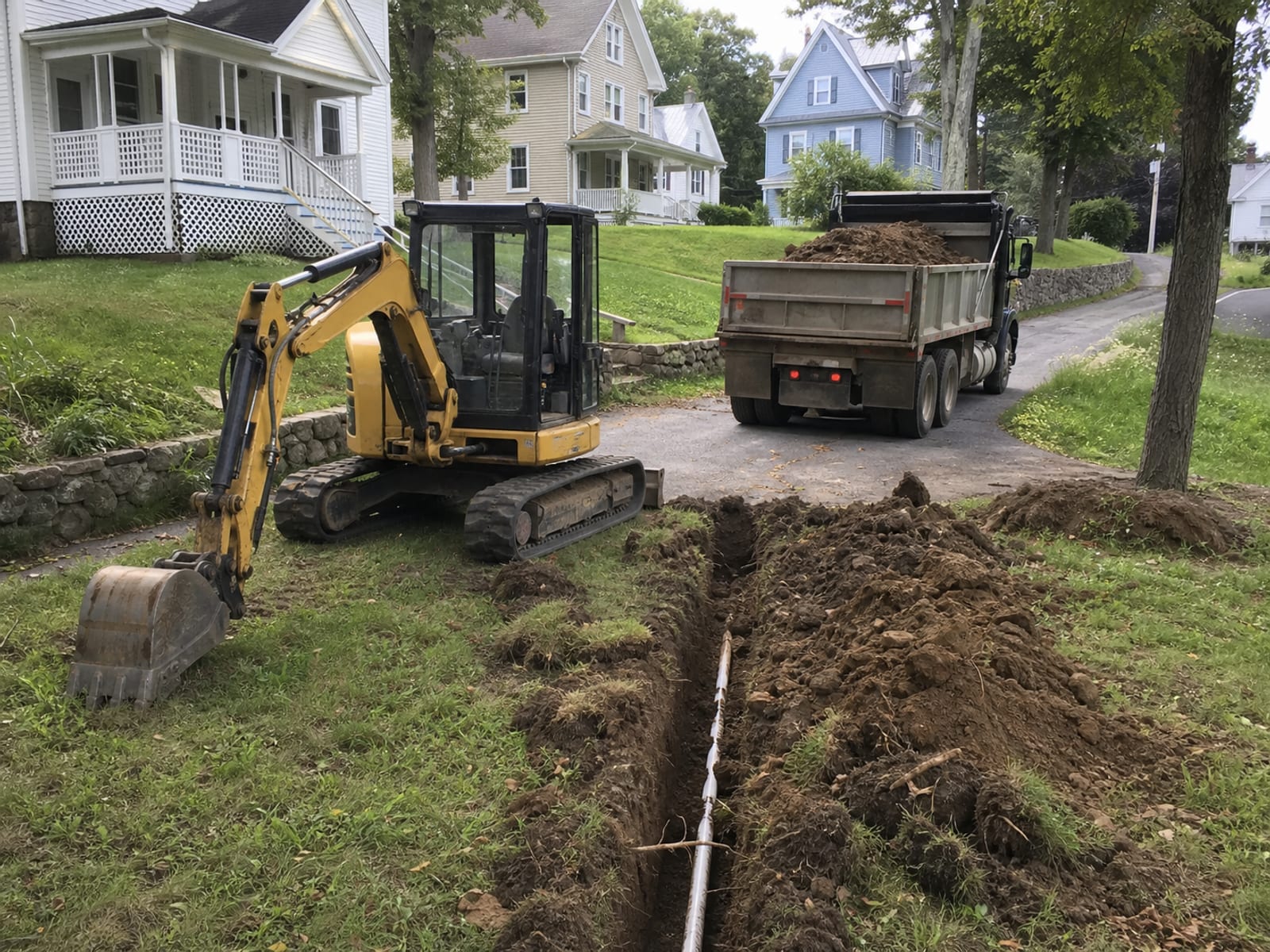
Five Things Set the Estimate, and None of Them Is Square Footage
| Driver | Why it moves the number | What you can check yourself |
|---|---|---|
| Access and staging | Whether equipment reaches the work directly or has to work at reach, in stages, or with smaller machines | Measure the tightest point on the route and note where a truck could stand |
| Soil, water, rock, and frost | What comes out, whether it can be reused, whether dewatering is needed, and what safety measures the conditions require | Note where water sits after rain and whether rock shows anywhere on the property |
| Volume, haul off, and imported fill | Every cubic yard has a destination, and hauling is a real cost on a lot with nowhere to stockpile | Think about whether material can stay on site at all |
| Utilities, permits, wetlands, and inspections | Coordination, waiting, and the pre work that has to happen before digging starts | Gather your records and identify private lines you know about |
| Drainage, erosion control, and restoration | The work after the hole is closed, which is frequently underestimated | Decide what you expect the finished surface to look like |
No published Derby specific residential price range exists, so any figure quoted before a visit would be invented. What a written estimate should give you instead is those five drivers, separated, with the assumptions stated and a process for what happens if the ground disagrees.
Derby's River Setting and Frost Depth Both Belong in the Plan
Two local realities affect nearly every excavation here.
The first is water. Derby sits at a river confluence, with floodplain conditions and mapped soils that include alluvial, poorly drained, and very poorly drained types along the river areas. That does not mean your parcel is affected, and it does mean the water question deserves a real answer rather than an assumption, both for the excavation itself and for whether municipal wetlands review applies.
The second is frost. Connecticut's residential code criteria identify a 42 inch frost line depth and do not permit footings to bear on frozen soil unless the frozen condition is permanent. That is a design criterion for construction rather than a general excavation depth, and how it applies to your project is the building official's and the approved design's call. It does mean winter work needs planning rather than optimism.
| Item | When it applies | Who |
|---|---|---|
| Temporary special exception for earth material work | Generally required before soil is disturbed or moved, with listed exemptions including work of one half acre or less and necessary foundation or trench work on a lot with issued zoning and building permits, where it does not exceed one half acre | Derby Zoning Enforcement and Wetland Division |
| Building permit path | Where the excavation supports construction or alteration of a building or structure | Derby Building Department |
| Municipal wetlands review | Where the activity is likely to impact or affect a wetland or watercourse, including from an adjacent area. Whether a proposal is regulated is a municipal determination | Derby Inland Wetlands |
| Call Before You Dig | Any power operated excavation, at least two full days ahead excluding weekends and holidays, and no more than 30 days ahead | CBYD, at 811 or 1-800-922-4455 |
| Trench protective systems | Trenches five feet deep or more, unless entirely in stable rock, with conditions governing the choice | The contractor's competent person, under OSHA requirements |
What We Do and How We Work
Prestige Property Maintenance is a licensed and insured excavating contractor based in Oxford, CT, established in 2015, owned by Kash Cochrane, CT HIC #0704432. We serve Derby along with the other towns across the Naugatuck Valley and western Connecticut, and we do not operate a Derby office or yard, which is worth knowing simply so you can picture how a crew and equipment actually reach your street.
What we commit to on a job like this is process rather than promises. A site visit before any number is given. A written scope that states what is included, what is excluded, and what assumptions it rests on. The utility notification handled with its full notice period rather than compressed. A straight explanation of what the excavation reveals, including when it is not what anybody expected. And one crew carrying the whole sequence, from the dig through the drainage to the finished grade, so nothing falls into a gap between companies.
Running mulching equipment alongside an excavating fleet also means that where a job needs clearing before it needs digging, that is the same crew and the same responsibility, rather than a second mobilization and a second conversation.
How to Request an Estimate
Call (203) 258-3395 or use the estimate form on this site. Have ready: what you want the finished ground to do, the property address, photographs of the work area and the access route, notes on where equipment could reach and where a truck could stand, any survey, plan, or previous permit, and anything you know about private lines, the septic, or a well.
One scheduling note to build in from the start: for any non emergency work with power equipment, the utility notice period has to run before digging begins. That window is fixed, so factoring it in at the planning stage is what keeps a start date realistic.
Four Things to Know Before the Machine Arrives
1. How much notice does Connecticut require before power operated excavation?
2. What does the utility markout cover?
3. At what depth does OSHA require a protective system in a trench?
4. What should you expect from a contractor before a site visit?
Pick an answer to begin.
Frequently Asked Questions About what to expect from an excavation company in derby ct
Do I need a permit for excavation in Derby, CT? It depends on the project. Derby's zoning regulations generally require a temporary special exception before soil is disturbed or moved, with exemptions listed for certain work of one half acre or less and for necessary foundation or trench work on a lot that already has zoning and building permits, where it does not exceed one half acre. Whether your proposal is exempt is a determination for the City's Zoning Enforcement and Wetland Division and, where construction is involved, the Building Department.
Do I need to call 811 before excavation in Derby? Yes, for power operated equipment. The non emergency notice is at least two full days, excluding Saturdays, Sundays, and holidays, and no more than 30 days before the excavation. If you have hired a contractor, they make the request, and you should still expect to be asked about private lines, since the markout only covers facilities registered with the system.
How long does an excavation project take? There is no general Derby duration to quote, and any number given before a visit would be a guess. What is fixed is the notice period. Everything else follows the scope, the ground and water conditions, approvals, utility coordination, weather, access, disposal, and any required checks before covering work. A realistic schedule comes after somebody has seen the site.
How much does excavation cost in Derby, CT? No published Derby specific residential price range exists. The estimate is set by access and staging, the soil, water, rock, and frost conditions, the volume of material and where it goes, the utility, permit, wetlands, and inspection coordination, and the drainage, erosion control, and restoration at the end. Ask for those separated in writing with the assumptions stated, and compare scopes rather than totals.
Can I handle a trench myself? Not one that anybody enters. OSHA's requirements address cave in protection, competent person oversight, soil assessment, water, spoil placement, and conditions that change during the work, and a trench five feet deep or more requires a protective system unless the excavation is entirely in stable rock. The utility notice applies regardless of who runs the machine. If someone is going into the hole, this is contractor work.
Does wetland review apply to work near a watercourse? It can. A person proposing an activity likely to impact or affect a wetland or watercourse has to obtain a permit from the municipal inland wetlands agency, and whether a particular proposal is regulated is a municipal determination rather than an owner's judgment. On a river adjacent parcel that is worth resolving before scheduling rather than after.
Can winter affect excavation work in Derby? Yes, in two ways. Connecticut's residential code criteria identify a 42 inch frost line and do not allow footings to bear on frozen soil unless the frozen condition is permanent, which affects construction related work. And weather, thaw, and rain change trench conditions, which is why conditions are reassessed rather than judged once at the start of a job.
What This Means for You
The part that makes people nervous, a machine working close to the house, is the part a competent contractor spends the most planning time on. What you should see is a visit before a number, a written scope with its exclusions stated, a locate call made with its full notice period, a protected work area rather than an improvised one, and a property put back in the condition somebody described to you in advance.
The two things you can do that help most are simple. Be clear about what the finished ground has to do, since that is what everything gets scoped against. And gather your records, including anything you know about buried lines, because that is information nobody else has.
If you have excavation to plan in Derby, CT, Prestige Property Maintenance can walk the lot, look at the access and the water, and put a scope in writing before anything is scheduled. We handle excavation, trenching, grading, and drainage solutions with one crew working out of Oxford, so the dig, the drainage, and the finished grade are one responsibility. See how we work across Derby, call (203) 258-3395, or contact us to arrange a site visit.
Words You Will Hear During the Job
Tap a term to see what it means.
Scope. The written description of what is included, excluded, and assumed. It is the document that decides most disagreements before they happen.
Related Articles
Excavation in Derby, CT: What Homeowners Need to Know
Planning excavation in Derby, CT? See how floodplain rules, zoning approvals, access, and 811 timing shape your project before any machine arrives.
Excavation Company in Bethany, CT: What Happens on a Wooded Lot
Wondering what to expect from an excavation company in Bethany, CT? See how a crew protects your long drive and wooded lot from call to cleanup.
Site Preparation in Derby, CT: From Approved Plans to Pour
Derby's compact, river adjacent lots make site preparation its own decision. Find out what a plan review and site visit actually confirm before you build.