

Excavation in Bethany, CT: Ledge, Wet Ground and Access
Kash CochranePublished
- excavation
- bethany ct
- ledge and rock
- site access
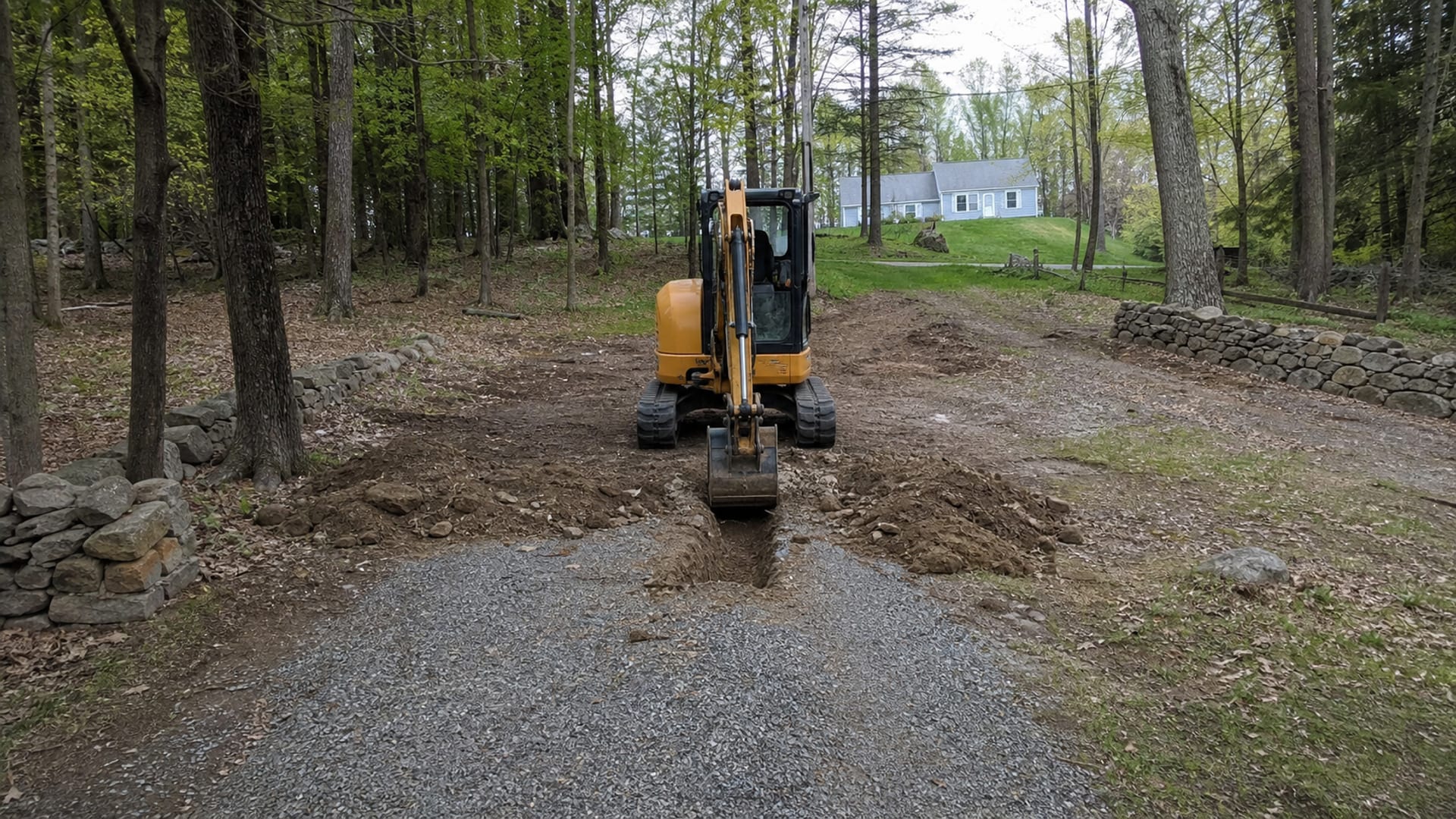
Three things worry people before they call about digging on a Bethany lot, and they are almost always the same three. Is there ledge under that spot, because the neighbor hit rock and it turned into a whole thing. Is the ground too wet back there, since it never really dries out in that low corner. And can a machine and a loaded truck actually get down the drive without leaving ruts you will be looking at for years. Those are the right worries. They are also the three questions that cannot be answered from a satellite image, a phone call, or an address, which is why the site visit is not a sales formality on a rural upland lot. It is the step that turns "I think I need digging" into a scope somebody can price and build.
Key Takeaways
Bethany regulates earth disturbance through three different paths, not one
the zoning regulations cover earth removal, excavation, filling, stockpiling, and grading, and a given project may fall under an exemption, an administrative permit, or a special exception. Which one applies is confirmed with Land Use, not assumed.
Dry ground is not proof there is no wetland
Connecticut defines inland wetlands by soil type, so an area that has never had standing water on it in your memory can still be regulated, and the determination belongs to the town's wetlands agency.
811 is the one part of the schedule that is fixed
notice for power operated excavation is at least two full days ahead, excluding Saturdays, Sundays, and holidays, and no more than 30 days ahead. Everything else about the calendar depends on the parcel.
Can a Machine Even Get to the Back of Your Lot?
On a compact village lot, access is a detail. In Bethany it is frequently the thing that decides which machine does the work, or whether the job is one mobilization or three.
The questions are specific and you can answer most of them yourself before anyone visits. How wide is the drive at its narrowest point, and is that a gate, a stone wall, a mature tree, or a culvert headwall. Where can a trailer turn around, because a machine that arrives on a trailer has to be unloaded somewhere with room. What is the drive built on, since a surface that carries a car all winter can rut badly under repeated loaded truck traffic. How steep is the approach, and does it cross a wet section. Where can spoil sit, and how far is that from where the digging happens, because every extra pass with a loaded bucket is time.
Two of those deserve a note. First, the drive itself is part of the scope whether or not anyone writes it down. Protecting it, and restoring it if it takes damage, is real work and belongs in the written scope rather than in an argument afterward. Second, access constrains machine size, and machine size constrains method. A larger excavator working from one position may be the efficient answer on an open lot and a physical impossibility on a wooded one, and the fix is not a bigger machine, it is a different sequence.

Is There Ledge Under There, and How Would Anyone Know?
Honestly: nobody knows for certain until somebody looks. No townwide numeric data on depth to bedrock, ledge frequency, or boulder density for Bethany turned up in the municipal sources reviewed, and anyone who tells you what is under your yard without investigating it is guessing.
What exists is screening. The NRCS Web Soil Survey publishes soil data with interpretations aimed at exactly this kind of question, including ratings relevant to shallow excavations, dwellings, local roads, and septic fields. It is free, it covers your parcel, and it is a reasonable place to start a conversation. It is also explicitly a screening tool and not a substitute for field investigation. A soil map unit describes a mapped area, not the eight square feet where your footing goes.
Field investigation is the step that actually answers it: test pits, hand probing, sometimes a machine scratching down in the proposed location before a design is finalized. On a project where hitting rock would change the approach materially, that investigation early is far cheaper than the change order that follows finding out late. Where ledge is a genuine unknown and cannot be resolved before the work, the honest way to handle it is a stated allowance and a defined method in the scope, not silence and a hopeful price.
Why Does Dry Ground Still Get a Wetlands Review?
Because in Connecticut, inland wetlands are defined by soil type, not by whether water is sitting on the surface when someone happens to look. That single point catches more Bethany owners out than any other rule, and it catches them out in the most frustrating way, which is after the equipment has been booked.
The practical version is this. A slope, a wooded flat, a section of lawn that is dry in July and dry in your memory can still sit on a soil the state classifies as a wetland soil. Municipal mapping exists and is useful for planning, but it is general and not a site specific delineation, so a map that shows nothing on your parcel is not a clearance. Where the answer matters, a soil scientist field locates the boundary.
State guidance on municipal wetlands permitting lists excavation, filling, grading, piping, culverting, and dewatering among the activities in or affecting a wetland or watercourse that need local review. It is also clear that an owner cannot self declare an exemption. The Bethany Inland Wetlands Commission, through the town's Land Use process, is who makes that call. Asking is a phone call. Not asking is an enforcement risk on a job that has already started.
Which of Bethany's Three Earth Disturbance Paths Applies to You?
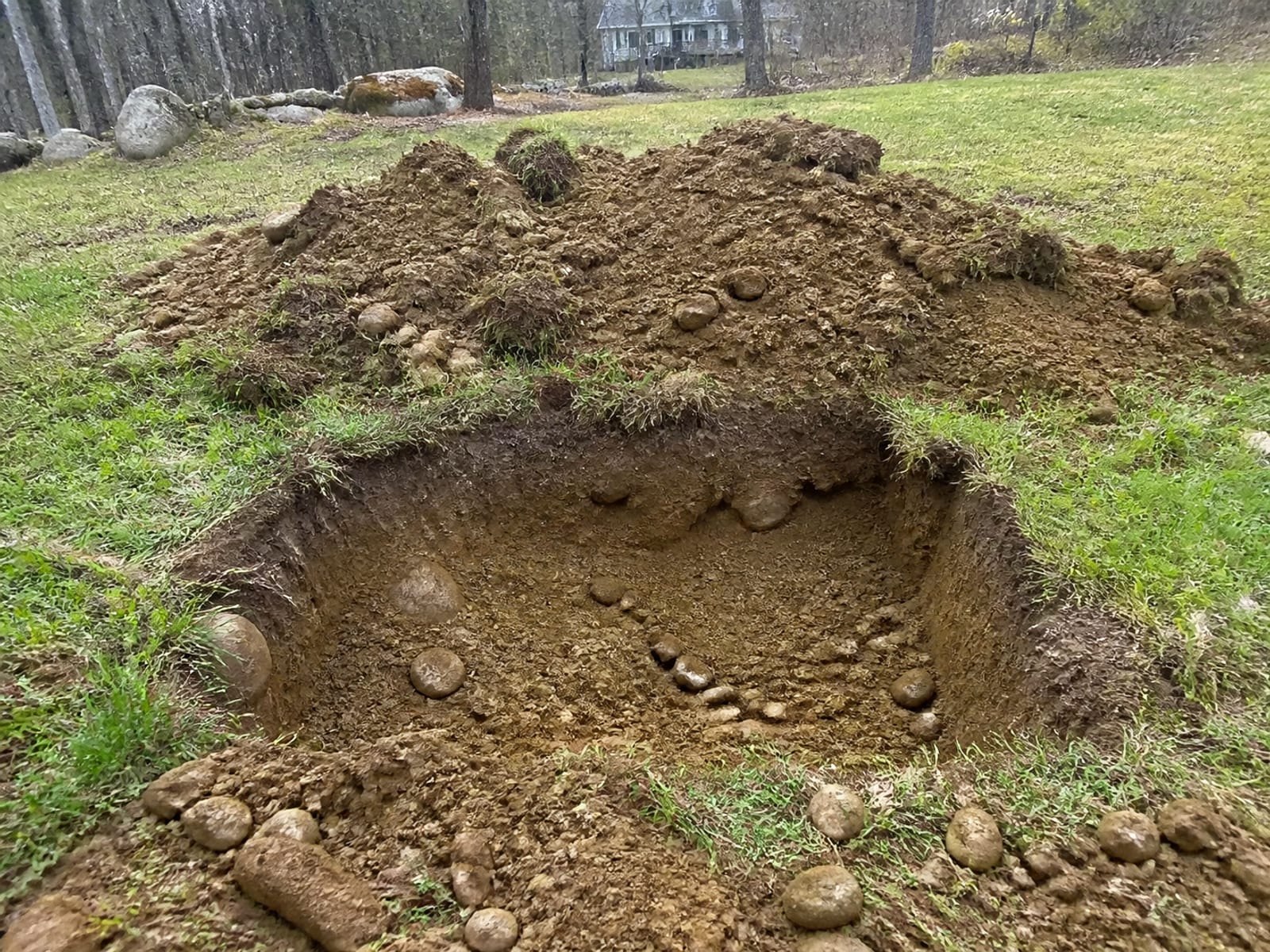
Bethany's zoning regulations deal with earth removal, excavation, filling, stockpiling, and grading directly, and set out that such activities may be permitted by exemption, by administrative permit, or by special exception. Three doors, not one, and which door your project uses changes the paperwork, the review body, and the schedule.
That structure is worth understanding for a reason that has nothing to do with bureaucracy. It means "do I need a permit for this" has three possible right answers, and the one that applies depends on details of your scope such as what is being moved, how much, whether it leaves the property, and what the finished condition is. It is a question with a definite answer, and Bethany Land Use gives it to you.
| The situation | The requirement | Who decides |
|---|---|---|
| Earth removal, excavation, filling, stockpiling, or grading | The zoning regulations provide exemption, administrative permit, and special exception paths. Confirm which applies before treating the dig as routine | Bethany Land Use, through the Planning and Zoning process |
| Work connected to a building, structure, or a regulated electrical, gas, mechanical, or plumbing system | Permits, plan review, and inspections. The department notes that work exempt from a building permit may still need zoning or health district approval | Bethany Building Department |
| Work in, or likely to affect, an inland wetland or watercourse, including excavation, filling, grading, piping, culverting, or dewatering | Local review of the regulated activity. Seek a determination rather than self declaring an exemption | Bethany Inland Wetlands Commission |
| Private construction disturbing one acre to less than five acres | Local approval with an erosion and sediment control plan under the state construction stormwater program, with no state application identified for this category | Bethany land use process, under the CT DEEP program |
| Private construction disturbing five acres or more | Local approval plus a certified Stormwater Pollution Control Plan and a state general permit application | Bethany land use process and CT DEEP |
| Any power operated excavation | Notify at least two full days ahead, excluding Saturdays, Sundays, and holidays, and no more than 30 days ahead, outside the emergency exception | Call Before You Dig, at 811 |
What Do You Know Before a Site Visit, and What Only the Visit Can Settle?
Splitting those two lists is the fastest way to understand why a phone quote and a walked quote are different documents.
| Question | Can be established beforehand | Has to be confirmed on the ground |
|---|---|---|
| What the finished condition needs to be | Yes, from your intended use, a plan, or a design | Whether it is achievable given the actual grades and constraints |
| Whether soils in the area are generally suited to shallow excavation | Yes, from the NRCS soil survey as a screening step | What is actually under the specific footprint, by test pit or probing |
| Whether ledge or boulders are present | No. No townwide data exists at parcel resolution | Yes, by field investigation, and it may still be partly an allowance |
| Where water sits and where it goes | Partly, from your own observation after heavy rain | The runoff path, seasonal high water, and whether dewatering is needed |
| Whether a wetland is involved | No. Mapping is a planning tool, not a delineation | A jurisdictional determination, and a field located boundary if needed |
| Whether equipment and trucks can reach the work | Partly, from measuring the drive and gates | Turning, staging, surface strength, and where spoil can sit |
| Where the utilities are | The public ones, through the 811 process | Private lines, the well, the septic tank and field, and old unrecorded runs |
| What it will cost | No, not honestly | Yes, once the six rows above have answers |
What Should You Compare Between One Excavation Company in Bethany, CT and Another?
Price alone is not a comparison when two quotes describe different work, and on a rural lot they usually do. What makes them comparable is a written scope that answers the same set of questions. Ask each of them for:
- The approvals position. Which reviews they think apply, who is obtaining what, and what happens to the schedule if a determination takes longer than hoped.
- The 811 plan. When notice goes in, and how private lines, the well, and septic components are being identified separately.
- The ground assumptions. What soil and rock conditions the price assumes, and what happens if the field says otherwise. This is the single most common source of a surprise bill.
- The water plan. Whether dewatering is anticipated, and where any pumped water is going, since discharge is not automatically permitted.
- The material plan. What is stripped and saved, what is reused, what is imported, what leaves, and to where.
- Access and restoration. How the drive is protected, and what condition it will be in at the end.
- Insurance and closeout. Current certificates, and which inspections or permit conditions have to be closed before the job is finished.
- The exclusions. Explicitly. A scope that lists what is not included is a scope written by someone who has done this before.
When Does the Job Genuinely Need an Excavating Contractor in Bethany, CT?
Some ground work sits comfortably with a capable owner and a rented machine. Most of what people actually need does not, and the line is not about skill so much as about consequence.
The clear triggers are: machine work near buried utilities or structures, any excavation a person will enter, anything that changes drainage, anything in or affecting a wetland or watercourse, anything that needs a municipal approval, and anything where material has to leave the property. OSHA's competent person requirements exist for the entered excavation case specifically: soil and rock classification, water conditions, cave in potential, protective systems, slopes, and safe access are all assessments that a designated competent person makes, with authority to stop work when conditions change. That is a role, not a formality, and it is the reason nobody should be improvising their way into a trench.
Add one Bethany specific trigger to that list: a long private drive with a single access route. When there is exactly one way in and out, sequencing and machine selection matter far more than they do where a truck can simply back in from the road, and getting that wrong costs a whole mobilization.
How Does Site Excavation in Bethany, CT Actually Run?
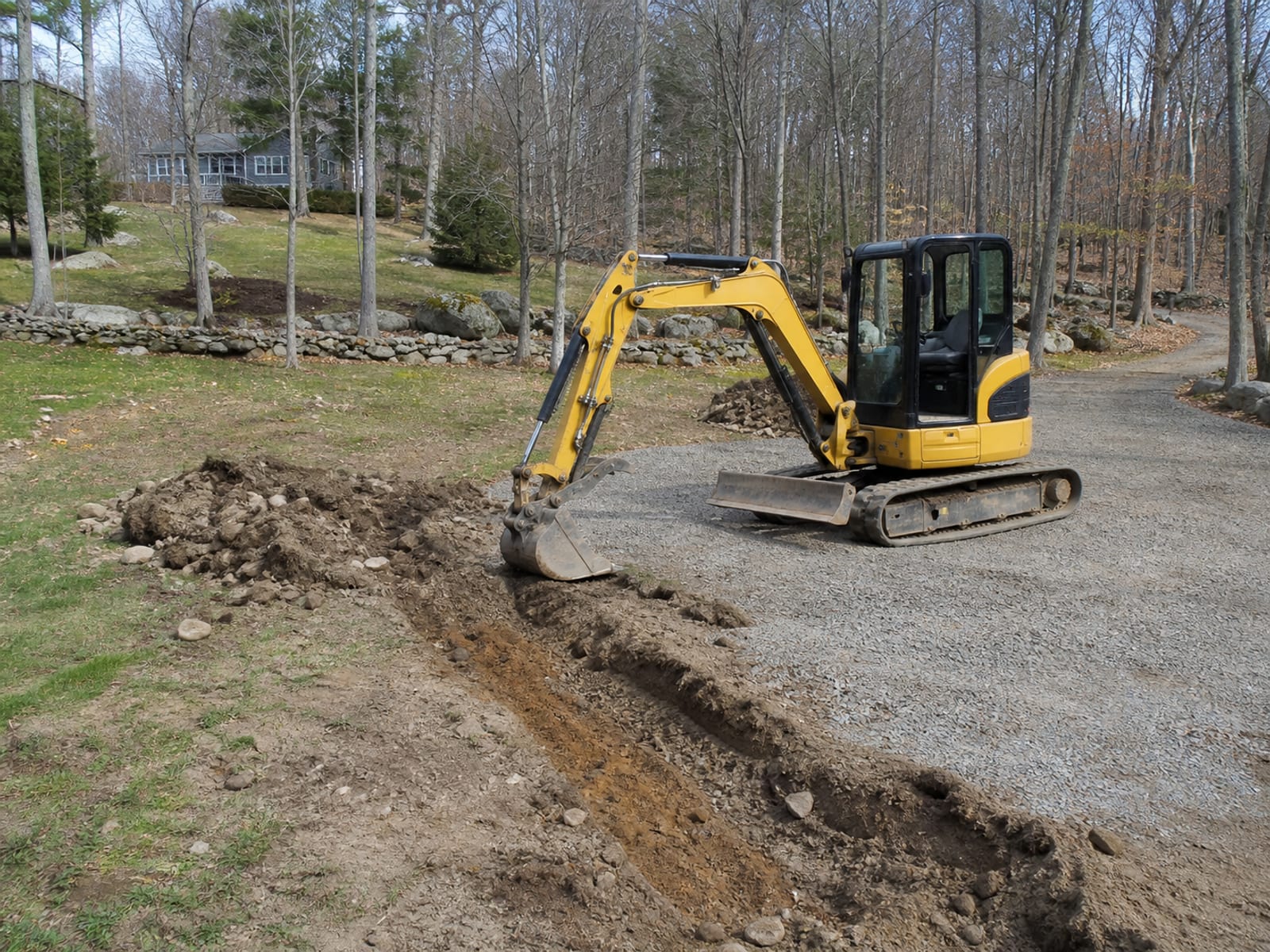
The order below is not adjustable in its middle. Each step produces the information the next one needs.
1. Define the finished outcome. Footprint, elevations, drainage direction, what material stays and what leaves, and the route for equipment and trucks. 2. Screen the approvals before mobilizing. Confirm which of Bethany's earth disturbance paths applies, and get a wetlands determination where the work could affect a wetland or watercourse. 3. Locate utilities and investigate conditions. Give 811 notice, wait out the locate process, verify the responses, identify the private facilities that are not marked, and use soil screening plus field investigation where the ground is uncertain. 4. Plan access and staging. Truck movements, turning, stockpile location, protection for the drive, and runoff controls that do not load an excavation edge or redirect drainage. 5. Excavate in controlled stages. Strip and set aside reusable topsoil where the plan calls for it, keep unsuitable material separate, verify elevations and subgrade as you go, and manage water rather than reacting to it. 6. Install the designed work. Foundation, drainage, utilities, or driveway base, with the understanding that dewatering and discharge are not automatically permitted and inspections may have to happen before anything is covered. 7. Backfill, grade, stabilize, and close out. Compaction where the design requires it, final grades, stabilization, and the permit conditions and inspections signed off rather than left open.
What Moves the Price on a Bethany Dig?
No published Bethany specific range for residential excavation, ledge removal, hauling, drainage digging, or private drive work was found in any official Connecticut or municipal source, and there is no defensible way to publish a figure without a walked parcel. What can be stated is what the figure is made of, and each of these is an investigation question rather than a fixed add on.
- Scope, depth, area, and finished elevations. How much material moves and where it ends up.
- Soil, ledge, wet ground, and dewatering. Including the safety measures those conditions require.
- Access, turning, staging, and hauling. The private drive question, in cost form.
- Local approvals. Zoning path, wetlands review, building permits, and stormwater requirements where they apply.
- Material. Whether it is reused, imported, or removed, plus final grading, drainage, and stabilization.
A written scope that separates those five is one you can hold a contractor to. A single number is one you cannot.
Which Mistakes Cost Bethany Homeowners the Most?
- Starting before the locate process is complete. Notice, markings, and responses all have to be in hand. Damaging a buried facility is expensive and avoidable.
- Treating what is visible as a site investigation. The surface tells you almost nothing about what is two feet down, particularly on glacial till.
- Skipping the wetlands question because nothing looks wet. The definition is soil based. Visible water is not the test.
- Leaving disposal, imported fill, stockpiling, and restoration out of the scope. These four are where most change orders live.
- Reading a building permit exemption as a general exemption. Bethany's own Building Department notes that work exempt from a building permit may still need zoning or health district approval, and wetlands and stormwater sit outside that question entirely.
What Should You Bring to a Site Visit?
Have this ready and the visit produces a scope instead of a follow up list: your survey or plot plan, photographs of the area after heavy rain, a clear statement of what you want the finished ground to do, the proposed location and elevations if a design exists, whatever you know about the well and the septic system including any as built, notes on private lines you have run over the years, and any prior reports, approvals, or correspondence with the town. Keep vehicles and stored material out of the planned work area so the ground can actually be seen.
That is genuine owner work and it shortens everything downstream. What is not owner work is operating powered excavation equipment near utilities, entering an excavation, judging cave in protection, pumping or discharging water without checking whether that is allowed, or anything in a wetland or watercourse.
Four Questions About Digging in Bethany
1. How does Connecticut define an inland wetland?
2. How many paths does Bethany's zoning provide for earth removal, excavation, filling, stockpiling, and grading?
3. What is the NRCS Web Soil Survey good for on an excavation project?
4. Your building work is exempt from a Bethany building permit. What does that settle?
Pick an answer to begin.
Frequently Asked Questions About excavation bethany ct
Do I need to call 811 before excavation in Bethany? Yes, for any excavation using power operated equipment, apart from the defined emergency exception. Notice has to be at least two full days ahead, excluding Saturdays, Sundays, and holidays, and no more than 30 days ahead. Wait for the responses and confirm the markings before digging. Bear in mind the marks cover participating utility facilities, so a private well line, a septic field, or an old feed to an outbuilding still needs to be identified from your own knowledge and any plans you have.
Do I need a Bethany permit to excavate, grade, or bring in fill? Possibly, and there are three possible answers rather than two. Bethany's zoning regulations cover earth removal, excavation, filling, stockpiling, and grading, and provide exemption, administrative permit, and special exception paths. Which one applies depends on your specific scope. Describe the work to Bethany Land Use and get the path confirmed before treating the job as routine.
Does dry ground mean wetlands review is unnecessary? No. Connecticut defines inland wetlands by soil type, so a dry looking area can still be regulated. Municipal mapping is a general planning tool rather than a site specific delineation. Where the work could affect a wetland or watercourse, the Bethany Inland Wetlands Commission makes the determination, and an owner is not permitted to declare an exemption on their own.
How much does excavation cost in Bethany, CT? No published Bethany specific range was found in any official source, so any figure quoted here would be invented. What sets the price is the scope, depth, and area, the soil and rock conditions, whether the ground is wet enough to need dewatering and the safety measures that brings, access and hauling along a private drive, the approvals that apply, and what happens to the material. A site specific written scope that separates those is the only real answer.
How long does excavation take? No verified Bethany wide duration exists either. The single fixed element is the 811 notice window of at least two full days excluding weekends and holidays. Beyond that, approvals, ground conditions, water, access, and material handling set the calendar, and a review that has to run its course can easily be longer than the digging itself.
Can I dig a trench myself? This article does not give trenching instructions, and that is deliberate. An excavation that a worker enters requires competent person oversight and appropriate protective measures under OSHA, covering soil and rock classification, water, cave in potential, protective systems, slopes, and safe access. The utility notification and permit requirements apply regardless of who is operating the machine. If someone is going into the hole, this is contractor work.
What should I bring to a site visit? Your survey or plot plan, photographs taken after heavy rain, the proposed location and elevations if you have a design, anything you know about the well and septic including an as built, notes on private lines, a clear description of the intended use, and any prior reports or approvals. Clearing vehicles and stored material out of the area beforehand helps more than people expect, because the ground has to be visible to be assessed.
Final Thoughts
Ledge, wet ground, and access are the right things to worry about on a Bethany lot, and the good news is that all three are knowable. Ledge is answered by field investigation with soil screening as the starting point. Wet ground is answered by observation plus, where it matters, a wetlands determination based on soil rather than on what the surface looks like in August. Access is answered with a tape measure and a walk down your own drive.
What none of them are answered by is a price quoted over the phone. The sequence that works is the plain one: decide what the finished ground has to do, confirm which of Bethany's earth disturbance paths your scope falls under, settle the wetlands question, get the utilities marked and the private lines identified, then get a written scope that says what the ground conditions are assumed to be and what happens if the field disagrees.
If you have digging to plan in Bethany, CT, Prestige Property Maintenance can walk the parcel, measure the access, look at where the water goes, and put a scope in writing before anything is scheduled. We handle excavation, site preparation, drainage solutions, and rock removal with one crew working out of Oxford, so the investigation, the dig, and the finish grade are not passed between three different companies. See what we do across Bethany, call (203) 258-3395, or contact us to arrange a site visit.
Terms Worth Knowing Before the Dig
Tap a term to see what it means.
Subgrade. The prepared surface at the bottom of an excavation that a foundation, pipe, or driveway base sits on. Its condition is verified before anything is built on it.
Related Articles
Excavation Company in Bethany, CT: What Happens on a Wooded Lot
Wondering what to expect from an excavation company in Bethany, CT? See how a crew protects your long drive and wooded lot from call to cleanup.
Bethany, CT Rock Removal and What It Adds to Your Project
Bethany sits on glacial till, so hitting a boulder or ledge mid-dig is common, not bad luck. Here is how rock removal in Bethany, CT actually works.
Stump Grinding in Bethany, CT: Clearing a Field of Stumps
Can not mow or build until the stumps are gone? Here is how stump grinding in Bethany, CT works, and when grinding alone will not be enough.