Bethany, CT Rock Removal and What It Adds to Your Project
Kash CochranePublished
- rock removal
- bethany ct
- ledge
- excavation
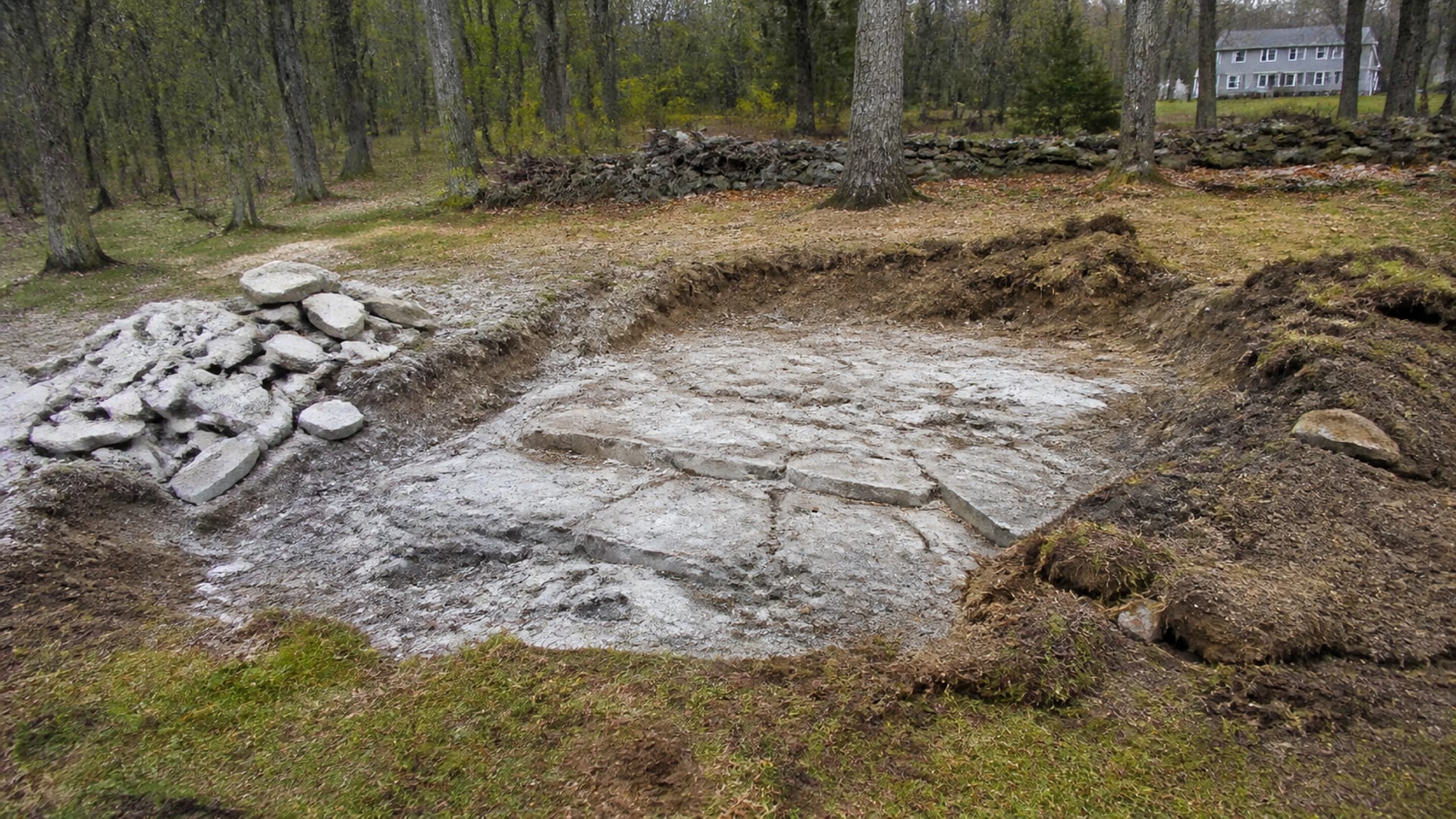
The machine stopped. Not because anything broke, but because the bucket hit something at three feet that will not come up, and now everybody is standing around the hole looking at a grey shape in the bottom of it. The foundation, the drive, the septic area, whatever the dig was for, is on hold, and the two questions in the air are how long this takes to get past and how much it changes the number you already agreed to. Both are answerable. What they are not answerable from is a photograph of the top of the rock, because the thing that decides everything is whether what you are looking at is a stone sitting in the ground or the top of the ground itself.
Key Takeaways
Hitting rock in Bethany is a known condition, not bad luck
the USGS describes glacial till as the most widespread glacial deposit in Connecticut, an unsorted mix of sand, silt, and clay carrying variable stones and large boulders, which is exactly why a buried boulder can appear mid dig.
A boulder and ledge are two different problems
a discrete rock can sometimes be exposed and lifted, while continuous bedrock generally needs mechanical breaking, and the method follows verified depth and the required finished elevation.
Bethany's earth excavation rules have an administrative track with real numbers
for work directly connected to a permitted structure, septic system, driveway, or utility, the cited zoning text describes an administrative permit path where movement is no more than 5,000 cubic yards, the open unfinished area is less than one acre, and the operation starts and finishes within six months. Outside the exempt or administrative categories, a special exception is required.
The wetlands review area can pull rock work into a second process
the town's wetlands application process asks for plans showing proposed activity inside the 150 foot regulated upland review area from a wetland or watercourse boundary, and calls for a soil scientist report or review before final commission review.
Blasting is a different conversation entirely
state guidance on blasting and rock removal names nearby wells, erosion, sedimentation, surface water, dust, noise, vibration, and acid rock drainage as issues, and recommends baseline well information in appropriate situations. It is never a default answer to rock.
Understand Why Your Dig Stopped, Because Bethany Sits on Glacial Till
Connecticut's surface is largely glacial till, and till is not sorted material. It is a matrix of sand, silt, and clay with stones and, in places, very large boulders mixed through it, left behind by ice rather than laid down by water. That is why a parcel can offer several feet of perfectly diggable material and then a rock the size of a car with no warning at the surface, and why the neighbor two hundred feet away had no trouble at all.
The other reason a dig stops is bedrock. Where the till is thin, the rock beneath it is close to the surface, and what looks in the hole like a very large boulder is actually the top of the ground continuing downward.
Two things follow from this. First, encountering rock is not evidence that anyone did anything wrong, and it is not evidence that your contractor should have known. No townwide depth to bedrock, ledge frequency, or boulder count exists for Bethany, and anyone offering one is guessing. The state geological survey publishes bedrock and surficial material maps that are useful for a desktop screen before a project, and they are planning tools rather than a parcel investigation.
Second, and more usefully: this is a solvable, plannable problem with known methods. A stalled dig on rock is a scope change, not a dead end.
Find Out Which of Three Things You Actually Hit
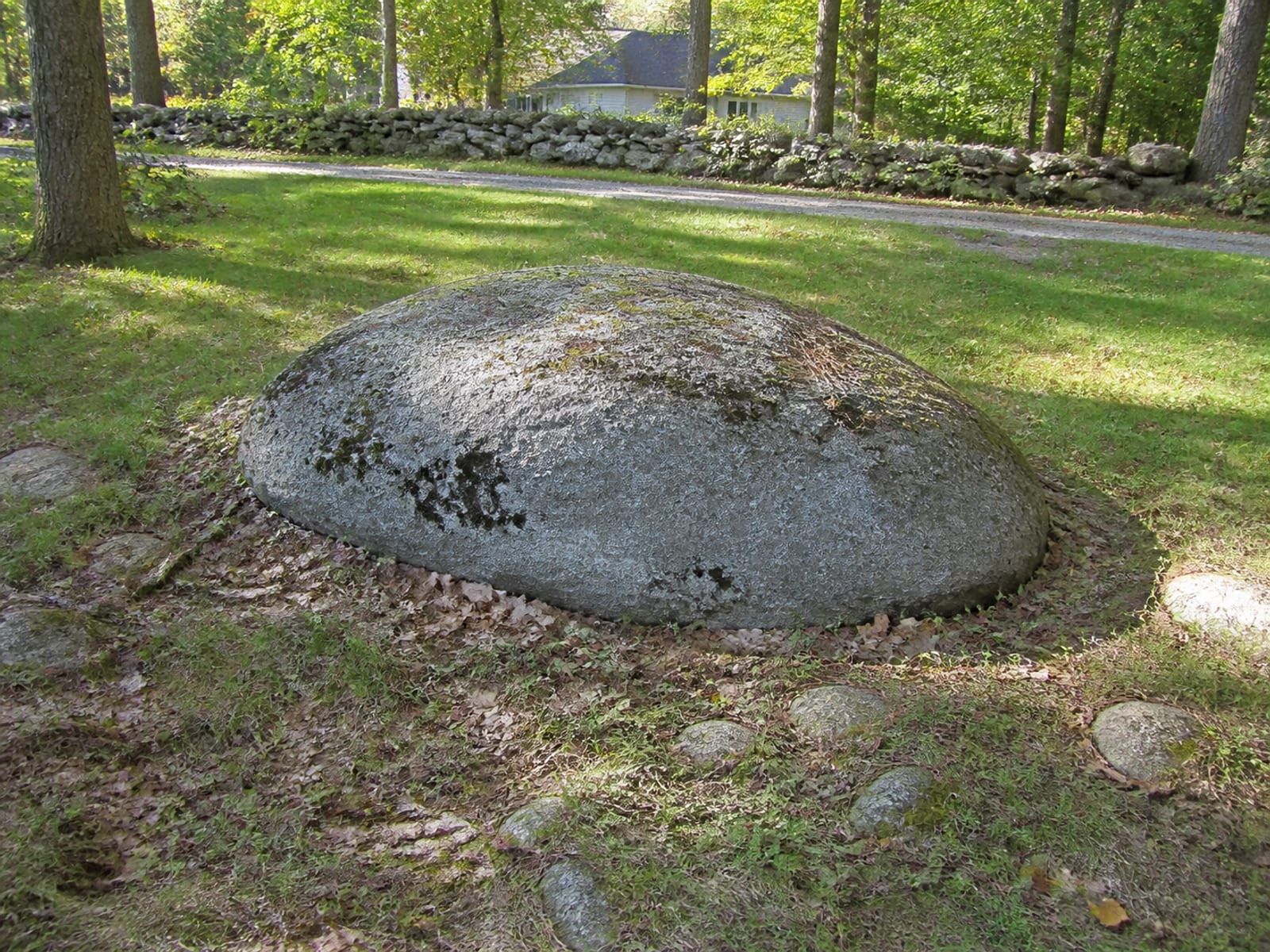
Before anyone picks a method, the material has to be classified from the actual exposed condition rather than from what is visible at the top.
| What is in the hole | How you tell | What it usually takes | What has to be established first |
|---|---|---|---|
| A discrete boulder | It has edges. Digging around it finds its underside, and the material continues below it | Exposing it, assessing it as a load, then lifting it out, breaking it down, or repositioning it on site | Its actual size and embedment, the lift plan and equipment, access, and where it goes afterward |
| Fractured or weathered rock | It comes apart along seams under working pressure, in pieces rather than as one mass | Working the seams with the machine, often with a breaker, and removing material progressively | Whether the required elevation is reachable this way, and where the material is going |
| Continuous ledge | Digging around it finds more of it. There is no underside to reach | Mechanical breaking with a hydraulic hammer, or in some cases a specialist approach after review | Verified depth to the required elevation, because that number sets the volume and the method |
| Any of the above near a wetland, watercourse, driveway, or town right of way | Location, not material | The same physical work plus a review path | Whether the 150 foot upland review area applies, and whether the right of way process is triggered |
The distinction is not academic and it cannot be made from a surface photograph. It is made by exposing the material and classifying it, which is also an OSHA requirement in its own right: a competent person classifies soil and rock deposits by visual analysis and testing where anyone will be working in the excavation, and reassesses when conditions change, including after rain.
Get Past a Boulder Without Making It a Bigger Hole
Boulder removal in Bethany, CT usually turns out to be a handling problem rather than a breaking problem, and the decision runs through four questions.
How big is it, really? A rock shows you its top. The rest is unknown until it is dug around, and it is common for the visible face to be a fraction of the mass. The excavation to expose it is itself part of the work.
Can it be handled as a load? A boulder being lifted out is a rigging exercise with real weight and a real fall hazard, and it needs the right equipment and a plan rather than an attempt.
Where does it go? Out of the hole is not a destination. Options are usually removal from the property, breaking it down into usable material, or repositioning it on site as a feature or as fill in an area where it does not compromise a finished grade. Each is a different cost and the choice is worth making before the rock is out rather than after.
Does it actually have to move? Sometimes it does not. If the boulder sits below the required finished elevation and outside anything that needs to bear load or be trenched, leaving it alone is a legitimate answer. Nobody removes rock for its own sake, and a contractor who checks the required elevation before assuming removal is doing the right thing.
Deal With Ledge by Depth and Final Grade, Not by Guesswork
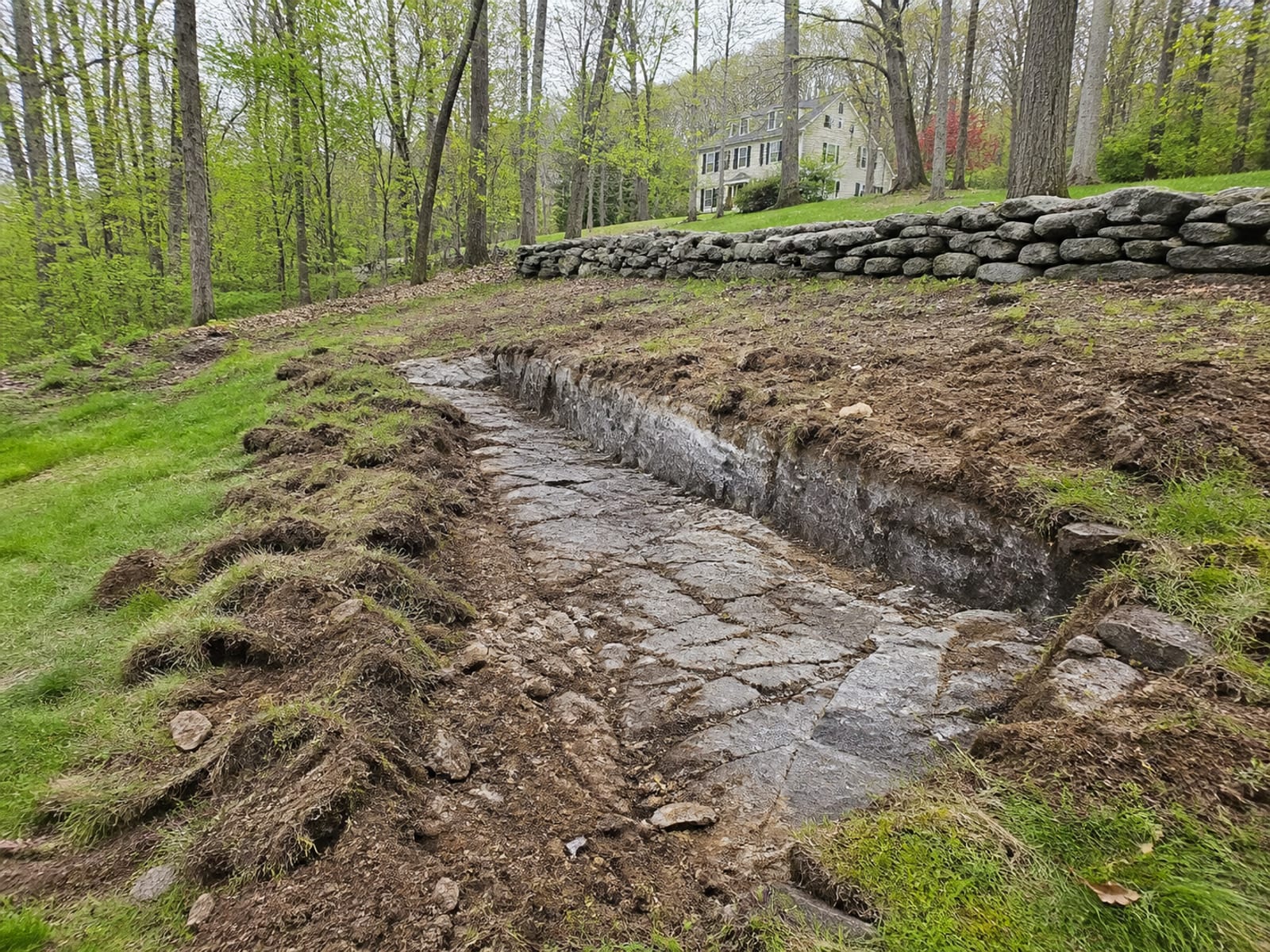
Ledge removal in Bethany, CT is a volume problem, and the volume is defined by two numbers: where the top of the rock is, and where the bottom of your excavation has to be. Everything else follows from the difference between them.
Establishing that difference means probing or drilling to find the rock profile rather than assuming it is level, because it very often is not. A rock surface that is at four feet in one corner and eighteen inches in another completely changes the quantity, and the corner nobody checked is the one that produces the change order.
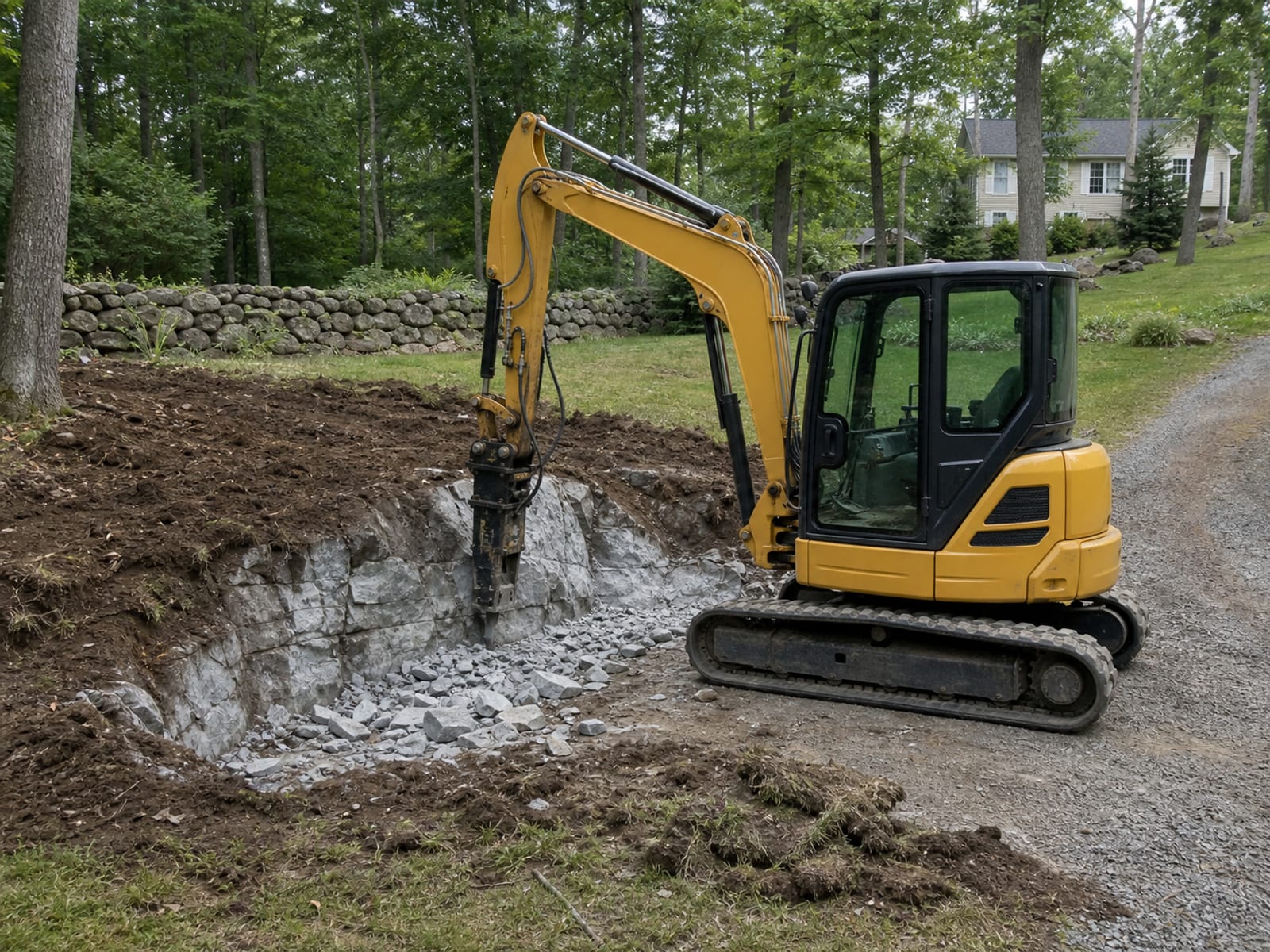
The usual method is mechanical: a hydraulic hammer or breaker fitted to an excavator, working the rock down in a controlled way. Breaker and machine selection are not universal, since the machine size, the attachment, the rock's own properties, the working access, and the required grade all bear on it. Progress on hard, unfractured rock is slow, and that slowness is the honest reason ledge is expensive rather than any markup.
Blasting exists as an option and belongs in a different category. Where it is being considered, state guidance treats it seriously: blasting and rock removal are called out as factors in evaluating effects on drinking water, with concerns spanning nearby well yield and quality, erosion, sedimentation, surface water, dust, noise, vibration, and acid rock drainage, and baseline well information recommended in appropriate situations. No Bethany rule was found that makes blasting automatic at any threshold, and it should never be presented as the routine answer to hitting rock.
The genuinely useful alternative to consider first is design. Raising a finished elevation, shifting a footprint a few feet, or rerouting a trench line can sometimes remove most of the rock quantity for the cost of a conversation. That is worth asking about before anyone starts breaking.
Keep Rock Excavation in Bethany, CT Inside the Approval You Already Have
Here is the trap. You had a permit for what you were building. Then rock appeared, the volume of material being moved grew, the open area grew, and the disposal plan changed. At some point that stops being the job that was approved.
| Path | When it applies | Who |
|---|---|---|
| Earth removal, excavation, filling, stockpiling, and grading permit | The town's earth excavation application under Section 8. For work directly connected to permitted construction, septic, driveway, or utility work, the cited text describes an administrative path within 5,000 cubic yards, less than one acre open and unfinished, and a start to finish inside six months | Bethany Planning and Zoning Commission, through Land Use |
| Special exception permit | Work that meets neither an exempt nor the administrative criteria | Bethany Planning and Zoning Commission |
| Inland wetlands review | Work in a wetland or watercourse, or inside the 150 foot regulated upland review area. The process calls for plans, an abutter mailing, a state activity reporting form, and a soil scientist report or review before final review | Bethany Inland Wetlands Commission |
| Building related approvals | Rock work supporting a structure. The Building Department notes that work exempt from a building permit can still need zoning, wetlands, fire, or public health approvals | Bethany Building Department |
| Driveway interface or road excavation permit | Work reaching a town right of way. The town's form requires CBYD contact before excavation in the right of way and notice to the road foreman one business day before the start | Bethany Public Works, through the town's permit process |
| Call Before You Dig | Any powered or mechanized excavation, at least two full business days ahead | CBYD, at 811, under PURA oversight |
The submission for the earth work path can ask for a lot: the quantity and type of material, contours, vehicle routes, erosion and sediment controls, stormwater measures, a reclamation plan, and where applicable information on soils, rock ledge, groundwater, and drainage. Reading that list backward is a good way to understand what a serious rock scope actually involves. It is not just breaking and hauling.
Protect the Well, the Water, and the Neighbors When the Scope Grows
A small rock problem is a machine problem. A large one starts to touch things beyond your own excavation, and it is worth knowing which.
Wells are the first. Where significant rock removal or any blasting related work is contemplated, nearby well yield and quality are a documented concern, and establishing baseline well information beforehand is a recognized step in appropriate situations. On a town of private wells, that is not a hypothetical.
Water and sediment are the second. Broken rock, disturbed soil, and an open excavation in wet conditions move sediment, and Bethany's own earth work requirements call for proposed erosion and sediment controls and stormwater measures as part of the application. Those controls are specified against the approved plan and the conditions on the ground, not chosen from habit.
Dust, noise, and vibration are the third, and they matter more on a rural road with close neighbors than people expect. Mechanical breaking is loud and it goes on for a long time. Telling the neighbors before it starts costs nothing and prevents a great deal.
Follow the Sequence That Turns a Stalled Dig Into a Scoped Job
1. Define the objective and the footprint again. What the excavation is actually for, the required bottom elevation, the finished grade, the drainage route, and how much of the disturbed area the rock affects. 2. Check the approval position before choosing a method. Whether the earth work path applies and which track, whether the 150 foot wetlands review area is involved, and whether a driveway interface or right of way is affected. 3. Open or confirm the locate ticket. Notice at least two full business days ahead of powered or mechanized excavation. Marks show participating facilities, not your private lines and not a safe work plan. 4. Expose and classify rather than assume. Dig around it. Establish whether it is discrete, fractured, or continuous, and probe for the rock profile across the footprint rather than at one point. 5. Select the method and the staging plan. Lift, break, work the seams, or redesign around it, with the equipment and the handling plan following the classified material, the access, and the required elevation. 6. Manage the rock, the water, and the surface. Where the material goes, whether any of it is reused, how water is kept controlled in an open cut, and how the finished elevation and drainage are achieved once the rock is out of the way. 7. Close out to the approval. Restoration, stabilization, and any reclamation the approval required, rather than leaving an open area and calling the rock done.
See What Actually Adds to the Cost When Rock Appears
No published Bethany price for boulder removal, ledge removal, or rock excavation exists, and no verifiable local duration range for a residential job exists either. What can be said honestly is which variables move the number, and they are all things you can ask about specifically.
- What the material actually is. A movable boulder, fractured rock, and continuous ledge are three different rates of progress, and continuous ledge is by far the slowest.
- Volume, and the destination. How much rock, soil, and fill moves, and whether it leaves the property, gets reused, or is repositioned.
- Access and staging. Room to work around the excavation, the slope, proximity to structures, and where a truck can get to.
- The required elevation. The single biggest lever, because it defines the volume, and it is sometimes negotiable through design.
- Which review path the scope lands in. The earth work permit track, wetlands review, the driveway or right of way process, and whether any of them need engineering, survey, or soil scientist input.
- The extra protections a bigger scope brings. Erosion controls, drainage measures, and where blasting is contemplated, well and pre work review.
Ask for these to be separated in writing, along with what condition would trigger a written change and who authorizes it. A rock scope with an honest change mechanism is more useful than a fixed number that everyone knows will move.
Avoid the Five Mistakes That Turn Rock Into a Stoppage
- Digging before the locate process is complete. PURA is blunt about the consequences of excavation damage: fires, explosions, injuries, deaths, and service disruptions.
- Assuming every buried rock can be lifted out. Plenty cannot, and the attempt is where equipment and people get hurt.
- Leaving approvals, drainage, erosion control, and restoration until after the rock is exposed. By then the scope has changed and the paperwork is behind the work.
- Skipping the wetlands question because the rock is upland. The trigger is the review area boundary, not where the obstacle happens to sit.
- Committing to a price or a date before the material is classified. Everyone involved knows it will change. Better to scope it properly and price it once.
Know What Is Yours to Do While the Machine Waits
Photograph the exposed condition from a safe distance, with something in frame for scale. Write down what the finished use of that ground has to be, because that is what sets the required elevation. Leave the area undisturbed so it can be assessed. Start the locate request when mechanized digging is being planned. And call Bethany Land Use before any further disturbance where an approval might apply, because the conversation is short and the alternative is not.
What is not yours: entering an unprotected excavation, treating utility marks as permission to proceed, operating equipment to lift or break large rock, or deciding on your own that a wetlands review area does not apply. Mechanical excavation, rock handling, work inside an excavation, regulated earth work, drainage and erosion controls, right of way excavation, and anything blasting related are contractor and specialist territory, and the exact credentials depend on the final scope.
Five Questions About Rock on a Bethany Lot
1. Why do buried boulders turn up so often on Connecticut lots?
2. How do you tell a boulder from ledge?
3. What defines the volume of a ledge removal?
4. Under Bethany's cited administrative earth excavation criteria, what is the material movement limit?
5. What does state guidance say to consider around blasting and rock removal?
Pick an answer to begin.
Frequently Asked Questions About rock removal bethany ct
What is the typical price range for rock removal in Bethany, CT? No published local or state range exists for boulder removal, ledge removal, or rock excavation here, so any figure would be invented. What sets it is whether the material is a movable boulder, fractured rock, or continuous ledge, the volume and where it goes, the access and staging, the required finished elevation, which review path the scope falls into, and whether engineering, survey, soil scientist input, erosion controls, drainage work, or well review are needed. A scope written after the material has been exposed and classified is the only thing worth pricing.
How do I know whether I need boulder removal or ledge removal? By exposing it. Digging around the rock establishes whether it is discrete with material continuing beneath it, or continuous with the ground. A surface photograph cannot tell you, and neither can the size of what is showing, because a modest visible face can belong to either. The same field step establishes the depth and the access, which is what the method selection depends on.
Do I need an earth excavation permit for rock excavation in Bethany, CT? Possibly, and there are three possible answers. Bethany's Section 8 provides exempt, administrative, and special exception pathways for earth removal, excavation, filling, stockpiling, and grading. The administrative path described in the cited text applies to work directly connected to permitted construction, septic, driveway, or utility work, within 5,000 cubic yards, less than one acre open and unfinished, and a start to finish inside six months. Confirm your parcel and your actual scope with Land Use before disturbing ground.
Does 811 apply to rock removal? Yes. Connecticut requires notice for powered or mechanized excavation, at least two full business days before digging, through 811 or CBYD. Rock work is excavation, and the presence of rock does not exempt anything. Remember that the markout identifies participating underground facilities and is neither a record of your private lines nor a substitute for a safe work plan on the day.
What if the rock work is near a wetland or watercourse? Then the location may matter more than the material. Bethany's process identifies a 150 foot regulated upland review area measured from a wetland or watercourse boundary, asks for plans showing proposed activity within it, and calls for a soil scientist report or review before final commission review. Confirm the boundary and the review status before work, rather than judging by whether the rock itself looks like it is in a wet area.
Can I remove a large boulder myself? This article does not recommend it, and not out of caution for its own sake. Lifting or breaking large rock is a load handling and excavation safety problem at the same time, with the added complication of buried utilities and, on a regulated scope, approvals. The safe approach depends on the actual weight, the equipment, the excavation conditions, and what has been approved, none of which are things to work out while a rock is swinging.
Is blasting automatically required for ledge? No, and no Bethany threshold requiring it was found. Mechanical breaking with a hydraulic hammer handles a great deal of ledge work. Blasting is a specialist scope with its own local and state review considerations, including effects on nearby wells and neighboring structures, and it should follow field conditions and the required grade rather than being offered as the default answer to hitting rock.
Moving Forward
Rock in the hole is a scope change, and scope changes are manageable when they are handled in the right order. Classify the material by exposing it. Establish the required finished elevation, since that is what turns rock into a quantity. Check whether the growing scope has moved you into Bethany's earth work permit track, the wetlands review area, or the right of way process. Then choose a method and price it once.
The thing most worth asking before any of that is whether the rock has to move at all. Raising an elevation, shifting a footprint, or rerouting a line can sometimes take most of the quantity out of the problem, and that conversation costs nothing compared to breaking rock that did not need to be broken.
If a dig has stalled on rock in Bethany, CT, Prestige Property Maintenance can expose and classify what you have hit, probe the profile across the footprint, and put a written scope together with an honest change mechanism in it. We handle rock removal, excavation, site preparation, and earth moving with one crew working out of Oxford, and more than a decade in Connecticut glacial soil means we plan for ledge and buried boulders rather than discovering them. See how we work across Bethany, call (203) 258-3395, or contact us to get the dig moving again.
Rock Terms Worth Knowing
Tap a term to see what it means.
Glacial till. The unsorted mix of sand, silt, clay, stones, and boulders left by ice. The most widespread glacial deposit in Connecticut and the reason buried rock appears without warning.
Related Articles
Excavation Company in Bethany, CT: What Happens on a Wooded Lot
Wondering what to expect from an excavation company in Bethany, CT? See how a crew protects your long drive and wooded lot from call to cleanup.
Rock Removal in Derby, CT: When the Dig Hits Ledge or a Boulder
Hit something hard mid-dig? Rock removal in Derby, CT starts with figuring out what you are dealing with before anyone reaches for a breaker or a permit.
Excavation in Bethany, CT: Ledge, Wet Ground and Access
Worried about ledge, wet ground, or a long driveway before excavation in Bethany, CT? See what a site visit actually confirms before work begins.