

Stump Grinding in Bethany, CT: Clearing a Field of Stumps
Kash CochranePublished
- stump grinding
- bethany ct
- land clearing
- site access
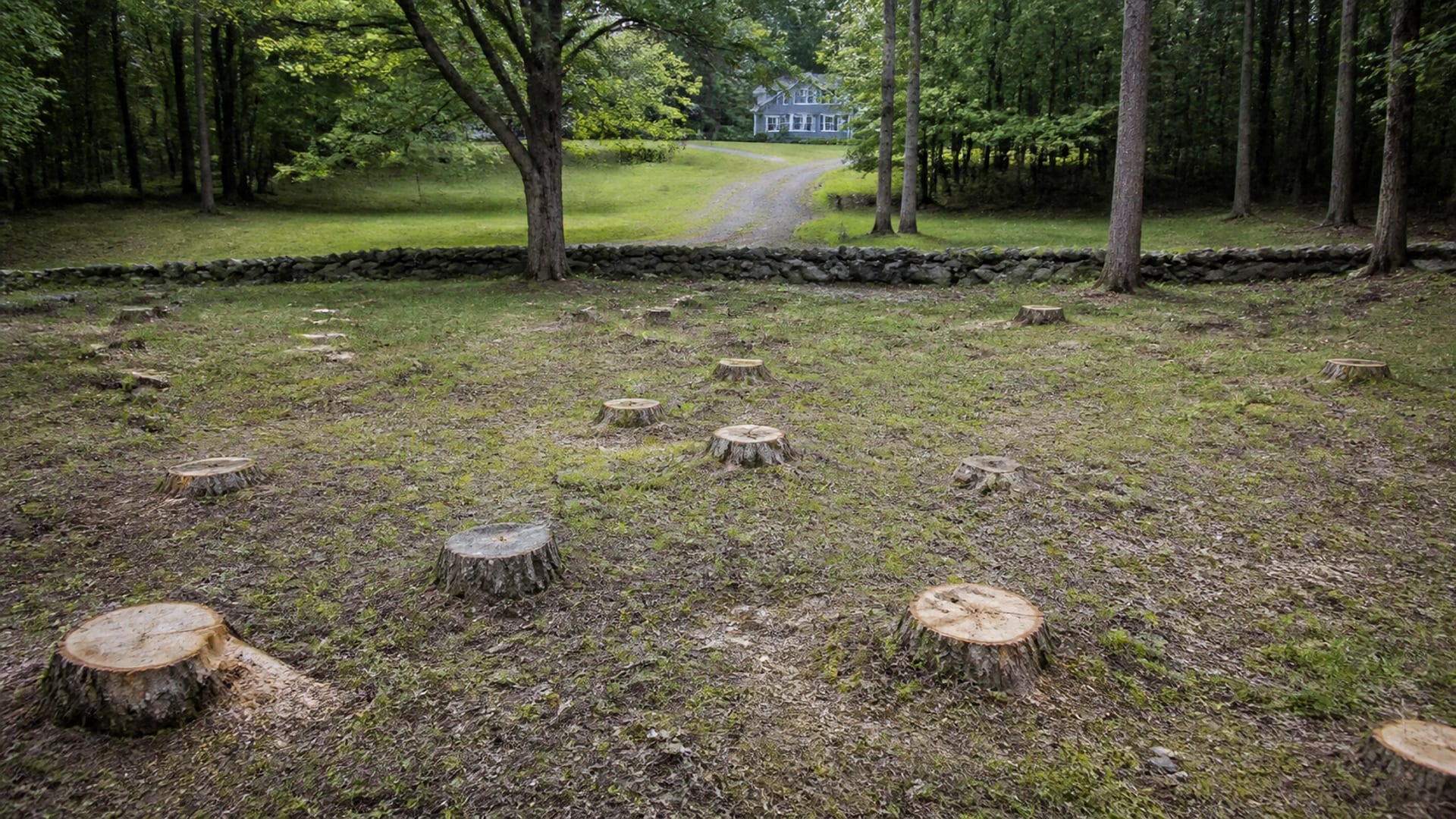
The trees came down. Maybe you cleared for a pasture or a building area, maybe a storm did most of the deciding for you, and either way what is left is a field of stumps sitting where a yard is supposed to be. You cannot mow it. You cannot run a fence line through it. The garden, the paddock, the shed, and the plans you had all sit behind the same obstacle. And the quotes you have collected are wildly different from each other, which is not a great sign about how well any of them understood the job. There is a real decision underneath all this, and it is not which contractor is cheapest. It is whether each of those stumps needs grinding or needs digging out, and that is decided by what is going to occupy the ground afterward.
Key Takeaways
What comes next decides the method
grinding produces a mowable or plantable surface, while excavation is what a foundation, a driveway base, a trench, or a wall footprint needs, because those require the root mass and unsuitable material actually out of the ground.
A quote based on trunk diameter alone is a guess
the widest cutting area, the wood's hardness and condition, and anything embedded in it change the work more than the number on a tape across the trunk.
A stump job can quietly become land disturbance
Bethany's zoning regulations require an approved erosion and sedimentation control plan before a zoning or building permit where cumulative disturbance exceeds one half acre, and treat earth removal, excavation, filling, stockpiling, and grading as regulated.
Distance to a wetland is its own trigger
the town's wetlands application process identifies a 150 foot regulated upland review area measured from wetlands and watercourses, and asks that proposed activity in that area be shown on a site plan.
The Next Use of the Ground Decides Grinding or Excavation
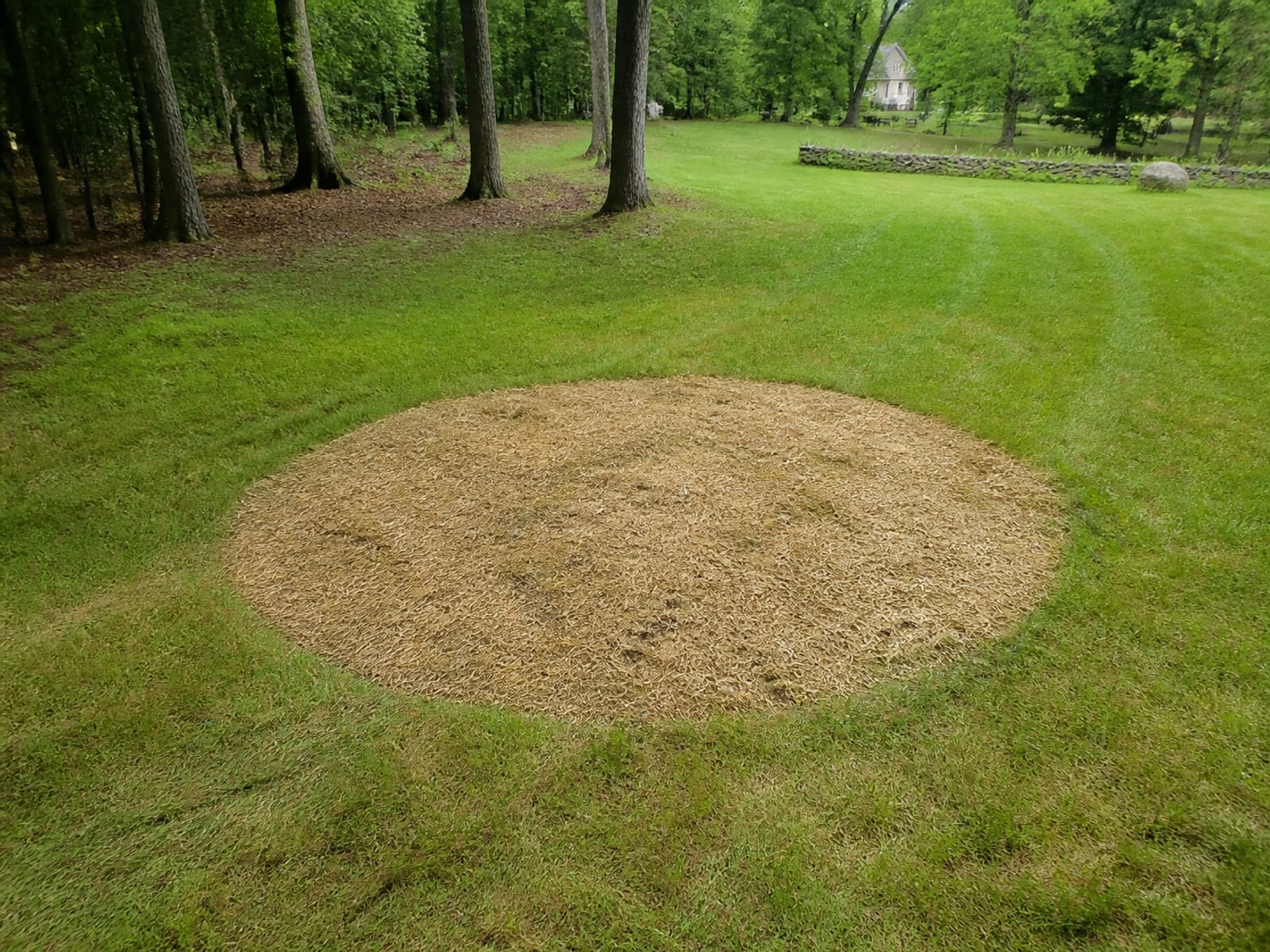
One sentence of vocabulary, then straight to the decision. Stump removal can mean grinding the visible stump below grade, or excavating the stump and its larger roots, and which one somebody means depends entirely on the job.
| The approach | What you end up with | Best fit | What it does not do |
|---|---|---|---|
| Grinding | The stump and reachable wood reduced to chips below grade, ground you can mow or plant | Lawn, pasture, planting beds, general yard use, fence lines where the post misses the root mass | Remove the whole root system, or produce ground suitable for a foundation or a trench |
| Full stump and root excavation | The stump and root mass removed as material, leaving a hole to be filled and compacted | A foundation, driveway base, retaining wall footprint, utility trench, or anywhere a structure needs sound ground | Stay a small tree service task. It is earth disturbance, with the review questions that brings |
| Leave it for now | The stump in place, a known trip and mower hazard, and time to resolve the rest | Where access, wetlands review, the season, or a future project is genuinely unresolved | Get any cheaper by waiting. Decay changes the wood but rarely in a helpful direction |
The test is simple to apply. Stand where each stump is and ask what will be occupying that exact spot in two years. Grass, a shrub, a paddock, or nothing much means grinding is the option to price first. A slab, a wall, a driveway, a trench, or anything that has to bear load means the roots and the material below are part of the problem, and grinding will leave you with a nice looking surface over ground you cannot build on.
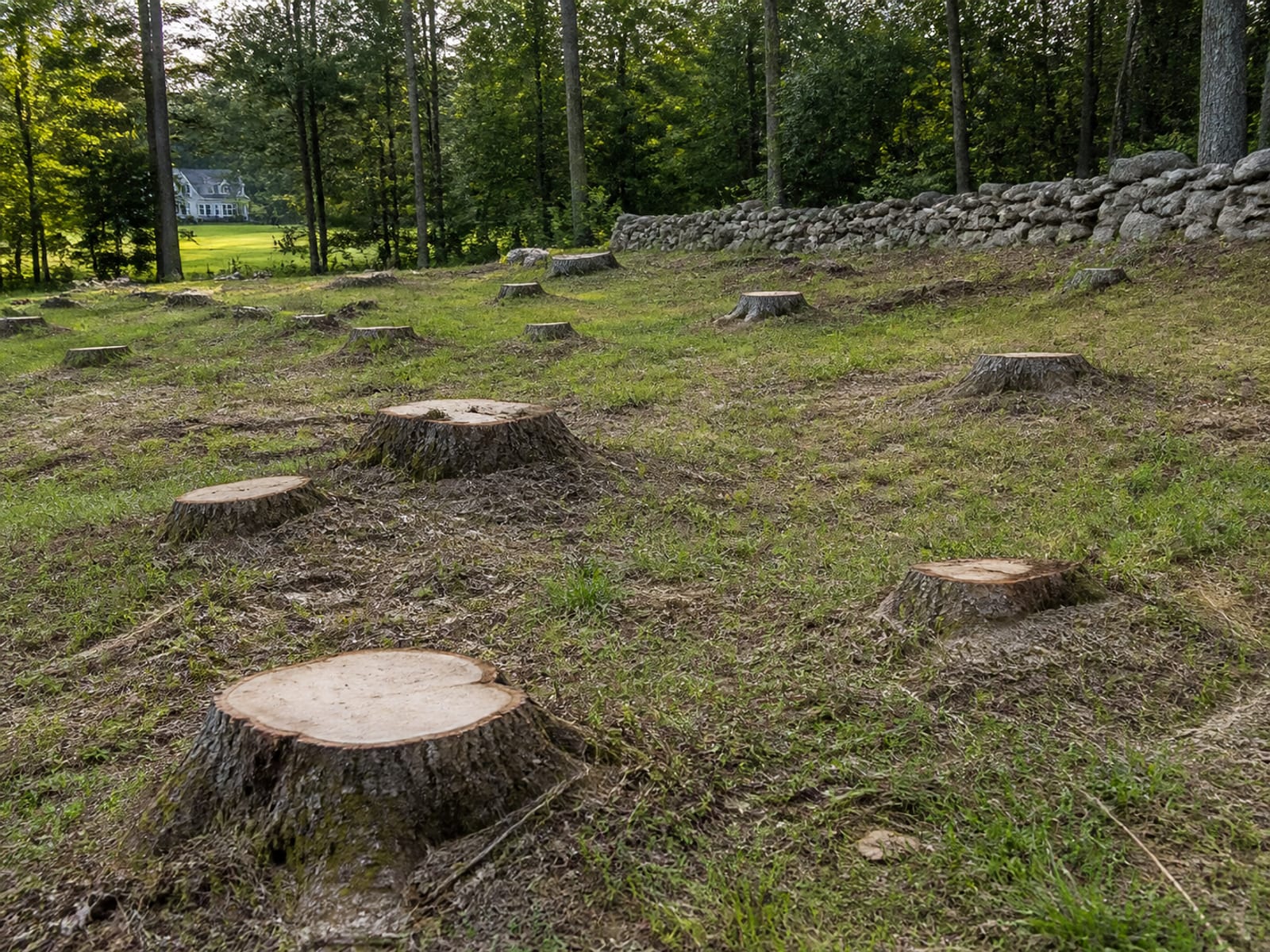
Trunk Diameter Is the Weakest Predictor of What a Stump Costs
People measure the trunk because it is the obvious thing to measure, and contractors quote off it because clients supply it. It is close to the least useful number available.
What actually drives the work is the widest cutting area, meaning the full spread of the stump at and just below grade including the root flare, which on a mature hardwood can be substantially wider than the trunk. Then the wood itself: hardness varies by species and changes how much material a pass removes and how fast, and age changes it again, since a fresh cut and a stump that has been sitting for six years cut differently. Then what is inside it. Soil driven into the flare by years of mowing, embedded stone, old fence wire, nails, and hardware are all common and all slow the job or damage teeth.
Site conditions do the rest. Ground stability under a machine, side slope, distance from where equipment can legally stage, how many moves are needed, and what the finish is meant to be all belong in the number. That is why a responsible quote comes after a look, and why two quotes based on the same list of diameters can be honest and still far apart.
Access Is Measured, Not Assumed, on a Bethany Lot
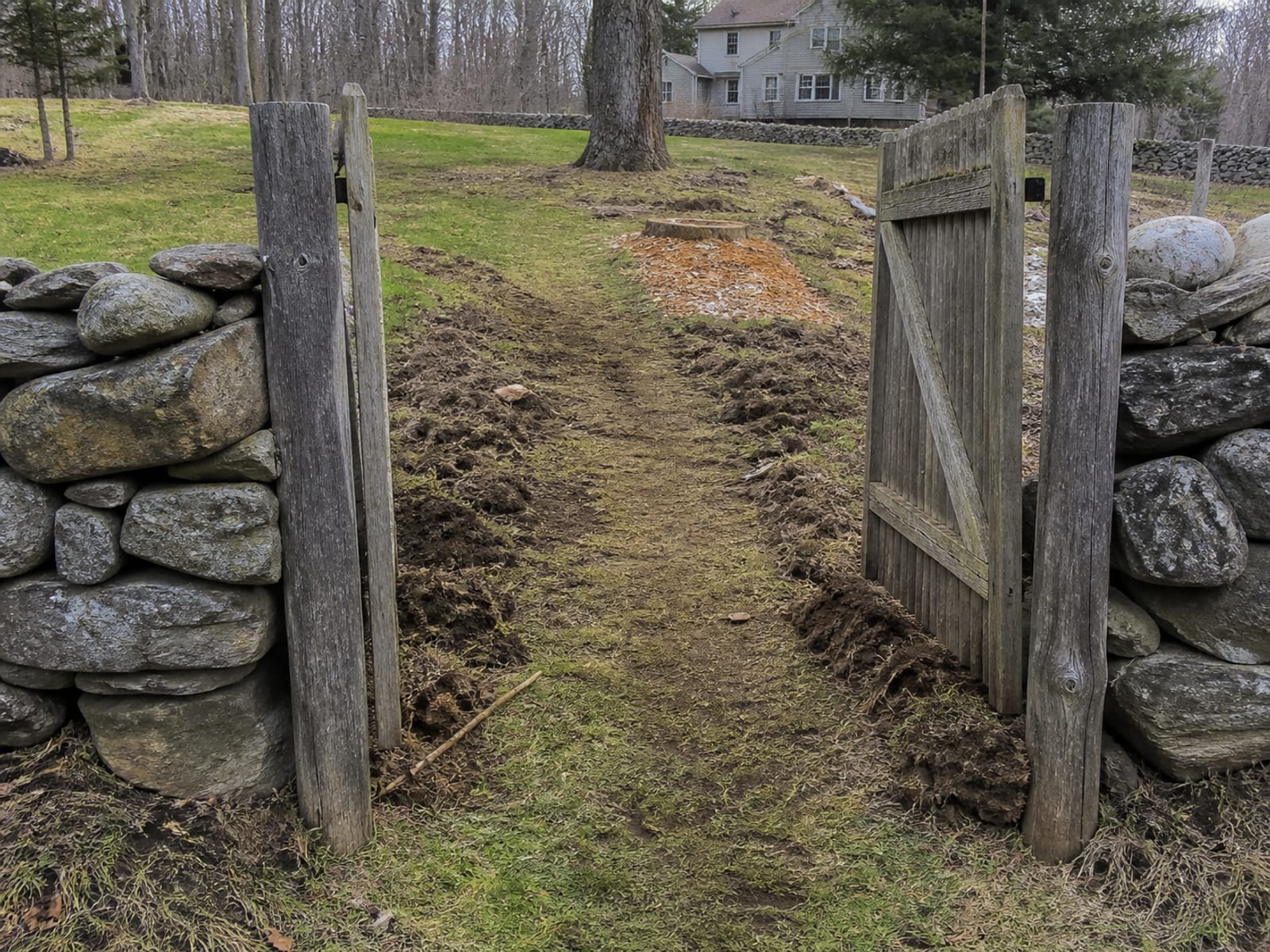
Self propelled stump cutters come in a range of sizes and some are built deliberately narrow, but the dimensions differ by model and no contractor can promise from a phone call that the machine will reach the back of your property. That is a measurement, and it is one you can take yourself.
Walk the route the machine would take and find the tightest point. Usually it is a gate, but it can also be a gap between the house and a wall, a turn at the corner of a deck, a set of steps, a culvert crossing, or a section of drive where a bank pinches it. Measure that point and photograph the whole approach, including the turns, the grade changes, and anything soft. Note where a truck and trailer can park and turn, because the machine has to get off the trailer somewhere.
Two Bethany specific things belong in that survey. Soft ground on a wooded lot after wet weather can make an otherwise reachable stump temporarily unreachable, and a side slope steep enough to be a rollover risk changes the setup entirely. Both are the sort of thing an operator will refuse on the day, correctly, so it is better to know before scheduling.
Grinding Handles the Stump, Not the Whole Root System
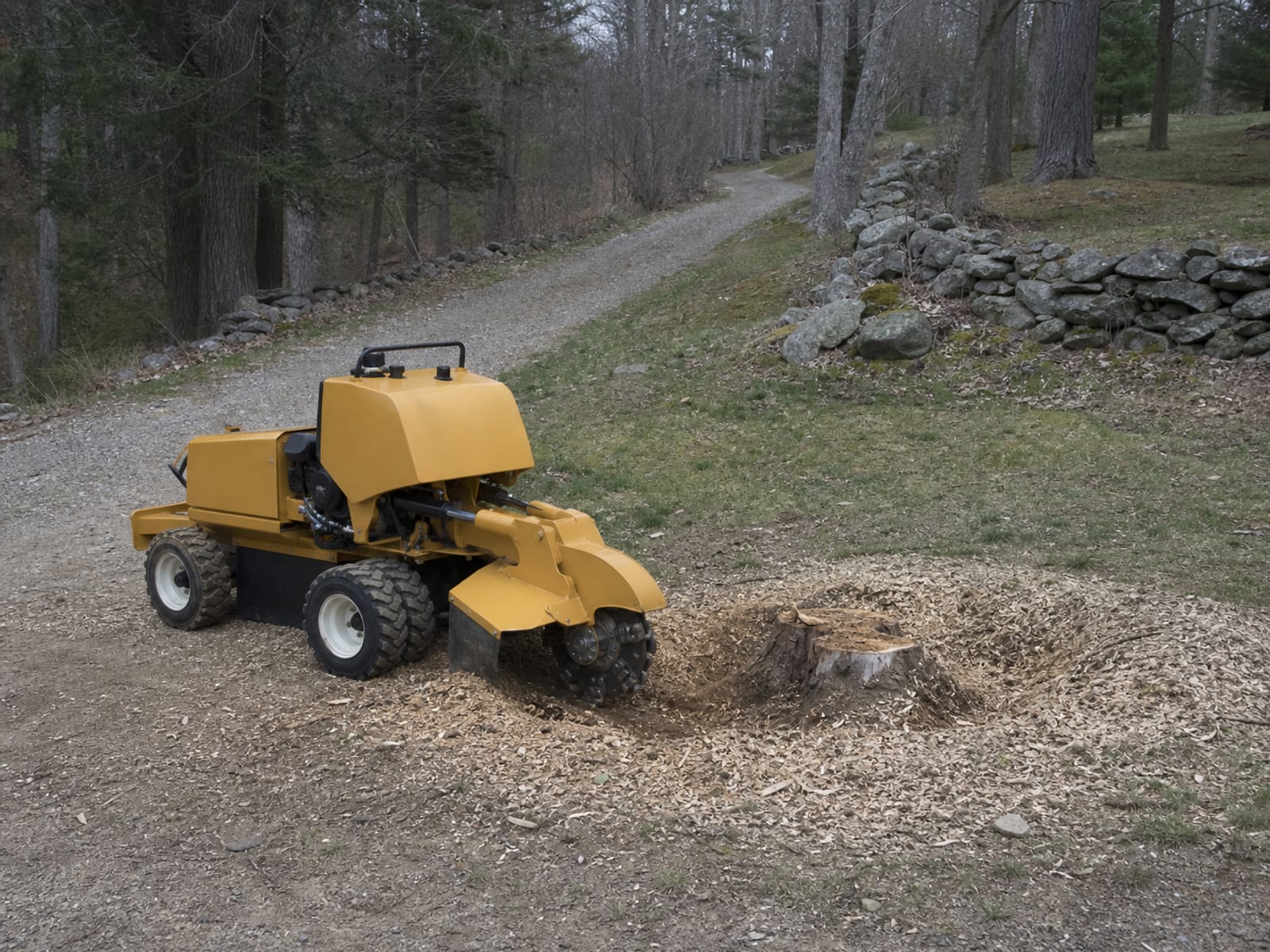
This is the expectation that most often goes wrong, and it is worth being precise about. A stump cutter uses a toothed wheel making repeated shallow passes: the operator starts at the top edge, sweeps across, lowers the wheel, sweeps again, and moves forward as the cutting area opens. It is an iterative process, and it deals with the stump and the wood immediately around and below it.
What it does not do is chase structural roots out to their ends. Those stay in the ground and decay over time. For a lawn, a planting bed, or a pasture that is fine and nobody notices. For a foundation, a slab, a driveway base, or a trench line, it is not fine, because decaying wood in the ground is a settlement problem waiting to happen and roots crossing a trench are an obstruction.
Chips are the other half of the finish, and they are a decision rather than a default. Grinding a stump produces a surprising volume of chip mixed with soil. It can stay in place as a mulch and a slow settling backfill, it can be removed, or it can be removed and replaced with imported soil so the area can be seeded or planted. Those are three different amounts of work and three different prices, and a quote that does not say which one it includes is incomplete.
A Stump Job Can Cross Into Regulated Land Disturbance Without Anyone Noticing
Nobody sets out to need a permit to grind a stump. The problem is that the scope creeps: grinding becomes root excavation, root excavation becomes a hole that needs fill, fill needs grade, grade needs erosion control, and somewhere along that line a yard task became earth disturbance.
| Checkpoint | When it can apply | Who to ask |
|---|---|---|
| Standalone stump grinding permit position | No source was found stating that ordinary standalone stump grinding does or does not require a Bethany permit, so it should be confirmed rather than assumed either way | Bethany Land Use, for your parcel and scope |
| Inland wetlands review or permit | Work that is a regulated activity or could affect wetlands or watercourses. The town's process identifies a 150 foot regulated upland review area and asks for a site plan showing proposed activity there | Bethany Inland Wetlands Commission, through Land Use |
| Earth excavation, grading, or erosion and sediment control review | Where the scope includes regulated excavation, removal, filling, stockpiling, or grading, or where cumulative disturbance exceeds one half acre, which requires an approved erosion and sedimentation control plan before a zoning or building permit | Bethany Planning and Zoning Commission and Land Use |
| Building permit and related approvals | Where the stump work is part of construction, alteration, demolition, or regulated systems. Bethany's Land Use page also advises consulting the health district on all projects so it can decide whether approval applies | Bethany Building Department, Land Use, and Quinnipiack Valley Health District |
| Call Before You Dig notification | Before mechanized equipment disturbs the subsurface. At least two full working days ahead. CBYD itself suggests considering a private utility locator as well | CBYD, at 811 |
The two practical takeaways: a locate ticket is an excavation notification, not proof that every private line is marked and not any kind of land use approval. And if the stump area is going to be graded, excavated, built on, or tied into a driveway or other improvement, that larger scope is what Land Use should be asked about, not the phrase "just stump grinding."
The Work Runs in Six Steps and the Finish Is a Separate Decision
1. Scope and inspect. Stump count, species where known, diameters measured at the widest cutting area rather than the trunk, height, whether each is fresh or aged, the root flare, access width, slope, nearby structures, septic features, the well, walls, utilities, water, and where chips are going. 2. Confirm the constraints. Whether the work sits in or near a wetland or watercourse review area, and if grinding is part of a wider excavation, grading, building, or driveway project, the permit path from Land Use before anything mobilizes. File the locate request where mechanized equipment will disturb the subsurface. 3. Stage and protect. An approach that avoids soft ground, wet areas, steep side slopes, fences, irrigation, drains, and curbing. An exclusion area for people, pets, and vehicles, and loose wood, stone, and wire cleared away first, because a cutter wheel throws debris. Eye, face, hearing, foot, and head protection for anyone in the area. 4. Grind in controlled passes. Wheel positioned at the top edge, light lateral passes, lowered for each successive pass, moving forward as the cutting area opens. Chips are never cleared with the wheel turning: the machine is shut down and the wheel stopped first. 5. Decide the finish deliberately. Chips left as mulch, chips removed, or chips removed and imported soil brought in for lawn or planting. Where construction is coming, the remaining root system and material get evaluated against what that construction needs, not against how the surface looks. 6. Close out. Confirm the agreed depth and cleanup were delivered, remove debris, and keep the locations identifiable until whatever comes next actually happens.
What You Send a Contractor Determines How Good the Quote Is
There is no published Bethany specific price range for stump grinding, no municipal schedule, and no defensible average to quote. What there is instead is a straightforward way to get an accurate estimate quickly, which is to send enough information that nobody has to guess.
Send the total stump count. Send the widest diameter of each, measured at the widest cutting area with a tape in the photograph so scale is obvious. Send the stump height. Send photographs that show the surroundings rather than just the stump, because the surroundings are the job. Send the gate width or tightest access point, the distance from where a truck can park, and anything on the route that slopes or turns. Say what finish you want, meaning chips left, chips gone, or soil and seed. And say whether a fence, structure, utility, septic system, driveway, or planting is planned for that ground.
That list is also, not coincidentally, the list of things that change the price: the number and cutting footprint of the stumps, hardness and condition and anything embedded, access and staging distance, the depth and finish, whether bigger or tracked equipment or ground protection mats are needed, whether the scope includes excavation, grading, imported soil, or erosion controls, and the ground condition on the day.
Five Mistakes Turn a Simple Stump Job Into a Bigger One
- Measuring only the visible trunk. The root flare, the terrain, and the access are what the quote actually depends on.
- Scheduling equipment before the locate. Connecticut requires notice at least two full working days before mechanized subsurface work, and private lines need separate attention on top of that.
- Treating a markout as an approval. It says where participating utilities are. It says nothing about wetlands, zoning, or whether the scope needs review.
- Choosing a grind depth before deciding what goes there. A fence post, a patio, a driveway, a utility run, and a lawn all want different things from the same square of ground.
- Leaving chips, soil, and restoration unstated. This is the single most common source of a disappointing finish, and it is fixed by one sentence in the scope.
Ground Condition, Not the Calendar, Sets the Schedule
No Bethany seasonal shutdown or permitted operating window for stump work was found in the reviewed sources, so there is no local calendar rule to plan around. The constraints are physical.
Frozen ground is workable for machine access but changes how the material cuts. Saturated or soft ground is the bigger issue on a wooded rural lot, because a machine that marks up the approach on the way in has created a second job. Where the work is near a wetland or watercourse, keeping equipment out of sensitive ground is a scheduling factor in its own right. And where grinding is the front end of construction, the timing gets set by the construction and its approvals rather than by the stumps.
The 42 inch frost line that comes up in Connecticut building conversations is a criterion for protected structural supports. It is not a stump grinding depth and should not be treated as one.
Your Own Tasks Stop at the Machine and at the Determination
You can photograph and measure everything described above. You can clear movable objects and loose surface debris once you have satisfied yourself the area is safe to walk. You can identify gates and the access route. You can decide whether chips stay or go. And you can mark the private features you know about: irrigation heads, drain outlets, lighting cable, the septic access, fence lines, and the well.
What your own knowledge cannot replace is the locate and the town's determination. Knowing roughly where the water line runs is not a markout, and being confident the wet corner is not a wetland is not a jurisdictional decision. Bring in a contractor when there are multiple or large stumps, difficult or steep access, utility exposure, a wetland or watercourse nearby, a tree close to a structure, visible metal or rock, a need to excavate roots, planned construction, or chips, soil, and erosion to manage.
Four Questions Before the Grinder Arrives
1. What decides whether a stump should be ground or excavated?
2. What does stump grinding leave behind?
3. What is a CBYD markout proof of?
4. At what cumulative disturbance do Bethany's zoning regulations require an approved erosion and sedimentation control plan before a zoning or building permit?
Pick an answer to begin.
Frequently Asked Questions About stump grinding bethany ct
What is the typical price range for stump grinding in Bethany, CT? No reliable Bethany specific published range exists, so any figure here would be made up. The estimate is built from the stump count and their widest cutting footprint, wood hardness and condition, anything embedded like stone or old wire, access width and staging distance, the requested depth and finish, whether chips stay or go, whether ground protection or larger equipment is needed, and whether the job expands into excavation, grading, or imported soil. Good photographs with a tape measure in them will get you an accurate number faster than any online calculator.
Is stump removal better than stump grinding in Bethany, CT? Neither is better in the abstract. Grinding is usually the option to evaluate first when the ground is going to be lawn, pasture, or planting, because it is less disruptive and less expensive. Excavation deserves the evaluation when a foundation, driveway base, wall, or utility trench will occupy the footprint, because those need the root mass and unsuitable material addressed rather than covered.
Will a stump grinder fit through my gate? Some machines are built for narrow access and others are not, and widths vary enough by model that nobody can answer this from a description. Measure the narrowest point on the whole route, not just the gate, and send photographs showing the turns, the slopes, and the surface. Getting this wrong is how a scheduled job becomes a wasted mobilization for both sides.
Do I need to call 811 before stump grinding? Yes, where mechanized equipment will disturb the subsurface, and that includes grinding. Connecticut requires notice at least two full working days ahead. Bear in mind that the markout covers participating utility facilities, so private lines such as irrigation, lighting cable, an invisible fence, propane, or septic components are a separate exercise, and CBYD itself suggests considering a private utility locator where those are a concern.
Do Bethany wetlands rules apply to a tree stump removal project? They may. The town's wetlands application process identifies a 150 foot regulated upland review area measured from wetlands and watercourses, and asks that proposed activity inside that area be shown on a site plan. Because the trigger is proximity to the resource rather than the size of the job, a modest stump project on the wrong part of a parcel can need review. Ask Land Use to look at the parcel and the complete scope.
Does grinding remove the whole root system? No, and a contractor promising otherwise is overselling. Grinding deals with the stump and the wood immediately reachable below grade. Structural roots running away from the stump remain and break down over time. That is perfectly adequate for lawn and planting, and it is not adequate under a structure, a driveway base, or a trench, which is where excavation comes in instead.
Can stump grinding be done in winter? There is no local seasonal rule preventing it, and cold firm ground can actually be easier on machine access than a wet spring. What matters is the condition on the day: frozen soil changes how material cuts, saturated ground risks damaging the approach, and work near a wetland has to keep equipment off sensitive ground regardless of the month. Schedule after a look at the ground rather than by the calendar.
Wrapping Up
A field of stumps looks like one problem and is usually two or three. Sort them by what the ground has to do next, and the rest follows: the ones under future lawn, pasture, or planting get ground, the ones under a slab, a drive, a wall, or a trench get excavated, and anything sitting in the wrong place relative to a wetland gets a phone call to Land Use before either happens.
Then give whoever is quoting the information they need to be accurate. The widest cutting area rather than the trunk, honest photographs of the approach, the tightest measurement on the route, and a clear answer about chips. Those four things will do more for the quality of your quotes than talking to a fifth contractor.
If you have stumps holding up a project in Bethany, CT, Prestige Property Maintenance can walk the property, sort the grinding jobs from the excavation jobs, check the access before anything is scheduled, and put a scope in writing that names the depth and the cleanup. We run stump grinding, land clearing, excavation, and grading with one crew out of Oxford, so a stump that turns out to need digging does not mean waiting on a second company. See how we work across Bethany, call (203) 258-3395, or contact us to get on the schedule.
Stump Work, in Plain Terms
Tap a term to see what it means.
Cutting area. The full width of the stump at and just below grade, including the root flare. It is the measurement that matters, and it is usually wider than the trunk.
Related Articles
Land Clearing in Bethany, CT: What the Property Looks Like After
Agreed to land clearing in Bethany, CT and picturing a bulldozed lot? Here is what actually happens to trees, stumps, and debris once work begins.
Excavation Company in Bethany, CT: What Happens on a Wooded Lot
Wondering what to expect from an excavation company in Bethany, CT? See how a crew protects your long drive and wooded lot from call to cleanup.
Excavation in Bethany, CT: Ledge, Wet Ground and Access
Worried about ledge, wet ground, or a long driveway before excavation in Bethany, CT? See what a site visit actually confirms before work begins.