

Excavation Company in Bethany, CT: What Happens on a Wooded Lot
Kash CochranePublished
- excavation
- bethany ct
- hiring a contractor
- site access
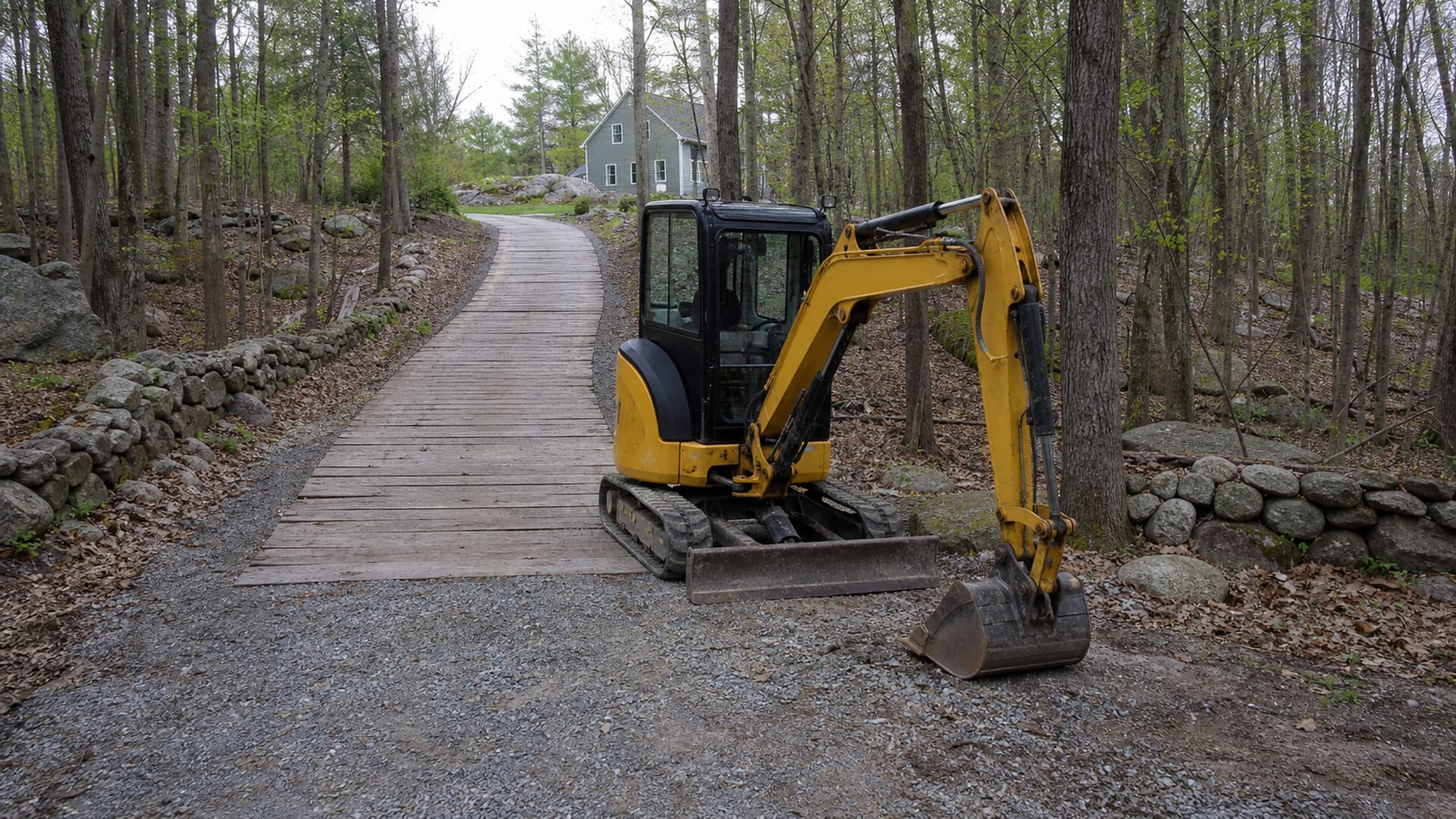
The part most people picture first is a machine coming down the drive. Not the digging, the arrival: a tracked excavator on a trailer, working its way past the trees, over the culvert, around the bend where the gravel is always soft, heading for a spot near the house where the well and the septic field are somewhere underfoot and nobody is entirely sure where. That worry is well placed and it is also the right place to start, because on a rural Bethany lot the drive is not the route to the job. It is part of the job.
Key Takeaways
The access route is scope, not logistics
on a long private drive the condition of the surface, the turns, the culvert crossings, and where a trailer can unload all shape the machine selection, the sequence, and what gets protected and restored.
Bethany has its own earth work and driveway paths
the town publishes an earth excavation or removal permit and a driveway interface or road excavation application, and its zoning materials treat earth removal, excavation, filling, stockpiling, and grading as allowed only through listed authorization paths, so the route depends on the scope and is confirmed with Land Use.
The plan is expected to change when the ground is opened
OSHA requires a competent person to inspect excavations, adjacent areas, and protective systems daily before work and after rainstorms or other hazard increasing events, and pre job planning covers utility location, soil evaluation, water control, and safe access and egress.
Protect the Drive, Because It Is Part of the Job
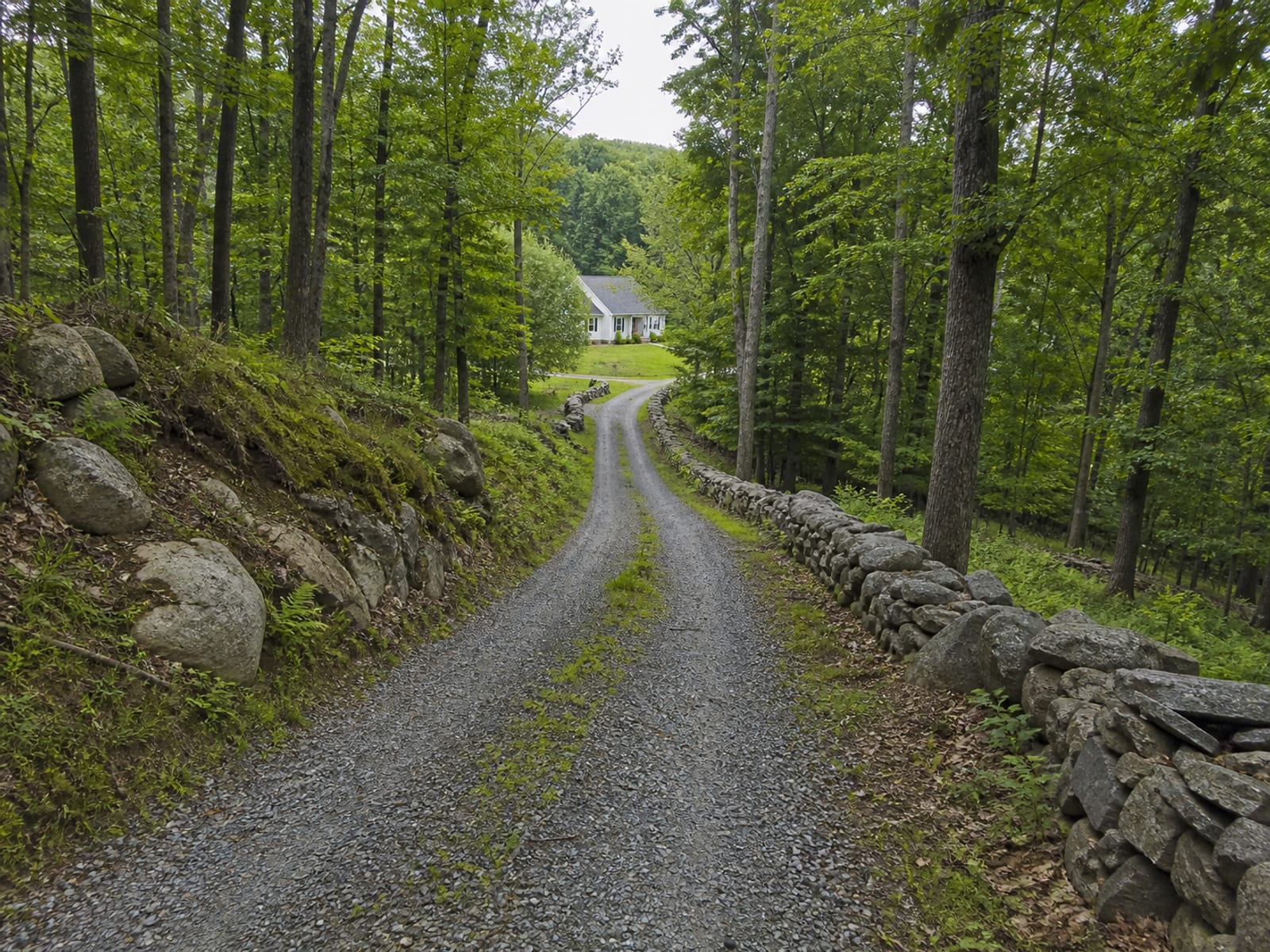
On a compact village lot the access question takes five minutes. Here it can take a walk of several hundred feet, and what that walk establishes changes the job.
Width and turns. The tightest point on the route decides what can get down it, and that point is often not the entrance. A bend between two mature trees, a gate post, or a narrowing where the bank has crept in is more common.
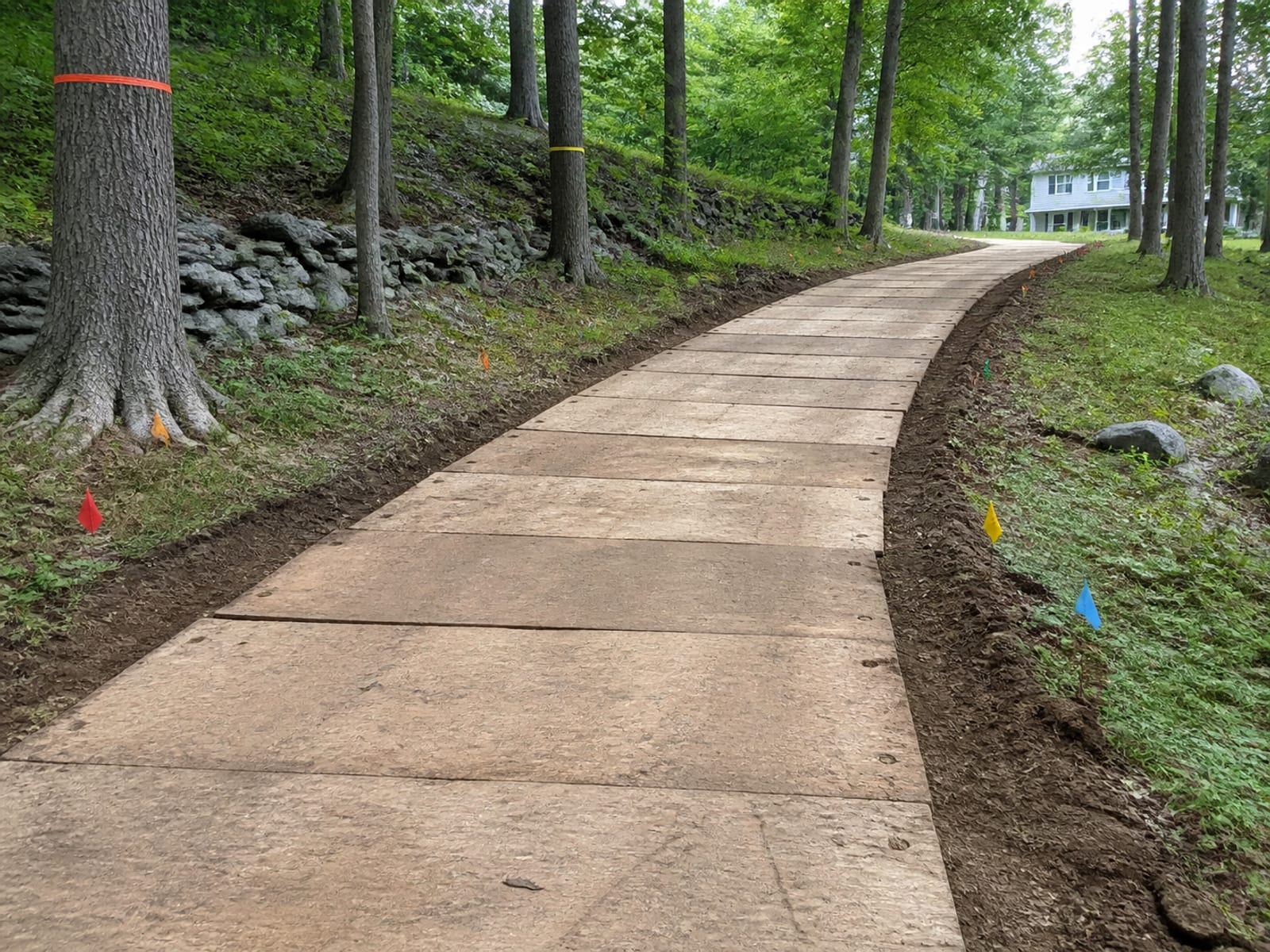
Surface strength. A gravel drive that carries cars all winter can rut badly under loaded trucks. Whether that surface survives the work, and what is done about it, is a scope item rather than an afterthought.
Culverts and crossings. A pipe under the drive that has been fine for twenty years may not be fine under a loaded machine. Knowing where the crossings are is part of the survey.
Unload and turnaround space. A machine arrives on a trailer and has to come off somewhere with room. So does a delivery of stone or pipe, and so does an empty truck that needs to turn around rather than reverse four hundred feet.
Trees. On a wooded lot the drive is lined with them, and both the canopy above and the roots below are considerations. Which trees are staying, and what protects them, is worth agreeing before the machine arrives.
Everything on that list has a cost implication, and all of it is much easier to discuss on a walk than to argue about later. A contractor who spends real time on the approach before talking about the excavation is doing this correctly.
Know Which of Six Projects You Are Actually Booking
Excavation work on a rural parcel usually falls into one of six situations, and being clear about which one you are in makes the first call far more productive.
Drainage correction, where water is arriving somewhere it should not and the ground or a system has to change. Driveway or access work, where the drive itself is the project rather than the route. Utility trenching, where a water, electrical, or septic line has to run between two points. Foundation preparation, where the excavation serves a construction project with specified elevations and inspections. Septic related work, which runs through a separate health review path. Regrading or erosion repair, where a slope, a washout, or a settled area needs correcting.
Those carry different approval questions and different definitions of done, and the parcel conditions, any plans you have, and the approvals that apply will determine what the appropriate scope actually is. Naming the outcome you want rather than the work you think it needs is the most useful way to start.
Have These Ready Before the First Call and Save a Week
Everything on this list is something only you can provide, and having it ready removes most of the back and forth.
- The desired final condition and the problem as you experience it, in plain terms.
- The parcel address, plus photographs or a short video of the access route and the work area. On a long drive, video is genuinely better than photographs.
- A survey or site plan if you have one, even an old one.
- Known well and septic locations, including the septic as built if it exists, the reserve area if you know it, and the tank and field positions.
- Known utilities and private lines, meaning anything you or a previous owner ran: a feed to a barn, a light, an irrigation line, an invisible fence, an old drain.
- Structures, walls, drainage routes, and visible rock in or near the work area.
- Any existing approvals, engineered plans, wetland delineation, soil data, septic design, or permit documents.
And one request to make of any estimate: separate what is included from what is excluded, specifically covering erosion controls, material import or export, disposal, rock handling, dewatering, restoration, seeding, driveway finish, and permit coordination. That list is where scopes differ, and it is where two quotes stop being comparable.
Watch the Six Stages of the Excavation Contractor Process in Bethany, CT
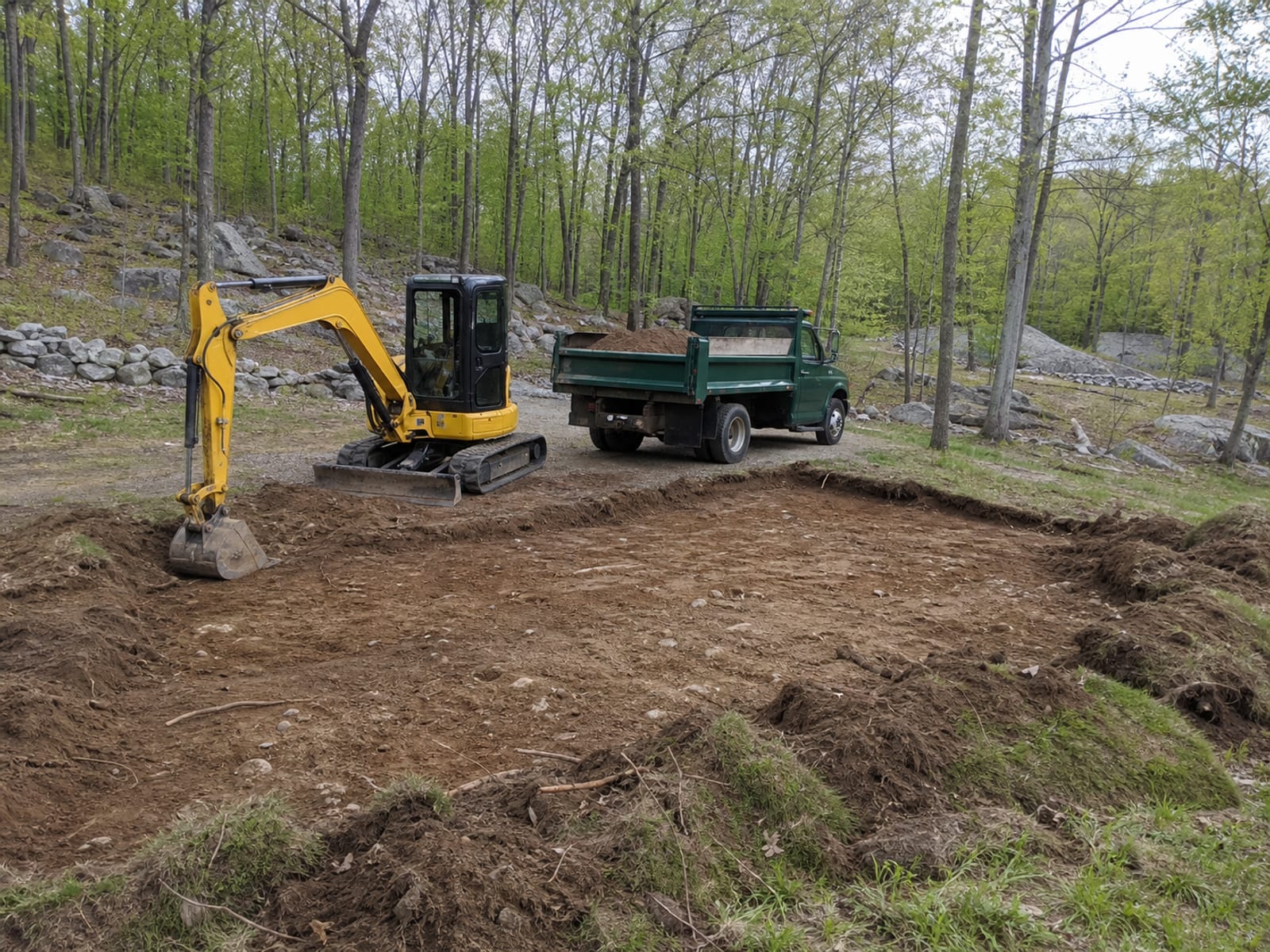
1. Site walk and scope confirmation. Walking the drive as well as the work area, looking at the ground, the water, the trees, and what has to be protected, then agreeing what the finished condition is. 2. Plans, permits, and wetland screening. Which of Bethany's paths the scope falls into, and whether the work is in or likely to affect a wetland or watercourse, since that is a municipal determination made before mobilization rather than after. 3. Utility notification and private line planning. Pre-marking the proposed work area, the locate request with its full notice period, verification of the responses, and a separate exercise to identify the private lines the markout will not show. 4. Access, staging, and site protection. Protecting the drive and the route, establishing where equipment, material, and spoil sit, protecting trees and structures, and installing erosion controls where the work calls for them. 5. Excavation, exposed condition review, and change control. The digging, with the ground looked at as it opens and a written process for what happens when it differs from what was assumed. 6. Inspection, backfill, final grade, and walkthrough. Any required inspection completed before anything is covered, then backfill and compaction as the design requires, final grade, restoration, and a walk of the finished work together.
Nobody should be promising a fixed start and completion date before stage one, and there is a reason for that beyond caution. The notice period is fixed, the approval path is determined rather than assumed, and stage five can genuinely change the scope.
See Why the Plan Can Change Once the Ground Is Open
This is the part homeowners most want reassurance about, and the honest version is more useful than reassurance.
An excavation is an investigation as well as a construction activity. Until the ground is open, what is under it is inferred. Rock, water, unsuitable soil, old fill, buried debris, and an unmarked private line are all things that turn up, and on a rural upland parcel none of them is unusual.
OSHA's requirements assume this. A competent person inspects the excavation, the adjacent areas, and the protective systems daily before work begins, and again after a rainstorm or any other event that increases hazards, because conditions genuinely change. The pre job planning that goes with it covers utility location, soil evaluation, water control, and safe access and egress, all of which are reassessed rather than settled once.
What protects you is not a promise that nothing will be found. It is a written change process: what conditions trigger a change, who documents it, who decides, and who authorizes the cost before further work happens. Ask for that in the scope, and the surprises become manageable rather than contentious.
Screen Bethany's Approval Paths Before Anything Mobilizes
| Situation | What applies | Who |
|---|---|---|
| Earth removal, excavation, filling, stockpiling, or grading | Bethany publishes an earth excavation or removal permit, and its zoning materials allow this work only as the minimum required for development preparation or water body maintenance or improvement, through the listed authorization paths. The route depends on the scope | Bethany Land Use and Planning and Zoning |
| Work in or likely to affect a wetland or watercourse, including clearing, grading, piping, culverting, excavating, filling, or construction | Municipal inland wetlands review and approval. For a non state project the municipal agency is normally the reviewer | Bethany Inland Wetlands Commission |
| Work in a town right of way, or a driveway interface | The town's driveway interface or road excavation application, which requires the locate notification for excavation in a town right of way, notice to the Road Foreman one business day before work, compliance with the relevant town code sections, repair of town property damage, and public works approval before release of bond and surety | Bethany Public Works and Land Use |
| Building related work | Building permits and inspections under the state building code. The town notes driveways are exempt from a building permit while warning that exempt work may still need zoning or Quinnipiack Valley Health District approval | Bethany Building Department |
| Septic, well, or health related work | Health district review, which on a rural parcel is a common early step rather than an afterthought | Quinnipiack Valley Health District |
| Any powered excavation | A Call Before You Dig notice at least two full days ahead, excluding Saturdays, Sundays, and holidays, and no more than 30 days ahead, outside an emergency | CBYD, at 811 |
| Disturbance of one acre or more | Connecticut's construction stormwater and dewatering general permit requirements. A threshold rather than a description of a typical residential job | CT DEEP, with municipal review |
The pattern worth noticing: none of these is a blanket requirement, and all of them are conditional on scope and location. That is why the screening happens early and why "do I need a permit" has a real answer rather than a general one.
Understand What Sets Your Estimate on a Rural Parcel
| Driver | What it changes |
|---|---|
| Volume of material | How much comes out, whether it can stay on the property, and how much has to be brought in |
| Access and the drive | Machine selection, the number of moves, protection, and restoration of the route |
| Trucking | Distance, turnaround, and how many loads the site can handle in a day |
| Rock and water | Whether breaking, dewatering, or a different method is needed, established once the ground is open |
| Trench protection | Where anyone enters an excavation, the protective system the depth and conditions require |
| Approvals and design | Wetlands review, earth work permits, right of way applications, health review, and any engineering |
| Inspections | Hold points where work waits, which affects sequencing more than production |
| Drainage and erosion controls | What is installed during the work and what stays afterward |
| Restoration | The drive, the lawn, the disturbed ground, and the finish everybody agreed to |
No reliable public Bethany specific price range for residential excavation was found, and none for typical duration either. That is why the estimate above is a list of drivers rather than a number: on a rural parcel these vary enough that a figure quoted without a site walk is a placeholder, and everybody involved knows it.

Work With a Crew That Owns the Whole Sequence
Prestige Property Maintenance is a licensed and insured excavating contractor based in Oxford, CT, established in 2015, owned by Kash Cochrane, CT HIC #0704432. We serve Bethany from Oxford, along with the other towns across the Naugatuck Valley and western Connecticut, and we do not operate a Bethany office or yard.
What that means practically on a job like this: one crew handles the whole sequence rather than handing it between companies. Running mulching equipment alongside an excavating fleet means that where a job needs clearing before it needs digging, the same crew does both without a second mobilization. And more than a decade working in Connecticut glacial soil means we plan for ledge, buried boulders, and water holding ground rather than discovering them as a surprise.
The commitments that matter to you are process ones. A site walk before any number is given. A written scope that states inclusions, exclusions, and assumptions. The utility notification taken seriously with its full notice period. Protection and restoration of your drive stated up front. And a straight explanation of what the excavation reveals, including when it is not what anybody hoped.
Request an Estimate With Everything in One Message
Call (203) 258-3395 or use the estimate form on this site, and include the parcel address, a description of the result you want, photographs or a video of the access route and the work area, whatever you know about the well, septic, and private lines, any survey, plan, or permit documents, and your rough timing.
Two scheduling realities to build in from the start. The utility notice period runs before digging, and it is fixed. And where a wetlands determination or a town approval applies, that runs on its own timeline rather than yours. Starting both early is the difference between a schedule that holds and one that slips before it begins.
Four Things Worth Knowing Before You Call
1. On a rural Bethany lot, what is the access route to the work area?
2. What does OSHA require of a competent person on an excavation?
3. What does Bethany's driveway interface or road excavation form require?
4. Why can a responsible contractor not give a fixed schedule before the site walk?
Pick an answer to begin.
Frequently Asked Questions About what to expect from an excavation company in bethany ct
How much does excavation typically cost in Bethany, CT? No reliable public Bethany range exists, so publishing one would be inventing a figure. The estimate is driven by the volume of material and where it goes, the access and the condition of the drive, trucking and turnaround, whether rock or water turn up, any trench protection required, the approvals and design work, the inspections, the drainage and erosion controls, and the restoration at the end. Ask for a written scope that separates those and states its assumptions.
How long does an excavation project take? There is no universal range worth publishing. The fixed part is the utility notice period. Beyond that, approvals, weather, access, hauling, inspections, and concealed conditions all set the calendar, and on a rural parcel the approvals and the concealed conditions are usually the two that move it most. A schedule offered after a site walk is worth something. One offered before is a guess.
Do I need a permit for excavation in Bethany? It depends on the scope and the location, and there are several possible paths rather than one. Bethany publishes an earth excavation or removal permit and a driveway interface or road excavation application, wetlands review applies where the work is in or likely to affect a wetland or watercourse, building permits apply to building related work, and health district review can apply to septic and well related work. Bethany Land Use is where you get the answer for your specific proposal.
Does the contractor call 811 in Connecticut? The party doing the excavation makes the notification, so if you have hired a contractor, that is theirs to file. The requirement is a minimum of two full days, excluding Saturdays, Sundays, and holidays, and no more than 30 days before the work. Pre-marking the proposed area is part of the process. What is still yours is identifying private lines, since the markout covers registered utility facilities and not the well line, septic components, or anything a previous owner buried.
What if the excavation reaches rock, water, or an unknown utility? Work stops in that area, the condition is documented, safety and scope are reassessed, and direction or a written change authorization is obtained before continuing. That is the correct sequence and it is also the one that protects you, because it means nothing gets covered up or charged for without a decision. It is worth agreeing the change process in the scope so this is a procedure rather than an argument.
Can I dig near a wetland or stream on my Bethany property? Not without the municipal review first. Work in or likely to affect a wetland or watercourse requires review and approval by the municipal inland wetlands agency, and Connecticut lists clearing, grading, piping, culverting, excavating, filling, and construction among the activities that can require it. Whether a specific proposal is regulated is the town's determination rather than yours or your contractor's.
Can I do some preparation myself? Usefully, yes, within limits. Gather the documents, take the photographs and video of the access route, write down what you know about the well, septic, and private lines, move personal items and vehicles out of the work area and off the route, and be clear about the finished condition you want. What to leave alone is entering any excavation, assuming where a utility runs, altering anything near a wetland, and any work in the town right of way.
Final Thoughts
Hiring heavy equipment for the first time feels like a leap because the sequence is invisible from outside. It is not complicated: a walk of the drive and the work area, a determination of which approvals apply, the utility notification with its fixed notice period, protection of the access route and everything around the work, the excavation with the ground actually looked at as it opens, the inspections that have to happen before anything is covered, and then backfill, grade, restoration, and a walk together at the end.
The two things worth insisting on are a written scope that states its exclusions and assumptions, and a change process for what happens when the ground turns out to be different. Everything else follows from those.
If you have work to plan on a wooded Bethany, CT parcel, Prestige Property Maintenance can walk the drive as well as the site, look at the access, the water, and the trees, and put a scope in writing before anything is booked. We handle excavation, site preparation, driveway and roadway excavation, and drainage solutions with one crew working out of Oxford. See how we work across Bethany, call (203) 258-3395, or contact us to arrange a site walk.
Terms From First Call to Final Grade
Tap a term to see what it means.
Site walk. The visit where the drive, the work area, the water, and the constraints are looked at together. Everything else is scoped against what it finds.
Related Articles
Excavation in Bethany, CT: Ledge, Wet Ground and Access
Worried about ledge, wet ground, or a long driveway before excavation in Bethany, CT? See what a site visit actually confirms before work begins.
What to Expect from an Excavation Company in Derby, CT
A machine on your small Derby lot does not have to be stressful. Learn what to expect from an excavation company, step by step, before you hire one.
Bethany, CT Rock Removal and What It Adds to Your Project
Bethany sits on glacial till, so hitting a boulder or ledge mid-dig is common, not bad luck. Here is how rock removal in Bethany, CT actually works.