

Excavation in Derby, CT: What Homeowners Need to Know
Kash CochranePublished
- excavation
- derby ct
- permits
- site preparation
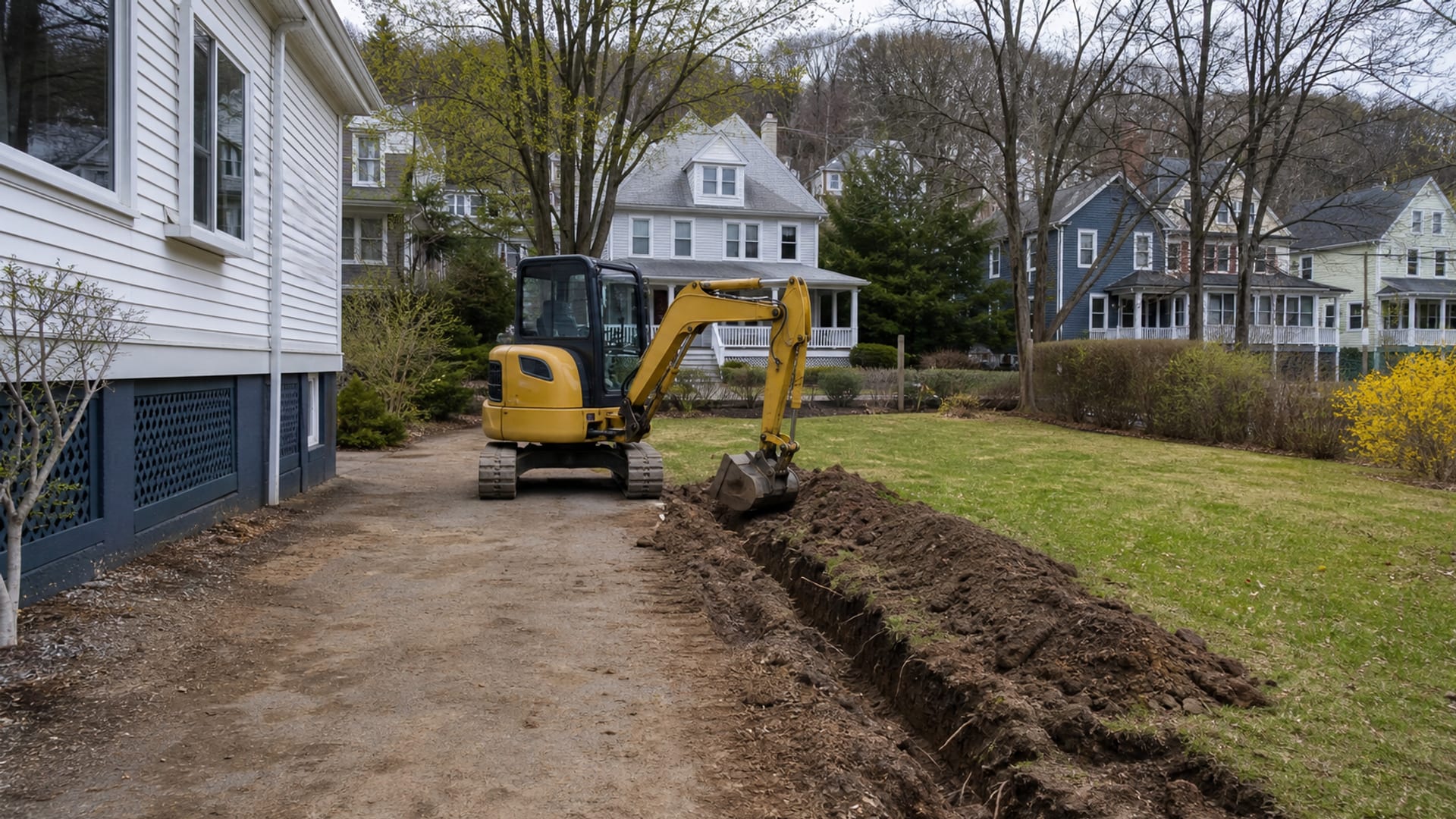
You are standing in a small back yard in Derby, or looking at a set of plans for one, trying to work out how any of this actually happens. The lot is tight. The neighbors are close. There is a river somewhere down the hill that you have a vague, uneasy feeling might matter. One contractor gave you a number over the phone in four minutes, another said he needed to walk the site first, and you have no idea which one was taking you seriously. Where does the dirt even go? Does a project this size need a permit at all? None of that is obvious from the outside, and it is not supposed to be. What follows is the actual sequence a careful contractor works through on a Derby lot, in the order they work through it, so you can tell the difference between a contractor who is stalling and one who is doing the job properly.
Key Takeaways
Derby treats moving soil as a land use decision, not just a machine task
the zoning regulations require a temporary special exception for digging, excavation, scraping, moving soil, or filling unless a listed exemption applies, and the Zoning Officer is who confirms which side of that line your scope falls on.
The floodplain question comes first, not last
Derby's Floodplain Zone takes in the natural channels of the Housatonic and Naugatuck and the mapped flood areas, and excavation, grading, filling, and paving inside it need the zoning or land use approval issued before work starts.
811 is a scheduling gate, not a formality
Connecticut requires notice at least two full days ahead, excluding Saturdays, Sundays, and holidays, and no more than 30 days ahead, for any excavation with power operated equipment.
Why Does Excavation in Derby Involve More Paperwork Than You Expected?
Most homeowners assume excavation is a question of equipment: what machine fits, how long it takes, what it costs. In Derby the first questions are usually regulatory, and they are the reason a careful contractor asks for a site visit instead of quoting from a description over the phone.
Derby's zoning regulations require a temporary special exception for digging, excavation, scraping, disturbance, moving of soil, or filling, unless an exemption applies. The listed exemptions include work of one half acre or less, qualifying foundation or trench work on a lot that already has issued zoning and building permits, and certain limited residential landscaping. That sounds like most home projects are covered, and many are, but the exemption has to be confirmed against your actual scope rather than assumed. The Zoning Officer is the person who makes that call.
The larger approval path asks for specifics that shape the whole job: cubic yards of material, how long the operation runs, erosion and sediment controls, the travel access plan, existing and finished contours, adjacent grades, proposed slopes and lateral support, drainage, nearby water resources, and the clearing and grading sequence. Reading that list explains a lot about why two quotes can differ so much. A contractor who has walked the site can answer those questions. One who has not is guessing at every single one.
Is Your Lot in the Floodplain Zone, and Why Does That Change Everything?
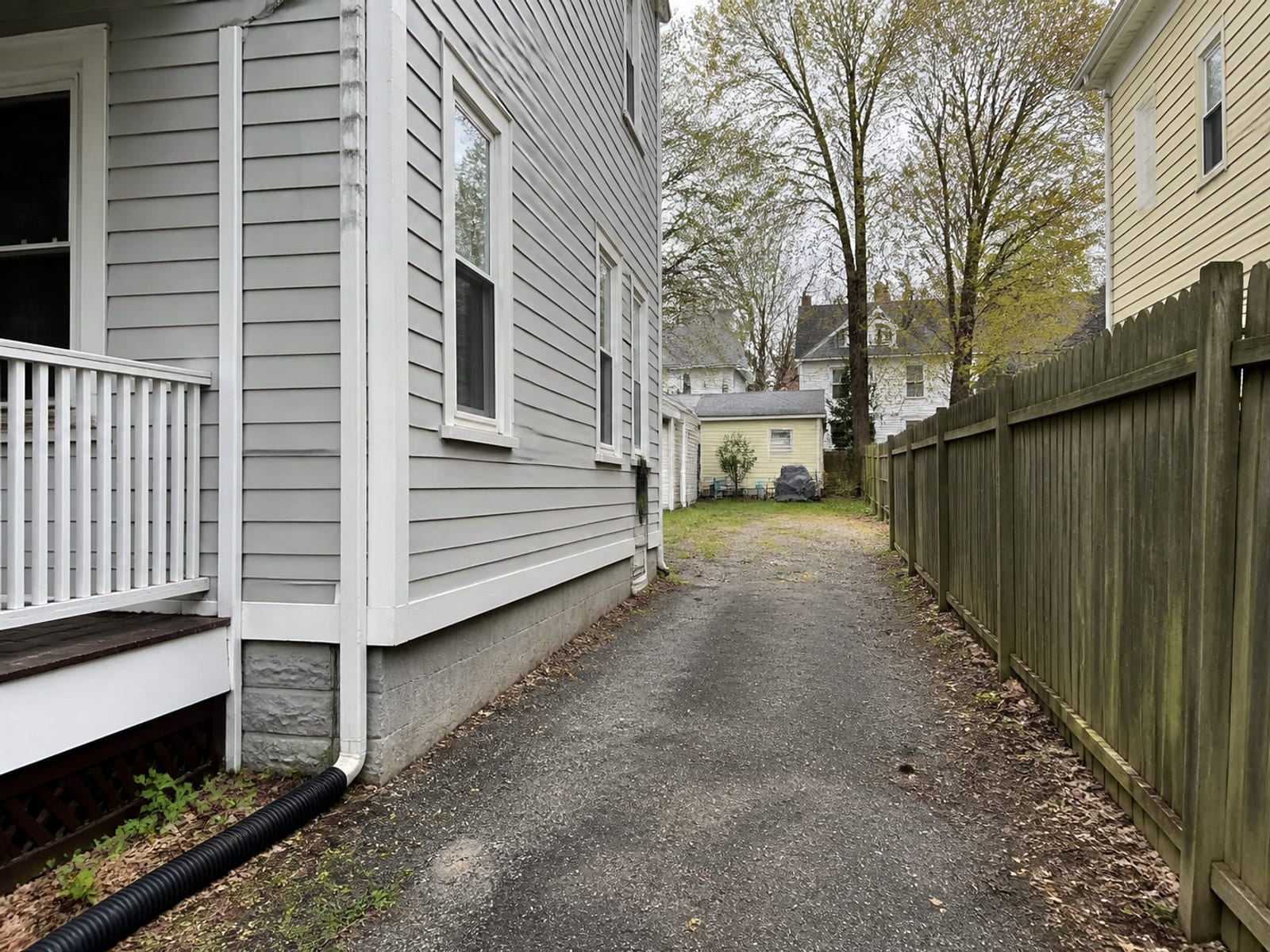
Derby sits at the confluence of the Housatonic and the Naugatuck, and its regulations define the Floodplain Zone to include the natural stream channels of both rivers along with the mapped flood areas. Inside that zone, excavation, drilling, filling, grading, paving, dredging, and other man made changes are listed as work that cannot proceed until the required zoning permit or applicable land use approval is issued. Where the City grants that approval, the decision is conditioned on evidence that a flood compliance permit has been issued under the City's floodplain management process.
For a river adjacent or low lying parcel, this is the first question, not a late surprise. It changes the approval path, the documentation, and often the drainage and stabilization work the finished job has to include. Upland Derby neighborhoods away from the rivers sit outside it, but "my street feels high enough" is not a determination. Derby land use staff make that call against the mapped zone.
There is a related but separate review for inland wetlands and watercourses. Where a project may affect a regulated wetland or watercourse, including excavation, filling, grading, piping, culverting, or clearing in or near the resource, municipal wetlands review applies and a site specific jurisdictional determination is needed. Floodplain and wetlands are different questions with different offices and different triggers, and a project can land in one, both, or neither.
| Screen item | When it may apply | Who decides |
|---|---|---|
| Temporary special exception for excavation, filling, or earth removal | Soil movement or filling generally, unless an exemption applies. Exemptions include work of one half acre or less and qualifying foundation or trench work on a lot with issued zoning and building permits | Derby Planning and Zoning Commission, administered through the Zoning Enforcement and Wetland Division |
| Floodplain Zone approval | Any listed man made change inside the Floodplain Zone, including excavation, grading, filling, drilling, or paving | Derby Zoning Officer or the Planning and Zoning Commission, depending on the application path |
| Flood compliance permit | Conditioned on the floodplain zoning or land use approval being granted | City of Derby, under its floodplain management process |
| Soil erosion and sediment control plan | Site development with disturbed area of one half acre or more, or wherever the regulations otherwise require it | Certified by the Zoning Officer, City Engineer, or the New Haven County Soil and Water Conservation District |
| Inland wetlands or watercourse review | Where work may affect a regulated wetland or watercourse | Derby's Zoning Enforcement and Wetland Division and the Inland Wetland Enforcement Officer |
| Building permit | Constructing or altering a building or structure, which may accompany exempt foundation or trench work | Derby Building Department and Building Official |
| Inspection before backfill | Storm drainage, water, or sanitary sewer facilities required by an approved site plan, special exception, or subdivision | City Engineer or designated agent |
| 811 notification | All excavators using power operated equipment, before non emergency excavation | Call Before You Dig, overseen by Connecticut PURA |
What Actually Drives the Scope and the Price?
No qualifying local price range exists for excavation in Derby. There is no municipal schedule, no state table, nothing defensible to publish, and quoting a figure without walking a specific parcel would be a guess dressed up as a number. What can be described honestly is what the price is made of, and that is more useful anyway, because it tells you which questions change the answer.
How much soil, and where does it go?
Derby's special exception application asks for cubic yards, which means the quantity has to be measured rather than eyeballed. Beyond the number, the destination matters just as much: material reused on site, stockpiled and managed, or hauled away are three different costs. Deciding this after the machine is already digging is how a job stalls with a pile nobody planned for.
Can equipment and trucks actually get in?
On a compact city lot, access often determines machine selection rather than the other way around. The regulations require a proposed travel access plan for larger excavation applications, and the Zoning Officer may require a stone stabilized construction entrance installed at least three days before site preparation begins, with adjacent roads cleaned daily. Where trucks turn, where stone and pipe get delivered, and where spoil sits are scope questions, not day one discoveries.
What is underground, and how deep does the work go?
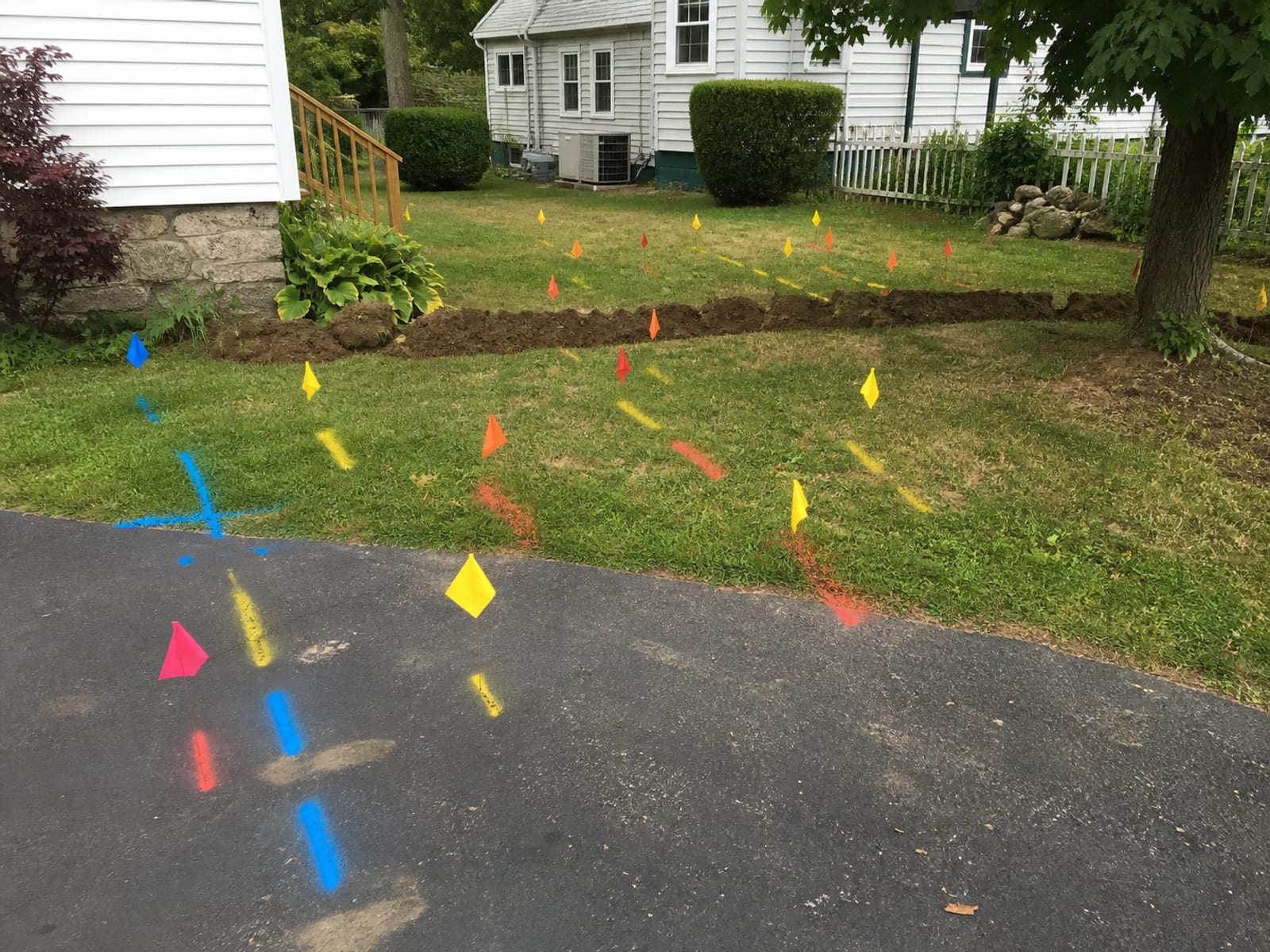
Every powered dig starts with the 811 notification, and public utility marks do not cover privately owned lines running across the property. Depth changes the safety burden as well. OSHA requires a protective system for trenches five feet deep or greater unless the excavation is entirely in stable rock, and the choice of system depends on soil, water, weather, surcharge loads, and nearby operations. Spoil has to be kept at least two feet back from the trench edge.
What has to be controlled, inspected, or stabilized?
Erosion controls, floodplain documentation, wetlands review, inspection hold points, and final stabilization are all real work with real hours attached. Disturbance of one half acre or more brings a certified erosion and sediment control plan that has to be in effect before, during, and after construction.
What might the ground do that nobody planned for?
The honest control here is site investigation and a stated allowance in the scope, not a blanket claim about what Derby soil always does. Groundwater, unexpected rock, or unsuitable material are handled by looking first and writing the contingency into the scope, rather than by discovering them mid dig.
What Does the Job Actually Look Like, Start to Finish?
The sequence matters, because several of these steps cannot be reordered without creating a problem. Approvals gate the dig, the dig gates the install, and the install gates the backfill. A contractor who runs them out of order usually ends up reopening something that was already closed.
| Stage | What happens |
|---|---|
| Define the finished condition | Intended finished grade or depth, work limits, drainage route, structures and utilities to protect, truck entry and turning, and whether spoil stays or leaves. For a regulated scope the regulations expressly want quantity, duration, controls, access, contours, slopes, drainage, and water resource locations |
| Approvals and utility coordination | Building permit path where a structure is involved, the CBYD notification inside the two to 30 day window, work area marked and reviewed after utility responses, and private lines accounted for separately |
| Access and sediment controls, first | Stabilized construction entrance where required, delivery and staging planned, protection for lawn, pavement, and walls, and erosion controls installed before major disturbance rather than after |
| Controlled excavation and material management | Machine chosen once access, soil, depth, and geometry are known. Hand exposure near known utilities. Protective systems where workers enter. Spoil managed deliberately |
| Install, then inspect before cover up | Storm drainage, water, and sanitary sewer facilities required by an approved plan are inspected by the City Engineer or designee before trenches are backfilled |
| Backfill, restore, and stabilize | Final grades, drainage details, temporary and permanent erosion controls, and vegetative stabilization, with temporary protection where the season prevents permanent cover |
How Do You Tell a Good Excavation Contractor from a Cheap Quote?
The three phrases people type into a search bar mean slightly different things, and knowing which one describes your project helps you ask better questions.
What should you evaluate in an excavation company in Derby, CT?
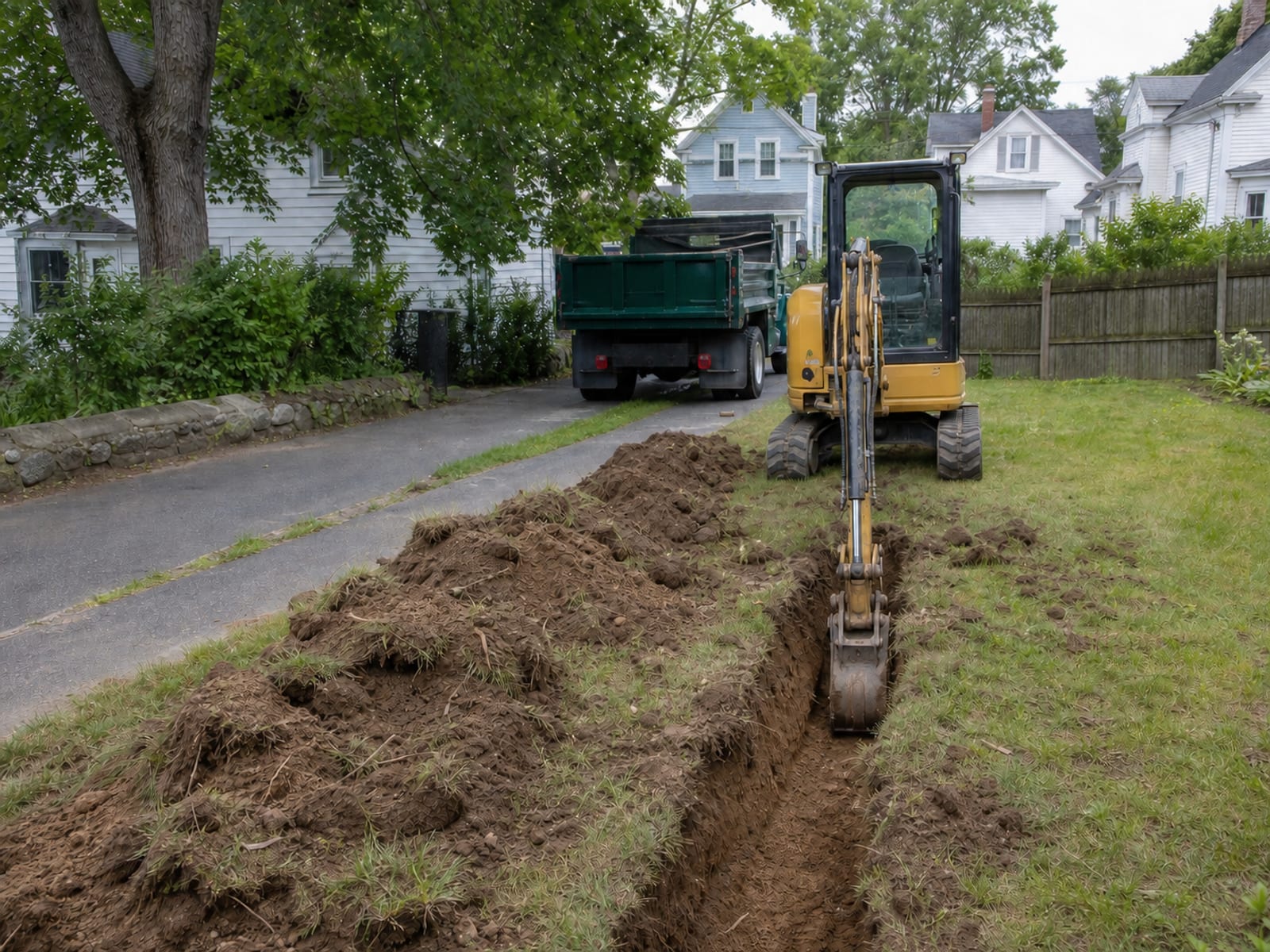
Treat this as a checklist rather than a shortlist. Ask how the scope will be measured, where the soil is going, how access and staging will work, when 811 gets called, what protective systems apply if anyone enters a trench, which approvals are needed and who is obtaining them, what erosion control is planned, and which inspections have to happen before backfill. A written scope should say what is excluded as clearly as what is included. Prestige Property Maintenance serves Derby from its base in Oxford and does not operate a Derby office or yard, which is worth knowing simply so you can picture how a crew and equipment actually reach your street.
When does an excavating contractor in Derby, CT need to lead the coordination?
Powered equipment, structural excavation, trenches anyone enters, drainage changes, utility conflicts, and work near regulated resources all push the job past what a homeowner can direct. In those cases you want one party accountable for the sequence, the safety plan, and the municipal coordination, rather than a set of separate trades each assuming someone else filed something.
When is it site excavation in Derby, CT rather than just a hole?
Once the work involves layout, cuts and fills, drainage, staging, stabilization, and closeout as a connected sequence, it is site work. Derby's rules for larger disturbance and earth material removal are written for exactly this, and the application asks for the whole picture rather than a single dimension.
What Do Derby Homeowners Get Wrong Most Often?
Every one of these is avoidable at the planning stage, and every one of them is expensive or dangerous once the machines are on site.
- Calling 811 too late: the notice window is at least two full days ahead, excluding weekends and holidays. A dig scheduled for tomorrow morning cannot be legally notified this afternoon.
- Assuming small means exempt: acreage is one of several exemption tests, and a small job can still touch a building, zoning, floodplain, or wetlands review.
- Starting without a spoil and staging plan: material has to go somewhere from the first bucket, and "we will figure it out" turns into a pile against a fence.
- Entering an unprotected trench: cave ins are the greatest trenching hazard OSHA identifies. No one should enter a trench without the required protective system in place.
- Leaving erosion control and stabilization for the end: Derby's rules put controls before disturbance, and treat final stabilization as part of the work rather than optional landscaping.
What Can You Do Yourself, and Where Does That Stop?
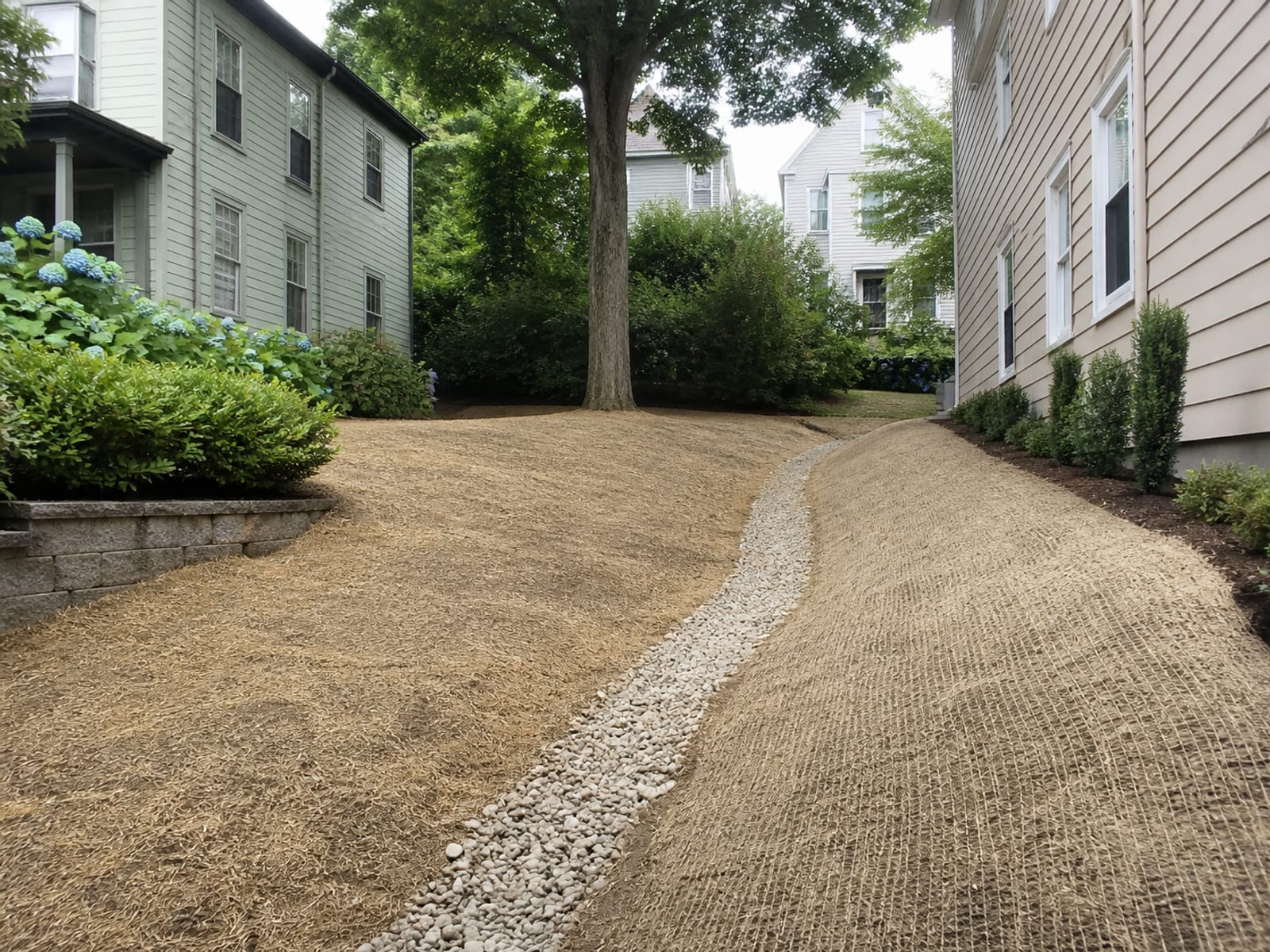
There is genuinely useful work a homeowner can do before anyone visits, and none of it involves a machine. Write down the history of the problem. Photograph wet areas, cracks, or settlement after rain. Note visible structures, the access route, and anything that constrains a truck. Find the property documents. Call Derby and ask whether zoning, building, floodplain, or wetlands review applies to what you are describing. Clear space for a site walk. That is project definition, and it makes every later conversation faster.
The line is at the equipment and the ground. Operating powered excavation equipment without the required 811 process, entering a trench, deciding a trench is safe for entry, placing spoil at a trench edge, altering a wetland or watercourse, or starting work that needs a Derby approval all sit firmly on the contractor side. The threshold is low on purpose, because Connecticut requires notice before powered excavation and OSHA's trenching obligations apply to construction excavation work.
Does the Season Change When the Work Can Happen?
There is no verified Derby calendar period when excavation is categorically prohibited, and inventing one would be dishonest. The real constraint is condition based. Derby requires temporary erosion protection when the time of year or weather prevents permanent vegetative cover from establishing. OSHA requires trench conditions to be inspected daily and whenever conditions change, including after rain, and specifically names weather and water content as factors in choosing a protective system.
In practice that means scheduling against actual ground conditions and the forecast, planning temporary stabilization, and reassessing after rain or thaw, rather than working to a fixed seasonal cutoff. Connecticut building code material lists a 42 inch frost line, which matters for footings and frost sensitive work, but it should be confirmed against current code and the Derby Building Official for your specific project rather than treated as a general rule.
Check Your Assumptions Before You Call
1. How far ahead does Connecticut require an 811 notification for excavation with power operated equipment?
2. Your Derby lot is a few streets back from the Naugatuck. What should be checked before scoping the dig?
3. When does OSHA require a protective system in a trench?
4. What does Derby's special exception application want to know about the soil you remove?
Pick an answer to begin.
Frequently Asked Questions About excavation derby ct
Do I need a permit for excavation in Derby, CT? It depends on the scope, and the honest answer is that Derby staff decide rather than a website. The zoning regulations require a temporary special exception for excavation, soil movement, or filling unless an exemption applies, and the exemptions include work of one half acre or less and qualifying foundation or trench work on a lot with issued zoning and building permits. A blanket yes or no would be wrong either way. Describe your actual scope to Derby Planning and Zoning and the Building Department and have them confirm it.
How much does excavation cost in Derby, CT? No qualifying local price range was found in any official Derby or Connecticut source, so publishing one would be inventing a number. Price is built from measured quantities, where the material goes, access and truck staging, utility conflicts, dewatering, proximity to structures, unexpected subsurface conditions, erosion controls, and required approvals or engineering. A written site specific scope is what turns those into a real figure.
How long does excavation take? No universal duration holds up. What can be stated is the known scheduling gate: 811 notice is at least two full days ahead, excluding weekends and holidays, and no more than 30 days ahead. Derby's Building Department states a building permit must be issued or refused within 30 days of application, though that plan review period does not cover related zoning, wetlands, floodplain, engineering, or inspection steps. A temporary excavation special exception calls for a public hearing.
Do I have to call 811 before digging? Yes, for any excavation using power operated equipment, outside of an emergency excavation. Notification must be at least two full days ahead, excluding Saturdays, Sundays, and holidays, and no more than 30 days ahead. The statewide program does not register facilities owned by a private residence owner serving only that residence, so private lines on your property still need to be identified separately.
Can I excavate near a wetland, watercourse, or the river? Do not assume it is allowed, and do not assume it is forbidden either. Municipal inland wetlands review applies where the work may affect a regulated wetland or watercourse, and Derby's floodplain controls apply separately where the Floodplain Zone covers the parcel. Both need a site specific determination before anything is disturbed.
What happens to the dirt that comes out of the hole? It has to be planned as on site reuse, a managed stockpile, or removal from the property. Larger Derby applications require the cubic yard quantity along with a plan for the operation, so this gets decided during scoping rather than during the dig.
What makes a trench unsafe? Cave ins, which OSHA identifies as the greatest trenching risk, along with falling loads, hazardous atmospheres, falls, mobile equipment, water, weather changes, and surcharge loads. Spoil placed too close to the edge adds load exactly where the wall is weakest. Conditions change after rain or thaw, which is why competent person inspections are required daily and whenever conditions shift. No one should enter a trench without the required protective system.
Terms You Will Hear During a Derby Excavation
Tap a term to see what it means.
Temporary special exception. Derby's approval path for digging, excavation, scraping, moving soil, or filling where no exemption applies. It asks for quantities, duration, controls, access, contours, slopes, and drainage.
Moving Forward
Excavation on a small Derby lot is not mysterious once you can see the sequence. It is a set of access, regulatory, and site questions worked through in order: what the finished condition needs to be, whether the parcel sits in the mapped Floodplain Zone or near a regulated wetland, which approvals apply, when 811 has to be called, how equipment and trucks reach the work, where every cubic yard goes, and what has to be inspected before anything gets covered up.
That sequence is also your best tool for judging a contractor. Someone who asks about your finished grade, your access, your soil destination, and your approval path before naming a number is doing the job properly. A figure quoted over the phone, before anyone has seen your slope, your access, or your position relative to two rivers, is a guess that will change once the work is real.
If you have ground that needs to move in Derby, CT, Prestige Property Maintenance can walk the site with you and work through those questions before anything is scheduled. We handle excavation, site preparation, grading, and trenching with one crew working out of Oxford across the Naugatuck Valley, so the access plan, the dig, and the finish grade are not handed between three different companies. Call us at (203) 258-3395 or contact us to arrange a site visit, and you will get a scope that names what is included, what is excluded, and which approvals your specific project needs.
Related Articles
What to Expect from an Excavation Company in Derby, CT
A machine on your small Derby lot does not have to be stressful. Learn what to expect from an excavation company, step by step, before you hire one.
Site Preparation in Derby, CT: From Approved Plans to Pour
Derby's compact, river adjacent lots make site preparation its own decision. Find out what a plan review and site visit actually confirm before you build.
Land Clearing in Derby, CT: What Is Under the Brush?
An overgrown Derby parcel hides more than brush. Learn how land clearing in Derby, CT reveals ground conditions, limits, and drainage before you build.