

Grading in Derby, CT: Why Water Still Runs at Your Wall
Kash CochranePublished
- grading
- derby ct
- yard drainage
- foundation water
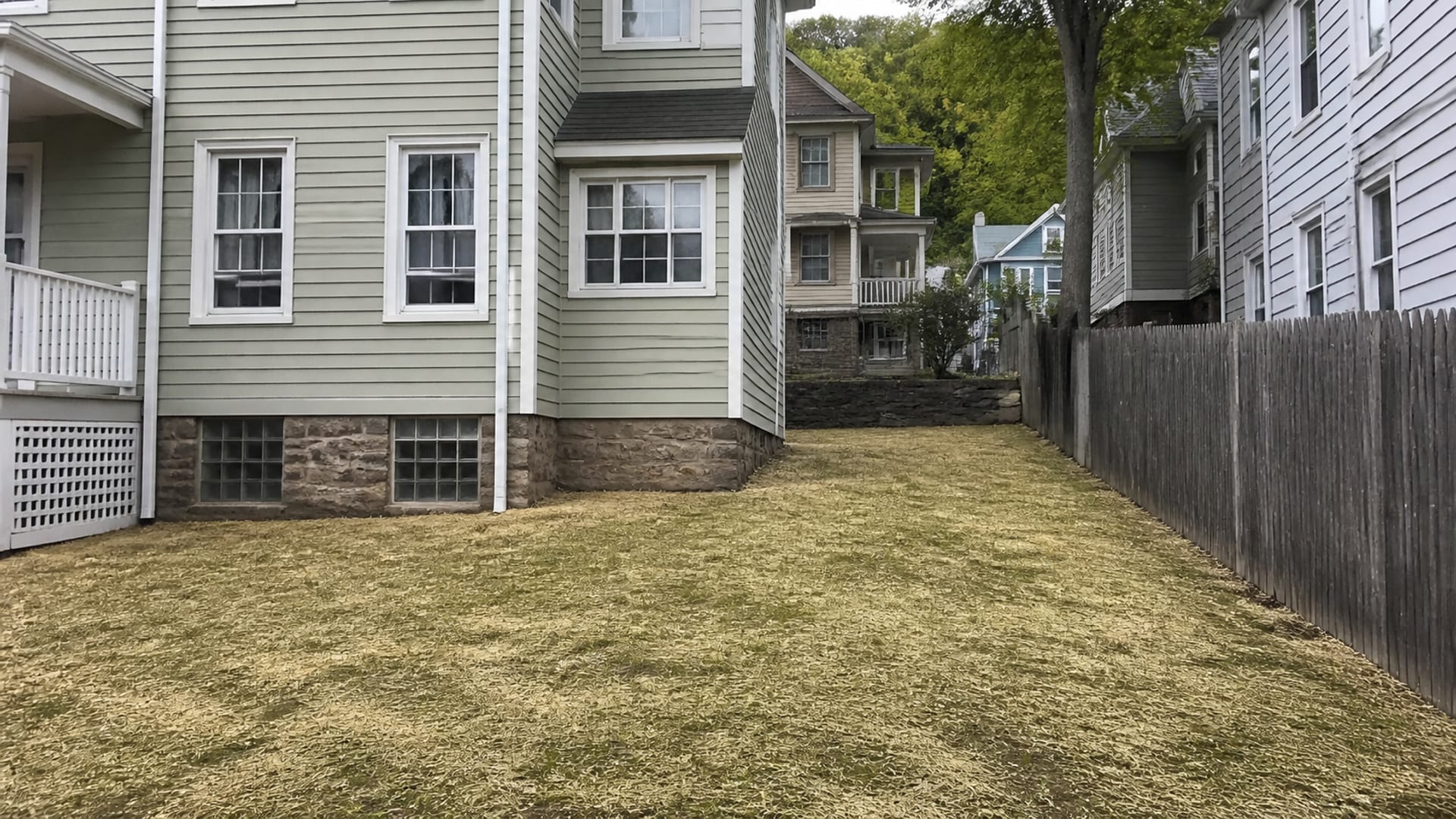
Every hard rain does the same thing. The water sheets off the lawn, picks a line, and heads for the basement wall instead of away from the house. You have watched it happen enough times to know the yard is wrong. What you do not know is whether reshaping the surface will actually fix it, or whether something is going on under the grass that no amount of moved topsoil will touch. That is the right question to be asking, and it is the one a lot of grading quotes skip straight past. On a Derby lot, near two rivers, on ground the City's own maps flag as alluvial and poorly drained, a puddle at the foundation has several possible causes. Which one you have decides whether grading is the answer or only half of it.
Key Takeaways
The puddle is a symptom, not a diagnosis
inadequate drainage can come from soil drainage capacity, shallow groundwater, underlying bedrock, minimal slope, or compaction, and the visible water does not tell you which.
Derby's ground is mapped, and it varies
the City's Plan of Conservation and Development identifies alluvial and floodplain soils, poorly drained and very poorly drained ground, floodway, and 100 year and 500 year flood zones along the Housatonic and Naugatuck.
Flat is usually the wrong goal
near a house, controlled drainage to a suitable, lawful outlet matters more than a yard that looks level.
811 applies to grading too
Connecticut requires a Call Before You Dig notification before power or mechanized excavation, at least two full working days ahead, and it is free.
Wetlands proximity can gate the whole project
Derby's published process states that where wetlands are within 200 feet of the property, its zoning application will not be processed before Inland Wetlands Commission approval.
Water at the Foundation Has More Than One Possible Cause
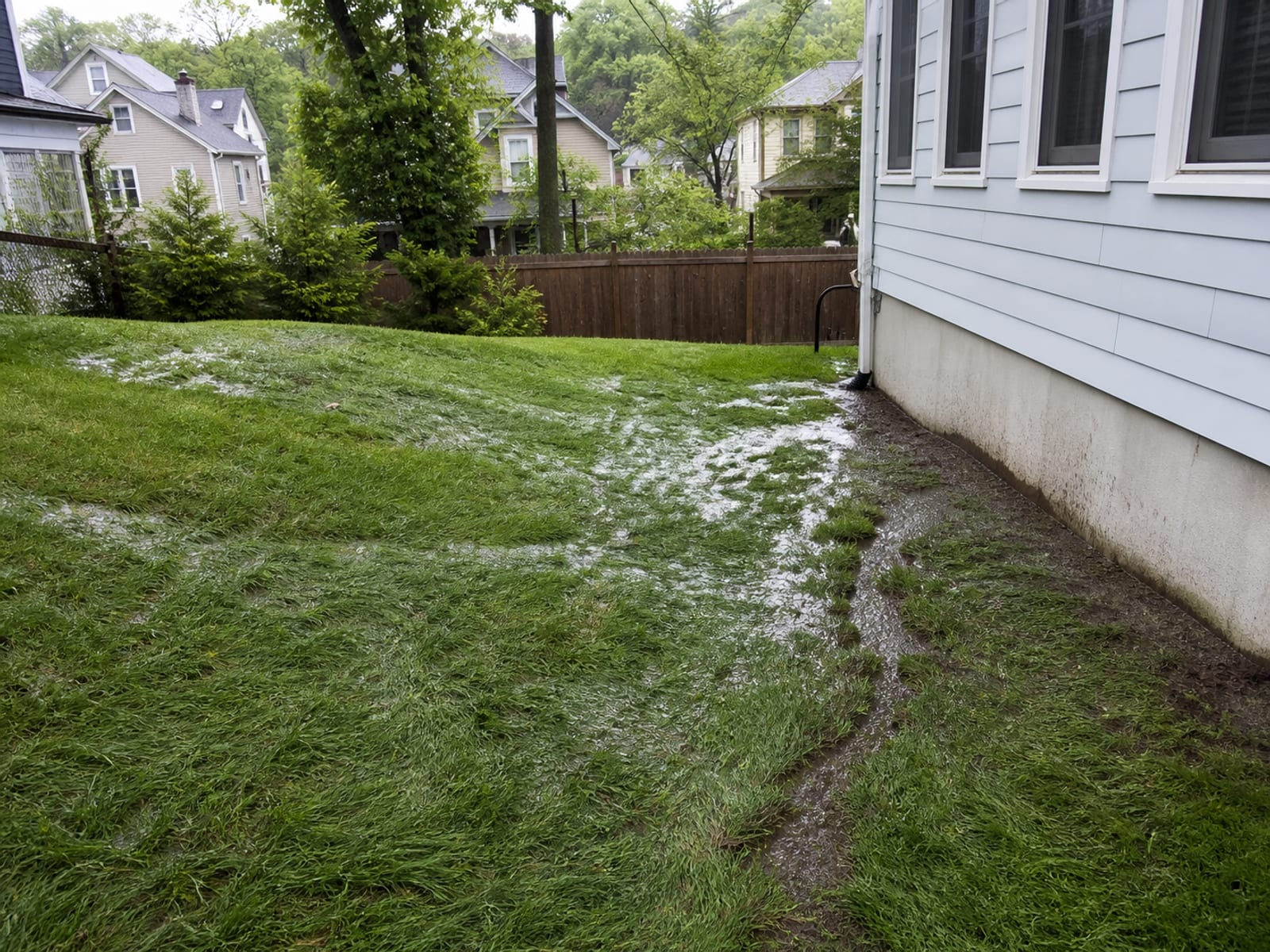
Before anyone quotes moving soil, the water has to be traced. Persistent water at the foundation, erosion channels cut across the lawn, standing water that lingers, downspouts discharging at the wall, and ground that stays wet after everything nearby has dried are all signals worth recording. They are not all the same problem.
Surface slope is the obvious candidate and often part of it. But the ground itself may simply not move water: some soils drain slowly regardless of what the surface does. Shallow groundwater rises independently of your lawn. Bedrock close to the surface leaves water nowhere to go downward. Compaction, common on an older developed lot where equipment has worked or vehicles have parked, can turn ground that used to absorb into ground that sheds. Any of those can produce the same puddle in the same spot.
That is why a contractor who walks the site in dry weather, asks what happens during rain, and looks at roof discharge, elevations, existing drains, and where water could lawfully go is doing the diagnostic work. One who quotes regrading from a description has skipped it.
Derby's River Geography Makes This a Parcel Question, Not a Town One
Derby sits at the confluence of the Housatonic and the Naugatuck, and the City's Plan of Conservation and Development maps alluvial and floodplain soils, poorly drained and very poorly drained ground, floodway, and both 100 year and 500 year flood zones along the rivers. It also sets out a strategy to restrict development on slopes of 25 percent or greater and to restrict excavation and clearing on land above steep slopes.
None of that means every Derby parcel is wet or steep. It means the opposite of a blanket assumption: grading here starts with parcel level constraints rather than a general rule about what Connecticut soil does. A lot three streets up from the river behaves differently from one on the low ground, and the mapped conditions are the reason to check rather than guess.
The housing stock adds a second layer. State data put Derby's median year built at 1965, which on a developed lot commonly means prior additions, compacted surfaces, undocumented drainage from a previous owner, unknown utilities, and constrained access. Those are not exotic complications, they are the normal condition of a sixty year old property, and they get found by looking rather than by assuming.
| Requirement | When it may apply | Who to ask |
|---|---|---|
| Zoning permit | Derby requires a zoning permit application before construction, reconstruction, change of use, enlargement, extension, moving, structural alteration, or a change in the use of land, building, or structure. Grading tied to a regulated improvement should be screened | Derby Zoning Enforcement and Wetland Division |
| Inland Wetlands Agency approval | Regulated work in or near wetlands or watercourses, including grading, piping, excavating, and filling. Derby states that where wetlands are within 200 feet of the property, the zoning application will not be processed before Commission approval | Derby Inland Wetlands Agency and its Enforcement Officer |
| Building permit | Code governed structures and related work, including retaining features. Whether a surface only grading job needs one is not established and should be confirmed | Derby Building Department and Building Official |
| Erosion and sediment control plan | Connecticut guidance uses a planning threshold of disturbance over one half acre, with municipal certification in applications above that threshold | Derby Planning and Zoning, or the reviewing authority |
| Construction stormwater general permit | CT DEEP classifies private, non governmental construction disturbing one acre to under five acres as locally approvable, with municipal review and a local erosion and sediment control plan | Municipal reviewing authority, and CT DEEP where required |
| CBYD notification | Before any power or mechanized excavation, at least two full working days ahead | Call Before You Dig |
The Scope Is Set by Six Things, and Price Follows the Scope
No reliable Derby specific price range for residential grading exists in any official source, so publishing one would be inventing it. What can be described accurately is what the scope is built from, which is more useful when you are comparing two quotes that look nothing alike.
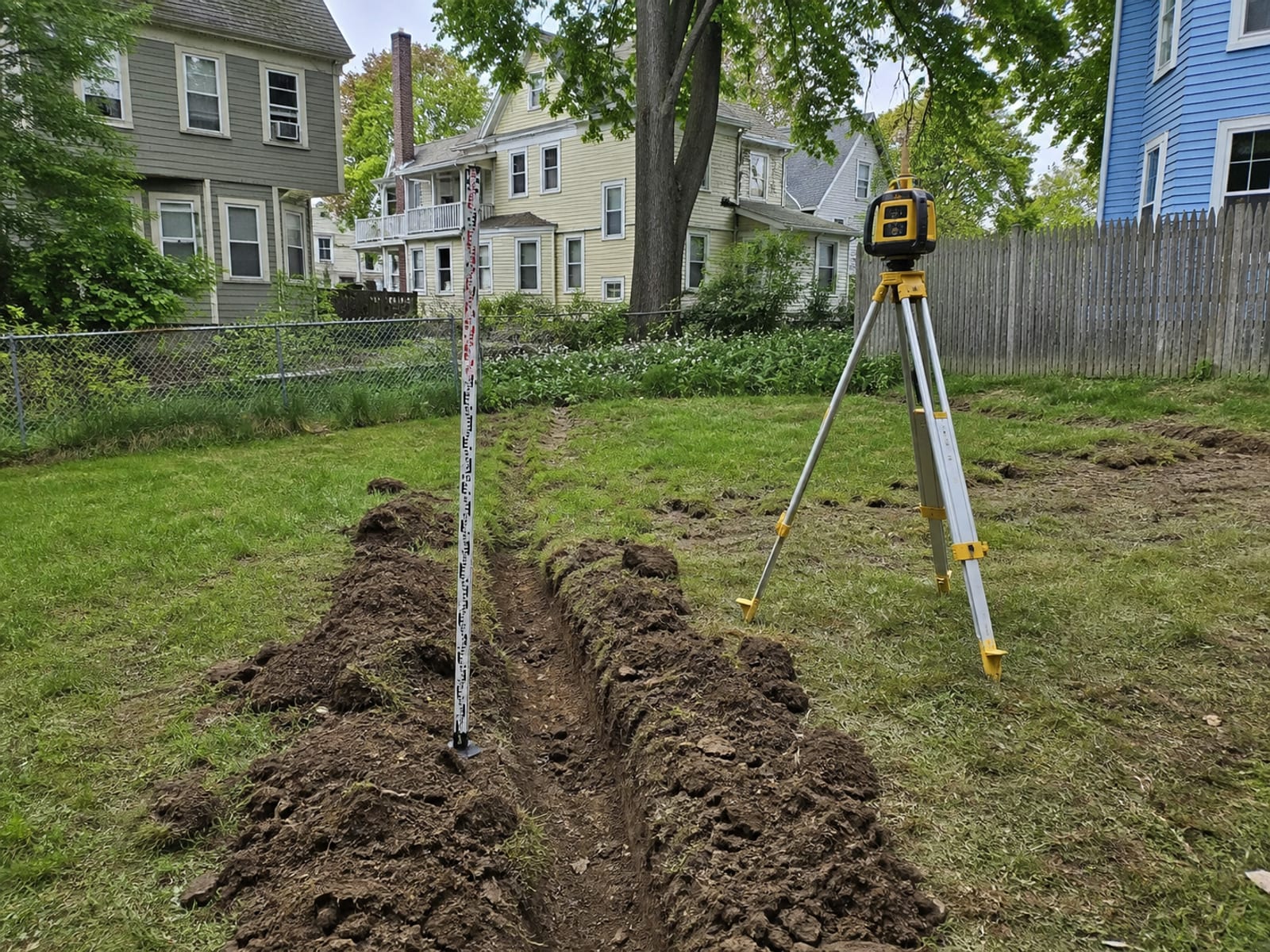
Existing grade, roof runoff, and foundation elevation
Where the water starts matters as much as where it pools. Roof discharge at the wall is a different problem from a lawn that pitches the wrong way, and the fixes are different too. Finished elevations also have hard limits: fill added without checking against siding, vents, drains, or door thresholds creates a new problem while solving an old one.
Soil, wet ground, rock, and compaction
These change the method, not just the hours. Wet ground, buried debris, rock, or heavily compacted fill can call for test pits, dewatering, different equipment, or disposal. They are verified by parcel review and investigation rather than assumed from what the neighborhood generally does.
Access, staging, cut and fill, and hauling
A tight lot, a narrow gate, a steep entry, pavement that must be protected, or nowhere for a truck to turn all change the approach. More cut, more import, more export, or more stockpiling means more equipment and more trucking.
Drainage components and a lawful outlet
Swales, downspout routing, pipe, stone, catch basins, and an approved outlet solve different problems from reshaping soil, and they are separate work. A drain without a suitable outlet does not fix anything. It relocates the water, sometimes onto somebody else.
Wetlands, floodplain, permits, and erosion control
Screening comes before design, not after. Where the work is in or near a regulated resource, the municipal determination governs, and Derby's own process ties its zoning application to Inland Wetlands approval where wetlands sit within 200 feet.
Restoration after the equipment leaves
Topsoil, seed or sod, mulch or other cover, and cleanup are part of the job. So is a wet weather check: drainage is verified by watching water move, not by a dry day walkaround.
The Four Things People Mean by Grading Are Not the Same Job
Yard grading in Derby, CT corrects surface water near an existing house
This is the narrowest version: a lawn pitching the wrong way, downspouts discharging too close, minor low spots, then topsoil and turf restoration. It works when the problem genuinely is the surface. Its limit is that it does nothing about shallow groundwater, a compacted subgrade, or bedrock, which is exactly why the diagnosis comes first.
Regrading a yard in Derby, CT reshapes an existing lawn and its water path
Here the work is assessment and elevations, stripping only what the scope needs, separating salvageable topsoil from subsoil and debris, shaping, compacting where performance matters, and stabilizing. The point is the water path, not the appearance.
Land grading in Derby, CT means larger site changes, cut and fill, and access
Once trucks, material staging, broader disturbance, and erosion control enter the picture, the approval triggers change with them. Disturbance thresholds, stormwater classification, and municipal review all become live questions rather than background ones.
Lot leveling in Derby, CT is not usually the right goal
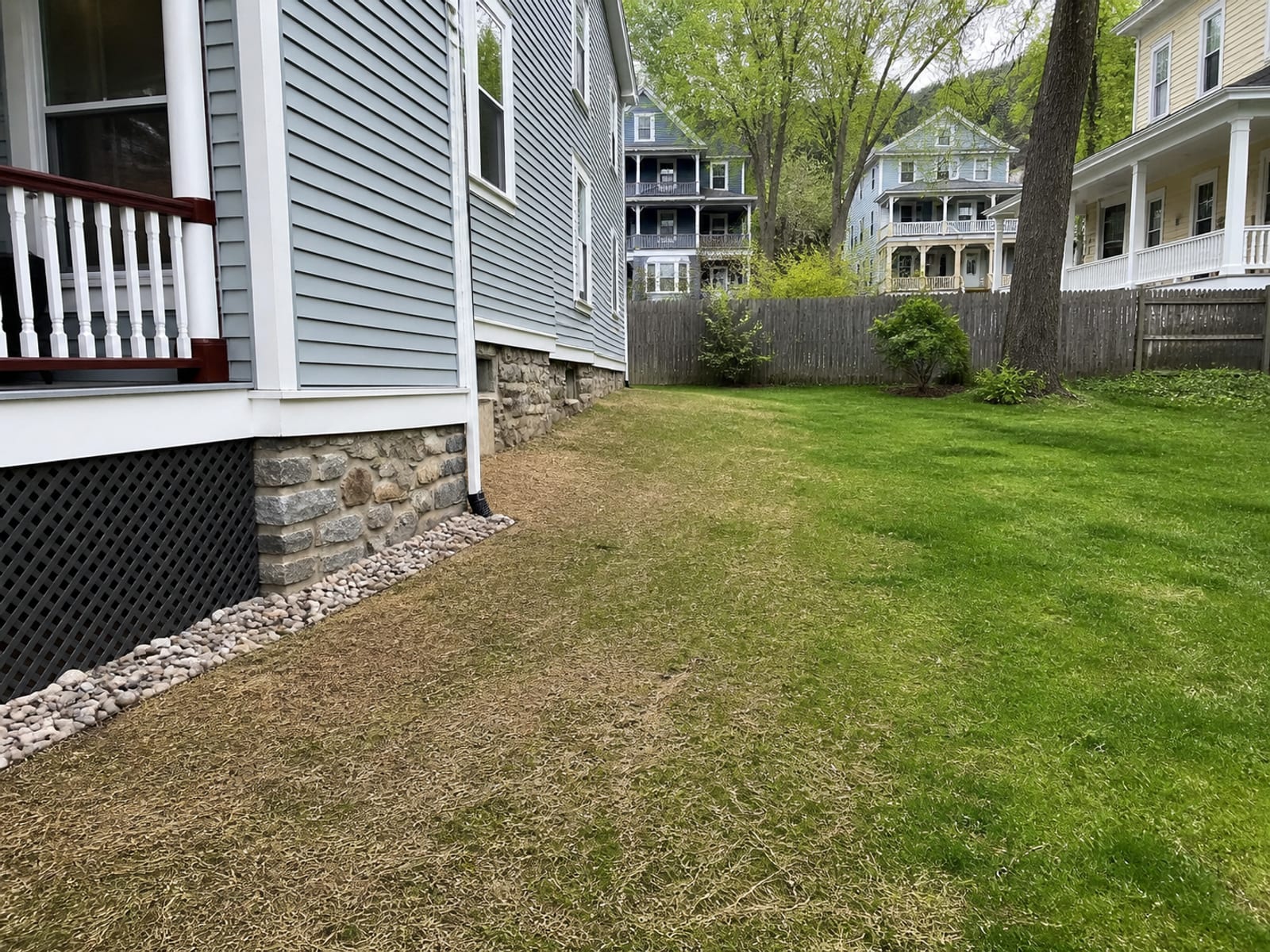
A visually flat yard next to a house is often worse than a yard with deliberate fall. What you want is controlled drainage to a suitable location on the property, which means the finished surface has intentional slope in a chosen direction. Flat is a look. Drainage is a function.
A Grading Job Runs in a Fixed Order for Good Reasons
| Stage | What happens |
|---|---|
| Diagnose the water path | Record where roof and surface runoff starts, existing elevations, low points, downspouts, pavement, drains, property lines, and the possible lawful outlet. Check wetland, watercourse, flood prone, and right of way constraints before setting any grades |
| Locate utilities and set the work limits | File the CBYD request before power or mechanized digging. Establish access, staging, stockpile, protected areas, and erosion control limits |
| Install protection before moving substantial soil | Connecticut guidance sequences erosion and sediment controls, then grading, then final stabilization. The controls chosen follow the plan and the site |
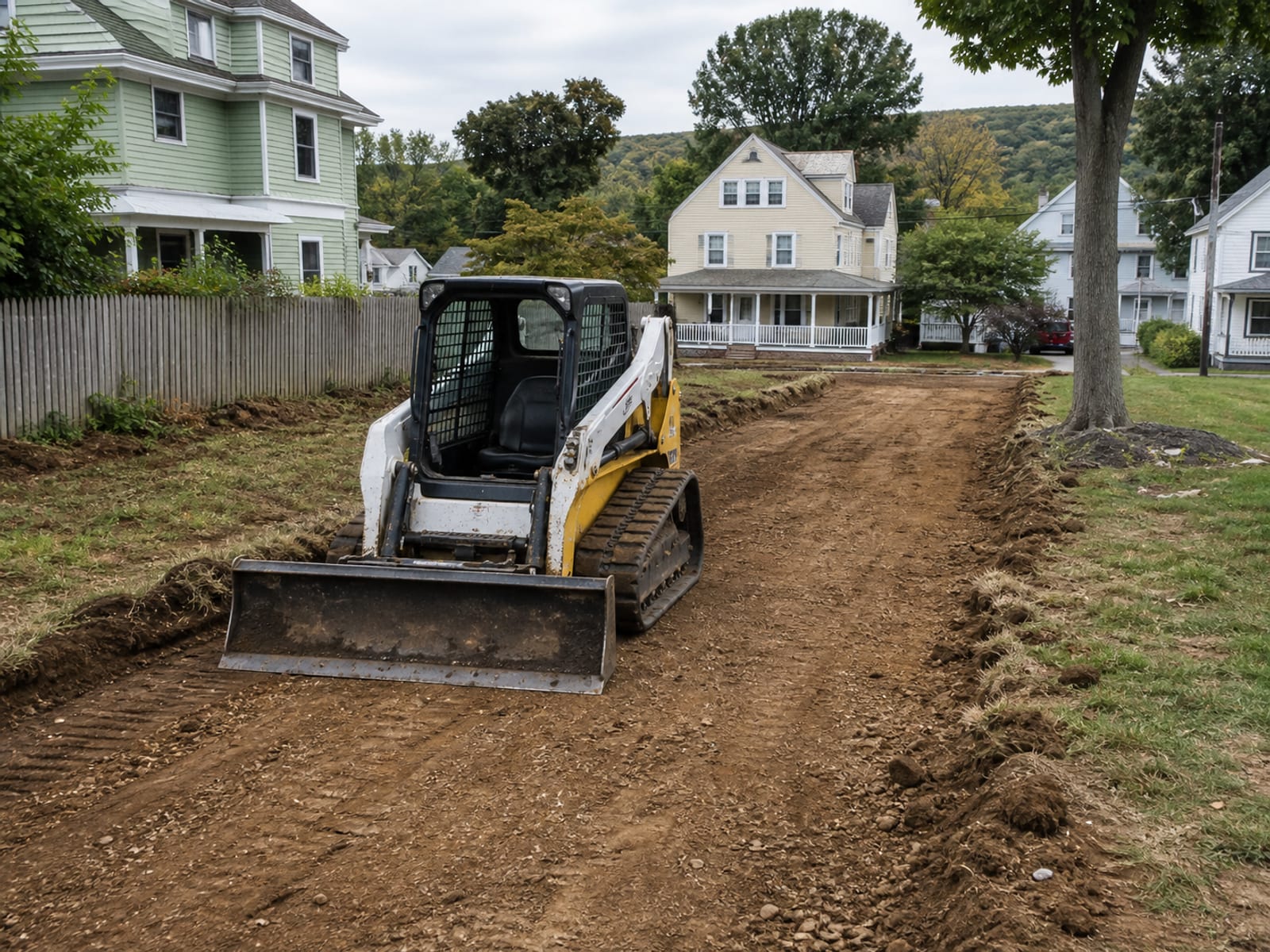
| Strip only what the scope needs, then cut, fill, and shape | Salvageable topsoil separated from subsoil and debris for restoration. Equipment matched to access, soil, volume, ledge, and finish tolerance |
| Compact fill where its performance matters | Fill supporting pavement, a wall, a structure, or designed drainage needs controlled placement. Connecticut code materials require footings on undisturbed natural soil or engineered fill |
| Install drainage only where the diagnosis calls for it | Swales, downspout routing, pipe, stone, basins, and a lawful outlet, chosen for the identified problem rather than added by default |
| Restore and verify in wet weather | Topsoil, seed or sod, cover, cleanup, and a check while water is actually running |
Five Mistakes That Turn a Grading Job Into a Bigger Problem
- Raising the grade without checking finished elevations. Fill placed against siding, over vents, above drains, or up to a threshold trades a wet lawn for rot and a code problem.
- Moving the runoff onto somebody else. Redirecting water toward a neighbor, a public way, a wetland, a watercourse, or an unapproved outlet is not a fix, and near the rivers it can be a regulatory matter.
- Leaving bare soil exposed before rain. Stabilization is part of the sequence, not the cleanup.
- Filling over organic material, loose soil, or buried debris. It settles, and the new low spot arrives a season later.
- Treating river adjacent ground as ordinary upland. Floodplain and wetlands conditions get checked against the mapping, not against how the yard looks on a dry day.
What You Can Do Yourself Stops at the Machine
There is genuinely useful work that costs nothing. Photograph where water moves during and immediately after rain, which is the single most valuable thing you can hand a contractor. Clear the gutters and confirm the downspout extensions are intact and actually discharging away from the wall. Maintain existing vegetation and any temporary cover. Note where puddles form and how long they last.
None of that substitutes for a drainage plan, and the line past it is firm. Machine digging, imported fill, drain installation, changes near a foundation, retaining features, driveway changes, work near a wetland or watercourse, flood prone work, erosion control planning, and anything that could shift water off the property belong with a qualified contractor or design professional. The CBYD notification applies before power or mechanized excavation regardless of who is doing it.
Before You Book a Regrade
1. Water pools at your foundation after every storm. What does that tell you about the cause?
2. What is the goal of grading next to a house?
3. Wetlands sit within 200 feet of the property. What does Derby's published process say?
4. Does a grading job need an 811 call?
Pick an answer to begin.
Frequently Asked Questions About grading derby ct
How much does yard grading in Derby, CT cost? No reliable local range was found in any official source, so any figure quoted before someone walks the property is a guess. The written scope should identify mobilization, any design or survey work, utility locating, clearing, cut and fill volume, imported or exported material, trucking, drainage components, erosion control, access, restoration, and permits or professional services. That itemization is what makes two estimates comparable.
Is regrading enough to stop basement water? Sometimes, and sometimes not. It depends on where the water is coming from, the condition of the foundation, the existing grade, roof runoff, the soil, and whether there is a lawful outlet. Where the source is surface water and roof discharge, correcting the grade can be the whole answer. Where shallow groundwater or a compacted subgrade is involved, surface work alone will not reach it.
Is lot leveling the same as yard grading? Not necessarily, and the distinction matters. Near a house the goal is controlled drainage rather than a flat appearance. A yard graded to look level can hold water against the foundation more effectively than the slope it replaced.
Do I need a permit to grade land in Derby? It depends on the scope, and Derby staff make that determination rather than a website. Derby requires a zoning permit application before a range of regulated activities, and grading tied to one of them should be screened with the Zoning Enforcement and Wetland Division. Work in or near wetlands or a watercourse requires Inland Wetlands Agency review.
Do I need to call 811 before grading? Yes. Connecticut requires notification to Call Before You Dig, by e-ticket or by calling 811, at least two full working days before power or mechanized excavation begins. The notification is free, and grading counts.
Can I grade near a wetland or watercourse myself? Do not assume an exemption applies. Submit the project description to Derby's wetlands authority for review where the work is in or near those resources. Connecticut DEEP directs non state applicants to the municipal inland wetlands agency, and Derby's own process is explicit about the 200 foot trigger for its zoning application.
When is the best season to regrade a yard in Derby? No Derby ordinance or permit condition creating a general seasonal prohibition was found. The real constraints are practical: wet or thawing ground, the forecast, erosion and sediment controls, and getting the surface stabilized. Connecticut's building code climatic criteria specify a 42 inch frost line for code governed foundation conditions, which is not a lawn regrading depth and not a seasonal ban.
Grading Terms Worth Knowing
Tap a term to see what it means.
Positive drainage. Ground shaped so water moves away from the building to a chosen location, which is the actual goal rather than a level surface.
Final Thoughts
The reason water still runs at your wall after a previous attempt is almost always that the attempt treated the puddle instead of the path. Surface reshaping fixes surface problems. It does not reach shallow groundwater, a compacted subgrade, or bedrock, and on a Derby lot near the rivers those are live possibilities rather than exotic ones. Finding out which you have is not an upsell, it is the part that decides whether the work holds.
A grading job done properly leaves you with a yard that sheds water in a direction you chose, to a place it is allowed to go, with the surface stabilized so the first heavy rain does not undo it. That is worth more than a level lawn, and it is what keeps the foundation, the driveway, and the parts of the yard you actually use out of the problem.
If water is heading the wrong way on a Derby property, Prestige Property Maintenance will walk it with you, work out where the water starts and where it can lawfully go, and tell you honestly whether grading alone will do it or whether the fix needs drainage solutions or excavation alongside it. One crew out of Oxford handles all three across the Naugatuck Valley, so nobody hands your drainage problem to a second contractor halfway through. Call us at (203) 258-3395 or contact us to arrange a site visit.
Related Articles
What to Expect from Drainage Work in Derby, CT, Start to Finish
Hired someone for drainage work in Derby, CT and wondering how torn up the yard gets? Here is the real sequence, from utility mark-out to grading.
What to Expect from an Excavation Company in Derby, CT
A machine on your small Derby lot does not have to be stressful. Learn what to expect from an excavation company, step by step, before you hire one.
Landscape Construction in Bethany, CT: Ground Work First
Told your Bethany patio needs the earthwork done first? Landscape construction in Bethany, CT starts with grading sloped, wooded ground, not pavers.