

Stump Grinding in Derby, CT: What Stays Behind After Grinding
Kash CochranePublished
- stump grinding
- derby ct
- lawn restoration
- tree removal
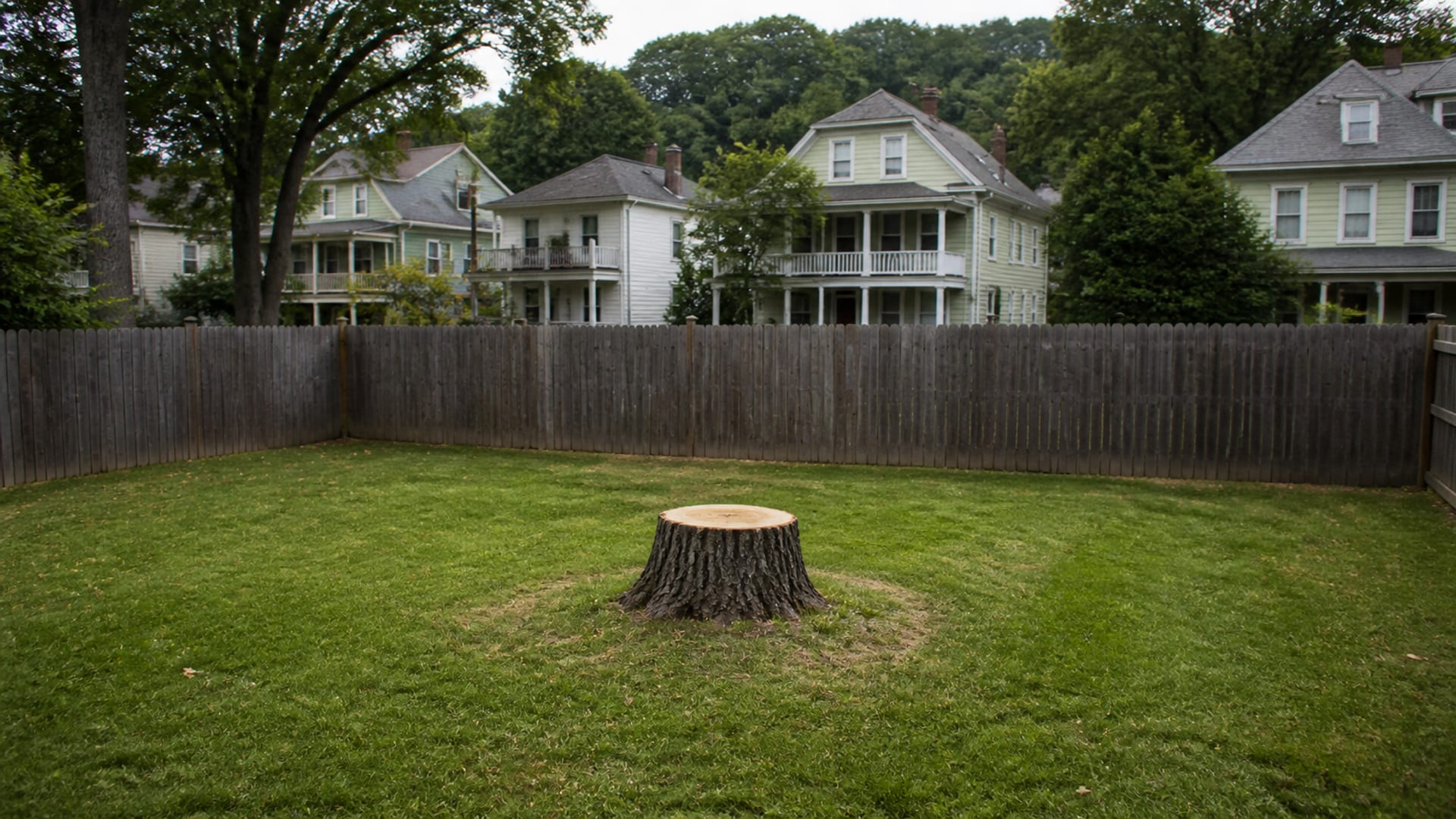
Cutting the tree down solved half the problem. There is a stump where the mower has to detour, or where the patio was supposed to start, or exactly where you wanted to put the replacement tree. Somebody has quoted you for grinding and it sounds like the obvious answer, and it might be. But grinding and removal are two different results, and the difference is entirely underground, which is a difficult thing to shop for. What you get back afterward, and whether it suits mowing, building, or planting, depends on questions that are easy to ask now and expensive to ask later.
Key Takeaways
Grinding reduces the stump, it does not extract the root system
what remains below grade is old root structure and a zone of soil mixed with wood chip, which is fine under lawn and is not the same thing as ground you can build on.
There is no standard grinding depth
extension guidance reports finishes ranging from flush with grade to more than a foot below it depending on the machine and what was requested, so depth is something you specify rather than assume.
Replanting in the exact same spot is the hardest use for a ground stump
extension guidance recommends a different location where possible, and where the same spot is unavoidable, removing the sawdust, taking out as many roots as possible, and restoring with compost and topsoil.
Know What the Machine Leaves Underground Before You Book It
A stump cutter is a toothed wheel that removes material in repeated shallow passes. It works down through the stump and the wood immediately around it, turning it into chip. That is the whole mechanism, and understanding it tells you exactly what remains.
Three things are still there when the machine leaves. The structural roots running away from the stump, which were never within reach of the wheel and will decay in place over the following years. A zone of mixed material where the chip has fallen into and blended with the surrounding soil. And, depending on the depth requested, some portion of the stump itself below the finish line.
For most purposes that is completely acceptable. Lawn grows over it. A bed can be built above it. A fence post can usually be set nearby, if not exactly through it. What it does not support is anything that needs sound bearing ground: a slab, a wall footing, a driveway base, or a trench line running through it. Decaying wood in the ground settles, and settlement under a structure is a problem that arrives years after anyone remembers there was a tree there.
So the useful question is not "can you grind it". It is "what is going on that spot, and does that use tolerate what grinding leaves".
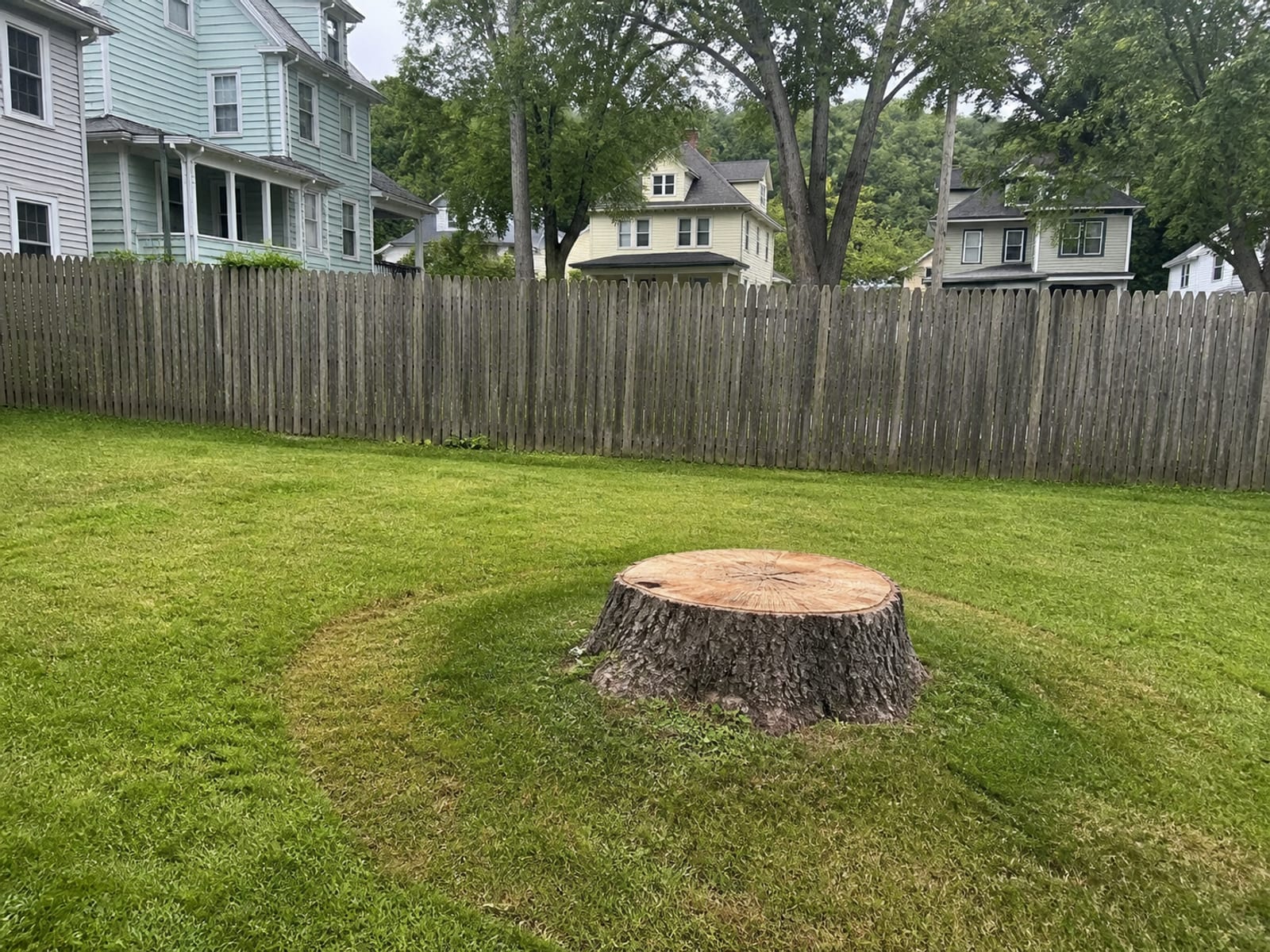
Get a Depth That Matches Your Plan Instead of a Standard One
There is no universal grinding depth, and any quote that does not name one is leaving the most important variable blank. Extension guidance describes results from flush with grade to more than a foot below it, driven by the machine and by what the customer asked for.
Rough guide to what your plan needs: a mowable surface only needs the stump below the level of the blade with the surface restored, which is a modest depth. A lawn you actually want to establish and keep wants more, because the deeper the chip zone sits, the more real soil there is above it for roots. A garden bed or planting area wants enough depth to allow soil replacement rather than growing directly in a chip and soil blend. And anything structural is not a grinding job at all.
Ask for the depth in writing, and ask what it is measured from. It is one line in a scope and it is the difference between the result you pictured and a second visit.
Compare Grinding, Extraction, and Leaving It
| Option | What is left below grade | Good fit for | Constraints to check first |
|---|---|---|---|
| Stump grinding | Structural roots, a chip and soil blend, and any stump below the finish depth | Mowing, lawn restoration, planting beds, general yard use | Machine access, requested depth, chip plan, nearby utilities and hardscape |
| Full stump and root extraction | A hole where the stump and root mass were, needing fill and compaction | A build, hardscape, a driveway base, a trench route, or exact spot replanting | It is excavation, so utility notification, earth disturbance rules, and access all apply more heavily |
| Leaving it in place | Everything, plus a visible trip and mower hazard | A wooded or unused area where nothing is planned | It does not get cheaper with time, and decay makes it messier to remove later |
Stump removal in Derby, CT when the roots have to come out
Full removal means excavating rather than reducing. The stump and root mass come out as material, which leaves a hole that has to be filled and compacted, and it means a machine working a much larger footprint than a grinder needs. On a compact lot that footprint is often the deciding factor, because the excavation reaches further from the stump than people expect.
It is also a different regulatory conversation, since it is unambiguously excavation. That brings the utility notification requirement, Derby's earth disturbance rules where they apply, and any wetlands question fully into scope.
Tree stump removal in Derby, CT for a build or a replacement planting
Two situations genuinely justify the larger job. The first is construction: if a slab, wall, driveway base, or trench is going through that footprint, the wood has to be out rather than reduced, because what is left behind becomes settlement under whatever is built. The second is exact spot replanting, which is discussed below and is the hardest use to satisfy.
Nobody can promise every root out of the ground without seeing the site. What a good scope can promise is a defined excavation area, a defined depth, and what happens to the hole afterward.
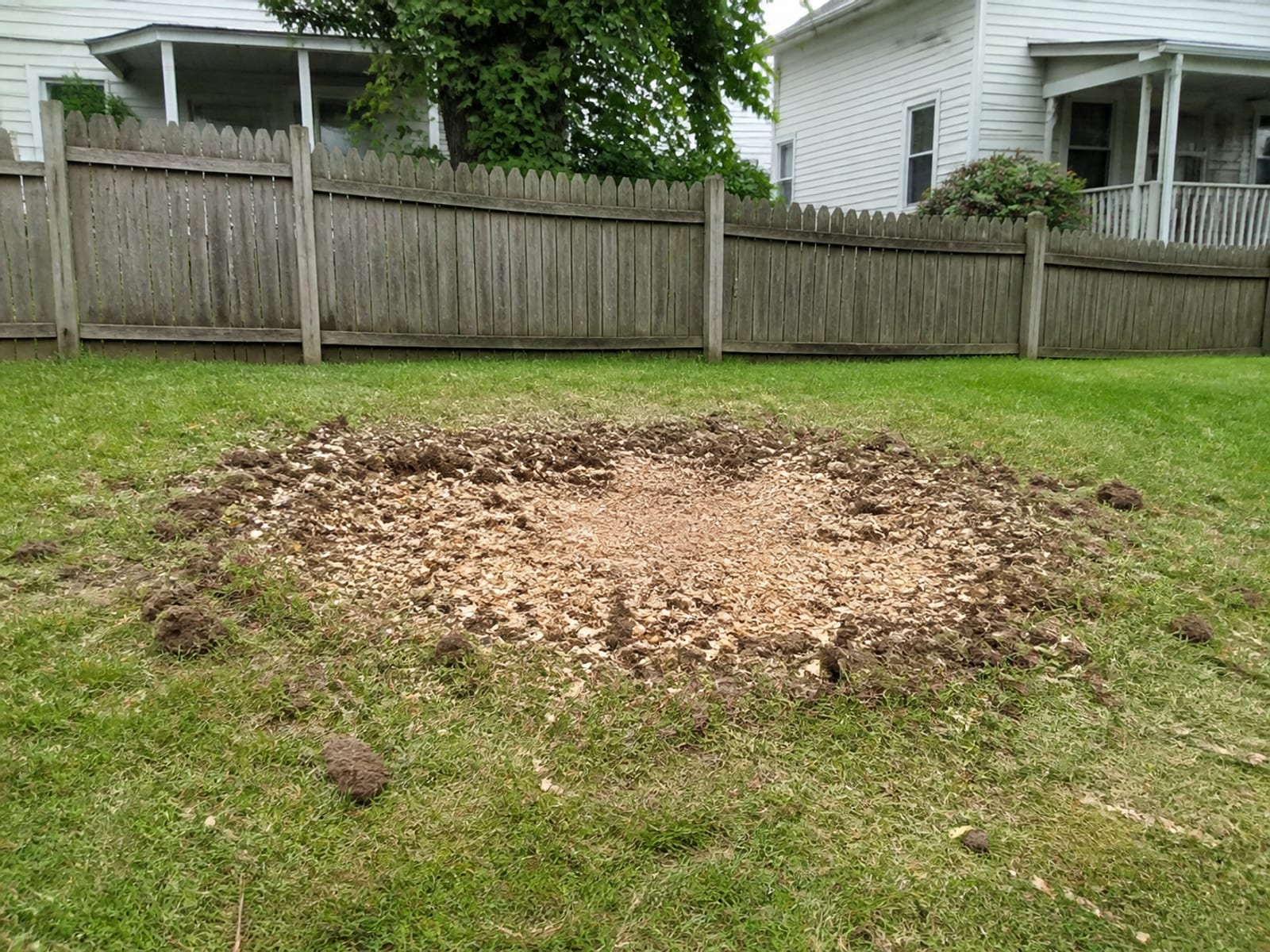
Turn the Chip Pile Into a Lawn Instead of a Sunken Patch
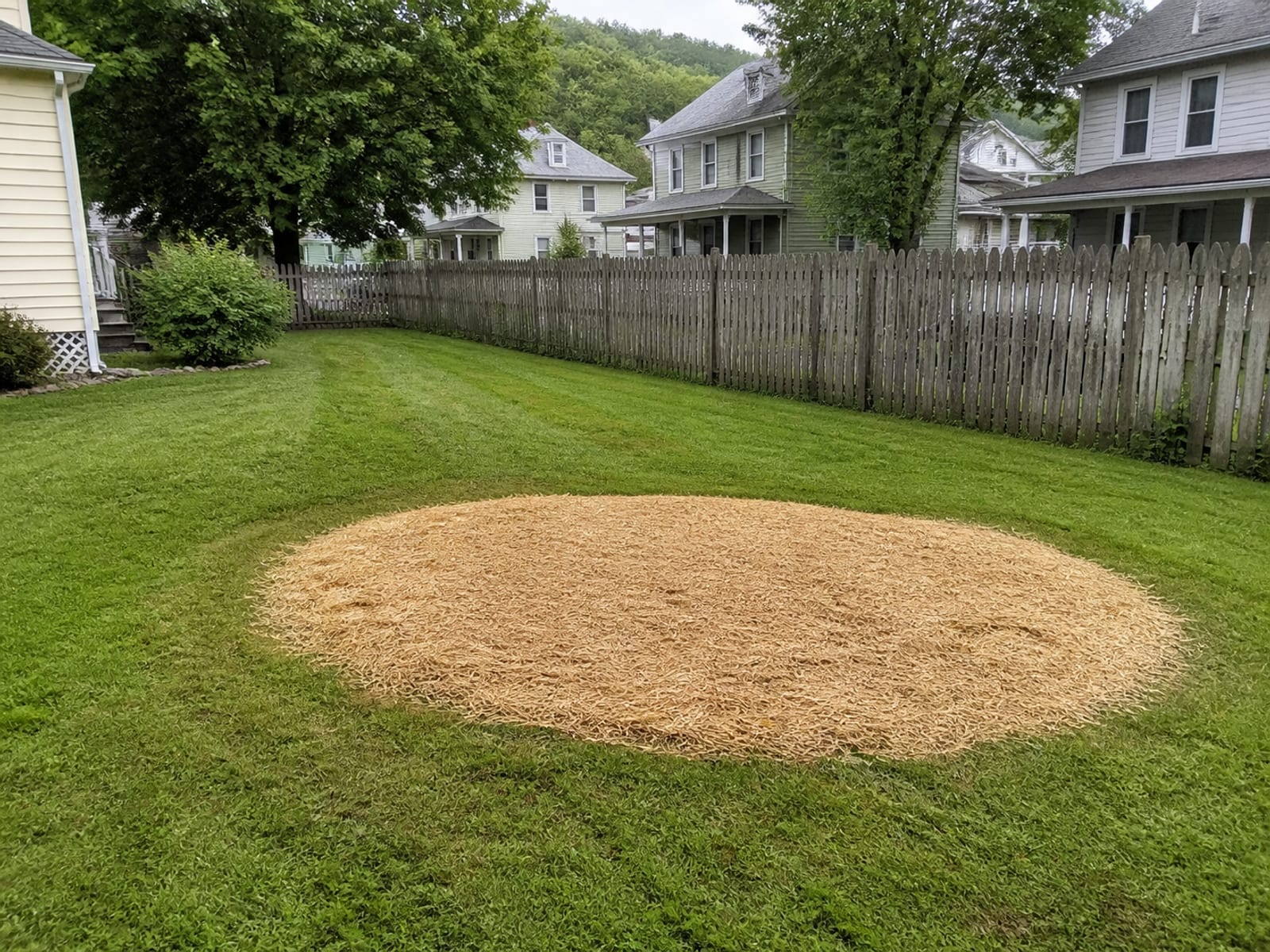
The chip is the part homeowners are least prepared for. Grinding a decent sized stump produces a surprising volume of wood and soil mixed together, and what happens to it is a decision with three common answers.
Left in place, it acts as a slow settling backfill and a rough mulch. That is fine in a wooded edge or an area nobody is trying to grow anything in. What it is not is a seedbed. A chip heavy blend holds water differently from soil, settles unevenly as the wood breaks down, and does not give turf what it needs to establish.
Removed, and the hole left open, which is rarely what anyone wants.
Removed and replaced with topsoil, which is what to ask for if the area is going to be lawn or planting. Extension guidance on establishing grass after a stump removal points in exactly this direction: get the woody material out of the top layer, bring in soil, and prepare the area properly rather than seeding into what the grinder left.
Expect some settlement in the first season regardless, because the material below is still consolidating. Planning to top dress the area once, a few months later, is the difference between a lawn and a visible dip that stays visible.
Replant Nearby Rather Than in the Same Hole
This is the request that most often ends in disappointment, and it is worth explaining honestly.
Extension guidance on replanting after a tree removal recommends choosing a different location where that is possible. The reasons stack up: old roots still occupy the space, the soil structure has been altered, sawdust in the soil affects nutrient availability as it breaks down, and if the previous tree came out because of a pest or disease, that history can carry.
Where the same spot genuinely is not negotiable, the same guidance sets out what has to happen: remove the sawdust, take out as many roots as possible, and restore the area with compost and topsoil. That is meaningfully more work than a standard grind and it should be scoped and priced as such rather than assumed.
Moving the new tree a few feet, if the design allows, saves all of it. Worth suggesting to whoever is making that decision.
Fit the Stump Grinder in Derby, CT Down a Compact Lot's Side Yard
Derby is older and built up, with a housing stock whose state data median year built is 1965 and a mix of residential, mixed use, and industrial patterns. In stump terms that means access is a live question on most properties rather than an occasional one.
Measure the tightest point on the route, which is usually a gate but can equally be a gap between the house and a wall, a corner turn by a deck, or a set of steps. Machines vary in width by model, so nobody can promise from a phone call that one will fit. Note where a truck and trailer can park, and how far the machine has to travel from there.
Then look at what is near the stump: a driveway edge, a walk, a retaining wall, a fence, a service drop, a meter, an old drain. A grinder throws debris and works close to whatever is beside it, so hardscape protection and an exclusion area are part of the setup rather than an afterthought.
Ground condition is the other Derby factor. The City's natural resources mapping identifies alluvial and floodplain soils, poorly drained and very poorly drained soils, the floodway, and the 100 year and 500 year flood zones along the river areas, while stating that the map is for planning purposes and delineations may not be exact. On a low lying parcel, whether the ground will carry a machine on the day is a real scheduling question.
Clear the Derby Checks Before the Machine Arrives
| Item | When it applies | Who |
|---|---|---|
| Call Before You Dig notification | Before mechanized excavation, with notice at least two working days beforehand. Grinding and root excavation both count | CBYD, at 811, overseen by PURA |
| Private line identification | Always, alongside the locate. Public marks do not identify privately installed lines | You and your contractor, from records and observation |
| Derby earth material removal, filling, and excavation rules | The zoning regulations require a temporary special exception before soil is dug, excavated, scraped, disturbed, or moved, subject to listed exemptions including an area of one half acre or less. Ordinary stump grinding is not named as its own category | Derby Planning and Zoning, through the Zoning Enforcement and Wetland Division |
| Wetlands review | A proposed activity likely to affect a wetland or watercourse needs municipal review and approval, and the agency determines jurisdiction rather than the owner | Derby Inland Wetlands Agency and its Inland Wetland Enforcement Officer |
| A permit titled stump grinding | No such standalone Derby permit was found in the City pages and regulations reviewed. That is not the same as nothing applying | Confirm the actual scope with the City |
The honest summary of that table: a straightforward grind on a dry upland lot with nothing regulated nearby is unlikely to need much beyond the locate call. A root excavation, a low lying parcel, or work near a watercourse is a different conversation, and it is a phone call rather than a research project to find out which one you are in.
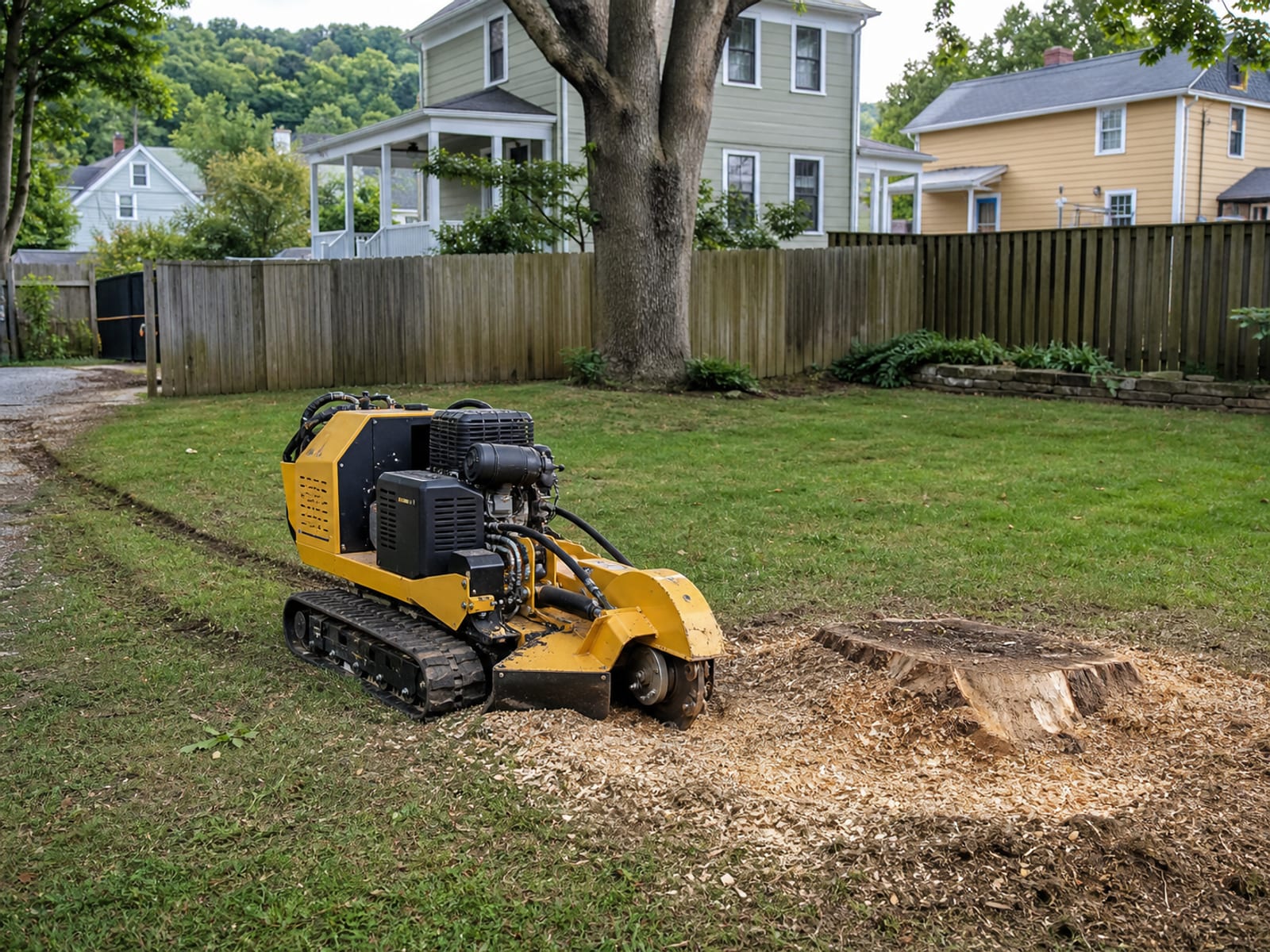
Walk Through the Job From Inspection to Restoration
1. Establish the end use and inspect. What the ground has to do afterward, then stump count, diameter at the widest cutting area, root flare, and what sits nearby. 2. Sort the notifications and any determination. The locate request with its notice period, private lines identified separately, and Derby contacted where the scope raises an earth disturbance or wetlands question. 3. Set up the site. Access route confirmed, an exclusion area for people and vehicles, hardscape and structures protected, and loose stone, wire, and wood cleared away, because a cutter wheel throws material. 4. Grind to the agreed finish. Repeated shallow passes to the specified depth, with the machine shut down and the wheel stopped before anyone rakes chip away. 5. Deal with the chip and restore. Chip left, removed, or removed and replaced with topsoil, then the surface prepared to match the intended use. 6. Plan for settlement. Agree who is coming back to top dress if the area is going to be lawn, because some settlement in the first season is normal rather than a defect.
Sidestep the Five Mistakes That Bring the Crew Back
- Booking a grinder before deciding whether the next project needs the roots out. The order is use first, method second.
- Skipping the locate. Grinding is mechanized digging, and the notice requirement applies to it.
- Assuming utility marks cover everything. Private lines, old drains, and anything a previous owner installed are not on that markout.
- Seeding into a chip and soil blend. It is the single most common reason a repaired area looks worse a year later than it did the week after grinding.
- Running heavy equipment across saturated ground, or starting work near a wetland without a determination. Both create a second problem larger than the stump was.
Wait Out the Mud Instead of Working Through It
No Derby ordinance or permit calendar bans stump work in a particular season, so timing is about ground condition rather than dates.
UConn Extension's guidance on spring conditions is the useful reference: a thaw can leave mud over still frozen ground, and heavy equipment in muddy and saturated areas risks compaction, rutting, and getting stuck. Its winter guidance notes that warm spells can partially thaw the ground and produce the same mud and frost heave problems out of season.
On Derby's mapped poorly drained and low lying parcels that is not a theoretical caution. A machine that leaves ruts across a lawn on its way to the stump has created work that was not in anybody's scope, and a week's delay usually costs less than the repair.
Four Questions Before You Book a Grind
1. What does stump grinding leave in the ground?
2. How deep does a stump grinder go?
3. What does extension guidance recommend about replanting a tree in the same spot?
4. Does stump grinding require a locate call?
Pick an answer to begin.
Frequently Asked Questions About stump grinding derby ct
What is the typical price range for stump grinding in Derby, CT? No Derby specific published range was found in any municipal, state, or university source, so a figure here would be invented. The variables are the stump count and their widest cutting diameter, the requested depth, the wood's condition and anything embedded in it, the access route and staging distance, what sits nearby that needs protecting, whether chip is left, removed, or replaced with topsoil, and whether the scope expands into root excavation. Photographs with a tape measure in frame will get you an accurate number quickly.
Is stump grinding the same as stump removal in Derby, CT? No, and the difference is what stays underground. Grinding reduces the stump to chip down to a requested depth and leaves the structural roots and a chip and soil zone behind. Removal excavates the stump and root mass as material, leaving a hole to be filled and compacted. The first is right for lawn, beds, and general yard use. The second is what a build, a driveway base, a trench line, or exact spot replanting actually requires.
How deep does a stump grinder go? There is no universal answer. Extension guidance reports finishes from flush with grade to more than a foot below it, depending on the machine and what was requested. So depth is a specification rather than a property of the service, and it should be written into the scope along with what it is measured from. Match it to your plan: shallow for mowing, deeper where you want real soil above the chip zone for turf or planting.
Can I plant grass after stump grinding? Yes, with the right preparation. Seeding straight into the chip and soil blend the grinder leaves usually disappoints, because the material holds water differently, settles as the wood breaks down, and does not give turf much to establish in. Ask for the chip to be removed from the top layer and replaced with topsoil, prepare the area properly, and plan to top dress once after the first season's settlement.
Can I plant a new tree in the same spot? You can, but extension guidance recommends a different location where the design allows it. Old roots still occupy the space, the soil structure has changed, sawdust affects nutrient availability as it breaks down, and any pest or disease that took the previous tree may still be present. If the same spot is unavoidable, the preparation is real work: remove the sawdust, take out as many roots as possible, and restore with compost and topsoil.
Do I need to call 811 for tree stump removal? Yes. Connecticut requires notification at least two working days before mechanized excavation, and both grinding and root excavation fall into that. Utilities then mark their facilities. Bear in mind that the markout covers participating public facilities and will not show privately installed lines such as irrigation, low voltage lighting, an invisible fence, or an old drain, so those need separate attention.
Do Derby wetlands rules matter for a stump? They can. A proposed activity likely to affect a wetland or watercourse requires municipal review and approval, and the agency determines jurisdiction rather than the property owner. On a low lying or river adjacent parcel that is worth a call before booking, particularly if the scope involves excavation rather than a simple grind. Derby's own mapping is explicitly a planning tool, not a determination for your parcel.
Wrapping Up
The question that decides everything here is what the ground has to do once the stump is gone. Mowing and planting beds are well served by grinding, provided the depth is specified and the chip is dealt with properly. Building, paving, trenching, or replanting in the exact same hole are not, and no depth of grinding turns them into a grinding job.
Ask three things of whoever quotes you: the finish depth and what it is measured from, what happens to the chip, and whether roots are being removed or only reduced. Those three answers tell you whether you are buying the result you pictured, and they cost nothing to ask.
If you have stumps to deal with in Derby, CT, Prestige Property Maintenance can look at the access, the ground, and what you want the area to become, then put a scope in writing that names the depth, the chip plan, and the restoration. We handle stump grinding, tree removal, excavation, and landscape construction with one crew out of Oxford, so a stump that turns out to need digging does not become a second company and a second mobilization. See how we work across Derby, call (203) 258-3395, or contact us to get it scoped.
Stump Terms, Plainly Defined
Tap a term to see what it means.
Cutting area. The full width of the stump at and just below grade, including the root flare. Wider than the trunk, and the measurement a quote should be based on.
Related Articles
Tree Removal in Derby, CT: What a Tight Lot Changes
A leaning or storm damaged tree over your Derby, CT house or the wires is not a wait and see problem. Learn the signs that call for tree removal now.
What to Expect from Drainage Work in Derby, CT, Start to Finish
Hired someone for drainage work in Derby, CT and wondering how torn up the yard gets? Here is the real sequence, from utility mark-out to grading.
What to Expect from an Excavation Company in Derby, CT
A machine on your small Derby lot does not have to be stressful. Learn what to expect from an excavation company, step by step, before you hire one.