Tree on a Power Line in CT: Stay Back and Call the Utility
Kash CochranePublished
- tree removal
- storm damage
- utilities
- connecticut
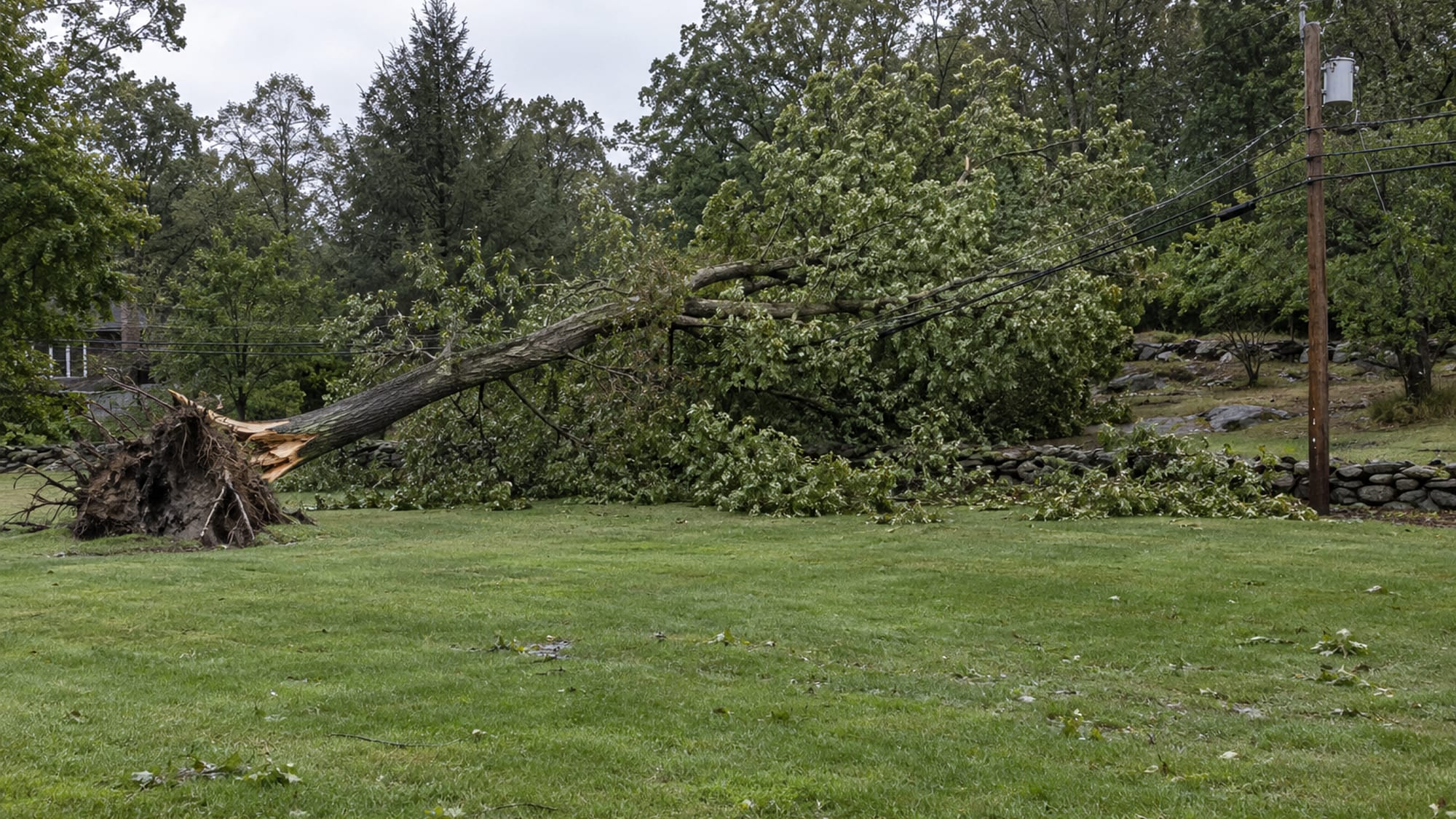
A tree is resting on the wire at the edge of the yard, or a limb is hung up across it after the storm. Whatever the damage looks like, stay back. Keep people, pets, vehicles and equipment away from the tree, the wire, the pole and the ground around them, and treat every line as live, even one that looks dead, disconnected or insulated.
Call 911 if there is immediate danger, a fire, an injury, a damaged pole or a line blocking emergency access. Whether or not the power is out, report any tree touching a line to the electric utility. Do not cut, pull, climb, move or burn anything until the utility has made the line safe.
Prestige Property Maintenance is an excavating contractor based in Oxford, and our part of a storm cleanup starts later, once the utility has finished at the line. Before that, the order of calls, who clears what, and a written plan for the wood, the stump and the ground keep the cleanup straightforward.
Key Takeaways
Treat every line as energized
A line that looks dead, disconnected or insulated can still carry power, so people, pets, vehicles and equipment stay away from the tree, wire, pole and the ground around them until the utility says otherwise.
The order of calls is set by the danger
911 for immediate danger, the utility for every tree touching a line, the insurer before permanent cleanup, and the town's tree warden for a tree on a public road.
The utility clears the line and the owner may handle what is left
Logs, brush, the stump and damaged lawn can stay with the property owner, so ask the utility in writing what it will remove.
Call 811 before any stump grinding or excavation
Connecticut requires at least two full days of notice, not counting weekends and holidays, before powered digging begins.
Stay Back From the Tree and the Line Until the Utility Says It Is Safe
Connecticut DEEP says that trees touching any part of the electric distribution system must be treated as dangerous, because trees can conduct electricity. Homeowners should avoid direct and indirect contact, which means the tree, the wire and anything touching either one. The first few minutes after you notice the problem come down to a short list.
- Keep the whole area clear: Children, pets and bystanders stay away from the tree, the wire, the pole and the ground around them.
- Touch nothing nearby: That covers the tree, the wire, the pole, a fence, a vehicle, any metal object and a puddle that may be energized.
- Assume the line is live: UI tells customers to stay away from downed or dangling lines and to assume every downed line is energized. Connecticut's Department of Public Health also says not to touch downed electrical wires.
- Do not drive over a wire or walk through the area: A wire lying across a driveway or lawn is treated the same way as one hanging from the pole.
- Photograph from a safe distance: Photos of the damage help with the utility and the insurer later, and none of them is worth stepping closer.
Cutting, pulling, climbing and burning all wait. UI says never to attempt to trim a tree that is touching a power line. OSHA's line-clearance rules treat tree work within 10 feet of lines up to 50 kilovolts as specialized work, with more distance for higher voltages, and they require training in spotting energized parts and holding a minimum approach distance. That is why a neighbor with a saw and a general tree service both wait for the utility.
The Order of Calls Is 911, the Utility, Then Your Insurer
Three questions set the order. Is anyone in danger right now? Which utility owns the line? Has anything been damaged that an insurer should hear about before cleanup starts? The table below puts each situation next to the call it needs.
| Situation | Who to call | Why |
|---|---|---|
| Fire, injury, a damaged pole, a line blocking emergency access, or any immediate danger to life or property | 911 | Emergency responders handle the immediate threat; the utility still needs a report |
| Any tree or limb touching or leaning on a line, with or without an outage | Eversource or United Illuminating (UI) | Only the utility or its qualified line-clearance crew works on a tree on or near an energized line |
| The tree damaged a house, garage, fence, vehicle or driveway | Your insurer, before permanent cleanup | Coverage follows the cause of the fall and the terms of the policy |
| The tree is on a town road or in a public space | The town, its tree warden, police or highway department | Tree wardens control trees along public roads and in public spaces |
| A stump to grind or ground to dig afterward | 811, Call Before You Dig | At least two full days of notice, not counting weekends and holidays |
Connecticut has two major investor-owned electric utilities. According to DEEP, Eversource serves 149 municipalities and United Illuminating serves 17, so your bill, the markings on the pole or the label on the utility's equipment tells you which one to call. UI takes reports at 1-800-7-CALL-UI (800-722-5584) and asks for the address, cross street, landmark or pole number. For Eversource, use its outage map and reporting system or the Connecticut electric customer number listed in its published contact materials, 800-286-2000.
A downed line is an emergency, so it goes to 911 as well. For a pole that is leaning, cracked or damaged, PURA says to contact the pole owner first or call 911. Do not call a private tree service to make the line safe.
Insurance Follows the Cause of the Fall
Once the utility has the report, the insurer is the next call, and it comes before any permanent cleanup. The Connecticut Insurance Department explains that liability follows cause. A tree owner is generally liable for damage to a neighbor's property only when the owner's negligence caused the fall. If wind, snow or ice brought the tree down without negligence, that is treated as an Act of God for liability purposes, and the neighbor generally submits the claim to the neighbor's own insurer.
Damage to your own covered structure is a different path. It generally falls under your own policy, subject to its exclusions, deductible and limits. A standard homeowner policy generally covers removal when a fallen tree damages a covered structure or blocks a driveway, and a tree that falls without damaging anything covered may have limited coverage for removal or none. Your policy language controls.
Photograph the damage from a safe spot, notify the insurer promptly, keep your receipts, and when practical hold off on permanent repairs until the insurer has inspected. The Insurance Department's severe storm guidance lists the same steps.
The Utility Clears the Line, and Some of the Wood May Stay With You
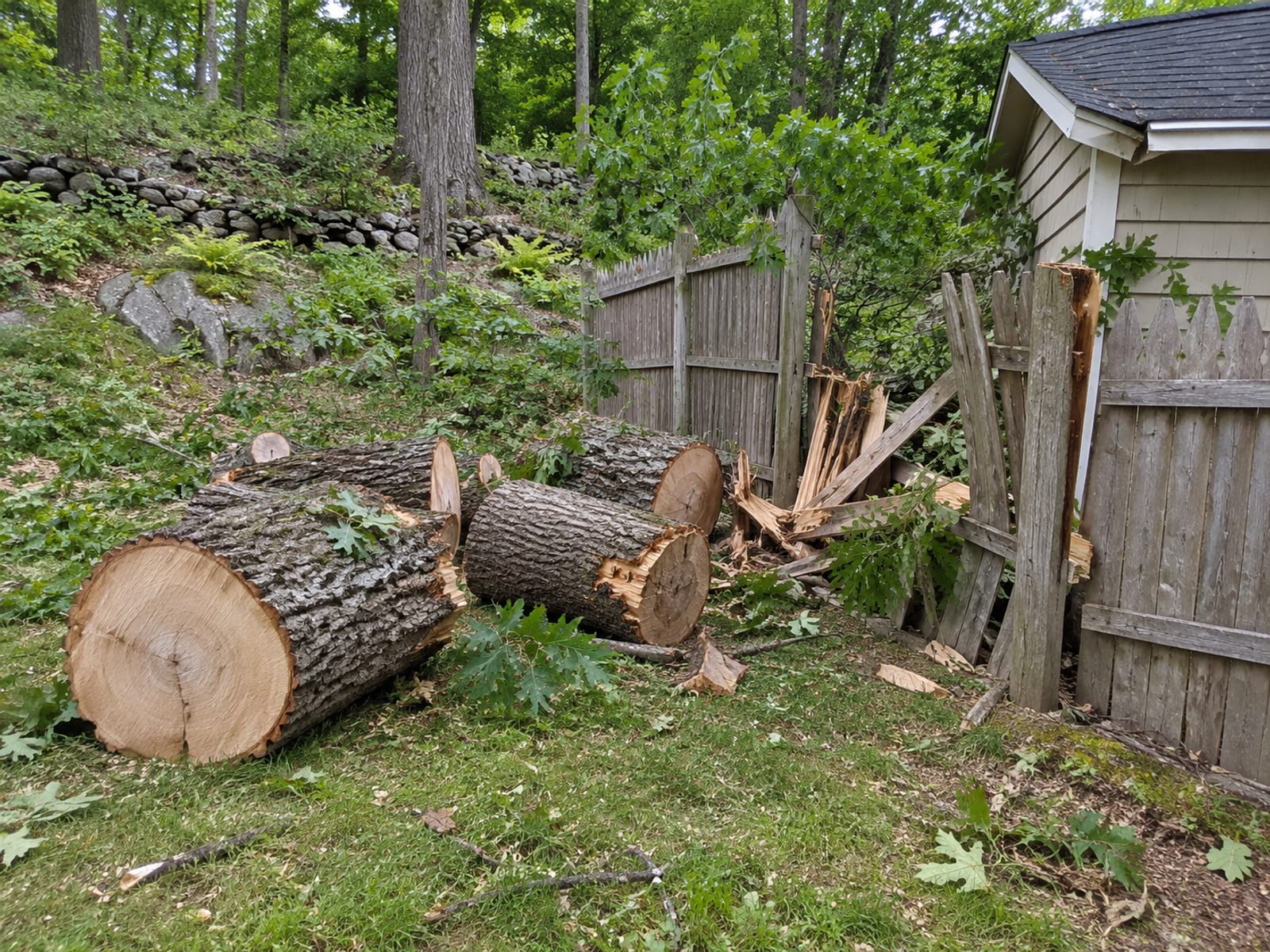
The utility's first job is electrical safety. It inspects the condition, isolates or de-energizes equipment when required, repairs the electric system and clears enough tree material to reach and restore its facilities. UI's materials say that privately owned trees generally are not trimmed or removed without the owner's consent, except when a tree is directly contacting energized conductors and presenting an imminent danger.
What happens after that depends on where the tree stands. On private property, the owner may need to arrange removal of the remaining trunk sections, limbs, brush, stump, chips, damaged landscaping and surface restoration. What a utility leaves behind can vary with the utility, the type of line, the property and the storm response, so ask the serving utility for a written statement of what it will remove and what stays before you hire anyone for the rest.
A tree on a public road is a different case. Connecticut's tree wardens have care and control of trees along public roads and in public spaces, except on state property and in areas under a park commission. Report it to the town, and a private contractor should not remove it without the authority to do so.
Private Tree and Excavation Work Starts After the Utility Releases the Area
The utility's crew works on the wire, and a private crew works on the ground once the utility has made the electrical hazard safe and clearly released the area for the work you have in mind. OSHA's line-clearance tree-trimming rules apply to workers doing tree work for the organization that operates or controls the line.
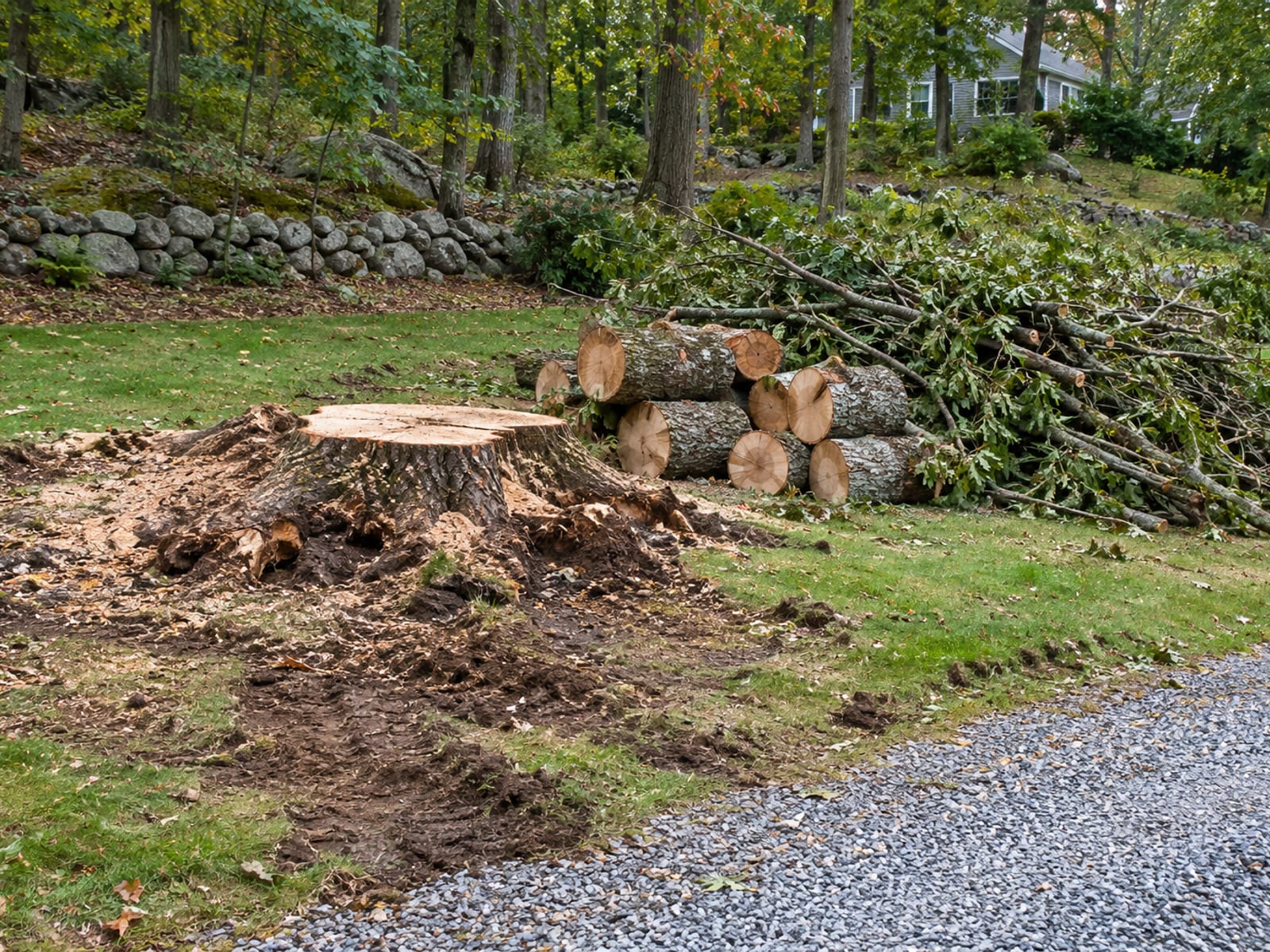
After the release, the private work is the part of storm tree removal that happens at ground level: cutting and removing the trunk and limbs, hauling or chipping brush, grinding the stump, and grading and restoring the surface, all within a written scope. Our tree removal work begins at that point, with the utility's release in hand.
Until then, do not decide that the tree can simply stay where it fell. Unstable wood left near a driveway, a structure, an access route, a wetland or a public way can create new hazards and can get in the way of later grading. But the decision on what to do with it waits for two things, the utility's release and the insurer's word on any claim.
Connecticut Permits, Wetlands, 811 and Ground Conditions Come Before the Stump Work
Powered digging has its own rules. Before stump grinding, excavation, grading, drainage installation or any other powered ground disturbance, Connecticut's Call Before You Dig rules require notice to the central clearinghouse at 811 or 1-800-922-4455. The notice is at least two full days, excluding Saturdays, Sundays and holidays, and no more than 30 days before the digging. A qualifying emergency has its own exception, but forgetting to call does not create one.
Permits depend on what happens after the tree is down. A tree removal alone may not be a building-code project, but structural work or related building activity may need local permits, and the municipal building official decides whether a permit is required and handles the inspections. Work likely to affect an inland wetland or watercourse goes to the municipal inland wetlands agency, which decides whether the activity is regulated. Work outside a wetland can still fall in a regulated review area, and the town's regulations set the buffers.
A project with excavation, drainage, a driveway or permanent site changes may involve zoning or erosion control review as well, and no single office makes every approval. Ask the town's building, zoning, wetlands, highway and tree warden offices before the work starts.
The ground matters too. USDA descriptions of Connecticut soils such as Groton and Elmridge document glacial till, dense till, stones and clayey layers. The state's groundwater page reports median annual precipitation between 42 and 52 inches, with wide variation in geology, relief and drainage. Western Connecticut sites may also have ledge or shallow bedrock, which is confirmed on the site walk.
Tree Size, Access and Ground Decide What the Cleanup Involves
Storm cleanup has no statewide flat rate, because the work changes from one property to the next. What drives the cost is a set of site and scope questions, and you can answer most of them before anyone visits.
- The tree: size, species, trunk diameter, number of stems, lean, root-plate failure and any limbs still hanging.
- What it is resting on: a line, a roof, a fence, a vehicle or a roadway.
- Access: distance from the road, the length and width of the driveway, and room for trucks, chippers, loaders and stump grinders.
- The ground: slope, wet or soft soil, frost, stone walls, ledge, buried boulders, and clay that drains poorly.
- What happens to the material: logs left on site, cut to firewood lengths, chipped or hauled away, and whether brush, stumps, roots and damaged landscaping are included.
Add the permits, wetlands review or tree warden authorization a property needs, and the nearness of a septic system, foundation or underground utility. The figure comes after we have seen the tree, the access and the ground, and it goes into the written scope.
The schedule moves for related reasons: the utility's own storm workload, approvals, weather, wet or frozen ground and unstable root plates. The sequence stays steady. Emergency protection comes first, then utility notification and clearance, insurance documentation, municipal review where it applies, 811, tree and debris work, stump work, and grading and restoration.
A Written Scope Shows Who Does What After the Utility Leaves
Before you sign anything for the private work, list what each party is doing. Ask who contacted the utility, who confirms the line is safe, who obtains permits, who calls 811, who removes the wood, who handles the stump, and who repairs the lawn, driveway, fence or drainage if they are damaged. A general tree service should not touch a tree on an energized line, so ask whether a crew is qualified for work near utility lines. ANSI Z133 is the industry safety standard for arboricultural operations, and a contractor can confirm its current compliance.
| Item in the scope | What it should say |
|---|---|
| Utility clearance | What the utility completed and what it left on site |
| Tree and limb removal | Which trunk sections and limbs the contractor takes down |
| Logs, brush and chips | Left in place, cut to firewood lengths, chipped, or hauled away |
| Stump | Ground out, extracted or left, and how deep |
| Hauling and disposal | What leaves the property and where it goes |
| Surface protection and restoration | Grading, topsoil, seed, erosion control and drainage repair |
| Permits and agencies | Who applies and who pays for each approval |
| 811 and underground marking | Who places the call and when |
| Traffic or public-way controls | What applies if the work touches a road |
| Change conditions | What happens if hidden ledge, buried utilities, unstable ground or more storm damage turns up |
Connecticut's Department of Consumer Protection (DCP) notes that tree and shrub cutting and grinding are excluded from the Home Improvement Contractor definition, while permanent changes to residential property may fall under the Home Improvement Act. Which rule applies depends on the exact work in the contract, so ask DCP or the contractor.
When the act applies, DCP's guidance calls for a written contract and an active registration, gives the customer the right to cancel until midnight of the third business day, with Saturday counted, and notes that emergency work may involve a signed waiver. The DCP home improvement guide recommends traceable payment over cash or peer-to-peer deposits. Do not pay the full amount upfront.
Plan the Stump, the Brush and the Lawn Before the First Saw Starts
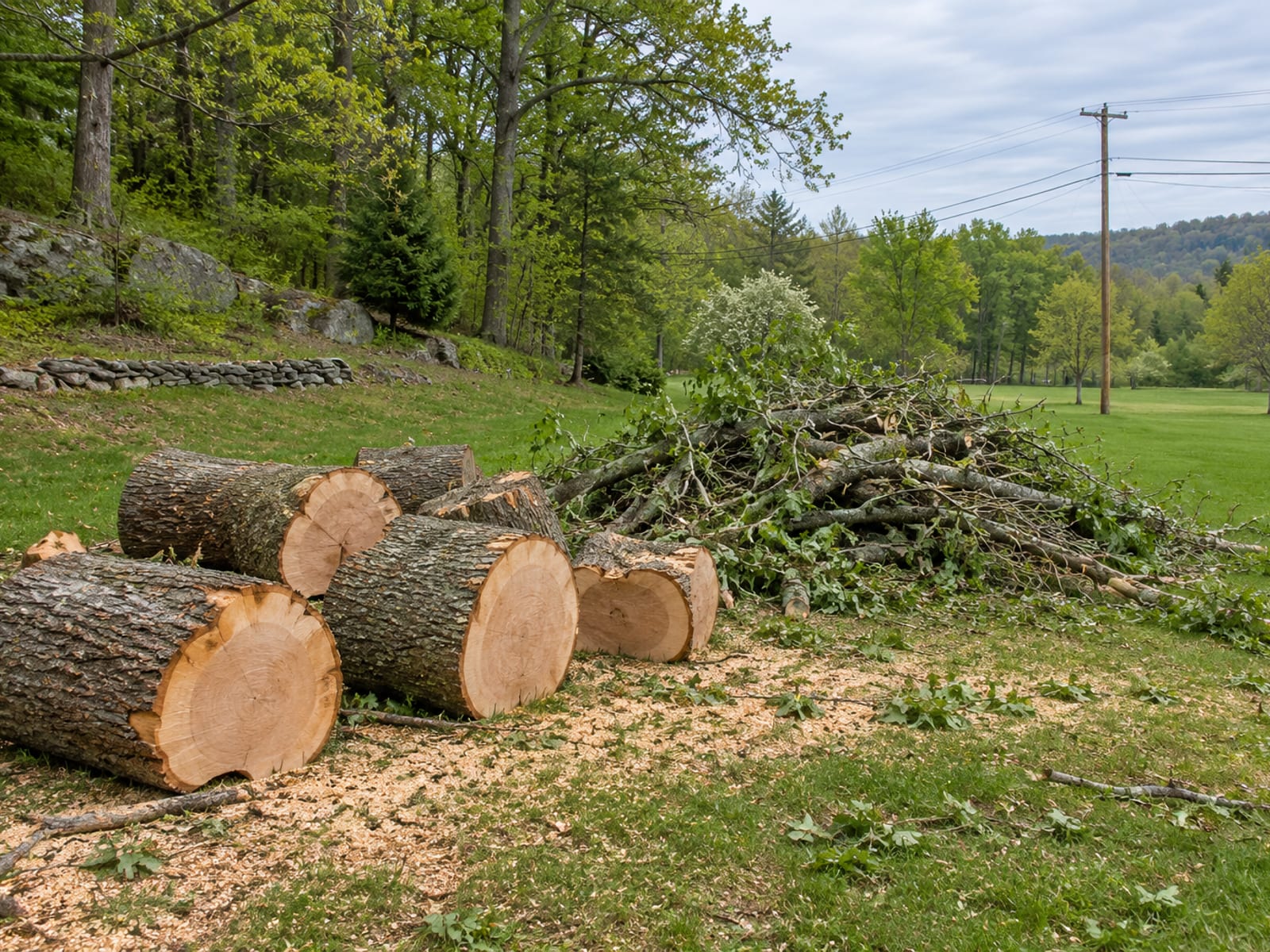
The tree on the ground is the visible part of the job. The stump, the brush pile and the damaged lawn are what remain once the trunk is gone, so settle them in the scope with the trunk.
A stump that sits in the way of lawn restoration, grading, drainage, a driveway, construction or future planting is a candidate for stump grinding, and grinding is powered digging, so the 811 call comes first. Brush has its own choices. It can be chipped, hauled or left in a place you agree on, and the scope should say which. If the storm damage is part of a larger wooded lot with several trees, brush and tight equipment access, it may fit better with land clearing than with a single tree removal.
Restoration closes the job. After the wood and stump are gone, the ground may need grading, topsoil, seed, erosion control or drainage repair, and a contractor who covers that in the same scope keeps one crew on the property from the tree to finished grade. That is how we work at Prestige Property Maintenance, as one crew from clearing through finished grade.
Five Questions to Answer Before You Hire for Storm Cleanup
1. Which of these is a reason to call 911 right away?
2. Who works on a tree that is on or near an energized line?
3. How much notice does Call Before You Dig require before stump grinding or other powered digging?
4. Who decides whether work near a wetland is regulated?
5. Wind brings your tree down onto a neighbor's fence, and you were not negligent. Whose insurer generally handles that claim?
Pick an answer to begin.
Tree on a Power Line in CT: Common Questions
Who do I call if a tree is on a power line in Connecticut? Call 911 for immediate danger, a fire, an injury, a damaged pole or a line blocking emergency access. Then report the tree to the electric utility that serves your address, Eversource or United Illuminating, even if the power is still on. Stay back until the utility has made the line safe.
Who pays when a tree falls on a power line? It depends on who is responsible for what. The utility or its qualified crew handles the energized line. The property owner may remain responsible for private-property logs, brush, the stump and surface restoration, and insurance generally follows the cause of the fall. Confirm the exact division with the serving utility, and read your policy for removal coverage.
Can I cut a tree that is touching a power line? No. UI warns customers not to attempt trimming, and OSHA's line-clearance rules reserve that work for trained workers. A private tree service waits until the utility confirms the electrical hazard is controlled.
Can I leave a fallen tree on my property? Hold off on that decision until the utility has cleared the hazard and the insurer has addressed any claim. After that, you and your contractor should record who is removing the trunk, limbs, brush and stump. Unstable wood near a driveway, structure, wetland or public way can create new hazards.
Do I need to call 811 before grinding the stump? Yes. Stump grinding is powered digging, so Call Before You Dig applies, with at least two full days of notice, excluding Saturdays, Sundays and holidays.
Who handles a tree that fell on a town road? Report it to the town, its tree warden, police or highway department as appropriate. Tree wardens control trees along public roads and in public spaces, with exceptions for state property and areas under a park commission.
After the Utility Has Made It Safe
The order is the part to remember. Stay back, treat every line as energized, call 911 for immediate danger, report the tree to the utility, and let the insurer hear about the damage before permanent cleanup. A tree on a public road goes to the town's tree warden, and 811 comes before any stump grinding or excavation.
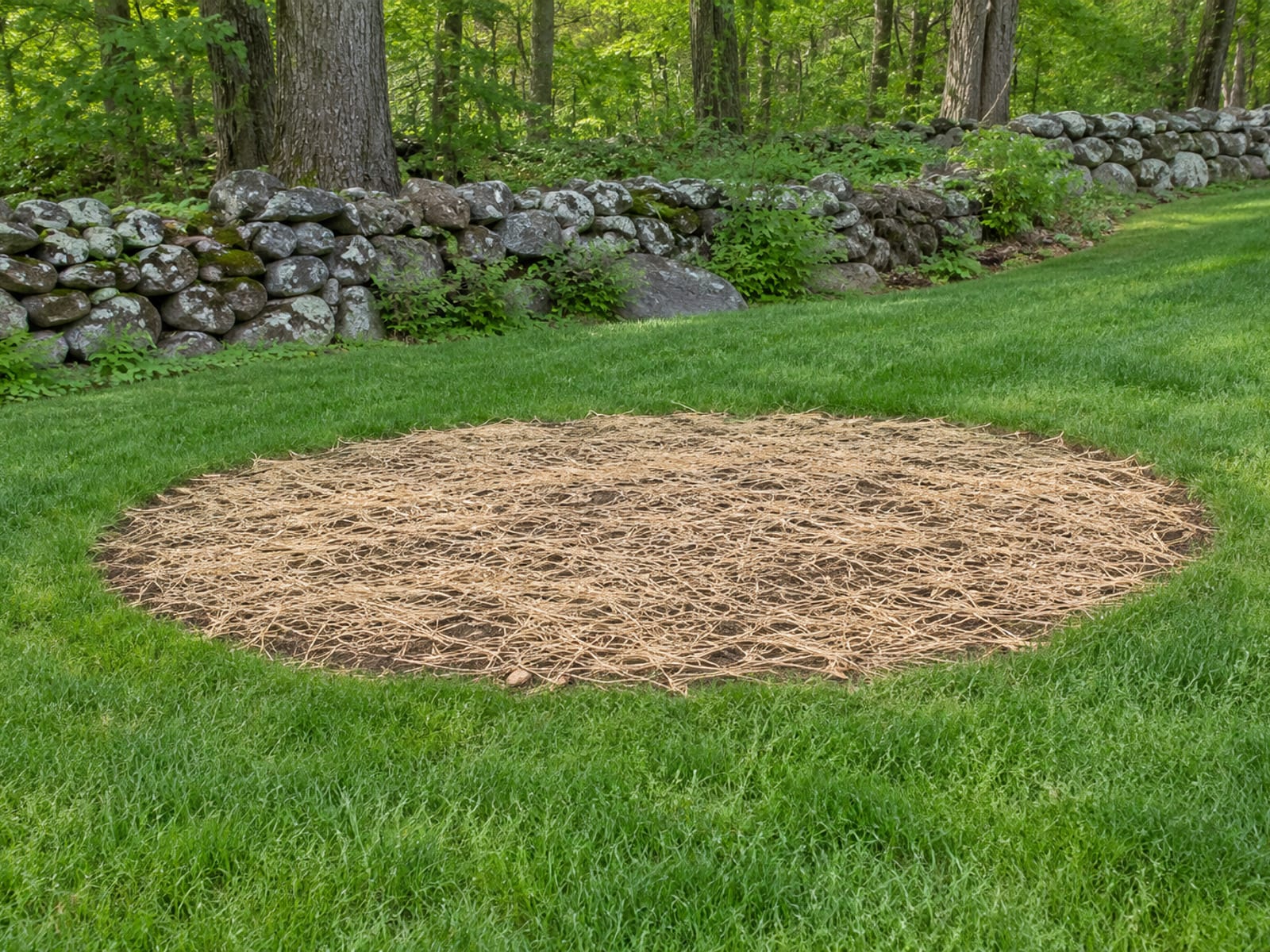
Once the utility has released the area, the wood, the stump and the ground are yours to plan. A written scope that names who removes what, who calls 811, who handles permits and who restores the surface gives you a clear line between the utility's work and the private work, and it keeps a storm from leaving open questions on the lawn.
If a tree has come down on your property and the utility has finished at the line, Prestige Property Maintenance can look at the tree, the stump and the ground and write that scope with you. We are based in Oxford, Connecticut, licensed and insured, Connecticut HIC #0704432, and have been here since 2015. Call us at (203) 258-3395 or contact us and we will set up the visit.
Words You Will Hear After a Tree Hits a Power Line
Tap a term to see what it means.
Energized line. A power line that may be carrying electricity. A line that looks dead, disconnected or insulated is treated as live.
Related Articles
Water Line to a Detached Garage: Can Electric Share a Trench?
A water line to a detached garage needs to sit deep in Connecticut, and electrical cover depends on the wiring method. See how the trench is approved.
Tree Removal in Derby, CT: What a Tight Lot Changes
A leaning or storm damaged tree over your Derby, CT house or the wires is not a wait and see problem. Learn the signs that call for tree removal now.
Tree Removal in Bethany, CT After Storm Damage: A Safety Guide
Tree removal in Bethany, CT means different things for a hazard versus a routine job. Learn how to tell them apart and stay safe while you wait.