

Tree Removal in Bethany, CT After Storm Damage: A Safety Guide
Kash CochranePublished
- tree removal
- bethany ct
- storm damage
- safety
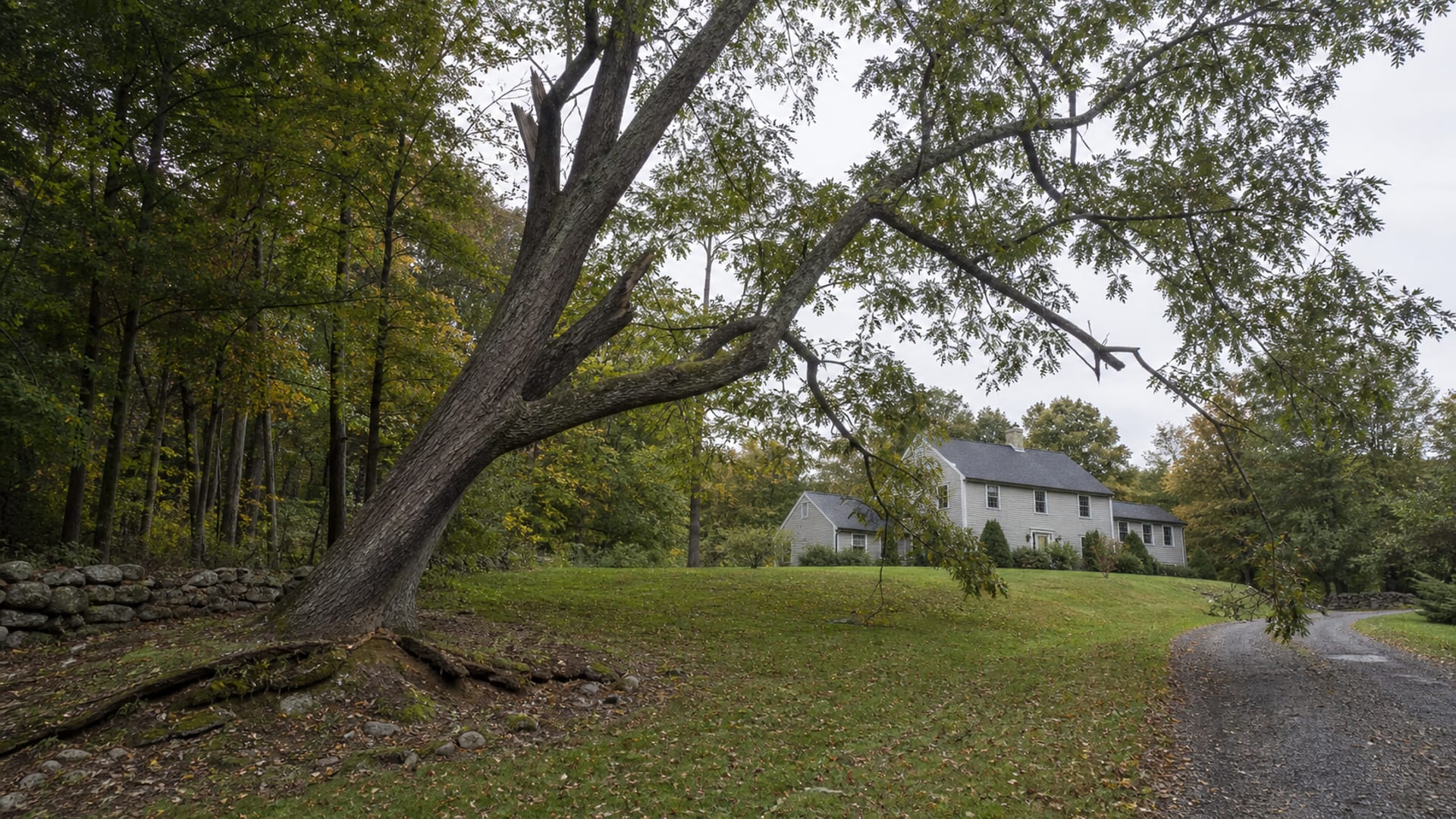
There is a tree you have started avoiding. It leans a little more than it did, or it split up high in the last blow, or a limb is hanging over the drive that was not hanging there in June. Some mornings you look at it and think it will hold. Some evenings, with wind in the forecast, you are less sure. The question you actually need answered is not what removal costs. It is whether this is something that has to be dealt with today or something you can put on a schedule, and how to work that out without walking under it to have a closer look. Here is the framework a crew uses, in the order they use it.
Key Takeaways
Storm damaged wood is not the same material as sound wood
UConn's guidance on wind and storm damaged trees warns that damaged limbs can hold unusual tension and can spring or move when cut, which is why a limb lying on the ground is not automatically a firewood job.
A tree in contact with electrical equipment is the utility's call, not yours and not a contractor's
Connecticut DEEP is direct that trees conduct electricity and that a tree touching wires means contacting the electric utility, and its guidance sets a 10 foot no pruning zone around utility lines.
Bethany's own residential permitting procedure tells owners to notify the Tree Warden before removing trees
, and asks that town trees near a proposed driveway or a sight line issue be shown on the plot plan for evaluation and tagging before removal.
Know in the Next Ten Minutes Whether This Is an Emergency
Work from what you can see from a safe distance. Do not walk under the tree to inspect it, and do not test anything by pushing on it.
| What you can see | What to do right now | What the professional response usually involves |
|---|---|---|
| Any part of the tree touching or resting on wires or electrical equipment | Keep everyone well clear, treat every wire as energized, and call the electric utility. Nothing else happens until they clear it | Utility coordination first, then removal planned around whatever they say |
| A limb hung up in the canopy, not on the ground | Establish an exclusion area underneath and around it, and keep people, pets, and vehicles out. Wind can drop it without warning | Trained removal from a position that is never underneath the suspended piece |
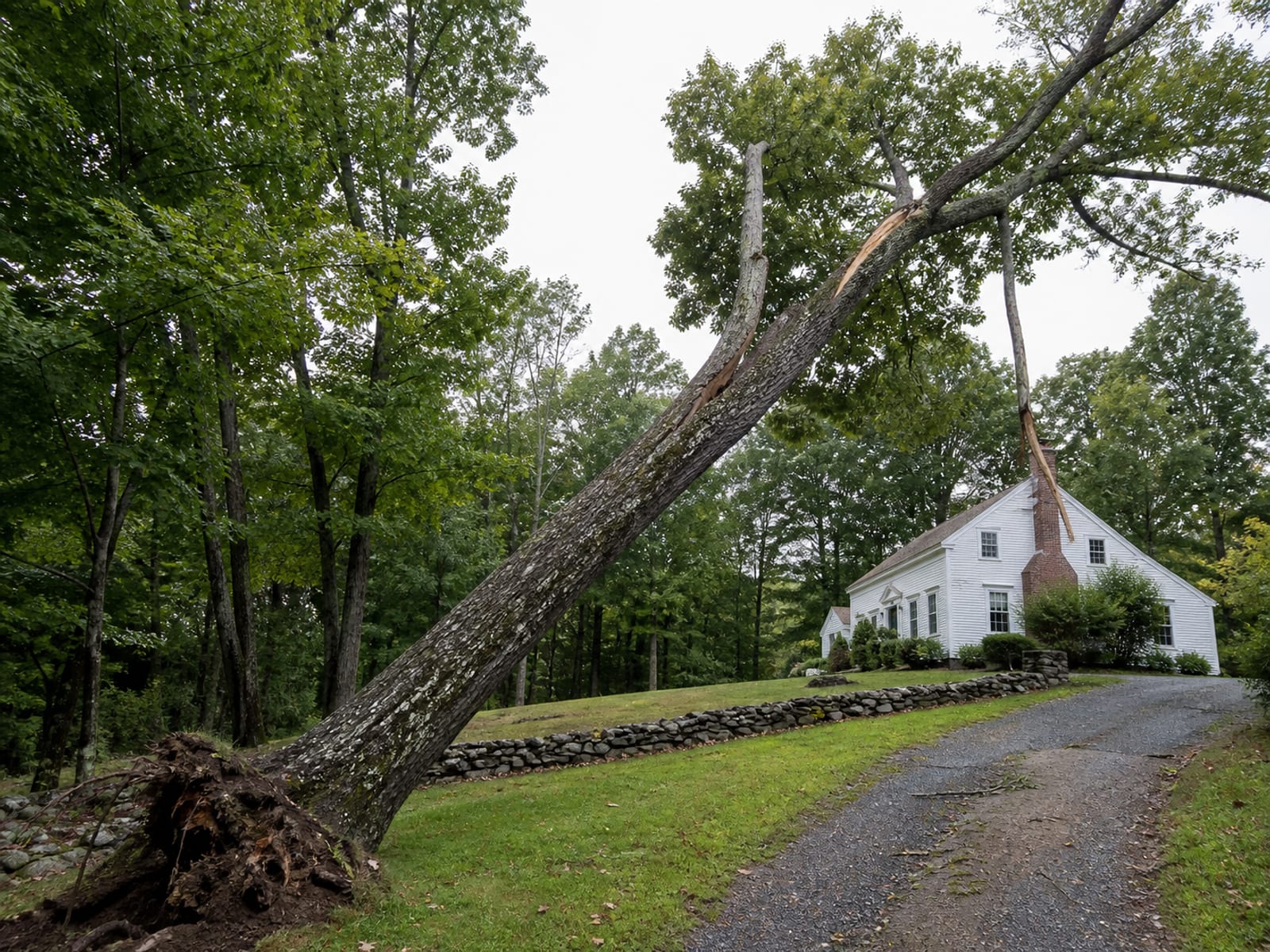
| The root plate lifting, soil cracked or heaved on one side of the trunk | Treat it as unstable. Clear the area on the lean side and anything the height of the tree away from it | Urgent assessment. A lifting root plate is failure in progress, not a maintenance item |
| A visible crack, a split fork, or a torn hanger over a house, drive, or occupied space | Move vehicles if that can be done without entering the fall zone. Keep the area below clear | Prompt scheduling, usually with controlled dismantling rather than felling |
| Dead but sound, standing clear of anything it could hit | Nothing urgent. Note it and get it assessed | A plannable removal, scheduled with the rest of your site work |
| A tree already down, resting on something, or bent under load | Do not cut it. Stored tension is the specific danger UConn warns about | Cutting sequence planned by someone who can read the loading |
The line between those rows is not the size of the tree. It is whether there is something below it that matters and whether the wood is doing something it should not be doing.
Keep People Safe While You Wait, and Let the Utility Own the Wire
While you are waiting for a crew, there are four useful things to do and a long list of things not to do.
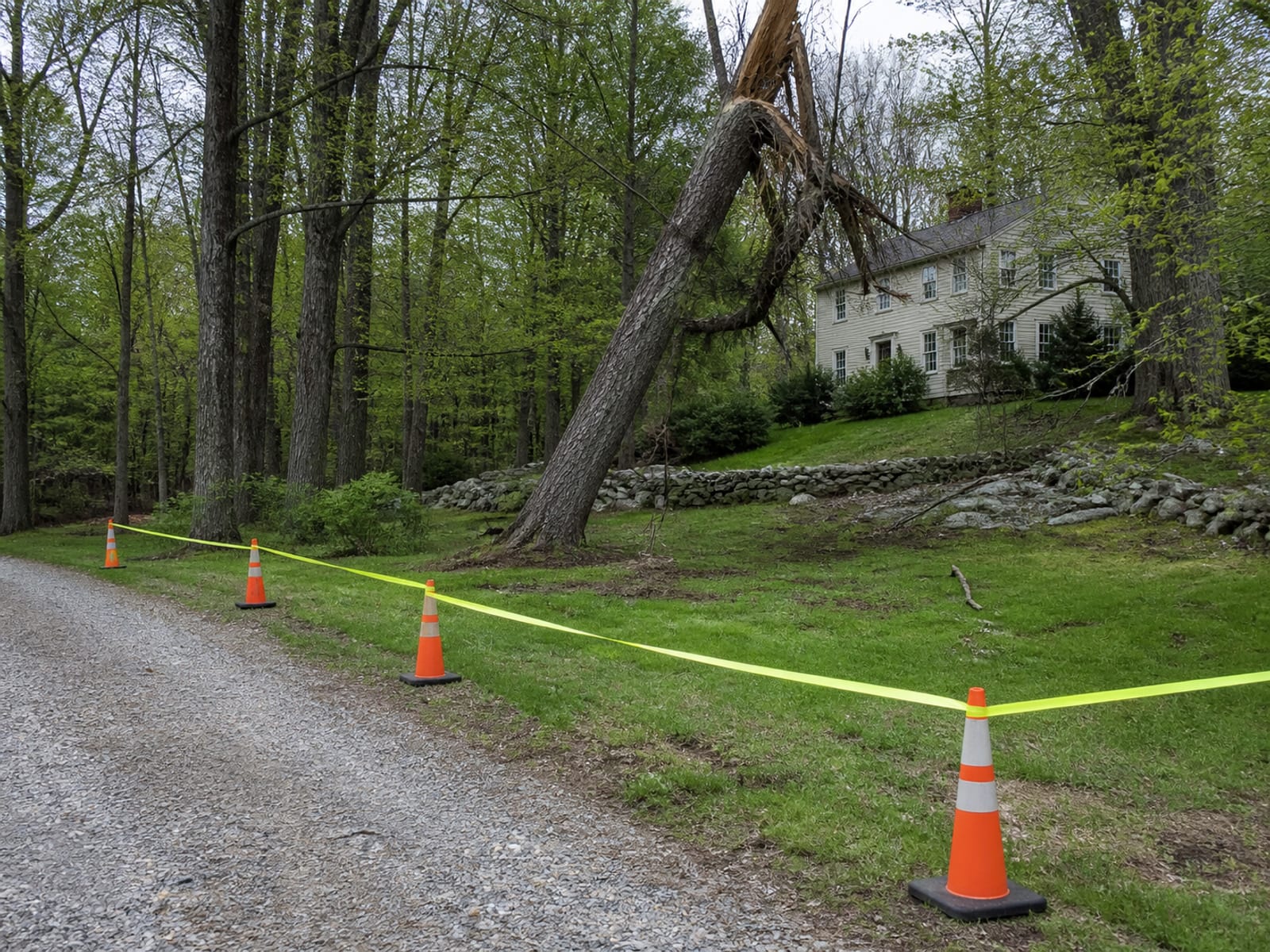
Mark out and enforce an exclusion area. Not a mental one, a physical one: tape, cones, a car parked to block the drive, whatever it takes to keep people from wandering into the fall zone. Include the far side, because trees do not always fall the way the lean suggests, particularly when there is broken wood involved.
Move vehicles and equipment out, but only if you can do so without entering that zone. If reaching the car means walking under the hanger, the car stays where it is.
Photograph the damage from a safe distance, for the insurance claim and for the contractor. Photographs from several angles, taken from a distance, are far more useful to an assessor than a description on the phone and they cost you nothing.
Keep access clear for emergency responders, particularly on a long private drive. A tree across the entrance is its own problem if anything else happens.
And on the wire: treat it as energized regardless of what it looks like, whether it is sparking, or whether the lights are on. Trees conduct electricity, which means the tree itself can be energized without touching anything visibly dangerous. Contacting the electric utility is not a formality that slows things down, it is the step that lets everything else happen safely.
See What a Hazard Tree Removal in Bethany, CT Assessment Actually Covers
An assessor is not just looking at the tree. They are looking at the tree, what is under it, what is over it, and how a crew and machine reach it.
The tree. Height and canopy spread, trunk diameter, the direction and degree of lean, visible decay, cavities, fungal bodies, storm damage, cracks, and the condition of the root plate. Storm damage in particular changes the plan, because it changes how the wood will behave when cut.
The targets. What sits inside the fall zone in every direction: the house, an outbuilding, the drive, vehicles, walls, fencing, a septic field, the well head, a neighbor's structure. A tree with an open field around it and the same tree over a roof are completely different jobs.
The overhead. Service drops to the house, utility lines along the road, and anything else strung across the property. This is a clearance question before it is a method question.
The access. Whether a truck, a chipper, an aerial lift, or a crane can be positioned safely. On a Bethany lot that usually means a real look at the drive width, the turning space, the slope, and whether the ground will carry the weight.
The ground. Bearing conditions, soft or saturated soil, side slopes, retaining walls, drainage features, and whether any of the staging would sit on ground the town regulates.
The finish you actually want. Removal only, removal plus haul away, wood cut and stacked for your own use, brush chipped, stump ground, or ground restored. Those are separate decisions and they are the main reason two quotes differ.
Match the Method to the Drop Zone Rather Than the Tree Size
Large tree removal in Bethany, CT is often assumed to mean a crane. It sometimes does. What actually decides the method is whether there is a safe place for the tree to land.
Where there is genuine open space, a sound tree can be felled from the ground in one piece, which is the simplest and least expensive approach available. Where there is not, the tree comes down in pieces, and the piece by piece approach is what a constrained site buys you: control over where every section lands. That controlled dismantling might be done by a qualified climber using ropes and rigging, from an aerial lift where access and ground conditions allow, or with a crane supporting the picks where a tree has to be taken off over a roof or a driveway and the site can accommodate the setup.
That is a selection, made after the assessment, and it is a reasonable thing to ask a contractor to explain. A quote that does not say which method it assumes is a quote that can change on the day. Equally, a contractor who proposes the simplest safe method rather than the most impressive one is usually the one paying attention.
Get Comparable Quotes From a Tree Removal Service in Bethany, CT by Comparing Scope
The most common reason two estimates look wildly different is that they describe different work. Before comparing totals, get each one to state, in writing, whether the price includes:
- The hazard assessment and the method proposed.
- Access protection, meaning what is done to keep equipment from rutting the drive or the lawn.
- Whether it is ground felling, climbing and rigging, aerial lift, or crane supported.
- Brush chipping, and where the chip goes.
- Log removal, or logs cut to a length you specify and left.
- Stump grinding, which is separate work and frequently excluded.
- Disposal and any restoration of ground damage.
- Permit and notification coordination, and who is doing it.
- What is explicitly excluded.
Also ask for evidence of credentials and liability coverage. Connecticut's Tree Owner's Manual advises using a Connecticut licensed arborist for arboricultural work and sets out minimum general liability coverage levels worth asking to see. Asking for the certificate is normal and any established company expects it.
Follow the Six Stages That Take a Job From Triage to Cleanup
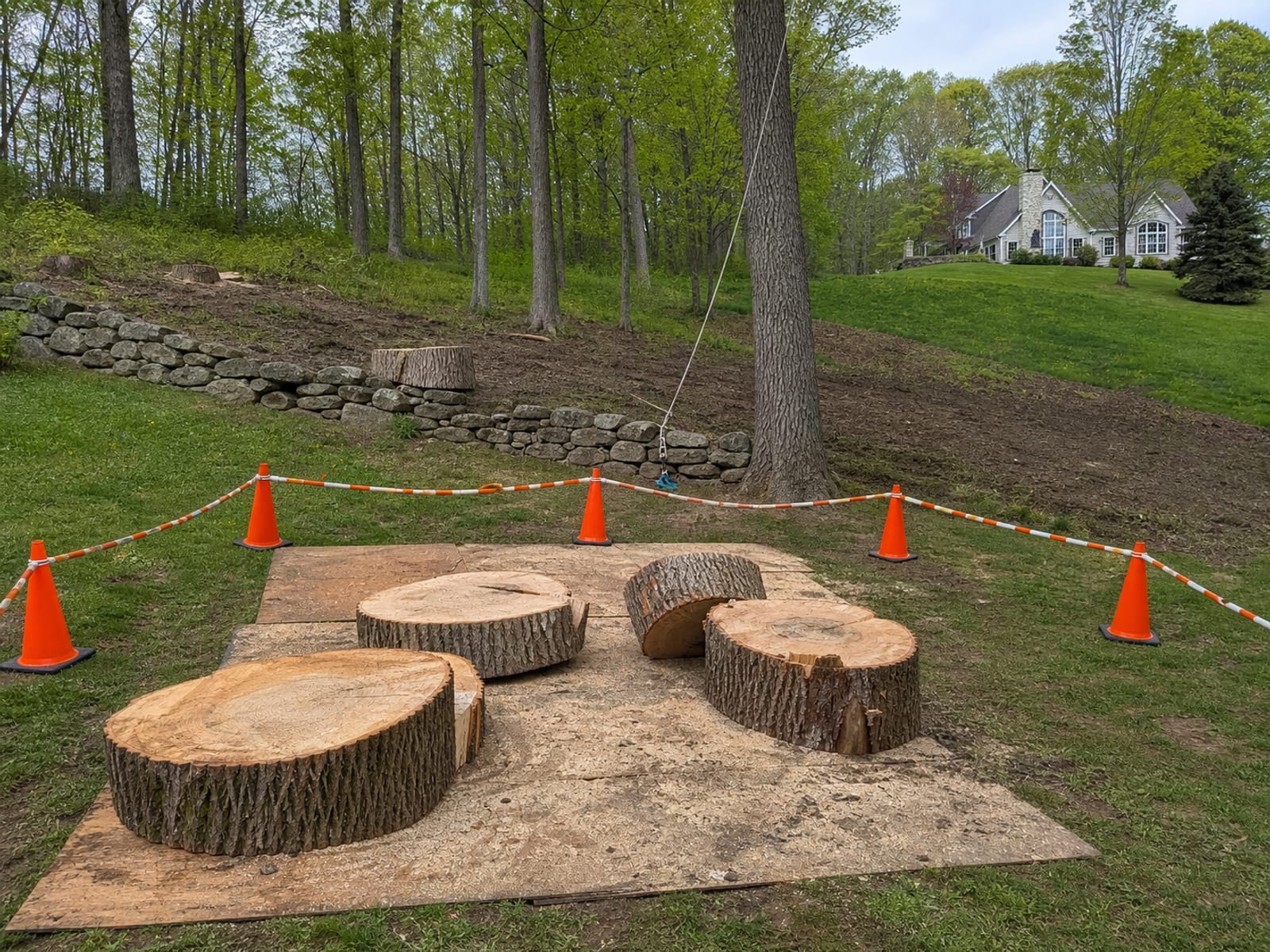
1. Triage and site walk. Is anyone in danger now, is there electrical contact, is there an exclusion area, and what does the tree and its surroundings actually look like. 2. Scope and approvals. Removal only, removal with haul away, or removal plus stump and restoration. Then the checks: Tree Warden notification where the town's procedure applies, wetlands where the work could affect a regulated resource, and a locate request before any digging. 3. Access and protection plan. Where the truck, chipper, lift, or crane can sit without damaging septic components, the well, walls, soft ground, or regulated areas, and how the work zone is controlled. 4. Method selection. Ground felling where there is a safe drop zone, controlled dismantling where there is not, with the rigging, lift, or crane decision following the site and the tree's condition. 5. Cut and lower inside a controlled zone. Communications agreed, the drop zone kept clear, sections removed in a planned sequence, nobody underneath a suspended piece. 6. Process material and close out. Brush chipped, logs handled as agreed, stump left or ground per the scope, ground damage looked at honestly, and the finished work compared against what was written down.
Budget From the Drivers, Because There Is No Per Tree Number
No Bethany specific published price for tree removal exists, and per tree figures circulating online are not quotes for your property. What is worth understanding is which conditions push a job toward the simple end and which push it toward the complex end, because you can assess most of them yourself from the ground.
Toward simpler: a smaller tree, sound wood, clear ground level access for equipment, an adequate and safe fall zone, no electrical conflict, no rigging required, and a straightforward disposal plan.
Toward more complex: a larger or decayed tree, storm damage, limited or steep access, a tree over a structure or driveway, proximity to lines, saturated ground, a need for an aerial lift or crane, emergency scheduling, complicated cleanup, and separately scoped stump work.
Two things shift a quote more than people expect. Emergency scheduling costs more everywhere, because it displaces other work. And cleanup scope, meaning what happens to the brush, the logs, and the stump, can be a large share of the job on a big tree. Deciding those before you ask for prices makes every estimate you receive comparable.
Check the Bethany Approvals That Can Attach to Tree Work
| Situation | What to do | Who |
|---|---|---|
| Tree removal within the town's residential permitting process | Bethany's published building and land use permitting procedure says to notify the Town of Bethany Tree Warden prior to removal of any trees, and to show town trees near a proposed driveway or a sight line problem on the plot plan for evaluation and tagging | Bethany Tree Warden, through Land Use |
| Work in or likely to affect an inland wetland or watercourse, including clearing, grubbing, grading, or material placement | Apply to the town's wetlands agency. The state's municipal permitting guidance is that non state applicants go through the municipality, and the agency, not the owner, decides whether the activity is regulated | Bethany Inland Wetlands Commission |
| A parcel in a mapped public water supply watershed or aquifer protection area, where an application is filed with a Bethany land use body | Notify the affected public water utility by certified mail within the period the town's form specifies. This is triggered by an application, not by every private tree removal | The applicant, using the town's notification form |
| Stump grinding, root excavation, replanting, fence work, drainage, or any other digging | Submit a Call Before You Dig request at least two full business days before digging. The markout covers participating facilities, not private lines | CBYD, at 811 |
| A tree or limb touching electrical equipment | Keep clear and contact the electric utility. No cutting, pruning, or moving | Your electric utility |
Two notes that save time. First, do not judge the wetlands question by how dry the ground looks. Bethany's own guidance points out that regulated wetland soils include poorly drained, very poorly drained, alluvial, and floodplain soils, and that wetlands are not always obvious in a lawn, with a licensed soil scientist establishing the boundary where regulated areas appear to exist. Second, where a wetlands application genuinely is needed, the town's own FAQ makes clear that review is a substantial part of the calendar rather than a rubber stamp, so start it early rather than after booking a crew.
Avoid the Five Mistakes That Put Homeowners in Hospital
- Treating a leaning, broken, or suspended tree as firewood. Damaged wood holds tension, and a saw cut is what releases it.
- Choosing between quotes on the total alone. Different haul away, stump, equipment, and access protection scopes make totals meaningless on their own.
- Digging for stump or drainage work before the locate. The notice period is at least two full business days, and it applies to grinding as much as to trenching.
- Assuming dry ground cannot be regulated wetland. The soils define it, not the surface.
- Cutting or pruning anywhere near a utility line. The state's guidance sets a 10 foot no pruning zone, and the tree itself can carry current.
Draw Your Own Line at the Ground and at the Wire
Once an area is confirmed safe, reasonable owner tasks are: photographing the damage, marking and enforcing the danger area, moving vehicles when that can be done without entering the fall zone, and deciding whether you want firewood kept once the tree is safely down.
The things to leave alone are consistent across every credible source. Do not climb. Do not use a ladder with a saw. Do not cut anything suspended or storm loaded. Do not fell a tree that could reach a target. Do not work within 10 feet of a utility line. And do not run a chainsaw for any cut you cannot make with both feet on the ground, which is the plain test the state's own Tree Owner's Manual uses.
Schedule Around Ground Conditions and Review Time
No Bethany rule prohibiting ordinary private tree removal in a given season was found, so the calendar is not the constraint. Conditions are.
Wind and active storms stop work, obviously. Snow and ice restrict safe access and safe climbing. Frozen ground can be good for equipment and thawing ground is the worst of both, since UConn's Connecticut guidance points out that a thawed surface over frozen soil produces mud, and advises keeping heavy equipment out of saturated ground to avoid compaction, rutting, and getting stuck. On a rural lot with a long drive, that is a real consideration rather than a nicety.
Where an approval is required, the review is often the longer pole in the schedule rather than the cutting. Emergencies are treated differently, which is exactly why sorting the urgent trees from the plannable ones early is worth doing.
Four Questions to Test Your Judgment
1. A large limb is hung up in the canopy after a storm. What do you do?
2. A branch is resting on the service wire to your house. Who do you call first?
3. What does UConn warn about storm damaged and downed wood?
4. What decides whether a large tree is felled whole or dismantled in pieces?
Pick an answer to begin.
Frequently Asked Questions About tree removal bethany ct
What does tree removal cost in Bethany, CT? No Bethany specific published pricing exists, and a per tree figure would be misleading because the same tree in two locations is two different jobs. The estimate is set by size and condition, whether the wood is storm damaged, what sits inside the fall zone, electrical proximity, whether a lift or crane is needed, how equipment reaches the work, whether the scheduling is an emergency, and what happens to the brush, the logs, and the stump. Decide the cleanup scope first, then ask for written estimates that all describe the same work.
Does a large tree always need a crane? No. The method follows the tree's condition, the available safe drop zone, what is below and around it, and whether equipment can be positioned safely. A crane is one option for a constrained removal, particularly over a roof or a driveway, and it needs its own safe setup. Plenty of large trees come down by climbing and rigging or from an aerial lift, and some come down in one piece because there is genuinely room.
What should I do if a tree is near or touching a power line? Keep clear, treat the line as energized, and contact the electric utility. Do not prune within 10 feet of utility lines, and do not assume a tree that is merely close is safe, since trees conduct electricity and contact can be indirect. This is not a step to be worked around by hiring someone quickly. The utility clears the electrical hazard, and the tree work follows.
Is a fallen branch safe to cut up myself? Not necessarily, and this is where people get hurt. UConn's guidance is specific that downed and damaged wood can contain dangerous tension. If the piece is suspended, bent, pinned under something, resting against a target, near a wire, or if you cannot confidently read how it is loaded, leave it. A limb lying flat in the open with nothing on it is a different situation from the same limb resting across a fence.
Do I need a Bethany permit to remove a tree? Confirm your scope with Land Use rather than assuming either way. Bethany's residential permitting procedure directs owners to notify the Town Tree Warden prior to removing trees within that process, and asks that town trees near a proposed driveway or a sight line issue be shown on the plot plan for evaluation and tagging first. Separately, wetlands review applies where the work may affect a wetland or watercourse, and the agency decides whether an activity is regulated.
When should I call 811? Before any ground disturbance connected to the job: stump grinding, root excavation, a replacement planting hole, fence work, drainage, or driveway repair. Notice is at least two full business days ahead. Remember that the markout locates participating underground facilities and is not a permit, not a site assessment, and not confirmation of where your own private lines run.
Can tree removal be scheduled in winter? Yes, and there is no local rule against it. Winter often has advantages, including firm ground and a canopy you can actually see through. The limits are weather on the day, snow and ice affecting safe access and climbing, and the thaw period when a soft surface over frozen ground makes equipment staging risky. Where an approval is required, that review runs on its own schedule regardless of season.
Moving Forward
Sort your trees before you sort your quotes. Anything touching electrical equipment goes to the utility today. Anything hung up, split, or with a lifting root plate gets an exclusion area and an urgent assessment. Anything dead but standing clear of a target is a job you can plan properly, which usually means a better price and a better result than the same work booked in a panic.
Then decide what you want the ground to look like afterward, because that decision, not the tree, is what makes estimates comparable. Removal only, brush chipped, logs kept or hauled, stump ground or left. Write it down and ask everyone to price the same thing.
If you have storm damaged or hazard trees on a Bethany, CT property, Prestige Property Maintenance can walk it with you, assess the access and the ground as well as the tree, and put a written scope together that names the method and the cleanup. We handle tree removal, land clearing, stump grinding, and forestry mulching with one crew working out of Oxford, so the tree, the stump, and the ground it leaves behind are one job rather than three. If anything is in contact with a wire, call your electric utility first. See how we work across Bethany, call (203) 258-3395, or contact us to arrange an assessment.
Terms You Will Hear During a Removal
Tap a term to see what it means.
Hazard tree. A tree with a structural defect or condition likely to cause failure, in a position where that failure could strike something that matters.
Related Articles
Tree Removal in Derby, CT: What a Tight Lot Changes
A leaning or storm damaged tree over your Derby, CT house or the wires is not a wait and see problem. Learn the signs that call for tree removal now.
Land Clearing in Bethany, CT: What the Property Looks Like After
Agreed to land clearing in Bethany, CT and picturing a bulldozed lot? Here is what actually happens to trees, stumps, and debris once work begins.
Excavation Company in Bethany, CT: What Happens on a Wooded Lot
Wondering what to expect from an excavation company in Bethany, CT? See how a crew protects your long drive and wooded lot from call to cleanup.