

Trenching Bethany CT: Water, Power, and Septic Lines
Kash CochranePublished
- trenching
- bethany ct
- utility lines
- septic

Ask five people how deep a trench has to be and you will get five answers, all delivered with total confidence. Somebody says four feet. Somebody says three. Somebody's brother in law did his at eighteen inches and it has been fine for a decade. None of that helps, because depth is not one number and never was. It depends on what is going in the trench, and a single run across a long Bethany lot can easily carry a water service, an electrical feed, and a septic line, each of which answers to a different code, a different approval, and a different inspector. That is the first thing worth knowing before you price anything by the foot.
Key Takeaways
Water service has a hard number and the others do not
the current Connecticut code requires water service pipe to be at least 48 inches deep and protected against freezing, and that rule applies to water service pipe rather than to everything else in the ground.
Electrical and septic each go their own way
electrical work follows the adopted National Electrical Code through a licensed electrician with the permit path that goes with it, while septic work goes through the local director of health, which for Bethany means Quinnipiack Valley Health District, with inspection before anything is covered.
The locate is not a map of your property
a CBYD ticket marks participating utility facilities. Your well line, septic components, irrigation, invisible fence, and any line a previous owner buried are not on it and have to be found separately.
Stop Looking for One Depth, Because Your Trench May Carry Three Standards
The reason online answers conflict is that people are answering different questions. Here is what actually governs what.
| What is going in | What governs the depth and method | Who is involved | When it gets inspected |
|---|---|---|---|
| Water service pipe | Connecticut code: at least 48 inches deep, protected against freezing | Bethany Building Department for the plumbing permit path, plus the water system's own requirements where a public connection is involved | Per the permit, before cover |
| Electrical feed | The adopted National Electrical Code, through the approved installation method for the cable or raceway used | A Connecticut licensed electrician, with the contractor obtaining the permit, through Bethany Building | Per the electrical permit, before cover |
| Septic line or system work | The state's technical standards for subsurface sewage disposal, through the approved plan | Quinnipiack Valley Health District as the local health authority, with licensed installation | Before covering. This one catches people out |
| Other buried utilities and site drainage | The installing utility's own requirements, or the design for the drainage work | The utility, and the town where the work is regulated | As the design or the utility requires |
Three consequences follow. First, no single depth statement is safe to repeat: the 48 inch figure belongs to water service pipe and generalizing it to electrical or drainage is guesswork. Second, a project that carries more than one service has more than one approval path and more than one inspection, which affects the sequence far more than the digging does. Third, the inspection points are what determine when a trench can be closed, so backfilling before them is the most expensive shortcut on the list.
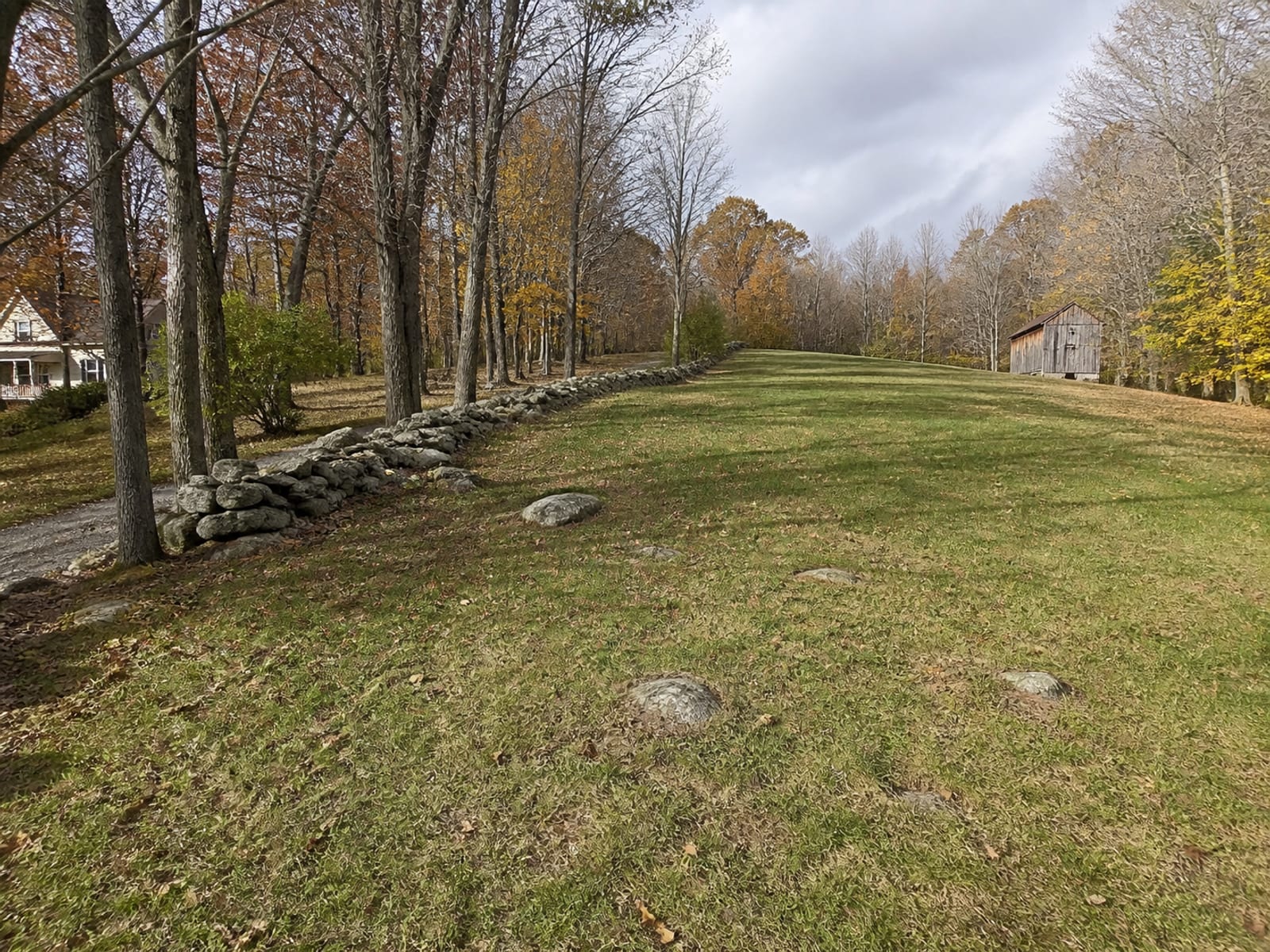
Walk the Route Before You Price the Foot
A long trench across a rural Bethany lot is not a linear foot commodity, and treating it as one is how a straightforward utility run turns into a mid project surprise.
Bethany's own plan of conservation and development names soils, slopes, wetlands, and flood plains as natural constraints, alongside limited developed infrastructure, rural character, and the town's public water supply watershed role. That is the town describing what a long route is likely to cross. It is not a claim about your parcel, and it is exactly the reason to walk the line rather than draw it on a map.
What the walk establishes: the endpoints and the actual length, every crossing, where the ground rises and falls, where it stays wet, where rock shows at the surface, where the well and its line are, where the septic tank, leaching field, and reserve area sit, what drainage the route interrupts, where equipment can get to and turn, and where spoil can be placed without blocking the work or ending up somewhere it should not be.
Two things frequently change the route rather than the price. Rock at the surface usually means rock along that contour, and going around can be far cheaper than going through. And a wet band across the slope is both a construction problem and possibly a regulatory one, which is a much better thing to learn on foot than with a machine already on site.
Get a Water Line Trench in Bethany, CT Below the Freeze and Approved
This is the one with a firm number. Connecticut's current code requires water service pipe to be at least 48 inches deep and protected from freezing, and the reason is straightforward: a service line above the frost depth is a line that will fail in a hard winter, usually in the least convenient place along its length.
That depth is a minimum rather than a target, and on a long route with changing ground it has to be maintained the whole way, which means the trench profile follows the surface rather than running level from a single starting elevation. High points along the route are where insufficient cover actually happens.
The other half is the connection and the paperwork. Where a public connection is involved, the water system has its own requirements on top of the code, and the plumbing permit and inspection path runs through Bethany's Building Department. The practical order is to establish the requirements first, then dig, rather than dig and then discover a detail that has to be redone.
Treat an Electric Line Trench in Bethany, CT as an Electrical Job With a Hole in It
The excavation is the visible part and the smaller part of the responsibility.
Electrical work in Connecticut requires a licensed electrician, and the contractor performing the work obtains the permit. The depth and the installation method follow the adopted electrical code and depend on what is being installed: the required cover differs by the type of cable or raceway, the voltage, and whether there is additional protection, which is precisely why a generic trench depth is useless here.
So the coordination question matters more than the digging question. Who is specifying the depth and the method, who is pulling the permit, when does the electrician need the trench open, and who calls the inspection before it is covered. On a long rural run, an open trench sitting through a weekend of rain while everyone waits for the next available slot is its own problem, so sequencing the excavation to the electrical work rather than the other way around is usually the right call.
Keep Septic Line Excavation in Bethany, CT Open Until the Inspection Happens
Septic is the path people most often get wrong, and the mistake is nearly always the same: covering work before it has been inspected.
Start by separating two different jobs. A house sewer problem, meaning the line between the building and the tank, is one thing. Repair or replacement of septic system components is another, and it is the one that carries the full health review. Connecticut assigns permitting for systems with flows up to 10,000 gallons per day to the local director of health, which for Bethany means the Quinnipiack Valley Health District, and the town directs applicants there to establish whether septic, well, or percolation test requirements apply before town permitting.
The state's technical standards ask that plans identify the house sewer, the tank, the leaching system, watercourses, drains, wells, and water service lines. Reading that list tells you what a septic trench actually has to avoid and stay clear of, and it is the reason the route walk matters so much on a lot that has all of those things.
Then the inspection. Septic work is inspected before it is covered. Not after, not on the basis of photographs. Any schedule that assumes the trench closes the same day the pipe goes in is a schedule that has not accounted for it.
One more thing worth protecting: the septic reserve area. It is the ground set aside for a future system, and running a trench, storing spoil, or tracking a machine across it can compromise something you will need one day and cannot easily replace.
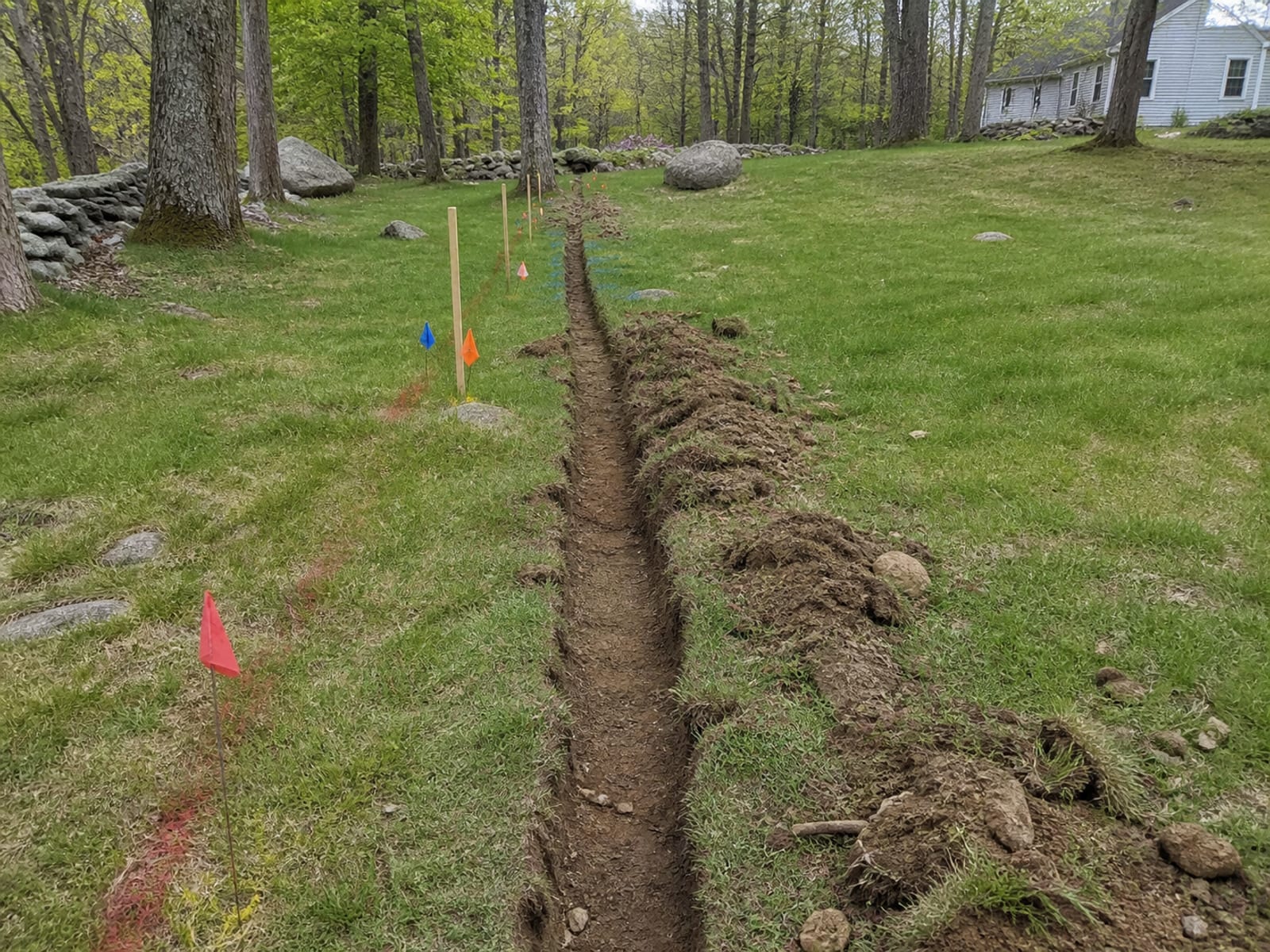
Coordinate Utility Trenching in Bethany, CT Around What the Marks Do Not Show
Call Before You Dig is mandatory before powered excavation. Notice is at least two full days ahead, excluding Saturdays, Sundays, and holidays, and no more than 30 days ahead, with the emergency exception reserved for immediate danger to life, health, or property rather than for a job that is running late.
What the ticket produces is marks for participating utility facilities. What it does not produce, and this is the point people miss on rural property, is any record of the things a homeowner or a previous owner put in the ground. The well line. The septic tank, distribution box, and field. Irrigation. Invisible fence. A feed to the barn, the shed, or a post light. An old field drain nobody documented. Those are found from your own knowledge, whatever plans exist, and careful field work, and on a long route they are the most likely thing to be hit.
Marks also have a tolerance zone around them and they are not a substitute for careful exposure where the trench crosses a known line. Where the route crosses a marked facility, hand exposure before the machine gets there is the normal answer.
Make the Trench Safe Before Anyone Steps Into It
Trench work has one hazard that dominates all the others, and it is not the machine.
OSHA requires the work to be planned with attention to soil conditions, utilities, traffic, and nearby structures. Its protective system rule is the one to know: an adequate protective system is required for employees in excavations, apart from excavations entirely in stable rock and excavations under five feet where a competent person has examined the ground and found no indication of a potential cave in. Sloping, shoring, or shielding are the methods, and which one applies depends on the soil, the depth, the water, and what is nearby.
The other rule with an immediate practical effect is the setback: spoil and equipment are kept at least two feet back from the edge, or retained. Material piled at the lip is load in exactly the place a trench wall is weakest, and it is also the material most likely to fall back in on somebody.
Conditions change, particularly after rain, which is why trench conditions are inspected daily and whenever something changes rather than assessed once on the first morning.
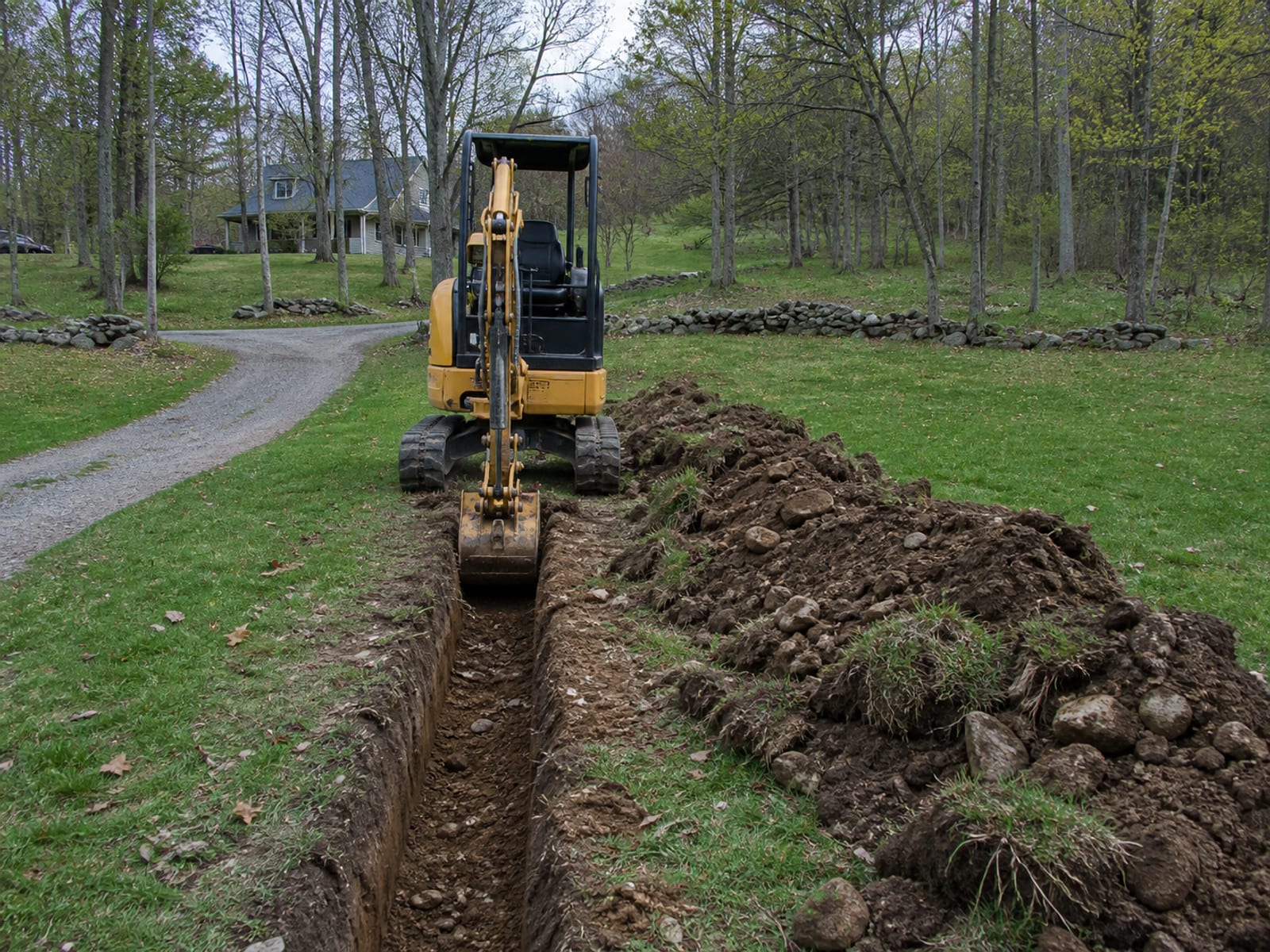
Follow the Seven Steps That Keep a Utility Run Boring
1. Walk and define the route. Endpoints, length, crossings, utilities, the well, septic components and reserve area, drainage, wet areas, access, staging, and where spoil goes. 2. Confirm the review path. Bethany Land Use on wetlands and land use, Quinnipiack Valley Health District on septic, well, and percolation test applicability, and the Building Department on plumbing and electrical permits and inspections. Where health approval is required, it comes before the town permit. 3. Give the 811 notice and read the marks against the route. Two full days minimum, then verify the responses and identify the private lines separately. 4. Stage the work and plan the protection. Safe access, spoil handling with the setback observed, and the protective system decided before anyone needs it rather than after. 5. Excavate to the requirements of the system going in. Method and equipment follow the access, depth, rock, groundwater, slope, and utility conflicts, with hand exposure where the route crosses a known line. 6. Install, then inspect, then cover. Water service to the required depth with freeze protection, electrical to its approved method, septic to its approved plan, and nothing backfilled until the inspection that applies has happened. 7. Backfill and restore, with the documentation closed out. Bethany tells permit holders to schedule inspections and notes that approval is not granted without a final inspection ticket. Backfill, testing, marker, and restoration requirements come from the approved documents rather than from habit.
Price It From the Route, Not the Linear Foot
No published Bethany specific residential trenching price exists, and a per foot figure is misleading here in a specific way: the cost per foot on a long rural route can vary by a factor of several between one end and the other, depending on what the ground does. The variables worth separating in a quote are:
- Route length and the required depth, which depends on which system is going in.
- Ground conditions along the route, meaning soil, rock, groundwater, and slope, and how much of the run each affects.
- Access and staging, including whether the machine can travel the route or has to work from limited positions.
- Conflicts and crossings, including hand exposure where the trench meets known facilities.
- The safety system, where the depth or the ground means workers will be entering.
- Material import or export, where the spoil is unsuitable for backfill or the design requires bedding.
- Approvals and inspections, and the waiting they can involve.
- Erosion control and restoration, particularly where the route crosses lawn, drive, or a slope.
A scope that separates those tells you where the risk sits. A single per foot rate hides it, and it is generally hiding it in the direction of a later conversation.

Head Off the Five Failures That Reopen a Finished Trench
- Treating the locate ticket as a complete map of the property. It covers participating facilities only, and the rural lines are the ones you own.
- Choosing a depth before identifying the system and its code path. The 48 inch water service rule is not a general trench depth.
- Ignoring wetlands, watercourses, or the septic reserve area. All three can be crossed by a route drawn on a plan with none of them shown.
- Leaving spoil and equipment at the trench edge. The two foot setback exists because that load is what collapses walls.
- Covering septic work before inspection. It is the one failure that reliably means digging the same trench twice.
Do the Owner's Half: Records, Route, and the Call
You can gather the records that nobody else has: the septic as built, the well location and depth, any plans from earlier work, and your own memory of what has been buried and roughly where. You can walk the route and photograph it, noting wet ground, rock at the surface, and anything crossing. You can clear the line of what can be moved. You can ask Land Use whether the route raises a wetlands question, and Quinnipiack Valley Health District whether health review applies. And if you are doing any powered digging yourself, you make the locate call.
Where it stops: powered excavation near marked facilities, any trench a person will enter, electrical work, septic construction, and anything in a regulated area. Those need the appropriate licensed and qualified path, and in the case of a trench somebody stands in, the protective system is not optional.
Four Questions Before You Open a Trench
1. What does the Connecticut 48 inch minimum depth apply to?
2. What is not shown on a CBYD markout?
3. Where does spoil have to sit relative to the trench edge?
4. When is septic work inspected?
Pick an answer to begin.
Frequently Asked Questions About trenching bethany ct
How deep does a water line trench need to be in Bethany, CT? The current Connecticut code requires water service pipe to be at least 48 inches deep and protected from freezing. That is a minimum to be maintained along the whole route rather than at the starting point, which matters on ground that rises and falls. It is also specific to water service pipe: do not apply the same figure to electrical, drainage, or anything else in the ground, because those follow their own codes and approved methods.
How long should I wait after calling 811 in Connecticut? At least two full days, excluding Saturdays, Sundays, and holidays, and no more than 30 days ahead for planned powered excavation. Wait for the responses and verify the marks against your route before digging. The emergency exception exists for immediate danger to life, health, or property, and a job running behind schedule is not that.
Do I need a permit for an electric line trench in Bethany? Electrical work requires a Connecticut licensed electrician, and the contractor performing the work obtains the permit through the Bethany Building Department. Confirm the scope with both, because the depth and the installation method depend on what is being installed rather than on a standard trench detail, and the inspection has to happen before the trench is covered.
Does septic line excavation need QVHD approval? Bethany directs applicants to the Quinnipiack Valley Health District to determine whether septic, well, percolation test, or other health approval applies, and where it does, that approval comes before the town permit. Connecticut assigns permitting for systems up to 10,000 gallons per day to the local director of health. Repair or replacement of system components is a different scope from a house sewer issue, so describe what you actually have.
Can I trench near a wetland or watercourse on my Bethany lot? Do not assume either way. Bethany's regulations state that a regulated activity may not be conducted or maintained without a permit from the Inland Wetlands Commission, and Land Use is who determines whether your proposed route is regulated. Ask before machinery is mobilized, because a determination is a phone call and an enforcement problem on an open trench is not.
What does trenching cost in Bethany, CT? No Bethany specific range exists in any source, and a per foot figure would be particularly misleading on a long rural route where the ground changes along its length. The real drivers are the route and required depth, the soil, rock, groundwater, and slope along it, access and staging, crossings and conflicts, the safety system where anyone enters the trench, imported or exported material, the approvals and inspections that apply, and the restoration. Ask for those separated in writing.
Can a homeowner dig the trench and have someone else connect the line? Partly, and less often than people hope. An owner can gather records, walk and mark the route, and prepare the site. Powered excavation requires the 811 notice regardless of who is running the machine. Electrical work needs a licensed electrician. Septic installation follows local health approval and licensed installation. And any trench somebody enters needs the protective system, which is not something to improvise. In practice, splitting the dig from the connection tends to create a gap in responsibility right where the inspection sits.
What This Means for You
A trench across a Bethany lot is a route investigation with a dig at the end of it, and the order matters more than the equipment. Establish what is going in the trench, because that decides the depth, the code, and the inspector. Walk the route and find the rock, the wet ground, the well, the septic components, and the reserve area before a line gets drawn. Make the calls: Land Use, the health district, the Building Department, and 811. Then dig, install, inspect, and only then cover.
Get that sequence right and a long utility run is one of the more predictable jobs on a property. Get it wrong and it becomes the same trench, dug twice, with a permit conversation in between.
If you have water, power, or septic to run across a Bethany, CT property, Prestige Property Maintenance can walk the route with you, look at where the rock and the wet ground actually are, and put a written scope together that names the depth standard for each line and the inspection points. We handle trenching, excavation, rock removal, and drainage solutions with one crew working out of Oxford, so the route, the dig, and the restoration are one responsibility. See how we work across Bethany, call (203) 258-3395, or contact us to walk the line before anything is priced.
Trenching Terms in Plain Language
Tap a term to see what it means.
Cover. The depth of material over the top of an installed line. It is measured to the pipe or cable, not to the bottom of the trench, and it has to be maintained along the whole route.
Related Articles
Utility Trenching in Derby, CT: A Homeowner's Guide
Before you approve trenching in Derby, CT, learn what a locate covers, what it does not, and why permits and trench safety rules matter on an older lot.
Land Clearing in Bethany, CT: What the Property Looks Like After
Agreed to land clearing in Bethany, CT and picturing a bulldozed lot? Here is what actually happens to trees, stumps, and debris once work begins.
Excavation Company in Bethany, CT: What Happens on a Wooded Lot
Wondering what to expect from an excavation company in Bethany, CT? See how a crew protects your long drive and wooded lot from call to cleanup.